Deja Vu

Ash Wednesday!

Carnival is over for yet another year, and today it’s back to work and farewell to the flesh and all of that. We separated and sorted the beads last night, clearing off the coffee table, and now have several bags I’m going to drop off at the library donation spot this Saturday. Today is about heading back into reality; vacation is over along with Carnival, and today is about getting back on that horse. Heavy sigh. Obviously, my preference would be to stay home.

Yesterday was a day off for me; no social media, no emails, nothing. I spent the morning, after writing yesterday’s blog, reading Lori Roy’s superb Gone Too Long, which I am still digesting. There’s a review to come–the book isn’t released until June or July–but I want to spend some more time digesting the book and thinking about it before I write anything about it. It’s fantastic, as all Lori’s books are, but this one–and I hesitate to say this about books as a general rule–is important in some ways. I do think it’s probably going to be one of the year’s best; again, that usually is the case with any Lori Roy novel.

I also started reading Alafair Burke’s The Better Sister, which is off to a rousing good start. This is part of my homework for the panel I am moderating for the Tennessee Williams Festival this year, and what a curse to have to read some fantastic books this month, you know?

I also scribbled notes in my journal for the WIP and a future Scotty, along with some notes on short stories and so forth. This most recent rejection of a short story has made me realize the stories have to dig deeper, and that’s what I am going to do with the next versions of the stories–I need to figure out who the characters are in my stories and build the stories outward from there. Usually, when I write a story, it begins as a fragment of some sort–an overheard conversation, a sentence defining who a character is–and then I build from there.  I think what I need to do going forward is branch out and write the story from its original kernel, and then break it down into its separate parts.

It’s always a learning process, isn’t it?

I also read another story from Norah Lofts’ Hauntings: Is There Anybody There? 

The story is called “Pesticide”:

“And what about Jennie?” It was an old problem and the question made a kind of chorus through my life. My sister Angela was ten when I was born; my brother Bill, twelve, Margery almost fifteen. My mother had actually resumed work and I can imagine that my arrival caused her considerable inconvenience. Inconvenient–though far from unloved–I had remained; too young to share pastimes, interests, holidays; “a drag” as Angela had once said when Mother urged her to take me on a picnic.

Now, in June, as I was recovering–rather slowly–from having my tonsils removed, both my parents, archaeologists, were invited to join a “dig” in Turkey; Angela was perfecting her Italian in Perugia; Bill was doing a stint of good work with the Labrador Mission and Margery’s exact whereabouts were unknown. The last communication was from Libya, where she had a job as secretary-interpreter to a Dutchman who had a firm in Tripoli. It was a postcard of some splendid Roman ruin and it said, tersely, “Shall not be here long. will write.” No letter had arrived; nobody worried. As a family we were happy-go-lucky as well as cosmopolitan. But even my parents jibbed at the idea of leaving me alone in the house.

Several ideas were discussed and discarded for this reason or that; and then Mother had an inspiration. “I wonder if Effie could have her.”

Effie, it turns out, was the live-in housekeeper/nanny/cook/babysitter who left the family before Jennie was born; she married and moved away. So Jennie now is sent to stay with Effie and her new husband–who is a monster of the worst sort, making Effie completely miserable and Jennie–a rather precocious ten year old–decides to take matters into her own hands.

Not really a ghost story, but it’s definitely Gothic and very chilling.

IMG_0857

Drivin’ My Life Away

We left the Orpheus parade last night when it started raining and the wind picked up. It was already cold out there, but that weather shift was going to take it from merely unpleasant to intolerable pretty fast, so we skedaddled back to the Lost Apartment and called it a night.

But Orpheus is a beautiful parade, and the floats simply breathtaking.

And there’s nothing like Carnival to make me remember why I love this city so much. Carnival is pretty much unavoidable , no matter how hard you try, and there’s no point in resisting it because it isn’t going away. Even those who hate Carnival (which I don’t understand, unless they are also the people who kick puppies and so forth) have to ride the wave until it’s over. Today is the last day of my Carnival related vacation, and it’s been absolutely lovely. Did I get everything done that I wanted to get done? Of course not. I never do. But I did do some thinking, and thinking time is often in short supply. I’m looking forward to getting back to work on the WIP–I may go back and revise the first ten chapters to weave in the threads that are missing before writing the second half of the book–and with any luck, I can have a decent draft of it finished by the end of March.

Fingers crossed.

It’s very cold this morning for a Mardi Gras Day, and I kind of am glad Paul and I don’t do Fat Tuesday anymore. Not that it wouldn’t be fun, but all the costume planning and so forth, and I doubt seriously I could drink all day anymore and still make it to work on Ash Wednesday and be functional. Sigh, the pleasures of getting old. But I always feel like my time is borrowed, and the life I have is a gift I never thought I would see. So there’s that, you know?

I do have some cooking to do today; I need to make bacon for lunch sandwiches and I am going to make the chili today–thank goodness it’s cold, right? I am also going to go ahead and make chicken salad for Paul’s lunches this week.

I am trying to decide what I want to write next, if I do another Scotty. There’s an amorphous idea boiling in the back of my head that’s been back there for quite some time–Hollywood South Hustle–which would combine two stories I’ve been pondering for a while (I am leaning toward this one as the next Scotty because the other two–Bywater Bohemia Bougie and Redneck Riviera Rhumba–don’t have even an amorphous story dancing in my head other than the titles. I think Redneck Riviera will have to have something to do with Frank’s wrestling career and the other has to do with gentrification, but that’s all I’ve got. Hollywood South on the other hand has two different plots I want to write–one about a film industry scam that actually happened here in New Orleans, and the other about the victim of a vicious assault, twenty years later. It’s just about trying to figure out, really, how those two plots roll into each other and can run parallel to each other in order to make a cohesive story. Plus there’s another plot element that needs to be wrapped up, carried over from the current, and I think this plot can accommodate that story pretty well. This is kind of the Scotty book I originally intended to write as the fourth book in the series, but Katrina pretty much buried that, at least for a while. (I’ve already spun part of that original plot into Murder in the Rue Ursulines; but since it was a Chanse book it changed a lot; enough so that using the original idea as a Scotty would absolutely work.)

But…it’s nice to have another idea for Scotty lingering in my head, on the back-burner. Maybe I’ll even get to it later this year.

Stranger things have happened.

I also want to work on Monsters of New Orleans. I’ve not done any short story work in a while, and I kind of miss it. I had another story turned down by Alfred Hitchcock’s Mystery Magazine, but that’s only whetted my appetite to try to get something else published in there. There’s a long story, novella-length, called “Never Kiss a Stranger” that I’d also like to get back to work on, but on the other hand, I’m wondering if the story might make for a better novel than long-form story. I suppose I should finish a draft before making a decision, one way or the other.

And on that note, it’s back to the spice mines for me. I was thinking about working on some stuff today, since I’m not leaving the house, but I think I’ll just read instead.

Happy Mardi Gras, everyone.

IMG_0858

Misunderstanding

Well, Iris is over for another year and as always, the ladies of Iris were most generous to Paul and I. The coffee table is now buried in beads and throws, and there’s a whole day of parades today, plus the magnificence that is Orpheus tomorrow night. We skipped Tucks and Endymion last night–we never have really gone to watch Endymion; we used to walk up St. Charles to go out dancing on that night, and always caught tons of beads from Endymion as we walked–and our attendance today is entirely dependent on the weather. The day parades have been moved up an hour already because of potentially inclement weather; but thus far Bacchus is scheduled to role tonight at its regularly scheduled time.

Paul went out to celebrate a friend’s birthday last night, leaving me home to my own devices for the evening, and so I pretty much spent the evening watching nonsense on television and reading Lori Roy’s Gone Too Long, which is so beautifully written I have to put it down every once in a while to digest it. I am hoping to finish reading it today before and between parade.  I am glad I have tomorrow off, so I can get all the odds-and-ends of my book finished before Orpheus rides, and on Fat Tuesday I am going to probably just relax and read most of the day. I am very behind, not only on the Short Story Project but on the Diversity Project, and I also have my TWFest homework to do as well–I have three books to read for that. But once the Festival is over and I have the first draft of the WIP finished (around April 1st, methinks), I can dive back into both projects. Huzzah!

And since I am taking today off from writing, I can spend the morning before the parades get here curled up in my easy chair with Lori’s book, which is an absolutely lovely way to spend a morning…and perhaps during the brief break between Thoth and Bacchus I can get it finished. It’s a very  well written book, and the story itself, intertwining present day grief in a family with a history of Klan leadership, is stunning in its scope and what it is trying to do, and I am here for it. It’s also interesting that it fits into one of my goals for the year–which is to read more diverse books as I try to get a better handle on this country’s horrific history with race and how that currently impacts and effects our current society–which was, as I started reading it, completely unintentional…so technically, it counts in the Diversity Project because it is about racial disparities and tackles the question of race head-on by doing something incredibly daring for this day and age–a look at the Klan from inside the family of one of its leaders.

Reminiscent of William Bradford Huie’s The Klansman, which I reread earlier this year.

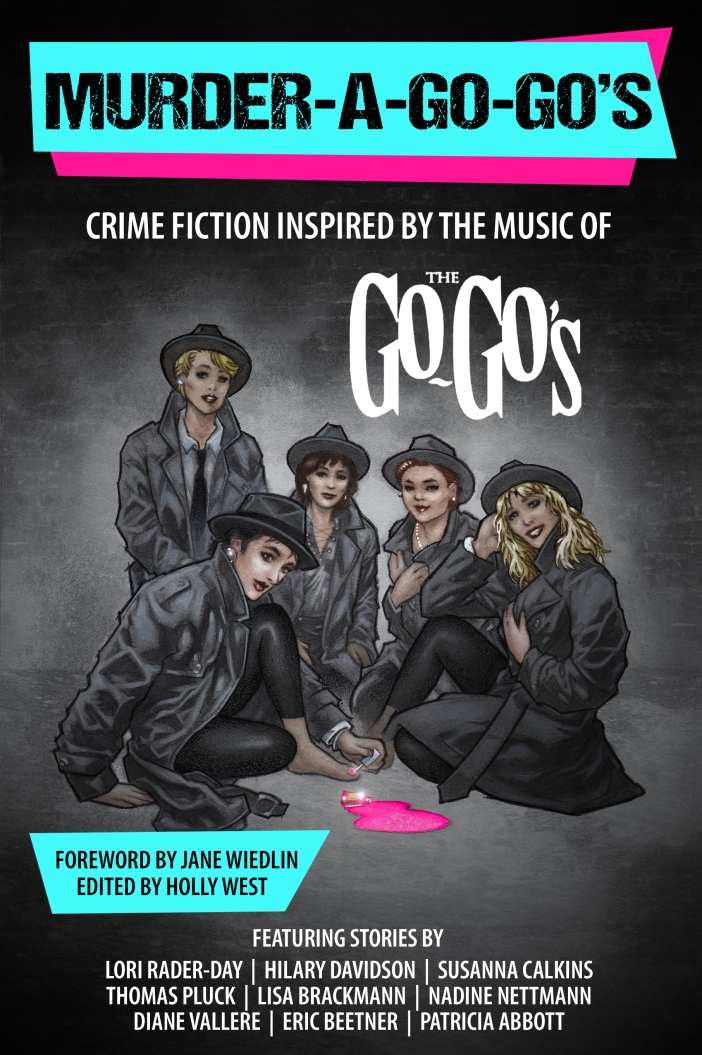
And now, I am going to retire to my easy chair with Lori Roy’s book and my iPad, with the electronic copy of Murder-a-Go-Go’s.

Happy Sunday, every one!

22281594_10159458325400290_4123370154571162732_n

It’s Everything But Party Time

Since adding Spotify to my life this week, I’ve been having a great time listening to albums I love, and of course the Go-Go’s are on that list. I’d forgotten how much I love having music on while I do things around the Lost Apartment–whether it’s cleaning or editing or writing; music always makes things better, quite frankly.

It certainly makes the time go by a lot faster.

Next up in Murder-a-Go-Go’s is Lisa Alber’s “It’s Everything But Party Time”:

cover-west-murder-go-gos-front

It’s my humble opinion that nothing says “boondoggle” like a bunch of oddballs running around a hotel dressed in fursuits. Wolves, raccoons, polar bears, and kittens sitting around the Paradise Arms Hotel lounge munching on appetizers and scratching each oth- er’s backs below a banner announcing “Furtopia—Welcome to Party Time!” didn’t bode well for the investigation.

My partner Mac skidded to a halt. “Sully? What the blazing fuck is this? You don’t warn me?”

“Nope. Hotel fully booked for a furry conference.”

The previous morning, paramedics had carted away a guy from room 306. Apparent heart attack. Only, the M.E. cut him open, cried “homicide,” and now here we stood, a day late to the investigation, surrounded by animal wannabes.

“So that lazy turd Weaver screwed up the initial investigation,” Mac said.

“Yep, settled for face value—natural causes. Didn’t lock down the scene properly. I’d probably have done the same thing.”

Mac punched me in the arm, too hard. “Not with me around.”

MacKenzie MacDougal, also known as Double-Mac-and-Cheese, Two-Mac, and Mac Attack, sports an unfortunate name to go with a fortunate tendency to rock her retro pantsuits. Ever more the professional than I, she perused the lobby area with its antique Italian marble, plaster ornamentation, and wrought iron fixtures straight out of Hollywood’s Golden Era and jotted a few notes.

Lisa Alber is another new-to-me author, which is one of the great things about anthologies; the exposure to writers you’ve not read before. She’s published four novels, including the County Clare mystery series.

“It’s Everything But Party Time” is particularly clever in that it’s set at a furry convention hotel, where the only guest not attending the convention died–originally presumed to be from natural causes, but the autopsy turned up peculiarities. This is a fun police procedural, with an interesting homicide detective team in Los Angeles; what makes this more unusual is that the woman is the better detective, the male isn’t threatened by her expertise, and they work very well together. This story is witty and clever and fun, and I had a great time reading it!

Should’ve Never Let You Go

And my first morning of vacation looms bright, with a stunningly blue sky and the sun blinding me through my windows. The clouds will roll in later this afternoon, per the weather forecast, and the thunderstorms aren’t supposed to arrive until around eleven; well after the second parade has passed. Tonight’s parades are Druids and (Stevie) Nyx; so only two, to prep us for the madness of Thursday, which includes Muses.

So much to get done today, should I choose to do any of it; I need to get caught back up on Scotty revising, and there’s always cleaning to do around the Lost Apartment. I also have to make groceries and collect the mail, and I’d like to go to the gym at some point this afternoon as well to begin my reconnection with taking better care of my body. There’s also reading to do; I need to read the next story in the Murder-a-Go-Go’s anthology, and I need to finish the ghost story I’m reading in Norah Lofts’ Hauntings, and of course, the delicious pleasure that is Lori Roy’s Gone Too Long also awaits on the end table next to my reclining chair. I need to set aside some time to finish that because I need to read my homework for the panel I’m moderating at the Tennessee Williams Festival–Alafair Burke’s The Better Sister, Samantha Downing’s My Lovely Wife, and Kristien Hemmerechts’ The Woman Who Fed the Dogs. I am also falling very far behind on the Diversity Project, which is enormously disappointing to me.

I’m sort of in a malaise in which I keep putting things off because I don’t want to do them, which isn’t really like me–or at least, the me I’ve been for the last half of my life. The first half of my life was when I just avoided things I didn’t want to deal with, which never ended well. I’m not entirely sure what’s causing it, and the Great Data Disaster of 2018 was so long ago now (three months, almost four!) that I can’t keep blaming things on it; but I can really trace this back to losing that weekend’s worth of work and getting derailed…because I was also on a roll at that point, and I’ve never quite gotten that momentum back.

Something innocuous I posted on social media blew up in a way I certainly never intended, and no, I don’t mean the post that someone needs to do a noir reboot of The Partridge Family, which I still think is a brilliant idea–after all, we never really know what happened to Shirley’s husband, who is rarely, if ever mentioned; and let’s face it, none of those kids looked even remotely related to each other. I envision Shirley as a not only a black widow going through numerous husbands and baby-daddies, but also being a horrific stage mother, forcing her children into musical careers, while having an affair with their sleazy manager, Reuben.

No, I idly posted that someone needs to do one of those music-inspired crime anthologies based on the music of Pat Benatar…and then came up with the title, Crimes of Passion: Crimes Stories Inspired by the Music of Pat Benatar.

Well, it kind of took off, with people replying to my tweet that they’d write to it, or responding on Facebook that they wanted to, even going so far as to pick the songs they wanted. At first–I was at work–I wanted to say, yo, everyone, it was just a thought, I’m not actually doing this but as the day went on I began to think, more and more, that hey, maybe you should think about doing this. More than enough people have offered to write for it, so many so that if anyone drops out there would still be more than enough stories to fill out a volume and for it to be really good.

So…I’m considering it, and considering publishers to approach. So maybe, just maybe, that will be my next anthology.

MAYBE.

And now, back to the spice mines.

22366703_10159458317505290_8781974010612680120_n

Tonite

As I said before,  I’d never really how dark the Go-Go’s lyrics work until I started reading them sans music, trying to pick a song to base a story on. One of the things that’s interesting about music is so often people will love a song,  make it their jam, and sing along to it all the time without  really understanding what the song’s about.

A classic case in point, and maybe the best example, is “Every Breath You Take” by the Police. It’s a terrific song on every level, was a huge hit, and launched their huge-selling Synchronicity album…and yet I knew, almost from the first time I heard it, that the lyrics were really dark and obsessive to the point of being completely creepy. So when I discovered that people actually thought it was romantic, and most people didn’t realize how creepy and stalker-ish it actually was, it blew my mind. The song is played at weddings, for fuck’s sake.

How can people so completely miss the point of the song?

Next up for Murder-a-Go-Go’s is “Tonite,” penned by R. D. Sullivan.

cover-west-murder-go-gos-front

“Come on, come on, come on…” Benicia whispered, eyes flicking between the rearview mirror of the stolen car and the red traffic light. One hand tapped nervously on the steering wheel. She tried to ignore what the pit bull had done to her leg, but it screamed with pain, and blood puddled in her shoe. There wasn’t time to deal with it.

The heat of the summer night pressed in from the open windows, oppressive and dry. No other cars sat at the intersection, nobody waited at the crosswalks. All of Red Bluff shut its doors and called it a night as soon as the sun set and this late? Nothing stirred.

Not even the junkies were out. With as hot as it has been, hitting 112 today, they were likely hunkered by the river that bisected town, trying to stay cool enough to sleep.

Good. The deserted streets would make this easier.

Eyes on the red light.

Eyes on the mirror.

Light.

Mirror.

The white pick-up screamed around the corner, slipping for a heartbeat before grabbing road and accelerating. she couldn’t see their faces, but she could picture them, how angry they’d look. Angry at her.

She put a hand on the two bags on the passenger seat and ran the red light.

There’s nothing I love more than a good tale of revenge, and “Tonite” is precisely that. The story opens with the major adrenaline rush of a car chase where the stakes are very high; if whoever is chasing her catches Benicia, they’re going to kill her. But what is her plan, what is her game, and what is she doing? Sullivan craftily weaves flashbacks into her chase tale, as Benicia races through the streets of Sacramento with angry killers on her tail, and each successful reveal adds to the incredibly powerful tension of the story, which literally amps up in the opening sentence.

Well done!

This Town

As I have mentioned before, I kind of invited myself to contribute to this anthology. It’s probably the single most brazen thing I’ve ever done as a writer. I’m not sure how it happened, exactly; I just saw it on Twitter or something and shamelessly contacted Holly West, who–rather than saying who the fuck are you? HELL FUCKING NO, was quite gracious and said, “By all means! I have a spot for you!”

The songs I got to choose from were three of my favorites, but I eventually decided on “This Town,” after reviewing the lyrics:

We all know the chosen toys 
Of catty girls and pretty boys 
Make up that face 
Jump in the race 
Life’s a kick in this town 
Life’s a kick in this town
This town is our town 
It is so glamorous 
Bet you’d live here if you could 
And be one of us
Change the lines that were said before 
We’re all dreamers – we’re all whores 
Discarded stars 
Like worn out cars 
Litter the streets of this town 
Litter the streets of this town
This town is our town 
It is so glamorous 
Bet you’d live here if you could 
And be one of us


 “We’re all dreamers–we’re all whores”–that was the line that sold me; this was the song I was going to use.

But despite the fact that was the line that convinced me, these lines:

Bet you’d live here if you could 
And be one of us

were the ones that actually inspired my story.

cover-west-murder-go-gos-frontOur IDs were fake, but no one seemed to care. Even when a burly bouncer asked to see them, his bare meaty arms adorned with tattoos, his bored eyes just flicked over the lami- nate before waving us inside. Celia was right about that, like she was right about every- thing. She could always find someone with coke to share or sell, or who was happy to share their blunt with us. She was a golden girl, the kind I used to think only existed in books or movies, the girl that’s too perfect to exist, the one every other girl wants to be friends with, wants to be. The one all the guys notice first, their eyes wide open and their jaws gone slack.

She always had the trendiest new make-up, the first to try out a daring new look we were too cowardly to try but quick to copy, always the first, the one everyone else imitat- ed. She seemed to glow from inside, drawing everyone’s eyes to her effortlessly, and she somehow managed to always look perfect, even when she was drunk, even after dancing for hours when our make-up ran down our cheeks and perspiration dampened our arm- pits. Her skirts were just the tiniest bit shorter than everyone else’s, her tops seemed to fit her in a way they didn’t fit anyone else, her hair thicker and shinier and bouncier. She pulled in guys like night insects to a white light, caught up in her magic. They only no- ticed the rest of us once she’d turned her attention elsewhere. We didn’t mind taking sec- ond place because it seemed like the natural order of things. She always knew the right thing to say—whether kind or insulting—and we all gravitated to her. She was our pledge class president, organized, efficient, determined we be the best pledge class our Omega Psi chapter had ever seen. Even the sisters seemed to be a little in awe of her, grateful she’d picked Omega Psi out of all the offers she’d had—every sorority had offered her a bid, I’d overheard one sister telling another at Monday night dinner, her voice awed as she went on to say that had never happened in the history of the Greek system at Tulane.

And she made us all feel special, whispering “Sisters” to us as we hooked our pinkie fingers and whispered the word back to her, committing to a lifelong bond with her.

She was Celia, and we were better for knowing her, special for being her sisters, like she’d selected us to be pledges and not the actives.

She somehow even knew the best places to catch the parades at our first Mardi Gras and wasn’t from New Orleans.

Haven’t we all known a girl like Celia, the one who somehow always knows what the next thing is, who always wears new styles and fashions before anyone else, who always seems to know where the best parties are, where to find the cute guys, the one everyone is drawn to, who draws the eye, who is the center of attention?

I was in a fraternity in college, and another trope that pops up regularly in my fiction is college Greeks–fraternities and sororities. Chanse was an alum of an LSU fraternity (I have an in-progress short story where Chanse deals with the current day members of his old fraternity after a suspicious death on Big Brother Night, “Once a Tiger”), and of course there are the Todd Gregory fraternity novels. Sororities fascinated me back then, and they still do today; they were a lot stricter than their male counterparts back when I was in college, and still seemed stuck, rules and tradition-wise, in the 1950’s.

Anyway, one day during Carnival last year I was standing under the balcony in front of the praline shop during a Saturday afternoon parade–Iris, I think it was–when a gaggle of sorority girls passed by in front of me. The clear leader of the pack was a beautiful young woman the others were clearly trying to please and impress; the alpha to their betas. They all paused right next to me so the leader could light a cigarette. As she put her cigarette in her purse three men of varying ages immediately stepped up to light her cigarette for her–one was in his fifties, one was slightly older than the girls, and another who might have been in his thirties–and I remembered another golden girl from a sorority back when I was in college…and I wondered what it would be like to be, not the alpha girl, but one of the betas, caught up in her thrall, and what you might be willing to do  for your alpha. Is it peer pressure, is it desire to please, what precisely is it that keeps you in thrall and makes you do things against your nature?

And that night, I started writing “This Town.”

The great irony, of course, was that after I’d written the story and Holly graciously agreed to use it in her anthology, I was reading William J. Mann’s Edgar-winning Tinseltown and realized that “this town” has a specific connotation, one that makes the song itself make even greater sense: “this town” is how people in Los Angeles refer to show business, i.e. “you’ll never eat lunch in this town again.” I’d even know that, from years of reading biographies and memoirs and histories of Hollywood and the studio system, but…my mind and my memory is a sieve these days.

But I’m very proud of my story, and I hope that you will like it, too, when you get a chance to read it.

Let My Love Open the Door

76 degrees already this morning, with the mercury forecast to continue to rise throughout the day, with heavy rains in the forecast for tonight’s parades. I think I’m going to spark up the barbecue this afternoon–get that true Carnival experience but barbecuing burgers and hot dogs–and probably try to get some work done around the parades.

I only worked two hours yesterday morning, so I went in early and did all the things, departed and went to the grocery store on the way home–there’s no way I can move my car again before Sunday evening–and then came home to do odious chores. But I got all of it done, reorganized some cabinets and the refrigerator, and then relaxed in my easy chair while I waited for Paul to come home so we could have dinner and go to the parades. Alas, he didn’t get home until too late, so we missed Oshun and Cleopatra. I guess I could have gone by myself, but that’s not as much fun, plus getting up early and doing the running around and cleaning and so forth had left me rather tired. I watched some television, including another episode of Versailles, and retired to bed relatively early. I slept well, which was lovely, and am up and at ’em this morning. I intend to get some revising done before the parades arrive, and there’s some tidying required for the living room.

But this morning I feel rested and like I can conquer the world, which is a lovely feeling.

We’ll see how long that lasts, won’t we?

Hilariously, part of my work on the kitchen yesterday including moving small appliances–I moved the microwave from next to the refrigerator back to the other counter, so it’s next to the stove now, and the coffee maker from there to the counter next to the refrigerator. As small a change as that was, it opened up the kitchen and makes that area look bigger. (I used to have it set up this way for years and changed it about two years ago; yesterday it dawned on me that was why the kitchen looked so much more crowded, so I switched it back.) I also put two boxes of books up in the attic, which was also a satisfying feeling, and at some point today I am going to combine some small boxes of books into a bigger box, and put that in the attic.

I’d also like to finish Lori Roy’s superb novel Gone Too Long this weekend, if i can. I am a little behind on the revising (as always) but am hopeful focusing can get more done before and after and around the parades today–as long as I don’t get too tired out there on the parade route…there are five today.

FIVE: Pontchartrain, Choctaw, Freret, Sparta, and Pygmalion.

Sigh. It’s a marathon, not a sprint.

I am also kind of looking forward to finishing this revision because I really want to get back to work on the WIP, which I think has a lot of potential…and there’s some stories I want to revise. It occurred to me the other day how to solve the problems with “The Problem with Autofill,” which is actually also going to need a new title; whereas I like the original title, it doesn’t really fit the story, and trying to make the story fit that title doesn’t work, either. So I will file the title away (like I had to do with “For All Tomorrow’s Lies”) and hope that a story will eventually come to me that will fit the title.

And on that note, it’s back to the spice mines.

CpqbmnjW8AAp2kn

Good for Gone

Music always brings back memories. One of the greatest disappointments of my life is I have absolutely no musical talent. I can’t read music, I can’t sing, I can’t play any instruments. My singing voice probably curdles milk.

But I love music, and I love all kinds and types and styles of music. I like Top Forty pop music from the 60’s and 70’s to album-only rock to country to jazz to rap to what I used to call ‘Ecstasy music’–gay dance remixes that were clearly mixed to enhance drug-dance marathons at three in the morning. My music collection has always been varied. I listen to music when I write, when I clean, when I do data entry at work, and it has always made the work go better.

The music of the Go-Go’s always brings back fond memories, of the times I saw them in concert, of other friends who were fanatics about them, and of course, from “We’ve Got the Beat,” Go-Go’s music really makes us dance!

Next up in Murder-a-Go-Go’s is Jen Conley’s “Good for Gone.”

cover-west-murder-go-gos-frontI’m going to tell you the truth. You don’t have to believe me, but I need to be heard. I need to tell you what love did to me.

Earlier tonight, I stood over my husband at the side of the bed holding a gleaming butcher knife, my hands shaking, my mind saying, He deserves it. Kill him.

My husband didn’t know I was there. He just snored on. His mouth open. His sleep apnea creating short quick pauses, then the chig chig sound burbling from his throat, followed by the release of breath. Sometimes he put the mask on before bed, looking like he’d emerged from some Rod Serling creation, and I’d once joked about it. “Episode 39, Season 7.”

“There is no season seven in The Twilight Zone,” he snapped, the snark dripping through his mask.

I met Jen at Bouchercon in Toronto; we were on an Anthony Awards Best Anthology Nominees panel, along with Jay Stringer, Sarah Chen, and Eric Beetner, if I am recalling correctly. It was an early morning panel, I think on either Friday or Saturday, and I’d stayed up much later than God intended, drinking with friends, and therefore wasn’t at my best on that panel…and in fact, I don’t remember much of it. I just remember liking them all, and thinking they were all smart and had terrific things to say, whereas I babbled like a complete moron. Jen was also at a disadvantage, in that she was nominated for a single author collection, Cannibals: Stories from the Edge of the Pine Barrens, whereas the rest of us were nominated for editing anthologies–so many of the questions thrown at us had to do with editing, rather than writing. But she was smart, she had terrific things to say, and I remember thinking I should read her collection.

It’s still in the TBR pile, alas, and this is my first time reading her work.

“Good for Gone” is a story about quiet desperation, about choices made and having to live with those choices. The older I get, the more these stories resonate with me, and the more I tend to write stories about bitter disappointment with life, and looking back with regret at the time you possibly chose the wrong path at a fork in the road. I’ve been thinking alot lately about how much the world has changed and evolved, as has society, since crime fiction started being published, and how motives for murder have also evolved. Do people still  kill to get out of bad marriages when divorce is so much easier to obtain these days?

The answer is yes, obviously, we see it in the news every day, and yet what works for real life doesn’t always work for fiction.

But Jen does a very deft job of getting inside her character’s head, of making us see the choices and the life and possibilities wasted and lost, about her wrong choices and regrets, and how that translates into the potential for murder.

Well done, Jen!

Romeo’s Tune

It’s PARADE SEASON, boys and girls!

Tomorrow’s afternoon parades were moved up an hour due to the possibility of inclement weather–which does rather make one wonder about the evening parades–but tis Carnival Season in New Orleans, so the weather is what it is, and we celebrate and enjoy around it. I mean, it usually rains during Jazz Fest, too. And I don’t think I ever remember a Carnival season where there wasn’t at least one cold, rainy night for parades.

The weather has been interesting lately; what I like to call New Orleans Gothic. It’s gray, rainy and warm during the day, and then the fogs rolls in as the sun goes down and it gets about ten degrees cooler. The cloud cover reflects the lights, so the clouds above at night aren’t dark but strange, light shades of orange and pinks and blues, yet closer to the ground, beneath the live oaks, its dark and the fog wraps itself around things so things begin to disappear about five feet or so ahead of you.

As I drove home from work and running errands late yesterday afternoon I began to notice the tell-tale signs; portable fencing lined up on neutral grounds, ready to be put into place for the parades. More and more houses are hanging Carnival flags and putting up their decorations. Fences are festooned with beads glittering in the sun when it peeks through the clouds for a moment or two. The grocery stores have, of course, been stocking King cakes since before Christmas, and everything you would need to party outdoors for days on end are on prominent display throughout the stores. The mood of the city is also starting to lift, which is always lovely.

New Orleans is always in a state of flux; but change seems to come slower here than it does in other places, and there’s always some resistance to those changes. I was thinking the other day that the New Orleans of today is so vastly different than the New Orleans I moved to all those years ago, that I fell in love with even longer ago. But no matter what, it’s always New Orleans here; there are some things that never change, that never go away. The friendliness, for one, and that peculiar to New Orleans us against the rest of the world mentality I’ve never really experienced anywhere else; the way the city will fight and squabble and complain and argue and bicker, but band together as one against outsiders. (In some ways, the Saints are the embodiment of this particular virtue, but that’s a subject for another time.)

I was at the office a mere two hours this morning, which I spent doing odds-and-ends I’m responsible for, and then hit the grocery store on my way home since I won’t be able to get anywhere this weekend. It’s warm–low seventies–but yeesh, is it ever muggy out there! I was sweating bringing the groceries in from the car, which…I mean, it’s still February. But I got enough stuff to get us through until the staycation next week starts.

I also read another one of Norah Lofts’ ghost stories from Hauntings: Is There Anybody There?, titled “Victorian Echo:”

When my great-aunt Julia died she was eighty-seven, and she had attained her last objective, which was to die in her own house.

She left far more money than anyone would have expected. Most of it went to rather obscure charities, but she left her house, its contents, and a thousand pounds to me; a surprise, and a very pleasant one. She had always lived rather parsimoniously; I had sometimes wondered if she had enough to eat and on my visits had taken food, making rather thin excuses.

Jon and I went out to look at my inheritance on a Sunday, the only day on which we were both free. It was mid-March, a sunny, windy, hopeful day with catkins in th ehedges and primroses in the ditches. Joe did not know the house well; he had come with me a time or two, but Julia disliked him and showed it.

Norah Lofts’ ghost stories are more Gothic than scary; her goal isn’t necessarily to give you a jump scare, but rather to get under your skin and make it crawl just a little bit. Her Victorian style of writing is absolutely perfect for this; she’s very much in the school of The Turn of the Screw and Shirley Jackson in that way. For our happily married young couple in this story, pinching pennies to make ends meet, this inheritance of a house and a small fortune is indeed a blessing for them…until they start to notice that their behavior changes when they are actually inside the house…

Great, great fun.

d476a24c9b6736ea384ce98703136e68