On the Dark Side

Sunday morning. I didn’t get as much done as I would have liked yesterday, but I did get some things checked off my to-do list, so i call that a win. I finished a first draft of my short story “The Trouble with Autofill,” which will need some serious revision and work–not a problem–but while I am displeased with the result, I am pleased that I got the first draft done. As I always say, you can always fix what you wrote–but you have to have something to fix. 

We finished watching Broadchurch last night, and my, was that series finale, wrapping up not only the story of the Latimers–whose son was murdered in Season One–but also the rape case that opened Season 3. I have to say, the show was really terrific; I greatly enjoyed it, and I thought it did a great job of putting real human faces on terrible tragedies. As I processed what I’d seen once it was finished, I realized that probably the reason I enjoy crime fiction so much is precisely that; it’s exploration of humanity through dealing with the unimaginable; and that’d also kind of what I’m doing with my short stories. I’m also really glad that I made the Short Story Project a year-long thing; I’m learning so much about short stories by reading so many different ones by so many different writers.

I also have to correct myself; I  do have a hard copy of Lawrence Block’s anthology In Sunlight or in Shadow. I was moving books around in the bookcases yesterday–and uncovering more anthologies and single-author collections as I went–and even though I’d spent a lot of time trying to find it over the past week to no avail, yesterday there it was, right next to Cary Elwes’ memoir of filming The Princess Bride, As You Wish. Why I hadn’t seen it or noticed it prior to this moment in time is one of the unsolved mysteries of my life and brain.

We also watched the first episode of American Crime Story: The Assassination of Gianni Versace, and I wasn’t overly impressed with it beyond the surprisingly strong performance of Darren Criss as Andrew Cunanan. Visually, it’s splendid, but…I’ll give it another episode or two before consigning it to the scrapheap. The beauty of our streaming society is I can always give it another shot later; maybe I’ll like it better at another time. Black Sails, for example, continues to be something I really am enjoying; I watched half of Episode 3, Season 1, on the treadmill Friday and yes, I can’t help but keep asking myself why on earth did you not like this the first time?

The only problem I’m really having with the Short Story Project is that I am not reading any novels; so my TBR pile is not being reduced in any way. I want to read John Morgan Wilson’s Moth and Flame, and it’s been sitting on my side table next to the easy chair for over a week now; but I’m in such a short story groove…anyway.

Tomorrow is the release day for a book I read in ARC (advanced reader copy) form months ago, The Wife by Alafair Burke.
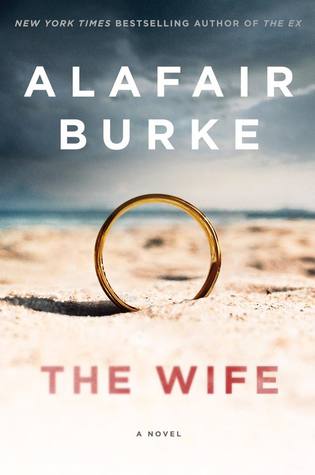
34971475

In an instant, I became the woman the assumed I’d been along: the wife who lied to protect her husband.

I almost didn’t hear the knock on the front door. I had removed the brass knocker twelve days earlier, as if that would stop another reporter from showing up unannounced. Once I realized the source of the sound, I sat up straight in bed, hitting mute on the TV remote. Fighting the instinct to freeze, I forced myself to take a look. I parted the drawn bedroom curtains, squinting against the afternoon sun.

I saw the top of a head of short black hair on my stoop. The Impala in front of the fire hydrant across the street practically screamed “unmarked police car.” It was that same detective, back again. I still had her business card tucked away in my purse, where Jason wouldn’t see it. She kept knocking, and I kept watching her knock, until she sat on the front steps and started reading my paper.

Alafair Burke’s The Ex made my Top Ten list of 2016; it was the first of Alafair’s books I’d read (I have a bunch more in the TBR pile) and it absolutely blew me away. I wasn’t sure what to expect, and having met and liked Alafair, there was an element of worry; what if I don’t like her book? But it wasn’t an issue; from page one on, I was hooked and it was a book I deeply resented having to put down to do other things. Obviously, I was really looking forward to The Wife–maybe I’ll focus this year on reading the rest of her canon–and was thrilled when I got an ARC at Bouchercon this year.

The Wife does not disappoint, either, and boy is it ever timely! Angela Powell, the wife of the title, has a pretty terrific life; married to a very successful man who is getting even more successful every day, a beautiful home in Manhattan, good friends she can rely on, and a son she dotes on. Angela’s almost too-perfect, too-good-to-be-true life slowly but surely begins to unravel when one of her husband’s interns goes to the police and files a criminal complaint for sexual harassment against him. But Angela is not only rocked by the charges against her husband–she’s also worried about any investigation into their lives, particularly by the press…because she has some dark secrets in her own past that she doesn’t want seeing the light of day. No one, other than her husband and her mother, knows anything more about her past other than she was a catering service waitress who eventually started her own business and is a great chef–she met Jason at a party she was working at–but there is a lot more there. And as the truth about Angela’s past slowly is revealed to the reader, each revelation is even more shocking than the last.

The book has a powerful enough story, with just Angela dealing with this assault on their life and having to wonder if her husband has done what he’s being accused of, and if so, how did she not see it–or whether she should believe in his protestations of innocence and stand by his side? The exploration of what does a woman do in this instance might have been enough for a lesser novelist, but it’s not for Alafair Burke; there’s a reason why she has moved onto my ‘must-read’ list.

The Wife is going to be one of the best books of the year, and will be surely nominated for every crime writing award in 2019. I urge you to read it. You won’t be sorry.

Undercover of the Night

I didn’t get as much done this afternoon as I would have liked, alas. I am getting laundry done, and have pretty much cleaned out my email inbox, and I did finish the first draft of “The Trouble with Autofill”–it’s not good, but it will be, and I am going to work on another short story for a bit while vacuuming and preparing dinner and finishing the laundry. Tomorrow I want to get a lot more done, and tomorrow is also a go to the gym day; and since it’s the fourth workout, that means moving up to two sets of everything rather than one. Next week will be three, and then after that it remains at three, with weight increases every week. I haven’t had any issues with going to the gym–I even went when it was so cold on Wednesday morning–so I think I’m getting back into the swing of things. Let’s hope I stay motivated; I think I will.

I am also learning a lot from the Short Story Project! Once I get this second short story finished, and revise the other, I am going back to the WIP and some other manuscripts that need my attention. It’s great because I am reading all these different styles and types of short stories and writers, and I am learning a lot about how to construct a short story, and suspense building, and so forth.

An excellent example of building suspense is the first one up today, “The Stranger in the Car” by Elizabeth Sanxay Holding, from Troubled Daughters Twisted Wives, the fabulous anthology of post-war stories by the terrific women writing suspense back then.

Carrol Charleroy leaned back in his chair and closed his eyes; a big, stout, handsome man, olive-skinned, with a black mustache; a flamboyant look about him, in spite of his correct and conservative clothes. Miss Ewing was playing the piano for him, and he tried to relax, to enjoy this music, but a peculiar restlessness filled him. He frowned, opened his eyes, and took out his cigar case.

He and his wife Helen never sat here in the drawing-room unless they had guests; then the room would be pleasantly lighted, there would be people moving about, the sound of voices. Now the only light came from the gold-shaded lamp beside the piano at the other side of the long room, and, in spite of Miss Ewing’s music, he was aware, as never before, of the sounds from the New York street outside, the rush of wind, a car streaking past, the frantic piping of a doorman’s whistle, a man’s voice, hoarse and furious. This made him feel vulnerable, not comfortably shut away from the world in his own home.

“I don’t like this sending Helen off to the hospital,” he thought. “The flu is a treacherous disease, I grant you that. But Helen and I, and the children, and the servants, too, have all had it, at one time or the other, right here in the house, and we did very well. Can’t say I care much for Dr. Marcher. Too quizzical…”

The Holding story is one of the longest I’ve tackled during the Short Story Project thus far; and it’s a slow burn, and it’s so worth it. The story opens with our point of view character, a successful businessman, being entertained by the piano playing of a family friend; concerned about his wife’s hospitalization for the flu; and later that evening, his daughter arrives home under mysterious circumstances; with a black eye and several strange stories being told to him from other people who saw her out that evening, and were concerned. Before long Mr. Charleroy is convinced something terrible has happened to his daughter…and that she may have taken the law into her own hands. The best part of this slow burn of a story is that Mr. Charleroy literally has no idea what’s going on around him, but only sees and hears enough to make him worried and suspicious; but all of the women in the story are taking care of everything around him, and finally, at the end, very kindly let him know what the truth was once it’s all wrapped up rather neatly, in a slightly macabre fashion, but wrapped up nonetheless. Holding is best known for her novel The Blank Wall, which Weinman included in the Library of America omnibus of post-war female suspense writers, and now I am positively looking forward to reading it.

The second story for this entry is an Edgar nominee for this year’s Best Short Story statue, from Montana Noir, capably edited by Keir Graff and James Brady, is Eric Heidle’s “Ace in the Hole.”

Civic-pride billboards and the drab county jail swept past the chilly Greyhound’s windows as it dropped down the hill into the night of Great Falls. Through frosted glass, Chance watched the town pull him in as the Missouri passed below, the bus thrumming over dark water and skiffs of ice. Beyond the bridge he saw the OK Tire sign was gone; it’s cinder-block building was now something new.

The bus pulled a lazy turn toward downtown, rolling through blocks of low brick warehouses before banking hard into the alley behind the depot. It settled with a hiss in the garage as the passengers roused and began filing off.

The snap of deep cold hit him at the door. The driver’s breath huffed with each suitcase he tossed from the coach’s gut. Chance had only his green duffel. He split off from the line shuffling into the warmly lit lobby. Ducking under the half-open bay door at the front of the garage, he stepped onto the street and walked toward Central Avenue.

This is a terrific story, and it’s easy to see why it’s an Edgar finalist. Chance went to jail for possession with intent to sell, managing to get rid of most of the bales of marijuana before the cops caught up to him–but one bale didn’t land in the river but rather on a bridge support; bad luck for Chance. Even worse luck for Chance is that the supplier he got the marijuana from is still around and still wants his money for the lost shipment of weed. There doesn’t seem to be any way out for Chance–but it turns out that he does, indeed, have one ace up his sleeve, after all, and decides to play it in one last stand.

This is a great example of a dark, noir story; although whether it fits the actual definition of noir as I personally have come to understand it is questionable. But the thing about noir is that it defies labels and definitions, and this story is the best example of I can’t say what it is but I know it when I see it. This story is totally noir; I can even see it as a film, with its bleak but beautiful Montana landscapes, the cold, the mermaids swimming behind glass in the bar, the brutality of the violence; this would be a great role for a mid-to-late twenties actor–maybe even a career-making role. All kinds of awesome, really.

montana noir

Dancing in the Sheets

The sun is shining, and the temperature has climbed to 49 degrees. The boil-water advisory ended finally last evening–it’s just not a crisis in New Orleans unless we have a boil-water advisory!–and here I sit this morning, ensconced at my desk with a cup of coffee, a load of laundry tumbling in the dryer, with great expectations of the day. I went to the gym last evening after work, and my muscles, while a bit tired, still feel stretched and worked and supple, if that makes sense. Probably the best thing about rededicating myself to physical exercise again is how much better I feel; I don’t ache or feel tired the way I did just last week, and the stretching and the treadmill are also making me feel ever so much better. Today, I am going to clean (if it’s Saturday I must be cleaning) but I am also going to write, edit and read today. Paul is going into the office to work (it’s that time of year again) and so I have the day to myself. I want to finish the first draft of “The Trouble with Autofill” and I want to edit “Cold Beer No Flies.”

Among many other things; my to-do list is ridiculous, quite frankly. But the only way to make progress is not to get overwhelmed by the enormity of the list but rather to keep plugging away at it.

I finished reading Miami by Joan Didion earlier this week, and it was quite good. Didion’s writing style is quite amazing, actually, and while the story of the book might seem, at first glance, to be rather dated; the truth is it is still very much appropriate to our modern times. Miami is a look at the Cuban exiles in the city, how they relate to each other, and how they impact south Florida politically; and to a lesser extent, the relationship between the US government with them as well as with Castro’s Cuba. During the Cold War Cuba was a much more terrifying apparition, close as it was to Florida, and it’s amazing how people do not realize the political clout, as a result of their sheer numbers, that the Cuban immigrants weld in that part of the state, and in the entire state as well. The importance of Florida as a swing state cannot be discounted; and therefore the Cuban-American community’s influence on national politics is something that has to always be considered. (A present day comparison would be the Puerto Ricans moving to Florida today in great numbers as a result of the hurricane destruction of their island; the difference being those Puerto Ricans are already American citizens who can register to vote and can impact 2018 already.) Didion’s look at Miami in the 1980’s, as a Caribbean city on the mainland, is also reminiscent of descriptions of New Orleans as the northernmost Caribbean city; the thing I love the most about Didion’s work is how she makes you think. Reading Miami made me want to write about Miami; I’ve been wanting to write about Florida for a long time, as Constant Reader already knows. Something to ponder.

miami

I also started reading Mark Harris’ Pictures at a Revolution, which is a look at the film industry through the lens of the five films nominated for the Academy Award for Best Picture in 1967, and how they were made. Harris’ thesis is that was the year that bridged the gap between old and new Hollywood; and the five Best Picture nominees illustrated that perfectly: an expensive musical flop (Doctor Dolittle); two old style Hollywood pictures about race (Guess Who’s Coming to Dinner and In the Heat of the Night), and two films that illustrated new Hollywood and its influence by European filmmakers like Truffaut and Fellini and Antonioni (Bonnie and Clyde and The Graduate). I, of course, have always been fascinated by Hollywood history and have been ever since I read Garson Kanin’s Tracy and Hepburn and Bob Thomas’ Selznick as a kid; this book is right up my alley, and since it’s been awhile since I’ve read any Hollywood history, I am looking forward to reading this (and his Five Came Back–I’ve already watched the documentary based on it).

The Short Story Project also moves apace; I am frequently surprised as I look through my shelves for something to read how many single author collections and anthologies dot them. My Ipad also has quite a few loaded onto the Kindle app; I often buy them when they are either free or reduced in price, and so my Kindle app is filled with books I’ve not yet read, primarily because I don’t like to read on it (which I realize is nothing more than stubbornness; if I can watch movies or television programs on it, why resist reading books there?) Yesterday I found my battered old Dell paperback of Agatha Christie’s The Golden Ball and Other Stories, which I remember loving as a child. I was looking for my copy of Lawrence Block’s first anthology inspired by paintings–those of Edward Hopper– In Sunlight or in Shadow, which I would have sworn I’d purchased in hardcover; yet it wasn’t anywhere on the shelves or in any of the TBR piles, before remembering I’d bought it as an ebook when the Macavity nominations come out; Block’s story “Autumn at the Automat” was a finalist, along with mine (I still can’t believe it) and I wanted to read all the other nominated stories for an entry, so the immediacy of the need required buying the ebook. It is a handsome volume, though, so I’ll need to buy a hard copy to pair with the new one. (New bucket list item: write a story for one of these anthologies by Lawrence Block)

Once I’d located it on the iPad, I scoured the table of contents and landed on a Joyce Carol Oates story, “The Woman in the Window.” I have to confess I’ve not read much of Ms. Oates; I am not even remotely familiar with what she writes. But she, too, was a Macavity finalist last year, for her story “The Crawl Space” (which also won the Stoker Award), and that story creeped me the fuck out. I know she’s been a Stoker finalist before, but I also think she tends to write across genre a lot and therefore isn’t pigeon-holed in one way or the other.

Beneath the cushion of the plush blue chair she has hidden it.

Almost shyly her fingers grope for it, then recoil as if it were burning-hot.

No! None of this will happen, don’t be ridiculous!

It is eleven A.M. He has promised to meet her in this room in which it is always eleven A.M.

This story, frankly, isn’t as strong as “The Crawl Space,” but it’s an interesting exercise in how thin the line between lust and loathing is; the woman of the title is a secretary having an affair with a much wealthier man, and as she gets older and older she is feeling more and more trapped in the relationship; he is married and he often has to break plans with her for his wife. There is also a shift occasionally to his point of view, and he’s not so fond of her anymore, either. Passion has cooled but habit has set in; and the way those lines can get crossed is chilling–and how destructive such a relationship can be to both parties, emotionally and mentally, is explored in great detail yet sparse language by Ms. Oates. The story’s not as creepy, as I said, as the other; but the end–which she leaves kind of hanging–you do feel that something awful is going to happen; maybe not today, maybe not tomorrow, but eventually.

I’ve not read Joe Hill before, and there are several reasons for that; none of which would make any sense to anyone who is not me; I am nothing if not aware of my own eccentricities, which is why I generally don’t share them with people; I don’t need someone else to point out that something doesn’t make sense. But I do have a copy of his short story collection 20th Century Ghosts, which I spied on the shelves as I looked for my copy of the Block anthology. Aha, I thought, perfect. I can read a Joe Hill story for the Short Story Project. So, I curled up under a blanket in my easy chair, waited for Scooter to get settled in my lap, and started reading “Best New Horror.”

A month before his deadline, Eddie Carroll ripped open a manila envelope, and a magazine called The True North Literary Review slipped out into his hands. Carroll was used to getting magazines in the mail, although most of them had titles like Cemetery Dance and specialized in horror fiction. People sent him their books, too. Piles of them cluttered his Brookline townhouse, a heap on the couch in his office, a stack by the coffee maker. Books of horror stories, all of them.

No one had time to read them all, although once–when he was in his early thirties and just starting out as the editor of America’s Best New Horror–he had made a conscientious effort to try. Carroll had guided sixteen volumes of Best New Horror to press, had been working on the series for over a third of his life now. It added up to thousands of hours of reading and proofing and letter-writing, thousands of hours he could never have back.

He had come to hate the magazines especially. So many of them used the cheapest ink, and he had learned to loathe the way it came off on his fingers, the harsh stink of it.

I did not mention the elephant in the room; said elephant, of course, being that Joe Hill is Stephen King’s son. (The Kings are a very literary family; Mr. King’s wife Tabitha is a poet and a novelist; their other son Owen also writes, as does Owen’s wife, Kelly Braffet; I read a novel by Ms. Braffet sometime in the last couple of years–not aware of the King connection–and greatly enjoyed it.)

But simply based on a reading of “Best New Horror,” I have to say Joe Hill is also a terrific writer. And while it, like some of his father’s work, bears a strong resemblance to something I would have read in an Tales from the Crypt or House of Mystery comic book–that is not a criticism. I loved those comics, and the stories I read in them; they had a deep influence on me not only as a writer but as a reader. “Best New Horror”, as you can tell by the opening, tells the tale of Eddie Carroll, a writing teacher and a long-time editor of the Best New Horror series, a chore he has learned to loathe and, basically, phone in every year for the money. This resonated with me; as an anthology editor myself, one of the reasons I stepped away from editing them–or took a break from doing it–was because it was becoming rote; a chore rather than something I found joy in doing. Eddie is an example of why I stopped–I didn’t want to become like him; embittered by the experience and tired of not finding anything fresh or new (unlike Eddie, I was able to keep the experience fresh because each anthology I did was a new topic; if I had done twenty anthologies with the same theme I would have gone on a killing spree). But in the mail comes a story from a new writer that is simply brilliant; original and fresh and resonant and horrifying in its reality; the story reinvigorates Eddie and makes the editing job no longer a chore; he has to have this story, and will do whatever he has to in order to track the writer down…but as with any horror  tale of obsession, it’s not going to end well. But Hill brilliantly keeps stringing the reader along, and the ending is just absolutely brilliant and clever. I am really looking forward to reading more of these stories.

And now, I must get back to the spice mines. There are clothes to fold, dishes to wash, floors to clean, stories to write and edit; I am probably coming back here for another entry later as I am trying to get caught up on posting the stories I’ve read–but I make no promises. I have another story to write as a call for submissions crossed my computer screen on Thursday; I have an unfinished story that I can repurpose, but I also need to get a first draft done so I can work the story out.

Until later, Constant Reader.

Got a Hold on Me

Friday morning, and a short day at the office. I am very pleased to report that looking out my windows this morning I see no snow and ice, so I think perhaps this cold snap has finally come to its bitter end. We’re now having water pressure problems in the city, a boil water advisory, etc. etc. etc. Heavy heaving sigh. But other than that, things are going well. Like I said, I have a short day today; I am going to go to the gym this afternoon when I get home from the office, and I am going to spend the weekend writing and editing and reading. I started writing another short story yesterday, “The Trouble with Autofill,” which I think is kind of clever, and have lots of other editing and writing to do. Woo-hoo! Exciting weekend, no? I also want to get some reading and cleaning done. But I think as long as I keep going–sticking to my goal of positivity and focus, things will go well.

Maybe today’s blog should be titled When You Believe.

So, my agenda this morning is to get my kitchen cleaned up, get better organized, clean out my email, and do some writing. I’m going to get the mail before heading to the office, and I also need to pack my gym clothes so I can just ran in, grab the bag, and head back out the door. I also have lost three more pounds this week, finally breaking through that pesky 214 pound plateau I was at–I haven’t weighed 211 in years, so huzzah for working out! Now to keep going.

I started watching Black Sails again this week. I tried it several years ago, and just couldn’t get into it, even going so far as to think it kind of boring. I don’t know why; it has everything I love–pirates, beautiful locations, great period costumes, hot sweaty men in buccaneer outfits–but for whatever reason I just didn’t get into it. Maybe I wasn’t paying close enough attention? Something. Anyway, I am enjoying it a lot more this time around, so I am in for all four seasons. I love pirates–always have–despite having given up on the Pirates of the Caribbean franchise after the second movie–and while I am not sure why that is the case, I just have. I’ve always wanted to write a pirate novel; and I still have a Scotty adventure having to do with Jean Lafitte’s treasure still floating around in the back of my  head. I’m making all kinds of notes as I watch this show–reread Treasure Island, do some research on pirates, reread The Deep–so who knows? My creativity is certainly flowering these days; and I do think this go back to your roots thing is really working for me. I am doing that with my workout program–all the way back to how I got started, in 1994/1995; and carrying my little blank book around has certainly kick-started my creativity. How cool is that?

I’ve also added a lot of fun Alfred Hitchcock movies to my watchlist on Amazon Prime, some I haven’t seen and others I already have: Saboteur, The Birds, Shadow of a Doubt, Topaz, Frenzy, Psycho, Family Plot, and Vertigo.

The Short Story Project is also continuing; I read a shitload of short stories on my Snow Day Wednesday, but am still doling them out two at a time here. 😉 First up today: “Lord of Madison County by Jimmy Cajoleas, from Mississippi Noir, edited by Tom Franklin:

“Are yall ready to worship?” says Pastor Jerry. He’s got his eyes shut, one arm raised high to Jesus in some weird half-Nazi salute. Frosted hair slicked back, bald spots barely showing. Graphic T-shirt that says, Lord’s Gym, and has Christ bench-pressing a cross on it. Cargo shorts that he still thinks are cool.

I’m a little ways back in the youth room, chewing on a pen cap. The worship band kicks in; it’s all reverbed guitar and concert lights and the bullshit praise lyrics projected onto a screem behind them. You know, the songs that are the kind of crap you say to your girlfriend but it’s supposed to be about God? You are beautiful. You alone are my rock. You alone are my one and only. Oh, Jesus, baby!

Out in the crowd of youth-groupers are my customers. The girl with her hands up in the air giggling, singing louder than anyone? That’s Theresa. Everyone thinks she’s weird, that maybe she’s one of God’s holy fools, but they all agree that she’s on fire with Jesus.

Nah, she just popped a molly.

This is a great opening; I had wondered if anyone was going to address the Southern relationship with religion, and Christianity, in particular. My own psyche has been deeply scarred by a love-hate relationship with the Southern brand of Christianity; the entire nation was recently stunned by the Alabama evangelical embrace of pedophile Roy Moore–which was something that neither surprised nor shocked me. I need to write about religion; I do wish someone with a book called Religion in America: A History of the Turbulent American Relationship with God. Writing is very therapeutic, and I do have such a story that I’ve been working on for going on thirty years; I seriously doubt anyone would publish it. Anyway, I digress. This story, about a young drug dealer who has a fraught relationship with his mother, his father, and his mother’s boyfriend, is very clever and tightly written, with surprise twists and turns that take it in directions I didn’t see coming. Doug, kicked out of his wealthy private school where he was making money dealing to the rich kids, realized the best new market for his merchandise was the youth group at a local church. His dealing increased the youth group’s membership, and he has his own fraught relationship with Pastor Jerry, whom he rather despises, while dating Jerry’s daughter Kayla. Kayla is the big surprise here, a femme fatale right out of the James M. Cain classics, and a true delight. I’d love to read more about Kayla.

After Mississippi Noir, I took down The Best Horror of the Year Volume Four, edited by Ellen Datlow, and the first story there was Stephen King’s “The Little Green God of Agony.”

“I was in an accident,” Newsome said.

Katherine MacDonald, sitting beside the bed and attaching one of the four TENS units to his scrawny thigh just below the basketball shorts he now always wore, did not look up. Her face was carefully blank. She was a piece of human furniture in this big house–in this big bedroom where she now spent most of her working life–and that was the way she liked it. Attracting Mr. Newsome’s attention was usually a bad idea, as any of his employees knew. But her thoughts ran on, just the same. Now you tell them that you actually caused the accident. Because you think taking responsibility makes you look like a hero.

“Actually,” Newsome said, “I caused the accident. Not so tight, Kat, please.”

There’s a reason why Stephen King is one of my favorite writers. One of the reasons is his uncanny ability to get into the heads of his characters, turning them into three dimensional beings that sound like someone you know. Kat, the physical therapist for an incredibly wealthy man–“the sixth wealthiest man in the world’–is tired of her job and tired of her patient. He won’t do the work required to get better and she is tired of watching him waste money and time on quick-fix quack cures that don’t do anything. This time, he’s brought in a small-time preacher from Arkansas who is going to exorcise the demon of pain from Newsome; it’s all she can do to keep a straight face and not say anything. Finally, she can’t resist and the preacher, Rideout, calls her out on a lot of things, seeing deep into her soul and telling her truths she doesn’t want to face herself, let alone share with anyone. And then the exorcism begins…in Danse Macabre, his later 1970’s/early 1980’s study of the genre, King talks about how horror comics of the 1950’s influenced his writing; as I was reading this story I could easily see it illustrated in Tales from the Crypt or House of Secrets. It’s terrific, absolutely terrific, and I was reminded again of why I love nothing more than curling up with Stephen King’s writing. It also vaguely reminded me of his novel Revival; I think this story may have triggered his creativity in that direction.

And now, I have spice to mine. Have a great Friday, Constant Reader!

IMG_3588

Tonight

SNOW DAY!

Yes, we had freezing temperatures in New Orleans the last two nights, and when I woke yesterday morning it was only 20 degrees; it’s 21 today. There was snow and ice outside both yesterday and today–not much, it’s New Orleans, seriously–but the exciting news yesterday morning was work was canceled because the roads were closed! The text went out around nine in the morning, but I, good boy who is determined to stick to his goals that I am, was at the gym. Yes, I got up yesterday morning, bundled up against the cold, and went to the gym. There were tumbleweeds blowing through there, of course, but I did my stretches, my workout, and twenty minutes  of cardio(okay, it was 17:58, but it was nine and I thought I needed to get home and get ready for work). I came home, did the dishes, packed Paul’s lunch, got cleaned up, packed my own lunch and headed out to the car, which had ice all over its windows. I got inside, started the car and turned the defrosters on, and was about to plug my phone into the stereo when I saw that I had 15 text messages….the initial messages about the office being closed and responses from co-workers. I immediately shut off the car and came inside and put my sweats back on.

Here is the horror that was New Orleans yesterday morning:

Really not much of anything, seriously. But as I told my boss last night, I know how to drive in snow and ice, but these people down here? Not so much.

The problem, apparently, was that the bridges into New Orleans–we’re kind of an island, surrounded by water and swamp and you have to cross a bridge to get into the city no matter from what direction–were icy, and of course, that makes them dangerous because people here don’t know how to drive on ice and the bridges are all pretty high. So the bridges were closed and so commuters couldn’t get into the city; the highways are also raised in many places and therefore dangerous when icy. So basically, the entire city shut down. I could have made it to work, but hey, you know, the office was closed. Today so far I’ve not heard about anything–I doubt very seriously we would close two days in a row, and I have no problem with going in.

But it was nice having a free day to stay home with the cat, you know? I did laundry, and since it was so cold at my desk in the kitchen even with the space heater on, decided to make it a real Snow Day and simply retire to my easy chair with the cat in my lap and work on the Short Story Project. I read a Lee Child story from one of the Lawrence Block painting anthologies, and a Laura Lippman from her collection Hardly Knew Her.

Lee Child’s story was “Pierre, Lucien, and Me”, from Alive in Shape and Color:

I survived my first heart attack. But as soon as I well enough to sit up in bed, the doctor came back and told me I was sure to have a second. Only a matter of time, he said. The first episode had been indicative of a serious underlying weakness. Which it had just made worse. Could be days. Or weeks. Months at most. He said from now on I should consider myself an invalid.

I said, “This is 1928, for fuck’s sake, They got people talking on the radio from far away. Don’t you have a pill for it?”

No pill, he said. Nothing to be done. Maybe see a show. And maybe write some letters. He told me what people regretted most were the things they didn’t say. Then he left. Then I left. Now I have been home four days. Doing nothing. Waiting for the second episode. Days away, or weeks, or months. I have no way of knowing.

I’m a fan of Lee Child, and one of my favorite memories was walking to Green Goddess with Alafair Burke when Romantic Times was here one year, and we ran into Lee on the street. I was a big fan, of course, but had never met him. Alafair, of course, knew him, and she invited him to join us. So I not only got to have lunch with Alafair Burke but also Lee Child. (How awesome are my namedropping skills?)

Anyway, he was as charming and self-deprecating as I’d heard–ridiculously tall and slender as well.

I love his Reacher series, but am many years behind on it, alas–so many books, so little time–but this story was short and quite lovely. The main character, as you can tell from the opening, is dying, and reflecting on his life; thinking back on whom he might need to apologize to or make amends with, and cannot really think of anyone. Then a name pops into his head; a millionaire he rather swindled, and the tale of the swindle makes up the rest of the story. The voice is charming and the swindle itself isn’t really that terrible, as far as these things go; he didn’t cause any harm, really, even if what he did was a crime.

I then moved on to Laura Lippman’s “Hardly Knew Her”, from her amazing collection Hardly Knew Her:

Sofia was a lean, hipless girl, the type that older men still called a tomboy in 1975, although her only hoydenish quality was a love of football. In the vacant lot behind the neighborhood tavern, the boys welcomed her into their games. This was in part because she was quick, with sure hands. But even touch football sometimes ended in pile-ups, where it was possible to steal a touch or two and claim it was accidental. She tolerated this feeble groping most of the time, punching the occasional boy who pressed too hard too long, which put the others on notice for a while. Then they forgot, or it happened again–they touched, she punched. It was a price she was more than willing to pay for the exhilaration she felt when she passed the few yew berry bushes that marked the end zone, a gaggle of boys breathless in her wake.

But for all the afternoons she spent at the vacant lot, she never made peace with the tricky plays–the faked handoffs, the double pumps, the gimmicky laterals. It seemed cowardly to her, a way for less gifted players to punish those with natural talent. It was one thing to spin and feint down the field, eluding grasping hands with a swivel of her nonhips. But to pretend the ball was somewhere it wasn’t struck her as cheating, and no one could ever persuade her otherwise.

Sofia, called Fee by her family and by no one else–she won’t allow it–has a father with a gambling problem; he plays in a game in the neighborhood tavern every Friday night. When he does well, there are gifts for the family on Saturday; when he doesn’t, he takes those gifts in the middle of the night and pawns or sells them, or turns them over as payment for a debt. He’s not a good bluffer, like his daughter, depending on the luck of the draw for his success or failure. But Fee is given a lovely amethyst necklace for her birthday–an heirloom–and when her father takes it to pay a debt, Fee is finished with her father, finished with this existence, and decides she is getting her necklace back. How this all plays out for Fee is a coming-of-age tale like no other I’ve read; one that only a talent like Laura Lippman could write. This collection of short stories is really quite extraordinary; as is the Block anthology; y’all really need to read these two books if you are a fan of short stories.

I also started watching, of all things, original episodes of Scooby Doo Where Are You? through Amazon Prime; I’ve been thinking a lot about Scooby Doo and its predecessor, Jonny Quest, since getting to meet one of the directors/animators for Hanna-Barbera at Comic-Con a couple of weeks ago. Jonny Quest is actually the first memory I have of watching something mystery/adventure related, and my love for Jonny Quest never really abated; I think, therefore, that the show was what triggered my lifelong love of mysteries and the crime genre; Scooby Doo came along around the time I was discovered the Hardy Boys and Nancy Drew and Trixie Belden. I’ll keep watching and musing about this some more, before making a post. I also still owe a post about I Tonya. I also finished reading Joan Didion’s Miami last night; so I’ll have to post about that as well.

So, that was how I spent my Snow Day; resting and relaxing and reading. It was actually quite lovely; we watched two episodes of Broadchurch last night and only have three to go before finishing the show. This third season is also quite good, and it’s cool how they’ve woven characters from the initial story into the present investigation; this entire season is an exploration about sexual assault, sex in genre, and porn. I am looking forward to seeing how it all plays out.

And now, back to the spice mines. As I said, I don’t think we’ll get another Snow Day today, so I have to get back to work. But how lovely to have a day where I didn’t really have to do anything; it’s been a long time. (Okay, I did the dishes and a load of laundry, but overall, it was a light responsibility day.)


Round and Round

So, I did it. I went to the gym yesterday for the first time in months, and God knows when the last time I went without a trainer appointment. I am very proud of myself for taking this first step, and I have to remember to stay motivated. It felt fantastic. I’d forgotten how great endorphins feel. I went in, and did some stretches before heading to the weight machines. I went all the back to my origins (something I seem to be doing a lot this year), and started doing my work outs the way I did when I first got back in shape way back in 1995: a full body workout (chest, back, shoulders, biceps, triceps, leg press, and calf raises, then abs and cardio) and did low weights, tried to not overdo it, and only did one set of 15 on everything. I will go up to two sets of everything on the fourth workout; three sets on the seventh, and up the weights on the tenth, and then on every fourth thereafter. I am not concerned about gaining size; this is more of a cardiovascular than strength workout. Maybe by the summer I might change to something more muscle building, but any workout with weights is going to gain some size. I’d like to hit my goal weight of 200 by July; we shall see. I also am not certain what that is going to do to my build, to be honest. But I can adapt…and posting publicly about this is also going to shame me into being more consistent.

And this morning I still feel good; I can tell I exercised, but am not sore. Yay! SO lovely to know I am doing it right. It’s hard to believe that it’s been so long since I learned about the body and how to exercise properly. I wonder–yes, I just googled my old gym in Tampa; it closed in 2003 and was still owned by the same person when it closed as when it opened. Good ole Metroflex and Alan. When I wrote Murder in the Rue Dauphine I based the gym Chanse worked out at on Metroflex; I even named the manager Alan. I’d completely forgotten about that until just now….

We watched I, Tonya last night and really enjoyed it. I have a lot of thoughts about it, but I’m going to let them digest for a few days before I post about it. The cast is excellent, and I think the movie is, too.

I have lots I want to get done on this holiday Monday; I am making an excursion to Metairie, and have lots of writing to do, and lots of editing, and tons of emails to anwer and get caught up on.

The Short Story Project continues. Yesterday I read the first story in Sue Grafton’s Kinsey and Me, “Between the Sheets”:

I squinted at the woman sitting across the desk from me. I could have sworn she’d just told me there was a dead man in her daughter’s bed, which seemed like a strange thing to say, accompanied, as it was, by a pleasant smile and carefully modulated tone. Maybe I’d misunderstood.

It was nine o’clock in the morning, some ordinary day of the week. I was, I confess, hungover–a rare occurrence in my life. I do not drink often or much, but the night before I’d been at a birthday party for my landlord, Henry Pitts, who’d just turned eighty-two. Apparently the celebration had gotten out of hand because here I was, feeling fuzzy-headed and faintly nauseated, trying to look like an especially smart and capable private investigator, which is what I am when I’m in good form.

My name is Kinsey Millhone. I’m thirty-two years olds, divorced, a licensed P.I., running my own agency in a town ninety-five miles north of Los Angeles. The woman had told me her name was Emily Culpepper and that much made sense. She was very small, one of those women who at any age will be thought “cute,” God forbid. She had short dark hair and a sweet face and she looked like a perfect suburban housewife. She was wearing a pale blue blouse with a Peter Pan collar, a heather-colored Shetland sweater with grosgrain ribbon down the front, a heather tweed skirt, hose, and Capezios with a dainty heel, I guessed her to be roughly my age.

“Between the Sheets’ is a delight, if for no other reason than the fact that it’s actually a traditional mystery story; one that is solved by viewing the crime scene, interviewing people, and observing the clues left behind by the killer and making deductions. This is particularly fun because the Kinsey novels are hardboiled style private eye novels, tough with sparse prose and told from Kinsey’s slightly cynical, world-weary point of view. This short story, still in that voice, though, has several moments os humor, and could easily have been an Erle Stanley Gardner Perry Mason story, or an Agatha Christie–although Christie’s short stories always seemed to me to border on the noir side.

The other story I read was “Barn Burning” from The Collected Stories of William Faulkner, an enormous volume I’ve only occasionally dipped into:

The store in which the Justice of the Peace’s court was sitting smelled of  cheese. The boy, crouched on his nail keg at the back of the crowded room, knew he smelled cheese, and more: from where he sat he could see the ranked shelves close-packed with the solid, squat, dynamic shapes of tin cans whose labels his stomach read, not from the lettering which meant nothing to his mind but from the scarlet devils and the silver curve of fish–this, the cheese which he knew he smelled and the hermetic meat which his intestines believed he smelled coming in intermittent gusts momentary and brief between the other constant one, the smell and sense just a little but of fear because mostly of despair and grief, the old fierce pull of blood. He could not see the table where the Justice sat and before which his father and his father’s enemy (our enemy, he thought in that despair; ourn! mine and him both! He;s my father!) stood, but he could hear them, the two of them that is, because his father had said no word yet:

“But what proof have you, Mr. Harris?”

Faulkner is one of my all-time favorite writers; his “A Rose for Emily” is one of the greatest short stories ever written–if not the greatest–and both Sanctuary and The Sound and the Fury are works of art most writers can only aspire to. There’s no sentimentality in Faulkner, at least not to me; he doesn’t romanticize poverty, he doesn’t romanticize the rural Southern experience, nor does he write about heroic figures. He writes about damaged and flawed human beings, and while his work is called “Southern Gothic,” I’m not sure if gothic is the right word. For me at least the descriptor gothic conjures up an entirely different image and style of story and writing. Reading Faulkner reminds me of home, reminds me of relatives and summers spent in rural Alabama, of orange-meat watermelons and fireflies and  four o’clocks and screen doors and ticks on dogs and red dirt and big red Coca-Cola coolers with a bottle opener on the side. “Barn Burning” is told from the perspective of a young boy, Colonel Sartoris Snopes, and opens with his father being found not guilty, for lack of evidence, of burning the Harris barn after a dispute about a loose hog; but despite the lack of evidence the Snopes family is banished from the county and sent on their way to the next sharecropping farm, where things go bad yet again, but this time Sarty can’t let it happen. It’s about learning the difference between right and wrong, and learning that sometimes loyalty to blood simply because of blood isn’t enough. It’s a terrific story, with great imagery and beautiful language use, and yes, reminded me of my long love affair with Faulkner’s work. He’s not easy to read by any means; but so worth the effort.

And now,  back to the spice mines.

tumblr_o5h18dblnH1uzn77yo1_540

Wrapped Around Your Finger

The temperature took a dip here Thursday evening, and has kept falling, even further than was projected. That means the heat is on and my space heater is back at work here in the kitchen/office, as I try to get the kitchen cleaned and the bed linens laundered. I slept later than I’d intended this morning–not a big deal, just got me off to a later start on my day than I’d wanted–and am now in the process of getting the things done that were on my Saturday agenda. I remembered that the last cold snap, coupled with my illness, had knocked me off my daily abdominal workout plan, so I got that started again this afternoon after running my errands, and it really is amazing what a difference that makes. I have an errand to run on Monday, but tomorrow if I rise early enough to get the things done that I want to, I am going to venture out into the cold temperatures and head to the gym to lift weights, stretch, and get on the treadmill. (I have all those lovely films on Starz to watch; movies I want to rewatch and others–like Friday the 13th–that I’ve never seen. Yes, I’ve never seen any  of the Jason movies, can you believe that? Shame on me! Bad, bad Gregalicious!)

Also, when I was talking about watching The Towering Inferno, I neglected to mention that the film was based on two books (I am a firm believer in mentioning the source material; so many people don’t know films were based on books, which is a shame). Two novels about fires in skyscrapers were released in the same year, so when the film was being prepared Irwin Allen bought the screen rights to both books to protect against another similar, competitive film being made. The two books were The Tower by Richard Martin Stern (which I did read) and The Glass Inferno by Thomas N. Scortia and Frank M. Robinson (I didn’t see any need to read a second book about a fire in a skyscraper). Whew. I feel better having giving them credit now.

As you are probably aware, the Short Story Project is really proceeding apace. Last year I tried to read a short story a day for January; I am reading a lot more than two a day this year, particularly since I decided to expand the project to last the entire year. In fact, blogging only once a day (although I blogged twice yesterday) isn’t enough for me to devote an entire entry to simply one story; I am having to at the very least double them up per entry, and I am still getting behind on the blog entries! Madness!

But after these three stories, I am caught up through Saturday.

Whew! The pressure is so intense.

These next three stories, of course, are from Sarah Weinman’s anthology Troubled Daughters Twisted Wives. The first is Helen Nielsen’s “Don’t Sit Under the Apple Tree.”

It was exactly ten minutes before three when Loren returned to  her apartment. The foyer was empty–a glistening, white and black tile emptiness of Grecian simplicity which left no convenient nooks or alcoves where a late party-goer could linger with her escort in a prolonged embrace, or where the manager–in the unlikely event that he was concerned–could spy out the nocturnal habits of his tenants. Loren moved swiftly across the foyer, punctuating its silence with the sharp tattoo of her heels on the tile and the soft rustling of her black taffeta evening coat. Black for darkness; black for stealth. She stepped into the automatic elevator and pressed the button for the seventeenth floor. The door closed and the elevator began its silent climb. Only then did she breathe a bit easier, reassuring herself that she was almost safe.

There was an apex of terror, a crisis at which everything and every place became a pulsing threat. Loren wore her terror well.

Loren, you see, is a second wife; thoroughly organized and ruthlessly efficient as a secretary, she first became the other woman when he was married to another woman. When that marriage inevitably ended in divorce, Loren not only got her man but she also got a big promotion. But Loren, you see, has a secret past she doesn’t want her husband to know about, lest he might go back to his former wife. And when the man who knows her secrets shows up–in the company of the first wife–she knows she has to do something about it. So, thoroughly organized and ruthlessly efficient, Loren comes up with a plan. But…even the best planner can get caught off-guard by a twist of fate they never foresaw, never considered. And as the suspense rises, as does Loren’s paranoia and fear…well, what a fantastic story.

The next story is by Dorothy B. Hughes, the master of suspense who crafted such brillaint novels as In a Lonely Place, The Blackbirder, and The Expendable Man, amongst others. I can attest to the particular brilliance of the first and third mentioned novels; the middle is in my TBR pile. Her other books are sadly out of print, and hard to find; but I am on a quest to read her entire canon, and I will not be denied.

Her contribution in this collection is a strange little story called “Everybody Needs a Mink.”

One was dusty rose brocade, tranquil as an arras in a forsaken castle. One was a waterfall of gold, shimmering from a secret jungle cache. And there was, of course, the stiletto of black, cut to here and here–the practical one, as it would go everywhere–and she had the black evening slippers from last year, like new for they only went to the New Year’s Eve and Mardi Gras dances at the club, and the annual office executive dinner at the Biltmore. With her pearls, single strand, good cultured, Christmas present two years ago from Tashi–black and pearls, always good.

She selected the gold. She’d dash down to Florida and pick up a copper tan before the Christmas party, or maybe Hawaii. Or a week in Arizona, quite chic. She could buy gold slippers and hunky gold jewelry. When you were selecting, you didn’t have to think practical, you could let yourself go.

This is an excellent character study of the interior life of women, or at least this woman, shopping the before school sales for her children at a department store in Manhattan, pretending that she’s a socialite with money to burn, trying on clothes she couldn’t possible afford and pretending for a moment, before she has to get back to reality, get the sale items for her kids and catch the train to her little suburb north of the city, Larksville-nearly-on-the-Hudson and her life as a middle-class wife and mother who must scrimp and save…but she tries on a mink, encouraged by an older man. an eleven thousand dollar coat, which he buys for her without her knowledge and then disappears. Terrific stuff.

The last story to catch me up on the Short Story Project is a deeply disturbing little tale called “The Purple Shroud” by Joyce Carrington. Originally published in Ellery Queen’s Mystery Magazine, it won the Edgar for Best Short Story for 1972. Dark, told in a distant, observational voice, it’s the kind of dark little story with a twist that would have been perfect for an episode of Alfred Hitchcock Presents.

Mrs. Moon threw the shuttle back and forth and pumped the treadles of the big four-harness loom as if her life depended on it. When they asked her what she was weaving so furiously, she would laugh silently and say it was a shroud.

“No, really, what is it?”

“My house needs new draperies,” Mrs. Moon would smile and the shuttle would fly and the beater would thump the newly woven threads tightly into place. The muffled, steady sounds of her craft could be heard from early morning until very late at night, until the sounds became an accepted and expected background noise and were only noticed in their absence.

Then they would say, “I wonder what Mrs. Moon is doing now.”

You see, every summer Mr. and Mrs. Moon come to an art colony at a remote lake in the woods, and Mrs. Moon weaves while her husband George instructs others in art, because he is the best instructor the art colony has ever had. But George has a bad habit of having affairs with young girl students at the colony every summer, ending them when it’s time to go home again, of course, and everyone knows and kind of feels sorry for Mrs. Moon, but this summer…this summer it’s different.

And now back to the spice mines.

23032766_10159569670925290_5398154575532610393_n

Church of the Poison Mind

Sue Grafton very famously said that if you want something, you have to voice that desire out loud; say it to someone.

It’s very strange; we are often taught–at least I was–that ambition in slight moderation is a good thing, but over-weaning ambition is a bad thing. I was taught that bragging is unbecoming; because if you truly did something well or a great job at something, you wouldn’t need to boast, would you? This was drilled into my head for as long as I can remember: you get complimented, you don’t brag, and if you do get complimented, you are gracious and self-deprecating.

This is so deeply ingrained in me that it is very hard for me to be ambitious, or share my ambitions with anyone; it’s hard for me to take pride in what I’ve accomplished; and I always look for a way to turn any compliment into a “if I can do it, anyone can” kind of thing.

Another friend of mine thinks daily affirmations is also a way to get what you want; if you say what you want out loud to your mirror (or your computer, whatever), you can create the kind of mindset that will help you attain your goals. I wrote some out last year, at the beginning of the year, but after a few weeks I started feeling self-conscious about doing it, kind of silly, and I stopped.

Self-defeating, isn’t it?

So, in the interests of breaking this cycle, and of getting better at taking compliments and believing more in myself, here are some goals I want to achieve:

I will take my career to go to the next level.

I will get an agent.

I will write reviews for the New York Times.

I will sell short stories to high paying markets.

I will get a story selected for the Best American Mystery Short Stories series.

I will get a short story published as part of the Bibliophile series.

I will win a major writing award.

Whew. I already feel like writing all the down is going to jinx me in some way. NO NEGATIVITY NO NEGATIVE THOUGHTS.

So, there’s that. I’ve also made some great progress on the Short Story Project, including “Dear Penthouse Forum (A First Draft” and “The Babysitter’s Code.”

You won’t believe this, but this really did happen to  me just last fall, and all because I was five minutes late, which seemed like a tragedy at the time. “It’s only five minutes,” that’s what I kept telling the woman behind the counter, who couldn’t be bothered to raise her gaze from her computer screen and make eye contact with me. Which is too bad, because I don’t need much to be charming, but I need something to work with. Why did they make so many keystrokes, anyway, these ticket clerks? What’s in the computer that makes them frown so? I had the printout for my e-ticket, and I kept shoving it across the counter, and she kept pushing it back to me with the tip of a pen, the way I used to with my roommate Bruce’s dirty underwear, when we were in college. I’d rounded it up with a hockey stick and stashed it in the corner, just to make a pathway through our dorm room. Bruce was a goddamn slob.

“I’m sorry,” she said, stabbing that one key over and over. “There’s just nothing I can do for you tonight.”

And so begins yet another delightful Laura Lippman story, only written in the style of a letter to Penthouse Forum. That premise, very clever in and of itself, also makes the story a bit of a time capsule; does Penthouse and it’s sister digest of letters, Penthouse Forum Letters, even exist anymore? How long before no one even remembers their existence anymore? And why did I not ever try to write them? It was good money. But I am digressing. This clever story goes on to have our main character trapped in the Baltimore airport overnight; unable to swing the money for an airport hotel or can back to his apartment, and then a beautiful woman in her thirties shows up to not only save the day for him, but to entice him with the possibility of incredible, strings-free sex. (Which was pretty much the theme of every letter to Penthouse Forum; there were erotic flash fiction.) But being a Lippman story, there’s more going on than just incredible, no strings attached sex, and when the story turns, it’s unexpected and quite delightful.

This second story from Hardly Knew Her, “The Babysitter’s Code,” was originally published in Plots with Guns in 2005; and this is the period when Lippman moved from her delightful Tess Monaghan series (which I should reread) to writing her stand-alone thrillers; or literary fiction about crime, which is what they really should be described as. That broadening of her scope, and stretching of her talents, is very clear in this story.

The rules, the real ones, have seldom been written down, yet every girl knows them. (The boys who babysit don’t, by the way. They eat too much, they leave messes, they break vases while roughhousing with the kids, but the children adore the boys who babysit, so they still get invited back.) The rules are intuitive, as are most things governing the behavior of teenage girls. Your boyfriend may visit unless it’s explicitly forbidden, but the master bedroom is always off-limits, just as it would be in your own house. Eat what you like, but never break the seal on any bag or box. Whatever you do, try to erase any evidence of your presence in the house by evening’s end. The only visible proof of your existence should be a small dent on a sofa cushion, preferably at the far end, as if you were too polite to stretch across its entire length. No parent should come home and peer into the Pringles can–or the Snackwell’s box or the glass jar of the children’s rationed Halloween candy–and marvel at your capacity. There is nothing ruder that a few crumbs of chips at the bottom of a bag, rolled and fastened with one of those paper clips, or a single Mint Milano resting in the last paper cup.

This story is more of a character examination than an actual story, and it’s also slightly reminiscent of Raymond Carver’s “Neighbors,” and talks about an essential truth we all tend to really ignore: when someone is alone in our homes, whether they are watching our children or pet-sitting or cleaning, they are privy to our secrets. And this house has plenty of secrets, in this affluent suburb of Baltimore; secrets that are too hard for our young babysitter to resist, as she snoops through the lady of the house’s closet and underwear drawers, and observes the crumbling marriage of the wealthy homeowner, his much younger trophy wife, and their genetically damaged baby. This story is both wistful and sad, more so than suspenseful, although the fear of being caught is always there. It’s also a very insightful look at how a teenage girl’s mind works. Brava, Ms. Lippman, brava.

I also discovered a volume I’d forgotten, and was very excited to rediscover. I’d forgotten that one year Sue Grafton skipped a book in the Alphabet Series and instead published a short story collection, Kinsey and Me, and I am really looking forward to diving into it. Yay!

I am really enjoying the Short Story Project of 2018.

Here’s a hunk for you.

47e2523bc858fca1cffee55a6058b425--sexy-guys-sexy-men

Nobody Told Me

Friday, and a Holiday Weekend Eve. Huzzah! I am going to get so much done this weekend, Constant Reader, you have no idea. Huzzah! Huzzah!

One thing I did notice this week–and this is really funny–is that when I was posting my book covers and book blurbs on Tumblr this week ((you can follow me here) I saw that in one of my former y/a’s, I’d used a name that I am again using in my WIP; obviously, that’s going to have to change! I also realized I was going to need to reread that book (Sara, in case you were wondering) to make sure I’m not pillaging other names from it, either. This happens, you see, because of manuscripts I wrote in my twenties and early thirties, and names I used in those books that I have re-used in rewrites of them or in new books. I also always would come up with character names for short story or book ideas; and so those names are already lodged in my head and when I need a new character name they boil up in my subconscious. So, now I have to rename this girl…and hopefully, I won’t have to rename anyone else.

(This hilariously happened another time, with two male names: Chris Moore and Eric Matthews. I originally came up with those names in the 1980’s when I was making notes on a fraternity murder mystery–great idea I should revisit–and then, when I was writing Every Frat Boy Wants It, I used those character names. In another irony, they were both from a small town in the California mountains, Woodbridge. When I was revising and rewriting and finishing Sleeping Angel, set in a small town in the California mountains named Woodbridge, I used those character names again and didn’t realize what I had done….which sort of makes Every Frat Boy Wants It kind of a sequel to Sleeping Angel. My work always somehow winds up connected in some way…)

I’ve been reading a lot of short stories lately; in fact, I’ve read about six over the last two days! How cool is that? I discovered that I had a collection of all Ross McDonald’s Lew Archer stories, The Archer Files, and dug into that last night while I was waiting for Paul to come home. I also can’t stop reading Troubled Daughters Twisted Wives by Sarah Weinman, and also read another couple of Laura Lippman’s stories in her collection Hardly Knew Her. There was a discussion recently on social media about short stories, and how the market has been slowly imploding over the last twenty years or so…it was interesting, and it also made me curious. I generally don’t read a lot of short stories–hence the Short Story Project–and yet, whenever I do read short stories I enjoy the hell out of them. You should always read the kind of things you like to write, and perhaps the reason I have so much trouble writing short stories is because I don’t read them very often (yes, yes, I edit anthologies, but that’s an entirely different thing–but maybe because I’ve done so many anthologies is part of the reason why I don’t read short stories in my free time? Hmmmm, something to ponder there), and frankly, reading these amazing short stories since the Short Story Project started has been kind of inspirational for me. So, the Short Story Project is working. Huzzah!

One of the last two stories I read in the Weinman anthology were “Lavender Lady” by Barbara Callahan; the story was originally published in Ellery Queen’s Mystery Magazine in September 1976 and was nominated for an Edgar Award for Best Short Story:

It was always the same request wherever I played. College audiences, park audiences, concert-hall audiences–they listened and waited. Would I play it in the beginning of a set? Would I wait till the end of a performance? When would I play Lavender Lady?

Once I tried to trick them into forgetting that song. I sang four new songs, good songs with intricate chords and compelling lyrics. They listened politely as if each work were merely the flip side of the song they really wanted to hear.

That night I left the stage without playing it. I went straight to my dressing room and put my guitar in the closet. I heard them chanting “Lavender Lady, Lavender Lady.” The chant began as a joyful summons which I hoped would drift into silence like a nursery rhyme a child tires of repeating. It didn’t. The chant became an ugly command accompanied by stamping feet. I fled to safety.

Mick Jagger famously said he’d rather be dead than singing “Satisfaction” when he was forty-five; that comment came back to bite him in the ass as he was singing it when he was in his sixties. I often wonder about that; how tired musicians must become of playing songs that are trademarks; the monotony of singing the same songs day after day, year after year. Imagine how many times Judy Garland sang “Over the Rainbow,” or Cher has sung “Gypsies Tramps and Thieves,” Madonna “Like a Virgin,” and so forth. How do you manage to do it without it becoming rote, routine, dull and boring?

But what makes this story so strong is that our main character’s signature tune, “Lavender Lady,” has a dark history. The song is beautiful and beloved, but the story behind it, the story that inspired the heroine to write it, is twisted and nasty. She was born into a wealthy family, neglected by everyone, and was kidnapped by her nanny…who was the Lavender Lady. That is the story behind the song, and so you can imagine how anguishing it is for her to sing it, over and over again, to have it be the signature tune that audiences expect for you to perform, come to hear; reliving that awful memory every time you play the first chord and sing the first note.

Terrific story!

The other was written by the amazing Vera Caspary, who also wrote the classic novel Laura, which of course was made into an even more well-known classic film. This story, called “Sugar and Spice,” which is the story of a very twisted relationship between two cousins.

I have never known a murderer, a murder victim, not anyone involved in a murder case. I admit that I am a snob, but to my mind crime is sordid and inevitably associated with gangsters, frustrated choir singers in dusty suburban towns, and starving old ladies supposed to have hidden vast fortunes in the bedsprings. I once remarked to a friend that people of our set were not in the homicide set, and three weeks later heard that her brother-in-law had been arrested as a suspect in the shooting of his rich uncle. It was proved, however, that this was a hunting accident and the brother-in-law exonerated. But it gave me quite a jolt.

Jolt number two came when Mike Jordan, sitting on my patio on a Sunday afternoon, told me a story which proved that well-bred, middle-class girls can commit a murder as calmly as I can knit a sock, and with fewer lumps in the finished product. Mike had arrived that morning for an eleven o’clock breakfast, and after the briefest greeting had sat silent until the bells of San Miguel started tolling twelve.

As I mentioned, “Sugar and Spice” tells the story of two cousins; Nancy and Phyllis. Nancy’s father was the richest man in their small town, and so therefore Nancy was rather spoiled and had a privileged upbringing, was used to getting her own way. Phyllis’ father walked out on her and her mother, and so her mother was forced to give piano lessons to support them. Everyone in town felt sorry for them; as they were quite poor. Nancy was overweight, ungainly and unattractive; Phyllis was kind of effortlessly beautiful, and their grandmother preferred Phyllis, constantly insulting Nancy and putting the two girls at odds with each. Mike Jordan, as mentioned above, is telling the story of the two cousins, and the murder of actor  Gilbert Jones, to his hostess, Lissa. As he gets to know both girls and they get older, the twisted relationship between the two girls becomes even more entangled and bitter and twisted, as they tend to keep falling in love with the same man. The story is fantastic, absolutely fantastic, and a master class in how to build suspense in a short story. Wow. Amazing.

And now, back to the spice mines.

539f6f8b18bbb_-_guy-without-his-shirt-1004-large-new

Breakin’ (Ain’t No Stoppin’ Us)

I slept extremely well last night; my sleep has been better lately. It also rained last night, which didn’t hurt. Our bipolar weather is humid and in the sixties this week, heavy sigh, but it’s going to get cold again this weekend, of course. I have a three day holiday this weekend, so I am hoping to get a lot accomplished. Saturday is errands and cleaning and reading and some editing; Sunday and Monday will be primarily devoted to writing. I am sooooo behind, Constant Reader, sooooo behind–but I am not allowing it to cause me the stress it usually does. Instead, I am going to not worry about it, make to-do lists, and go from there, which only makes sense. If I focus on getting things done and ticking them off on the list, they’ll get done, right? And then I will feel accomplished.

Huzzah! Always try to find a positive way to look at things; that way you won’t get overwhelmed.

The Short Story Project continues, with yet another story from Troubled Daughters Twisted Wives, edited by Sarah Weinman. Next up in the book–which I can’t seem to either put down or step away from–is “Louisa, Please Come Home” by Shirley Jackson.

“Louisa,” my mothers voice came over the radio; it frightened me badly for a minute. “Louisa,” she said, “please come home. It’s been three long years since we saw you last; Louisa, I promise you that everything will be all right. We all miss you so. We want you back again. Louisa, please come home.”

Once a year. On the anniversary of the day I ran away. Each time I heard it I was frightened again, because between one year and the next I would forget what my mother’s voice sounded like, so soft and yet so strange with that pleading note. I listened every year. I read the stories in the newspapers–“Louisa Tether vanished one year ago”–or two years ago, or three; I used to wait for the twentieth of June as though it were my birthday. I kept all the clippings at first, but secretly; with my picture on all the front pages I would have looked kind of  strange if anyone had seen me cutting it out. Chandler, where I was hiding, was close enough to my old home so that the papers made a big fuss about all of it, but of course the reason I picked Chandler in the first place was because it was a big enough city for me to hide in.

Shirley Jackson is one of my favorite writers, as Constant Reader is undoubtedly–or should–be aware of by now. This story, which I’ve not read before, is strange, as all her stories are strange; interesting and unusual and unlike anything I’ve ever read before. Louisa tells the story of how she ran away; how she planned it carefully, and how she actually accomplished it, and did it all on the day before her sister’s wedding. Jackson lets us know what Louisa is like by showing us; that Louisa is painstaking and careful, and she also leaves parts of Louisa mysterious. We never know why Louisa decided to run away from her family and disappear; only that she did and how she did it, and how she very carefully created an entirely new life for herself in another city. She doesn’t miss her family, has no desire to go back, has no interest in how her disappearance may have impacted them. She is a method actress, in a way; the most interesting thing about Louisa is that when decides on a part to play, as she does every step of the way as she disappears, she becomes an entirely different person, to the point where her appearance even changes slightly. Someone from her old life eventually catches up to her, and this is where the Jackson macabre touch with a twist comes into play; the ending of this story is so real yet so bizarre and unforeseen that it stands as yet another example of Jackson’s genius.

And now, back to the spice mines. Here’s a hunk for you:

23415215_10159586736200290_2405475615155149540_o