Wrapped Around Your Finger

The temperature took a dip here Thursday evening, and has kept falling, even further than was projected. That means the heat is on and my space heater is back at work here in the kitchen/office, as I try to get the kitchen cleaned and the bed linens laundered. I slept later than I’d intended this morning–not a big deal, just got me off to a later start on my day than I’d wanted–and am now in the process of getting the things done that were on my Saturday agenda. I remembered that the last cold snap, coupled with my illness, had knocked me off my daily abdominal workout plan, so I got that started again this afternoon after running my errands, and it really is amazing what a difference that makes. I have an errand to run on Monday, but tomorrow if I rise early enough to get the things done that I want to, I am going to venture out into the cold temperatures and head to the gym to lift weights, stretch, and get on the treadmill. (I have all those lovely films on Starz to watch; movies I want to rewatch and others–like Friday the 13th–that I’ve never seen. Yes, I’ve never seen any  of the Jason movies, can you believe that? Shame on me! Bad, bad Gregalicious!)

Also, when I was talking about watching The Towering Inferno, I neglected to mention that the film was based on two books (I am a firm believer in mentioning the source material; so many people don’t know films were based on books, which is a shame). Two novels about fires in skyscrapers were released in the same year, so when the film was being prepared Irwin Allen bought the screen rights to both books to protect against another similar, competitive film being made. The two books were The Tower by Richard Martin Stern (which I did read) and The Glass Inferno by Thomas N. Scortia and Frank M. Robinson (I didn’t see any need to read a second book about a fire in a skyscraper). Whew. I feel better having giving them credit now.

As you are probably aware, the Short Story Project is really proceeding apace. Last year I tried to read a short story a day for January; I am reading a lot more than two a day this year, particularly since I decided to expand the project to last the entire year. In fact, blogging only once a day (although I blogged twice yesterday) isn’t enough for me to devote an entire entry to simply one story; I am having to at the very least double them up per entry, and I am still getting behind on the blog entries! Madness!

But after these three stories, I am caught up through Saturday.

Whew! The pressure is so intense.

These next three stories, of course, are from Sarah Weinman’s anthology Troubled Daughters Twisted Wives. The first is Helen Nielsen’s “Don’t Sit Under the Apple Tree.”

It was exactly ten minutes before three when Loren returned to  her apartment. The foyer was empty–a glistening, white and black tile emptiness of Grecian simplicity which left no convenient nooks or alcoves where a late party-goer could linger with her escort in a prolonged embrace, or where the manager–in the unlikely event that he was concerned–could spy out the nocturnal habits of his tenants. Loren moved swiftly across the foyer, punctuating its silence with the sharp tattoo of her heels on the tile and the soft rustling of her black taffeta evening coat. Black for darkness; black for stealth. She stepped into the automatic elevator and pressed the button for the seventeenth floor. The door closed and the elevator began its silent climb. Only then did she breathe a bit easier, reassuring herself that she was almost safe.

There was an apex of terror, a crisis at which everything and every place became a pulsing threat. Loren wore her terror well.

Loren, you see, is a second wife; thoroughly organized and ruthlessly efficient as a secretary, she first became the other woman when he was married to another woman. When that marriage inevitably ended in divorce, Loren not only got her man but she also got a big promotion. But Loren, you see, has a secret past she doesn’t want her husband to know about, lest he might go back to his former wife. And when the man who knows her secrets shows up–in the company of the first wife–she knows she has to do something about it. So, thoroughly organized and ruthlessly efficient, Loren comes up with a plan. But…even the best planner can get caught off-guard by a twist of fate they never foresaw, never considered. And as the suspense rises, as does Loren’s paranoia and fear…well, what a fantastic story.

The next story is by Dorothy B. Hughes, the master of suspense who crafted such brillaint novels as In a Lonely Place, The Blackbirder, and The Expendable Man, amongst others. I can attest to the particular brilliance of the first and third mentioned novels; the middle is in my TBR pile. Her other books are sadly out of print, and hard to find; but I am on a quest to read her entire canon, and I will not be denied.

Her contribution in this collection is a strange little story called “Everybody Needs a Mink.”

One was dusty rose brocade, tranquil as an arras in a forsaken castle. One was a waterfall of gold, shimmering from a secret jungle cache. And there was, of course, the stiletto of black, cut to here and here–the practical one, as it would go everywhere–and she had the black evening slippers from last year, like new for they only went to the New Year’s Eve and Mardi Gras dances at the club, and the annual office executive dinner at the Biltmore. With her pearls, single strand, good cultured, Christmas present two years ago from Tashi–black and pearls, always good.

She selected the gold. She’d dash down to Florida and pick up a copper tan before the Christmas party, or maybe Hawaii. Or a week in Arizona, quite chic. She could buy gold slippers and hunky gold jewelry. When you were selecting, you didn’t have to think practical, you could let yourself go.

This is an excellent character study of the interior life of women, or at least this woman, shopping the before school sales for her children at a department store in Manhattan, pretending that she’s a socialite with money to burn, trying on clothes she couldn’t possible afford and pretending for a moment, before she has to get back to reality, get the sale items for her kids and catch the train to her little suburb north of the city, Larksville-nearly-on-the-Hudson and her life as a middle-class wife and mother who must scrimp and save…but she tries on a mink, encouraged by an older man. an eleven thousand dollar coat, which he buys for her without her knowledge and then disappears. Terrific stuff.

The last story to catch me up on the Short Story Project is a deeply disturbing little tale called “The Purple Shroud” by Joyce Carrington. Originally published in Ellery Queen’s Mystery Magazine, it won the Edgar for Best Short Story for 1972. Dark, told in a distant, observational voice, it’s the kind of dark little story with a twist that would have been perfect for an episode of Alfred Hitchcock Presents.

Mrs. Moon threw the shuttle back and forth and pumped the treadles of the big four-harness loom as if her life depended on it. When they asked her what she was weaving so furiously, she would laugh silently and say it was a shroud.

“No, really, what is it?”

“My house needs new draperies,” Mrs. Moon would smile and the shuttle would fly and the beater would thump the newly woven threads tightly into place. The muffled, steady sounds of her craft could be heard from early morning until very late at night, until the sounds became an accepted and expected background noise and were only noticed in their absence.

Then they would say, “I wonder what Mrs. Moon is doing now.”

You see, every summer Mr. and Mrs. Moon come to an art colony at a remote lake in the woods, and Mrs. Moon weaves while her husband George instructs others in art, because he is the best instructor the art colony has ever had. But George has a bad habit of having affairs with young girl students at the colony every summer, ending them when it’s time to go home again, of course, and everyone knows and kind of feels sorry for Mrs. Moon, but this summer…this summer it’s different.

And now back to the spice mines.

23032766_10159569670925290_5398154575532610393_n

Nobody Told Me

Friday, and a Holiday Weekend Eve. Huzzah! I am going to get so much done this weekend, Constant Reader, you have no idea. Huzzah! Huzzah!

One thing I did notice this week–and this is really funny–is that when I was posting my book covers and book blurbs on Tumblr this week ((you can follow me here) I saw that in one of my former y/a’s, I’d used a name that I am again using in my WIP; obviously, that’s going to have to change! I also realized I was going to need to reread that book (Sara, in case you were wondering) to make sure I’m not pillaging other names from it, either. This happens, you see, because of manuscripts I wrote in my twenties and early thirties, and names I used in those books that I have re-used in rewrites of them or in new books. I also always would come up with character names for short story or book ideas; and so those names are already lodged in my head and when I need a new character name they boil up in my subconscious. So, now I have to rename this girl…and hopefully, I won’t have to rename anyone else.

(This hilariously happened another time, with two male names: Chris Moore and Eric Matthews. I originally came up with those names in the 1980’s when I was making notes on a fraternity murder mystery–great idea I should revisit–and then, when I was writing Every Frat Boy Wants It, I used those character names. In another irony, they were both from a small town in the California mountains, Woodbridge. When I was revising and rewriting and finishing Sleeping Angel, set in a small town in the California mountains named Woodbridge, I used those character names again and didn’t realize what I had done….which sort of makes Every Frat Boy Wants It kind of a sequel to Sleeping Angel. My work always somehow winds up connected in some way…)

I’ve been reading a lot of short stories lately; in fact, I’ve read about six over the last two days! How cool is that? I discovered that I had a collection of all Ross McDonald’s Lew Archer stories, The Archer Files, and dug into that last night while I was waiting for Paul to come home. I also can’t stop reading Troubled Daughters Twisted Wives by Sarah Weinman, and also read another couple of Laura Lippman’s stories in her collection Hardly Knew Her. There was a discussion recently on social media about short stories, and how the market has been slowly imploding over the last twenty years or so…it was interesting, and it also made me curious. I generally don’t read a lot of short stories–hence the Short Story Project–and yet, whenever I do read short stories I enjoy the hell out of them. You should always read the kind of things you like to write, and perhaps the reason I have so much trouble writing short stories is because I don’t read them very often (yes, yes, I edit anthologies, but that’s an entirely different thing–but maybe because I’ve done so many anthologies is part of the reason why I don’t read short stories in my free time? Hmmmm, something to ponder there), and frankly, reading these amazing short stories since the Short Story Project started has been kind of inspirational for me. So, the Short Story Project is working. Huzzah!

One of the last two stories I read in the Weinman anthology were “Lavender Lady” by Barbara Callahan; the story was originally published in Ellery Queen’s Mystery Magazine in September 1976 and was nominated for an Edgar Award for Best Short Story:

It was always the same request wherever I played. College audiences, park audiences, concert-hall audiences–they listened and waited. Would I play it in the beginning of a set? Would I wait till the end of a performance? When would I play Lavender Lady?

Once I tried to trick them into forgetting that song. I sang four new songs, good songs with intricate chords and compelling lyrics. They listened politely as if each work were merely the flip side of the song they really wanted to hear.

That night I left the stage without playing it. I went straight to my dressing room and put my guitar in the closet. I heard them chanting “Lavender Lady, Lavender Lady.” The chant began as a joyful summons which I hoped would drift into silence like a nursery rhyme a child tires of repeating. It didn’t. The chant became an ugly command accompanied by stamping feet. I fled to safety.

Mick Jagger famously said he’d rather be dead than singing “Satisfaction” when he was forty-five; that comment came back to bite him in the ass as he was singing it when he was in his sixties. I often wonder about that; how tired musicians must become of playing songs that are trademarks; the monotony of singing the same songs day after day, year after year. Imagine how many times Judy Garland sang “Over the Rainbow,” or Cher has sung “Gypsies Tramps and Thieves,” Madonna “Like a Virgin,” and so forth. How do you manage to do it without it becoming rote, routine, dull and boring?

But what makes this story so strong is that our main character’s signature tune, “Lavender Lady,” has a dark history. The song is beautiful and beloved, but the story behind it, the story that inspired the heroine to write it, is twisted and nasty. She was born into a wealthy family, neglected by everyone, and was kidnapped by her nanny…who was the Lavender Lady. That is the story behind the song, and so you can imagine how anguishing it is for her to sing it, over and over again, to have it be the signature tune that audiences expect for you to perform, come to hear; reliving that awful memory every time you play the first chord and sing the first note.

Terrific story!

The other was written by the amazing Vera Caspary, who also wrote the classic novel Laura, which of course was made into an even more well-known classic film. This story, called “Sugar and Spice,” which is the story of a very twisted relationship between two cousins.

I have never known a murderer, a murder victim, not anyone involved in a murder case. I admit that I am a snob, but to my mind crime is sordid and inevitably associated with gangsters, frustrated choir singers in dusty suburban towns, and starving old ladies supposed to have hidden vast fortunes in the bedsprings. I once remarked to a friend that people of our set were not in the homicide set, and three weeks later heard that her brother-in-law had been arrested as a suspect in the shooting of his rich uncle. It was proved, however, that this was a hunting accident and the brother-in-law exonerated. But it gave me quite a jolt.

Jolt number two came when Mike Jordan, sitting on my patio on a Sunday afternoon, told me a story which proved that well-bred, middle-class girls can commit a murder as calmly as I can knit a sock, and with fewer lumps in the finished product. Mike had arrived that morning for an eleven o’clock breakfast, and after the briefest greeting had sat silent until the bells of San Miguel started tolling twelve.

As I mentioned, “Sugar and Spice” tells the story of two cousins; Nancy and Phyllis. Nancy’s father was the richest man in their small town, and so therefore Nancy was rather spoiled and had a privileged upbringing, was used to getting her own way. Phyllis’ father walked out on her and her mother, and so her mother was forced to give piano lessons to support them. Everyone in town felt sorry for them; as they were quite poor. Nancy was overweight, ungainly and unattractive; Phyllis was kind of effortlessly beautiful, and their grandmother preferred Phyllis, constantly insulting Nancy and putting the two girls at odds with each. Mike Jordan, as mentioned above, is telling the story of the two cousins, and the murder of actor  Gilbert Jones, to his hostess, Lissa. As he gets to know both girls and they get older, the twisted relationship between the two girls becomes even more entangled and bitter and twisted, as they tend to keep falling in love with the same man. The story is fantastic, absolutely fantastic, and a master class in how to build suspense in a short story. Wow. Amazing.

And now, back to the spice mines.

539f6f8b18bbb_-_guy-without-his-shirt-1004-large-new

Breakin’ (Ain’t No Stoppin’ Us)

I slept extremely well last night; my sleep has been better lately. It also rained last night, which didn’t hurt. Our bipolar weather is humid and in the sixties this week, heavy sigh, but it’s going to get cold again this weekend, of course. I have a three day holiday this weekend, so I am hoping to get a lot accomplished. Saturday is errands and cleaning and reading and some editing; Sunday and Monday will be primarily devoted to writing. I am sooooo behind, Constant Reader, sooooo behind–but I am not allowing it to cause me the stress it usually does. Instead, I am going to not worry about it, make to-do lists, and go from there, which only makes sense. If I focus on getting things done and ticking them off on the list, they’ll get done, right? And then I will feel accomplished.

Huzzah! Always try to find a positive way to look at things; that way you won’t get overwhelmed.

The Short Story Project continues, with yet another story from Troubled Daughters Twisted Wives, edited by Sarah Weinman. Next up in the book–which I can’t seem to either put down or step away from–is “Louisa, Please Come Home” by Shirley Jackson.

“Louisa,” my mothers voice came over the radio; it frightened me badly for a minute. “Louisa,” she said, “please come home. It’s been three long years since we saw you last; Louisa, I promise you that everything will be all right. We all miss you so. We want you back again. Louisa, please come home.”

Once a year. On the anniversary of the day I ran away. Each time I heard it I was frightened again, because between one year and the next I would forget what my mother’s voice sounded like, so soft and yet so strange with that pleading note. I listened every year. I read the stories in the newspapers–“Louisa Tether vanished one year ago”–or two years ago, or three; I used to wait for the twentieth of June as though it were my birthday. I kept all the clippings at first, but secretly; with my picture on all the front pages I would have looked kind of  strange if anyone had seen me cutting it out. Chandler, where I was hiding, was close enough to my old home so that the papers made a big fuss about all of it, but of course the reason I picked Chandler in the first place was because it was a big enough city for me to hide in.

Shirley Jackson is one of my favorite writers, as Constant Reader is undoubtedly–or should–be aware of by now. This story, which I’ve not read before, is strange, as all her stories are strange; interesting and unusual and unlike anything I’ve ever read before. Louisa tells the story of how she ran away; how she planned it carefully, and how she actually accomplished it, and did it all on the day before her sister’s wedding. Jackson lets us know what Louisa is like by showing us; that Louisa is painstaking and careful, and she also leaves parts of Louisa mysterious. We never know why Louisa decided to run away from her family and disappear; only that she did and how she did it, and how she very carefully created an entirely new life for herself in another city. She doesn’t miss her family, has no desire to go back, has no interest in how her disappearance may have impacted them. She is a method actress, in a way; the most interesting thing about Louisa is that when decides on a part to play, as she does every step of the way as she disappears, she becomes an entirely different person, to the point where her appearance even changes slightly. Someone from her old life eventually catches up to her, and this is where the Jackson macabre touch with a twist comes into play; the ending of this story is so real yet so bizarre and unforeseen that it stands as yet another example of Jackson’s genius.

And now, back to the spice mines. Here’s a hunk for you:

23415215_10159586736200290_2405475615155149540_o

I’m So Excited

Since earning a thirty day ban from Facebook yesterday because of the horror of posting pictures of sexy men in their underwear, I’ve decided to make lemons from this lemonade and start exploring other options of social media. Obviously, Facebook is one of the bigger ones; but I also am on Twitter, Instagram and Tumblr; so why NOT explore those options and expand my following on those sites? So, thank you, fascist homophobic sexist Nazis at Facebook; you’re making me do something I wouldn’t ordinarily do, and at the same time, you might even be rendering yourself obsolete in the world of one Gregalicious.

Well done there, Facebook. Seriously.

Although these other social media platforms are…a little confusing.

Anyway, you can find me on Tumblr here, follow me on Twitter @scottynola, and my Instagram is here. Find me, follow me, and I’ll promise to be better about posting in those places!

As I said, my great experience over the weekend doing panels at Comic Con has kind of invigorated me; I am getting back down to serious writing again, and my creativity is raging out of control. I think that  part of it has to do with keeping a physical journal again; I can’t believe how much of a difference it is making having it with me at all times, and I certainly can’t believe I stopped carrying one with me at all times. I don’t even remember when it was that I did stop carrying one, to be honest. I was talking to another writer this weekend–Bryan Camp, whose debut novel The City of Lost Fortunes will be out this April, and I read an early draft, which was fantastic; I can only imagine how good it is now–and was talking about how much the business had changed, and how quickly it happened. I sort of knew what I was doing the first few years, and then came the Time of Troubles, which derailed me for several years…and when I really got my head back in the game, everything about the business had changed. There were ebooks and bookstores and newspapers were disappearing; magazines that used to review were gone or on their way out the door, Insightoutbooks was phasing out…it seemed like every time I was trying to adapt to something new something else changed, or the new thing was no longer a thing, and social media had become to go-to for marketing; although now it was being called branding. I’m still not completely comfortable with that term; I don’t like thinking of my books as product or of myself as something akin to Tide and Coca-Cola and Folger’s. But I suppose it does make sense from a business perspective; publishing is a business, and the idea is to move units, just like liters of milk and loaves of bread and cans of creamed corn.

But that doesn’t mean I have to like it, does it? Sigh.

Yesterday I read a short story by Truman Capote, from Breakfast at Tiffany’s and Four Other Stories. It was called “A Diamond Guitar.”

coverbreakfast

The nearest town to the prison farm is twenty miles away. Many forests of pine trees stand between the farm and the town, and it is in these forests that the convicts work; they tap for turpentine. The prison itself is in a forest. You will find it there at the end of a red rutted road, barbed wire sprawling like a vine over its walls. Inside, there live one hundred and nine white men, ninety-seven Negroes, and one Chinese. There are two sleep houses–great green wooden buildings with tarpaper roofs. The white men occupy one, the Negroes and the Chinese the other. In each sleep house there is one large pot-bellied stove, but the winters are cold here, and at night with the pines waving frostily and a freezing light falling from the moon the men, stretched on their iron cots, lie awake with the fire colors of the stove playing in their eyes.

Truman Capote’s In Cold Blood is one of my favorite books, and it’s partly because he is so poetic, so charming, a writer in his word choices and the way he describes things. It always cracks me up when people tell me they love Breakfast At Tiffany’s because it’s clear they’re talking about the movie and not the Capote novella it was loosely based on; the novella is actually really dark and sad, as most of Capote’s work is; even if he didn’t always write about the south, he was very much of the Southern Gothic school of writers. In the novella Holly is basically an escort who’s looking for a sugar daddy–and so is her neighbor, the guy telling the story; he’s not George Peppard and he doesn’t fall in love with her because he’s gay, escorting and also looking for a sugar daddy; they bond in friendship over that similarity.

This story, “A Diamond Guitar,” is short and very poetically written; many Southern prisons are referred to as ‘farms’ and the prisoners work with the money from the sweat of their labor going to the prison (and usually siphoned off by someone). The story is about a convicted murderer, known in the story only as Mr. Schaeffer, and it tells the story of the only friend Mr. Schaeffer ever had in the prison, a beautiful young Cuban boy named Tico Feo. Tico brings the diamond studded guitar into the prison with him; the two men become friends–but not lovers; Capote is very clear that they are close as lovers but there is nothing physical between them; and finally Tico decides he wants to escape and he wants his friend to come with him. Tico does manage to escape, but Schaeffer does not; he trips and breaks his ankle and is left behind–it’s never clear whether this accident was actually deliberate or not, but it’s clear Schaeffer doesn’t really want to escape. But without hid only friend, Schaeffer closes himself off from everyone else in the prison, and under his cot he keeps the diamond guitar. The diamonds, of course, are just glass; just like Tico, everything about the guitar is phony.

It’s a really lovely little story.

And now, back to the spice mines.

Give It Up

It rained overnight, and is still damp and gloomy this morning. There really is nothing like sleeping during a downpour, is there, the constant strumming of the rain, the comfort and warmth of the mattress and under the blankets, is there?

Yesterday was a crazy busy day for one Gregalicious, who got up in the morning and did some work, cleaned, and then walked to Comic Con for a signing and a panel. The signing was fun, and the panel discussion about creativity and creativity triggers was also a lot of fun; as exhausting and draining as it is to do public appearances, I also always somehow forget, in the nervousness and terror of having to speak in front of a room full of people, how much I actually enjoy talking about writing and creativity. So, there’s that. I then came home, watched the ice dance final at US Nationals, and then the Saints play-off game, which was a nail-biter down to the very last play of the game (GEAUX SAINTS!). We stayed up and watched the Golden Globes before going to bed; I also managed to get some brainstorming done in my journal, and I also read a short story, to keep the Short Story Project going.

One of the truly fun things about the panel was that Tom Cook was on it. Tom was an animator/director for Hanna-Barbera in the late 1960’s/1970’s, and of course, one of the shows he worked on was Scooby Doo Where Are You, which tremendously influenced me in the direction of mysteries and crime when I was a kid. So meeting Tom, and thanking him for the influence, was kind of a thrill for the weekend for me. I am starting to feel energized about writing again, which is very cool.

The short story I read was “East Wind,” from Daphne du Maurier’s The Doll and Other Lost Stories.

the doll

Nearly a hundred miles west of the Scillies, far from the main track of ships, lies the small, rocky island of St. Hilda’s. Only a few miles square, it is a barren, rugged place, with great jagged cliffs that run deep into deep water. The harbour is hardly more than a creek, and the entrance like a black hole cut out of the rock. The island rises out of the sea a queer, misshapen crag, splendid inits desolation, with a grey face lifted to the four winds. It might have been thrown up from the depths of the Atlantic in a moment of great unrest, and set there, a small defiant piece of land, to withstand forever that anger of the sea Over a century ago few knew of its existence, and the many sailors who saw its black outline on the horizon imagined it to be little more than a solitary rock, standing like a sentinel in mid-ocean.

“East Wind” is an early du Maurier tale, from early in her career (which people seem to want to divide into ‘pre’ and ‘post’ Rebecca); and in some ways the inexperience shows. The story is, as so many of her later stories are, very matter-of-fact; simply told with a move this  to that to the other; unemotional and simple. However, what is actually missing from this story that shows up in her later stories are layers of detail and complexity; stories like “Don’t Look Now” and “The Birds” have so many layers to burrow through, so much detail, and so much creepy, quiet horror that they continue to haunt the reader once the story is told. “East Wind” is an equally unpleasant tale, but doesn’t have the impact of the later stories in its telling.

As I started reading it, it reminded me of one of my favorite Stephen King stories, “The Reach”, which was the final story I think in Skeleton Crew, and was originally called “Do the Dead Sing?”, which is, in my opinion, a far superior title. That story was from the point of view of an old woman, dying in her bed on a cold, blustery winter night, and remembering something that happened many years ago–while also hearing her beloved dead one’s calling to her to join them. The story was brilliant and beautiful and haunting, and as I said, remains one of my favorite King stories to this day.

The du Maurier tale is similar in that it is about a remote island, where the inhabitants have very little contact with the outside world and because of a limited pool, have become more than a little inbred. The east wind of the title is brutal, blasting away at the little island and making the seas rough, so a brig of foreign sailors is forced to take shelter in the harbor, foreigners who don’s speak the same language. These exotic to the islanders strangers have an odd impact on the islanders, who become intoxicated in the strangeness and newness of this experience, which eventually leads to seduction and murder, changing and scarring the island forever; and of course, once this has happened and the east wind stops blowing, they get back in their ship and sail away because, of course, it was nothing to them. This is, of course, a terrific theme that du Maurier returns to again and again in her work; the dionysian influence of an outside force that causes trouble and then moves on without a care, leaving damage in its wake. The story itself, which is short and unemotional, is important as an early work because the reader, the duMaurier afficionado, can see how she developed themes she used extensively in her later career; her fascination with the concept of the unfeeling outside force on ordinary people’s lives, and the disruption such an influence can cause.

And now, back to the spice mines.

Cover Me

The first day of the new year: 2018. It is currently twenty-eight degrees outside; which is hideous for New Orleans. Much as I would rather spend the day curled up beneath blankets with a good book today, I am venturing out for an early lunch with a friend before heading back home for the LSU bowl game. I am currently wrapped in a wool blanket sipping my first cup of coffee. I didn’t want to leave the warmth of my bed this morning; it was comfortable and warm in there under all those blankets. Tomorrow I have to work a long day which will entail getting up quite early; I am not looking forward to that as the temperature is supposed to be around the same as it is this morning.

Not a pleasant start to the new year, but i am grateful that at least our thermostat is in the positive numbers.

Yesterday after lunch at Commander’s, I stopped at Garden District Books and bought myself a blank journal; while watching the Saints lose (seriously, they couldn’t have played worse if they were trying to lose) I wrote three pages of notes on the WIP in it; and they are good notes. Sometimes, it’s necessary to go back to your roots to kick the cobwebs out of your mind and get things together. I’m glad I remembered that I used to do this with my journals, and I can carry it with me everywhere, just like I used to; and I can just scribble notes, even just brainstorming and free association the way I used to rather than rabidly checking my phone.

So, here are my goals for 2018. I prefer to set goals rather than make resolutions; goals sounds, for one thing, more positive, and not reaching a goal isn’t like failing; breaking a resolution sounds almost criminal, whereas not making a goal doesn’t mean the goal isn’t still attainable; just taking longer than originally anticipated. So, here goes.

Get to the gym at least twice a week. I was doing quite well with doing crunches at home several days a week, until I got sick a few weeks ago and it flattened me out. It will be easier to get to the gym now on the weekends since football season is past; ideally I should make it three times per week; but two is better than once; and once is better than never. Getting into a regular routine will help me get back into better physical condition; being in better physical condition will help me sleep better and help regulate my vitals–blood pressure, etc.

Write a short story every month. I always try to write more short stories; I set this goal every year, and I am even going to allow myself a little more wiggle room here with this one; I am going to expand it to mean just working on a short story every month. I have any number of short stories in a draft form, either unfinished or in need of rewriting/revising/polishing, and the sooner I can get those files off my desk the more room I will have on my desk.

Get an agent. This was a goal last year that I didn’t achieve; but last year I did start submitting queries. Now that I’ve ripped off that bandage, I am going to get going on this and get somewhere with it. However, part of this is having something to submit; and the WIP needs more work. So, I am setting May 1 as the goal date of having the WIP in shape and submittable. That gives me four months, and I should be able to get it done in that amount of time.

Finish the new Scotty and a young adult novel. I’ve had to stop the current Scotty because it was kind of a mess; I am debating whether any of the chapters I’ve written are even usable. I’ll need to reread them all, of course, but I am thinking that not only does the title need to be changed but the book itself needs to be overhauled. This is do-able. I also have about 40k of another y/a novel that’s been haunting my files for several years. It needed about another 20k, and I wasn’t totally satisfied with the plot. I think I know how to fix the plot and get it up to about 60k; with a goal of getting that finished by the end of the summer.

Pay down my debt. Buying a new car and having to have full insurance coverage on it put a major dent in my finances this year; so much so that it’s almost frightening how close to the edge I’ve skated at times. Obviously, the best way to not have financial concerns would be to pay down the debt that I owe, rather than just, as I said, skating along the way I have been, which means tightening my belt and maybe doing without. I am already denying myself new books until I clean out my TBR pile substantially (I will make exceptions, of course, to this rule), and frugality is the key to this year.

Do a better job of staying on top of the household chores, and maybe add a cleaning project each week. The condition of the Lost Apartment is really appalling, and trying to stay on top of things has been much harder than it should have been, but if I add one extra chore to the weekly ones rather than trying to do a massive, over-all all-at-once clean, I can get the house back under control in a matter of months and having it under control after a matter of months is better than never at all, right?

Those are all attainable, and putting them out there in public does make it slightly more likely that I will get them done.

And on that note, tis back to the spice mines. I need to finish the laundry and grab a shower before lunch.

Here’s a Happy New Year hunk to kick off the year for you, Constant Reader, and as always, thanks for being here.


1384788976_sonu-sood-l

State of Shock

Good morning, Constant Reader, and everyone who only occasionally stops by, should you happen to stop by this chilly late December morning. It’s very gray outside, and the Lost Apartment is cold, and I have a slight sinus headache, but nothing I can power my way through. I still am not feeling at 100% yet, but am getting there; maybe by this weekend? One can hope.

I feel slightly cotton-headed this morning, and am trying to decide what to read next. I’m definitely doing a month or two of short story reading for the first two months of the new year, which I am kind of excited about. Yesterday I was tired all day, and never made my to-do list; I’ll have to get that done today. Today is also payday, so I’ll have to pay the bills today as well. I didn’t really want to get out of bed this morning, honestly; the bed was warm and comfortable and it was cold in the apartment–and I would gladly go back to bed if i could. Heavy sigh.

I know I have some short stories to work on, and I need to do some other things as well. I hate this cotton-headed feeling! It makes it really hard to focus. One short story, which is do this weekend, is almost finished; it only needs two quick tweaks and another read-through before I turn it in; the other story isn’t necessarily a big priority; I just wanted to get it done and out of the way months before it is actually due because I don’t want to have to want until the last minute to work on it and have to rush, if that makes sense. It sort of does, doesn’t it? (See what I mean about cotton-headed?)

It’s always something, isn’t it?

I am still enjoying Joan Didion’s Miami, and think I’m going to read, for fiction, Lisa Unger’s The Red Hunter next. I always enjoy Lisa’s work, and while I am still carefully doling it out so I won’t run out of Unger books to read, I think it’s safe to go ahead and read another one. I also suppose I should do a year recap here, as well as a goals-setting entry for 2018. Sigh.

Okay, back to the spice mines.

IMG_1040

Legs

Post-Christmas, and it’s gray outside. I have to work today; it’s a late night so I don’t have to go in until later. It’s gray and chilly outside, and the Lost Apartment is a disaster area. I don’t feel quite so ill today; in fact, I feel better today than I have in over a week. Dare I hope that whatever it is I was contaminated with is finally over? I think so. I am not coughing, I don’t feel feverish, and I don’t feel dizzy nor weak; how lovely to get over my illness in time to go back to work! I do have a three day weekend upcoming, but we are having lunch at Commander’s on New Year’s Eve, seeing I Tonya that evening, and of course, the LSU bowl game is that Monday. And the next weekend is Comic-Con, at which I will be exceptionally busy. Heavy heaving sigh.

I also now have to figure out what I need to get done. I’ve been in the fog of illness for so long I don’t remember what’s due and to who anymore.

I slept most of yesterday. I woke up early, put the turkey in the slow cooker, tried to do the dishes and some straightening up, and then Paul and I binge-watched The Night Manager, which was remarkably good. I kept dozing off during it, though, missing almost all of episode 3,  as well as significant chunks of 2 and 4, but I did see all of 5 and 6. I’d never really seen Tom Hiddleston in anything before–not counting Thor–and I see why he is such a big deal. Handsome and talented and extremely charismatic, and those eyes! We then watched an old BBC miniseries with Daniel Craig, Archangel, and I also slept through most of it. Then I went to bed and slept like a stone. I think the sleep was a desperately needed part of the healing process, to be honest; the illness kicked off with an inability to sleep for three consecutive nights, which continued through the illness. So, finally being able to sleep well, and get some rest, was something I greatly appreciated and clearly needed. My mind does seem clear this morning, even if the disaster area that is the apartment is defeating to look at. But I must persist, because cleaning the apartment is long overdue, and it’s tragic how quickly it can get out of control.

I am delving more deeply into Joan Didion’s Miami every night before I go to sleep, and the book is simply fantastic. I’m amazed at how she wrote; the way she effortlessly creates a mood with her word choices, which are clever and insightful and spare at the same time. I’ve also decided to make the month of January “Short Story Month” again, perhaps extending it into February as well, since I have so many marvelous anthologies and single-author collections to choose from. And really, how difficult is it to read a short story every day? Not very.

And so, on that note, it is back to the spice mines with me.

augRussian-Hotties4

Love is a Battlefield

Yesterday I made an attempt to run errands; but after I went to the bank I felt dizzy and nauseous, so skipped the grocery store and came home. I spent the rest of the day alternating between fevers and normal, and so on, so I simply parked myself in my easy chair with a book, a blanket, and a cat. I finished reading Joan Didion’s A Book of Common Prayer, which was extraordinary, and started another that I’m not too wild about. I also started watching a documentary of the history of the Papacy on Prime, which conveniently now has an app for AppleTV. I shall continue to try to read the book I’m not wild about, but it may not survive the fifty-page rule. Harsh, I know, but I have a lot of books to read.

I am hoping that I am in the last stage of this illness; I am still coughing so hard that my lungs and diaphragm hurt, and right now my eyes are kind of warm, but I think I am going to be able to hang with a quick (ha!) trip to get groceries and then spending the rest of the day curled up underneath a blanket with a book. My kitchen of course is a disaster area, but I feel confident that I’ll be able to get it cleaned up today as well. This is a big transition from yesterday, I might add, when I felt like a limp dishrag for most of the day.

Hope springs eternal.

In other exciting news, I’ll be signing and speaking on two panels at Comic Con in New Orleans in two weeks. Huzzah! Of course, this appearance is contingent on my living that long; which is a moment by moment thing. I am feeling odd again right now; not sure what that’s about, or even how to describe it, but I guess the easiest way to sum it up in one word is fuzzy; like I am out of my body and observing but not participating. It’s unnerving, and it definitely needs to stop.

All right, I think I might need to lie down again. Heavy sigh.

18953035_10213420277288443_320740805906235544_n

Drive

It is cold, gray and wet again this morning in New Orleans; the high is predicted to be 42. 42! Honestly. I turned the heat on yesterday and honestly, forgot to turn it off before i left for the day–and usually this makes the upstairs an inferno. Nope, it was merely comfortable up there when I got home from work last night. So, I turned it off when I went to bed, and turned it back on again this morning as I shiver at my computer. Heavy sigh.

But Paul comes home tonight, hurray! And it’s also Friday, so I have a short day today to usher in the weekend. I got an unexpected royalty check yesterday–it’s so lovely that the Frat Boy books from Kensington are still selling, all these years later–and that altered my weekend errand plans somewhat. There’s also no Saints game on Sunday, nor any college football, so I have absolutely no excuse to not clean and edit and write this weekend. I do hate that college football season is over almost entirely, but hey–what can you do? LSU did far better than I could have hoped after a rocky start, and the Saints did a lot better than I thought they would have, especially after that 0-2 start.

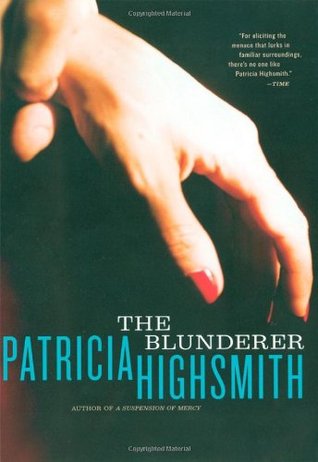
Last night, I finished reading Patricia Highsmith’s The Blunderer, and started rereading Larry McMurtry’s The Last Picture Show, which is my favorite novel of his. I read it the first time when I was about twelve, I think; and have reread it several times since; but I haven’t read it again in over twenty years, and I found a copy when I was cleaning out the storage unit and dragged it out. It’s not the first book people think of when they think of McMurtry–that would most likely be his Pulitzer Prize winning Lonesome Dove–and I’ve read a lot of McMurtry–not all of it, certainly–but I’ve always had a special regard for this novel. But I’ll talk more about that when I’ve finished the reread.

Meanwhile, The Blunderer by Highsmith was quite an interesting read.

276203

The man in dark-blue slacks and a forest-green sport-shirt waited impatiently in the line.

The girl in the ticket booth was stupid, he thought, never had been able to make change fast. He tilted his fat bald head up at the inside of the lighted marquee, read NOW PLAYING! Marked Woman,  looked without interest at the poster of a half-naked woman displaying a thigh, and looked behind him in the line to see if there was anyone in it he knew. There wasn’t. But he couldn’t have timed it better, he thought. Just in time for the eight o’clock show. He shoved his dollar bill through the scallop in the glass.

“Hello,” he said to the blonde girl, smiling.

“Hello.” Her empty blue eyes brightened. “How’re you tonight?”

It wasn’t a question she expected to be answered. It wasn’t.

And so begins Patricia Highsmith’s third novel. The thing that is so terrific about Highsmith is you really never know what you’re going to get with her; her plots are fiendishly original and clever, and so deliciously dark and relatable in some way. The Blunderer opens with Melchior Kimmel establishing an alibi for himself by going to see a film and being seen…and once seen and recognized, he keeps going and exits, heads for his car and then follows a bus north. At a designated rest stop he parks out of sight, finds his wife, who has gotten off the bus, convinces her to follow him to go and chat, and once they are out of sight he brutally murders her.

He gets away with it, too–he was seen at the movie theater, remember, and no one saw him at the rest stop. His wife’s murder remains unsolved.

Until lawyer Walter Stackhouse sees a notice in the paper about the murder. It intrigues him. He writes essays, or wants to write essays, about what he calls ‘unequal friendships,’ where one friend is lesser than the other and yet the better friend seems to get dragged along by the other. This murder fascinates him, and he starts trying to think how the husband could have done it and gotten away with it…and actually figures it out. Walter is also unhappily married; his wife, Clara, is frankly awful and is trying to ruin his friendships with other people and isolate him; yet she also makes him terribly unhappy. He tried to leave her once before and she threatened to kill herself, so they patched things up. But he is now introduced to another young woman whom he’s attracted to…and somehow Clara has figured this out and continues to make him miserable.

His idle fascination with the Kimmel murder eventually leads him to visit the bookstore Kimmel owns and operates, orders a book, and decides, after having seen Kimmel, that he must be innocent. His own life, meantime, gets worse. He tells Clara he wants a divorce and she attempts suicide. She gets out of the hospital and is just as awful as ever…and then her mother dies and she has to go back to her hometown in Pennsylvania to attend to things. She takes the bus. Obsessed with the Kimmel case, and wondering if he could, in fact, kill his own awful wife…he follows her bus in his car. When they reach a rest stop, he gets out of his car and looks for Clara…and cannot find her. But he’s seen…and later, Clara’s body is found at the bottom of a cliff. Suicide or murder? The police think it’s suicide at first…but the similarity to the Kimmel case is there….and his own fascination with that case now comes back to bite him in the ass.

I greatly enjoyed this book, as I have all of Highsmith’s that I’ve read thus far, and I love how she deftly changes directions in ways the reader cannot see coming. You can’t help but feel for Walter in his horrible dilemma, and the way his life starts to slowly spiral out of control all because he happened to read about an interesting murder in the newspaper. As the weird connections between the two cases slowly come to light, no one believes Walter is innocent–not the police, his friends, his co-workers, his maid, nor even his new love. It’s an extraordinary story, and the way Highsmith heightens the tension until it’s almost unbearable, the two parallel stories crossing and recrossing, is quite exceptional.

Highly recommended.