Always Something There To Remind Me

Monday morning.

I didn’t get as much done as I wanted to this weekend–do I ever?–and now it’s Monday morning. Ah, well, ’tis life, isn’t it? We have friends coming in this week–we’re having brunch Saturday at Commander’s–and I’m not sure what other opportunities we’ll have to see them this week.

I did manage to finish reading Donna Andrews’ latest, Gone Gull, over the course of the weekend, which was fun.

gone gull

“Wow, you could kill someone with that thing! Doesn’t that worry you?”

I counted to ten before looking up from the anvil, where I’d been about to start hammering on an iron rod. I’d only finished heating the iron to the perfect temperature for shaping it. If I was working in my own barn, I’d have ignored Victor Winter’s remarks.

But I wasn’t in my own barn. I was at the Biscuit Mountain Craft Center being paid–quite handsomely–to teach Blacksmithing 101. And however annoying I found Victor, he was a student. If ignored, he’d start muttering again about complaining to management. I didn’t want him doing that. Management was my grandmother Cordelia, owner of the center, and I didn’t think she needed the aggravation today.

So when I’d reached ten I put my hammer down, set the rod safely on the anvil, and pushed up my safety goggles. Then I smiled, and did what I could to turn his question into a teaching moment.

“Yes, Victor,” I began. “You could kill someone with this metal rod–even if it wasn’t heated to its present temperature of approximately a thousand degrees Fahrenheit.”

I love the Meg Langslow series, and eagerly await each new volume (there’s another one coming out in October, The Finch That Stole Christmas, huzzah! The Christmas ones–there are two already–are amongst my favorites).  Meg is, as you can guess from the above opening, a highly skilled and trained blacksmith; if I had any complaint to make about the series, it’s that Meg’s blacksmithing has taken a backseat to all of the many other things she somehow manages to do. This book is also not set in the small college town of Caerphilly, Virginia (I pronounce it carefully, because it makes me laugh), but rather in the Blue Ridge mountains, where Meg’s long lost grandmother (introduced in The Good, the Bad, and the Emus, another favorite) lives. (Although I do miss Caerphilly, but I am hopeful the October release will be set there.) Meg has an enormous family, a wry sense of humor, and is uber-organized, which is why she also ends up running so many, many things–almost all of which result in someone being murdered and Meg having to use her highly honed organization and deduction skills to catch a killer.

The premise of every  cozy series, of course, is that the main character manages to catch the killer before the police do; this is a very difficult thing to pull off, and Andrews does it every single time. The books are witty, and clever, and I don’t think I’ve ever even tried to figure out who the killer is, or solve the crime (which is something I tend to do whenever I read a crime novel) because I am enjoying the ride so much.

Gone Gull is a fine addition to a series that I hope Andrews never grows tired of writing, because I’ll keep buying and reading as long as she does.

You Can’t Hurry Love

I read a lot this weekend! I did work on the writing a little bit, but not nearly as much as I could/should have. I finished reading the Highsmith, reread The Exorcist, and finally got to Ross MacDonald’s The Drowning Pool, which I read yesterday afternoon, and then last night while watching the US Open I started reading Christopher Golden’s Ararat (which is great fun so far; I’m a little less than halfway through and having a great time reading it).

It might interest you to know, Constant Reader, that I’d never read Ross MacDonald until I was on a panel somewhere with Christopher Rice, either in 2002or 2003, and Chris mentioned MacDonald as one of his favorite writers/greatest influences. I’d read John D. MacDonald and Gregory McDonald; but had somehow never gotten around to Ross. I knew of the Lew Archer series, of course, but had never read any of them, nor any of his standalones. Based on Chris’ recommendation, I started reading them, and never looked back–although I have been slowly doling them out, as there is a limited amount of them and no new ones coming anytime soon. I was a little surprised, after finishing The Exorcist, to pick up The Drowning Pool and realize it was one I hadn’t read.

411U1dmvA2L

If you didn’t look at her face she was less than thirty, quick-bodied and slim as a girl. Her clothing drew attention to the fact: a tailored sharkskin suit and high heels that tensed her nylon-shadowed calves. But there was a pull of worry around her eyes and drawing at her mouth. The eyes were deep blue, with a sort of double vision. They saw you clearly, took you in completely, and at the same time looked beyond you. They had years to look back on, and more things to see in the years than a girl’s eyes had. About thirty-five, I thought, and still in the running.

She stood in the doorway without speaking long enough for me to think those things. Her teeth were nibbling the inside of her upper lip, and both of her hands were clutching her black suede bag at the level of her waist. I let the silence stretch out. She had knocked and I had opened the door. Undecided or not, she couldn’t expect me to lift her over the threshold. She was a big girl now, and she had come for a reason. Her stance was awkward with urgency.

“Mr. Archer?” she said at last.

“Yes. Will you come in?”

“Thank you, Forgive me for hanging back. It must make you feel like a dentist.”

“Everybody hates detectives and dentists. We hate them back.”

The Drowning Pool is hard-boiled, borderline noir (based on the fact that Archer works as a private eye), and can’t you imagine the above scene being played, in black-and-white by either Humphrey Bogart or Robert Mitchum, talking to either Gloria Grahame or Ida Lupino or Barbara Stanwyck? The story is simple: Archer is hired by the wealthy-seeming Mrs. Slocum to find out who has written her husband a poison-pen letter accusing her of adultery; back at the time the book was written, adultery was one of the few grounds for divorce recognized in every state. But as Archer begins to investigate, turns out Mrs. Slocum and her husband don’t have money; the money belongs to her mother-in-law, and she keeps them on a tight leash. Her estate is also sitting on a lot of oil, which she refuses to allow anyone to drill for, which would in turn make them even filthier rich. The elder Mrs. Slocum winds up dead in the swimming pool during a party, and soon the case begins twisting and turning left and right–and more bodies continue to pile up as Archer tries to get to the bottom of what is going on at the Slocum estate. It’s a great, fast read–and MacDonald’s grasp of language is extraordinary.

There’s a reason why MacDonald is up there with the greats of crime fiction.

There’s also an interesting subplot–almost a throwaway–about why the second Mrs. Slocum’s marriage is an abject failure. MacDonald doesn’t spend a lot of time on this, but it’s there for the queer reader to pick up on. It would be interesting to compare and contrast this book with MacDonald’s wife, Margaret Millar’s, Beast in View, released a few years later. There’s also an interesting comparison to be made between The Drowning Pool and James M. Cain’s Double Indemnity, in the character of Mrs. Slocum’s daughter Cathy, and the daughter in Cain’s book; also, an interesting comparison between this book could be made with Hammett’s The Maltese Falcon.

Maybe someday when I have more time.


You Are

It’s raining this morning here in New Orleans, and very dark outside my windows. We’re in a flash flood warning through Thursday, but from everything I’ve seen on-line this morning the eye of Harvey is going to pass far to the west of New Orleans; but a lot of Louisiana is going to be impacted. Not to the extent Houston and Texas were, of course. Just thinking about what’s happened to Houston (still happening, actually) here is terrifying. I saw on Weather.com that three times the water pumped out of New Orleans after the Katrina levee-failure has dropped on Houston…although it’s a much bigger area. Houston is going to need us all, everyone. It’s the fourth largest city in the United States; a major port and contributor to the economy, and a major cog in the oil/gas industry. Most everyone I know and love and care about in Houston has surfaced somewhere on social media, so I know they’re all okay, but the images are absolutely horrific.

It’s odd that today is the anniversary of Katrina and it’s raining, with a hurricane heading for the western part of the state. I’ve thought a lot about the post-Katrina flood these past few days as Houston has been ravaged, and my heart breaks for all the lives that are going through what so many here experienced. So many New Orleanians evacuated to Houston and stayed there, and now are going through the same experience all over again. It makes my heart hurt. I don’t doubt that Houston will rebuild; I lived in Houston for two years and have spent a lot of time there. Houstonians and Texans are, no matter what else you may think about them, are a hardy, tough lot who can’t be kept down.

HOU DAT.

The LSU-BYU game, which was scheduled to be played originally in Houston this Saturday, has been moved to the Superdome; I think we may try to get tickets. It’s going to be interesting trying to drive to work today, and even more interesting trying to get home later this evening after a day of incessant rain. Heavy sigh.

Oh, the wonderful Paul D. Marks did a blog piece about us Macavity Award finalists; you can find it here:

http://www.sleuthsayers.org/2017/08/2017-macavity-award-short-story.html

I started inputting the edits on the WIP yesterday–I stand corrected; that is more tedious than doing a line edit–and have decided my next read will be The Cry of the Owl by Patricia Highsmith, a writer I love and admire and haven’t read enough work by; I’ve read some of her short stories (wonderful) but I think the only novels I’ve read (and loved) are The Talented Mr. Ripley (which I need to reread) and Strangers on a Train.

And on that note, ’tis back to the spice mines with me. Here’s a Tuesday hunk for you, Constant Reader:

1653299_754078757980213_6781330768048610910_n


Mr. Roboto

I finished the line edit yesterday, thanks be to the baby Jesus. Now I have to input it into the document, but the worst part–the actual line by line edit–is done done done. Huzzah! Huzzah!

I lived in Houston for two years, and of course, my parents lived there over ten. So, I feel connected to that city as well–not to mention all the friends I have there, and my favorite specialty bookstore, Murder by the Book, so my heart breaks every time I see the flooding pictures, videos, and the posts. Keep Houston in your hearts, everyone, and know they are going to need help. Twelve years ago it was New Orleans, and Houston opened its heart to us. Never forget. Rebuilding Houston is going to be a long and incredibly challenging process. We need to be there for our fellow Americans.

I spent the rest of Sunday–pre-Game of Thrones epic season finale, reading Jeff Abbott’s extraordinary Blame.

blame

What she would never remember: their broken screams starting with I love…and I hate…, the sudden wrenching pull, the oh-no-this-is happening-this-can’t be-happening feeling of falling as the SUV rocketed off the road, the horrifying downward slope of the hillside in the headlights, his hand tight over hers on the steering wheel, the smashing thunder of impact, the driver’s-side airbag exploding in her face, the rolling, the lights dying, the unforgiving rock, and then the blow to her head that undid her and wiped her clean and made her new.

The old Jane died; every version of David died. The new Jane, product of a dark night’s fury and tragedy, knew nothing more until she woke up four days later, remembering nothing, not her name, not her mother’s face, the crash, what had happened to her in that hospital bed, or any of her past seventeen years. Slowly the memories began to seep back: her birthdays when she was a child, cake sweet and soft on her lips; the smoky, rich aroma of her grandfather’s pipe matched with the woolly smell of his tweed jacket with leather elbow patches; her mother’s favorite lavender soap; the notebook she’d filled with short, dark adventure stories one summer and proudly read to her dad; the faces of her teachers; the smile of the librarian who’d give her stickers during the summer reading program; the feel of her hand in her father’s palm; the faces and the laughter of her friends when they were kids.

Sometimes the memories felt immediate; sometimes they felt like something she’d seen in a film, present but distant, nothing to do with the person she was now.

Except for the past three years.

Jane was seventeen, but as the memories surged back, she was stuck at fourteen. Those last three years were gone, all the joy and drama of her high school life, lost in the damage and the trauma. Including those mysterious, unexplained last few hours, when she was with a boy she wasn’t supposed to be with, when she was out doing God knows what. The girl lived and eventually limped back into the bright sunshine, and the boy died and went into the cold ground, a secret sleeping with him.

And so the world she knew turned against her.

Except someone watched, and waited, and wondered how much of that night Jane Norton really remembered.

Amnesia. While not nearly as common as soap operas make it seem, it’s an actual thing. I did a lot of research on amnesia when I was writing Sleeping Angel–most of which I’ve actually forgotten–but if done right, amnesia is an excellent foundation for a crime novel/thriller.

Jeff Abbott has done it right with Blame.

Two years have passed since the terrible accident that took Jane’s memory and killed her neighbor, David–one of the most popular boys in their high school in an affluent section of Houston. Jane’s early memories have come back, but she doesn’t remember high school before the accident, or the tragic accident that killed her father when she was a freshman. Hated and resented by many of her classmates, she’s now homeless, sometimes crashing in one of her few friend’s dorm rooms in a local college. Her mother is too much for her to handle–think Mildred Pierce on steroids–and of course, David’s parents also still live next door; his mother hates her and makes no bones about hating her. Her mother refuses to sell the house, and David’s parents are splitting up. On the anniversary of the accident Jane unfortunately encounters David’s mother Perri at David’s grave, which turns into an incredibly ugly altercation when Perri attacks her; Jane’s Uber driver records it all–and it goes viral.

At the same time, someone named “Liv Danger” is going after Perri on social media–Jane as well–and soon other people involved somehow, even peripherally, the night of the accident are under attack. Slowly but surely, Jane has to slowly start piecing together what happened that day as the Liv Danger’s behavior becomes more and more menacing and dangerous…and other dangerous characters are getting involved.

This book was, quite simply, an extraordinary read. The tension begins on Page One, and not only does it not let up, it builds. I literally took the book into the kitchen with me, reading while I was making dinner because I couldn’t stop, didn’t even want to take twenty minutes away from it because I had to know what happened that night! 

I cannot recommend this book highly enough, but along with that recommendation comes this warning: set aside a weekend to read it because you won’t want to put it down.

Easily one of my top reads of this year.


Up Where We Belong

Oh, Florida.

I am connected to Florida, and despite all the negative reactions just saying Florida can often trigger simply by saying the word, I have a genuine fondness for the pork chop shaped state. My grandparents retired there, to the Panhandle, when I was a kid; an aunt owned a summer house a few blocks from the Gulf in Panama City Beach. I spent a lot of time there during the summers when I was young (part of the annual jaunt to Alabama); and I wound up living there in the early 90’s when I worked for Continental Airlines. I visited Miami and South Beach frequently; I have many friends who live (or have residences) in Fort Lauderdale. I’d intended to set my novel Timothy there originally–the house was going to be on one of the islands across the Intercontinental Waterway from Miami. (I did have my couple meet and fall in love on South Beach, although the story moved them back to the beautiful house on Long Island, near the Hamptons.) I’ve always wanted to write about Florida, and I’ve always loved reading about Florida. There’s something noir and gritty and hardboiled about Florida, yet at the same time there’s this zany wackiness to Florida (so people will post link to bizarre news stories about things that happen there on social media and say “Oh, Florida.”)

There are so many wonderful books about Florida; so many amazing writers have set their novels there–from Robert Wilder’s Flamingo Road to John D. MacDonald’s noirs and Travis McGee novels to Elaine Viets’ badass Helen Hawthorne series to Edna Buchanan to the sublime Vicky Hendricks (you MUST read Miami Purity, Constant Reader) to Randy Wayne White’s Doc Ford series–the list could go on and on and on. Everything works in Florida; whether it’s hard-boiled crime or hilariously funny crime or noir.

There’s actually a Florida noir in my mind right now, that I am hoping to get to at some point this year (if I don’t run out of time; if I do, it’ll be next year.)

medium

On the fifteenth of March, two hours before sunrise, an emergency medical technician named Jimmy Campo found a sweaty stranger huddled in the back of his ambulance. It was parked in a service alley behind the Stefano Hotel, where Jimmy Campo and his partner had been summoned to treat a twenty-two-year-old white female who had swallowed an unwise mix of vodka, Red Bull, hydrocodone, birdseed and stool softener–in all respects a routine South Beach 911 call, until now.

The stranger in Jimmy Campo’s ambulance had two35-mm digital cameras hanging from his fleshy neck, and a bulky gear bag balanced on his ample lap. He wore a Dodgers cap and a Bluetooth ear set. His ripe, florid cheeks glistened damply and his body reeked like a prison laundry bag.

“Get out of my ambulance,” Jimmy Campo said.

“Is she dead?” the man asked excitedly.

And so begins my latest Carl Hiaasen read, Star Island. 

I chose to read another Hiaasen rather something heavier and darker because, quite frankly, this entire past week had been so crazy on every level–what with what was going on in the country in general, madness at home, madness at the office–that I wanted something that would help me escape from it all, and Hiaasen always delivers. His books, which seem so zany and wild and yes, fluffy, on the surface are actually much more; there are layers and depth there that may not be readily apparent. Star Island not only has the trademark Hiaasen wacky wit, but it’s also a very subtle critique of our current celebrity culture,  and how an entire media has built up around ‘entertainment news.’

Star Island focuses on the misadventures of a young pop star who rose to fame by selling sex in her videos at age fourteen: Cherry Pye, and her team of handlers who really see her as a cash cow and not as a human being. Cherry is beautiful and sexy, but not much talent–relying on autotune and back up vocalists being dubbed in and over her own off-tune warblings. Cherry is the worst kind of diva: spoiled, selfish, narcissistic, and used to having her team–which includes her awful parents–clean up her messes so she never has, and is wholly incapable of, taking any responsibility. Because she is so frequently in and out of rehab, her team has had to hire a look-alike, Annie DeLusian, an actress, play her in public to cover up overdoses, etc. The book opens with Cherry on the verge of another comeback with a new album, Skantily Klad, and also overdosing on the combination of things in the excerpt above while partying with a young three-named actor. Annie fills in for her to fool the paparazzi while the team slips the girl out the back–and the story is off to the races. Will her team be able to keep Cherry sober and out of trouble long enough for the investment in her new album put her back on top again? Will the paparazzo completely obsessed with her get the shots he needs to get himself out of the hole? And what about Annie, the only decent person in this whole mess? Tired of playing Cherry and dealing with her horrible team, will she be able to find her way out of this and maybe get some gigs that actually use her talent?

Star Island also brings back two Hiaasen characters from past books: Skink, the ex-governor of Florida who now lives in the wilderness and wreaks havoc on corrupt developers and others who work to destroy the complex Florida ecosystem; and Chemo, the criminal sociopath who lost a hand to a barracuda and had it replaced with a weed whacker. (Yes, it sounds crazy. The first Hiaasen I read, over twenty years ago, was Chemo’s first adventure, and was so silly and over-the-top that I refused to read another Hiaasen until I picked up Bad Monkey off a sale table at a Barnes and Noble in DC a few years ago; now I get what Hiaasen is doing with his work and enjoy it.)

Star Island made me laugh out loud several times, and somehow, with all of its twists and turns, everything was wrapped up at the end in a very satisfying package. Hiaasen novels are intricately and complexly plotted, which I admire–plot is always an issue for me, and I am always afraid I am leaving threads hanging when I finish writing a novel.

The book was exactly what I needed to read this weekend.


Back on the Chain Gang

Saturday morning, with Fleetwood Mac blaring through the stereo, a load of laundry going in the washer, another in the dishwasher, and I’m about to do the floors. This week was so insane–both personally and at work–that I’m glad that it’s the weekend; last week just needed to end. I woke up with a lot of energy this morning; hopefully it will see me through the cleaning and the errand I need to do today. Last night I was glued to the Weather Channel until I couldn’t watch anymore; I alternated between that and reading Star Island by Carl Hiaasen before retiring to bed relatively early. Paul’s going to spend the day doing errands and running around with a friend; I hope to get the line edit finished as well as Chapter Four (I hate transitional chapters); tomorrow I intend to edit some short stories and possibly get started on Chapter Five. Crescent City Charade isn’t coming along as quickly as I might have hoped; I think I’ll brainstorm the next few chapters this evening, as that should help.

Next weekend is Southern Decadence. Wow, this summer has just flown by, hasn’t it? The humidity should break in the weeks after Labor Day and then it’s the fall. Football season also starts (for LSU) this Saturday; the Tigers are supposed to play BYU in Houston; not sure how that’s going to work given Harvey and what it’s doing to southeastern Texas. Best as I can tell, Houston is getting hammered this morning, but at least it’s down to a Category 1–which, while not ideal, with it’s heavy rains and so forth–is better than the Category 4 that came ashore last night. Hurricane season sucks, y’all. As a friend said last night, hurricane season makes you into a bad person, as you’re always hoping and praying it will go somewhere else, which means wishing it on other people.

So fucking true, and so fucking sad.

I read the first two digital issues of Starman this week; it’s not quite as good as I remembered, but on the other hand, I originally started reading it about seven or eight issues in. The first issues of a new superhero comic are always, like a television show, a bit wobbly as they try to find their legs and get on firm footing–notable exceptions being Ozark and Game of Thrones, but usually I’ll try to give a TV show a couple of episodes to find its way and gel. This iteration of Starman is about Will Payton, a recent college graduate, raised by a single mother with a younger sister. The mom sacrificed a lot to help put Will through college; he got a degree in Advertising and landed a great job with a major firm in Phoenix. But he hated the job, hated what he was doing, and much to his mother’s dismay and anger, he quit and tried to find something else. He went on a camping/hiking trip, and while on it, something happened that he doesn’t quite understand. He wakes up after thirty-two days in the morgue; he’s confused the authorities who found his dead body in the woods, and basically scares the crap out of them when he sits up and starts talking. He also has powers he doesn’t understand, and so he comes back home, confides in his sister…and has to face the wrath of his mother who demands that he find a job…all the while he’s trying to figure out what’s happened to him. He can fly, generate heat, withstand bullets…and can change his appearance by just thinking about it. His sister convinces him that he’s a superhero, and he needs to start fighting crime and helping people.

What Will doesn’t know is the proverbial mad scientist was conducting experiments in a lab, trying to create super-powered beings. But when he was ready to tap into power from a satellite, it was pushed off course by space debris—and rather than beaming back into his lab and into the bodies of his human volunteers–the energy was beamed into Will, where he was sleeping in the woods. The first two issues set this up, and set the stage for a coming conflict with the mad scientist and his creations.

That’s a lot to cram into two issues, so there’s that.

And now, back to the spice mines.

IMG_1786

Jeopardy

So, yesterday was my birthday. Fifty-six officially; although I always add a year to my age on New Year’s Day for the sake of simplicity. I had some trouble falling asleep on Saturday night; a combination of restlessness and heartburn. I wound up sleeping in till almost ten; which is late for me but since I didn’t really fall asleep until around three in the morning it wasn’t that much sleep. But I had a lovely day, really. I kind of just laid around and reread In a Lonely Place by Dorothy B. Hughes, rewatched The Philadelphia Story on TCM (Katharine Hepburn and Cary Grant were both robbed of Oscars), then watched The Nineties and The History of Comedy on CNN before finally watching last night’s Game of Thrones.  I also thought about the new Scotty some; I have today off from work as my birthday gift to myself, so I plan on doing some writing, line editing, and revising, and thinking about what I’m going to write next before actually sitting down at the computer is always a wise thing to do (although usually I never had the time to do that, thanks to deadlines). There’s a serious moral dilemma coming for Scotty in this book; one that really has been needing to be dealt with in the series for quite some time, but I’ve dodged it and avoided it; this is the book where I am finally going to have to have him face up to it, the way I am bringing it to the forefront so he can no longer avoid it is, if I do say so myself, rather clever.

Or it’s just going to be a steaming pile of shit. There’s no middle ground, really.

It was kind of fun to reread the Hughes novel; it is a masterpiece of noir that has been sadly overlooked for many years. Hughes was an exceptional writer, and I do admit that opinion is based on my having read only two of her novels, this and The Expendable Man (which, sadly, was her last and published in 1962). It’s not easy to find Hughes’ novels. I do feel safe in calling Hughes one of the best writers of her generation, and certainly one of the best noir writers of all time, based on those two books because they are just that good. I do have a copy of her The Blackbirder, which I want to read before the end of the year. In A Lonely Place was also filmed, directed by Nicholas Ray and starring Humphrey Bogart and Gloria Grahame; the film is significantly different from the novel, but it’s also outstanding. The new edition of the novel, from New York Review Books (who also have republished The Expendable Man and The Blackbirder), includes an afterward by the wonderful Megan Abbott, who is not only one of this generations greatest writers but also one of crime fiction’s most knowledgeable critics; her literary criticism is intelligent, thoughtful, incredibly well-written, and certainly puts me in my place whenever I am lucky enough to read some of it; I would love to read her study of literary and film noir, The Street Was Mine. (Whenever I read her criticism, any thoughts I might have about pursuing academic criticism–gay noir, gay representation in crime fiction, the heyday of romantic suspense from the 1950’s till its unfortunate death in the 1980’s–go out the window.)

Her all-too-short essay in the back of this edition alone makes the cover price worthwhile.

hughes.final_hi-res_2048x2048

It was good standing there on the promontory overlooking the evening sea, the fog lifting itself like gauzy veils to touch his face. There was something in it akin to flying; the sense of being lifted high above crawling earth, of being a part of the wildness of air. Something too of being closed within an unknown and strange world of mist and cloud and wind. He’d liked flying at night; he’d missed it after the war had crashed to a finish and dribbled to an end. It wasn’t the same flying a private little crate. He’d tried it; it was like returning to the stone ax after precision tools. He had found nothing yet to take the place of flying wild.

It wasn’t often he could capture any part of that feeling of power and exhilaration and freedom that came with loneness in the sky. There was a touch of it here, looking down at the ocean rolling endlessly in from the horizon; here  high above the beach road with its crawling traffic, its dotting of lights. The outline of beach houses zigzagged against the sky but did not obscure the pale waste of sand, the dark restless waters beyond.

He didn’t know why he hadn’t come out here before. It wasn’t far. He didn’t even know why he’d come tonight. When he got on the bus, he had no destination. Just the restlessness. And the bus brought him here.

Isn’t that an incredible opening?

Not being an expert in crime fiction–there’s so much of it to read, and there’s more new stuff all the time, so it’s hard to keep up with the new let alone trying to read everything already published–I am unable to place In A Lonely Place into any kind of context as far as the history of crime fiction is concerned, but Abbott does this beautifully in her afterward. But it’s very clear in this opening paragraphs that Hughes is addressing alienation in this book, and toxic masculinity, which may have seen its ultimate pinnacle in the second World War (the alienation of returning veterans, and the difficulty of readjusting from war to peace was also being addressed in films like The Best Years of Our Lives) and by having Dix, her main character, pretend to be writing a novel also took on the glut of post-war war novels that so many returning soldiers were writing; novels that continued to proliferate for several decades beyond the war.

The first time I read the book, having already seen the film, I was more focused on the story itself rather than an examination of how deftly Hughes creates her story, the language and imagery she chooses, and the nuanced way she creates her character. On this read, knowing how it’s going to end, I was able to pay more attention to these things, and was able to marvel at how brilliant the entire package is.

A recurring motif in the novel is fog; Hughes uses the fog as a metaphor for the fog in Dix’s brain; and we are never sure when Dix’s mind changed, making him lethal. He was raised by a puritanical uncle, Fergus, who is currently supporting him while he writes his novel–but there is a limit to the support, and while in our time $250 a month may not seem like much, at the time of the novel it was a fortune, just over $2500 in today’s dollars. Dix’s resentment of the uncle–we never learn what precisely happened to his parents–who is rough on him and has always made him work, even when he was in college at Princeton trying to fit in with the idle rich sons of privilege and then goes into detail how humiliating it all was, doing things for them for ‘tips’ until he could manipulate events to make it look as though he were the wealthy one and the sad unfortunate, unpopular boy he used for money were the dolt. In this way, Hughes also makes a sly commentary about class and privilege (which, in my opinion, she does far better than Fitzgerald did in an entire novel with The Great Gatsby, and she does it only in a few pages). So, there was always some kind of a chip on Dix’s shoulder; the war simply gave him a way to channel that anger and discontent and alienation. Now the way is over, and Dix is having to find a new way to channel those diabolical energies–and he does, in committing murder.

The entire tale is told through Dix’s perspective, which also makes him one of the first unreliable narrators in crime fiction. (It was done before, but never quite so lethally.) So, when we see the other characters–and there are only three: his old war buddy Brub, now a police detective; Brub’s wife Sylvia, whom Dix despises on first sightl and of course, the love interest, Laurel Gray–is she the femme fatale he thinks she is, or is that just a product of his own warped sense of right and wrong? Who is Laurel, of the reddish gold hair and the tempting figure? Is she the hard-as-nails user he thinks she is, or is she an entirely different character altogether?

In  A Lonely Place is a masterpiece of noir, and hopefully, this edition will elevate Hughes to the position both she and the book deserve in the annals of our genre.

And now back to the spice mines.


Hungry Like the Wolf

Ah, Thursday. I am very tired this morning; my sleep last night was restless and of course, after a long day yesterday (twelve hours), which included bar testing and all the walking that entails, I am very low energy this morning. I didn’t get much writing done yesterday morning; I am still in the midst of Chapter Two of the new Scotty but part of that problem is trying to make sure I have the voice and tone right–which is, of course, ridiculous; it can always be fixed in a later draft. I need to plow through this first draft and get the story done. Everything else can be repaired later.

Why do I always try to make it right the first time? So stupid. How many books have I written? Some people seriously never learn, you know what I mean?

The line edit continues as well, and is beginning to feel like my own personal invasion of Afghanistan; an endless quagmire I’m never going to get out from under. I still want to have it all finished by the end of the month and the clock is seriously ticking. Heavy heaving sigh.

The lovely thing is I have a three day weekend to look forward to; my birthday is this weekend and as such, I took Monday off as a treat for myself. We’re going to go see Dunkirk Saturday evening, and have a lovely dinner out afterwards. I also hope to be able to use the extra time off to get some work done and do some reading; I want to get the Ambler novel read this weekend so I can reread Dorothy B. Hughes’ sublime In a Lonely Place in its new edition with an afterward by the sublime Megan Abbott. I read it several years ago on the recommendation of Megan, Margery Flax and the wonderful Sarah Weinman, and I became a huge fan of Hughes as a result. I went on to read everything she’d written that was still in print, and started hunting down used copies of the rest on eBay and second hand booksellers on-line. If you’ve not read Hughes and are a fan of crime fiction, you really should read In a Lonely Place. You owe it to yourself to read it.

The film, while different from the book, is also extraordinary. You can’t go wrong with Humphrey Bogart and Gloria Grahame.

All right I need to hit the spice mines. Your Throwback Thursday hunk is actor/model Ed Fury.

IMG_2419

Never Gonna Let You Go

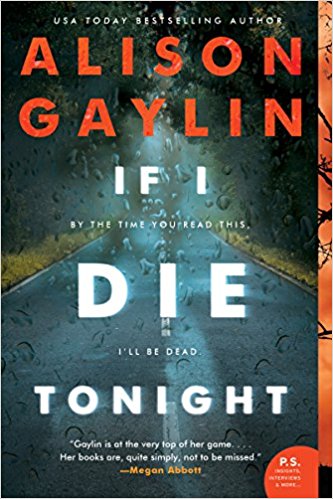
Have you read the comic book co-written by Megan Abbott and Alison Gaylin, Normandy Gold?

IMG_1772

It will come as no surprise that its fantastic. Megan Abbott and Alison Gaylin are two of the best crime writers of our Golden Age of women crime writers.

One of the things that can get confusing with crime fiction is the subgenres and the sometimes slight distinctions between them; take hard-boiled vs. noir as an example. I think the confusion comes because a hard-boiled crime novel, when made into a film, can fit into the film noir category, which is a bit broader than the genre definitions crime novels can use and books can fall into; for example, The Maltese Falcon and The Big Sleep are hard-boiled detective novels; the films, however, are classic film noir. (Your mileage may vary; I am speaking only for myself and how I classify books.) For me, a detective novel that is dark and brooding and cynical in nature is hard-boiled, Sue Grafton and Sara Paretsky’s novels, for me, fall into this category, as do Hammett’s detective fiction and Chandler’s. James M. Cain’s novels were noir, as are Megan Abbott’s. Alison Gaylin’s detective novels are more hard-boiled; her stand alone novels are more noir. For me, a noir novel doesn’t have a professional investigator as the main character; those are hard-boiled.

Charles Ardai’s Hard Case Crime line of novels contains both noir and hard-boiled fiction; the team-up of Gaylin and Abbott with the graphic serial novel Normandy Gold is a fine addition to Hard Case, and one of the best comics/graphic novels I’ve come across in a long while. As I read the first issue on my iPad, all I could think was how glorious this is; excellent, crisp dialogue and incredible storytelling, along with some amazing artwork. If there are awards for graphic novels, just start sending them along to the team that produced this now!

Normandy Gold firmly straddles the line between noir and hard-boiled with guns blazing. Set in the 1970’s, Normandy is a small town sheriff in rural Oregon. Her mother was a prostitute, and she ran away when she was a teen to try to find a better life for herself, leaving her younger sister behind. One day she gets a call from her sister, and is still on the line with her as her sister is murdered. Normandy comes to Washington DC to find out what she can about her sister’s death; the cops have written it off as just another dead whore no one cares about and unsolvable. But Normandy also finds out her sister wasn’t just a prostitute; she worked for a very elite, high level escort service, and decides to go undercover to find what happened to her sister.

This typical-sounding set-up comes alive in the hands of two master storytellers, and the art itself is stunningly beautiful. The story moves very quickly, and the 1970’s setting is perfectly done; not a false note in the entire first issue. This is the kind of story that, as a film in the 1970’s, would have earned a star like Jane Fonda or Ellen Burstyn or Ann-Margret an Oscar nomination, if not the statue itself. Vividly realized, you keep turning the pages to see what happens next…and when you get to the end of the issue, you’re sorry it’s done but can’t wait to read the next.

Highly recommended.


She Works Hard for the Money

Tuesday.

I had yesterday off, which was most lovely, and I spent the day relaxing, making lists, writing, editing, reading, and cleaning. I made shrimp creole for dinner, which was fabulous, and then we watched the series finale for Orphan Black. I am going to miss the sestras; it was quite a thrill ride for five seasons, and Tatiana Maslany’s talent is truly amazing.

I didn’t get as much writing done as I would have liked, but sometimes just being able to reflect and think is just as effective as actually writing. Plus, I kind of needed a rest. I am going to get some more writing done today, and I am going to finish the second half of the WIP line edit, and then tomorrow (a twelve hour day) I am going to hopefully get started on the first half of the manuscript’s line edit. I can’t believe how long it’s taken me to get this done; and then I am going to have to story edit one more time just to make sure. I want to be able to start sending it to agents after Labor Day. I want to get the first draft of this Scotty finished by mid-September as well, then let it sit for a month or so while I write this noir I’ve been wanting to write for a while. I think the working on something different between drafts is working for me. It doesn’t make sense in any sort of writing universe to write this way, but it’s working for me and as I always tell beginning writers–find whatever system works for you, even if it doesn’t make the slightest bit of sense to anyone else.

I am also way behind–and off the rails–for short stories. I need to get back to “For All Tomorrow’s Lies” soon; it’s due for an edit/revision, and I never did finish that draft of “Quiet Desperation.” Heavy heaving sigh. I think there’s another one I was working on–oh, yes, “This Thing of Darkness,” and some others, too, that never quite got finished. This creative ADD needs to stop.

I need to make a list, is what I need to do.

Heavy heaving sigh.

I’m really enjoying Journey Into Fear. The action has now moved from Istanbul to on board a ship, sailing to Genoa with Our Hero, whose life is in danger. I love these kinds of stories; and miss them. The change from trains and ships as means of transportation has kind of eliminated them as settings for crime novels and thrillers; there will be no more books like this or Murder on the Orient Express, which is really unfortunate. The whole air of being away from everyone else in the world, isolated on a journey with only your fellow passengers, any one of which might be the murderer/spy/assassin,  that whole claustrophobic feeling–an author has to really push themselves and their creativity to come up with a way to isolate the characters and seal them off from the rest of the world these days. Rebecca Chance did this beautifully in her novel Mile High, set on a luxury airliner on a flight from London to Los Angeles; Nick Cutter’s The Deep set his novel on a sealab at the bottom of the Marianas Trench (and that sense of claustrophobia was so beautifully portrayed in that novel that just remembering it makes me shudder). It is still possible, of course, to do something along the lines of And Then There Were None, where the characters are stranded on an island and cut off from the rest of the world; the single season suspense show Harper’s Island did this nicely…I’ve always wanted to do one of those types of novels, and Scotty would be the perfect character for such a book, I think, but I can’t for the life of me figure out how to make it work. I guess I’ll just let it sit in the back of my head until I get one of those a-ha moments that I am always afraid I’ll stop having.

And now, back to the spice mines. Here’s today’s hunk for you:

17799041_1312232648824796_1105402056845445771_n