My first series will always be special to me, even though I’ve retired Chanse MacLeod…at least for now, at any rate; I’ve learned (sometimes the hard way) that I shouldn’t ever say never when it comes to my writing career. Chanse will always be special for me in that he was the main character in my first book to be published as well as the first series of mine to see print. I originally created Chanse in 1989–can you believe that? Thirteen years from the time I first started constructing the character and him getting into print.
When I left California and moved to Houston that year, I decided to put the miseries of the 1980’s behind me, forget the past, and try to move on to the future I wanted for myself. I still had no idea what I wanted to do to make a living, but I knew I was never going to become a writer unless I actually, you know, wrote. When I moved to Houston, I moved away from reading mostly epic fantasy and horror to reading crime and horror. Sue Grafton’s F is for Fugitive had just been released, and the bookstore–Bookstop?–I frequented in Houston had a store catalogue that had book reviews and author interviews, and Sue Grafton was on the cover. I thought the alphabet titles was a great idea, so I bought the first three and took them home. I loved them, and started diving back into the crime fiction genre headfirst. I also started reading the Erle Stanley Gardner Perry Mason novels again–I’d read some when I was a kid–and I also started reading the rest of the Travis McGee series (I’d read, and not liked, The Dreadful Lemon Sky when I was thirteen; I wasn’t old enough to appreciate the series) and absolutely loved them. I loved McDonald’s writing style more than anything else, and the descriptions of McGee sounded, well, hot.
I started creating Chanse MacLeod as a blend of Kinsey and Travis McGee, really; I was driving to work one day and crossed a bayou. noticing the sign for the first time, and thought “The Body in the Bayou would be a great title for his first book” and so i started constructing the character and his world. He was a former cop turned private eye in Houston; he’d played college football at Auburn but suffered a career-ending injury his senior year and so he went into law enforcement, eventually going out on his own. He had a secretary named Clara that he shared with a couple of lawyers in an office suite in downtown Houston, and most of his work involved trying to get evidence of adultery for wealthy and suspicious spouses. In 1994. after I fell in love with New Orleans, I moved Chanse to New Orleans and his college experience to LSU; I also was discovering gay crime novels around this same time, so I decided to make Chanse a gay man; from a small town in Texas with homophobic parents and family, playing a sport where homophobia is rife, and he too discovered and fell in love with New Orlean…so he became a cop when his football career ended, eventually becoming a private eye. I started rewriting the four or five chapters I’d written with the story set in Houston…but once I moved to New Orleans and began to grasp what it was actually like to live here, I threw the entire thing out and started over.
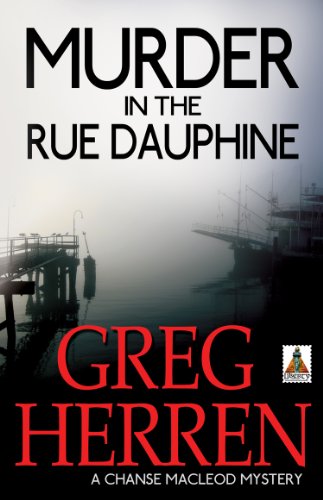
That manuscript I started over became Murder in the Rue Dauphine, and the first place I submitted it to offered me a contract six weeks after I mailed them the manuscript. Alyson was home for the first five books in the series…before Alyson Books went belly-up, without paying me the advance for the fifth book and no longer paying me royalties on the others (the entire series was still in print when Alyson folded).
Burn in hell, corporate trash who bought Alyson.
(The company had been doomed for a while, and the unfortunate last minute attempt to rescue it failed, which I thought was horrifically unfair to the person who they brought in to save it. The final collapse was hardly his fault; his predecessors had made so many unbelievably stupid mistakes there was no saving the business, really. And ebooks and so forth started eroding away at the reader base, at the same time the business began to crumble. I’ve always felt bad for the poor dude who was the last to hold the title of publisher. I don’t think he had any staff and he was the only person working there by the bitter end.)

But when Alyson went belly-up and chose to stop honoring their contractual obligations to pay their writers, I’d already moved the Scotty series to Bold Strokes Books and was doing not only anthologies for them but also editorial work for them, so moving the Chanse series there was a no-brainer.
The last two books in the series were done with Bold Strokes Books.
As with anything with my career, I had a plan for the Chanse series but of course, man plans and the gods laugh. I had always intended the series to be seven books, from the very beginning, and I had this emotional journey for him all mapped out: the series would chart his progression from lonely, damaged and scarred loner with a snide sense of humor to more centered, more grounded, more mature and more settled into his life. So, when the series opened, he was–against his better judgment–seeing a hot flight attendant, and wondering if he was actually falling in love and had the opportunity to be happy for once in his life. I really did give him a miserable backstory; alcoholic mother, abusive drunk redneck father, grew up living in a trailer park in a snotty small Texas town where no one would let him forget he was trash until he showed some football playing ability–and he was just cynical enough to understand they still considered him trash, but trash with a skill they appreciated. He went to LSU and joined a fraternity in a final attempt to banish the homosexuality from his brain (it didn’t work), and then was injured in a bowl game so his career was over–he’d been considering going for the NFL draft. He was a big man, as such; and spent a lot of time in the gym working out and keeping fit. I also had to make a horrific decision while writing the second book–with every intention of walking that ending back in the third.
And then Katrina happened, and everything changed.
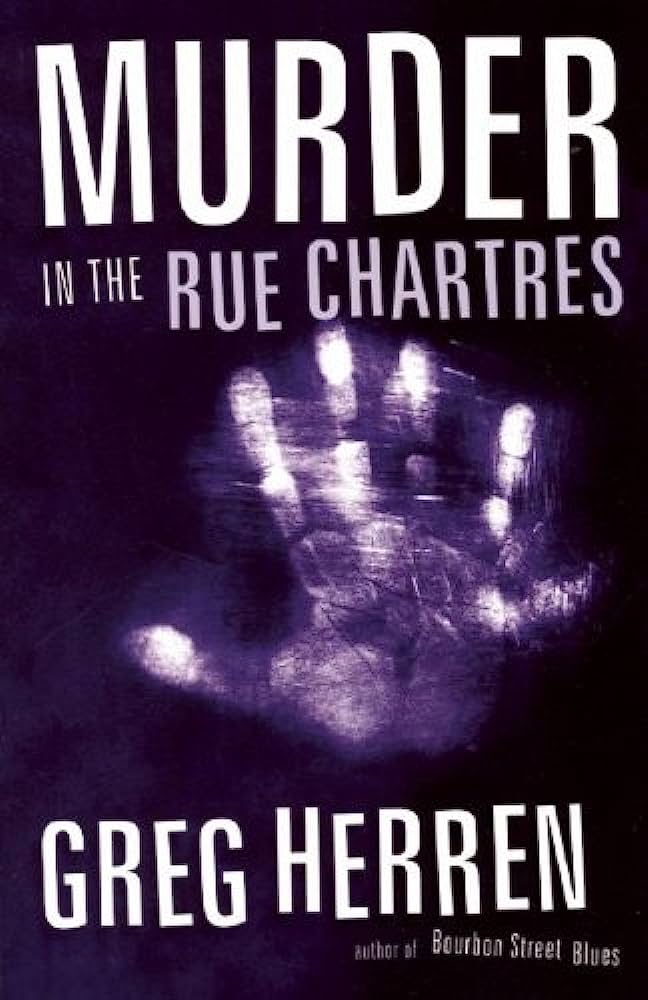
My editor at Alyson Books at the time, Joe Pittman, was new. He had come on board shortly after my previous editor was let go (I had a different editor for each of the first three Chanse books, and in fact had a different for the last two–so the Chanse series went through five editors at Alyson…now I would see that as a sign), and I was assigned to him as a gay mystery writer. He got in touch with me after Katrina to check in on me and of course, to encourage me to write about Katrina, which I did NOT want to do whilst I was in the middle of experiencing the aftermath still. I was still unhoused at the time, staying with my parents in Kentucky, before moving back to Hammond, Louisiana, just before Rita to housesit. Paul and I talked on the phone one morning and suggested we do a fundraising anthology for Katrina victims…but I wasn’t interested. Joe called me that afternoon and with the same suggestion, so I told him Paul wanted to do one and that was how Love, Bourbon Street came to be. Joe also kept insisting to me that I should write a post-Katrina book as the next Chanse book, and despite my reluctance I decided to go ahead and do it. Part of the problem, as I saw it, was, how do you end a book on a hopeful note when the city is still in ruins and most of the population still displaced? Joe kept pushing me, and I finally agreed to write Murder in the Rue Chartres–and I really don’t remember anything about writing the book other than I did actually write it, and it turned out to be one of my best books. It won the Lambda, for one thing, and got great reviews everywhere.
The fourth Chanse novel was, in my opinion, the weakest of the series. They’d fired my editor before I signed a contract for the fourth book, and when that finally happened, they needed me to write in like eight weeks. I asked for a two book contract so I would never have to write another book in eight weeks again (LOL at my naivete), and they were so desperate for the fourth they agreed. (I had already written a Scotty book that was just sitting in a drawer; I turned it into the fourth Chanse and to this day I think it was a mistake.) Of course, they did publish the fifth, but they never paid me a dime for Murder in the Garden District. The only money I’ve made off that book is from the ebook Bold Strokes put up–I gave them the entire Chanse backlist for ebooks, and those Chanse books still sell.
Maybe I shouldn’t have ended the series at seven?
But it felt like the right place to stop. Chanse’s personal story of personal growth and how it happened kind of got lost along the way; he grew and changed as the series progressed, but writing the last two–which I also think are good–felt a little paint-by-the-numbers for me; I felt that writing the sixth and when I felt it again in the seventh, I decided to stop there. I wasn’t getting any satisfaction for writing the books anymore, there was no joy derived from doing them, and since I’d already planned to stop at seven…I stopped at seven.
I still get ideas for Chanse books, of course. I have an LSU fraternity murder that would be a perfect Chanse story–I planned it as a novella–and of course, I’ve always wanted to fictionalize the Jeff Davis Eight murders as a Chanse novel, too. Maybe I could do three Chanse novellas published in one book?
That would make a lot more sense, and could be even more fun to write than one long single story novel.
Or I may not do anything with Chanse at all, and use those stories/plots for something else.
 Queer and Loathing in America
I would not be sorry to see more Chanse books (and of course, they give me one of my funniest memories in reaction to something you wrote) and would read either a novel or three novellas.
LikeLike