You’re the Inspiration

Ah, another week.

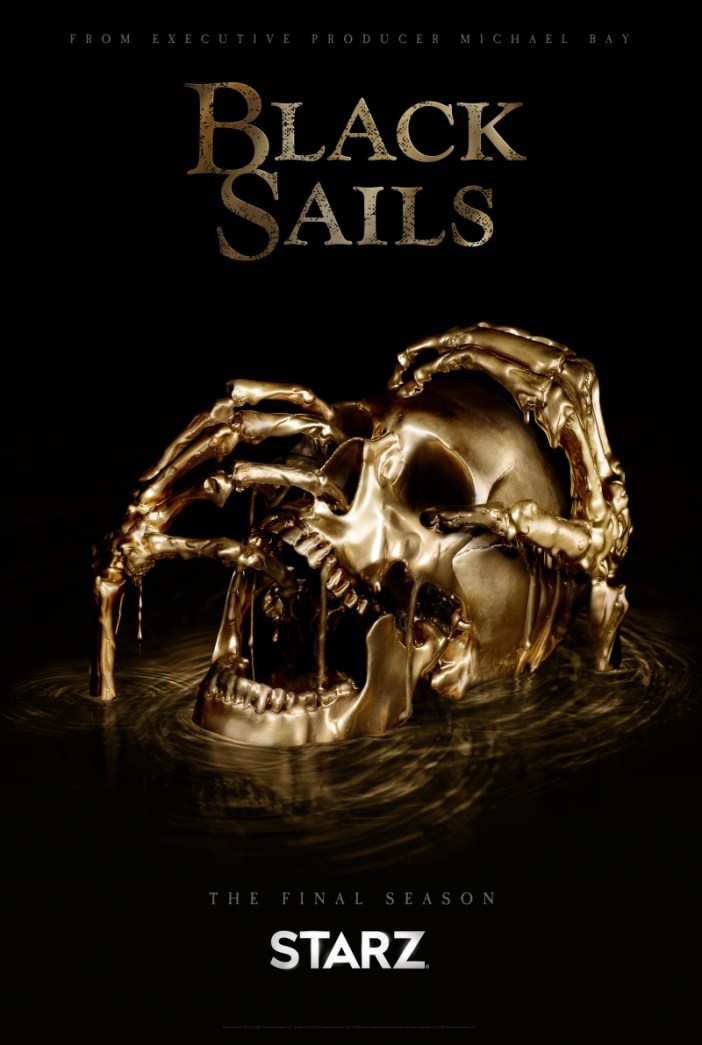
I finished watching Black Sails this weekend, and wow. Wow. WOW. That was, without a doubt, one of the best series finales I have ever seen. I cried. Yup, I did. There was a twist there at the end that I did not see coming, and it was so incredibly moving and emotionally satisfying…I mean, wow.

I cannot recommend this show highly enough.
kinopoisk.ru

I love pirates, which was part of the reason why the Pirates of the Caribbean movies were so innately disappointing; sure, I enjoyed Johnny Depp’s performance in the first one, but after that they just seemed like parodies of the first, and the plots, such as they were, were ridiculous. I think I was very young when I saw Treasure Island in two parts on The Wonderful World of Disney, and around that same time A High Wind in Jamaica also aired. I became all about the pirates–there were even Nancy Drew (The Haunted Showboat) and Hardy Boys (The Secret of Pirates’ Hill) and Three Investigators (The Secret of Skeleton Island) adventures revolving around pirate treasure; and any number of Scholastic Book Club mysteries about searching for treasure left behind by pirates. I read Robert Louis Stevenson’s Treasure Island when I was around ten; it was an illustrated version, and I remember the pictures as if I just saw them yesterday.

So, yeah, I’ve always loved pirates.

387

I started watching Black Sails a year or so again, and it just didn’t catch on with me. I don’t know why, nor do I remember why. I gave it two episodes and stopped, and I do remember thinking, meh, it’s visually stunning, but I don’t care. But earlier this year, needing something to keep me entertained whilst on the treadmill, I decided to give it another whirl, and got sucked right in.

1200x630bb

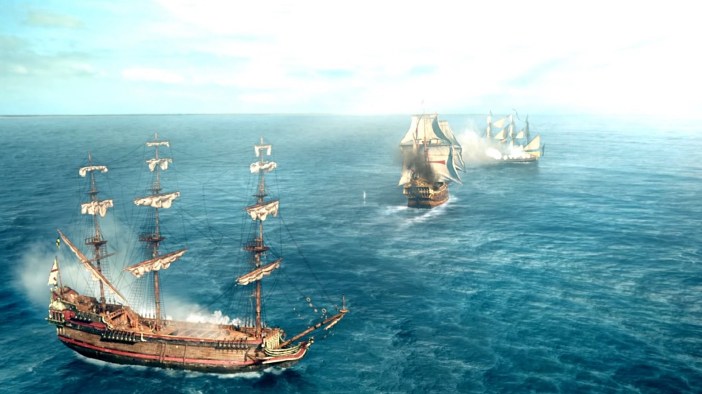
Visually, it is an absolutely stunning show. Set in the Bahamas in the early eighteenth century, Nassau in particular, the scenery is spectacular. The visuals are breathtakingly beautiful; the ships at sail, the water, the island, the beach, the town, the costumes. Visually, it’s a sumptuous feast.

In the first episode we meet Captain Flint, John Silver, and Billy Bones; as soon as I heard the names (I only knew it was a pirate show) I knew what it was: a prequel to Treasure Island. This time around, that really got my interest going. But what was strange was that there were also characters who actually existed in history: Charles Vane, Jack Rackham, Anne Bonny, Edward Teach. The lines between the real characters and the fictional soon became so blurred that I forgot I was watching a prequel to Treasure Island most of the time, and was watching a fictionalized version of history; Nassau and the Bahamas were  a failed British colony basically taken over by pirates; the British Empire was too busy dealing with the War of the Spanish Succession to be bothered with doing anything about Nassau; and Captain Flint’s plan to set up a republic of pirates and escaped slaves was actually based in history; I have a book about it called The Republic of Pirates that I haven’t gotten to read yet (but I’ve moved it up the TBR pile).

And of course, the cast is stunningly beautiful.

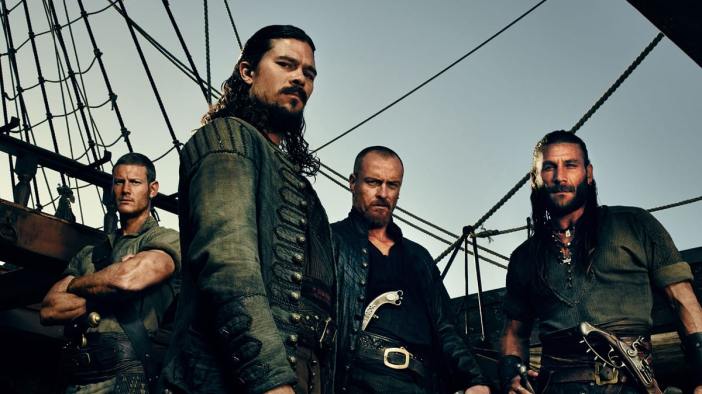
I mean, Tom Hopper as Billy Bones:

black-sails-tom-hopper-content_1

Toby Stephens as Captain Flint:

2016 Winter TCA Portraits

Luke Arnold as John Silver:

2OLPGFFd_400x400

Zach MacGowan as Charles Vane:

Zach-McGowan2

And my favorite character turned out to be Jack Rackham, played by Toby Schmitz.

Black Sails Season 4 2017

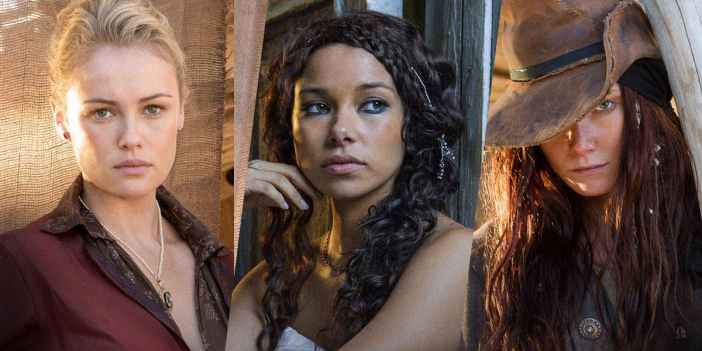
What was also enjoyable to me was that the cast was also diverse; and the women weren’t there simply to look pretty, be ogled, or be used as sexual pawns. They were integral parts of the cast, and drove a lot of the action on the show, and were incredibly strong. Eleanor Guthrie ran Nassau; Max moved from being a mere worker in the brothel to major position of power; Madi was Queen of the Maroons and spoke for/led her people, and of course, Anne Bonney was just a badass.
black sails women

I also loved that the show included the Maroons; escaped slaves who made their own community and resisted being recaptured.
ships-in-black-sails-season-4-produced-by-micheal-bay

All of the characters were fully realized; and the plot was so intricate as each character formed friendships/romances/alliances, and betrayed others, as they tried to gain the ascendancy, not only in Nassau but also over the treasure of the Spanish galleon Urca de Lima. It was interesting watching the characters change and evolve based on their experiences, what they went through, and what they suffered. The relationships, the friendships, completely made sense–even when it came to the betrayals. I was so caught up in the story that it wasn’t until the fourth season that I started remembering, “oh, no, this is the prequel to Treasure Island, and the pirate republic eventually collapsed,” which meant, to my fear and horror, that most of the cast wasn’t going to get out alive.

v1

Also, serious props to the characterization of Woodes Rogers, the British man who comes to the Bahamas determined to solve the piracy problem with a good heart and good intentions; watching him slowly evolve into one of the best villains on the show as his ideals are slowly stripped from him by circumstance and reality was mesmerizing.
160120-sponsored-starz-article-tease_rb5zob

All of the characters evolved and changed, which is a rarity in any television series, but the acting and writing in Black Sails was so superb it never hit a false note.
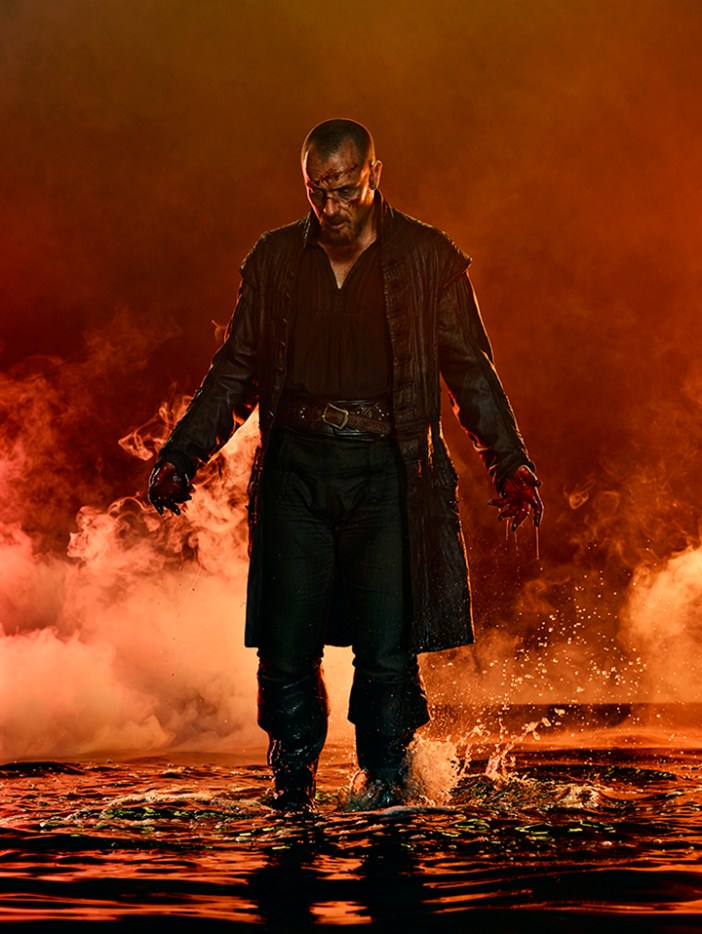
Black Sails Key Art Shoot 2015

And it was interesting in that not only were women shown nude, but there was full frontal male nudity as well.

In the first season there was a lesbian relationship–which I figured, of course there is, gotta give the fanboys some hot girl-on-girl action–but again; while there were sex scenes, the relationship wasn’t prurient and was depicted as honestly and as importantly as any of the heterosexual romances.

I don’t want to give spoilers, and I won’t–because some of the most powerful surprises in the show have to come as a surprise, or will lose their impact–but in Season 2 as we get the back story on one of the principle male leads….he’s gay, and that changes, not only the character, but everything that came before. And his story is absolutely heartbreaking, and played brilliantly.

And the ending! Again, no spoilers, but I cried. And I don’t think I’ve ever seen a series finale that felt so right, so perfect, as an end for a story. Where Black Sails succeeded was in making you care about the characters and understanding their relationships, rather than just focusing on story and the size and scope of the show–which, don’t get me wrong, is also pretty amazing.

Bravo, Starz. This is the second series of yours I’ve watched all the way through–the first being Flesh and Bone, which was also brilliant–and I have to say, Starz is kicking ass on the series front. Wow. Loved it.
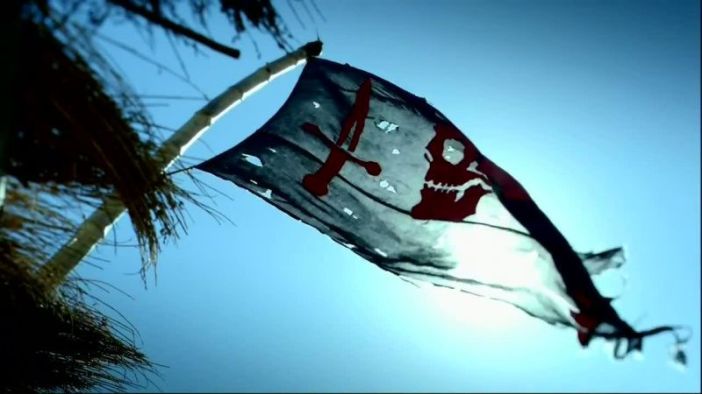
19bbpt1nmp93zjpg

Wake Me Up Before You Go-Go

I overslept this morning, which is really fine; I feel very rested, which means I needed the sleep and my muscles, which have felt tired all week, don’t this morning; so there you have it. I have some errands to run in the early afternoon, and I also have some writing to do today; I need to finish a chapter in the WIP and finish one in the Scotty. I should probably do so organizing and of course, the Lost Apartment is a mess. I also need to revise two short stories, whose due dates are rapidly approaching. Next weekend I will be in Alabama for the Murder in the Magic City/Murder on the Menu events, and the next weekend is the final parade weekend of Carnival (yes I am missing the first weekend for the first time in years). I do hate missing the King Arthur parade; I have lots of friends and acquaintances in that one, so I generally get buried in beads. I can’t believe I agreed to miss that weekend, but I also was so busy making sure it wasn’t the final weekend of Carnival that I didn’t notice.

Stupid, stupid, stupid Gregalicious.

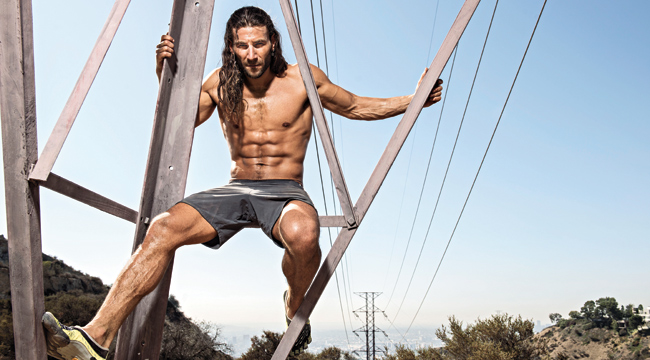
Heavy sigh. I finished watching the first season of Black Sails last night, both at the gym and then when I got home after; I am, as I have said, really enjoying the show. I can’t quite figure out why I didn’t like this show when I tried to watch it several years ago, but I am really enjoying it now and glad I gave it another chance. I suspect I didn’t pay enough attention to it as I watched, and you kind of need to pay attention. There’s a lot going on, there are a lot of cross-plots, and lots of scheming. I don’t think I much cared for the way the women were treated in the first episode or two, either; it appeared that the women were all whores or mistreated terribly by men. But that’s not the case; the women are stronger and smarter than the men, and Eleanor Guthrie, who runs Nassau, is developing into quite the cold-blooded manipulative she-devil, which I am also rather loving. And of course, you can never go wrong with a hot, sweaty men in tight leather pants. My favorite, of course, is Tom Hopper, but Zach MacGowan, who plays Captain Charles Vane (and also played Roan on The 100; I thought he looked familiar) isn’t a slouch either.

Zach-Mcgowan-main

I also read two short stories last night, both horror, to keep the Short Story Project going.

The first, “Minuke,” by Nigel Keale, is from a very thick book edited by Marvin Kaye called Ghosts:

The estate agent kept an uncomfortable silence until we reached his car. “Frankly, I wish you hadn’t gotten wind of that,” he said. “Don’t know how you did: I thought I had the whole thing carefully disposed of. Oh, please get in.”

He pulled his car forward and frowned. “It puts me in a rather awkward spot. I suppose I;d better tell you all I know about the case, or you’d be suspecting me of heaven-knows-what kinds of chicanery in your own.”

As we set off to see the property I was interested in, he shifted the cigarette to the side of his mouth,

“It’s quite a distance, so I can tell you on the way there,” he said. “We’ll pass the very spot, as a matter of fact, and you can see it for yourself. Such as there is to see.”

This is a ghost story, or more properly, the story of a haunting;  it was originally written and published in 1950–which makes the story sixty-eight! It’s also told in a classic horror trope that is hardly used anymore, because it’s become cliche–someone is telling the story of what happened to someone else, a disinterested party. Stephen King has used this method a time or two; most notably in his novella “The Breathing Method” from Different Seasons, and sometimes in short stories. It’s a very classic trope–Dracula is an epistolary novel, after all, told in diary entries and letters. But at the time “Minuke” was originally published, horror wasn’t considered a form of literature and as such tropes hadn’t evolved into cliches quite yet, and it’s a well-told tale. The house of the title is merely a bungalow, built in the housing boom of the post-war era, and therefore its tenants are the first to live there; it is too young of a house to have a haunting, and yet it does. It turns out, you see, when the foundations were being dug, they came across some ancient Norse grave markers…(of course, at the time the story was written Poltergeist was many years away in the future, and the ‘never build on an Indian burial ground’ theme hadn’t become deeply engrained in the culture).

(Aside: the collection Ghosts is a gorgeous, leather bound edition with gold inlay and a ribbon page marker that I purchased for a few bucks off a sale table at Borders many years ago; I don’t know why I’ve never dipped into it before, but it’s going to definitely play a role in this year’s Short Story Project.)

The second story I read was “Fallen Boys” by Mark Morris, from Best Horror of the Year Volume Three, compiled and selected by Ellen Datlow, and originally published in Jonathon Oliver anthology The End of the Line:

When the child screamed, Tess Morton felt guilty for having to repress the urge to snap at it. She was aware that it wasn’t Matthew Bellings who should be punished, but his tormentors, and yet the boy’s cry of pain or distress was so whiny that it grated on her nerves.

The reason she felt little compassion for the child was because she knew it took almost nothing to provoke a wail of complaint from him. Matthew would cry out whenever someone barged into him in the school corridor; whenever a football was kicked towards him in the playground; whenever a classmate flicked a paper pellet at him, or snatched a text book out of his hand, or pushed in front of him in the lunch queue. Indeed, the merest slight would cause Matthew’s red-cheeked, strangely wizened face to crumple, his mouth to twist open and that familiar, toe-curling bleat to emerge.

This story, about a class field trip to an abandoned tin mine (now open as a tourist attraction and advertised as an education experience for children), is predicated on a horrific truth about bullying that we don’t like to acknowledge or understand; one that Stephen King exposed and explored powerfully in his own debut novel, Carrie. 

When we read accounts about bullying, and how teachers and other adults look the other way, we are horrified by it; when we read short stories and novels about bullying  our hearts naturally go out to the victims and we loathe the bullies and their enablers; long for their comeuppance, and are infinitely satisfied when it does come. But that bears no resemblance to the reality. That comes from the emotional distance, and the pleasant lies we so often tell ourselves, the lies about who we are as people, and how we would behave in certain circumstances–we identify with heroes and see ourselves as heroes; part of the brilliance of Stephen King’s work is he so often lays bare that horrific truth that we aren’t all heroes.

Take Tess Morton, the teacher taking her kids on this field trip. The story is completely told from her point of view. She knows that kids are bullying Matthew, and she also knows that as the voice of authority she has to try to put a stop to it. She does try, but it’s not taking because Matthew himself irritates her and sometimes she herself wants nothing more than to give him a good slap. This is the same way Miss Desjardin, the gym teacher who stops the shower assault on Carrie White in the opening scene of Carrie, feels about the victim; she has to punish the girls who did it, but Carrie irritates her, she wants to smack her a good one, and she understands why Carrie is bullied.

This is also why school–the hallways, the playground, the cafeteria, the gym–is so scarring for so many people, because they are so evocative of Lord of the Flies or The Hunger Games.

This is a great story; Morris builds his suspense beautifully, and the denouement is rather sudden when it happens–more than a little reminiscent of EC Comics, but it’s also rather satisfying.

And now. back to the spice mines.