Burning Heart

Sunday morning, and yet another good night’s sleep. It truly is amazing what a difference that can make in one’s life; I miss the days when I could simply tumble into bed and close my eyes and, as Paul once put it, “sleep through a nuclear holocaust.” Yesterday was a good day; I got groceries and did some cleaning. I read both “This Town” and “Don’t Look Down” aloud, did the necessary clean-ups on them, and this morning I am going to read “Fireflies” aloud and see if it, indeed, does hold together. I wrote the first draft of “Fireflies” something like thirty years ago (!) and it’s still in the file folder, handwritten (because until computers, I almost always hand-wrote everything); I am still not entirely certain the story works; but we will find out today when I read it out loud.

I was very pleased with the two stories I read aloud yesterday, and if I do say so myself, I feel “This Town” is one of the better stories I’ve written. I’m going to read “Fireflies” aloud this morning, and then I’m going to work on “This Thing of Darkness” for a little bit, see how that goes, and then maybe dive into one of the two novels I am working on (focusing on, really; there’s a third I started writing a couple of weeks ago, which I am itching to get back to, but that’s just crazy talk). I also started reading Alex Segura’s Blackout yesterday, not getting very far, alas; but I am looking forward to getting further into it. I also started reading Martin Edwards’ Edgar Award winning The Golden Age of Murder, which is my new ‘read a chapter or two before bed’ book. We also started watching Harlan Coben’s new Netflix series, Safe, and are really enjoying it thus far.

My kitchen is also a disaster area; I made ravioli last night and yes, well, a mess is a bit of an understatement.

I also stopped at Office Depot yesterday to purchase pens. I’ve discovered a new brand of pen that I absolutely love: Tul, with a dash over the u. They sent us a couple of them at the office a month or so ago, and I absconded with them, as is my wont, and then bought a couple more. Yesterday I bought several more packs of them. I’ve always been a bit of a pen nerd, and I also noticed last night, as I made notes in my journal, that my blank book is almost full; time to get a new one soon. Yay! I really am glad I’ve gone back to keeping a journal to write notes and ideas down into; I’ve worked out issues with several of my short stories this year in it, as well as the books.

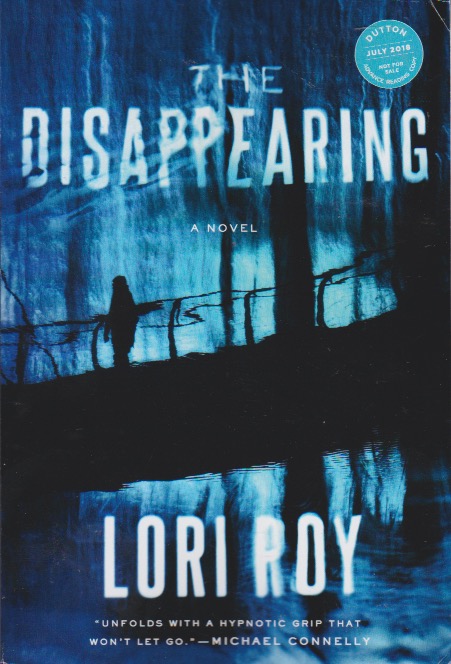
I also managed to finish Lori Roy’s upcoming new release, The Disappearing, last night.
the disappearing

Lane Wallace is alone inside Rowland’s Tavern when the front door flies open. A man stumbles inside, bringing with him a spray of rain that throws a shine on the hickory-brown floors. He scans the dark rooms, stomps his feet, and draws both hands over his wet, round face. If the man says anything, Lane doesn’t hear him for the rain pounding the tin roof and the palm fronds slapping the front windows. It’s supposed to rain through the night, and all around Waddell, people will be keeping a close eye on the river.

Lane smiles because maybe the man is a friend of a friend and not a stranger. She’s expecting a big crowd tonight, and one of her regulars might have invited him. But he doesn’t smile back. Slipping her phone from her back pocket. she lays it on the bar top where the man will be sure to see it. It’s a subtle warning, but if the man is looking for trouble, it’ll make him reconsider.

He’s a little on the heavy side; doughy, a person might say. From behind the bar, Lane asks the main if a beer’ll do him, and as he slides into a booth near the front door, he nods. Hr regulars, men who’ve known her all her life, or rather who have known her father, won’t show up for another hour or so but Rowland Jansen will be back any time now. He ran out to move his car and Lane’s to the higher and drier ground of the parking lot out front, so she won’t be alone with the man for long.

This is Lori Roy’s fourth novel, and it’s quite an achievement. His first three novels–Bent Road, Until She Comes Home, and Let Me Die in His Footsteps–were all shortlisted for Edgar Awards; she won Best First for Bent Road and Best Novel for Let Me Die in His Footsteps, raising her up into the exalted, rarified air of the Multiple Edgar Winner Circle. I’ve only read Bent Road–I do own the others, will every intent to read them at some point; too many books, not enough time–and it blew me away with its stunning depiction of rural Kansas, its juggling of two separate time-lines, and its thematic exploration of how the pains and evils of the past can influence the present.

That same theme runs through this stunning new novel, The Disappearing, as well, and is explored even more deeply and explicitly than in the first. Waddell is a small town in north Florida, amorphously near Tallahassee; Roy’s captured the feel of rural small town Florida deftly (there is, as not many know, a huge and significant difference between the coastal cities of Florida and the insular, small towns of the state’s interior). She plays with the memories of Ted Bundy’s journey through the area; a young woman, a student at Florida State doing some internship work at a local, fading plantation is missing, which has stirred up all those fearful memories of Bundy’s spree. The plantation also shares a boundary with a closed reform school for boys, whose own violent and possibly deadly past has also come back to haunt Waddell.

But it’s also an exploration of family, and how the damage from a past history of deep violence and emotional abuse, locked away and ignored, can reverberate through the years and have deep, horrific implications on the present. Susannah Bauer’s disappearance triggers a chain reaction of emotion and violence and horror, spread over the course of a few days after the night of the heavy rain, that will continue to cycle through the future unless honestly and painfully dealt with in this present.

There are four point of view characters in The Disappearing: three women from generations of the same family–Erma, the matriarch of the Fielding family, with her guilts and secrets festering inside her for decades; Lane, her daughter, whose own emotional damage and baggage perpetuates the cycle; and Lane’s younger daughter, Talley, whose wanderings due to her own loneliness and unhappiness makes her the holder of most of the secrets and truths of the present. The fourth point of view character is Daryl, a mentally disabled young man who is the groundskeeper at the church, and his story is told in the recent past rather than the present, as Lori Roy deftly spins all the secrets and lies and horrors of the town of Waddell into an astonishingly well-blended tale of flawed people and the damage they can leave in their wake.

Even more impressive than the characters and the story itself is the mood and the voice; the way she maintains this almost dreamy tone, creating the perfect mood for the story is masterful. The voices of her characters are compelling and real; only Daryl tells his story in the first person; the others are a very tight third person present tense. The shifts in voice, the tone, the tense and the word choices and the imagery, kept reminding me of Faulkner’s brilliant The Sound and the Fury, and in a very good way.

The Disappearing is an extraordinary achievement, and is destined to make awards short-lists and all the Top Ten lists for 2018.

Party All The Time

Saturday morning. I need to read aloud some stories this morning–“Don’t Look Down,” “This Town,” and “Fireflies”–and I’d like to get some work done on either Scotty or the WIP this weekend. I need to clean this weekend; I got started lasted night, washing the bed linens and blankets, a pre-vacuuming downstairs, organizing books, putting away a load of dishes; I also spent a lot of time in my easy chair reading Lori Roy’s stunning new novel, The Disappearing, which is giving me all kinds of thoughts and things to think about. It’s really extraordinary; you should, by all means, preorder it.

I am also working on a much longer blog piece; about being a gay writer, “own voices,” “we need diverse books”, and various other hashtags and ‘movements’ that have occured over the years on social media. There was an instance lately where an encounter with an albeit well-meaning straight lady kind of took me aback; I wasn’t really sure how to react to what she said. Albeit was well-intended, it was still kind of a backhanded slap in the face.

I find myself thinking weirdly deep thoughts about being a gay writer these days; because no matter what I write and no matter what I do, no matter how hard I might try to run away from it, gay is so inextricably a part of me that I cannot wall it off; no matter what I think or do or write or say, that different point of view is always going to be there; it cannot be turned off. There was, back in the day, a lot of talk about a gay sensibility that queer writers brought to their work; I don’t know if that conversation is still being had. But then, this is all fodder for that other blog entry I want to write; I shouldn’t get that in-depth with it here.

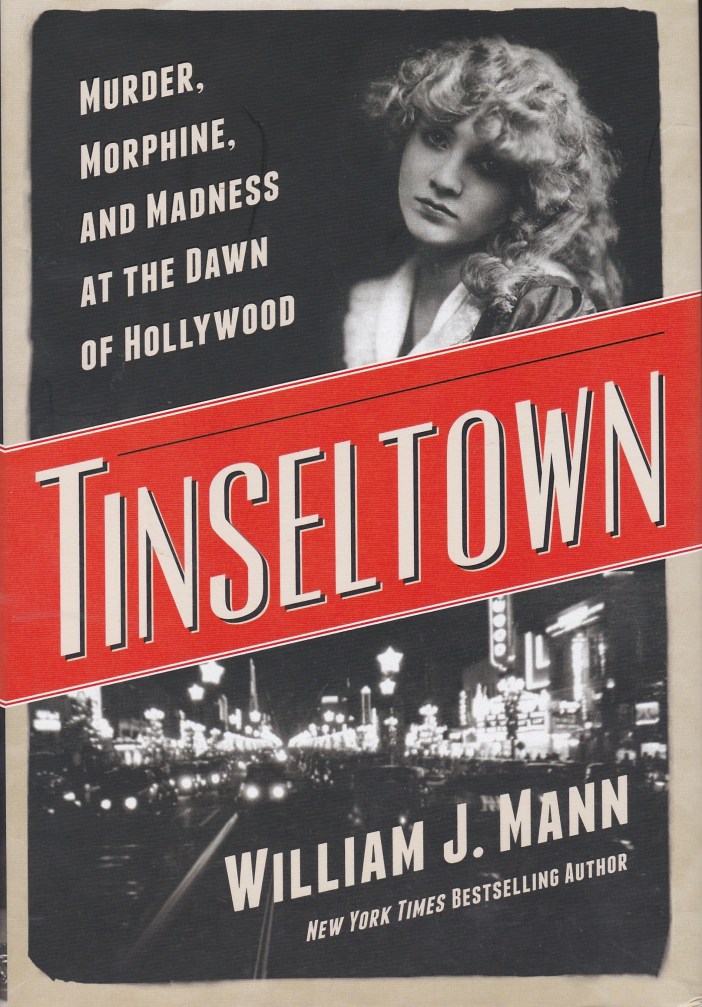
I did finish reading William J. Mann’s Edgar Award-winning Tinseltown: Murder, Morphine and Madness at the Dawn of; Hollywood, last night. Bill is one of my oldest friends in publishing of any kind; we’ve known each other well over twenty years, I would say. I interviewed him years ago for his first publication, the novel The Men from The Boys, and again later with the release of his first Hollywood history/biography, Wisecracker,  a biography of William Haines, the first openly gay movie star; who chose to give up his career when Louis B. Mayer told him he needed to give up his partner and marry a woman. He then went on to have a long career as an interior decorator; he was a close friend of Joan Crawford’s, who said of his long-time partnership, “it’s the only happy marriage in Hollywood.” Tinseltown tells the story of the murder of the director William Desmond Taylor in 1920, and how the big-wigs in Hollywood not only tried to cover up important details of the murder for their own reasons, but how the murder affected the lives of three Hollywood women: major star Mabel Normand (immortalized by Stevie Nicks in song on one of her most recent albums); up-and-coming star Mary Miles Minter; and fringe actress wannabe Patricia Palmer. It’s a well-crafted, well-researched reconstruction of what happened nearly a hundred years ago: it’s also an interesting overview of how Hollywood became what it was; how the Hays Production Code was born as well as the big studio systems; and how hoydenish religious groups have always made a lot of noise and tried to force their point of view down the throats of the rest of the country. I enjoyed it thoroughly, and highly recommend it.

tinseltown

I’ve always wanted to write a book or two set in old Hollywood; maybe not in the days of the silents, but perhaps one in the 1930’s and another in the 1950’s. The one about the 1950’s has more of a shape in my head; even a title (Chlorine), but there’s so much else I need to write.

But first I need to get my act together today and do all the things I need to get done today; I also need to probably come up with a schedule and list of goals. There are so many books I want to write, so many short stories I want to write, so many short stories I need to revise. There’s only so much time in every day.

And now, back to the spice mines.

PS So far, cutting the cable chord is going swimmingly. I couldn’t be more pleased.

How Will I Know

Well, somehow I managed to make it to Friday. This wasn’t a great week; sleep issues, mostly, but last night I finally slept well despite some truly strange dreams…which are fading away from me now. That’s fine, but they were seriously weird; I did wake up a few times during the night thinking okay, that was just weird. But as usual, now that I am awake and drinking my coffee, I don’t really remember any of them. I would have loved to stay in bed longer, but I have a meeting this morning at the office. It’s my short day, which is also incredibly lovely, and I am hoping to  have a nice relaxing weekend of catching up on things, including rest.

I managed to get “Fireflies” revised and ready for a read-aloud this weekend; that’s several stories I get to read aloud this weekend, including “Don’t Look Down” and “This Town”. Three stories to read aloud, even if “This Town” is just to check for extraneous words and trim it down a bit, if possible. I also started writing “This Thing of Darkness” yesterday, and it’s coming along swimmingly. I got about 1400 words or so done. I need to get back to the Scotty book this weekend as well; I am going to reread the entire thing before I get back to it, though. I also have to go to the post office as well as do that grocery store thing.

And of course, the apartment is a disaster area.

Heavy heaving sigh.

But I’m pretty jazzed about getting through this day and getting home to start the cleaning, and get to reading Lori Roy’s The Disappearing. She really is quite an extraordinary writer. If you aren’t reading her, you need to be. Seriously.

I am also going to discuss a short story today, which means we are back to the Short Story Project, and might even be able to get another one knocked out tomorrow.

Today’s is “e-Golem” by S. J. Rozan, from the September/October 2017 issue of Ellery Queen’s Mystery Magazine:

Bookstore dust was not the same as other dust. Loew had noticed this before, sweeping out the cluttered aisles of his used-book shop. It settled more gently, but at the same time seemed more weighty, each mote carrying both wisdom and whimsy, erudition and imagination. He shook his head. Loew, he told himself, this is why you’re doomed. WHy you’re barely eking out a living, selling forgotten things no one wants in a store you soon won’t be able to afford.

For most of his life, first working after school in his father’s shop in what was then the Jewish, later the Chinese, and lately the gentry’s Lower East Side, and on through the almost imperceptible transition when the shop became his, Loew had found pleasant this sense of gentle churning. Books no longer needed in one place lodged in the shop until they found a home in another, and customers came periodically to discover what treasures had rolled to the surface. This churning and discovering still went on, he understood, but less tenderly and on the Internet that soul-destroying virtual world where all was about price and little about love. People who bought rare books online did so speculatively, hoping their value would increase. How different from Loew’s customers, who held a book, fingered its pages, inspected its cover, to decide whether this book, this copy, was meant to be theirs. A customer who turned a book down was never a disappointment to Loew. It meant the two didn’t belong together. The customer would find his book, and the book would find its owner. Until it did it had a home here on Loew’s shelves.

S. J. Rozan is one of my favorite crime writers, bar none. This story, which is both clever and slightly sly at the same time, is an example of her work at its best. Loew discovers an old book of mysticism in his store, and half-heartedly tries to create a golem to go after his biggest enemy–Amazon. What happens next is why Rozan is one of the greats of our time in crime fiction; clever twists and turns that one never sees coming. But what really struck me the most about this story is how good she is at voice. Never once does she hit a false note in this story; every word is perfect and fits with the character’s voice. Were I ever to teach a class in crime writing, I’d use this story as an example of how to do voice perfectly.

And now back to the spice mines.

32247206_1671285199636859_5541500018004852736_n

Never Surrender

’tis Wednesday already; the week is already half over. Next week is the combination Tennessee Williams Festival/Saints and Sinners weekend (AIEEEEE!), which is going to be, literally, insane. But I can hang; it’ll be lovely seeing everyone, but I can’t believe it has come up upon us all again so suddenly. It’s like I wasn’t paying any attention and the next thing you know, BOOM, there it is.

As I continue to work on this plethora of short stories (I started ANOTHER fucking one yesterday), I am, however, pleased to announce that one of the ones I’ve done since the beginning of the year will be appearing in the anthology Murder-a-Go-Go’s. The book’s theme is crime stories inspired by songs of the Go-Go’s, and will be edited by the amazing Holly West, and published by the crew at Down and Out Books. My story was inspired by the song “This Town” and is also, coincidentally enough, titled “This Town.”

Our IDs were fake, but no one seemed to care. Even when a burly bouncer asked to see them, bare meaty arms adorned with tattoos, bored eyes flicking over the laminate before waving us inside. Celia was right about that, like she was right about everything. She could always find someone with coke to share or sell, or who was happy to share their blunt with us. She was a golden girl, the kind I used to think only existed in books or movies, the girl that’s too perfect to exist, the one every other girl wants to be friends with, wants to be. The one all the guys notice first, their eyes wide open and their jaws gone slack.

 She always had the trendiest new make-up, the first to try out a daring new look we were too cowardly to try but quick to copy, always the first, the one everyone else imitated. She seemed to glow from inside, drawing everyone’s eyes to her effortlessly, and she somehow managed to always look perfect, even when she was drunk, even after dancing for hours when our make-up was running down our cheeks and perspiration dampened our armpits. Her skirts were just the tiniest bit shorter than everyone else’s, her tops seemed to fit her in a way they didn’t fit anyone else, her hair thicker and shinier and bouncier. She pulled in guys like night insects to a white light, caught up in her magic, wanting her. They only noticed the rest of us once she’d turned her attention elsewhere. We didn’t mind taking second place to her because it seemed like the natural order of things. She always knew the right thing to say—whether kind or insulting—and we all gravitated to her, wanting to be her friends, to be her. She was our pledge class president, organized, efficient, determined we be the best pledge class our Omega Psi chapter had ever seen. Even the sisters seemed to be a little in awe of her, grateful she’d picked Omega Psi out of all the offers she’d had—every sorority had offered her a bid, I’d overheard one sister telling another at Monday night dinner, her voice awed as she went on to say that had never happened in the history of the Greek system at Tulane.

And she made us all feel special, whispering “Sisters” to us as we hooked our pinkie fingers and whispered the word back to her, committing to a lifelong bond with her.

I am so glad they liked this story, because I loved it. It’s soooo dark. When I was going through Go-Go’s lyrics to choose a song, I was really surprised; I knew all the songs by heart–if I heard one I can sing every word–and danced like crazy to them, always thought they were these upbeat cheerful songs…and then yikes! Reading the lyrics without hearing the music? JFC, are these songs dark. I mean, check out this verse from “This Town”:

Change the lines that were said before 
We’re all dreamers – we’re all whores 
Discarded stars 
Like worn out cars 
Litter the streets of this town 
Litter the streets of this town

I mean, we’re all dreamers – we’re all whores? As soon as I read that line, the story just jumped into my head; a group of girlfriends, on Fat Tuesday,  wandering around in the Quarter getting wasted…and then the first line of the story popped into my head: Our ID’s were fake but no one seemed to care. That was how it started, and the next thing I knew I had over four thousand words and a very rough first draft.

I love when that happens. And the editor liked it! YAY! Huzzah for good news! It gives me hope for these other short stories I’m writing.

And I also have read some more stories for the Short Story Project. First up is “Damage Control” by Thomas H. Cook, from the MWA anthology Manhattan Mayhem.

She’d been found in the dilapidated Bronx apartment where she’d lived for the past seventeen months. It was a basement apartment and had only a couple small windows, but she’d make it darker still by drawing the curtains. It was so dim inside that the first cop to arrive had stumbled about, looking for a light switch. He’d finally found one only to discover that she’d unscrewed all the light bulbs, even the ones in the ceiling and the fluorescent ones on either side of the bathroom mirror. Neighbors later told police that they hadn’t seen a single sliver of light coming from her apartment for well over a month. It was as if the terrible capacity for destruction that I’d glimpsed in her so many years before had at last grown strong enough to consume her entirely.

This is a truly sad story; in which a man is forced to look back on a painful decision made years earlier, when his family took in a foster child to give their only child a sister. The two girls got along well at first, but the foster child became a problem child, possibly even dangerous, and for the sake of their blood daughter they gave the foster child back to the system. Now an adult, she has died, and he is having to reflect, remember, what happened all those years ago, wonder if things could have been different, if maybe he had tried a little harder maybe things wouldn’t have ended so badly for her. There’s a horrible twist at the end as well, which makes the story all the more poignant and sad; about how a life can be so easily wasted and thrown away, based on a perception that ma or may not be correct.

I then moved on to a Shirley Jackson story, from the recent collection Let Me Tell You. The story is titled “Paranoia.”

Mr. Halloran Beresford, pleasantly tired after a good day in the office, still almost clean-shaven after eight hours, his pants still neatly pressed, pleased with himself particularly for remembering, stepped out of the candy shop with a great box under his arm and started briskly for the corner. There were twenty small-size gray suits like Mr. Beresford’s on every New York block, fifty men still clean-shaven and pressed after a day in an air-cooled office, a hundred small men, perhaps, pleased with themselves for remembering their wives’ birthdays. Mr. Beresford was going to take his wife out to dinner, he decided, going to see if he could get last-minute tickets to a show, taking his wife candy. It had been an exceptionally good day, altogether, and Mr. Beresford walked along swiftly, humming musically to himself.

I absolutely, positively love love LOVE Shirley Jackson. The other night, as I was trying to decide which story to read next, I suddenly realized that I have three short story collections by one of my favorite authors and haven’t read any of them. I immediately grabbed Let Me Tell You and sat down with it. “Paranoia” is brilliant, positively brilliant; to tell you why would spoil it, and if its spoiled the effect is ruined, but it is, with every word and sentence, the perfect fictional story representation of defining the word paranoia. It reminded me, as I kept reading, of precisely why I love Jackson so much. God, what a great story!

And now, tis back to the spice mines with me.

IMG_1984