Rocky Mountain High

I was really into soaps in the late 1970s and up until the mid 1990s or so. My fandom, how it came to be, and how much of an influence soaps were to me as a writer is a topic for another time, perhaps after Pride Month is over because it’s really not Pride related, except for how they related to me as a gay man. But by the late 70s, I was strictly an ABC guy: All My Children, One Life to Live, General Hospital and Edge of Night, with me having a special attachment to Edge, which will also be a subject for another time. But soaps were strictly a daytime medium for a very long time–at least until Dallas premiered. Originally, each episode was a stand-alone but the show very quickly moved to the serial format, and the ratings went through the roof–and of course, “Who Shot J.R.?” was a global phenomenon (I figured it out early on–when I saw that Mary Crosby was only contracted for four episodes in the following season and the reveal that the shooter’s identity would be revealed in episode 4…it wasn’t too big of a leap from there to “it must have been Kristin”. I was right.), and Dallas ruled the ratings from there on out..

The success of Dallas, of course, lead to copycats from other networks trying to cash in on the new craze; television is nothing if not a place where imitating success is seen as a no-brainer; the irony was that so many of the other soaps that launched at night in the wake of the huge success of Dallas…failed for the most part. The only post-Dallas night time soaps that enjoyed long runs were Knots Landing, Falcon Crest, and Dynasty.

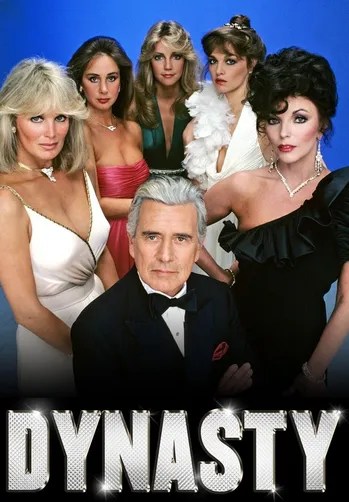
I first learned of Dynasty in a People magazine profile on Linda Evans, who at the time was best known as the woman John Derek left for Bo (who was a huge star at the time), and it mentioned she’d done a two hour pilot for a night time soap called Oil. By the time the fall previews started dropping, the show’s name had been changed to Dynasty, and there was going to be a gay character on the show. Once I read that, I knew I was going to watch. And then the premiere of the show was delayed months because of a strike. The show also had some other cast members I knew of and was interested to see–Wayne Northrop, who’d played Roman on Days of Our Lives; Pamela Sue Martin, of Nancy Drew and The Poseidon Adventure fame; and of course long-time television star John Forsythe as Blake Carrington, the patriarch of the family.
The first season was interesting enough, but the show didn’t really catch fire until the second season, when Joan Collins joined the cast as Blake’s first wife and mother of his children, Alexis. By the end of the season Dynasty had climbed from middling ratings to the Top Five, and it had become must-watch television.
But my primary interest was the character of Steven.

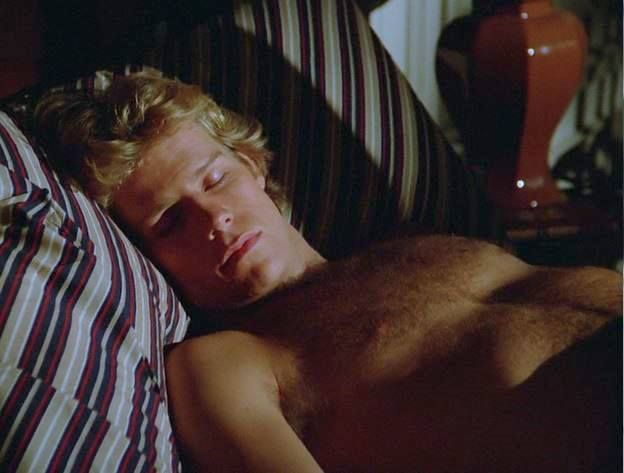
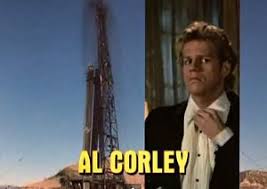
Originally played by Al Corley, Steven’s storylines were made clear in the pilot; Steven is coming to terms with his sexuality, coming back to Denver for his father’s wedding despite the fact that Blake is homophobic and he’s been living with a man (Ted Dinard) in New York for the past few years. Steven still isn’t entirely sure of his sexuality (it never occurred to anyone in production that he could be bisexual; he only had a binary choice during the entire run of the show), and decided to go to work on an oil rig to “become a man.” His co-workers pranked and hazed him for being gay at first, and then tried to “straighten” him out by buying him a hooker, which doesn’t go well. He then embarks on an affair with his boss’ wife Claudia (played by Pamela Bellwood, who was probably one of the best actresses in the cast), who was also mentally ill and her sanity wavered throughout the run of the show. Ted comes to Denver to get Steven to come home, but Steven’s decided to stay in Denver and try to get on with his life and ends things with Ted. Unfortunately, Ted comes to the Carrington estate (which was ‘played’ by Filoli, gorgeous place that was also the ‘setting’ for Laurie R. King’s superb Back to the Garden) to say goodbye, Blake comes home already angry, becomes angrier to learn Ted is in the house, rushes upstairs to see them hugging goodbye, and in a homophobic rage pulls Ted off Steven, punches him and knocks him down–only he is killed when he hits his head on a fireplace guardrail–and now Blake has to go on trial for murdering his son’s gay lover; and now the entire world nows.

Alexis returned for the trial, entering the courtroom wearing a veil, and Fallon gasps, “oh my god that’s my mother” setting the stage for season two, and night time television’s greatest villains, Alexis.

Season 2 was disappointing in terms of Steven as he spent season two trying to be straight, getting involved with and marrying Sammie Jo (Heather Locklear in the role that made her famous), but eventually telling his entire family that he’s gay, he’s tired of trying to be someone he’s not, and leaves Denver. He is reported killed in a oil rig explosion in the south China Sea in season three, which was their way of recasting–“plastic surgery so he doesn’t look the same”–and he was replaced by Jack Coleman (at the time best known for playing a serial killer on Days of Our Lives).
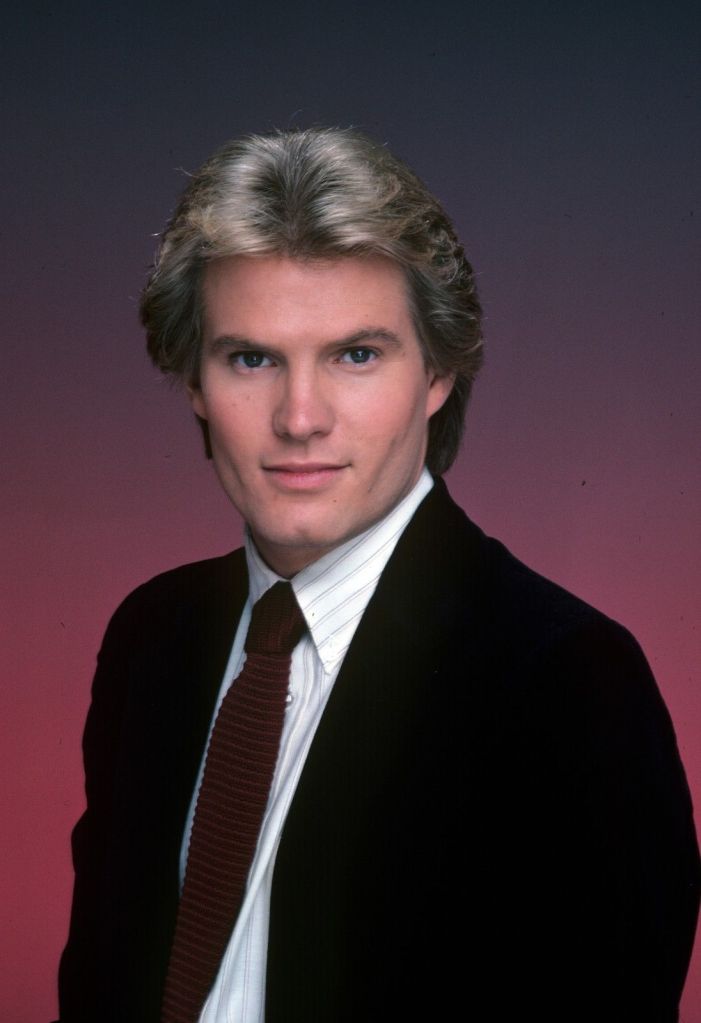
Coleman was fine, but he was different, and the character changed to match the actor. His entire storyline for the rest of the series involved him getting married, ruining that by getting involved with another man–before deciding what to do with him again for the sake of storyline; showing how hard it was to actually integrate someone with a same sex attraction into the cast of a soap. Every man he was involved with was a new character, and soaps–whose mainstay bottom line is thwarted romances, marriage and divorce–really didn’t know what to do with a non-straight character, other than throwing him into relationships with women (???) to have them end badly and so on.

When the reunion film was done in the 1990s, Al Corley returned as Steven (no explanation of why he looked the way he did before the surgery) and he’d made peace with his sexuality, again living in New York happily with another man and raising his son (oh yes, the gay character also impregnated one of his ‘women’)…while never once raising the possibility of bisexuality; I guess getting the 1980’s home audience vested in a gay character was risky enough without bringing in bisexuality–which tells you where we were as a country in the 1980’s…and we shouldn’t also overlook the fact that it was Dynasty that brought HIV/AIDS to the forefront of conversations in this country. Rock Hudson’s AIDS diagnosis became public shortly after he appeared on the show, and there was a lot of panic because he’d kissed the Linda Evans character–had he infected her? (We didn’t know as much then as we do now; now that fear is laughable but it was palpable back then because there was so much ignorance about it then, thanks to the Reagan Administration and the deeply embedded homophobia in post-war American culture.)

I started rewatching the original show once it was available for streaming, and that first season really is a slog; Blake was the primary villain in the first season (Alexis took his place, turning him into a more traditional soap hero–flawed but a good person at heart) and he just didn’t have the gravitas to relish being evil the way Joan Collins jumped in with both hands and feet), so while I was enjoying seeing the more honest and realistic to life way Steven and his dilemma was displayed in that first season–even the affair with Claudia made sense the way it was written–they really didn’t know what to do with him after the recast, and he descended from the fully developed realistic character Corley played to the two-dimensional soap hero he devolved into after the recast.

But…it was still pretty daring for the 1980s, and I did appreciate the attempt at representation. I know the reboot, which I didn’t watch, made Steven straight up gay; even gender swapping Sammie Jo by turning her into Sammy Joe. Progress is progress, and we cannot ever dismiss out of hand the brave attempts at using homosexuality and familial homophobia as a source for story; they were fighting the network censors, the right wing, and most of the country was homophobic, too.

They did the best they could and it was important at the time…even if it doesn’t hold up well under modern understanding.

Half of My Heart

And now it’s Friday. It’s hard to imagine that it’s almost Thanksgiving already, but the initial pandemic shutdown also seems like it was more than a million years ago–when dinosaurs roamed the earth–rather than a mere eight months or so ago. Eight months we’ve been dealing with this; even though it seems more like eight fucking decades. But I’ve noticed that time has sped up lately–for the longest time it felt like time was dragging and was taking forever to pass, but now…now time is flying.

I suspect it’s the looming deadlines and being behind on everything, quite frankly.

The sun is bright this morning in my eyes and I cannot find my baseball cap–it’s probably stashed somewhere I thought I’d remember where it was–so I’ve had to move my chair and I am writing this while sitting at a weird angle to my desk. I’m working at home again today, and will be walking to the gym for today’s workout when I am finished with this afternoon’s work. Yesterday for the Cynical 70’s Film Festival I watched The Boys from Brazil and The Towering Inferno–more on those later–and I think that for today I might just dip back into some more Halloween horror. We also started streaming Mr. Mercedes, which is now available on Peacock for free–I am actually impressed with everything they are offering; it’s very similar to HBO MAX, but am still not willing to pay for another premium service yet–and I have to say, I am enjoying this adaptation. It’s fairly true to the books–at least as I remember, although I don’t remember the neighbor Ida, played by the amazing Holland Taylor–and I have to say, the three Bill Hodges novels (Mr. Mercedes, Finders Keepers, End of Watch) have been my favorite Kings of this century thus far; Mr. Mercedes very deservedly won the Edgar for Best Novel some years back, and as much as I loved the books, I was very sad when I reached the end. King himself was an executive producer, and the television series adaptation was written by David E. Kelley, who has also been responsible for a lot of good television over the years, including Big Little Lies and The Undoing, which we are greatly enjoying as well. There are three seasons of this adaptation, and I assume each season covers one of the books.

The Boys from Brazil is an interesting film, and very much of its time. Based on the novel by Ira Levin, both book and film were very much of the 1970’s, and also encapsulated that cynicism and paranoia of the decade perfectly. It was also one of those stories that permeated the zeitgeist; everyone knew what”the boys from Brazil” were without reading the book or seeing the movie. The movie is a very close adaptation of the book–Ira Levin was known for his brevity as a writer, so rarely did things need to be cut out of the books for the screenplay. The Boys from Brazil was actually Levin’s longest novel–I could be wrong, but I don’t think so–and the film has some impressive star power, with Laurence Olivier, Gregory Peck, and James Mason in leading roles, and an incredibly impressive supporting cast, including Rosemary Harris, Anne Meara, and Uta Hagen. The film also opens with a focus on a young character played by an extremely beautiful young Steve Guttenberg (whatever happened to him? He was a big deal in the 1980’s and then just kind of faded away) as a young Jewish-American man who goes Nazi hunting in Paraguay, and is actually the one whose investigation tips off the big Nazi hunter played by Laurence Olivier about what’s going on and kicks the film into gear before he is, of course, caught and murdered by the Nazis.

It’s hard to imagine now that the 1970’s were forty years or so ago now; the world has changed so much…but the 1970’s were also only a few decades removed from the second world war and Nazi war criminals were still being hunted down worldwide by the Israeli secret police. (The Germans were also hunting them down for trials; the Israelis were killing them.) The Lieberman character played by Olivier (he got an Oscar nomination; ironically, he also got one for playing an escaped Nazi war criminal in Marathon. Man a few years earlier) was based on Simon Weisenthal; does anyone even remember Weisenthal today? (Weisenthal was one of the people who helped track down Eichmann.) It’s no secret that many Nazis escaped to South America after Berlin fell, and Brazil, Argentina and Paraguay in particular; so much so that it was so much a part of the zeitgeist that everyone knew and a casual reference was easily picked up on. Levin took that, decided to make Josef Mengele, the escaped Nazi “angel of death”, and put him at the center of the story. And the scene where Leibermann finally realizes what Mengele’s plans are–that is the scene that earned Olivier the Oscar nomination. The film doesn’t pack the same emotional wallop that the book does–probably because by the time the film was released, most people knew what the title referenced and what it was about (Levin was a master of the huge surprise twist), which killed some of the suspense. Gregory Peck isn’t very good as Mengele, either; paired with his listless performance in The Omen, Peck was clearly phoning it in for the most part in the 70’s and cashing the checks.

And as I always say, you can never go wrong with Nazis as your villains. The two best Indiana Jones movies have him fighting Nazis; you just can’t come up with better villains–having the opposition be Nazis alone immediately makes your hero pure of heart and decent and makes you root for him. (The Vatican, however, is an excellent fallback choice.)

There’s also an excellent essay to be written about The Boys from Brazil, comparing and contrasting it to Robert Ludlum’s The Holcroft Covenant, which is also about an attempt to resurrect the Third Reich, with the the seeds planted in the waning days of the war.

The Towering Inferno was part of the big wave of disaster movies that was a thing in the 1970’s, spawned by the huge success of Airport and The Poseidon Adventure. Like all disaster films, it boasted an all-star cast chock full of award winners and household names–Paul Newman, Steve McQueen, William Holden, Faye Dunaway, Jennifer Jones, Fred Astaire, Robert Wagner, Susan Blakely, and Richard Chamberlain, to name a few–and a terrible script that was focused more on the adventure than the actual characters. (It’s also jarring to see O J. Simpson in a supporting role; and to remember he had a fledgling acting career before he murdered two people) Disaster movies inevitably fit into the Cynical 70’s Film Festival because they are always about preventable disasters that wind up happening because of greed and people in positions of power that invariably shouldn’t be; there’s always one scene where the person in charge of cleaning up the mess and solving the problem sanctimoniously lectures the person they feel is responsible for it: in this case, fire chief Steve McQueen lectures architect Paul Newman about the irresponsibility of building skyscrapers from a firefighter’s point of view (and having witnessed 9/11….yeah, watching the scene made me squirm more than a little bit)–but Newman, you see, is the hero; the fire and the building’s failure to be properly prepared isn’t his fault; construction manager Richard Chamberlain cut corners on the electrical wiring and so forth to stay on schedule and under budget to please building owner (also his father-in-law) William Holden. I watched the movie for the first time several years ago–and couldn’t make it all the way through on a rewatch. The acting is too bad, the writing too awful, and the story not compelling enough. It was nominated for like seven Oscars, including Best Picture–which should give you an idea of what a bad year that was for film. It was based on two novels, published around the same time, that covered the same ground–a fire in a new skyscrape–so the rights to both had to be secured to prevent lawsuits: The Tower by Richard Martin Stern, and The Glass Inferno, by by Thomas Scotia and Frank Robinson, with their titles blended into The Towering Inferno.

Around the time I originally watched The Towering Inferno I rewatched three other big disaster movies of the time–Airport, The Poseidon Adventure and Earthquake–and none of them really hold up. There were scores of other disaster movies of the time too–several Airport sequels, a movie about killer bees, etc.–but if the BEST of the time don’t hold up, the ones that weren’t considered good at the time must be really horrific.

And on that note, it is back into the spice mines with me. Have a lovely Friday, Constant Reader, and I’ll catch you tomorrow.