Guilt is a Useless Emotion

Saturday morning and all is well in the Lost Apartment. I certainly hope this day finds you contented and well, Constant Reader! I slept deeply and well last night, after watching the LSU Gymnastics team defeat Arkansas, and then watching the ladies’ figure skating finals at US Nationals. It was a lovely evening–one can never go wrong with a double feature of gymnastics and figure sating, really–and as I said, afterwards I slept like a stone.

I also spend some time polishing and revising my short story for the MWA anthology Crime Hits Home, being edited by the enormously talented S. J. Rozan (if you’ve not read her novels, start. Right. Now. Her Winter and Night is one of my all-time favorites). As always, submitting to the open call for an MWA anthology is a long shot–there are levels of blind-reads to make it through–and I have as yet to make it into one of the fiction anthologies (I do have a piece about writing dialogue in the upcoming Mystery Writer’s Handbook, edited by Lee Child and Laurie R King, and I did have a recipe in the MWA Cookbook a while back) so keep your fingers crossed for me. Inevitably everything I’ve had rejected by an MWA anthology has sold elsewhere, so making myself write a story for the submission calls has always wound up working out for me in the end…I was, however, more than a little bummed when this call came out, because my story “The Carriage House” was perfect for this one….but I had already submitted it to Mystery Tribune (who did wind up buying and publishing it). I think the story is good–although I wish I had finished the drafting sooner, so I could have spent more time on the revisions and polishing. Ah, well–if they reject it I will try to sell it somewhere else.

Today I have to make groceries, get the mail, and go to the gym. I’ve blown off the gym pretty much ever since the weather turned cold last weekend–the stress and pressure of writing the story, as well as what was going on in the country over the last wee or so has precluded any writing or gym visits, which I should have never allowed. I was coming home from work every day and immediately turning on either CNN or MSNBC, being sucked right in and then spending the rest of the evening watching them report the same news, hour after hour after hour–which also needs to stop–and I need to get my focus back again. Not that I am not gravely concerned about the future of the country, of course–that I very much still am–but I need to focus on what I need to get done while paying some attention to the current crisis.

I also need to do some cleaning around here as well…cleaning and filing never seems to have an endpoint, ever–and I also need to get back to my reread of the manuscript. I should have started revising it last week…but a thorough reread/copy edit/line edit of the manuscript in its most recent iteration is probably really the smart thing to do; it was what worked so well with Bury Me in Shadows, and definitely need to stick to the things that actually work for me.

While I was making condom packs yesterday I managed to watch three films: Farewell My Lovely with Robert Mitchum as Philip Marlowe; The Fog with Jamie Lee Curtis and Adrienne Barbeau; and last but not least, a revisit of Creepshow 2, with assorted stars, including George Kennedy and Dorothy Lamour. The first definitely fits into the Cynical 70’s Film Festival–you don’t get more cynical than the film version of a Chandler novel–and the other two are holdovers from the Halloween Horror Film Festival, with the last also fitting into the Stephen King Film Adaptation Festival. Of the three, I had only see the third before; I actually saw it at the drive-in, and then again on what used to be the pay-cable movie channels, whether it was HBO or Cinemax or Showtime I cannot recall. Farewell My Lovely is flawed, but a very good film–very solid noir; I kept thinking it should have been filmed in black and white–and Mitchum projects the world weariness of an older Marlowe quite perfectly….I’d love to see someone like Oscar Isaac or Bill Skarsgard or Adam Driver take on the role. The entire movie was stolen, however, by Sylvia Miles in a terrific supporting performance that earned her an Oscar nomination; and Charlotte Rampling is also perfect as the femme fatale. (A very young Sylvester Stallone also has a small role as a gangster.) I did enjoy it, and I think it was released in the wake of Chinatown, when Hollywood discovered noir would still sell tickets.

The Fog was also a perfectly adequate horror film, directed by John Carpenter, about a hundred-year old curse coming to wreak vengeance and havoc on the coastal California town of Antonio Bay. Jamie Lee Curtis is in the cast–in the midst of her fame as a Scream Queen–but she isn’t the star of the film (if it could be said to have one); if anything, it’s a supporting role at best. The bigger female role belongs to Adrienne Barbeau, playing dee-jay and radio station owner Stevie, who is the first to realize what is actually going on–without knowing the history, she just knows the fog is dangerous and bad. I’d also forgotten Janet Leigh was in the movie as Mrs. Williams, local get-it-done lady who is in charge of the hundred year anniversary of the town. It has all the requisite John Carpenter directorial touches–jump scares, a weird and creepy electronic soundtrack, the growing sense of doom with every scene–and I would recommend it, even if it is dated. It was remade this century–I may watch the remake at some point for a comparison/contrast.

Creepshow 2 was obviously the sequel to the original; written by Stephen King and based on his short stories (some of these may be actually original, as I don’t recall reading the stories for the first and third part of this anthology film), and both films served as an homage to the horror comics King grew up reading and loving and inevitably influenced his writing. The second film didn’t do as well as the first, but the underlying theme of all the stories is paranormal vengeance for bad behavior. The first features an old cigar store wooden Indian (I don’t think if anyone brought up that subject that anyone born after 1970 would even know what one was) that comes to life to wreak vengeance for the brutal murders of the elderly couple who own the store he stands in front of; and the third features an adulterous wealthy wife rushing home from a rendezvous with a paid escort ($25 per orgasm!) who gets distracted by dropping a cigarette in the car and runs over a hitch-hiker, whom she leaves on the side of the road but he just keeps popping up as she debates whether she can live with what she did as she continues on her drive home, trying to kill the hitch hiker as he inevitably pops back up on the road saying thanks for the ride lady–which became a running gag between me and my friends at the time. (The woman is played by Lois Chiles, who came to the TWfest one year and was an absolute delight.) Both are good and macabre; fitting right into the karmic justice theme that ran through almost all horror comics back in the day. The middle story–“The Raft”–is also one of my favorite Stephen King stories; about four college students who go for a late-in-the-season swim because it sounds like a good idea, helped along by weed and beer, and it goes horribly wrong for them. The story is different from the filmed version–it’s told from the perspective of the less-than-perfect male roommate who always lives in the shadow of his roommate who is muscular and handsome and charismatic, who loves his friend but also resents him a little because he always sucks up all the air in the room. In the film the two girls who go with them are just other girls; in the story there’s a different dynamic, in which the stud’s girlfriend senses the other girl, ostensibly the lesser roommate’s date, is making a play for the stud before the dying starts. The main character in the story, though, is a decent guy which winds up ending badly for him; in the movie, he’s more of a dick, because he realizes when the final girl is taken by whatever the thing is in the water preying on them, that he could have used that time to swim for it…but doesn’t realize it until it’s too late. In the movie, he deliberately feeds her to the creature so he can escape…and that decision is what dooms him, and you don’t really feel sorry for him the way you do in the story. The highlight of this segment is Paul Satterfield’s youthful physical beauty in a bright yellow bikini (and while I enjoyed viewing the splendor of his body in a bikini, I also kind of doubted he would have worn one; back in the 80’s the only men who wore bikinis were gay, body builders, Europeans, or guys who’d been competitive swimmers so they were used to them); and the movie is okay. I do wish anthology films would make a comeback–since they inevitably based their “episodes” on short stories (Robert Bloch and Richard Matheson had a lot of their short stories adapted for anthology films as well as for anthology television series), it would be great to see some modern horror short stories filmed.

And on that note, tis time for one Gregalicious to head back into the spice mines. I want to spend some time this morning with Laurie R. King’s The Beekeeper’s Apprentice, which I am loving, before it’s time to hit the errands and the gym. I am also sure there will be figure skating to watch this weekend as well, huzzah! Have a lovely Saturday of a holiday weekend, Constant Reader, and I’ll see you tomorrow.
Don’t Toss Us Away

Edgar Allan Poe is credited with inventing the detective story, or so the lore of our genre goes, which is why the Mystery Writers of America named their awards for excellence in the field after him. The private detective has gradually evolved over the years from the times of Poe’s Auguste Dupin (“Murders in the Rue Morgue”–which Constant Reader should recognize as the source for my Chanse titles, beginning with Murder in the Rue Dauphine) through Conan Doyle’s terrific Sherlock Holmes to the twentieth century masters of crime-solving: Ellery Queen, Nero Wolfe, Lew Archer, Philip Marlowe, etc. The 1970’s served as a bridge for the post-war detective to the dawning of a new age–which was necessary because by the early 1980’s the genre had become a bit stagnant, repetitive, overloaded with tropes that were deeply misogynistic.

In the 1980’s, three women–Sara Paretsky, Sue Grafton, and Marcia Muller–breathed new life into the genre by introducing three hard-boiled women private eyes; tough women who could hold their own with their male counterparts and were also incredibly well-developed and extremely well written. All three women were named Grand Masters by the Mystery Writers of America in their turn; alas, only Paretsky is still publishing, and we still mourn the loss of Grafton to cancer several years ago, before she finished her alphabet series featuring Kinsey Millhone.

And while there is still great private eye work being produced today by both men and women, it’s also very exciting now to be on the verge of yet another re-invigorization of the private eye novel–and crime fiction in general–with new takes on old tropes, subversion of those tropes, and the exciting arrival of writers of color and queer writers. The passing of Sue Grafton was a great tragedy, but her publisher, Putnam, partnered with Mystery Writers of America to create an award to honor her and her work; by celebrating the series private eye novels with women firmly centered as the investigator. The first Grafton Prize, awarded last year, went to Sara Paretsky for Shell Game; this year there are six finalists: Linda Castillo (Shamed); Tracy Clark (Borrowed Time); Edwin Hill (The Missing Ones); Sujata Massey (The Satapur Moonstone); Gigi Pandian  (The Alchemist’s Illusion), and Marcie R. Rendon (Girl Gone Missing)–all books I am looking forward to reading,

Ironically, I had already arranged to interview Tracy Clark for the Sisters in Crime quarterly column I do, “The Conversation Continues”–so I had already obtained copies of all her works.

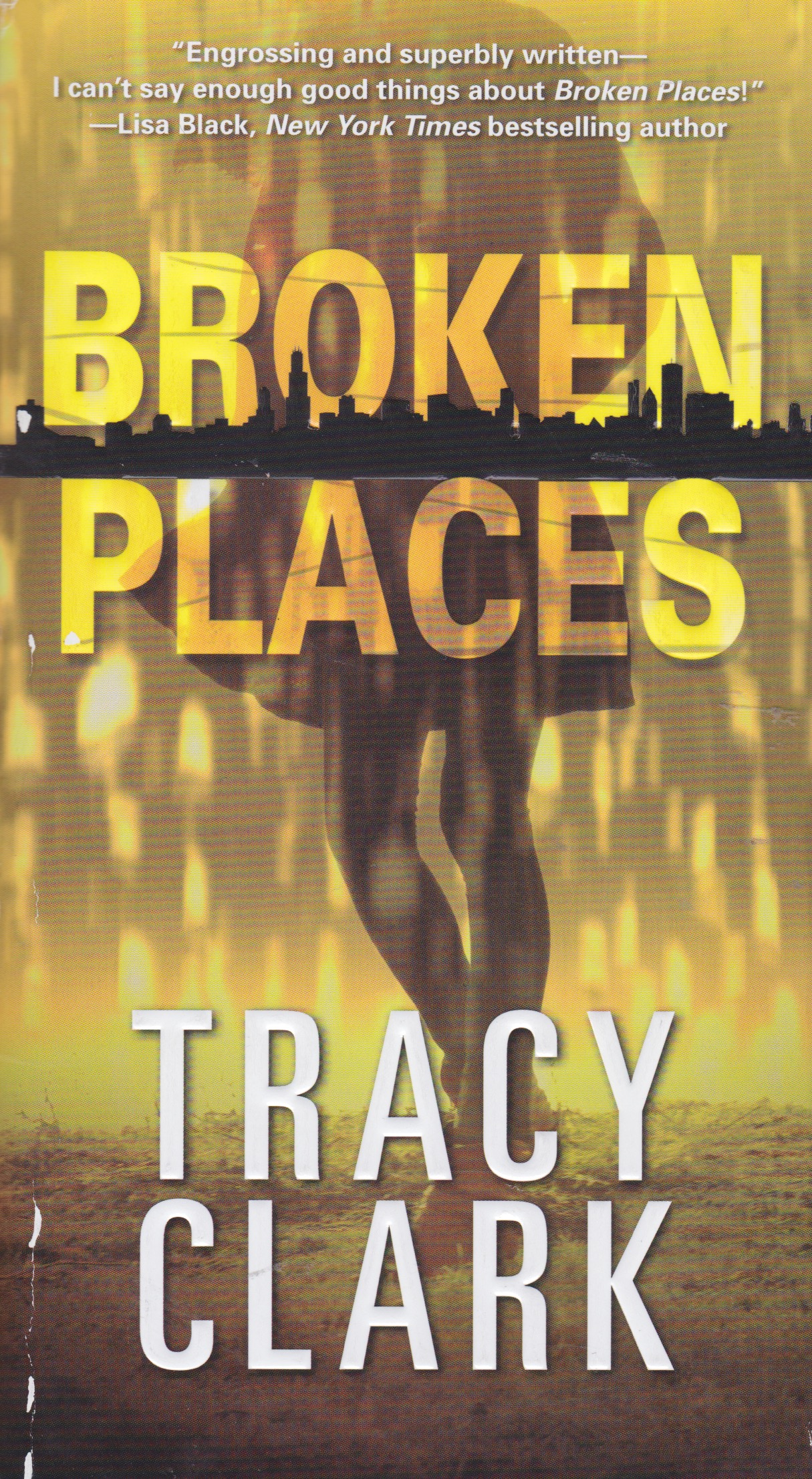
Yesterday I  finished reading the first Cass Raines mystery, Broken Places.

broken places

Chicago cops had to be on the lookout for any number of nefarious mopes eager to take a potshot, but this morning my biggest enemy was turning out to be the scorching rays of the summer sun. I slid into the driver’s seat of the unmarked car and cranked the windows down, balancing a rapidly melting iced tea, extra ice, between my thighs. A few feet away, my partner, Detective Ben Mickerson, stood in front of the Dairy Queen basking in the hellfire. “Vitamin D,” he said, ruddy face pointed skyward. “Soak in that Vitamin D.”

“You say Vitamin D, I say skin cancer,” I groused, The hot vinyl seats nearly seared through my blazer and pants–and they were both summer weight. I checked myself in the rearview. The little makeup I’d started the day with was long gone now, melted away by flop sweat. I flicked at the sweaty ringlets at the nape of my neck and wiggled uncomfortably in my bulletproof vest, my breasts pressed flat, as though squeezed between the hot plates of a waffle iron.  I looked like I’d gone through a car wash, and it was just ten AM. No great loss, though. Five mintues tops was all I ever invested in primping. I didn’t have the patience for it, and in the long run it seemed rather silly. Thugs and killers didn’t care what I looked like. They spotted the cop car, they ran, then I had to run after them. I’d be thirty-five in the spring. Eyeliner and blush weren’t going to make the running any easier.

“The sun is going to kill you,” I yelled out the window.

Cass Raines, Clark’s private eye, is actually a cop when the book opens; and she and her partner are tracking a problem kid, a gangbanger who killed four members of a rival gang, starting a war of attrition and revenge. They chase him down to a rooftop, and Cass almost has him talked down when another douchebag of an officer–protected by powerful political connections–ruins the situation and she ends up having to shoot the kid. She resigns from the force, haunted by the kid she killed, and become a private eye. This backstory plays out over the first several chapters, and then we flash forward two years to the present day. Cass is a complicated young woman–her mother died when she was young; her father took off and she was raised by her grandparents, whose home she inherited–and she is very solitary. This, her first case, kicks off when her father figure, a local priest (she’s lapsed) hires her to find out who is following and harassing him; but before she can even get truly started on her investigation Pops (as she calls Father Ray Heaton of St. Brendan’s) is found dead in the confessional booth, with the gun in his hand, an apparent suicide–and there’s another body in the church, a young Latino gangbanger named Cesar. The police–including her nemesis, the douchebag who ruined her attempt to bring the kid in several years earlier–are very quick to rule it a murder-suicide, but Cass doesn’t believe it for a minute, and begins her own investigation.

The case itself is full of surprising twists and turns, and Cass takes quite a beating as she tries to find out the true story of what happened that night at St. Brendan’s–and her personal life also starts to grow a little complicated, with the return of her birth father and the introduction of a possible love interest police detective for her. Well written, Cass is the kind of character you love to get behind and root for; she has, like all the best private eyes in fiction, a strong moral code of her own that turns her into a complex and fascinating character, one you can’t help but like even when she maybe isn’t behaving at her best. Clark has done a fantastic job of breathing life, not only into Cass, but into her supporting characters and the people she comes across throughout the course of the case.

Clark also makes Chicago into a very real place. I spent eight years of my childhood growing up on the south side, and she brings Chicago to life, with all of its problems and charms, with a loving but critical eye. It’s not the same Chicago we see through the eyes of Paretsky’s V. I. Warshawski, but it’s to Clark’s credit that she doesn’t try to imitate the queen of Chicago crime, but rather emulate her.

An impressive debut, and I am looking forward to reading further adventures of Cass Raines.

One More Night

Thursday. I overslept this morning and thus didn’t make it to the gym–I’ll have to go tomorrow night after work–but I also had a really great night’s sleep and so am taking that as a win; now that I am out of bed my muscles aren’t tired or sore. I’ll do some stretching and my abs this morning before getting in the shower. I also have to get up tomorrow morning and go to the eye doctor; instead of my usual wimpy not complaining and accepting things, I called them and told them I can’t read in my progressive contacts so I need a stronger prescription. So, I am going in tomorrow to get a new trial pair and perhaps order my new glasses and a year’s supply of the contacts; depending on how the new ones feel.

The decisions have been made on the Bouchercon anthology, and all the people who submitted have been duly noted. This weekend I will read the chosen again and put them in order. I am currently waiting to hear back from all the selected authors. I think we’ll make the announcement of the table of contents next week. Huzzah!

Yesterday I also started writing, of all things, a Chanse MacLeod short story. I know, right? I don’t think I’ll ever write another Chanse novel, but there are ideas I had for him that I don’t want to really waste, and hey, why not write short stories about him? I always had in mind to write about him returning to the town of his birth; I also had a story in mind involving his younger brother; another with him dealing with his fraternity past in Baton Rouge–all stories my publishers were never interested in since they weren’t set in New Orleans. As I have said before, I’ve never really known how to write a private eye mystery short story, but all this short story reading I’ve been doing has kind of opened my eyes in that regard; so thank you, Sue Grafton, Ross Macdonald, Laura Lippman, etc. I’ve already realized that the opening doesn’t work, and it’s just extraneous crap I don’t need. But I am going to soldier on, and hopefully today I will finish the first draft. I also have an idea for a short story involving Chanse’s partner, whose name I cannot recall; I’ve always been interested in writing about her–the straight girl who paid for college by stripping on Bourbon Street. I cannot for the life of me think of her name right now, which is annoying, but I always thought she was interesting. I’d even thought about spinning her off, even using Chanse as a supporting character in the books–but then, is there an audience for a series about a female private eye who used to work as a stripper? But I think I can make it work as a short story. We’ll see.

Last night while I was making dinner I reread some of the short stories I have in progress, and was quite pleased with them. I am going to try to get those revisions done as quickly as I can, so I can get them out of my hair so I can focus on getting the new project done.

I’m still behind on the Short Story Project, but I did manage to read Raymond Chandler’s “Red Wind” yesterday; someone recently talked about it somewhere on social media as the perfect hard-boiled short story. It had been a while since I’d read Chandler–and I haven’t read all of Chandler, either, something I need to remedy–and so I thought it was a great opportunity to read this story, which I wasn’t familiar with.

There was a desert wind blowing that night. It was one of those hot dry Santa Anas that come down through the mountain passes and curl your hair and make your nerves jump and your skin itch. On nights like that every booze party ends in a fight. Meek little wives feel the edge of the carving knife and study their husbands’ necks. Anything can happen. You can even get a full glass of beer at a cocktail lounge.

I was getting one in a flossy new place across the street from the apartment house where I lived. It had been open about a week and it wasn’t doing any business. The kid behind the bar was in his early twenties and looked as if he had never had a drink in his life.

I’ve not read all of Chandler, or his hard-boiled cohorts Dashiell Hammett, Ross Macdonald, or noir master James M. Cain. What I have read I’ve greatly enjoyed; as I have greatly enjoyed John D. Macdonald. I think I’ve been influenced by all of them to some degree; and there simply isn’t enough time to read. I’d love to go back and not only finish reading all of their works but to reread the ones I’ve already read; The Maltese Falcon, for example, is way overdue for a reread and so are the Travis McGee novels; The Big Sleep, Farewell My Lovely, and The Lady in the Lake, along with Love’s Lovely Counterfeit and of course, the Archer novels (although I am reading the Archer short stories). Anyway, I’ve always loved these writers and their work, and I do need to go back and reread them, problematic as some of them may be to modern eyes.

“Red Wind” is a really good story, complicated and complex, but still moves relatively easily from A to B to C. It opens with Marlowe stopping in at a bar across the street from where he lives in an apartment building, and a murder occurs right in front of him and the other denizens of the bar. After dealing with the police he heads back to the apartment building where he runs into the proverbial ‘dame’ of these types of stories, she lies to him, of course, but also manages to save his life when the murderer shows up to eliminate the witnesses. But while the mystery of the murder is now cleared up, turns out the victim has left some loose ends behind–involving the dame and some others. He was a blackmailer; the murder had nothing to do with the shooting (a very clever shift by Chandler), and Marlowe is on the case, trying to solve the blackmail cases and dealing with the LAPD. The writing is choice, terse, and all throughout the story the Santa Ana wind plays a role, almost like another character, driving people to do things they might not do under normal weather circumstances.

And now, back to the spice mines; since I didn’t go to the gym I need to get other things done.

IMG_3978