I was really into soaps in the late 1970s and up until the mid 1990s or so. My fandom, how it came to be, and how much of an influence soaps were to me as a writer is a topic for another time, perhaps after Pride Month is over because it’s really not Pride related, except for how they related to me as a gay man. But by the late 70s, I was strictly an ABC guy: All My Children, One Life to Live, General Hospital and Edge of Night, with me having a special attachment to Edge, which will also be a subject for another time. But soaps were strictly a daytime medium for a very long time–at least until Dallas premiered. Originally, each episode was a stand-alone but the show very quickly moved to the serial format, and the ratings went through the roof–and of course, “Who Shot J.R.?” was a global phenomenon (I figured it out early on–when I saw that Mary Crosby was only contracted for four episodes in the following season and the reveal that the shooter’s identity would be revealed in episode 4…it wasn’t too big of a leap from there to “it must have been Kristin”. I was right.), and Dallas ruled the ratings from there on out..
The success of Dallas, of course, lead to copycats from other networks trying to cash in on the new craze; television is nothing if not a place where imitating success is seen as a no-brainer; the irony was that so many of the other soaps that launched at night in the wake of the huge success of Dallas…failed for the most part. The only post-Dallas night time soaps that enjoyed long runs were Knots Landing, Falcon Crest, and Dynasty.
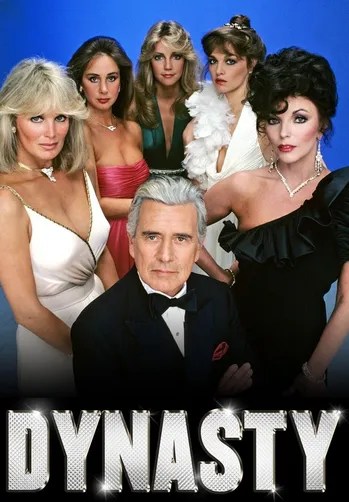
I first learned of Dynasty in a People magazine profile on Linda Evans, who at the time was best known as the woman John Derek left for Bo (who was a huge star at the time), and it mentioned she’d done a two hour pilot for a night time soap called Oil. By the time the fall previews started dropping, the show’s name had been changed to Dynasty, and there was going to be a gay character on the show. Once I read that, I knew I was going to watch. And then the premiere of the show was delayed months because of a strike. The show also had some other cast members I knew of and was interested to see–Wayne Northrop, who’d played Roman on Days of Our Lives; Pamela Sue Martin, of Nancy Drew and The Poseidon Adventure fame; and of course long-time television star John Forsythe as Blake Carrington, the patriarch of the family.
The first season was interesting enough, but the show didn’t really catch fire until the second season, when Joan Collins joined the cast as Blake’s first wife and mother of his children, Alexis. By the end of the season Dynasty had climbed from middling ratings to the Top Five, and it had become must-watch television.
But my primary interest was the character of Steven.
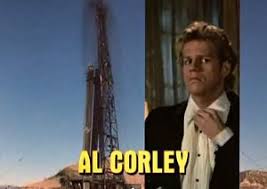
Al Corley as Steven Carrington
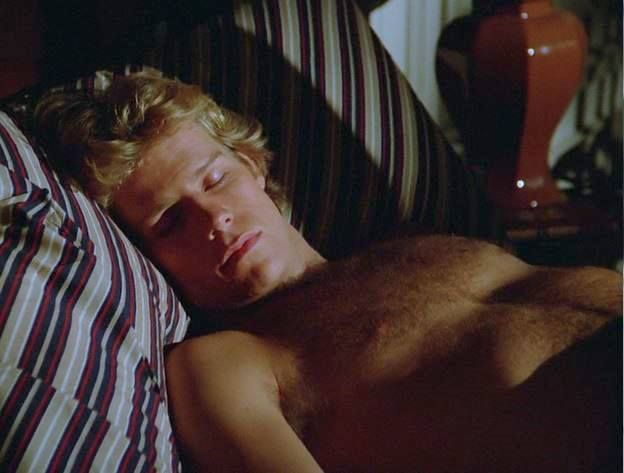
Originally played by Al Corley, Steven’s storylines were made clear in the pilot; Steven is coming to terms with his sexuality, coming back to Denver for his father’s wedding despite the fact that Blake is homophobic and he’s been living with a man (Ted Dinard) in New York for the past few years. Steven still isn’t entirely sure of his sexuality (it never occurred to anyone in production that he could be bisexual; he only had a binary choice during the entire run of the show), and decided to go to work on an oil rig to “become a man.” His co-workers pranked and hazed him for being gay at first, and then tried to “straighten” him out by buying him a hooker, which doesn’t go well. He then embarks on an affair with his boss’ wife Claudia (played by Pamela Bellwood, who was probably one of the best actresses in the cast), who was also mentally ill and her sanity wavered throughout the run of the show. Ted comes to Denver to get Steven to come home, but Steven’s decided to stay in Denver and try to get on with his life and ends things with Ted. Unfortunately, Ted comes to the Carrington estate (which was ‘played’ by Filoli, gorgeous place that was also the ‘setting’ for Laurie R. King’s superb Back to the Garden) to say goodbye, Blake comes home already angry, becomes angrier to learn Ted is in the house, rushes upstairs to see them hugging goodbye, and in a homophobic rage pulls Ted off Steven, punches him and knocks him down–only he is killed when he hits his head on a fireplace guardrail–and now Blake has to go on trial for murdering his son’s gay lover; and now the entire world nows.
Alexis returned for the trial, entering the courtroom wearing a veil, and Fallon gasps, “oh my god that’s my mother” setting the stage for season two, and night time television’s greatest villains, Alexis.
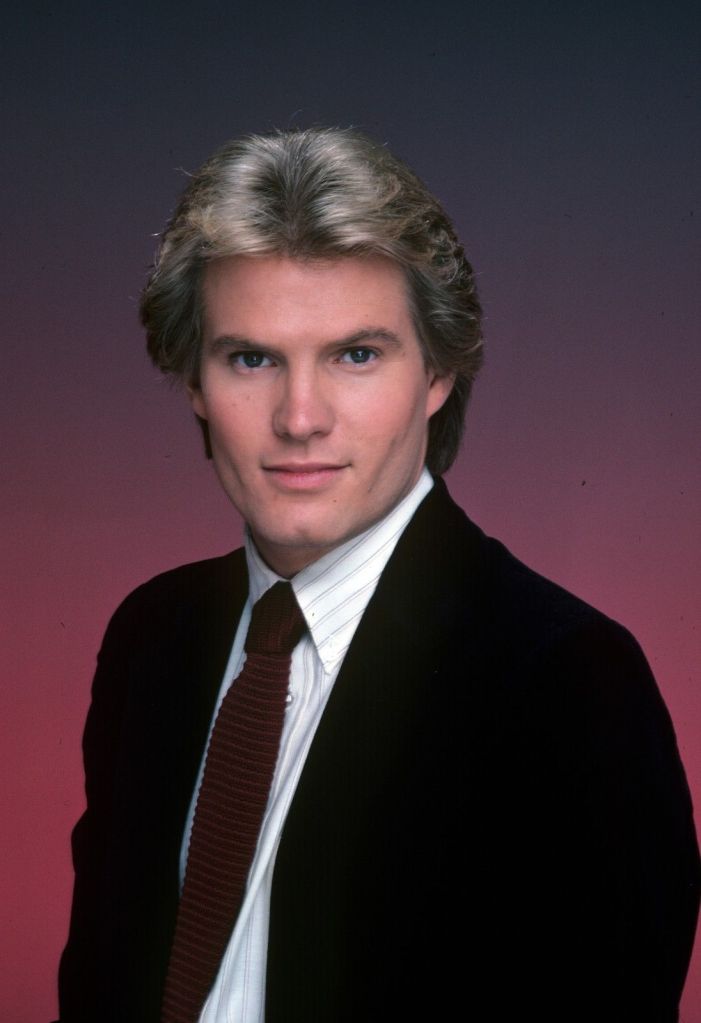
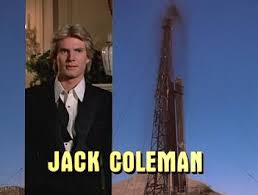
Season 2 was disappointing in terms of Steven as he spent season two trying to be straight, getting involved with and marrying Sammie Jo (Heather Locklear in the role that made her famous), but eventually telling his entire family that he’s gay, he’s tired of trying to be someone he’s not, and leaves Denver. He is reported killed in a oil rig explosion in the south China Sea in season three, which was their way of recasting–“plastic surgery so he doesn’t look the same”–and he was replaced by Jack Coleman (at the time best known for playing a serial killer on Days of Our Lives).
Jack Coleman, the second Steven
Coleman was fine, but he was different, and the character changed to match the actor. His entire storyline for the rest of the series involved him getting married, ruining that by getting involved with another man–before deciding what to do with him again for the sake of storyline; showing how hard it was to actually integrate someone with a same sex attraction into the cast of a soap. Every man he was involved with was a new character, and soaps–whose mainstay bottom line is thwarted romances, marriage and divorce–really didn’t know what to do with a non-straight character, other than throwing him into relationships with women (???) to have them end badly and so on.
When the reunion film was done in the 1990s, Al Corley returned as Steven (no explanation of why he looked the way he did before the surgery) and he’d made peace with his sexuality, again living in New York happily with another man and raising his son (oh yes, the gay character also impregnated one of his ‘women’)…while never once raising the possibility of bisexuality; I guess getting the 1980’s home audience vested in a gay character was risky enough without bringing in bisexuality–which tells you where we were as a country in the 1980’s…and we shouldn’t also overlook the fact that it was Dynasty that brought HIV/AIDS to the forefront of conversations in this country. Rock Hudson’s AIDS diagnosis became public shortly after he appeared on the show, and there was a lot of panic because he’d kissed the Linda Evans character–had he infected her? (We didn’t know as much then as we do now; now that fear is laughable but it was palpable back then because there was so much ignorance about it then, thanks to the Reagan Administration and the deeply embedded homophobia in post-war American culture.)
I started rewatching the original show once it was available for streaming, and that first season really is a slog; Blake was the primary villain in the first season (Alexis took his place, turning him into a more traditional soap hero–flawed but a good person at heart) and he just didn’t have the gravitas to relish being evil the way Joan Collins jumped in with both hands and feet), so while I was enjoying seeing the more honest and realistic to life way Steven and his dilemma was displayed in that first season–even the affair with Claudia made sense the way it was written–they really didn’t know what to do with him after the recast, and he descended from the fully developed realistic character Corley played to the two-dimensional soap hero he devolved into after the recast.
But…it was still pretty daring for the 1980s, and I did appreciate the attempt at representation. I know the reboot, which I didn’t watch, made Steven straight up gay; even gender swapping Sammie Jo by turning her into Sammy Joe. Progress is progress, and we cannot ever dismiss out of hand the brave attempts at using homosexuality and familial homophobia as a source for story; they were fighting the network censors, the right wing, and most of the country was homophobic, too.
They did the best they could and it was important at the time…even if it doesn’t hold up well under modern understanding.
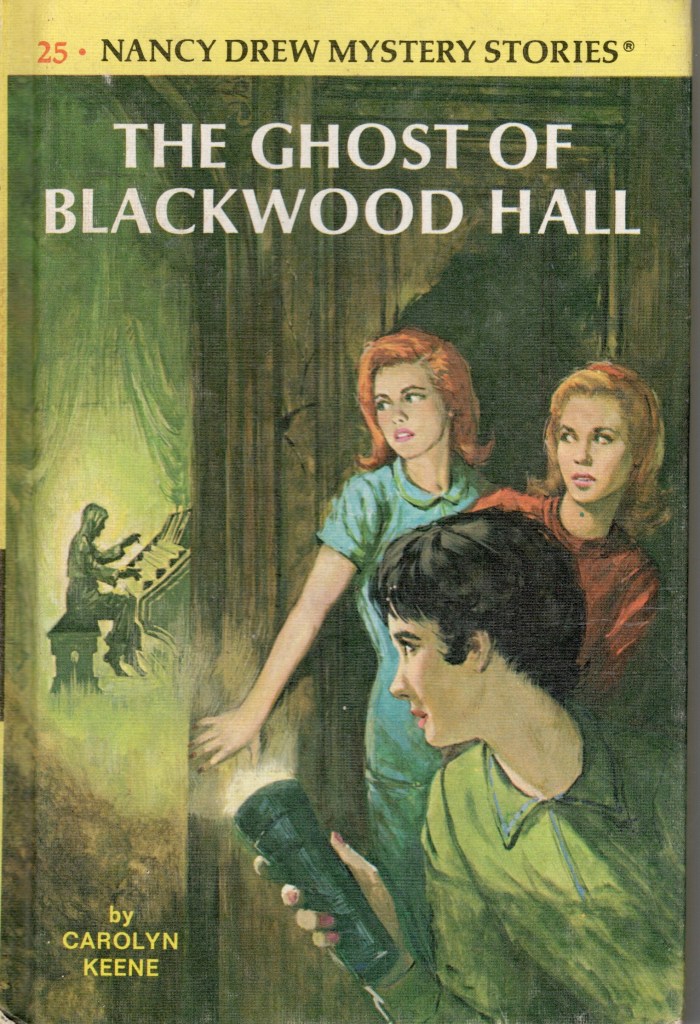
One of the most fun, for me, things about being a writer is being able to pay homage to books and writers I’ve enjoyed or felt a connection to in some way. I do this in at least every book I write–sometimes it’s as little a thing as having one of my characters reading a book I greatly enjoyed–and sometimes it’s a little more sly and tongue in cheek. For one example, I wondered occasionally while writing Bury Me in Shadows if anyone would notice that the name of the plantation house that burned during the Civil Was was Blackwood Hall–I only called it that once or twice; I usually referred to it as “the ruins”–and that it was a ghost story…hence The Ghost of Blackwood Hall, which had always been one of my favorite Nancy Drew mysteries when I was a kid (my favorite books in any series were ones that dealt with ghosts, hauntings, or the supernatural–it never was anything supernatural–in them; even as a kid I had, apparently, this morbid fascination with death and the afterlife that has continued into my adulthood). Vieux Carré Voodoo was also inspired, in some ways, by The Mystery of the Fiery Eye, one of my favorite Three Investigators mysteries–a jewel stolen from an idol that cultists will kill to get back is at the heart of both stories, and I also took inspiration somewhat from Wilkie Collins’ The Moonstone, which I had also read and loved as a child.
I’ve not picked up a Nancy Drew mystery in years to read through, until recently. I remember the series fondly–it wasn’t my favorite, nor was the Hardy Boys; but those books were more easily accessible and easier to find in stores and libraries than the other kids’ series, and with the kind of obsessive behavior I’ve always had–which hasn’t tempered much with the passage of time–once I started reading a series I wanted to read (and own) the complete set. This odd childhood obsession has never abated, even as I am now past sixty; I don’t have room to have all my series books out displayed on bookshelves (they are some of the boxes in the attic and the storage unit) and I think I am missing a few volumes from each series I do collect–but without being able to put them out, it’s hard for me to know which ones I am missing, so I’ve kind of held back on collecting them over the last decade or so. Discovering eBay in the wake of Hurricane Katrina was a big impetus in getting me to start collecting (trying to finish collecting) again, but the lack of space for storage–let alone putting them out on display in bookcases–inhibited me and I began to wonder about the advisability and the point of collecting children’s book series if I was simply going to put them in boxes and store them. It seemed kind of dumb, in all honesty, and so I stopped.
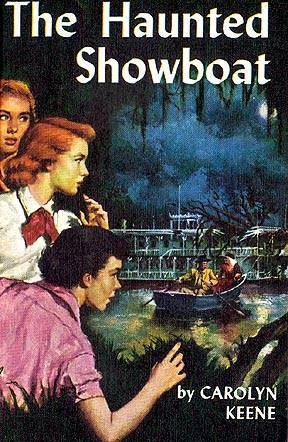
But the kids’ series had an enormous impact on me growing up and as a developing writer. I honestly think that The Haunted Showboat, number 35 in the Nancy Drew series, was my first actual encounter with New Orleans and Mardi Gras; it was either the fourth or fifth Nancy Drew mystery I had actually read (I started with The Secret of Red Gate Farm, The Mystery at Lilac Inn, and The Hidden Staircase; I think the next I read was The Haunted Showboat or Password to Larkspur Lane) and I do believe it was Nancy Drew who introduced me to New Orleans (outside of US History; I knew the Battle of New Orleans and the Louisiana Purchase and all of that, but this was my first non-historical introduction to the city).
I used to be able to list the books in order as well as give some background on the story; my memory isn’t quite as reliable on that score as it used to be. I joined some fan groups on Facebook, primarily to see if there were other alternatives than eBay and scouring second hand stores for the copies of the series books I am missing (and that’s a whole other story; there’s definitely a murder mystery novel that can be built around adult fans of kids’ series, seriously), and have been taken aback by the toxicity that can show up in these groups: hatred of anything new or daring or different to do with the characters (they have gone to TOWN on the new television series for both Nancy Drew and The Hardy Boys–hating changes and updates with the fiery white hot passion of a dozen burning suns–and it inevitably comes down to ‘political correctness’ and ‘being woke’–despite knowing that all the earlier series books were revised in the 1950s thru the early 1970s to get rid of dated stereotypes and racism), but that is a subject for a different time (I’ve not watched Nancy Drew–literally forgot about it–but I’ve liked The Hardy Boys).
Anyway, as I am writing a new Scotty book, I decided to do some research into Nancy Drew and New Orleans–mainly deciding to reread both books that were set, at least in part, here.
So, I went on line (much easier than going through the boxes in storage–which is yet another example of how stupid it is for me to keep storing books) and ordered copies of both The Haunted Showboat and The Ghost of Blackwood Hall, which, according to a synopsis I read on a Nancy Drew website, had Nancy, Bess and George come to New Orleans–which I didn’t remember. I remembered that the book was about Mrs. Putney being swindled out of her jewelry, and it had something to do with spiritualism, which eventually led Nancy and her friends to the abandoned, haunted Blackwood Hall–but I did not remember them coming to New Orleans. This struck me as strange–I certainly vividly remembered other parts of the story, particularly a scene when Ned and Nancy stumbled into quicksand (which, according to everything I read and saw on television and/or movies as a child, I thought would be more of a danger to me at every point of my life).
Both books arrived on the same day, but since I do remember The Haunted Showboat more than I remembered anything New Orleans with The Ghost of Blackwood Hall, I decided to look through the latter and read the New Orleans section again.
Yeesh.
Despite my obsession with collecting and reading the entire series, as I mentioned earlier, Nancy Drew was never my favorite of the kids’ series; I liked The Three Investigators and Ken Holt most of all, and I always thought both Trixie Belden (the original six) and Judy Bolton were better written and more interesting than Nancy (Judy was also a goody two-shoes, but she was more rounded and developed, as were her friends), and looking through The Ghost of Blackwood Hall made me remember why she was never a favorite; the books aren’t very well written. (The original texts were much better than the revised ones, but it was a very low bar to hurdle, seriously.) And yet I had to have all the books and read them all; I watched the 70s television series with pre-Dynasty Pamela Sue Martin; and I still sort of have a soft spot for good ole Nancy; but man, these revised texts are simply terrible–and the later, newer books steadily declined in quality–I remember one where Nancy and her friends, being chased by a bad guy, duck into a room and–this is so stupid, it was even shown as an illustration–hide by sitting in chairs and holding up picture frames because of course the bad guy would look at them sitting still and believe they were a photograph or a painting.
Even as a kid, I knew that was fucking stupid.
Anyway, so Nancy is hired by a jeweler to help out his client Mrs. Putney–who clearly isn’t the sharpest tool in the shed–who is a widow and received a message from “beyond the grave” from her husband that she needed to bury her most valuable jewelry in the woods for safekeeping. (She’s also told to tell “no man or woman” about this; which is why the jeweler brings her to Nancy because she’s a “girl”–but the jeweler is a man…I guess in her mind he doesn’t count because he’s the one who spots that her jewelry is all fake, once she’s reconsidered her stupidity and dug the jewels back up.) There’s a lot of gullibility and superstition in this book, for the record, that doesn’t really make any logical sense. In a weird sequence of events, Nancy winds up with the name of a man from New Orleans who was an accomplished jewelry designer and “capable of making fakes that look real”–so she decides to follow the clue to New Orleans to look for information on the man. Because of course. Anyway, despite the fact that Mrs. Putney isn’t paying for this trip and in fact warns her not to go–Carson Drew, Nancy’s father, decides to foot the bill for her, Bess and George to fly down to New Orleans and follow this laughable clue that could only be a valuable one in a Nancy Drew mystery. (As I was reading this part again, I started thinking about how expensive this would be back then–the revised text was written in 1967, the original in the late 1940’s–and how amazing it was that all three eighteen year old girls had nothing else to do and could hop on a flight to New Orleans just like that; I am sure even back then it was more expensive to buy a ticket at the last minute.)
None of this mattered, of course, to young Greg when he was reading it the first time…and yes, I am being harsh about a kids’ series book which I am clearly too old for, but c’mon. And I knew when I was a kid that the books weren’t well written. (One thing that always annoyed me about this series and the Hardy Boys was they never really deduced anything or solved an actual mystery; really, the books were usually about catching a criminal whose identity was known almost from the start through a series of contrivances.)
But…
Once they are in New Orleans–after Bess tells a strange woman on their flight where they are staying in city: Nancy, seated in front of them, was sorry their hotel had been named. She had wanted to keep their visit to New Orleans as secret as possible. Um, you’re on a flight to New Orleans. So, since it’s too late to call on the suspect’s former boss, they go sight-seeing–but Nancy ducks into every jewelry and/or pawn shop they come upon.
The trip proved to be pleasurable, if not profitable. Their inquiries led them into many sections of New Orleans. The French Quarter, where the buildings were charming in their elegance of a bygone day, interested them most. Beautiful ironwork, delicately tinted plaster walls, old courtyards, once the center of fashionable Creole family life, fascinated the girls.
On a balcony, a brightly-colored parrot chattered at them in friendly fashion. A smiling woman, bearing a basket of flowers, stopped to sell a flower to each girl. On all sides, the visitors saw interesting characters, and heard the soft-spoken dialect which was a blend of French, Cajun, and Gumbo.
GUMBO IS NOT A LANGUAGE.
And since Cajun is a derivative of French…sigh. And by 1967 New Orleans wasn’t really bilingual anymore. It had begun to die out around the turn of the twentieth century, and it’s definitely a rarity here now to find anyone native who speaks both English and French, or speaks French as their first language.
The next day they visit their suspect’s former employer, who knows nothing, and then do some site-seeing before lunch “in a quaint restaurant.”
“New Orleans is wonderful!” Bess exclaimed. Counting on her fingers, she added, “We’ve seen the banana wharf, the market, the garden district, and that old cemetery where all the dead are buried in tombs above the ground.”
“That’s because this place is below sea level,” said George. “Say, do you suppose that guide that we believed the story about the tomb which is supposed to glow at night with an unearthly light?”
“He said spirits come out and weave back and forth like wisps of fog,” said Bess.
“That’s just what they are–fog,” George declared practically.
“Oh, I don’t for a minute believe in ghosts,” Bess replied quickly.
“I wish we had time to go to Grand Isle, the haunt of Lafitte and his men,” said Nancy.
“Who is he?” Bess asked.
“He was a famous pirate,” Nancy replied. “According to tradition, when burying treasure, he always murdered one of his band and left his ghost to guard the hidden loot!”
I guess Bess never studied about the Battle of New Orleans–and no one at either the Stratemeyer Syndicate or Grosset & Dunlap knew that you capitalize “Garden District.” Then comes a really weird section where the girls visit a spiritualist photographer on whose works sometimes “spirit writing” appears. Naturally, Nancy’s image has a warning to stop sleuthing, and then the lights go out and when they come back on, the photographer is unconscious, along with Nancy, are gone! This for me is a particularly weird section. Nancy is the point of view character, even if at a distance. Why would you then switch to Bess and George frantically searching for Nancy rather than showing her capture and abduction and eventual escape? WHY HAVE THE ACTION TAKE PLACE OFF THE PAGE?
Oh, and when Nancy regained consciousness, she was tied up and trapped in a basement near the Quarter.
A basement. Near the French Quarter. In New Orleans, which we’ve already learned is below sea level and therefore bodies can’t be buried in the ground.So of course we have basements.
But Nancy leads the cops back to the house, where all evidence of her being tied up and so forth have disappeared:
To their surprise the policeman remarked soberly, “This isn’t the first time queer things have happened in this section of the city.”
Ah, so it must be the Faubourg Marigny. Lots of queers lived there and in the lower Quarter back then. But I guess the girls should consider themselves lucky that they found an English-speaking cop–who would never say “this section of the city.” He’d name the neighborhood–“this isn’t the first time queer things have happened in the Marigny.” So anyway, the girls decide to go home, and fortunately, there’s a flight from New Orleans to River Heights within an hour. They pack and head for the airport just in time to catch their flight home–when Bess mentions something else mysterious that is going on that she knows about and just hasn’t mentioned before for some reason, and of course, as always, this side story subplot is connected to the main one.
And that’s where I stopped, since that was the end of Nancy’s adventures in New Orleans.
Sigh.
The Haunted Showboat, on the other hand, opens with an immediate eye-roller for New Orleanians:
“Would a trip to the Mardi Gras interest you, Nancy, and also a mystery to solve?” Bess Marvin asked.
Mardi Gras is French for Fat Tuesday, so basically Bess just asked her if she would interested in a trip to “the Fat Tuesday.” Yes, I am well aware that outside of New Orleans it’s all lazily considered Mardi Gras, but it’s really Carnival. Mardi Gras is quite literally Fat Tuesday, the final day of Carnival, and while I’ve grudgingly come to accept that there’s no way that people will ever not refer to the entire event as “Mardi Gras”–even I have a tendency to get lazy and say”Mardi Gras” when I mean Carnival–it will never not bother me. Of course, Bess isn’t from Louisiana and she can be forgiven for getting this wrong, and even using “the” as unnecessary definitive article can be forgiven. But–and this is something that always annoyed me about both Nancy Drew and the Hardy Boys–never is it mentioned in this book that Nancy and her friends have been to New Orleans before, and never was it mentioned on that previous trip in The Ghost of Blackwood Hall that Bess and George have New Orleans relatives.
Wouldn’t you think that would have come up in The Ghost of Blackwood Hall? Of course it didn’t, because when book 25 was written they had no idea that Book 35 would return Nancy and friends to New Orleans and Louisiana. (This kind of continuity thing used to drive me nuts; Nancy and the Hardys were ‘well known’ as amateur detectives, and every book opens with a reference to their first series book as well as the most recent, and closed with a teaser for the next, despite the fact that really, every mystery they solved was a stand alone with no connections to the past or the future. A couple of other continuity errors that always bugged me with Nancy is that Ned is mentioned as her boyfriend in the revised text of Number 5, The Secret at Shadow Ranch even though she meets him for the first time in Number 7, The Clue in the Diary; she finds her dog Togo as a stray at the opening of The Whispering Statue’s original text; but she already has Togo in the revised text of earlier volumes and yes, I am aware that I have spent way too much time in my life obsessing about Nancy Drew and continuity errors in the series–and there are a lot.)
Anyway.
If anything, The Haunted Showboat is actually worse than The Ghost of Blackwood Hall in so many ways, and not just in the aforementioned minor ways. First of all, the cousin of Bess and George’s, who invited them down, is named Donna Mae, because back in the day you could always make your audience know “hey this is set in the South” by giving a female character two first names–and always something Mae. (Ellie Mae Clampett is another example; for the record, out of dozen and dozens of southern women relatives there is exactly one whose name was “Something Mae”.) It takes a while for them to get to Louisiana–Nancy’s car is stolen once, and the replacement is sabotaged–because of course the criminals down in Louisiana will stop at nothing to keep this teenager from the midwest to interfere with their plans!–but there’s one part of their trip that is absolutely hilarious: they drive through Mobile on their way to New Orleans, but somehow get to the Mississippi River before they get to New Orleans or the plantation outside of town they are visiting:
Soon the girls reached the broad Mississippi and gazed at the peaceful, somewhat muddy river.
SOMEWHAT MUDDY?
Nancy then follows the River Road and turns inland. This geography makes literally no sense at all. But..it’s Nancy Drew, and the worst is yet to come.
You see, the Havers–who live at Sunnymead–have two black servants: Mammy Matilda and Pappy Cole. And oh yes, it’s just as racist and horrible as you can imagine–especially when you add in the “voodoo drums” they hear when canoeing through the swamp to get to the wrecked and haunted showboat, the River Princess. Anyway, yes, you can just imagine how dated and awful these depictions are. And everyone calls it “the Mardi Gras,” which no one does in the real world, either. The Quarter is referred to (correctly) as the “Vieux Carré”, but an aside says “or the old city”–it means “old square”, not old city–and of course they have lunch at Antoine’s.
There’s also an Uncle Rufus, who lives in the swamp in a tiny cabin and does voodoo spells.
There’s also a swamp episode and a wrecked, haunted showboat in an episode of Scooby Doo Where Are You?, which I’ve always wondered whether it was inspired (or stolen) from this edition.
So, neither book has aged particularly well–I’m still trying to wrap my mind around Gumbo as a language–and I suppose I shouldn’t be surprised by the racist depictions of Black characters in The Haunted Showboat, but the book is still in print and kids are still reading it. Everyone knows that the original texts of the Hardy Boys and Nancy Drew series were updated in the 1950’s and through the 1960’s to get rid of problematic depictions of non-white characters; it might not be a bad idea for them to do it again now. No one should be reading The Haunted Showboat as it stands today, really.
But it was an interesting time travel to revisit the books again. At some point I’d love to talk about all the kids’ series I read when I was a child, but…time.

 Queer and Loathing in America