Method of Modern Love

Saturday morning–so lovely to be the weekend! But so many errands to run today, so many chores to do, so much…it’s almost overwhelming. And yet these things need to be done, need to be handled, need to be taken care of; it still doesn’t make doing them any less horrific and horrible, or less time consuming. And really, it’s about the time consumption. There is so much I need to get done, so much I need to do, so much I need I have to get finished and out of the way…that it makes doing the errands seem even less appealing than they usually do.

Sigh.

I just need to get–and stay–motivated.

And isn’t that always the issue?

We started watching a mini-series on Netflix last night, Collateral, starring Carey Mulligan, and it’s quite interesting; every hot button topic you can think of in Britain right now: immigration, crime, drugs, the military and PTSD; it’s quite compelling, and Carey Mulligan is exceptional in it. It all begins with the murder of a pizza delivery boy, and then slowly spreads from there to an enormous conspiracy involving people trafficking and refugees. It’s quite compelling, and all  of the performances are excellent; it’s very similar to Seven Seconds in that the majority of people, no matter what their actions, are understandable through the complexity of their emotional inner lives and who they are…but the underlying villains are quite awful. We watched the first three episodes, and there’s another to watch tonight.

Out of curiosity, we also watched the season finale of The Walking Dead; we didn’t continue watching once the season returned after the winter break because we were, frankly, over it. And while the first part of the show was enormously satisfying, I also understood why there was so much bitter on-line chatter about it afterwards–and I had to agree. I was just glad I hadn’t invested any time on the second half of this season.

I also have some reading to do, and I would like to go to the gym this morning, but I don’t think that’s going to happen, due to that time thing. But perhaps–perhaps--I can get over there after my errands.

We’ll see how it goes.

Meanwhile, for the Short Story Project, I read  “Blood in the Sun” by Justin Scott, from Lawrence Block’s Alive in Shape and Color:

Summer, 1973

New York City

“If you can fly, then this roof is as good as any,” Clyfford Still told Jimmy Camerano.

Jimmy was sitting on the edge of the parapet with one arm hooked around a masonry gargoyle and his legs dangling ninety feet above Tenth Street.

“Zoom from New York. Alight on a calmer island. Paint pictures undisturbed.”

Still was Jimmy’s hero, a unique painter, a founder of abstract expressionism, and a recluse who likened art galleries to brothels, museums to mausoleums, and most of his fellow artists to ambitious backstabbers. Tall, white-haired, and slick in a sharkskin suit, he stood inside the parapet, leaning on his elbows, peering down dubiously at Jimmy’s landing zone.

This is a delightful tale about the world of art in New York City, and how critics apparently wield a lot of power over the work of artists; one of the characters is one of those critics from the New York Times who can either make or break an artist’s career. It’s also a tale of playing a long game for revenge, which seemed a bit much, but only afterwards, when thinking the tale over again–it was enormously satisfying to read but then when you’re finished and remembering you think, well….But the story of an artist on a ledge, ready to commit suicide because a bad review may have destroyed his career, was something a writer (another sort of artist, although I always roll my eyes at writers who call themselves artists and their work art; while i am more than willing to concede that literature is art, styling one’s self an artist always seems pretentious to me) can relate to; although I can honestly admit that while a bad review can make me angry, it never makes me either suicidal or homicidal. But this story was interesting; it held my interest and I was fascinated by the characters and the talk of art, and the twist ending was perfect.

Next up was “Night Windows” by Jonathan Santlofer, from Block’s In Sunlight or in Shadow:

There she is again, pink bra, pink slip, in one window then the next, appearing then disappearing, a picture in a zoetrope, flickering, evanescent, maddening.

Yes, that’s the word. Maddening.

Then he thinks of another: Delicious.

And another: torture.

This story was absolutely chilling, and more than a little disturbing. It’s a stalker story; a man watching a woman from his windows through hers in New York City; watching her undress and move around her apartment in various states of undress, remembering previous victims, thinking about what he’s going to do to her–and the planning stages of how he is going to insinuate himself into her life and destroy her, break her down bit by bit until he has satisfied his disgusting urges. There are surprises here, and twists that tend to catch the reader off-guard; Santlofer delightfully lulls the reader into a sense of security several times about what the story is but actually it isn’t; these twists and turns are wonderful and executed perfectly. I loved Santlofer’s story in the other Block anthology as well; I’m going to have to read more of his work.

And now, best to get those errands and things done.

30624044_10156310060538256_7117381024964967300_n

The Boys of Summer

I finished watching Netflix’ amazing series Seven Seconds last night, and it is some of the best, smartest television I’ve ever seen; it takes on so many issues, and handles them so incredibly brilliantly. The acting and writing is razor sharp; the show is moving and heartbreaking and so incredibly complicated. What is has to say about race and justice and family is just…I will be processing this show for several days. It reminded me very much of American Crime in how it realistically and powerfully presented every side of an issue, and how flawed everyone is, and how it makes you question your own assumptions and thought processes and basically, everything you think and believe. American Crime was an exceptional show; I honestly believe that it was low-rated because it was too complex and real for viewers to handle. Seven Seconds is at that same level of expertise and complexity; it also makes me question what I do within my own work; the layers I don’t peel away, and how my own work might be too simple.

Jean Redmann always says–and I shamelessly steal this at every opportunity–that we become crime writers because we have a desire to find justice in a world where justice isn’t always served, and this, as members of a marginalized community who rarely find justice, makes us want to write stories in which victims find justice–we want to create art in which justice is always served and is an absolute and is available for everyone, accessible, even as we know that it is, in fact, not. I know that I was enormously disappointed by the end of season 2 of American Crime; but it was much more realistic with its ending than it would have been had it been emotionally satisfying. We want to see the bad guys get punished, we want the circle that opened with the commission of the crime to close, be wrapped up and packaged with a neat little bow; we want order to be restored.

But we live in a world, and a society, in which order is an illusion; we pretend, just like we like to pretend we have control over our lives. There’s a wonderful quote which I can’t recall exactly, but it goes something like man  plans and the gods laugh. I know, after the Time of Troubles, I focused on working out and my body; because that was something I had control over. Even now, as I write and plan what I want to do with my career as a writer, I ignore the obvious: I can’t control whether an editor wants to publish my story or whether an agent believes they can sell my manuscript; I can’t control whether someone will buy my books and like them. But thinking about those things is part of what destroyed my will last year; I have to not worry about that, not worry about whether people will get what I am doing or whether I am going to get one-star reviews or whether enough copies of the books will sell so my publisher will continue to invest in my career. I can only do the best that I can and focus on the work itself and push all of that other stuff to the back of my mind. Just like I can’t control whether I am going to be killed in a car accident on the way to the grocery store or any myriad number of other things.

All I can do is make plans and try to control what variables I can. I can drive carefully and pay attention to what I am doing and remain alert to the other drivers and try to anticipate what they are going to do and be prepared for eventualities that I can foresee, while recognizing I cannot foresee everything.

As you can tell, Seven Seconds is a powerful viewing experience.

And Regina King is a goddess.

I think the reason the two stories I am currently failing at telling–“Once a Tiger” and “Don’t Look Down”–are failing because I don’t know the story I am trying to tell nor the characters I am writing about. In both cases, I worry that there’s no market for them; why write them if they have no future? But that’s again out of my control; that’s the kind of second-guessing that is fatal for an author. There are things that are within my control, after all, and my entire career has been guided by choices that I’ve made; I chose to write about gay characters, knowing that made break-out success next to impossible. I don’t regret those choices in any way; there’s no guarantee that writing something more mainstream would have brought greater success. And despite my tendency to overthink and self-deprecate, I am proud of all of my books. Every. Single. One. Of. Them. Some are better than others; some have flaws that I wish I hadn’t missed in the process of writing them. It’s difficult to evaluate one’s own work, no matter how clear-eyed one can be; I tend to always be my own worst critic. And as I get older and my memory begins to fail me more, I don’t remember what I meant to do, what was my goal when I was writing some books–hell, many of them. It never occurred to me, as I was writing the Scotty books, that I was writing a series with what is now called a throuple at the heart of it; that Scotty’s personal story was how a non-monogamous, promiscuous gay man came to be in  a relationship with two men, and how that has changed his life. Now, as I write the eighth in the series, they have gotten older and wiser and even have a young “son”–and not in the sexual way; they all look on Taylor, Frank’s nephew, as their child; kind of like My Three Dads–and I don’t even think about how unusual that is to write about. The series has become about aging as a gay man; moving from being that hot guy everyone wants to have sex with to an older guy not quite as motivated to slut around anymore but to help and mentor a younger gay guy, to make his life and his journey easier. I have to push my worries about these changes in Scotty aside and remember it is the character that people relate to, not him being young and hot and beautiful and going out dancing or doing drugs or picking up strangers; but the fact that he is so unapologetically himself.

And that’s what I’ve forgotten over the last few Scotty books; maybe it’s there, but that sense of who Scotty is as a person is something I feel like I’ve forgotten over time; maybe it’s in my subconscious, but I have to remember that: I need to remember the core of who Scotty is.

Anyway, I should probably get back to the spice mines. I am thinking a lot today, obviously.

IMG_1242

We Belong

Wednesday morning, and I have go have blood work done. No worries–it’s just for the semi-annual check-up, but I hate this whole process of fasting/not having anything to drink after midnight, plus the abject misery of having blood drawn–my veins roll, so they always have to DIG for them, generally leaving me with an enormous bruise–blah blah blah. Yay.

Plus, I can’t have coffee until I get back home.

AIEEEEEE!

Heavy heaving sigh.

Well, it wasn’t as bad as feared. She managed to get the blood vials filled on the first try, without having to dig! For once, I don’t mind getting one of those damnable “how was your visit?” emails, as now I get to recognize my technician for a job very well done. I don’t even have a bruise!

It’s been an interesting week. I’m watching the Netflix series Seven Seconds, which I am enjoying the hell out of, and Paul and I are watching also a BBC series called Retribution, which is one of the best concepts for a crime series I’ve seen in quite a while: a young married couple, who grew up as neighbors in rural Scotland, are murdered a few weeks after the wedding by a junkie robbing their apartment; the wife is about seven months pregnant. As the families get the news and grieve, the very next night after the bodies are found the killer for some reason is coming to see them and buys guys at a station twenty miles from where they live. There is a terrible storm that night and he wrecks his car, and the families find him and bring him inside. After they do, they see a news report which identifies him as the killer…and he is at their mercy. They drag him out to the barn, and sometime during the night someone cuts his throat…and now they have to cover up the crime. Juicy, right?

I also started writing two new short stories this week; don’t ask me why, I don’t know why I am on such a short story roll lately. One of them is my Italian short story, the one I’ve been wanting to write since we visited Panzano; I wanted to set a story there ever since I first saw that gorgeous village in Tuscany. The other is one I started a long time ago, but only wrote the opening paragraph; for some reason the rest of the story revealed itself to me this week so I started working on that as well. Who knew?

I also read some short stories this week.

First was “Where Are You Going, Where Have You Been” by Joyce Carol Oates; which was originally published in 1966 and is now available for free pdf download on-line;

Her name was Connie. She was fifteen, and she had a quick, nervous giggling habit of craning her neck to look into mirrors or checking other people’s faces to make sure her own was all right. Her mother, who noticed everything and knew everything and who hadn’t much reason any longer to look at her own face, always scolded Connie about it. “Stop gawking at yourself. Who are you? You think you’re so pretty?” she would say. Connie was raise her eyebrows at these familiar old complaints and look right through her mother, into a shadowy vision of herself as she was right at that moment: she knew she was pretty and that was everything. Her mother had been pretty once, too, if you could believe those old snapshots in the album, but now her looks were gone and that was why she was always after Connie.

I’m not sure how I came across this story, but wow, is it ever disturbing. I’ve really enjoyed my discovery of Oates’ talents through reading the occasional short story, and each one makes me want to read more. Connie, so confident in her looks and the power they give her, unfortunately attracts the attention of the wrong guy who turns up at her house one day with a friend when she is there by herself. As Connie tries to handle the situation…the sense of dread Oates evokes in her prose is palpable. I couldn’t stop reading, while at the same time was afraid to keep reading.

The next story I read was “A Jury of Her Peers” by Susan Glaspell.

When Martha Hale opened the storm-door and got a cut of the north wind, she ran back for her big woolen scarf. As she hurriedly wound that round her head her eye made a scandalized sweep of her kitchen. It was no ordinary thing that called her away–it was probably further from ordinary than anything that had ever happened in Dickson County. But what her eye took in was that her kitchen was in no shape for leaving: her bread all ready for mixing, half the flour sifted and half unsifted.

She hated to see things half done; but she had been at that when the team from town stopped to get Mr. Hale, and then the sheriff came running in to say his wife wished Mrs. Hale would come too–adding, with a grin, that he guessed she was getting scary and wanted another woman along. So she had dropped everything right where it was.

“Martha!” now came her husband’s impatient voice. “Don’t keep folks waiting out here in the cold.”

She again opened the storm-door, and this time joined the three men and the one woman waiting for her in the big two-seated buggy.

When I was in high school, I was in a contest play; one of the many disciplines for what was called Speech Competition in the state of Illinois was one-act plays. I auditioned for the contest one-act at my high school and was cast in Susan Glaspell’s one-act play Trifles, which was based on this short story. As a teenager, I thought the play was kind of silly and dumb, to be honest. We did well, but didn’t make it out of regional competition; we placed third, with every judge placing us third; if any judge had given us a first we would have moved on. But hey, it was my high school’s first time doing a contest play, we had practically no budget or set, and the two schools that beat us did the first act of Antigone, complete with sets and costumes, and the other did the first act of The Importance of Being Earnest, again, with an apparently bottomless budget for sets and costumes; both schools were also known for their drama departments.

Reading the original short story, all these years later, as both a fan and writer of crime fiction, made me appreciate the tale all the more. It’s about psychology; what drove the woman to kill her husband, after years and years of a miserable existence, why now? And the two other wives, the ones who find the motive, and understand it and sympathize with her, have to decide whether to share that with the condescending men/husbands, who basically spend the whole story mocking them and women in general, when they are the ones who actually solve the case…it’s actually genius and actually quite brilliant.

And now, back to the spice mines.

12795475_1033437423383944_9161554592569797704_n

Oh, Sheila

Tuesday!

As February winds to a close, and March lingers there on the horizon, I can’t believe that we are nearly three months into 2018 already. I’ve done quite a bit of writing so far this year; so much so, that in fact, I’ve already written more than I did all of last year. How scary is that? The next few months are going to be a bit on the insane side for me, as I have much to write, the Williams Festival/Saints and Sinners is also coming up quickly, and many many deadlines are looming as well. Which is cool, but stressful. I’m getting a lot done, though, and I am making progress on the goals I set for the  year. I’m not as consistent with the gym and working out as I would like, but I am already on pace to have been to the gym more times this year than last already, and that watershed is coming up soon.

We started watching Altered Carbon on Netflix this week. I’ve seen a lot of people trashing the show on social media; so I didn’t have high hopes going into it, but we’re enjoying it so far. Visually it’s stunning; it sort of reminds me of Blade Runner (which I haven’t seen in over thirty years; should probably rewatch that soon). It’s kind of a cross between sci/fi and a hardboiled detective story; which is part of why I find it intriguing. I also like the lead actor, Joel Kinnaman; I enjoyed him in the American version of The Killing, and you can’t go wrong with James Purefoy. And while there is a lot of nudity, for a change it seems pretty equally distributed between males and females, and they actually show full frontal male, which is extremely unusual. The show has also intrigued me enough to go back and read the books on which the show is based; and I am relatively certain the books are most likely better than the show.

I’m a little behind on the Short Story Project, as I try to wind down the Bouchercon anthology, but I did read “Three Little Words” by Nancy Pickard, from the MWA Anthology Manhattan Mayhem.

Priscilla laughed hysterically when her doctor told her she had only a few weeks to live.

When she saw the shocked dismay on his handsome face, she waved away his worry and kept guffawing like a four-year-old who had just heard the funniest knock-knock joke on earth. And, being a preschool teacher, she knew knock-knock jokes and four-year-olds.

Nancy Pickard is one of my favorite crime writers: her stand-alones, The Virgin of Small Plains and The Scent of Rain and Lightning are two of my favorite crime novels of all time (both are sorely in need of a reread). I also loved her Marie Lightfoot series; Marie being a true-crime writer, so her adventures were always interspersed with excerpts from the book she was writing about the case she was looking into in the book; a book within a book, and it was terribly clever. This short story is evidence of why I enjoy Pickard’s work so much. Poor Priscilla is a wealthy young girl who’s estranged from her family; she creates a bucket list when she finds out she had little time left to live: it consists of three little words, tell the truth. And that’s what she does; she goes around telling everyone the truth, whether they want to hear it or not. Then she is murdered, but why? The story is told from the point of view of her doctor, who is also her friend, and as the story moves on, each sentence makes the plot and mystery of who murdered Priscilla and why even more complicated and layered; this story is definitely a classic.

And now, back to the spice mines.

27658062_1803481379946097_4518429655433083893_n

Your Love Is Driving Me Crazy

Tomorrow morning at this time I will be running around, hoping that I am not forgetting to do something before we leave for Toronto. I haven’t had much of a chance to get excited about the trip, but this morning it’s starting to be kind of real to me. The kitchen is a mess–I made Swedish meatballs last night–and so I need to get the dishwasher loaded, start gathering things to pack for the trip, etc.

I also queried another agent yesterday, and submitted another short story. I have three more agents to query on my list today, and I might submit yet another short story to another market. We’ll see how that goes.

I also printed out Jackson Square Jazz last night; I am going to do the ever popular copy edit with it. It also occurred to me that this is a golden opportunity, as the ebooks for the first two Scottys are about to go live, to re-edit them and therefore make the ‘new’ versions of them worthwhile to have for people. I haven’t completely decided whether I am going to re-edit the books or not, but we shall see how it goes. It’s really dependent on the time factor, and since I am trying to finish writing another Scotty at the same time…it’s also not a bad idea, as rereading the originals will put me in a Scotty mindset, which can’t hurt, you know?

I started reading Robert Marasco’s Burnt Offerings last night, and was very quickly absorbed into the story. The beginning is reminiscent of several other horror classics–Rosemary’s Baby, Harvest Home, The Haunting of Hill House–and thoroughly enjoyable. It’s clearly a ‘haunted house/bad place’ story; I’ve never seen the movie nor had I read the book before, so I am kind of excited about it. I also need to pick out the books I’m going to be taking with me on the trip.

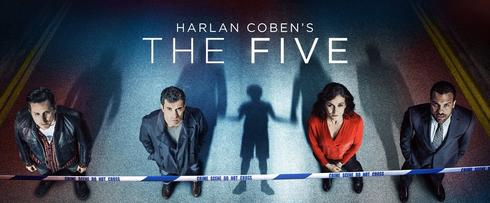
We also finished watching Harlan Coben’s The Five mini-series last night on Netflix. There are ten episodes, and it’s a interesting show with several different mysteries, several different crimes, and they are all connected in some strange way to the disappearance of a small boy some twenty years earlier. The main characters–Slade, Danny, Mark, Pru–were all friends, and one afternoon they were off in the woods playing, with Mark’s younger brother Jesse in tow. Being older kids, they wanted to go off and do their own thing, so they sent Jesse off on his own and he disappeared. A child molesting serial killer later confessed to killing him…but the body was never found. Flash forward twenty years, and Jesse’s DNA has turned up at a brutal crime scene, which begs the question, is Jesse still alive? How did his DNA wind up at a crime scene twenty years after he disappeared? And then his DNA turns up at another brutal crime scene. What is the connection between the cases? Lots of twists and turns, and several big surprise twists made it quite enjoyable to watch. The cast was also really good, and the mini-series format gave the writers the opportunity to delve into the characters and their lives a lot more. It also was very haunting in that it’s theme–the damage the disappearance of a child can do to those left behind–is something I am fascinated by.

Harlencobenthefive

Highly recommended.

And now, back to the spice mines.

You Can’t Walk in Your Sleep (If You Can’t Sleep)

So, Ozark.

It was really the perfect thing to watch at this time, given my revived interest in Southern Gothic (Harry Crews’ A Feast of Snakes notwithstanding; I just need to find better examples of Southern Gothic to read, and every once in a while I’m going to come across something I don’t like; it’s just the odds, really).

But Ozark hit all the right notes, and combining great writing and storytelling with stunning cinematography, terrific acting in complex, multi-layered characters, and complicated relationships between those characters, and you get an amazing show. Ozark is just that; and I do hope it will be renewed.

download

Ozark is the latest in a series of television programs focusing on people who could be your friends or neighbors and are actually criminals. There were times when it reminded me of Weeds; I’ve heard other comparisons, like Breaking Bad and The Sopranos  as well. Marty Byrde, our main character, played perfectly by Jason Bateman (and back in the 80’s, who thought Jason Bateman would be the biggest star in that family?), is a numbers guy; he’s a partner in a very successful Chicago financial investment firm; he’s more of a look at the numbers and do the math kind of guy, while his partner is more of a dude bro salesguy; he makes the sales, but Marty is the one who takes care of the clients’ money and investments. In the very first episode, a Mexican drug lord, Dell, shows up with guns and goons, takes everyone in the firm hostage, and starts threatening them for stealing; everyone is killed–but Marty thinks quickly, promises to replace the money that was stolen, and launder it all; he decides to leave Chicago and set up shop at Lake of the Ozarks. His wife, played by the SUPERB Laura Linney (who makes everything better by just showing up), is having an affair and isn’t sure she wants to escape with Marty. Of course, Dell is having her watched as well–and alerts Marty to the fact she’s emptied their accounts and headed over to her lover’s apartment…the end result is her lover is thrown off the high balcony, literally landing at Marty’s feet when he arrives, and the Byrdes flee to Missouri to set up a money laundering business for the drug cartel in Lake of the Ozarks.

The writing is so crisp, the dialogue so real, and the characters are beautifully rendered and portrayed by the cast. Once they are at the lake, the Byrdes run afoul of some locals–the morally challenged Langmores, headed by teenaged Ruth; a star-making role for her portrayer, Julia Garner. Ruth is smart, battered by life, and mean–she wants to get her and her family out of the trailers they live in and into a better life; the developing relationship between her, her cousins, and the Byrdes is one of the strongest prongs of the show. There’s also a gay FBI agent, whose partner was also his partner in their private life but they are no longer together, which makes working together for them a challenge; Agent Roy Petty is one of the more unlikable characters on the show, and it’s very interesting to see such a developed, unlikable gay character on television. He’s also part of one of the most clever and original gay subplots I’ve ever seen; but saying any more than that would give away spoilers.

The plot is so intricate, there are so many twists and turns, ups and downs, changes in direction that you cannot stop watching, nor can you let your mind wander–something small and seemingly insignificant in one episode can turn out to be really important later.

And the cinematography! Lake of the Ozarks, the surrounding forests and topography, are lovingly shot; and it’s also shot through a slightly darker lens, to make it all more beautiful and brooding.

I loved this show, was sorry to see the end of the first season, and can’t wait for it to come back.