If Anyone Falls

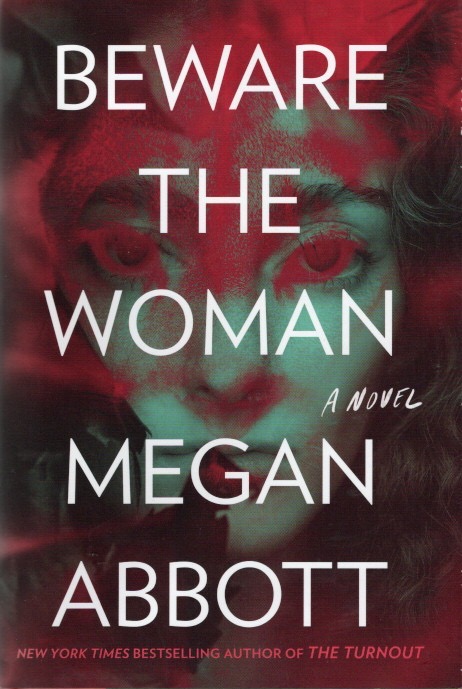
I finished reading the new Megan Abbott novel, Beware the Woman, this morning during a marvelous, raging thunderstorm that filled the gutters and streets of New Orleans with dirty swirling water, cutting the temperature to something bearable for once this summer and cooling the interior of my apartment to the point I needed to put on a sweatshirt and a knit cap on my head. Curled under a blanket with a good book while a thunderstorm rages with a warm cup of coffee on the side table, tendrils of steam rising in curly-cues of white from the creamer-lightened pool of soft brown, is perhaps my happiest of places.

Hell, reading anything new by Megan Abbott is my happiest of places.

My first Megan Abbott novel was Bury Me Deep, which stunned me with its craftsmanship, its voice, its literate choices of words and sentences structures that are short yet lyrical, minimalist strokes painting a broad canvas of human frailty and contradiction, crime and desire that comes from a primal place within, almost inexplicable and unexplainable yet so easily understandable and recognizable. I went on from there to Dare Me and the rest of her all-too-short canon; admiring, loving, respecting and enjoying each book with its magical spell woven by a true master of the literary form, astonishing in its humanity and an exploration of what lengths her characters will go to in order to get the thing (or things) they want, need, desire and hunger for.

Some of the earlier reviews I saw for Beware the Woman painted some parallels between the book and what is perhaps my favorite novel of all time, Rebecca by Daphne du Maurier…which had me intrigued and interested even more than usual.

But more on that later.
“We should go back,” he said suddenly, shaking me out of sleep.

“What?” I whispered, huddled under the thin bedspread at the motor inn, the air conditioner stuck on HI. “What did you say?”

“We should turn around and go back.”

“Go back?” I was trying to see his face in the narrow band of light through the stiff crackling curtains, the gap between every motel curtain ever. “We’re only a few hours away.”

“We should go back and just explain it wasn’t a good time. Not with the baby coming.”

His voice was funny, strained from the AC, the detergent haze of the room.

I propped myself up on my elbows, shaking off the bleary weirdness.

We’d driven all day. In my head, in my chest, we were still driving, the road buzzing beneath us, my feet shaking, cramped, over the gas.

Our main character here is Jacy Ashe, a pregnant wife in her early thirties, married to a neon sign artist, Jed, and working as an elementary school teacher. They are en route when the story opens to the remote upper peninsula of Michigan (primarily known to me from Steve Hamilton’s novels) to visit Jed’s retired doctor father, who lives up there in what used to be the family summer place, with his housekeeper, Mrs. Brandt. This is one of the classic set-ups of one of my favorite subgenres of crime fiction–the Gothic–as well as placing it strongly into another category I love, domestic suspense. This novel has echoes of du Maurier, Phyllis A. Whitney, Dorothy B. Hughes, and Margaret Millar…blended seamlessly together into a classic yet modern novel that updates and reinvigorates both subgenres, bringing them into the modern era and proving they are still just as relevant and important as they have ever been.

(Aside: I do not know where Abbott came up with the name “Jacy,” but it’s one I’ve always liked and wanted to use in my own work since first reading Larry McMurtry’s The Last Picture Show and seeing the Bogdonovich film based on it; I smiled and wondered if that was where Abbott got the unusual name from.)

The Gothic set-up is there, and I can also see the slight echoes from Rebecca: the brooding remote house in the country where tragedy has occurred in the past; the mysterious housekeeper who doesn’t seem to like our heroine very much; the slow-burn of slow revelations of secrets from the past; and the creeping paranoia and potential gaslighting of Jacy…often explained away as her pregnancy hormones or a reaction to the medications after she has a pregnancy complication. One of the strengths of Gothics, for me, is that question of paranoia vs. reality; the gaslighting that is always a hallmark of a Gothic novel. After all, what reason could either Jacy’s father-in-law or husband have for wanting to drive her mad and risking her baby’s health and well-being? She feels her husband slipping away from her and no one seems to believe her…this is probably one of the best depictions of a paranoid pregnant woman in literature since at least Rosemary’s Baby.

Someone once said the Gothic and domestic suspense novels were “women’s noir,” because the danger to them always arose from them being women and doing women’s things; a reaction to the terror of getting married and placing (until very recently) all of your agency into the hands of your husband–and what if you chose poorly?

Abbott takes the best elements of noir and combines them with the foundations of domestic suspense and Gothic to explore what it is like to be a woman, how it is to be a woman, and the trap of societal and cultural expectations for women.

And there’s a reason why the cops always look at the husband first when a woman is killed.

This is a brilliant novel, with many layers to unpack and unravel through its deceptively simple voice and brevity of language. Megan Abbott is a sorceress, a Scheherazade of crime fiction to whom you simply cannot stop listening. Read it, cherish it, love it.

Cool Change

On my way home from Kentucky over the weekend, I started listening to Carol Goodman’s marvelous The Seduction of Water. The book was too long, however, for me to finish before I pulled up in front of the Lost Apartment Saturday night; I have been known to stay in the car for another fifteen to twenty minutes to finish an audiobook, but when I checked with this one, I still have over an hour left to go. There was no way I was going to sit in the car for another hour with the apartment merely a dozen or so yards away from me, so I unplugged the phone and started unloading the car, figuring I could listen to it on Sunday while doing things. I was exhausted and had too many other things to do that day, so I put it off until the morning of the 4th, when I finished listening while doing laundry and cleaning the kitchen.

And what a marvelous tale it is, indeed.

My favorite story when I was small, the one I begged for night after night, was “The Selkie.”

“That old story,: my mother would say. She’d say it in the exact tone of voice as when my father complimented her dress, Oh, this old thing, she’d say, her pale green eyes giving away her pleasure. “Wouldn’t you rather something new?” And she’d hold up a shiny book my aunt Sophie, my father’s sister, had bought for me. The Bobbsey Twins or, when I was older, Nancy Drew. American stories with an improving message and plucky, intrepid heroines.

“No, I want your story,” I would say. It was her story because she knew it by heart, had heard it from her mother, who had heard it from hers…a line of mothers and daughters that I imagined like the images I had seen when I stood by her side in front of the mirrors in the lobby.

“Well, if it will help you sleep…”

And I would nod, burrowing deeper into the blankets. It was one of the few requests I stuck to, perhaps because my mother’s initial hesitation came to be part of the ritual–part of the telling. A game we played because I knew she liked that I wanted her story, not some store-bought one. Even when she was dressed to go out and she had only come up to say a quick good night she would sit down on the edge of my bed and shrug her coat off her shoulders so that its black fur collar settled down around her waist and I would nestle into its dark, perfumed plush, and she, getting reading to tell her story, would touch the long strands of pearls at her neck, the beads making a soft clicking sound, and close her eyes. I imagined that she closed her eyes because the story was somewhere inside her, on an invisible scroll unfurling behind her eyelids from which she read night after night, every word the same as the night before.

“In a time before the rivers were drowned by the sea, in a land between the sun and the moon…”

I’ve always loved the selkie story, myself, and what a marvelous opening this was for the novel!

Our main heroine, Iris Greenfeder, is an ABD (all but dissertation) trying to patch together a living from being an adjunct writing teacher at several different schools. This particular semester, as the book opens, she is also teaching a writing class at Rip Van Winkle Prison. Iris’ mother was a sort of successful fantasy writer who was killed in a fire before she could either write or complete writing the final volume of her trilogy. Iris’ father manages the Hotel Equinox in the Catskills, a luxury resort hotel with stunning views of the Hudson River Valley. Her mother was killed when she was about eleven, and was checked into the dive hotel as “Mr. and Mrs. John McGlynn”–but only her body was found. Was it an affair? Was it something else? This mystery hangs over Iris’ life when the book opens, and her own writing career gets a boost when she sells a story to Caffeine magazine, whose editor kind of pulls Iris back into the orbit of the Equinox Hotel. She lands a top agent who also has more than a passing interest in Iris’ history, and her mother.

She isn’t there long when she realizes that many mysteries shroud not only her own past, but the hotel as well. As she starts trying to figure out her mother–no one believes she was having an affair, despite the police conclusion–and what happened all those years ago, she finds that her mother was also involved in a crime involving some of her friend–the McGlynn, one of whom went to prison and her friend, his sister, threw herself in front of a train after visiting her brother. He was in jail for robbing a hotel, but did he actually do it, or was he framed? Did Iris’ mother know the truth? Slowly but surely Iris starts following the clues and trying to figure out what the truth about her mother was–and there are also people who are looking for that final manuscript of her trilogy. Why? Who cares about an old unpublished manuscript? Iris also is in a long term relationship with an artist that isn’t really giving her what she needs, either–but can she trust the younger, sexy ex-con from her class at the jail that she hires at the Equinox?

This book is classic Goodman; erudite and literary, with ties to writers and the publishing world and legends and fairy tales, all woven together in an enthralling mystery that is very hard to put down.

Definitely another five-star for Carol Goodman!

Come Sail Away

Nothing will get my attention more quickly than a Daphne du Maurier comparison.

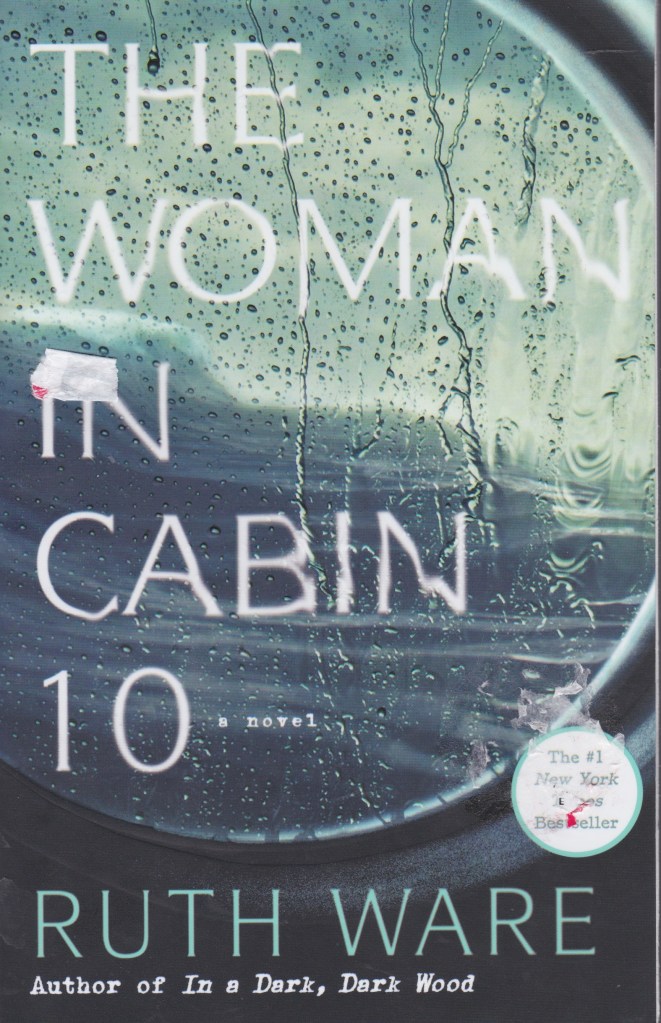
I’d been meaning to get around to reading Ruth Ware since her The Woman in Cabin 10 broke her out in the crime writing community. I’d heard lots of good things about her work from reviewers and people on social media, and as her career continued to grow and develop it seemed like all of her books–while similar, in some ways, to each other–were rather dramatically different from each other. I began acquiring copies of her books, unable to decide where to start while each new one joined the TBR pile and began collecting dust. When I saw someone had compared her The Death of Mrs. Westaway to du Maurier and Rebecca, that got my attention and I decided to start there. I listened to it on one of my drives to Kentucky and loved, loved, LOVED it.

So, while planning for my recent trip up, I decided to listen to The Woman in Cabin 10, and have been admonishing myself for the lengthy delay in getting to it ever since finishing. It is quite excellent, and I am finding myself becoming quite a fan of Ruth Ware.

The first inkling that something was wrong was waking in darkness to find the cat pawing at my face. I must have forgotten to shut the kitchen door last night. Punishment for coming home drunk.

“Go away,” I groaned. Delilah mewed and butted me with her head. I tried to bury my face in the pillow but she continued rubbing herself against my ear, and eventually I rolled over and heartlessly pushed her off the bed.

She thumped to the floor with an indignant little meep and I pulled the duvet over my head, but even through the covers I could hear her scratching at the bottom of the door, rattling it in its frame.

The door was closed.

I sat up, my heart suddenly thumping, and Delilah leaped onto my bed with a glad little chirrup, but I snatched her to my chest, stilling her movements, listening.

I might well have forgotten to shut the kitchen door, or I could even have knocked it to without closing it properly. But my bedroom door opened outward–a quirk of the weird layout of my flat. There was no way Delilah could have shut herself inside. Someone must have closed it.

I sat, frozen, holding Delilah’s warm, panting body against my chest and trying to listen.

How’s that for a beginning?

I defy anyone to stop reading after those opening paragraphs, seriously.

Our main character turns out to be Laura Blacklock–nicknamed Lo–who is an aspiring travel journalist working as an assistant at Velocity magazine. Usually her boss is the one who gets to go on trips to write about the experience, but pregnancy has forced her to turn over a rather plum assignment to Lo; taking a cruise on a luxury ship through Scandinavia, including a look at the Northern Lights and exploratory visits to fjords. But as she is preparing for the trip, her flat is broken into while she is in it. This understandably causes her some trauma, and she is already taking medication for anxiety. Shaken up and still having nightmares, she boards the Aurora Borealis in a determined attempt to fulfill her job responsibilities well enough to get a promotion or better assignments. Easier said than done, really; on the first night she hears the toilet in the next cabin–Cabin 10–at the same time realizing she doesn’t have any mascara. She goes to Cabin 10, borrows mascara from a beautiful young woman, and returns to her cabin. Having a few drinks at dinner to calm her nerves even more, she keeps an eye out for the young woman, who never shows. In the middle of the night a sound in the next cabin wakes her, and she goes out onto her veranda to glance around the privacy screen. Before she can get out there she hears a cry, a clank, and a splash; once she is out there she thinks she sees a human hand disappearing into the water, and smear of blood on the glass screen next door. She gets the ship’s security, but Cabin 10 is empty. The man who was staying in there cancelled at the last minute. There is no trace of the girl she met, no trace of anything exceptional having happened in Cabin 10–and the only proof of her story is the mascara tube, which she still has.

No one believes her–and her recent break-in and the anxiety medications, along with the drinking she’s done, make it relatively easy for her claims to be dismissed. Certain she’s a peripheral witness to a murder, Lo starts poking around–eventually finding herself in danger.

I really enjoyed this book. Ware makes you care about Lo, and you root for her to get to the bottom of what’s going on aboard the Aurora. Ware is, indeed, a modern day writer of Gothics in the mid-to-late twentieth century traditions of duMaurier, Victoria Holt and Phyllis A. Whitney, with a generous dash of Mary Stewart as well. Is she being gaslighted, and if so, by whom and why? Who was the woman? What was she doing on board? Why was she murdered? The reader knows Lo is telling the truth, which is a brilliant way of getting reader buy-in for both the character and the story, and the gaslighting is done so well that even the reader sometimes has to question Lo’s sanity; was it alcohol and drug-related PTSD? But as the story progresses and Lo learns more and more about her fellow passengers–this is a press junket, so everyone on board is a professional travel journalist of some sort–she starts putting together the pieces and fragments of information she gathers that gradually reveal the picture of a very clever murderer who won’t stop at anything to get away with their crime, even if it means killing Lo.

Highly recommended–especially if you, like me, love the old books with the woman in a nightgown running away from a scary looking house with a light on in one window on the cover. Cannot wait to read some more of Ruth Ware.

Sidebar: the story itself is very Hitchcockian in style, and of course the gaslighting made me think of the great film Gaslight which defined the word into the vernacular…and made me also think, sadly, of what a greater masterpiece Gaslight might have been had Hitchcock also directed it.