You Might Think

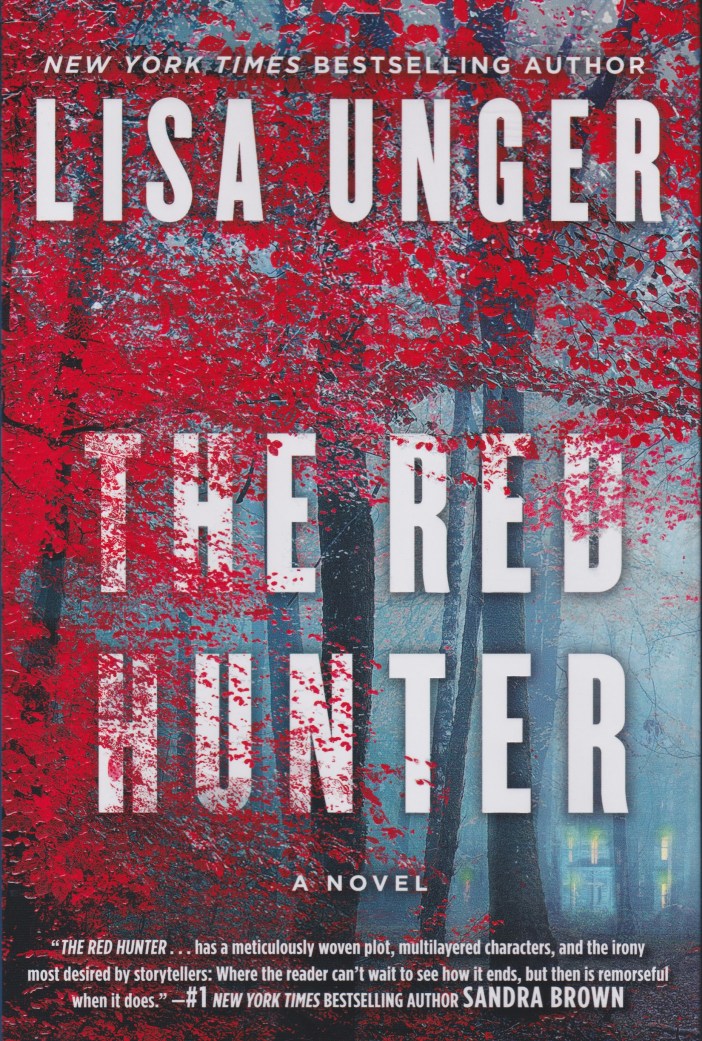
Friday night I finished reading Lisa Unger’s exceptional The Red Hunter. I don’t remember who originally told me to read Lisa Unger’s work, but whoever it was, I really need to say thank you again! She is an exceptionally terrific writer, and as I make my way through her canon, it is startling how fresh, new and completely original every single volume is.

Take The Red Hunter, for example, her April 2017 release. Unger’s books are always about the damage humans do to each other, and how that damage and/or abuse creates ripples that eventually become waves that affect the present, and the necessity of coming to terms with that past in order to solve the problems of the present. The Red Hunter is, at it’s core, the story of a house in rural New Jersey; an old derelict place that is falling to pieces. Claudia, a publishing executive whose personal life is in shambles, decides to renovate the house as a project and blog about it, moving into it with her daughter, Raven. But the house has some terrible secrets.

the red hunter

There’s nothing about me that you would ever notice. I am neither especially thin, nor overweight. My face will not be one you remember. With dark eyes and pale skin, hair the color of straw, cheeks round and just rosy enough that you won’t wonder if I’m ill, I will blend into the sea of other plain faces you saw before and after as you went about your day. nothing about my clothes will capture your notice. No brands that incite jealousy, or anything revealing, no stains, maybe just wrinkled or worn enough that you’ll dismiss me as someone without much money, though not poor enough to be in need. If I’m wearing a uniform, I don’t even exist. I am the checkout girl at the grocery store, or the maid that cleans your hotel room, the girl woh answered the phone, or the young lady at the information desk. No, you would say later, you can’t recall her name or what she looked like, not really. The truth is you don’t see me; your eyes glance over me, never coming to rest. But I see you.

This is Zoey Drake, one of Unger’s point of view characters. Zoey is a young college student at NYU, who studies martial arts and works in a coffee shop; she house and cat sits for a place to stay. Zoey sees herself as the Red Hunter, a vigilante/Batman of sorts, who stops crimes from happening when she comes across them and always dresses nondescriptly; she is trying to right a cosmic wrong. When she was a young girl, her parents were brutally murdered in front of her, and she too was injured and left for dead; she survived that horrible night, but has always been looking, ever since, for answers to the question of who murdered her parents and why.

Claudia herself is surviving a brutal attack; she was assaulted and raped brutally years earlier, which wound up damaging her and her own marriage in ways she couldn’t even comprehend at the time. There has always been a question as to whether her daughter, Raven, is her husband’s or her rapist’s. This is part of the reason why Claudia has brought Raven the old house in the New Jersey countryside; she is trying to rebuild the house and their lives at the same time. Raven has her own curiosity about the question of her paternity.

Their lives are destined to cross because of the house; you see, the house is where Zoey lived with her parents and where they died in front of her. The killers were looking for something in the house that has never been found…and Zoey’s actions have set everything into motion again so that the tangled skeins of their livers are going to cross again as the mystery of how and why what happened when she was a little girl rears its ugly head again, and now all of them are in terrible, deadly danger.

Wow. This book is a thrill-ride from start to finish; fully developed characters that you care about, a fascinating unfolding of a crime with twists and turns that keep the reader balanced firmly on the edge of their seat.

Seriously, if you aren’t reading Lisa Unger, what the hell is wrong with you?

State of Shock

Good morning, Constant Reader, and everyone who only occasionally stops by, should you happen to stop by this chilly late December morning. It’s very gray outside, and the Lost Apartment is cold, and I have a slight sinus headache, but nothing I can power my way through. I still am not feeling at 100% yet, but am getting there; maybe by this weekend? One can hope.

I feel slightly cotton-headed this morning, and am trying to decide what to read next. I’m definitely doing a month or two of short story reading for the first two months of the new year, which I am kind of excited about. Yesterday I was tired all day, and never made my to-do list; I’ll have to get that done today. Today is also payday, so I’ll have to pay the bills today as well. I didn’t really want to get out of bed this morning, honestly; the bed was warm and comfortable and it was cold in the apartment–and I would gladly go back to bed if i could. Heavy sigh.

I know I have some short stories to work on, and I need to do some other things as well. I hate this cotton-headed feeling! It makes it really hard to focus. One short story, which is do this weekend, is almost finished; it only needs two quick tweaks and another read-through before I turn it in; the other story isn’t necessarily a big priority; I just wanted to get it done and out of the way months before it is actually due because I don’t want to have to want until the last minute to work on it and have to rush, if that makes sense. It sort of does, doesn’t it? (See what I mean about cotton-headed?)

It’s always something, isn’t it?

I am still enjoying Joan Didion’s Miami, and think I’m going to read, for fiction, Lisa Unger’s The Red Hunter next. I always enjoy Lisa’s work, and while I am still carefully doling it out so I won’t run out of Unger books to read, I think it’s safe to go ahead and read another one. I also suppose I should do a year recap here, as well as a goals-setting entry for 2018. Sigh.

Okay, back to the spice mines.

IMG_1040

Solitaire

Sleep has eluded me all week; I lie in bed all night half-awake and half-asleep, hoping that my mind will stop racing and I will somehow, as I toss and turn, find a position in my bed that will allow me to, at last, find sleep. I grow tired every evening before bed–and have stayed away from screens, since I’ve read in many places that sleeplessness can be caused by the light emitted by computer and device screens–but it is all for naught. I’m not sure what has caused this change, and I am afraid I will never sleep deeply again.

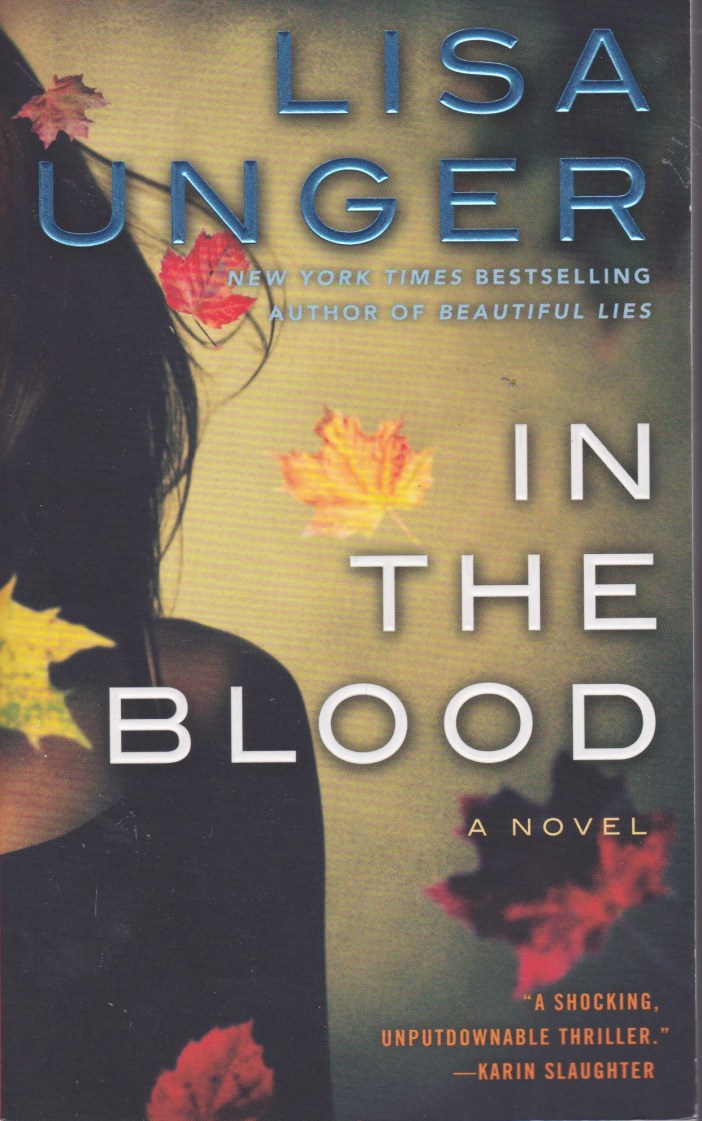
Last night I had to do bar testing, and when I got home I finished reading Lisa Unger’s In the Blood.

in the blood

There are twelve slats of wood under my bed. I know this because I count them over and over. Onetwothreefourfivesixseveneightnineteneleventwelve. I whisper the numbers to myself and the sound of it comforts me as I’m sure a prayer would comfort someone who believes in God. It’s amazing how loud a whisper can be. Surrounded down there by the white glow of my bed skirt, the sound of my own voice in my ears, I can almost block out the screaming, the horrible keening. And then there’s the silence, which is so much worse.

In the quiet, which falls like a sudden night, I can hear the beating of my own heart, feel it thudding in my chest. I lie very still, willing myself to sink into the pile of the carpet lower and lower until I don’t exist at all, There is movement downstairs. I hear the sound of something heavy scraping across the dining room floor. What is he doing?

I have come to this place before. Here, I have hidden from the frequent and terrible storms of my parents’ miserable marriage. And I have listened as their voices break through the thick walls and the heavy, closed doors. But usually I can only hear the ugly cadence of their voices, and very rarely their words, which I know to be hateful and spiked with old hurts and bitter resentments. It is a poison in the air, a toxic cloud. Onetwothreefourfivesixseveneightnineteneleventwelve. Sticks and stone can break your bones, but words can break your heart.

Over the last year, I’ve become an enormous fan of Lisa Unger. This is the third book of hers that I’ve read since the first of the year, and like the two before it, it’s absolutely stunning. The cadence of the words, the way the story is structured to build, and the words themselves, chosen with infinite care, create a thing of beauty about a terrifying darkness.

The book is set in The Hollows, a small town in upstate New York which Unger has visited before; the two previous works of hers that I’ve read were also set in this strange town where bizarre things happen; where it is not unusual for ghosts to appear, and madness is only a short step away. The Hollows is Unger’s Castle Rock, her Collinsport, her Bon Temps; a town where violent death and passionate love are possible; where the veil between the world of the living and the dead is as thin as the wall between sanity and madness.

In the Blood is the tale of Lana Granger, a damaged young college student who has come to The Hollows to attend Sacred Heart College and completely disappear from a horrific past that is slowly revealed to the reader; each revelation even more horrific than the last. Lana is heavily medicated, “flat”, as she calls it; Unger exploration of that state of mind, a drug-induced emotionless existence, seems not only realistic but tragic and sad at the same time. Lana is convinced by her faculty advisor to take a job as babysitter/nanny for a troubled twelve year old named Luke, who lives with his mother in a big Victorian house a short bike ride from the campus. Two years earlier, a young female student disappeared from the campus and was found dead a few days later; one of Lana’s roommates, Beck, with whom she has a challenging relationship, disappears after a public argument with Lana in the library.  Luke isn’t just troubled, he’s dangerous, and the two begin a dangerous dance, as he dangles bait in front of her to lure her into his games.

As Lana’s story unfolds, every other chapter is a diary excerpt; the diary of a woman trying to maintain her own sanity as she realizes, almost from birth, that there’s something wrong, something horrifically off, about her son. Is Luke’s mother’s diary, with Unger showing the reader the horror of what being a mother to a budding psychopath must be like? Or is it something else?

And there is history here as well; murder tangled up in the DNA Lana has gotten from both of her parents. And as the reader learns more and more of Lana’s secrets, the more terrifying the story becomes.

Much has been made lately of the use of the Unreliable Narrator; Unger’s main characters are always unreliable, but she manages to not make it a cliche, nor does she seem to do it in order to pull off unforeseen, out-of-the-blue plot twists on her readers; she manages to do this in a wholly organic way that completely makes sense. She is a master; her books are stunning works of art, as complexly constructed as a human personality, with all of its quirks and tics.

I was troubled by one particular plot twist; but I cannot write about that without undermining the pleasure of reading the book; pulling that thread will unravel the entire story and ruin the book for anyone who hasn’t read it, which is a pity; it’s something that I feel should be discussed, and I also see not only why it was a necessary turn for the story–it completely made sense and pulled everything together–but at the same time it made me a bit uncomfortable.

Read this book. Read Lisa Unger. And cherish the experience.

Affair of the Heart

Wednesday. It’s also Pay Day, or rather, Pay the Bills Day. Hurray. Although none of them are actually do until next week, so I may wait to pay them so I can savor the feeling of having actual money in my checking account for a couple of days.

Apparently we’re in a boil water advisory this morning in New Orleans. Fortunately I have an entire shelf full of bottled water in my refrigerator that have been through the Brita filter–I don’t trust that our water pipes aren’t lead–and showering isn’t an issue in this particular advisory, but this seems to happen more regularly than it really should, you know? I love this city, but our old infrastructure leaves so much to be desired. And no matter how many luxury condo buildings go up over parking lots, this is still an old, fragile, crumbling city.

I continue to work my way through Lisa Unger’s In the Blood, and I got rolling on Chapter Six of Scotty yesterday (I know, I meant to outline the next five chapters but I had an idea for how to get it started and then it just kind of started going), but last night was bar testing and so I am a little frazzled/tired this morning. My mind is certainly all over the place. I had some terrific book mail yesterday–including the ARC for the fabulous new Alison Gaylin coming out in March, If I Die Tonight, which I am itching to get into. (I may have picked out a stack of horror novels to read for Halloween/October, but it’s still September, don’t you know). I think I’ll be able to get the Unger finished this weekend and then move onto the Gaylin. I also have an electronic ARC of Laura Lippman’s Sunburn I keep forgetting I have–the curse of pesky ebooks is that I don’t think about “oh, I should check the iPad and see what I have to read in there” very often, if at all.

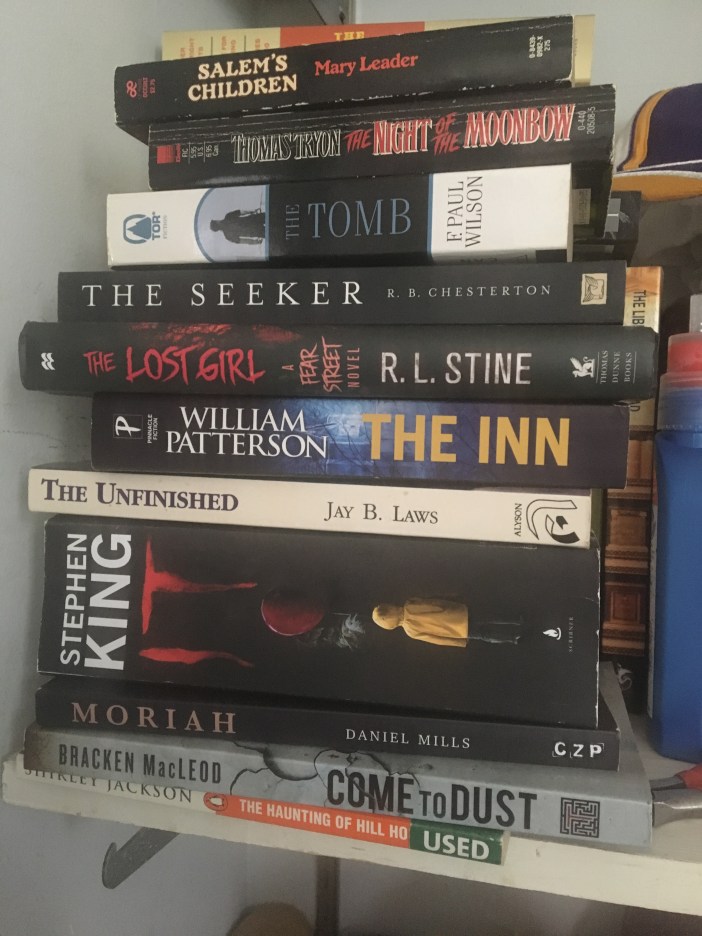
Here’s my rather ambitious stack of books to read for October/Halloween:

IMG_2866

It is a bit overwhelming in its length, but the lovely thing is it’s a reread; so I don’t have to gobble it all down at one time. I can read it here and there, slip another in for a break, and then go back. I am very curious as to how well it holds up, and as I’ve previously mentioned, I’ve not reread It since I read it the first time. I do want to see the movie, but may end up waiting to see it once it’s streaming. I am excited, though, for it–as most people whose opinion I respect have greatly enjoyed it. There are so few King adaptations that are good–Carrie, Misery, Dolores Claiborne, Christine–that when a good one comes along, it must be embraced.

All right, it’s off to the spice mines with me.

Gloria

Tuesday! I have a long day of testing facing me, capped off with bar testing tonight at Good Friends. I have my morning free, at least before I have to run my errands, so I am going to try to get some writing done. I did finish Chapter 5 yesterday, and am trying to get the next five chapters outlined before I get moving on Chapter 6. I think I know what’s going to happen next; but everything’s kind of amorphous and I really want to sit and think it all through before I try writing. Some of the stuff in the first five chapters is going to need to be redone–there’s some stuff that I might have to cut out entirely–and I am going to seriously consider that before just trying to make it all work together.

I printed out another, trimmed copy of the WIP, which is now 276 pages instead of 340. That was some serious editing I did there. I am going to wait until this weekend to read it again; although I have lots of notes about what needs to be done with it.

I also started writing another short story yesterday, “The White Knuckler.” Not sure how it turns out, but right now in my head it’s just another variation on my theme of ‘running into someone from your past on a vehicle of mass transportation,” like my story “A Streetcar Named Death.” I do seem to return to the same themes, or variations on the same type of story, an awful lot. So, I am just going to rough draft it out, and then try to figure out how not to make it just another variation on a theme. I don’t want to be reductive.

Short stories are hard.

Lisa Unger’s In the Blood continues to enthrall. We are also watching a Netflix original series, Atypical, which is about a highly functional autistic teenager and his family. His parents are played by Michael Rappaport and Jennifer Jason Leigh (of whom I’ve been a fan since Fast Times at Ridgemont High); Sam the teen is played by Keir Gilchrist, who played the gay son on United States of Tara. It’s actually a very sweet show, with strong characters played by actors very good in the roles; its focus is that Sam is now ready to start dating, or rather, thinks he should start dating. The show is both funny and touching, and we are enjoying it quite a bit.

So, this morning I am going to sign out of here, do some filing, and basically figure out what I need to do (in other words, get organized), and perhaps curl up in the easy chair with some more Lisa Unger to get inspired, as I always am by brilliantly talented people.

Here’s a Tuesday hunk for you:

20430101_10212597842477607_5335237010569140603_n

Is There Something I Should Know?

It rained last night; it was kind of a shock as there was no thunder and/or lightning, and the sun was actually shining. I only knew it was raining when I took out the trash; and it was pouring. Quietly. It was eerie; there wasn’t any wind so the rain was coming straight down, slowly–the way it does in the jungle. And then I remember, as I seem to forget at times, oh, yes, we live in the tropics. It’s easy to forget that when you live in a city that should be a tropical swamp.

I am working both days this weekend; both Saturday for testing and Sunday for the NO/AIDS Walk. I get to take next Monday off, and then go in late on Tuesday, which will be lovely. But ugh, staring down seven consecutive days of work is horrific. But, you know, it happens. And it’s not like it’s every week, you know?

The new Scotty is taking shape, which is lovely. It’s so vastly different than it’s source material, even if it using the same framework, and I am actually enjoying myself as the plot broadens, expands and takes shape. I am hopeful to have a first draft finished around mid-October, if all goes well and the creek don’t rise; November 1 if I get distracted, as I am wont to do.

Lisa Unger’s In the Blood continues to enthrall me; if you haven’t read her work, Constant Reader, you really need to. She defies classification as well; there are crimes in her novels, but there’s also a touch of the paranormal–but you’re never really sure if the paranormal stuff is real or not; she dances a fine line, but the writing is so incredibly strong she never falls off the beam. In that way, she is kind of Shirley Jackson-ish–thematically and plotting and character-wise; she doesn’t write in Jackson’s style, which would be incredibly difficult to master. She’s just bloody fantastic.

September is drawing to a close, and I am already lining up my reading for Halloween Horror: the annual reread of The Haunting of Hill House,  a reread of It, and I have some horror anthologies and other horror novels in my TBR stack that I’ll be pulling out and diving into.

And on that note, it’s back to the spice mines.

Here’s a hunk to get you through your Monday!

IMG_2767

Overkill

Ugh, my house is a mess. I kind of should go make groceries today, but I also kind of don’t want to leave the house. The cursor on the latest chapter of the book is blinking at me, but I am just not feeling any desire to do any writing today.

But I have to. There is no ‘don’t wanna’ allowed.

Heavy sigh.

What i really want to do is read more of Lisa Unger’s book, In the Blood, which really gets off to a terrific start. I was part of the way through Chapter Three when I realized I was getting too drowsy to focus last night, but didn’t really want to put it aside. I generally either don’t dream, or don’t remember my dreams in the morning, but the last week or so I’ve been dreaming odd things that I still remember when I wake up in the morning. They of course become more vague the more I wake, which is an interesting phenomenon and one I am sure everyone experiences and has been studied and writing up extensively in journals. Yet I still find it intriguing.

I often write about dreams, usually in my work that could considered to fall into supernatural/paranormal/borderline horror–I have a tendency to use dreams to amp up the tension as well as reveal things to the main character, which has become a crutch. In fact, a book idea I’ve been playing with–I wrote a short story years ago which kind of serves as a synopsis of the book–is all about dreams.

Yeah, that will need to go back in the drawer and only pulled out to bring back to the drawing board.

Heavy heaving sigh.

I don’t know why I procrastinate so much about writing, I really don’t. I always enjoy writing, and the feeling of satisfaction I get when I finish for the day is one of my favorite feelings in the world. And yet, here I sit, writing a blog entry while the Saints are getting stomped on the living room television (this is going to be such a long, horrible football season for Louisiana fans….) rather than working on the new Scotty book. I’ve already done some filing, made Paul breakfast, folded clothes…sheesh.

All right, I am going to go make groceries and come home to write.

Here’s a Sunday hunk for you, actor Justin Clynes:

justin clynes


Our House

..in the middle of our street.

We will not be discussing the embarrassment that was last night’s LSU “game.”

Friends are in town, and we had lunch with them at Commander’s Palace yesterday, which was lovely. I didn’t read the menu carefully and got something that had fried eggs on the top–which ran with yolk when you broke it; shudder–but I simply pushed them away with my fork and ate everything else. I was very tired after that, and came home, worked for a little while, and then curled up with Liane Moriarty’s The Husband’s Secret. I had read Big Little Lies concurrently with watching the HBO series, and enjoyed both the book and the show, so wanted to read another one of her novels. I wasn’t quite sure what I was expecting with this one–the jacket blurb mentioned that a wife finds a sealed envelope addressed to her from her husband, with the words To be opened only in the event of my death.

I would have opened it immediately, of course.
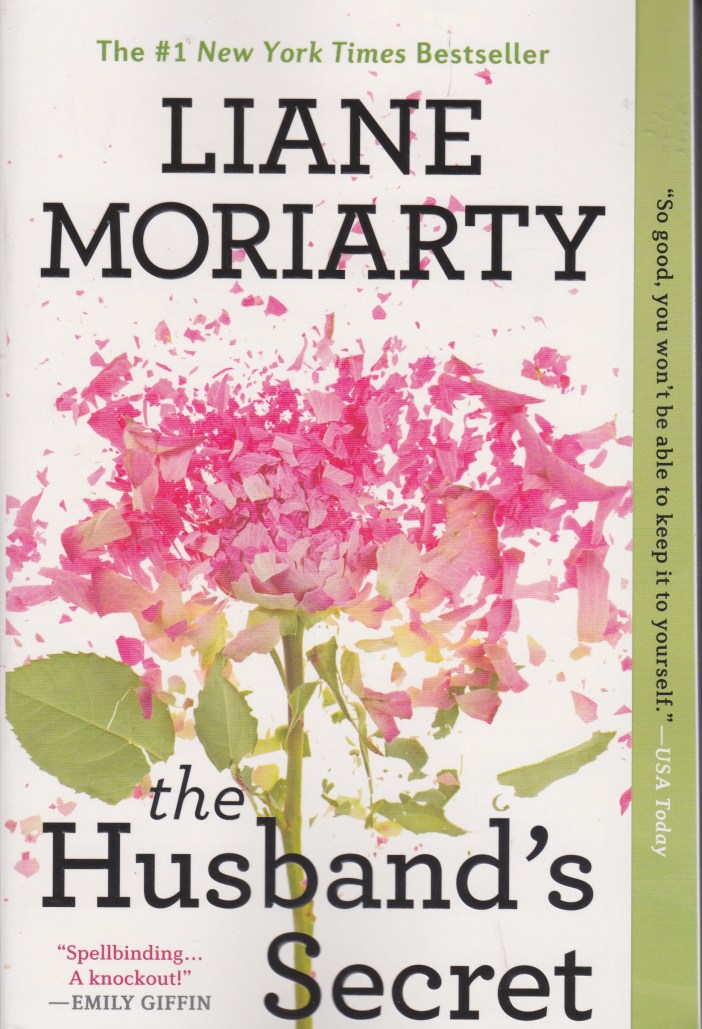
the husband's secret

It was all because of the Berlin Wall.

If it weren’t for the Berline Wall, Cecilia would never have found the letter, and then she wouldn’t be sitting here, at the kitchen table, willing herself not to rip it open.

The envelope was gray with a fine layer of dust. The words on the front were written in a scratchy blue ballpoint pen, the handwriting as familiar as her own. She turned it over. It was sealed with a yellowing piece of sticky tape. When was it written? It felt old, like it was written years ago, but there was no way  of knowing for sure.

She wasn’t going to open it. It was absolutely clear that she should not open it. She was the most decisive person she knew, and she’d already decided not to open the letter, so there was nothing more to think about.

Although, honestly, if she did open it, what would be the big deal? Any woman would open it like a shot. She listed all her friends and what their responses would be if she were to ring them up right now and ask what they thought.

Liane Moriarty is compulsively readable. And that’s not a quality in an author that should be dismissed lightlyAs I mentioned the other day with Louise Penny, it’s hard to classify Moriarty’s work; there’s a crime involved, but is it really crime fiction? I’m not sure it’s marketed that way; this book has a jacket blurb from Anne Lamott, for example, rather than Sue Grafton or Sara Paretsky. She is an enormous bestseller; which is no small feat for an Australian writer to accomplish in the United States, particularly when she is writing about Australia (although Colleen McCullough was quite successful in the US with The Thorn Birds, before she turned to ancient Rome). She structures her books around three women as the main characters; and she writes about the issues that concern women–I suppose, in a way, her novels could be classified as modern domestic suspense. Like the previous masters of domestic suspense (a classification title I am still not entirely convinced I like), she writes about every day women thrust into extraordinary situations, and she also shoehorns in some brilliant social commentary along with social issues, like Margaret Millar and Charlotte Armstrong and Dorothy B. Hughes did. The books are, as I said, compulsively readable and hard to set aside until you’ve reached the end.

Women writers, no matter their success, are rarely taken as seriously as male writers. I’m not sure if it’s because women writers tend to focus on women and issues that affect them while men, in theory, tackle larger themes. Male characters written by men are off saving the world in genre fiction, bedding fabulous babes and getting into fistfights, surviving by their skills or because their masculinity is superior to that of the bad guys. Or the male characters are finding dissatisfaction and misery in their maleness (I’m looking at you, literary fiction), prisoners of societal expectations of manliness and resenting putting aside their fantasy of what their life should be and having to settle for something that is less than that fantasy. Rarely do you find male characters (I’m not saying they don’t exist, so don’t come after me; I am fully cognizant of the fact that these are all incredibly broad generalizations) who are struggling with the work/home balance, juggling having to have a career and an income with finding time to be participants in their children’s lives or even, for that matter, simply helping around the house.

Men do not drive the story in Liane Moriarty’s novels, but they do impact it. They serve as catalysts for her stories, but her books are about the women whose lives are impacted by the men in them.

The Husband’s Secret,  like Big Little Lies, tells the story of three women whose lives intersect due to a private grammar school, St. Agatha’s in Sydney. Rachel is the aging part-time school secretary, widowed and haunted by the unsolved murder of her teenaged daughter many years before. The loss of her daughter has embittered her, and the only thing she basically has to live for is her grandson. Her story is set into motion when the perfect daughter-in-law she doesn’t much like and her son tell her that Lauren, the daughter-in-law, is being sent by her company to New York for two years, taking the only thing in her life she cares about–the grandson–away from her; just as her daughter was taken from her some twenty-five years or so earlier.

Tess’ world has just been ripped apart by the announcement by her husband and her best friend/first cousin that they are in love and want to be together–but out of respect for her having consummated the relationship. Her cousin, Felicity, is like a sister to her; their mothers were twins and they were born within days of each other. Felicity also used to be overweight; over the past year she has lost weight and become beautiful. Tess, betrayed and hurt, uses her mother’s recent accident in which she broke her ankle as an excuse to grab her son Liam and leave Melbourne, returning to Sydney to sort out her life and her future–enrolling young Liam in St. Agatha’s.

Cecilia, the third woman, is like Madeline in Big Little Lies; married, highly competent and efficient, the organizer that winds up running everything and basically being Supermom. She married a handsome rich man, and they have three daughters together. She’s hardly as confident as she seems; it’s a veneer to protect her and hide her own insecurities as she ruthlessly organizes her life and tries to put the world in order–one of those people who are basically exhausting to talk to; who leave you tired and drained when you finish speaking with them and you aren’t sure why.

Their lives intersect primarily because of the letter Cecilia finds in her attic, although Tess is less involved with the other two women, only peripherally floating into their orbit through the school, but the book’s theme is grief and motherhood and how these three different and incredibly complex women deal with both. What sacrifices do mothers have to make for their children, and what do they owe themselves? What is too far, too much, and where do you draw the line? Rachel’s life was decimated by her daughter’s murder and the lack of a conclusion to the story; to the extent that she walled herself up away from the rest of her family, and her relationship with her son has suffered–it is only through the events of this book that she finally realizes that her son is suffering not only from the loss of his sister and the loss of his father but from the loss of his mother. What does Tess owe to her young son in the wake of the apparent end of her marriage, and the horrific betrayal by her husband and her cousin? Does she try to ride out this love affair, rise above her own hurt and anger and put her child first? Is it better for Liam if she ends the marriage or tries to get past everything and forgive him, if that’s the option? She also is forced to take a long hard look at her own life at who she is and who has become as a person, and who does she want to become?

Cecilia’s journey is, of course, the most shattering. Her husband’s secret, contained in the letter, turns her world upside down and inside out; nothing is what she thought it was, what she believed, and she too is faced with a horrible choice: any decision she makes is going to be incredibly difficult to live with–but what can she live with for the sake of her daughters?

There is some reader manipulation; it’s important for the narrative that Cecilia not read the letter until a certain point, and when she does, the chapter ends with her starting to read–which felt unfair, particularly as the book shifted to another viewpoint in the next chapter. It would have been just as effective, I thought, for the text of the letter to appear and not show Cecilia’s reaction before shifting to the other viewpoint; that’s the editorial and/or authorial I would have made. It just kind of felt manipulative.

The book is very clever, certainly smart–I enjoy the way Moriarty writes, and she has a great way of finding the word rhythm that works, slightly altering those patterns as she shifts from viewpoint to viewpoint to give the reader a stronger sense of the character and their voice; a nice hat trick which is not easy to pull off. The decisions the women make–all affected by the letter Cecilia finds–may not be happily ever afters, but are all things they can, they find, live with. They can go on, they can endure, they can survive.

And maybe that is a happily ever after, after all.

After finishing this, I started reading Lisa Unger’s In the Blood, which immediately grabbed my interest; it was hard to put it down in order to get sleep.

And now, back to the spice mines.
I’m a Believer

Thursday!

Paul leaves this afternoon, so I will come home from work tonight to an empty house, a herd of hungry cats outside, and an incredibly needy one inside. Which is, of course, fine; I can handle Scooter’s neediness, and of course the herd outside just wants to be fed and petted on the head every now and then. But I am always somewhat amazed by how much space Paul takes up; the apartment always seems enormous, silent and empty when he’s gone. Ah, well. I can get started on the Cleaning Project tonight, while watching documentaries or movies on the upstairs television; the upstairs is Paul’s responsibility–so whenever he’s out of town I, of course, give it a thorough cleaning/organizing. After I get off work tomorrow I don’t have to be back at work until 3 pm on Wednesday next week; four-and-a-half glorious days of cleaning and organizing and writing and revising and reading and–let’s face it–being incredibly lazy and just sitting in the easy chair watching shit on television with Scooter sleeping in my lap.

There are worse ways to spend an evening.

I’ve been, alas, too tired when I get home the last few evenings–after making dinner and doing laundry and cleaning the kitchen. etc–to do anything other than sit in my easy chair and watch television, so I’ve not been able to get back to Daniel Woodrell’s amazing Tomato Red; hopefully I can spend some quality time with it this weekend and get it read. I think after that I am going to read a book by a woman; my reading has been overly male lately (other than that wonderful Lisa Unger Ink and Bone, which is going to be on my Top Ten list for the year, along with Dan Chaon’s Ill Will), but I am also thinking I might read The Great Gatsby next.

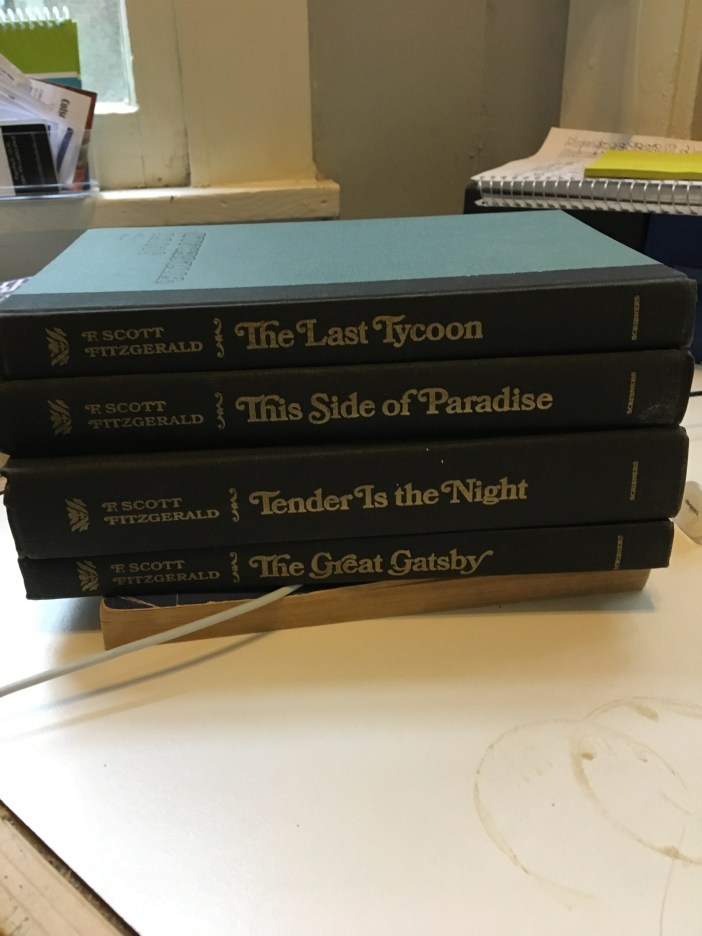
My Fitzgerald set arrived this week:

IMG_2286

Aren’t they lovely? I can’t wait for the Steinbeck set to arrive.

To be honest, I was stunned to pick it up and see how short The Great Gatsby actually is; it’s less than 200 pages. I should be able to read that relatively quickly.

So, anyway. Back to the spice mines with me.

Time for Me to Fly

I took today off from work; I am starting to wear a little around the edges (it happens more frequently the older I get, alas) and so two long weekends in a row, I felt, might be necessary in order for me to recharge my batteries. I’m not sure why–other than I’m older, which is something I refuse to either accept or accede to–but there it is. I started rewriting a story yesterday–this is the sixth draft, but I think I’ve finally figured out how to make it really work, and last night we watched another episode of Claws, which is really terrific; it’s so nice to see Neicy Nash finally in a complex role and she is tearing it up. We’re also going to start watching the Ellen Barkin series, Animal Kingdom, probably this evening. I can’t seem to find The Mist anywhere, though; but its reviews aren’t good, so maybe that’s a good thing? Pity, because it’s one of my favorite King novellas.

I also finished reading Lisa Unger’s Ink and Bone last night.

ink and bone

Daddy was on the phone, talking soft and low, dropping behind them on the path. Nothing new. He was always on the phone–or on the computer. Penny knew that her daddy loved her, but she also knew that he was almost never paying attention. He was “busy, sweetie,” or “with a client,” or “just a minute, honey, Daddy’s talking to someone.” He was a good story-teller, a bear-hugger, always opened his arms to her, lifted her high, or took her onto his lap while he worked at his desk. Mommy couldn’t lift her anymore, but Daddy still could. She loved the feel of him, the smell of him. He was never angry, always funny. But sometimes she had to say his name like one hundred times before he heard her, even when she was right next to him.

Dad. Dad? Daddy!

Honey, you don’t have to yell.

How could you not hear someone who was right next to you?

If Mommy was out and Daddy was in charge, then she and her brother could: eat whatever they wanted (all you had to do was go into the kitchen and take it; he wouldn’t even notice); play on the iPad forever (he would never suggest that they read a book or play a game together); ride their plasma cars up and down the long hallway from the foyer to the living room. And it was only when they got too loud that he might appear in the doorway to his office and say: “Hey, guys? Keep it down, okay?”

I can’t remember who it was that insisted I read Lisa Unger, but I owe that person a tremendous debt of gratitude.

Ink and Bone is the second Unger novel I’ve read (the first was Crazy Love You, which I read last year and loved), and I enjoyed this one even more than the first one I read, and I loved that one.  Unger is an extraordinary writer; with an uncanny ability to tell her readers who a character is with a few brushstrokes that are so honest and real and true that the reader immediately knows exactly who that person is; and her ‘villains’ are all the more terrifying for being so absolutely real.

Both books I’ve read of hers were set in (or around) a small town in upstate New York known as The Hollows as well as in Manhattan. The Hollows is one of those towns; like Stephen King’s Castle Rock, a town where paranormal things happen: people can see ghosts, commune with the dead, or hear The Whispers in the woods; the dead trying to tell their stories. There is also human evil in The Hollows; whether these people are drawn there by the paranormal force (one character in Ink and Bone calls the town a ‘hellmouth’) that is active there, or if that force draws the evil out from their hearts.

The story at the heart of Ink and Bone is missing children: the Gleason family rented a woodsy cabin in The Hollows for the summer; the marriage between Wolf and Merri is teetering because of his adultery and her Vicodin addiction. Merri is too zonked out on Vicodin to go for a walk in the woods with her family; on that walk both her husband and son are shot, and her daughter Abbey taken. This disappearance, and the fact that both parents are considered suspects by the police, has further shattered the marriage, perhaps beyond repair, and Merri is convinced her daughter is still alive. She goes back up to the Hollows and hires a local private eye, Jones Cooper, to look for her daughter. Jones works with Eloise Montgomery, an elderly local psychic–but in this case, Eloise passes the case along to her granddaughter, Finley.

Finley is a the crowning achievement of this narrative; a young heroine with complicated emotions and a gift she doesn’t quite understand, doesn’t know how to control, and isn’t sure she wants. She is heavily tattooed; the ghosts she sees she has transformed into tattoos on her body. She is sort of involved with a tattoo artist, Rainer, who loves her and followed her to the Hollows from Seattle, setting up shop in the small town. She isn’t sure how she feels about him, or whether she can get more serious with him thanks to her gift/curse. She has a close relationship with her (sometimes maddening) grandmother, who sort of Yodas her about the gift; never really explaining anything and often responding to her questions with ambiguous non-answers. She has a difficult relationship with her own mother, who is estranged from Eloise and has rejected fervently the gift. Finley, though, is seeing things now; things that may lead her to Abbey.

The book is extraordinary, and while Finley is the primary point-of-view character, we get to see things from several others as well; secondary point-of-view characters who not only advance the story but also enhance our understanding of what is going on, who they are, and Unger makes us care about them, warts and all. She is an incredibly gifted storyteller, and I defy anyone to put the book down during the last hundred pages or so.

Unger has written many novels about the Hollows, and about Jones Cooper; having not read them all nor having read them in order, I can’t say whether reading them in order enhances and enriches the reader’s experience or knowledge; maybe reading them in order is a more satisfying experience. But I can say that not reading them in order isn’t a hindrance, like so many other series or interconnected books.

You need to be reading Lisa Unger, Constant Reader.

And I think next I shall read Carson McCullers’ Reflections in a Golden Eye.

And now back to the spice mines.