Hold Me Tight

Monday morning of a short work week, as I am traveling to Alabama on Friday, returning to New Orleans on Sunday, and then it’s off to Ole Miss and Oxford, MS for another event.

It was a rather lovely three day weekend, quite frankly; I wish there was some way to make every weekend three days, to be honest. Having the extra day makes all the difference, really. I spent one day running errands and cleaning, another day cleaning and reading, and the last day reading and writing. I now feel completely relaxed and rested and thoroughly prepared for this week, as opposed to whining about how the weekend never lasts long enough. Alas, there won’t be another such three day weekend until Memorial Day at the end of next month. Heavy heaving sigh.

I finished reading Finders Keepers yesterday, and I did really enjoy it. It was an excellent follow-up to Mr. Mercedes, and it was fun catching up with the remaining cast of that novel: Bill Hodges, Holly, and Jerome, who team up to help out a teenaged boy who has discovered a treasure trove–a buried trunk full of money and manuscripts, the haul from the robbery/murder of noted American author Joel Rothstein. Like all of King’s novels, it was compulsively readable, highly entertaining, with strongly built characters and relationships, brilliants touches of pop culture, and a good story. And, like so many of King’s novels/stories, at the center of the story was an author and his work–not to mention how that work affected his readers. Like Misery, one of his readers takes the work too seriously and becomes overly attached to the main character, doesn’t like what the author does to the character, and that fanaticism is what leads to the robbery/murder, and triggers the rest of the story.

I often chastise myself for writing about writers; I’ve always considered it more than a little self-indulgent, and as I get older and further along in my writing career, writers as characters continue to pop up in my work. “Quiet Desperation” is about writers and writing; and an author character popped up in The Orion Mask– Jerry Channing, a character I became so attached I brought him back for Garden District Gothic, and even considered giving him his own stand-alone adventure. It also occurs to me that the unnamed protagonist of several short stories I’ve written–an author–are really early incarnations of Jerry (the only short story about him that’s been published so far was “An Arrow for Sebastian”). Yesterday I started a second draft of “Quiet Desperation”–an actual rewrite, rather than an edit (which is, I think, long been a part of my problem with writing; I don’t rewrite, I simply edit what I’ve already written, which is lazy) and it will eventually require me to drive out to New Orleans East, because where the new opening of the story takes place is a part of New Orleans I haven’t seen in over ten years, and I am pulling from my memories–and Katrina occurred since then, so the topography of that part of the city/parish has undoubtedly been changed by the hurricane and aftermath. Of course, now that I have a new car, that’s not an issue; nor is driving out there. It’s just a matter of finding the time. Next weekend is definitely out, since I’ll be in Alabama, and when I’m  not in Alabama I’ll be too busy preparing for the trip to Mississippi–although I could drive out that way on the way out of town to Alabama on Friday; it’s on the way.

Hmmmm. ’tis a thought.

We also watched last night’s Feud, and I have to say, both Jessica Lange and Susan Sarandon are absolutely killing it. I’m not sure who’s going to win the Emmy, but my guess is on one of them–with Nicole Kidman’s performance in Big Little Lies giving them both a run for their money.

We also started watching Thirteen Reasons Why, and got through the first three episodes. Had I not needed to get up this morning for work, we would have watched more. There are some questionable aspects of the story/plot for me, but the young actors are incredibly appealing, and Dylan Minnette, who plays main character Clay Jensen, is quite compelling as the quiet loner. I have some thoughts about him, his character, and where this is all going, but I will keep those to myself and continue to watch.
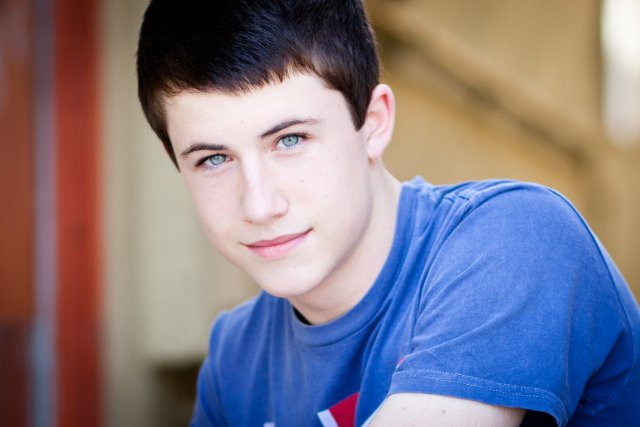
dylan minnette

I also have a copy of the book in my TBR pile, where it’s been forever, and might just go ahead and read it now–reading Big Little Lies while watching the show didn’t hurt either, frankly.

And now, back to the spice mines.

 

Judy in Disguise (with Glasses)

Monday morning in New Orleans.

I’ve been awake for an hour, yet don’t feel awake yet. Second cup of coffee is helping, though; I can almost feel the caffeine moving through my body inside my veins. I have a short day today; only five and a half hours, and am having dinner with my friend Stuart this evening. Tomorrow and Wednesday are both twelve hour days at the office, complicated still further by meeting with Wacky Russian early on Wednesday morning. I don’t have to go in until late on Thursday, which will also be rather lovely; I am sure I am going to need the extra sleep to get over the preceding days. And of course, Friday is Good Friday, so—three day weekend! I am hoping that if I spend about three hours on each day of that weekend cleaning I can get the Lost Apartment back under control. It’s a horrifying mess, quite frankly, and it’s more than a little appalling. The ceiling fans, for example, are disgusting.

I’ve gotten further along in Underground Airlines, and I am really enjoying it. With the three day weekend coming, I hope to get it finished this week, finish The Nest over the weekend, and maybe move on to something else. I didn’t get any writing done this weekend, but I did do some brainstorming–which, to me, counts, and if you don’t think it does FUCK YOU–and came up with some new characters. The problem I am having with Chapter One of Crescent City Charade (which I really want to finish this week) is that already the chapter is too long and it’s not even finished yet. This isn’t a bad thing, of course, and rather than resisting how long the chapter is I should just make it as long as it needs to be to get to the transition into Chapter 2 and worry about editing it down–or splitting it into two chapters, if necessary–later, rather than worrying so much about it now; similar to how I have almost five thousand words of “Quiet Desperation” already written and haven’t even gotten to the meat of the story yet. (That story, obviously, is going to require a ridiculous amount of editing.)

Have I ever mentioned how much I hate editing myself? The only thing worse is rewriting. Heavy heaving sigh.

Friday night I finished watching a television show on Hulu; Faking It, which originally aired on MTV. It only lasted three seasons, and it’s actually kind of clever (the second season was twenty episodes; the third and final was only ten, which makes me wonder how that played out). MTV has long been a progressive force, yet we really no longer hear about MTV being controversial. MTV ran the first HIV/AIDS PSA’s to air, and continued to do so for years before other networks caught up. MTV also originated reality television–The Real World model is still copied and imitated to this day; any reality show where everyone has to share a living environment is copying it–and also put a face on HIV/AIDS with Pedro Zamora back in the early 1990’s. I often have held that a lot of the shift in public/social perceptions of the LGBTQ community had a lot to do with MTV’s influence on youth; I also think MTV has shifted public perceptions on many social issues by exposing young people to them and helping them to see the systemic unfairness in so much of American society. But that’s an essay for another time.

Faking It has a ridiculous premise, but it’s actually kind of clever at the same time: Hester High School, in Austin, Texas, is every conservative’s nightmare about political correctness raging out of control in public education. The show could have easily been called Politically Correct High; because Hester High School is just that: sensitivity to other races and cultures are foremost. The most popular kid at Hester is the openly gay kid, whose best friend is the high school lothario; but the primary focus of the show is the friendship of Karma and Amy, two best friends who accidentally get outed as a lesbian couple. Amy wants to correct the record, but Karma enjoys the corresponding rise in their popularity and she wants to ride that wave; plus, the school lothario–played by Gregg Sulkin–is now interested in her because he’s never had sex with a lesbian before. The show frankly and honestly takes on a lot of social issues–everything from intersex to transgender to sexual fluidity–and the catch to the ‘pretending to be lesbians’ schtick is that Amy actually is in love with her best friend Karma–who doesn’t return the feelings. The young cast is quite appealing, and while some of the adventures they have strain credulity, the show’s message of tolerance, acceptance, and understanding is handled very well.

Gregg  Sulkin also has achieved teen heartthrob status.


gregg sulkin

Not hard to see why.

But young, out actor Michael J. Willett as Shane Harvey pretty much steals the show. Shane is depicted as a scheming. snarky, but funny kid with a lot of insecurities who really just wants to find a boyfriend, and Willett plays the part to perfection. He also played gay in the movie GBF, which was actually a lot better than I thought it would be (think a John Hughes teen comedy with a gay main character instead of Molly Ringwald), and the two characters couldn’t be any more different–showing that there are a range of gay characters; we aren’t this monolithic ‘all the same’ that some people seem to think we are–which goes along with the concept of inclusion: we’re not all finger-snapping sidekicks with a great sense of snark, fashion sense, and with our fingers on the pulse of pop culture. Just as it would be cool for books, TV shows, and movies to include gay characters for the sake of diversity; within the gay community there’s a huge range of diverse characters. The key to writing gay characters is to make them human.

homerot1_willett

Here’s hoping Willett can find more work as an out gay actor.

And now, back to the spice mines.

La La (Means I Love You)

Good morning. It’s a lovely Sunday morning in New Orleans, as I look at the start of a relatively easy and short week for me at work. Good Friday is a paid holiday for me, so I only have four days to get through, and I have short days on both Monday and Thursday (horrifying long days on Tuesday and Wednesday, of course), so it’s kind of a ‘win some lose some’ kind of week. I ended up not writing much yesterday; instead I read Underground Airlines (which I am enjoying) and when Paul got home from his errands, I made dinner and we watched Rogue One and then the first two episodes of Five Came Back, a wonderful documentary about five Hollywood film directors (Frank Capra, John Ford, John Huston, William Wyler, and George Stevens) who spent World War II making documentaries about the war rather than directing films in Hollywood. It’s narrated by Meryl Streep, and is based on the book of the same title by Mark Harris (who also wrote the documentary). It’s very well done; and it does a really good job of capturing the era it’s about, while at the same time not only exposing how easy it is for film to be used as propaganda, but raising questions about the ethics of making propaganda during a time of war. As we as Americans are currently wrestling with the notion of news as propaganda, and how to tell what is real and what is not–a horrifying place to be, quite frankly–and how the news was controlled for the American public during the Second World War to keep them behind the war effort (which was prodigious) as well as buying war bonds to finance it, it raises difficult questions about truth, ethics, and the media. I cannot recommend it enough; I’m really looking forward to viewing the final episode.

I will undoubtedly spend today in a mix of cleaning, writing, and reading. My friend Stuart is in town, and hopefully we’ll get to have lunch or an early dinner together today, if not, it will be tomorrow.

Underground Airlines, like The Underground Railroad, is not an easy book to read. I’ve never read much alternate history (Philip K. Dick’s The Man in the High Castle being one of the few exceptions), and that’s what this book is; alternate history, and one that, as you learn more about the ‘history’ of the United States and its ‘peculiar institution’ the deeper you get into the book, is terribly disturbing because you can see how it might have gone this way.

American history, as it pertains to questions of race and equality, is difficult; and the truth of American history, as opposed to the deeply sanitized version we are taught in public school (or at least, the deeply ‘rah-rah-rah’ version I was taught in the 1960’s, predicated on the manifest destiny of white Europeans to take dominion over the Americas while eradicating the natives and enslaving Africans, required a lot of unlearning; I told one of my co-workers the other day that I’ve spent most of my adult life unlearning everything I was raised to believe while re-educating myself on the truth), is actually kind of ugly. I remember reading James Michener’s Centennial when I was in my teens, and realizing everything I’d been taught, read, or seen in movies about the native Americans, and their clash with white Europeans, was actually incredibly biased against the native ‘savages’. (If you’re interested in re-educating yourself on American history, please read Howard Zinn’s histories of the United States, starting with A People’s History of the United States.)

Anyway, when Underground Airlines was released, there was some controversy, given the subject matter and that author Ben H. Winters was white and writing from the perspective of an African-American who worked as a runaway slave catcher. Questions of cultural appropriation often dog the work of white people who write from outside their own experience; yet at the same time there is also a clamor for diversity within fiction and there has long been a Twitter hashtag #weneeddiversebooks. I don ‘t think–and I could be wrong–that the problem is so much cultural appropriation as it is that authors of color do not have the same easy access to publishing that white people do; it’s easier for a white author to get a book published with a person of color as the main character than it is for an author of color to do so. I’ve personally enjoyed seeing the progress made by film and television to cast people of color; when I was a kid I would have loved to find books or television shows or films where gay men weren’t tragic figures doomed to die, or the butt of the joke, or figures of contempt; I can only imagine the positive impact this is having on young minority children to be able to see characters like themselves on films and television shows, or finding them in books.

This is not a bad thing.

The book is very well-written, and I am enjoying it tremendously, but it’s not an easy read, as I said earlier. I had always, as I’ve said before, intended to read it and The Underground Railroad back-to-back, to get a sense of comparison and to see how the differences between how an author of color deals with the issues of race and white supremacy vs how a white author does. Both books have made me think about these issues–the racial divide/conflict that is so deeply woven into the fabric of our society and culture, and how it always has been there from the very beginning.

That’s not a bad thing. Being made to think, to reexamine your values and beliefs, to unlearn things you were taught that are wrong and to reeducate yourself is never a bad thing. I think we, as a country and a society and a culture, can do with some reexamination.

Heavy thoughts for a Sunday morning before I head back into the spice mines.

Here’s a happy Sunday morning hunk for you, Constant Reader.

IMG_1678


Cry Like a Baby

Well, I finished my essay for Sisters in Crime finally yesterday and got it all turned in. Woo-hoo! That’s something–the first thing I’ve really finished this year since turning in the last manuscript, and I am going to ride that particular triumph all week, and hopefully get the other things I want to get written finished this week as well.

I can hope, at any rate.

I’m not really sure why I struggled so much with that essay; I’m not really sure why I am struggling so much to write in general since I turned in my last manuscript. Even this blog sometimes seems like a slog; although I do suspect in some ways it has everything to do with my usual inability to focus on what I am working on; deadlines can certainly make focus much much easier to deal with. But I really want to get these stories finished this week, and I am also wanting to get some editing done and some work on the book as well. Maybe I am overestimating what I can get done reasonably in a week, I don’t know. But it will be enormously satisfying, for example, just to get one of these stories finished. I actually was rereading one yesterday, also incomplete (“The Scent of Lilacs in the Rain”, for the record) and it’s actually quite good. It’ll probably need to be edited down some, but not bad–there’s about three thousand words or so already, and that’ll probably need to be sliced in half at the very least since there are at least several thousand new words needed to finish. I also have no idea where I would publish the story–I don’t know where I would publish any of the stories I’ve written/am writing. But I am enjoying working on them, so there’s that.

One of the things I am trying very hard to do is remember that I actually do ENJOY writing. It’s so easy to hate doing it, really–and that often has to do with the pressure of deadlines, or the frustration of it not going well, or it not going at all. I don’t miss the pressure of deadlines, in all honesty, but I am starting to get concerned about not getting enough done.

Heavy heaving sigh.

But we finished watching Big Little Lies last night, and got deeper into this final season of Bates Motel–which is so deranged it’s amazing! I am going to miss this show, and seriously, if Freddy Highmore is NOT recognized by the Emmys this year…I don’t know what is wrong with the Emmy voters. PAY ATTENTION.

I am still digesting The Underground Railroad (and the show Big Little Lies), but I hope to blog about both relatively soon.

And on that note, back to the spice mines!

Here’s a Twofer Tuesday hunk fest!


A Beautiful Morning

Well, I finished reading The Underground Railroad yesterday, and will most definitely be blogging about it, once I’ve digested it some and thought about it some more. It was, to say the least, very powerful, and not only did it made me think about the subject matter–it also made me think about a lot of other things, which I will be more than happy to discuss once I’ve digested them. I also started reading The Nest by Cynthia D’Aprix Sweeney, which I am enjoying as well.

We were supposed to get heavy weather yesterday, but it arrived over night instead–everything out there is wet and dripping, which is always a joy. Ah, well.

I didn’t write yesterday, or at all over the weekend, which is, of course, terrible. I did get some cleaning done and some organizing–not as much as I would have liked–but we’re also working on getting caught up on our shows and I did want to power through and finally finish the Colson novel, which I did manage to do, and then we got caught up on The Walking Dead, watched last night’s Feud, and then it was bedtime.

I am greatly enjoying Feud, and am very impressed with how it’s taking on the issue of how Hollywood/entertainment treats women; which also, in some ways, goes along with another show I am looking to finishing watching–the season finale of Big Little Lies was also last night; which we will undoubtedly watch tonight as well as continuing to get caught up on Bates Motel (a show that is KILLING it now in it’s final season). The way two of my favorite old Hollywood actresses–Bette Davis and Joan Crawford–are being depicted is brilliant, and the two women playing them, Jessica Lange and Susan Sarandon, are turning in stunning, award-worthy performances. Last week’s episode, in which both Davis and Crawford are still not fielding any offers before the movie opens–and then it becomes a huge hit–was particularly brilliant; the moment when Joan Crawford, leaving the theater after the preview of the film that ended with a standing ovation, is recognized in the lobby and then mobbed with fans–when this happens, the look on her face–surprise evolving into pure joy at being treated like a star again, is so poignant it’s heartbreaking.

Last night’s, Oscar night when Crawford was snubbed in favor of Davis, was also almost painful to watch; the naked need Davis had for that third Oscar, the pain and anguish Crawford felt about being overshadowed once again by her rival (the scenes where Crawford talks to Geraldine Page and Anne Bancroft, asking them if she can accept for them, and the pity and sympathy Page and Bancroft feel for her, agreeing to let her do it because she needs to…wow)–and Judy Davis is also killing it as Hedda Hopper.

And last night, for the first time, Catherine Zeta-Jones actually delivered as Olivia de Havilland.

I got the idea for an essay yesterday about women’s fiction–using three novels to not only compare and contrast to each other but also to talk about how fiction by, for, and about women is so regularly disdained and dismissed as somehow lesser–the three being The Best of Everything by Rona Jaffe, Peyton Place by Grace Metalious, and Valley of the Dolls by Jacqueline Susann. I’ve been toying with the idea for quite some time, and I thought about it again yesterday, partly because of Feud, but also partly because of Big Little Lies. Of course, I have no idea where to publish the thing…and it’s not like I don’t have a million other things to write as well.

Heavy heaving sigh.

And on that note, back to editing.

People Got to Be Free

Tuesday. I managed to get a shit ton of stuff done yesterday; well over half of my to-do list, which was quite a triumph. I’m not sure what that was all about, frankly, but I am sure it had something to do with going to bed early. I did the same last night; much earlier than I usually do, and am feeling pretty well rested this morning as well.

Note to self: going to bed early on nights when you have to get up early the next morning is the smart thing to do, dumbass. Make a habit of it.

Paul checks into the hotel tomorrow for the weekend. It’s not like I’ve seen much of him lately, anyway. He gets home after I go to bed, so if I’m lucky we have a bit of conversation in the morning on my way out the door. I’ll be glad when this is all over and we can get back to some semblance of normality, again. I kind of feel like I’ve been living alone for the last few weeks. Heavy heaving sigh. I’ve been watching a lot of old episodes of Dark Shadows lately, which is entertaining on many levels, but primarily for making me realize how deep an influence the old show had on me–how many books have I written that open with someone arriving someplace they’ve never been before? Let’s see….Lake Thirteen, Sorceress, Dark Tide, The Orion Mask…and even Timothy, kind of.

Granted, many novels open that way…but in my subconscious I always hear the mournful sound of the train whistle, the light on the front of the train, and the voice…”My name is Victoria Winters.”

It reminds me that long, long ago, I wanted to write about supernatural occurrences in a small town, perhaps even write a series, beginning with a book called I, Vampire. There’s a small town in Louisiana, just above Baton Rouge on the other side of the river, but before Lafayette, that is sort of what I had in mind when I first had that idea way back in the early 90’s; I had driven from Houston to Tampa with a friend and we detoured off I-10 in Louisiana to go along the River Road…I’ve actually used the fictional town in a couple of books already (Murder in the Arts District, The Orion Mask) and may go back and use it again. Need was also supposed to be the first in a supernatural series, which I’d intended to tie in to that town as well.

Maybe I’ll get back to that sometime.

I also have to stop myself from using the name “Collins” on a regular basis in my work. I would love to call a character Barnabas, too.

All right, time to get back to the spice mines. Here’s Tuesday’s hunk.

Hey Jude

Well, yesterday was a bust. I got practically nothing done yesterday, other than laundering the bedding, doing the dishes, and straightening up some around the house. I was surprisingly tired, somehow, and wound up relaxing in my easy chair for most of the day, streamed a movie (G. B. F., which was really cute; it’s lovely to see that they are making teen movies with gay characters front and center) and then watched old episodes of Dark Shadows. I simply gave into the being tired and listened to my body, and decided it wasn’t smart to force myself to do anything when I was so tired and listless. I overslept again this morning–stayed in bed until ten again, just like yesterday–but am again refusing to feel any guilt. Obviously, my body, mind, and spirit need rest. Today I will have to go get groceries–no choice, really–and work on some things. We’ll see how it goes; trips to the grocery store rarely end well, you know? That always seems to wear me out somewhat.

And much as I loathe the very idea, my taxes do need to be done.

Heavy heaving sigh.

And I need to go to the grocery store.

Heavy sigh.

Oh, well, it has to be done, no sense in moping about it, right?

And since I embraced my lazy yesterday, I have to get things done today. There is no choice. It simply must be.

At least it’s a beautiful day out there, right? That has to count for something.

I am a little worried about my tendency to stay in the house. I mean, I have a new car and could spend time on the weekends doing things; like exploring New Orleans, going to the beach–all sorts of things–and yet it’s true: a body at rest tends to stay at rest. Like even now I am dreading the very thought of getting out of this chair and going out to do things. It really is sad.

But at least today I feel rested. Yesterday I did not; I felt tired all day. I already feel rested and awake this morning even though it’s already 11:30 and I’ve only had two cups of coffee. I do feel like if I can just get motivated I can clean and make groceries and edit and write and do some of my taxes and so on. And maybe, just maybe, I can get that rewrite of the story finished and maybe make some progress on Crescent City Charade and figure out some other things.

The day is rife with potential and possibilities. You have to love that, don’t you?

I also rewatched my old DVD of Beauty and the Beast yesterday; I’ve been thinking about writing about it and the live-action version that’s just been released (I do want to go see it; just am not sure when I’ll be able to get to a theater) and some of the controversy involved with both. I love the movie, I love the stage play based on it, and if people want to read things into it that are offensive and whatever, have at it. I will still love the movie and the story, and read into it what I see in it: namely, the entire movie is a metaphor for HIV/AIDS, and hope.

Next weekend is the TWFest/Saints & Sinners; I’ve made the executive decision to not stay in the Quarter for more than Friday night; I shall simply commute back and forth between the evejavascript:void(0);nt and the Lost Apartment. That way we won’t have to mess with boarding Scooter. I’ve taken Friday off from work; I shall head down there in the early afternoon and go shopping at the outlet mall for an outfit to wear to the opening parties, and then after everything I am doing on Saturday I shall take the streetcar home, and then take it back down there for Sunday’s events.

All right. I am getting nothing done here. So I shall post a picture of one of the attractive young actors from G. B. F. before I go.

This is Taylor Frey, who also played gay on Days of Our Lives.

Aquarius/Let the Sunshine

I stayed up late last night reading, and as such slept through my morning. When I got home from running errands yesterday I couldn’t find my copy of Peaches and Scream, which meant I either left it somewhere yesterday (the horror! It was signed) or I left it in the car–which I will check shortly–but while I was cleaning and doing laundry and all of that yesterday, I decided not to walk back out to the car but to just pick up another book–the next on the TBR pile–and I got very caught up in it, caught up so much that I wanted to see how it ended.

The book was Big Little Lies by Liane Moriarty.

“That doesn’t sound like a school trivia night,” said Mrs. Patty Ponder to Marie Antoinette. “That sounds like a riot.”

The cat didn’t respond. She was dozing on the couch and found school trivia nights to be trivial.

“Not interested, eh? Let them eat cake! Is that what you’re thinking? They do eat a lot of cake, don’t they? All those cake stalls. Goodness me. Although I don’t think any of the mothers actually eat them. They’re all so sleek and skinny, aren’t they? Like you.”

Marie Antoinette sneered at the compliment. The “let them eat cake” thing had grown old a long time ago, and she’d recently heard one of Mrs. Ponder’s grandchildren say it was mean to be “let them eat brioche” and also that Marie Antoinette never said it in the first place.

Mrs. Ponder picked up her television remote and turned down the volume on Dancing with the Stars. She’d turned it up loud earlier because of the sound of the heavy rain, but the downpour had eased now.

She could hear people shouting. Angry hollers crashed through the quiet, cold night air. It was somehow hurtful for Mrs. Ponder to hear, as if all that rage was directed at her. (Mrs. Ponder had grown up with an angry mother.)

I’ll be completely honest: I would have never heard of this book were it not for the HBO show, which Paul and I are watching. I primarily focus, when it comes to fiction, first on crime novels, followed by young adult, then horror, and finally queer fiction; as my reading time is relatively limited I can barely keep up with what’s au courant in crime, let alone anything else. Liane Moriarty, an enormously successful Australian novelist, is classified as chick lit, a term I’ve always found to be, at the very least, demeaning–not just to those who write it but to those who read it.

And there are a LOT of readers in this particular field.

The primary problems–which I will address now, before moving on to the things I really enjoyed–I had with this novel really are all about me, rather than the book itself. As someone who writes crime fiction, and therefore reads a lot of it, has edited a lot of it, has judged it for awards, Big Little Lies actually can be considered a crime novel, particularly if you look at the definition of the genre from Mystery Writers of America; because the book is about a crime, in a way; and the way the book is structured is a very much a crime trope: from the very beginning we know some kind of crime has happened, but we don’t know who or what or how. The book unspools by giving us all the backstory leading up to the commission of the crime, exposing all the secrets and lies involving a trio of three women, connected by having a child in kindergarten at one particular school, and then it gives us the crime itself, and it’s aftermath. There’s kind of a Greek chorus of voices at the end of each chapter, snippets from police or newspaper interviews, from various other characters but not the main ones, and Moriarty uses this device to not only build suspense but keep the reader hooked and intrigued and turning the page. The problem, of course, is that if you are a regular reader of crime fiction, many of the big surprises and twists to the plot…well, they aren’t shocking and surprising; in fact, I predicted every single one of them many chapters before the reveals. But I didn’t know who the victim would be, or how it would happen, or who would actually do it; Moriarty does an excellent job of juggling all the little threads and making you guess how it would all come down when you finally reach the climax of the novel, which kept me turning the page.

Those quibbles aside, Big Little Lies is compulsively readable. Moriarty does an excellent job of creating characters the reader can not only identify with but sympathize with, and there is also a lot of wit and sly social commentary in the book as well. As I mentioned earlier, the three main characters–Jane, Celeste, Madeline–are all connected by having a child in kindergarten. On the morning of kindergarten orientation, Madeline gets out of her car to lecture the teenaged driver of the car in front of her at a stoplight about texting and driving, only to turn her ankle on her way back to her car. Jane, new to the area, is in the car behind her and gets out to help her, and a friendship is born. Celeste is eventually drawn into their orbit, and we get to know these three women very well–as well as their secrets. Celeste is filthy rich, Celeste middle class, Jane borderline poor; Moriarty does an excellent job of showing the contrasts in their lifestyles as well as how those differences affect their behavior as well as their relationships. She also does an excellent job at showing the sensitivities and competitiveness between the moms who stay at home and the moms who work; Moriarty takes us into the world of women as mothers of young children and is very sly about the modern world of the helicopter parent; particularly on that first day of kindergarten orientation, when one of the children has been bullied and accuses Jane’s son of doing it, and how that accusation splits the school into two warring factions; of what it’s like to have your child accused of something heinous and the worry that comes along with that; the fierce desire to protect your child even if it means calling another child a liar; the terror that there is something psychologically wrong with your child. Moriarty is excellent at this; this women are incredibly real and fully developed and realized. She also writes with wit and flair and clever use of language; she has an innate ability to hook her reader and keep them reading.

It’s easy to see why she is an international bestseller.

I can highly recommend the book, despite the slight problems I had with it; it’s a great, enjoyable ride, and like I said to begin with, I stayed up until almost two in the morning reading it, and the first thing I did when I got up this morning, rather than messing about on-line and answering emails and reading social media, was get my cup of coffee and get back in my easy chair to finish reading it.

And that says a lot about Liane Moriarty as a writer. I do intend to read more of her work.

Telephone

The Carnival hangover continues.

I worked twelve hours yesterday, including bar testing last night, so that could account for feeling drained this morning. It’s probably a combination of the two–long day, post Carnival malaise–but I only have to get through today and tomorrow and then it’s the glorious weekend again, which is quite lovely. These abbreviated work weeks always feel somewhat off, much as I love long weekends. I started work on Crescent City Charade yesterday morning but didn’t get very far; I am thinking it wasn’t smart to try to get it going in the wake of Carnival–smart or not, I am not beating myself up because it didn’t come easy. I do have those days when nothing really comes out on the page, and it really can’t be forced. (I mean, it can, but it usually ends up being such garbage it has to be completely redone or thrown out; on the other hand sometimes when I force it, it’s hard going at first and then it truly gets going. I can usually tell the difference, though, and I could tell yesterday wasn’t going to be one of those good days of work.)

In other good news, my editor liked Wicked Frat Boy Games, which was absolutely lovely news to wake up to. Now I just have to go over her edits. Hurray!

Paul and I are watching Big Little Lies on HBO and we’re enjoying it so far; great performances not only by the actresses in the leads (Reese Witherspoon, Nicole Kidman, Shaillene Woodley, Laura Dern) but also good roles for the supporting males, and the kids are also pretty good. It’s beautifully shot, and the suspense is doing a slow build. Paul did comment that it seemed a little Real Housewives of Monterey-ish to him, but I suspect that any film or television vehicle driven by women interacting is going to feel that way for a while.

I do enjoy the Real Housewives, I’ve never denied that; it’s a fascinating phenomenon, and as ‘staged’ and manipulated as these shows can be (the Lifetime series UnReal did a really great job of tearing away the veil on these sort of shows; the first season was fantastic; I didn’t watch the second season but from everything I’ve read it wasn’t nearly as good as the first; I may go back and watch it at some point when I have time–I crack myself up); Alison Gaylin wrote a wonderful y/a ebook about a young girl whose family had a reality show called Reality Ends Here which I highly recommend. I explored the ‘real housewives’ in a Paige book called Dead Housewives of New Orleans (no longer available; long story) but because of rushing and publisher deadlines and so forth I wasn’t able to make that book all I wanted it to be, so I am rebooting the concept and making it the Scotty book I am working (or not working, as the case may be) on, but it will be vastly different in this incarnation. Pretty much the only thing that is going to stay the same is the background set-up of the book; a reality show about social climbing upper class New Orleans women. I really want to get this right, you know?

And on that note, I am going to get my day going.

Here’s a hunk for you, Constant Reader:

Paparazzi

Memories lie.

There are things and moments from my childhood I remember completely differently from my parents and my sister, for example, or moments from early on in Paul’s and my relationship. My memories differ from those of kids I went to high school with, and those of my fraternity brothers. Memory and experience are always, of course, colored by our own internal beliefs, values, fears, and opinions; which is what makes being a crime writer interesting.

I remembered, for example, that we moved from the city out to the suburbs in the winter of 1969. I’ve always thought that was the truth; we moved to our house in Bolingbrook that winter and would have sworn on a stack of Bibles that was the truth. Imagine my surprise, during my recent visit to my parents, to hear both of them insist that wasn’t true and we moved out there in either the winter of 1971 or 1972; and I sat there, confused, and then a key piece of my history snapped into place in the jigsaw puzzle that is my memory: you were ten when you moved; your eleventh birthday was your first birthday in the new house so it had to be 1971. I’d always remembered that we’d lived out there for much longer than we had. We only lived in Bolingbrook for four and a half years; I was in the sixth grade when we moved and we moved to Kansas after my sophomore year ended.

Interesting, isn’t it?

I was rather startled the other day to hear that David Cassidy is in early stage dementia; David Cassidy was a part of my childhood, and it’s hard to remember the years when The Partridge Family aired without hearing their music in the echo chambers of my brain. The Partridge Family Album was, in fact, the first album my sister owned. She had one of those little portable record players that either ran on six enormous batteries or could be plugged into the wall, and she played the album over and over and over again. I didn’t mind because I kind of liked the music myself; and we watched the show religiously every week. My sister, of course, was madly in love with David Cassidy, who did nothing for me. (Even as a nascent gay child, my crush was Kurt Russell.)

Before buying that album my sister primarily bought 45’s; it amazes me that there are any number of people who don’t know what those are, or how you used to stack them on the record player, so the next one would drop when the previous one finished playing and the needle cleared out of the way, or the scratchy sounds from collected dust and/or scratches on the record that you could always hear in the background. David Cassidy replaced Bobby Sherman in my sister and her friends’ affections; Bobby Sherman replaced Davey Jones of the Monkees.

The show itself was pretty dreadful, really. The idea was derived from the Cowsills, an actual family musical group, and it was designed to appeal to young girls and hopefully sell some records; another prefabricated music group along the lines of the Monkees and the Archies. They’d never intended for “Keith” to sing lead vocals on the music, but David Cassidy auditioned and got the part and to their surprise, he could sing and had musical ambitions. (Alas for him, he became a huge teen idol but never got the rock stardom he always dreamed of.) His stepmother in real life, Shirley Jones, was cast as his mother, widowed Shirley who worked in a bank to support her five kids. (Jones was actually an accomplished singer herself, and had an Oscar for playing a prostitute in Elmer Gantry.) Even at the time, I didn’t think the show was funny, but it wasn’t as bad and corny and hokey as The Brady Bunch, which was admittedly a low bar. But I was delighted several years ago to discover that the Partridge Family’s music was on iTunes, and I downloaded some, out of a sense of nostalgia.

And it wasn’t bad. I downloaded more, and still listen to it from time to time. It’s glossy, well produced, and slick pop music, but it’s not terrible. It certainly holds up better than Shaun Cassidy’s hits or New Kids on the Block.

And am I ever glad I didn’t have to go into the office today. I am worn out, frankly, not sure how I am going to survive tonight’s parades.

Heavy sigh