Addicted to Love

I solved an enormous problem with the WIP yesterday. As I mentioned in yesterday’s blog post, I diagnosed precisely what was wrong with it and why it wasn’t working on Sunday night; making the executive decision to start spending more time with the characters yesterday morning–I had a terrible sinus headache, went to the office, and wound up coming back home–and after I took a second Claritin (don’t tell anyone) and some antibiotics, I started brainstorming with the characters in my journal and suddenly everything made sense to me. I knew not only what was wrong with it, but also realized my own stubborn clinging to the original idea and form and style and voice that I’d envisioned was, yet again with yet another manuscript, the primary problem. Once I took what was, sadly, cliched about the manuscript out of it, changed some things, and came up with another concept for how to explore the chilling theme I’d originally wanted to explore–again, the only person tying me to that original concept was ME–then I was able to open up my mind to the possibilities. Why did it have to be late in the season? Why not the beginning of the season? Something happens during the summer that drives the narrative of the story, but by pushing it back to Halloween, I’d weakened the story. If the summer incident happens after school starts but before football season starts, and then the night of the first football game, having the second tragedy start makes the stakes higher and puts my main character into more of a difficult place. Plus, it gives me the chance to cut even more out and add even more in.

GOD I AM SO THRILLED CONSTANT READER YOU HAVE NO IDEA.

Now, if I were only to have such a breakthrough on the Scotty book, my month would be made.

Anything can happen, right, peeps?

But this is, quite frankly, an excellent example of two things: one, how reading a great writer can help you with your own work (in this case, Lori Roy’s The Disappearing) and how going back to your old habits–despite the risk of appearing like a Luddite–can bring back creativity. I know it’s lame, and old-school, and all that, but in the early days of my writing career I did everything by hand. Even with the advent of computers, when I started writing on screen rather than in a notebook, I always brainstormed on paper, and that always worked for me. Keeping a journal–and finding a new brand of pen I absolutely love–has made such an enormous difference, Constant Reader. I was sitting at my desk yesterday afternoon, the antibiotics racing through my body to clear up the sinus infection, making color-coded index cards about the characters and the plots, and it all just felt so good and organic; like I was really onto something with the manuscript.

I also realized (thank you, Lori Roy) precisely how the story needed to be told; the voice and point of view and tense was all wrong. So, sure enough, as I revised the first chapter to change the voice and so forth, it started working beautifully.

So, so happy.

And now,  back to the spice mines.

d j cotrona


Kyrie

Well, I finished “Fireflies” yesterday and got it sent in to the market; we’ll see how it goes. It’s kind of a stretch for that particular market, I suppose, but we’ll see how it goes. If they don’t want it, at least it’s finished. Who knows, there may be some editorial notes that will make it even better.

Two stories I sent out into the world–“Lightning Bugs in a Jar” and “Neighborhood Alert”–were turned down; no surprise, really; I am starting to realize my stories, while crime oriented for the most part, aren’t really mysteries, which kind of precludes their acceptance into mystery magazines. But that doesn’t mean I’m going to stop writing them, of course. I’ve thoroughly been enjoying myself this year writing short stories, so why stop doing something that gives me pleasure? They are also wonderful exercises in voice, tone, character; even in plotting, to a certain degree; I also feel that working on them is improving my writing (although, from looking at the Scotty book and the WIP, I am not so certain that’s true! Ha ha ha–just kidding; no more self-deprecation here). The problem, of course, is how does one monetize that work, so that it’s not just a writing exercise but something that can provide an income stream? The truth is, of course, that there are markets out there for crime fiction that may not be recognized necessarily as markets for crime fiction. But at the same time, getting published in places outside the recognized crime genre could be a way of getting my name out there and recognized, building the brand, as it were.

God damn, how I hate the term brand when it comes to writing! It just seems wrong, but I get it, and why it’s used. But that doesn’t have to mean I like it.

I have to confess, I had a slight crisis of confidence on the WIP yesterday.  I’ve been working on it for so long–off and on for at least two years–that I was starting to think, meh, maybe I should table it for good and be done with it. But as I was watching Harlan Coben’s Safe on Netflix last night (we enjoyed it), it suddenly occurred to me that there was a glaring hole in the middle of the entire thing; I’ve never really understood why some of the things that happen in the book actually do happen. Without that knowledge, is it any wonder I can’t get inside the characters? And without being able to really understand the characters and why they do the things they do, how can I possibly write about them honestly, realistically, and have the story I’ve devised for them actually work? So, the problems with the WIP that I’ve had all along basically stem from two things: a lack of understanding of who the characters are and their motivations, and not really knowing how to end it properly. So, my goal for this week is to do exactly that; go back to the beginning and figure out who my characters are and what the plot of the book really is. I still like the idea of having the entire book play out over the course of a weekend, from Friday night to Monday morning, and I think I can make that work, but I need to know who the characters are, what drives them, what drove them, and why they do the things they do. Which is what is missing from the book, the emotion and the understanding. “Oh, I need this kid to be a bastard, so he is a bastard.” No, that doesn’t work.

So, it’s kind of back to the drawing board for me. I am going to work on those characters and the plot of this book while I work on the Scotty; and if ideas some to me about Muscle, so be it; I will also work on it. But the primary focus has to be the Scotty book, which I need to get finished by July 1. And that’s very do-able. The first draft is nearly half-way finished; so the goal this week is to read what’s already done and take notes, while preparing for the next four or five chapters.

And, as I have always said, it’s never a bad thing to go back to the drawing board sometimes. You shouldn’t ever force a book or a story.

For your enjoyment, here’s the opening for “Don’t Look Down”:

Jase shifted the Fiat’s engine into a lower gear as he started up the steep hill. He hadn’t driven a standard transmission since college, but he did remember hills required downshifting. As the Fiat started climbing he passed two handsome, tanned men on mountain bikes, sturdy thighs straining against their brightly colored Lycra casing. According to the directions, he would be in Panzano when he reached the top of the hill.  There was a parking lot off to the left and just beyond that he could see a stone wall. The hill—or mountain, he wasn’t sure which—dropped off into a valley to the right, vineyards and olive trees spreading out to the next sloping hill.  A low stone wall hugged the right side of the road nearer the crest of the hill, with barely enough space for pedestrians or mountain bikes. All the roads had been incredibly narrow since he’d left the highway, with many sharp blind curves as the road weaved in and out and around and along mountains.  At one point an enormous bus coming the other way had almost forced him onto the shoulder, missing the black rental car by inches. He glanced up at the directions tucked into the sun visor. At the crest of the hill there would be another sharp, almost ninety-degree turn to the left, and to his right would be the triangular town center of Panzano-in-Chianti. To get to the hotel, because of the narrow one-way streets, he’d have to circle around the  triangular town square to get to the little hotel.  

The sunlight breaking through the clouds in the valley was beautiful.

Philip would have loved this, Jase thought. He always wanted us to see Italy.

All he felt was a twinge of sadness, which was better than breaking down into tears. He was healing, needed to get away from the apartment, the neighborhood, seeing Philip everywhere he turned, everywhere he looked.

And what better way to do that than two weeks in Italy?

28684878_1224228877721777_1611553184461666820_n


Burning Heart

Sunday morning, and yet another good night’s sleep. It truly is amazing what a difference that can make in one’s life; I miss the days when I could simply tumble into bed and close my eyes and, as Paul once put it, “sleep through a nuclear holocaust.” Yesterday was a good day; I got groceries and did some cleaning. I read both “This Town” and “Don’t Look Down” aloud, did the necessary clean-ups on them, and this morning I am going to read “Fireflies” aloud and see if it, indeed, does hold together. I wrote the first draft of “Fireflies” something like thirty years ago (!) and it’s still in the file folder, handwritten (because until computers, I almost always hand-wrote everything); I am still not entirely certain the story works; but we will find out today when I read it out loud.

I was very pleased with the two stories I read aloud yesterday, and if I do say so myself, I feel “This Town” is one of the better stories I’ve written. I’m going to read “Fireflies” aloud this morning, and then I’m going to work on “This Thing of Darkness” for a little bit, see how that goes, and then maybe dive into one of the two novels I am working on (focusing on, really; there’s a third I started writing a couple of weeks ago, which I am itching to get back to, but that’s just crazy talk). I also started reading Alex Segura’s Blackout yesterday, not getting very far, alas; but I am looking forward to getting further into it. I also started reading Martin Edwards’ Edgar Award winning The Golden Age of Murder, which is my new ‘read a chapter or two before bed’ book. We also started watching Harlan Coben’s new Netflix series, Safe, and are really enjoying it thus far.

My kitchen is also a disaster area; I made ravioli last night and yes, well, a mess is a bit of an understatement.

I also stopped at Office Depot yesterday to purchase pens. I’ve discovered a new brand of pen that I absolutely love: Tul, with a dash over the u. They sent us a couple of them at the office a month or so ago, and I absconded with them, as is my wont, and then bought a couple more. Yesterday I bought several more packs of them. I’ve always been a bit of a pen nerd, and I also noticed last night, as I made notes in my journal, that my blank book is almost full; time to get a new one soon. Yay! I really am glad I’ve gone back to keeping a journal to write notes and ideas down into; I’ve worked out issues with several of my short stories this year in it, as well as the books.

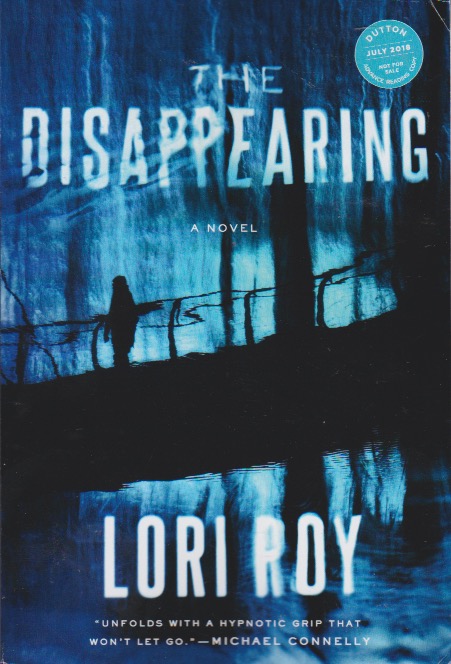
I also managed to finish Lori Roy’s upcoming new release, The Disappearing, last night.
the disappearing

Lane Wallace is alone inside Rowland’s Tavern when the front door flies open. A man stumbles inside, bringing with him a spray of rain that throws a shine on the hickory-brown floors. He scans the dark rooms, stomps his feet, and draws both hands over his wet, round face. If the man says anything, Lane doesn’t hear him for the rain pounding the tin roof and the palm fronds slapping the front windows. It’s supposed to rain through the night, and all around Waddell, people will be keeping a close eye on the river.

Lane smiles because maybe the man is a friend of a friend and not a stranger. She’s expecting a big crowd tonight, and one of her regulars might have invited him. But he doesn’t smile back. Slipping her phone from her back pocket. she lays it on the bar top where the man will be sure to see it. It’s a subtle warning, but if the man is looking for trouble, it’ll make him reconsider.

He’s a little on the heavy side; doughy, a person might say. From behind the bar, Lane asks the main if a beer’ll do him, and as he slides into a booth near the front door, he nods. Hr regulars, men who’ve known her all her life, or rather who have known her father, won’t show up for another hour or so but Rowland Jansen will be back any time now. He ran out to move his car and Lane’s to the higher and drier ground of the parking lot out front, so she won’t be alone with the man for long.

This is Lori Roy’s fourth novel, and it’s quite an achievement. His first three novels–Bent Road, Until She Comes Home, and Let Me Die in His Footsteps–were all shortlisted for Edgar Awards; she won Best First for Bent Road and Best Novel for Let Me Die in His Footsteps, raising her up into the exalted, rarified air of the Multiple Edgar Winner Circle. I’ve only read Bent Road–I do own the others, will every intent to read them at some point; too many books, not enough time–and it blew me away with its stunning depiction of rural Kansas, its juggling of two separate time-lines, and its thematic exploration of how the pains and evils of the past can influence the present.

That same theme runs through this stunning new novel, The Disappearing, as well, and is explored even more deeply and explicitly than in the first. Waddell is a small town in north Florida, amorphously near Tallahassee; Roy’s captured the feel of rural small town Florida deftly (there is, as not many know, a huge and significant difference between the coastal cities of Florida and the insular, small towns of the state’s interior). She plays with the memories of Ted Bundy’s journey through the area; a young woman, a student at Florida State doing some internship work at a local, fading plantation is missing, which has stirred up all those fearful memories of Bundy’s spree. The plantation also shares a boundary with a closed reform school for boys, whose own violent and possibly deadly past has also come back to haunt Waddell.

But it’s also an exploration of family, and how the damage from a past history of deep violence and emotional abuse, locked away and ignored, can reverberate through the years and have deep, horrific implications on the present. Susannah Bauer’s disappearance triggers a chain reaction of emotion and violence and horror, spread over the course of a few days after the night of the heavy rain, that will continue to cycle through the future unless honestly and painfully dealt with in this present.

There are four point of view characters in The Disappearing: three women from generations of the same family–Erma, the matriarch of the Fielding family, with her guilts and secrets festering inside her for decades; Lane, her daughter, whose own emotional damage and baggage perpetuates the cycle; and Lane’s younger daughter, Talley, whose wanderings due to her own loneliness and unhappiness makes her the holder of most of the secrets and truths of the present. The fourth point of view character is Daryl, a mentally disabled young man who is the groundskeeper at the church, and his story is told in the recent past rather than the present, as Lori Roy deftly spins all the secrets and lies and horrors of the town of Waddell into an astonishingly well-blended tale of flawed people and the damage they can leave in their wake.

Even more impressive than the characters and the story itself is the mood and the voice; the way she maintains this almost dreamy tone, creating the perfect mood for the story is masterful. The voices of her characters are compelling and real; only Daryl tells his story in the first person; the others are a very tight third person present tense. The shifts in voice, the tone, the tense and the word choices and the imagery, kept reminding me of Faulkner’s brilliant The Sound and the Fury, and in a very good way.

The Disappearing is an extraordinary achievement, and is destined to make awards short-lists and all the Top Ten lists for 2018.

Party All The Time

Saturday morning. I need to read aloud some stories this morning–“Don’t Look Down,” “This Town,” and “Fireflies”–and I’d like to get some work done on either Scotty or the WIP this weekend. I need to clean this weekend; I got started lasted night, washing the bed linens and blankets, a pre-vacuuming downstairs, organizing books, putting away a load of dishes; I also spent a lot of time in my easy chair reading Lori Roy’s stunning new novel, The Disappearing, which is giving me all kinds of thoughts and things to think about. It’s really extraordinary; you should, by all means, preorder it.

I am also working on a much longer blog piece; about being a gay writer, “own voices,” “we need diverse books”, and various other hashtags and ‘movements’ that have occured over the years on social media. There was an instance lately where an encounter with an albeit well-meaning straight lady kind of took me aback; I wasn’t really sure how to react to what she said. Albeit was well-intended, it was still kind of a backhanded slap in the face.

I find myself thinking weirdly deep thoughts about being a gay writer these days; because no matter what I write and no matter what I do, no matter how hard I might try to run away from it, gay is so inextricably a part of me that I cannot wall it off; no matter what I think or do or write or say, that different point of view is always going to be there; it cannot be turned off. There was, back in the day, a lot of talk about a gay sensibility that queer writers brought to their work; I don’t know if that conversation is still being had. But then, this is all fodder for that other blog entry I want to write; I shouldn’t get that in-depth with it here.

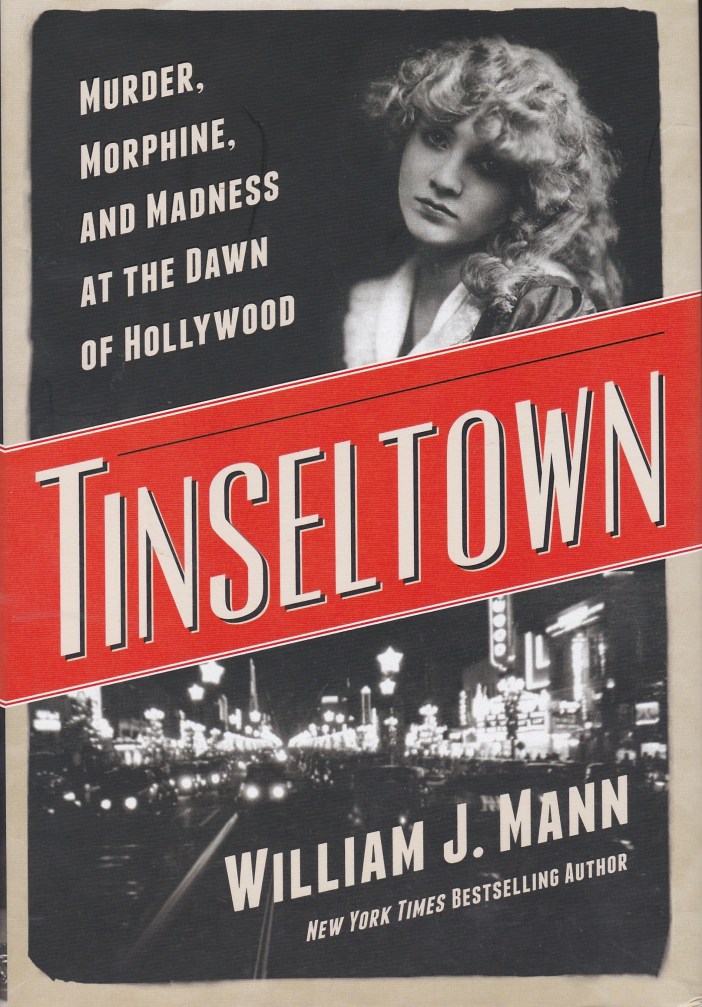
I did finish reading William J. Mann’s Edgar Award-winning Tinseltown: Murder, Morphine and Madness at the Dawn of; Hollywood, last night. Bill is one of my oldest friends in publishing of any kind; we’ve known each other well over twenty years, I would say. I interviewed him years ago for his first publication, the novel The Men from The Boys, and again later with the release of his first Hollywood history/biography, Wisecracker,  a biography of William Haines, the first openly gay movie star; who chose to give up his career when Louis B. Mayer told him he needed to give up his partner and marry a woman. He then went on to have a long career as an interior decorator; he was a close friend of Joan Crawford’s, who said of his long-time partnership, “it’s the only happy marriage in Hollywood.” Tinseltown tells the story of the murder of the director William Desmond Taylor in 1920, and how the big-wigs in Hollywood not only tried to cover up important details of the murder for their own reasons, but how the murder affected the lives of three Hollywood women: major star Mabel Normand (immortalized by Stevie Nicks in song on one of her most recent albums); up-and-coming star Mary Miles Minter; and fringe actress wannabe Patricia Palmer. It’s a well-crafted, well-researched reconstruction of what happened nearly a hundred years ago: it’s also an interesting overview of how Hollywood became what it was; how the Hays Production Code was born as well as the big studio systems; and how hoydenish religious groups have always made a lot of noise and tried to force their point of view down the throats of the rest of the country. I enjoyed it thoroughly, and highly recommend it.

tinseltown

I’ve always wanted to write a book or two set in old Hollywood; maybe not in the days of the silents, but perhaps one in the 1930’s and another in the 1950’s. The one about the 1950’s has more of a shape in my head; even a title (Chlorine), but there’s so much else I need to write.

But first I need to get my act together today and do all the things I need to get done today; I also need to probably come up with a schedule and list of goals. There are so many books I want to write, so many short stories I want to write, so many short stories I need to revise. There’s only so much time in every day.

And now, back to the spice mines.

PS So far, cutting the cable chord is going swimmingly. I couldn’t be more pleased.

How Will I Know

Well, somehow I managed to make it to Friday. This wasn’t a great week; sleep issues, mostly, but last night I finally slept well despite some truly strange dreams…which are fading away from me now. That’s fine, but they were seriously weird; I did wake up a few times during the night thinking okay, that was just weird. But as usual, now that I am awake and drinking my coffee, I don’t really remember any of them. I would have loved to stay in bed longer, but I have a meeting this morning at the office. It’s my short day, which is also incredibly lovely, and I am hoping to  have a nice relaxing weekend of catching up on things, including rest.

I managed to get “Fireflies” revised and ready for a read-aloud this weekend; that’s several stories I get to read aloud this weekend, including “Don’t Look Down” and “This Town”. Three stories to read aloud, even if “This Town” is just to check for extraneous words and trim it down a bit, if possible. I also started writing “This Thing of Darkness” yesterday, and it’s coming along swimmingly. I got about 1400 words or so done. I need to get back to the Scotty book this weekend as well; I am going to reread the entire thing before I get back to it, though. I also have to go to the post office as well as do that grocery store thing.

And of course, the apartment is a disaster area.

Heavy heaving sigh.

But I’m pretty jazzed about getting through this day and getting home to start the cleaning, and get to reading Lori Roy’s The Disappearing. She really is quite an extraordinary writer. If you aren’t reading her, you need to be. Seriously.

I am also going to discuss a short story today, which means we are back to the Short Story Project, and might even be able to get another one knocked out tomorrow.

Today’s is “e-Golem” by S. J. Rozan, from the September/October 2017 issue of Ellery Queen’s Mystery Magazine:

Bookstore dust was not the same as other dust. Loew had noticed this before, sweeping out the cluttered aisles of his used-book shop. It settled more gently, but at the same time seemed more weighty, each mote carrying both wisdom and whimsy, erudition and imagination. He shook his head. Loew, he told himself, this is why you’re doomed. WHy you’re barely eking out a living, selling forgotten things no one wants in a store you soon won’t be able to afford.

For most of his life, first working after school in his father’s shop in what was then the Jewish, later the Chinese, and lately the gentry’s Lower East Side, and on through the almost imperceptible transition when the shop became his, Loew had found pleasant this sense of gentle churning. Books no longer needed in one place lodged in the shop until they found a home in another, and customers came periodically to discover what treasures had rolled to the surface. This churning and discovering still went on, he understood, but less tenderly and on the Internet that soul-destroying virtual world where all was about price and little about love. People who bought rare books online did so speculatively, hoping their value would increase. How different from Loew’s customers, who held a book, fingered its pages, inspected its cover, to decide whether this book, this copy, was meant to be theirs. A customer who turned a book down was never a disappointment to Loew. It meant the two didn’t belong together. The customer would find his book, and the book would find its owner. Until it did it had a home here on Loew’s shelves.

S. J. Rozan is one of my favorite crime writers, bar none. This story, which is both clever and slightly sly at the same time, is an example of her work at its best. Loew discovers an old book of mysticism in his store, and half-heartedly tries to create a golem to go after his biggest enemy–Amazon. What happens next is why Rozan is one of the greats of our time in crime fiction; clever twists and turns that one never sees coming. But what really struck me the most about this story is how good she is at voice. Never once does she hit a false note in this story; every word is perfect and fits with the character’s voice. Were I ever to teach a class in crime writing, I’d use this story as an example of how to do voice perfectly.

And now back to the spice mines.

32247206_1671285199636859_5541500018004852736_n

On My Own

The Terror continues to enthrall us; it’s such an amazing achievement for a television production; the mood, the eeriness, the sense of dread. The acting and the production values are also amazing. Well done, AMC. The Walking Dead  may have gone off the rails, and we may have lost interest in Fear the Walking Dead early on, but there’s no question that you have become one of the leaders in producing quality television series. I am surprised The Terror isn’t getting more attention than it is; it’s indicative of just how little attention it’s getting that when I started watching I thought the entire series had finished airing. Come on, people; it’s well written, incredibly suspenseful, the acting is top-notch, and the production values are amazing.

I am almost finished with the revision of “Fireflies,” and so it, too, should be ready for a read-aloud this weekend. Once those are finished, I can send off the short story collection and submit “Fireflies” to the appropriate anthology; and then it’s back to the WIP and Scotty. (I also have a thought about a second collection of stories, but that’s a whole other ball game, and I may skip out on it for this year and try for the contest–there’s a contest for a short story collection I’m eyeing, but making the submission for this year might be a push, really; I could always wait and do it next year; when the collection would have matured and I could take my time with the stories. But then again, we’ll have to see how writing goes this summer. One never knows, does one?)

In other exciting news, today I cut the cable cord once and for all. It’s amazing what an exorbitant price we were paying–and have been paying–for years. I simply upgraded my Hulu subscription to include live television, and wound up getting almost all the channels we were getting anyway, losing a few but also gaining a few and said goodbye to the cable bill. We pretty much stream everything anyway these days, so why keep paying? Hulu is $39.99 for live television as well as on demand, and we have all those other apps. And really, if there’s any show we want to see or watch that we don’t get thru Hulu or through one of the apps…I can pay for it. It’s way cheaper than paying almost (gulp) fifteen hundred dollars a year for a lot of shit we don’t watch. Hulu TV isn’t as easy to flip through from channel to channel–which is going to make college football days more difficult….but on the other hand, I also don’t need to spend my entire Saturdays in the fall sitting in my easy chair watching every college game that airs.

And the more we use it, the easier the Hulu TV is going to be to use. It’s about getting used to it.

And I have to say, it’s going to feel good to only pay that much lower bill for simply high speed internet.

Of course, the cable company is already offering me deals to come back. Um, maybe you should offer the deals to have kept me in the first place?

I will keep you posted, Constant Reader, on how the Hulu TV option works for us. But other than an occasional glitch last night, it seemed to work just fine.

And now, back to the spice mines.

a-shirtless-friday-16

Say You Say Me


Progress on “Don’t Look Down” is going very well. The short story is probably going to wind up being a novella–it currently sits at about 9000 words and will probably be longer than that; but I don’t think I can whittle it down to shorter length. As I worked on it yesterday–and the work, I have to say, was so much easier than it had been; I think I finally understand the voice, tone, and main character’s P.O.V., at long last–I was revising my way along and looked down and saw that I had crested 8900 words. I knew it was going to be a longer story; I’d always intended and envisioned it that way, but at the same time, since this is for a collection rather than a magazine or an anthology, I can make it as long as I want it to be.

Which is actually very freeing, to be honest. One of the issues I have with short stories is length. I am always worried that I’m going to run out of room to tell the story the way I want it to read, to get the reaction from the reader that I want to get. (There are stories, of course, that I write and worry are too short; “The Problem with Autofill” sits currently at about 3300 words, and I fear it needs to be longer than that.)

But it’s such a good feeling when the story starts to click in your head, and you don’t worry about things like length, and you start to feel confident in yourself and your ability to tell the story you want.

I’ve also decided to stop beating myself up over not getting as much done as I want to. That’s a losing battle anyway; I always over-estimate how much work I can get done in any given period of time and so I am constantly going to be berating myself and feeling bad. And wasn’t the entire point of going off-contract to write to relieve stress? So why am I continuing to create stress for myself by trying to get too much done in too short a period of time?

Madness.

The to-do list should be viewed, instead of as things I have to get done this week rather as the things I need to get done; important as a reminder of things I need to do, so I don’t forget and/or let something important fall through the cracks. That’s the point.

Oy. Sometimes I wonder about myself.

And now, back to the spice mines.

IMG_1240

I Miss You

Well, “Don’t Look Down” is now ready for the read-aloud phase. Huzzah! I am pretty darned excited about it, too. I think this most recent draft is actually not bad, to be honest–and I am pretty psyched to be so close to done with this collection. Huzzah! Perhaps it will happen this very weekend. Hope springs eternal.

The question is, does it need an author introduction? I don’t think it does, to be honest; and every time I’ve tried to write one I’ve either drawn a blank or written something that sounded so pompous it annoyed me.

I’m really uncomfortable talking up my accomplishments, because it feels like bragging, and every time I do, I hear a voice sneering in my head, really? I hate that; it always undermines my confidence and makes me doubt myself, which then leads to me not getting anything done or not putting myself forward for anything, and on and on and on it goes.

I also reread the fourth chapter of the most recent revision of the WIP, and it was embarrassingly bad. I literally cringed reading it–and this is not me being self-deprecating or not taking myself seriously. I mean, it’s bad. I’ve not gone back and reread the first three chapters, and I do realize that a lot of this has to do with switching from limited third person POV to first person POV–I am basically just going through and changing the POV, but as I was doing that in this chapter I was really struck by how bad so much of the actual writing was. It was kind of boring, and that’s death for a y/a.

I guess now I know why no agent responded to my queries. I was also right in worrying that it was too early to send it out. The problem is I need to learn how to discern between serious, honest concerns about my writing and the tendency to trivialize, minimize, and self-defeat myself.

Case in point: I was convinced Royal Street Reveillon was terrible. I reread some bits to revise, and realized, nope. it’s not terrible at all. It needs some polish and some work, but it’s pretty good.

I need some serious therapy.

And now back to the spice mines.

32231135_1842660146028220_4874801715049660416_n

That’s What Friends Are For

So, yeah, yesterday. I get nearly as much done yesterday as I’d intended, despite my plans in the morning. I wound up getting sidetracked (the whole #cockygate thing was fascinating), I also started reading Lori Roy’s The Disappearing (not far into it, but already it’s fantastic–quelle surprise), and I also had dinner with a friend from high school whom I’d not seen in (gulp) forty years.

I don’t really mind, though. Beating myself up over not getting as much done as I wanted is kind of a waste of time. It’s not like it’s an outcome I can change, after all.

And why worry about things you can’t change?

It was fun seeing someone from high school again; a lot more fun than I thought it would be. The other day  I talked about how my life, or my memoir, would be divided up into decades, because it seemed like, in looking back, every new decade of my life almost coincided with a calendar decade and always signified change of some sort. I left Kansas in early 1981 for California, and I never returned. I’ve written about Kansas–not as much as I’ve written about New Orleans, of course; I’ve never written about anywhere as much as I’ve written about Kansas–and sometimes I think I should go back; but when I write about Kansas I make up the towns and the counties and the rural areas I write about, so I can write from my memory so if my memory turns out to be faulty, well, I made up the town. My fictional places are based on real places, but they are fictional.

The WIP, which I can never seem to find the time to get back to, is actually set in fictional Kansas. It’s been kicking around in my head for at least fifteen years, and the story has changed repeatedly over the years. I think I’ve got the right story now, and I really need to finish the Scotty so I can get back to it and finish the final, first person revision, which I think is the right way to go with this.

Anyway.

I don’t dwell on the past very often; but one of the nice things about seeing someone from high school is it kind of forces me to look back over the years. I mean, sometimes I do think about things, but it’s not something I spend a lot of time dwelling on; the past can’t be changed. But you can look back with a different perspective; with the wisdom that comes with the passing of time–or at least, a different perspective. I was desperately unhappy when I was younger; I also now know that my difficulty in focusing and inability to not have my mind wander would now warrant ADD medication. I spent a very long time of my life being unhappy; feeling like the life I wanted to live was something I would never be able to live. And yet I can honestly say I wouldn’t change any of the experiences I had, no matter how unhappy they may have made me at the time–because all of that made me the person that I am now, and I’m kind of happy with who I am now, and the life I have now. Sure, it would be terrific to have more success and more money; but I also think that would always be the case no matter how much success and how much money I might have.

It’s a weird world, it’s a weird life.

I’ve always been weird.  I never fit in anywhere. I didn’t fit in at either high school, I didn’t fit in at college or in my fraternity. I used to think my not fitting in was because of the gay thing; but then, like I said, I never really fit in with other gay men, either. I’m not sure what that’s about; maybe there’s some kind of social anxiety issue I have that hasn’t ever been diagnosed. But I am always uncomfortable at parties or in large gatherings, particularly when I walk into one alone and there’s no one there that I know; I’ve always envied gregarious, outgoing people who can walk up to total strangers and start a conversation. I am horrible at small talk; and live in deathly fear of saying something completely inappropriate to someone I’ve just met and giving offense; God knows someone I’ve only just met has certainly said offensive things to me before.

Ah, life.

And on that note, it’s back to the spice mines.

IMG_1240

Sugar Walls

Sunday morning. Yesterday wasn’t nearly as productive as I would have hoped; but I am pleased to report that “My Brother’s Keeper” is finished,  and “Don’t Look Down” isn’t nearly as big of a mess as I thought it was before reading it from beginning to end. It needs some serious polishing before I can consider it to be done–or read it aloud–but I think another push on it today and it will be done. I also started writing yet another story yesterday–“This Thing of Darkness”–which is kind of an interesting idea. We’ll see how it goes. My goal for today is to finish “Don’t Look Down” and “Fireflies” today so they are ready for the read-aloud. And, of course, once “Don’t Look Down” is finished, my collection will be as well–which is kind of exciting.

I didn’t work on Scotty yesterday; I am going to hold off on going back to work on him until tomorrow. I want to get this collection finished, and he needs to sit for another day. I may go back and reread what I’ve already written; the first fourteen chapters, so I can figure out where, precisely, this next chapter needs to go.

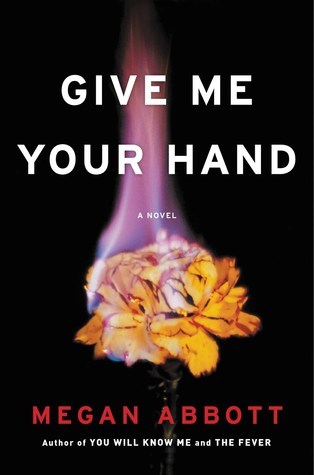
I also finished reading Megan Abbott’s amazing Give Me Your Hand last night.

29569206

I guess I always knew, in some subterranean way, Diane and I would end up back together.

We were bound, ankle to ankle, a monstrous three-legged race.

Accidental accomplices. Wary conspirators.

Or Siamese twins, fused in some hidden place.

It is powerful, this thing we share. A murky history, its narrative near impenetrable. We keep telling it to ourselves, noting its twists and turns, trying to make sense of it. And hiding it from everyone else.

Sometimes it feels like Diane was a corner of myself broken off and left to roam my body, floating through my blood.

On occasional nights, stumbling to the bathroom after a bad dream, a Diane dream, I avoid the mirror, averting my eyes, leaving the light off, some primitive part of my half-asleep brain certain that if I looked, she might be there. (Cover your mirrors after dark, my great-grandma used to say. Or they trap the dreamer’s wandering soul.)

Megan Abbott has been a favorite of mine, since years ago when I first read Bury Me Deep as a judge for the Hammett Prize. A period noir, set in the early 1980’s and based on a true story, I was blown away by its deceptive simplicity and hidden complexities. It echoed of the great noirs of James M. Cain and great hardboiled women writers, like Margaret Millar and Dorothy B. Hughes; a tale of desperation and love and murder, crime and ruined reputations, as it delved into the complex emotions that could lead a woman to commit a horrifically brutal murder; its exploration of small-town corruption was reminiscent of Hammett’s Red Harvest. Over the years since that first reading, I’ve gone on to read Abbott’s other brilliances: This Song is You, Queenpin, Dare Me, The End of Everything, You Will Know Me. Her women aren’t victims in the classic sense of victims in crime fiction; her women have agency, they make their decisions and they know their own power; a common theme to all of her novels is the discovery of that power and learning to harness it; whether it’s sexual power (The End of Everything), physical power (You Will Know Me), cerebral (Give Me Your Hand), or inner strength (Dare Me).

And somehow, she manages to continue to grow and get better as a novelist, as a writer, with every book.

She is probably the greatest psychological suspense writer of our time; her ability to create complex inner lives for her characters, to explore the duality of weakness and strength we all carry within us, and the delving into the complicated nuances of female friendships, with all their inner rivalries and passions and jealousies and affections, is probably unparalleled. Her books are also incredibly smart and layered; this one has references, both subtle and overt, to both Hamlet and Macbeth seamlessly woven into the text; the dual, competing themes of inertia despite the knowledge of a crime versus unfettered ambition; and what to do when faced with both. How do you decide? And what does your decisions say about you as a person?

Give Me Your Hand is set in the world of research science, which may seem a weird setting for a crime novel…but competition for research funding and positions, for advancement in career, the thin veneer of civility and camaraderie between co-workers angling for plum research assignments, is at its very heart, noir. One of the characters, Alex, says at one point, jokingly, “we’re a nest of vipers”…and it turns out to be very true.

The novel follows the complex friendship between the main character, Kit Owens and Diane Fleming, who first meet as young teens at Science Camp, and again later their senior year of high school. They become friends, with similar interests; Kit and Diane push each other to be their very best. It is the friendship with Diane that sets Kit on the road to  her career as a research scientist; yet their friendship is blown apart by a secret Diane shares with Kit,  and the knowledge of that shared secret haunts both women for the rest of their lives. Their paths cross again years later, working in the same lab and competing for a limited number of spots on a new, important research project having to do with how excessive premenstrual syndrome: premenstrual dysphoric disorder (PMDD). The book also offers two timelines: the senior year, with its heavy influence of the Hamlet theme, and the present, which is more on the lines of Macbeth. Blood also is used, repeatedly, brilliantly, as an image; the study is on a disorder caused by menstruation, and of course, blood as in relatives, as a life-force, as a motivator.

The book is slated for a July release; usually when I get advance copies I wait until the release date is imminent for me to blog about these books. But this one couldn’t wait; I’ve not been able to stop thinking about it since finishing it late last night.

Preorder the hell out of this, people.