What Does It Take (To Win Your Love)

SATURDAY!

I slept in this morning gloriously, and it is apparently already above seventy degrees outside; I see nothing but blue sky when I look up, and the sun is shining through my filthy windows. I will undoubtedly have to get out the ladder and do the windows today. My plan was for today to be my day off; cleaning, of course, doesn’t count because as weird as it sounds, I actually like to do it.

I might start some preliminary editing on the secret project as well. But don’t hold me to that, okay?

Yesterday, a conversation with friends somehow ended up on the subject of the movie The Best Little Whorehouse in Texas, which I saw in the theater when it was first released but haven’t really seen much since then, other than the clip of “Little Bitty Piss Ant Country Place,” which was de rigeur at Lafitte’s on Sundays for tea dance. I liked the movie when I first saw it, and some of the music was quite catchy. But there was always something a bit off about it. Last night I decided to stream it, watch it from a modern-day perspective, and yes, the movie is quite disturbing on many levels.

It seems funny now, but back when the film was released many television stations couldn’t say the word “whorehouse” on air; many newspapers wouldn’t print the word, either. (I don’t know how they reported on actual whorehouses; I guess they called them ‘houses of prostitution’ or something like that) And the tone of the movie…well, I guess it could be best described as “Hee Haw, only with whores.”

And that was really what the problem was for me, on this rewatch. Prostitution is prostitution; whether you think it should be a crime or not (for the record, I think it should be legalized and taxed) turning it–and sex–into this ‘wink-wink-nudge-nudge’ cutesy musical just doesn’t work. And there’s also an underlying cynicism to the movie that clashes with the cutesy-ness: the governor is a politician who doesn’t really care one way or the other whether the Chicken Ranch is breaking the law or is a boon to the economy of the town but only about popular opinion–making his decision only when the polls come in; Melvin P. Thorpe, the Houston news sideshow who breaks the story and gets the Chicken Ranch shut down is a snake-oil salesman of the worst kind–a phony and a liar and an anything-for-ratings shyster; likewise, the political structure of the town is perfectly fine with the existence of the Chicken Ranch and taking Miss Mona’s money until things go south and they all abandon her when the spotlight is shone upon the town; and so on and so forth. All along the whorehouse, Miss Mona and the sheriff trying to protect her as shown as the heroes/victims of the story while law-and-order/politicians/the news are shown to be slick hucksters and really of lower character than the whores–begging the question, ‘who are the real whores here? The girls are selling their bodies but the others are selling their souls.’

There’s also the political subtext of city vs. country; a very popular political subtext in our so-called liberal popular culture, in which city people are seen as buffoons and the country people are the voices of reason and common sense–this thread has frequently run through film and television and even in literature to the point where politicians will feed on it: Sarah Palin’s “real America”, etc., ignoring the fact that the urban centers are the engines that drive the economy and where most of the population live. In this story, the ‘city folk’ from Houston are seen as the villains, not understanding something that the ‘country people’ see as not a big deal, making a big fuss over something that doesn’t bother the country people, and ultimately, telling the country people how to live their lives.

The fact that this movie is based on a true story makes the fluffy film even more unfortunate. Looking into the original non-fiction piece “The Best Little Whorehouse in Texas” that ran in Playboy, the film pretty much actually follows the trajectory of the movie’s story. They did take poultry in exchange for services during the Depression; the business did exist as long as it did in the movie; the sheriff did refuse to close it down despite being ordered to by the Attorney General of Texas; the house operated pretty much the way shown in the movie.

As I watched the movie again, I couldn’t help but wonder not only what happened to the girls after the Chicken Ranch was closed, but where they came from to begin with. I almost wish the movie had been made based more closely on the original article rather than turned into a musical–although the musical was a Tony-winning hit on Broadway. Also, casting Burt Reynolds and Dolly Parton in the leads was also a mistake. Dolly was coming off her debut in 9 to 5, which had made her a bona fide movie star, and Burt Reynolds was one of the biggest male stars in the world at the time, which resulted in a lot of sanitization, which kind of hurt the movie. Burt and Dolly have chemistry together, and charisma to spare…but you never forget it’s Burt and Dolly, rather than Sheriff Ed Earl and Miss Mona. Burt and Dolly being cast also resulted in an adaptation to the original story which turned them into romantic interests, and a schmaltzy scene where they go on a picnic and stare up at the stairs and Miss Mona talks about her religious faith–having to explain Jesus to the sheriff in such a basic way that makes it clear that Ed Earl has somehow, as a small town Texas sheriff, never set foot in a church or watched a religious epic movie. I find that rather hard to believe.

There’s also a delicious irony in the fact that in a movie about a whorehouse, there is only one brief flash of bare breasts. The majority of the nudity in the movie is male–and it’s all in the post-game locker room scene, where the Texas A&M football team, having won their annual rivalry game with Texas, is excited about going to the Chicken Ranch (the winning team’s seniors are rewarded with a trip there). There are lots of great bare dancer bodies, even bare butts as they perform “Aggie Stomp.” (When I first saw the movie, I greatly enjoyed this scene as there were very few places to see the bare male form in popular culture at the time, or that many bare male forms at the same time. But even then I thought the guys weren’t bulky enough to be football players, and there certainly were no men big enough to play on the line.) The song itself again is one of those ‘wink-wink’ things, because we are supposed, as an audience, to believe that for college football players, being taken to a whorehouse was a treat–because football players never had access to women’s bodies for sex otherwise.

Riiiiiiiiight.

Of course, the Chicken Ranch is supposed to be closed until things settle down, but Miss Mona risks opening for the football party–which is, of course, when Melvin P. Thorpe and his camera crew break in and film. There’s also, if you pay attention in this scene, some subversive sexuality going on during the Aggie party–we see two players in bed with one woman; two guys and two women together; etc.

The movie now seems much sillier than it did at the time; terribly dated, more than a little misogynist, and like I said earlier, that ‘wink-wink, nudge-nudge’ approach to sex and sexuality now reads as annoyingly and insultingly coy.

I would actually love to read a non-fiction history of the Chicken Ranch, to be honest.

And now, back to the spice mines.

Poker Face

So, last night I watched the documentary Author: The JT LeRoy Story. I’ve been digesting it ever since, and still am not really quite sure how I feel about it.

If you aren’t aware of the background story, essentially in the late 1990’s stories began to be published written by someone who wrote under the name “Terminator”, and they were quite good, actually. Eventually, a novel was published called Sarah; “Terminator” was now writing as “JT LeRoy.” By the time Sarah was released, I was working as editor of Lambda Book Report. We’d gotten a review copy of it along with a press release about the author’s background, and basically claiming that the novel was loosely autobiographical. JT’s mother, Sarah, had been a truckstop prostitute; and that was the world JT was raised in; JT was also very young and unsure of his gender/sexuality, and had also worked as a truckstop prostitute. It was a fascinating story, really; but at the same time it seemed kind of, well, off to me. People were raving about the book, and I didn’t actually have to assign it out to anyone: a reviewer emailed me, having just read it, and begged me to let her review it, so I did.

Hey, when someone volunteered to review, it made my life easier and I rarely said no. But I was able to keep the review copy that had been sent to us, and I read it in my spare time–when I wasn’t having to read something to review or determine whether it should be reviewed–and I was impressed. It was a very dark story, but very well written. So, I emailed JT to let him know how much I enjoyed the book, and to congratulate him as well as to let him know we were running a review of it, and since it was going to be a full page review, rather than one of the shorter ones we usually did, I needed an author photo. He emailed me back…and then another bell went off. The email was barely literate, for one thing: and while I knew editors sometimes work really hard with authors…it just didn’t seem to click for me. Something wasn’t right. And a few days later I got a letter thanking me for my interest in the book–again, a handwritten letter rife with grammatical and spelling errors.

And I recognized the author photo. It was an image that had run on the cover of a Dennis Cooper novel that had been published ten years earlier.

And since JT was supposedly only twenty or twenty one at the time…it didn’t compute. Had he been the model for the book cover image? But he would have only been ten or eleven at the time. Again, it didn’t make sense–but it was neither my place nor my job to question this, so I just let it go; and we didn’t run the author photo with the featured review.

As far as I was concerned, that was the end of it. I did get a copy of his next book, The Heart Is Deceitful Above All Things, but it never came out of my TBR pile, and I was no longer running the magazine, so it wasn’t that big of a deal. I did occasionally see notices about readings being held of JT’s work–with big name celebrities, like Winona Ryder and Matthew Modine, actually reading the work because JT wouldn’t do public appearances and was reclusive. Which, you know, was fine–but it was also interesting. But then he started showing up in magazines and so forth–always in sunglasses, and I also wondered if he was actually bald; because he was clearly wearing bad blond wigs. Again, I arched my eyebrows, but hey, whatever works. It was revealed that he was HIV positive, one of the books was being made into a movie…and then the scandal broke: JT LeRoy didn’t exist; he was a myth, a creation, and the person who was actually writing the books was a straight lady with a longtime male partner and a child, and the partner’s sister was ‘playing’ JT for public appearances and for photographs. I didn’t really see this as a huge scandal at the time; authors always use pseudonyms, and while there was some deception there–the woman pretending to be JT, the backstory, etc.–the bottom line for me was the writing was good, and the fact that it wasn’t autobiographical after all made the achievement even more extraordinary.

But the claiming to be HIV positive…that didn’t sit well with me. It was an insult to everyone infected and living with HIV; it was an insult to everyone we’ve lost to the disease. How very dare you claim HIV positive status to lend authenticity to your fabrication. You deserve to go to hell for that.

But I wanted to watch the documentary. I knew from seeing a review of it in the New York Times that it was primarily focused on Karen Albert, why she became first “Terminator” and then “JT LeRoy”. It’s an interesting story, and while I felt like the documentary was too busy apologizing and making excuses for Ms. Albert–the way she talked about all these different personas she took on–JT, his friend Speedy (which is who she appeared as in public with JT, so she could be there at the readings and everything else public that was going on for JT’s work)–it sounded almost like there was an element of dissociative identity disorder going on there; she certainly had the kind of childhood which tends to result in that particular psychiatric disorder. But she insists that isn’t the case; but she seems to fall back on a particular writerly trope that has always rather put me off as pompous and annoying: the notion that writers have no role in their actual writing and that the characters TAKE OVER.

Um, no. I don’t know where or why that trope about the experience of writing started or even how it got started, but I’ve always felt it’s a steaming pile of bullshit and whenever I hear any writer say something along those lines my eyes roll so hard they almost unscrew out of their sockets.

Don’t get me wrong; when I am writing, especially in the first person, I have to get completely inside the character I am writing about and channel them–but they don’t take me over. I don’t BECOME Chanse or Scotty when I am writing about them. They are a part of me but they aren’t me.

The documentary, though, is fascinating, and Karen Albert is an interesting person. Do I think she set out to pull a long con? No, I don’t. I do believe that it got out of control and she didn’t know how to contain it–and there were also money issues involved; why kill the goose that’s laying the golden eggs? But I also think she doesn’t own her part in any of it; she’s so busy (in the documentary) giving explanations and justifying the masquerade that she doesn’t really feel any remorse about the lying and the fraud. She only regrets being caught.

Interestingly enough, the publisher of the JT LeRoy books have published new editions to coincide with the release of the documentary–which makes the documentary and her role in it even more suspect. Hey, here’s another chance for me to sell some books!

And she never apologizes for, or even tries to justify, the HIV lie. She makes the point that the books are fiction and they exist, so calling the whole escapade a fraud isn’t honest; she seems to think the more grandiose word “myth” is more apt to describe what she did with the creation of JT LeRoy.

JT LeRoy, though, was a fraud. The books are real, of course, and nothing can take away from the fact that she wrote two really extraordinary books. Would the books have become so successful had she not created the fraud?

We’ll never know.

And here’s a hunk to slide you into the first weekend of Carnival parades:

Jesus To A Child

Yesterday was my second of two twelve hour days this week at work. I am so tired this morning. Yesterday, after working twelve hours on Tuesday, I got up at seven to meet Wacky Russian at eight, came home and answered emails and did the dishes and started laundry before heading to the office, where I had non-stop clients all day until it was time to walk to the Pub for bar-testing before walking back to the office and driving home.

Oy. Despite a good night’s sleep I am still tired, and my brain is a little fried. I don’t have to go to the office until 4:30, so I have a nice relaxing day of writing and editing and cleaning before I venture down there, but right now all I need is caffeine.

Lots and lots of caffeine.

Today’s short story is one of Stephen King’s that I read again recently. Stephen King is a great short story writer; I didn’t really read short stories when I was a kid other than the ones we were forced to read in classes until Night Shift came out. I also thought, at the time, “ugh, short stories” but I was a big King fan after the first three novels and so I thought, ah, what the hell, why not read his stories? I didn’t much care for the first story in the collection, “Jerusalem’s Lot,” which, because of the title, I thought was going to have something to do with the novel (which I loved, and still do love), but it didn’t. I put the book down after that, and it wasn’t until later that for some reason I idly picked it up and read the next story, “Graveyard Shift,” which creeped me the hell out…and I kept reading.

Burt turned the radio on too loud and didn’t turn it down because they were on the verge of another argument and he didn’t want it to happen. He was desperate for it not to happen.

Vicky said something.

“What?” he shouted.

“Turn it down! Do you want to break my eardrums?”

He bit down hard on what might have come through his mouth and turned it down.

Vicky was fanning herself with her scarf even though the T-Bird was air-conditioned. “Where are we, anyway?”

“Nebraska.”

She gave him a cold, neutral look. “Yes, Burt. I know we’re in Nebraska, Burt. But where the hell are we?”

“You’re got the road atlas. Look it up. Or can’t you read?”

And with that, the story “Children of the Corn” is off and running. The story, which is, indeed, a short story–in the collection it accounts for a whopping 29 pages–was originally published in Penthouse, back in the glory days when magazines not only published short stories, they also paid very well for them (sobs softly to self). It seems odd that a short story spawned a movie franchise (ten at last count; I am sure it’s due for a reboot soon), but there’s another story in this collection that was filmed as well–“Trucks” became Maximum Overdrive, directed by Stephen King himself and it had an awesome AC/DC soundtrack. I didn’t think the movie was that terrible, but it’s apparently considered one of the worst movies of all time. I haven’t, of course, watched it in years, and when I did see it I was stoned out of my gourd (which may have been why I liked it). But I digress.

“Children of the Corn” isn’t my favorite Stephen King story; it’s not even my favorite story in this particular collection (that would be “The Last Rung on the Ladder”), but it’s a damned good story, and what King manages to accomplish in those 29 or so pages is quite remarkable. Burt and Vicky are a couple whose marriage is falling apart, and in one last attempt to save their marriage, decide to drive across the country together to a family wedding on the west coast. (Which, of course, is a truly terrible idea; at least to me. Paul and I rarely argue, even more rarely get angry with each other–but going on a long drive together in a car definitely puts us both on edge and we end up bickering a bit. Nothing serious, nothing bad–but it still happens. If Paul and I were on the verge of breaking up, the worst thing I could think of to do was going on a long cross country drive together. I don’t know, maybe it would work for some couples; anything is possible. But…BAD IDEA.) They got lost somewhere in Nebraska, and as they try to figure out where they are in Nebraska, Burt turns his attention away from the road and hits something–something Vicky insists is a little boy. They stop the car…and the fun starts. They are near a small town called Gatlin–and as they examine the boy’s body they realize he was dead before they hit him.

It’s a great set-up; a classic trope in horror stories–traveling strangers come across something unexpected and horrible, and then have to stop whatever it is/escape whatever it is/do something; the theme of course being survival. Usually in these types of stories, the author will have the disparate group–or couple–get past their differences in order to work together; what makes this story so genius is Burt and Vicky’s conflict, no matter what happens to them in Gatlin, Nebraska, never really goes very far away. They still annoy each other, are still annoyed with each other. For me, that makes the story resonate more and makes it more realistic; it was also the first time that a young Greg read such a story where the conflict between the characters wasn’t overcome by the need to survive.

One of the reasons I always loved Stephen King, and thought he was a great writer (long before the literati came around, if they ever did) was because he made his stories–and his characters–so real; the characters always seemed like people you actually knew, and he peeled back the layers and the facades so you could see their reality. It was a lot of fun to reread the story for Short Story Month; and I promise, Constant Reader, that as soon as I finish the two projects I am working on I will read some new stories to discuss with you.

In honor of “Children of the Corn”, here are some hunky farmers.

When I See You Again

Christmas was a lovely day, relaxing and everything. I got some work done in the early afternoon, and then retired to the reclining chair to watch television. We started watching a couple of movies but tired of them quickly, but we did watch Spotlight, which we enjoyed, and got caught up on a couple of TV shows we watch as well. I started reading Dennis Lehane’s Edgar Award winning Live by Night, which I was reminded of last night when seeing a preview for the film version coming out in January, and it was yet another one of those books in the TBR pile forever that I thought oh, I’ll get around to this at some point. I’d forgotten it was set in Ybor City and Tampa, both of which I am more than a little familiar with from living there in the early 1990’s.

Tampa is vastly different now than it was when I lived there; when I went to GCLS conference in Orlando (I started to write a couple of years ago before realizing it was more like eight or nine years ago; yikes!) I drove over to Tampa to have dinner with a friend, and in the ten years or so at that time since I’d moved away the city was completely different. I only had dinner, and then drove back to Orlando, but I remember driving in and being completely surprised by how different it was. (I used to drive back and forth between Orlando and Tampa a lot; my friends and I had tired of the Tampa gay bars and on the weekends we couldn’t make it to Miami–or I wasn’t going somewhere, thanks to my airline job–we often would drive over to Orlando to go to clubs there)

I wasn’t happy when I lived in Tampa, but Tampa was where I grew up, for wont of a better phrase. It was while I was living there that my life came together, where I decided that I wanted to be more than just an airline employee, and made the changes needed in my life and my mentality that made it possible for me to have the life I have now. I also kind of liked Tampa; I always thought there was something about the town that would make it a good setting for crime novels. I’ve used Tampa in some of my books, but fictionalized it as “Bay City.” I have an idea for a noir that would use “Bay City” as its setting; it’s one of the books I want to write in 2017.

And, of course, Bouchercon is in St. Petersburg in 2018. Maybe I’ll take a week and explore first. There’s a big cat sanctuary just north of Tampa I’d like to visit, because I also have a book idea actually set in a big cat sanctuary; I’ve been meaning to come over to explore and investigate that for quite some time now.

I could also take a long weekend and let Paul sit on the beach while I explore and research, too. We also spent that long weekend at Saddlebrook, the tennis resort, just north of Tampa as well. (It was what actually gave me the idea for the big cat book; of course there’s also a book in the tennis resort as well.)

But I need to get the one I am writing now written, and so on that note, it’s back to the spice mines.

Here’s a post-Christmas hunk for you, Constant Reader:

Isn’t It Midnight

So this is Christmas.

I overslept this morning, which was a pleasant surprise. I’d intended to get up so I could get going on everything i need to do today, but it simply wasn’t in the cards for me to wake up early (the way I did yesterday). Ah, well, it is what it is, and while I do have a lot of work to do today, if I buckle down I can get it done.

I know, working on Christmas? Deadlines, alas, don’t get adjusted for holidays, and this is my punishment for allowing myself to get so behind in the first place. A few hours of good, solid work though, and I can take the rest of the day off. I also have tomorrow off (Paul’s going into the office) and this is my week of late nights (both Tuesday AND Thursday) so if I can get back on track with some good work today–I can still make the deadline.

We opened our gifts yesterday; I got some lovely things from Paul that I am very happy with, and he also seemed to like his gifts also. So, that was lovely. He went out during the day and got a massage while I worked, and got shrimp po’boys for us on his way home and then we watched the Saints beat Tampa Bay (GEAUX SAINTS!) and then relaxed while watching two movies–Hail Caesar!, which could have been better; and Deadpool, which was a lot of fun. I’m not sure what we’re going to do later–I am sure we’ll find something to watch on the many, various streaming options that we now have. (We were going to get caught up on The Exorcist, but Paul decided it was inappropriate to watch on Christmas Eve. “But it’s about good and evil,” I replied, to no avail.)

I will also do some reading. Yesterday evening I reread an old thriller originally published in 1975; that I think I read sometime in the late 1970’s/early 1980’s, when I was going through my first thriller reading phase: Valley of the Assassins by a long-forgotten novelist named Ian MacAlister, and it was set in the Middle East; more precisely, Iran, Iraq, Oman and then Saudi Arabia. It’s an Indiana Jones-type tale (which I always love) about the search for the tomb of the Old Man of the Mountain, and all the treasure buried with him somewhere in the Arab deserts. It begins with the appearance of a strange map, lots of intrigue and adventure and double crosses, and it had some basis in history–the Old Man of the Mountain really existed (I first learned about him reading Thomas B. Costain’s The Three Edwards, and more in The Conquering Family; an interesting historical figure; he founded the Society of Assassins, and was greatly feared). It was also interesting to reread to see how much the Middle East has changed since the time this book was written, making it very dated.

My thriller/intrigue period of this time was triggered by reading Alistair MacLean’s Circus and Helen MacInnes’ The Salzburg Connection back to back; I went through a very long period where I read many books by those two authors and books by others as well; eventually discovering Robert Ludlum, whom I really loved and read everything by until his death (I’ve not read any of the ‘co-written’ books published yearly since he died).

Reading this, and thinking about these thrillers, has reminded me of something I periodically remember but then it slips away: an idea I had years and years and years ago that I wanted to write about as a stand-alone type book, which then evolved into a stand-alone novel with Colin from the Scotty series as the main character. This is an idea I’ve always loved and wanted to try. The Scotty series, if you will recall, began as a stand-alone and then evolved, because of the contracts, into a trilogy. The final volume of the trilogy was effectively split into two books: Mardi Gras Mambo and Vieux Carre Voodoo (and by this, I don’t mean the mysteries themselves; I mean the personal story of the guys). No one really knows much about Colin other than what he chooses to share with them, and there’s also no way of knowing if what he chooses to share is the truth, part of the truth, or not true at all. The fun thing about having a character who’s a secret agent for hire of sorts is just that: the mystery of who he really is. I thought it would be fun to write a stand alone adventure for Colin himself, so the readers could get to know him better–and know him better than Scotty and Frank do. The idea for the thriller I wanted to write, a thriller based in a treasure hunt based in history in the Middle East, easily melded with the thought of writing a stand alone thriller for Colin; in fact, using that idea for a Colin book makes the most sense.

So rereading this book made me think of that book; and while it never really had a title, nor a definitive answer for what treasure he was looking for in addition to being involved in some international espionage, obviously, I’ve been thinking about it a lot over the last day or so.

I’ve also, for that matter, thought about writing a book from Frank’s point of view as well. But the Colin one makes the most sense to me.

Anyway, I digress, and need to get back to the spice mines.

Happy holidays, everyone!

Seven Wonders

Paul left early this morning–4:45 am to be exact–and somehow I then managed to sleep in until ten. I have another late night of bar testing this evening, and had planned to get up early and head out to the mall to do my Christmas shopping for Paul as well as stop by the Apple store. Alas, I overslept, and while I could go ahead and get ready quickly and head on out to do it all, I’m also thinking I can just do it tomorrow. Yes, the weekend before Christmas is going to be hideous out there in retail land, but I also don’t want to be rushed. I took tomorrow off because I have some appointments in the late afternoon, but if I can get up by nine tomorrow morning, I can do it all: Target, Apple, Macys, and even Costco. I have tickets for an early (10:00 am) showing of Rogue One Saturday morning at the Prytania Theater, and I intend to get quite a bit of writing–and cleaning–done this weekend.

In other exciting news, my editor got back to me and was enormously pleased with the tweaks I made based on her suggestions for my story; I cannot make an official announcement yet but I am very excited. The name of my story is “Lightning Bugs in a Jar,” and I can’t wait to talk about it. Woo-hoo!

There’s nothing quite so satisfying as getting praise for your work, is there? Particularly when you’re an author. I always thought that the more work I published, the further along in my career I got, the easier it would get and the less self-doubt there would be. Alas, that isn’t true; if anything, it gets worse. Heavy heaving sigh.

Ah, well.

So, as soon as I finish this I am going to get cleaning and organizing around here so I won’t have to take time from my weekend to do it.

I really want to get this book done. I’m itching to get going on some other projects (as always).

All right, sorry for the brevity, but I need to get back to the spice mines.

But here’s a hunk for you in the meantime.

Over and Over

My documentary binge continues. I was actually wrong–the series about castles in England was called Secrets of Great British Castles, and the presenter is a very attractive Brit named Dan Jones. The first episode was Dover; the second The Tower of London. The third episode was Warwick Castle, but I decided to skip that one. I’ll go back to the show eventually, but I wasn’t really in the mood to watch about Warwick Castle, so I went back to the documentary category on Netflix while waiting for Paul to get home (I wrote a lot yesterday) and found one called Shenandoah.

It was incredible, and I can’t get it out of my mind.

The documentary is about the death of an illegal immigrant from Mexico in the small town of Shenandoah Valley, Pennsylvania; a coal mining town which is dying a slow economic death. The town was made up of families descended primarily from European immigrants: Irish, Italian, Lithuanian, Polish–but has also seen a recent influx of Mexican immigrants. Luis Ramirez was attacked and beaten by four stars of the high school football team (again, yet another town whose identity is wrapped up entirely in its high school football team) and later died of his injuries. Two of the four boys pled guilty and agreed to testify against their friends; an all-white jury in the town shockingly (sarcasm) found them all not guilty on every charge other than simple assault. The federal government then stepped in and charged the boys under federal hate crime statutes, along with four local cops accused of hindering the FBI investigation and conspiracy to cover up the crime. All six were convicted.

What was disturbing, for me, was the horrific racism exhibited by the townspeople during the investigations, and how they saw the original verdict as a triumph for “white America”; the horrific xenophobia and the blaming of Mexicans for all their troubles. I am glad some of these people are now on film; some day they will be as embarrassed, hopefully, by their behavior and conduct preserved for all time as the racists during the integration struggle in the south. Chanting “USA!” in response to the death of a Latino at the hands of four white teenagers? Calling them good boys?

Despicable, really. And for the record, these are the white working class voters of ‘real America’, of ‘small town America’, that are held up as paragons of everything that our country supposedly is at its best.

Not all of them, of course. The documentary showed several points of view that also showed there were people who aren’t racist and were appalled by what was going on in their town. The young boy who was involved and pled guilty initially, Brian Scully, was kicked off the football team and the documentary actually traces his growth as a person, and how the horror of that night and what he was involved in changed him. He actually found some salvation and solace from, of all things, musical theater; joining the cast of a school production of Into the Woods (which, ironically, opened the night before he had to testify against his friends in the initial trial).

It’s an incredibly powerful documentary that I recommend everyone watch; it’s on Netflix.

I also watched Ghosts of Ole Miss, which was about the integration of the campus in 1962 by James Chambers and the campus wide riot that resulted, with the students attacking the National Guard and the National Guard having to fight back, resulting in the US Military having to come to the campus to put down the riot and finish the integration process. The documentary also talked about the 1962 undefeated Ole Miss football team, which held the university together and gave the students something to be proud of after the Battle of Ole Miss; yet at the football games the students were all waving Confederate flags and their mascot was still Johnny Reb, and…

Sigh.

Both documentaries have given me a lot to think about, and even some ideas about things to write; which means both films did their jobs.

Today I am going to write some more (the goal is five thousand words; I achieved that yesterday but I don’t know if I can do it a second day in a row but you never know!) and continue reading Elizabeth Little’s Dear Daughter around doing some chores. I don’t have to leave the house again until Monday when I go back to work (sob), so there’s that. I also got another deep good night’s sleep last night, so….can’t complain!

And now back to the spice mines.

Here’s a hunk for today:

Gold Dust Woman

My windows are filthy.

Embarrassingly so. It’s always amazing to me how dirty the air in New Orleans must be; because I don’t think I’ve ever lived anywhere before in my life where dust accumulates so quickly.

Anyway. At some point this weekend I shall have to do something about it.

Thanksgiving was a lovely day; the pizza was amazing and we watched two movies, Absolutely Fabulous (which was so bad it was sad) and Neighbors 2, which was actually quite funny. If someone would have told me before watching that the movie I was really looking forward to would be terrible and the one I was watching because I thought it would be terrible would be enjoyable, I would have scoffed in utter disdain. But Rose Byrne is quickly becoming a favorite actress of mine, and this is the first thing I’ve ever seen Zac Efron in, and he played the role of douchey frat bro aging out much better than Rob Lowe did in St. Elmo’s Fire; in fact, I kept thinking as I watched that he would be perfect in the inevitable remake.

I also got further into Elizabeth Little’s wonderful Dear Daughter, which I am also really enjoying. I started off the day watching another documentary series, Secrets of English Castles, and was about halfway through the episode on Dover Castle when Lisa arrived with our pizza, and once I’m finished working today (Paul won’t be home until really late this evening yet again)I am diving back into it. I really am delighted to discover all the documentaries on all of my streaming apps; I see plenty of informational and enjoyable viewing in my future.

We also watched the LSU game last night; GEAUX TIGERS. It’s really quite a shame, as they lost four games by a total of twenty points. Yet another season so close, and yet so far. The coaching situation should be resolved soon; one thing for certain is that LSU football is never dull.

I also can’t believe my vacation is almost over. Where did the time go? I didn’t get nearly as much finished this week as I wanted to, and yet…I can’t really see where I wasted time or goofed off a lot. But the primary purpose of a vacation is to get rested, and I certainly have rested this week and gotten a lot of wonderful sleep. We shall see how that translates into next week when I return to work, won’t we?

And now I suppose I should return to the spice mines.

Here’s a hunk for the day:

I Love the Nightlife

Ah, disco.

I’ve always loved to dance. In fact, many times when I’m cleaning and Paul isn’t home, I’ll put on some dance music and dance around the Lost Apartment while I’m cleaning. If it’s a song I particularly love, I’ll slip into Drag Queen mode and perform as I sing and dance along to the music. It brings me joy, and there’s nothing I love more than a dance jam. One of the things I tried to imbue in the Scotty books–especially Mardi Gras Mambo–was the joy that can be found in dancing and dance music; some of the best times of my life were on the dance floor.

When I was a kid I used to watch Soul Train and American Bandstand, and tried to copy the way the young people on the show danced. I loved going to high school dances. Of course, gay bars are often all about the dancing. I was also a child of the 1970’s, very much, and so I lived through the popularity of disco, which I loved because it was dance music. And while I sadly never went there, you also couldn’t live through that period without knowing about Studio 54.

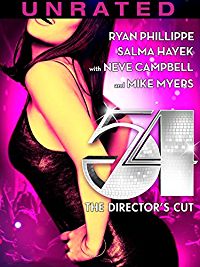
So, you can imagine my disappointment when I saw the movie 54<; it was a glossy “boy from Jersey moves to the city gets caught up in the glitz but then walks away from it and learns from his experience” type movie. And while I may have never gone to Studio 54, I knew enough about it–and lived through that time–to know that this movie was deeply, deeply sanitized.

When I heard there was a director’s cut, that was much better because the studio had redone almost the entire film, I thought–I want to see it. Paul went to a play Friday night, so after I was finished with my daily work I got in my easy chair with Scooter and rented it from Amazon.

Seriously, it was amazing.

51j9xzmxetl-_sx200_ql80_

The only resemblance this movie has to the studio release is the cast and it’s about Studio 54.

This movie is bleak, dark, and realistic–I would say it’s just as dark as Saturday Night Fever, which is an incredibly dark movie.

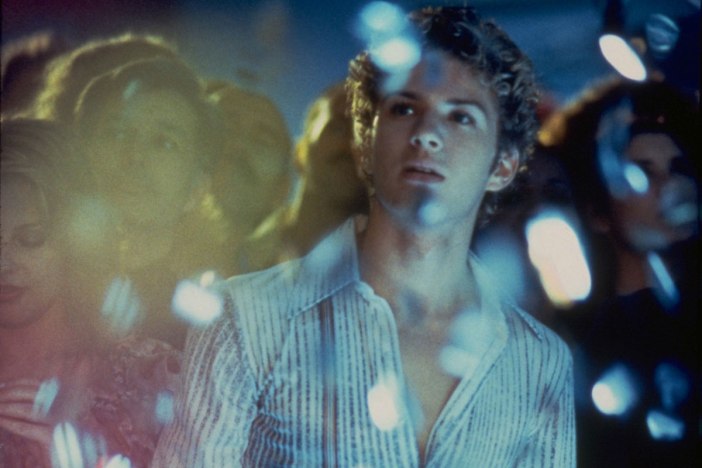
Shane, the main character, played by Ryan Phillippe in all of his stunning young beauty, lives in Jersey City with his father and two younger sisters. This is blue collar America in the 1970’s in all of it’s realistic bleakness. He works as a pump jockey at a gas station; the hostage crisis in Iran is going on; the economy is in the toilet, and he is uneducated but wants something more–like so many people did from that background (like Tony in Saturday Night Fever, for that matter). He has a crush on Julie Black, an actress on All My Children, and after one wretched night in a bar where he meets a girl, they have mutually unsatisfying sex in the backseat of his car, and when he asks her if she want to go out sometime, she dismissively says, “I’m from Montclair and you’re from Jersey City. I don’t date guys from Jersey City”–he gets the big idea to cut off his long frizzy hair into a more stylish look and convince his two buddies to go into the city with him and try to get into Studio 54, where he might have a chance to meet Julie Black.

Shane catches the eye of Steve Rubell, played by Mike Meyers, in the crowd outside and is picked to go inside–his two buddies aren’t–and Meyers tells him, “Not in that shirt”–forcing him to take it off as the price of admission. Once he is inside, though…and this is very important–he is dazzled by the inside: the people, the decor, the music, the dancing, the celebrities.

ryanphillippe54

Before long, he’s hired to be a busboy, which requires him to wear those hilarious little running shorts that were in vogue back then–the bartenders are all gorgeous and shirtless–and he befriends another barback, whose wife works in the coatroom, and he moves in with them after his father throws him out for working at ‘that freakshow.’

The director’s cut doesn’t shy away from anything–the sexuality, the hedonism, the drugs. Everyone is smoking pot, snorting coke, popping Quaaludes. And of course, gorgeous as he is, Shane is getting laid left and right and using his body as his commodity. Shane also explores his own bisexuality; the movie never really makes it clear whether he is hustling when he is with wealthy men, or if he genuinely is fluid sexually. He often sleeps with people that Steve tells him to, and even gets some modeling gigs.

But the relationship with his married friends–Anita and Greg, played by Salma Hayek and Breckin Meyer, is also at the heart of the movie. They genuinely love and care about each other, but it’s never clear whether Shane is just close to them or if he’s part of the relationship. He definitely has sex with Anita–but after his initial anger Greg forgives him because they’re family.

There is also an incredibly awkward moment when Shane misreads a cue from Greg–now supplementing his income by dealing drugs–and they kiss for a moment before Greg freaks out and runs away.

54-16x9

I am not kidding when I say the director’s cut is a completely different movie from the theatrical release. There are characters in this version that don’t even show up–or if they do, it’s a small scene–in the theatrical version; there are whole stories and plots that vanish from this to the ‘original.’ This movie is very much in the tradition of Saturday Night Fever and Cruising (both of which I need to revisit now), and in its darkness and complexity, is equal to–and in some ways, superior–to both. This was the 1970’s I remember.

And the music! Oh, the music is so fantastic.

I highly recommend it.

Bella Donna

I’ve been, over the course of the last week, rereading Les Liaisons Dangereuses by Choderlos de Laclos; originally published in 1782 as the sun set on the absolute Bourbon monarchy. My interest and curiosity in the novel had been piqued by watching the two competing film versions of the same story that had come out in the same time period; the more famous Dangerous Liaisons and the overshadowed Valmont. The book had been adapted into a quite successful play; the play was the basis for the former film while the book served as the template for the latter–the director, Milos Forman, had been intrigued by the play but the rights had already gone; the book, however was in the public domain and he was determined to film his story. Even now, I wonder about the wisdom of his decision and his financial backers. Dangerous Liaisons wound up being an enormous hit and was nominated for a boatload of Oscars; his film came out second and was mostly overlooked. I preferred Valmont at the time, for reasons I shall explain; but on reviewing the films it is clearly the inferior of the two.

dangerous-liaisons

I also thought it was interesting that publishers associated the book in print with the first film…

The story itself has always, always, fascinated me; it is incredibly dark, and rather on the noir side. Madame de Merteuil, a widow (her title is actually Marquise), is angry because her lover, the Comte de Gercourt, has left her to become affianced to her young cousin Cecile Volanges; a fifteen year old innocent who has been living and being educated in a convent. It is this innocence that Gercourt is attracted to; and as an affianced husband he no longer requires a mistress. The Marquise’ jealousy is, of course, primarily motivated by ego; men do not leave her. So she concocts a scheme to despoil the innocence of young Cecile, and wants to enlist her dear friend, the Vicomte de Valmont, to seduce the girl and turn her into a wanton so that on her wedding night Gercourt would not only be disappointed but humiliated; she also thinks Valmont will help her because in the past, Gercourt had seduced a mistress of Valmont’s. But seducing a virgin isn’t the kind of challenge a practiced roué as Valmont; his interest lies in seducing Madame de Tourvel, a deeply religious and devoted wife whose husband is away on business, nor does he particularly feel the need for revenge against Gercourt. So the Marquise instead has to find another method of having the young girl seduced, and the story goes from there.

glenn-close-and-john-malk-001

I love the book. It’s extraordinary; and it is an epistolary novel, told and advanced through the letters of everyone involved in this game of seduction and the corruption of innocence and virtue. The reader is thus able to engage with each player, and Laclos is able to create each character and their voice distinctly. It’s also a fascinating character study; as the Vicomte and the Marquise explain to each other each step in their game–eventually leading to a bet between the two; if Valmont is somehow able to accomplish his seduction of Tourvel, the Marquise will be his for one night. But also, we see Tourvel’s letters to the Vicomte as she tries to resist him; her letters to friends where she talks about the struggle in her own soul between virtue and sin. We see Cecile’s letters to her friend Sophie, back in the convent, as her own innocence and childhood is slowly taken away from her as she is first excited and scared at the thought of her impending marriage; her innocent, almost childlike love for her music instructor, the Chevalier Danceny (whom the Marquise, having failed at getting Valmont to seduce Cecile, targets to be Cecile’s despoiler), and then her ultimate education into sensuality by Valmont (who finally does seduce Cecile and take her as his mistress to revenge himself on her mother, who has written disparagingly about him to Tourvel and thus hindered his seduction of her). The letters between the Marquise and Valmont also reveal how they became the way they are; their own brief affair which ended when they recognized in each other another such as themselves and decided to be friends and allies instead, and the ultimate game they are actually playing with each other.

The original film, with Glenn Close and John Malkovich in the leads, with Michelle Pfeiffer as Tourvel, Uma Thurman as Cecile, Keanu Reeves as Danceny, and Swoosie Kurtz as Cecile’s mother Madame de Volanges, was very sumptuously filmed; gorgeous sets and costumes and cinematography. But I was repelled by it when I watched it; I couldn’t really believe either Close or Malkovich as these master seducers–although I readily believed them as manipulators. The film itself seemed incredibly cold and dark to me. I much preferred Valmont; with Colin Firth and Annette Bening in the roles, with Meg Tilly as Tourvel, Fairuza Balk as Cecile, Henry Thomas (from E.T. now a young man) as Danceny, and the amazing Sian Phillips as Cecile’s mother. The backstory is set up better–we see Gercourt dumping the Marquise brutally, for example, and Bening and Firth are just so luminously beautiful it was easier to believe they’d be able to seduce pretty much anyone.

tumblr_l89but6kut1qzu6rfo1_1280I read the book after seeing the films; I’ve reread it several times, and after rereading it this last time and rewatching the movies, I am not ashamed to say that I was wrong originally. <I>Dangerous Liaisons</I> is more true to the book as it was written; that coldness, the dark viciousness at the heart of the novel drives that movie far more than it does <I>Valmont</i>; the main characters aren’t quite as dark and nasty and chilling in the second version; she’s simply a woman scorned and he’s just kind of a dick. That sense of evil entitlement that Close and Malkovich embraced and played to the hilt; that seductive sleaziness just isn’t there.

And I now prefer the first film.

It was adapted yet again in the late 1990’s as Cruel Intentions and updated to the world of a modern day prep school and filthy rich kids, with beautiful Ryan Philippe and Sarah Michelle Gellar in the leads as step-siblings, Reese Witherspoon in the Tourvel role as a young girl who’s kind of became the spokesperson for modern virtue and virginity pledges, and Selma Blair as Cecile; whom Catherine’s latest boyfriend has left her for. It takes place over the summer between semesters–and the motivation for Gellar as Catherine to have Cecile seduced, and the reason her boyfriend leaves her for Cecile, doesn’t really play as well. (In an interesting aside, Swoosie Kurtz appears early in the movie as Sebastian’s–the modern day Vicomte–therapist whose daughter he seduces. The darkness at the heart of the story is there in this adaptation, making it even darker as it is about cynical teenagers/high school students. I intend to watch it again; I’ll probably talk about it here once I do.


MSDCRIN EC012

And now back to the spice mines.