Making Love Out of Nothing At All

Ah, where has the week gone? Tis now Friday morning, yet another week has somehow slipped through my fingers, and yet my to-do list is a long and large as it has ever been.  Sigh. But I did finish Eric Ambler’s Background to Danger last night; another one of those “hey, I’m just on the train minding my own business and now I’m involved in international intrigue” style stories, and it was done rather well. It was written before the second World War, and the two opposing sides were the Soviet Union and Nazi Germany, trying to control who runs Romania and an evil international oil conglomerate was also involved; which was kind of interesting. Even in the 1930’s the capitalist insistence on profit before politics was known; the world has changed, apparently, very little. Were Ambler an American rather than British, making the Soviets the good side (even though the Nazis were the villains) would have made him suspect after the war; the lovely days of virulent anti-Communism, McCarthyism, and hysterical patriotism weren’t that long ago, and the after-effects are still being felt today.

I revised “For All Tomorrow’s Lies” yesterday, and I am not truly certain that the ending works. This is the problem I generally have with short stories (and novels, for that matter): ending them. I’m never completely convinced that my endings work; that they aren’t rushed and sudden. I think, over all, it’s a good story; I am going to reread a hard copy of it and make notes on it today. I like the concept of the story, but I am not sure I’ve pulled off the ending. It may need another thousand words; perhaps in the next version I’ll go ahead and tack on a longer ending, see if it can work. I also worked on “The Brady Kid” a bit yesterday, and I think it, too, is coming along well; I just am not certain that I know how to properly end it either. I think I’ve come up with the proper answer to make “Fireflies” work in it’s next edition; we shall see. I’d like to get them all out into the markets soon; rejections are, of course, to be expected and fine. (I am struggling with Scotty, so am following my own advice and working on something else while I ponder the issues I am having with the Scotty book; I may try to write my way out of those issues this weekend.)

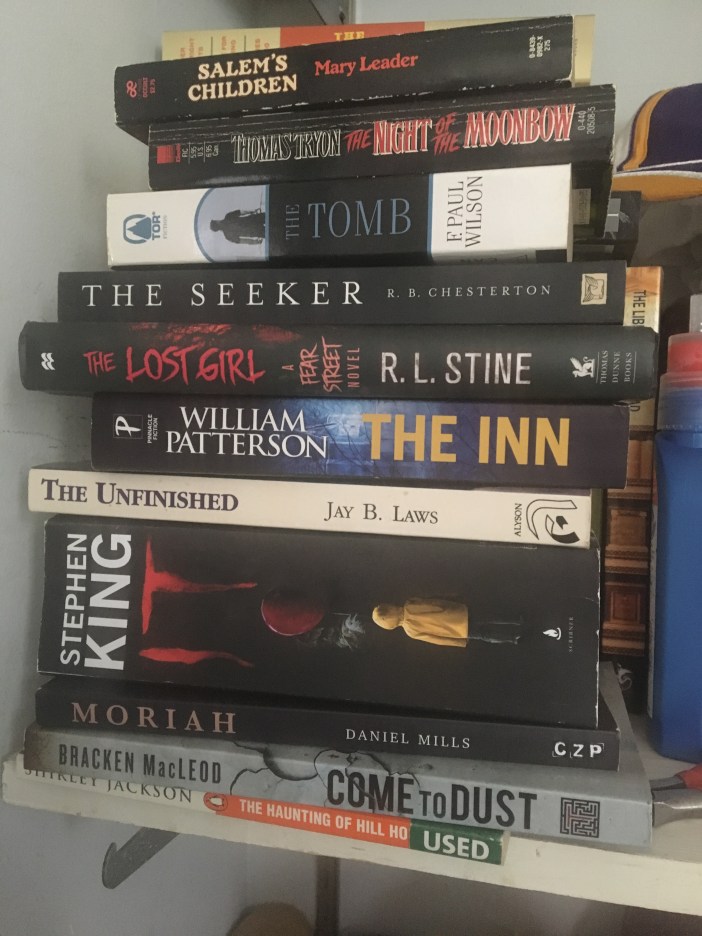
And now, even though October doesn’t really begin until Sunday, I am going to start working through my Halloween Horror reading.  I’m going to start rereading It today; knowing I am most likely going to put it aside from time to time to read other things. I’d like to get through my entire stack of Halloween Horror reading; there is, of course, no guarantee that I will, but I am going to give it the old college try (there’s also the trip to Toronto, which means time in airports which also means more time to read).

And on that note, tis time to get  back to the spice mines.

Here’s a Friday hunk to slide you into the weekend:

17621904_1306426352738759_889410002924164138_o

Affair of the Heart

Wednesday. It’s also Pay Day, or rather, Pay the Bills Day. Hurray. Although none of them are actually do until next week, so I may wait to pay them so I can savor the feeling of having actual money in my checking account for a couple of days.

Apparently we’re in a boil water advisory this morning in New Orleans. Fortunately I have an entire shelf full of bottled water in my refrigerator that have been through the Brita filter–I don’t trust that our water pipes aren’t lead–and showering isn’t an issue in this particular advisory, but this seems to happen more regularly than it really should, you know? I love this city, but our old infrastructure leaves so much to be desired. And no matter how many luxury condo buildings go up over parking lots, this is still an old, fragile, crumbling city.

I continue to work my way through Lisa Unger’s In the Blood, and I got rolling on Chapter Six of Scotty yesterday (I know, I meant to outline the next five chapters but I had an idea for how to get it started and then it just kind of started going), but last night was bar testing and so I am a little frazzled/tired this morning. My mind is certainly all over the place. I had some terrific book mail yesterday–including the ARC for the fabulous new Alison Gaylin coming out in March, If I Die Tonight, which I am itching to get into. (I may have picked out a stack of horror novels to read for Halloween/October, but it’s still September, don’t you know). I think I’ll be able to get the Unger finished this weekend and then move onto the Gaylin. I also have an electronic ARC of Laura Lippman’s Sunburn I keep forgetting I have–the curse of pesky ebooks is that I don’t think about “oh, I should check the iPad and see what I have to read in there” very often, if at all.

Here’s my rather ambitious stack of books to read for October/Halloween:

IMG_2866

It is a bit overwhelming in its length, but the lovely thing is it’s a reread; so I don’t have to gobble it all down at one time. I can read it here and there, slip another in for a break, and then go back. I am very curious as to how well it holds up, and as I’ve previously mentioned, I’ve not reread It since I read it the first time. I do want to see the movie, but may end up waiting to see it once it’s streaming. I am excited, though, for it–as most people whose opinion I respect have greatly enjoyed it. There are so few King adaptations that are good–Carrie, Misery, Dolores Claiborne, Christine–that when a good one comes along, it must be embraced.

All right, it’s off to the spice mines with me.

Is There Something I Should Know?

It rained last night; it was kind of a shock as there was no thunder and/or lightning, and the sun was actually shining. I only knew it was raining when I took out the trash; and it was pouring. Quietly. It was eerie; there wasn’t any wind so the rain was coming straight down, slowly–the way it does in the jungle. And then I remember, as I seem to forget at times, oh, yes, we live in the tropics. It’s easy to forget that when you live in a city that should be a tropical swamp.

I am working both days this weekend; both Saturday for testing and Sunday for the NO/AIDS Walk. I get to take next Monday off, and then go in late on Tuesday, which will be lovely. But ugh, staring down seven consecutive days of work is horrific. But, you know, it happens. And it’s not like it’s every week, you know?

The new Scotty is taking shape, which is lovely. It’s so vastly different than it’s source material, even if it using the same framework, and I am actually enjoying myself as the plot broadens, expands and takes shape. I am hopeful to have a first draft finished around mid-October, if all goes well and the creek don’t rise; November 1 if I get distracted, as I am wont to do.

Lisa Unger’s In the Blood continues to enthrall me; if you haven’t read her work, Constant Reader, you really need to. She defies classification as well; there are crimes in her novels, but there’s also a touch of the paranormal–but you’re never really sure if the paranormal stuff is real or not; she dances a fine line, but the writing is so incredibly strong she never falls off the beam. In that way, she is kind of Shirley Jackson-ish–thematically and plotting and character-wise; she doesn’t write in Jackson’s style, which would be incredibly difficult to master. She’s just bloody fantastic.

September is drawing to a close, and I am already lining up my reading for Halloween Horror: the annual reread of The Haunting of Hill House,  a reread of It, and I have some horror anthologies and other horror novels in my TBR stack that I’ll be pulling out and diving into.

And on that note, it’s back to the spice mines.

Here’s a hunk to get you through your Monday!

IMG_2767

Overkill

Ugh, my house is a mess. I kind of should go make groceries today, but I also kind of don’t want to leave the house. The cursor on the latest chapter of the book is blinking at me, but I am just not feeling any desire to do any writing today.

But I have to. There is no ‘don’t wanna’ allowed.

Heavy sigh.

What i really want to do is read more of Lisa Unger’s book, In the Blood, which really gets off to a terrific start. I was part of the way through Chapter Three when I realized I was getting too drowsy to focus last night, but didn’t really want to put it aside. I generally either don’t dream, or don’t remember my dreams in the morning, but the last week or so I’ve been dreaming odd things that I still remember when I wake up in the morning. They of course become more vague the more I wake, which is an interesting phenomenon and one I am sure everyone experiences and has been studied and writing up extensively in journals. Yet I still find it intriguing.

I often write about dreams, usually in my work that could considered to fall into supernatural/paranormal/borderline horror–I have a tendency to use dreams to amp up the tension as well as reveal things to the main character, which has become a crutch. In fact, a book idea I’ve been playing with–I wrote a short story years ago which kind of serves as a synopsis of the book–is all about dreams.

Yeah, that will need to go back in the drawer and only pulled out to bring back to the drawing board.

Heavy heaving sigh.

I don’t know why I procrastinate so much about writing, I really don’t. I always enjoy writing, and the feeling of satisfaction I get when I finish for the day is one of my favorite feelings in the world. And yet, here I sit, writing a blog entry while the Saints are getting stomped on the living room television (this is going to be such a long, horrible football season for Louisiana fans….) rather than working on the new Scotty book. I’ve already done some filing, made Paul breakfast, folded clothes…sheesh.

All right, I am going to go make groceries and come home to write.

Here’s a Sunday hunk for you, actor Justin Clynes:

justin clynes


Too Shy

Thursday!

I worked late last night, but also pulled within four or five chapters of being finished with inputting the line edit. Hip hip hurray! HUZZAH indeed! So, so close, and I know exactly how to finish polishing it; I know what needs to be added.

That’s such a lovely feeling, you have no idea.

The rest of this month is going to be a bit challenging; I have to do a lot of bar testing, going to the office on Saturdays, the NO/AIDS Walk is an upcoming Sunday, and just thinking about any and all of it makes me tired. But I will persist. I will persevere. Because I am Gregalicious!

I’m enjoying Louise Penny’s Still Life, which is a really charming read, to be honest, and I can’t think the last time I read a book about which I could use the word charming as a descriptor. Granted, I tend to read darker stuff, but I am enjoying this. I will keep you posted, Constant Reader, as I make my way through the rest of the book. I think I have copies of other Louise Penny novels scattered about the house in TBR piles; but I do think when I finish this I am going to tackle the reread of It. It’s so daunting though, I look at how enormous the trade paperback I recently bought on impulse is, and want to weep. How did I ever read a novel that large in such a short period of time? Will it still hold up after all this time? The suspense! Older Stephen King novels I’ve loved have stood the test of time; and I do think that perhaps I also might give The Shining a reread in October, when I am going to primarily focus on horror, as I always do in the month of Halloween.

I am going to pick up a prescription (I meant to do this yesterday and forgot) and some other errands–since I worked late last night I don’t have to be in until one. I am also going to do some other chores around the house before I leave for the office etc. I am hoping to get some more of the edits input this morning as well.

And here’s a Throwback Thursday hunk for you, Constant Reader, actor Doug McClure:

IMG_2685

1999

So, I had to go to the DMV this morning to renew my driver’s license, which had expired on my birthday and I hadn’t realized it, like an idiot. The DMV is never a great experience, and yesterday was no exception to that rule. But I was able to finish reading Christopher Golden’s Ararat while I was there, which made the time pass much faster (I was there slightly less than two hours) and I did end up taking what had to be the worst driver’s license photo in history–at least my personal history of driver’s license photos. Insult to injury? My last one looked terrific. Heavy heaving sigh.

Even more insult to injury? It looks like me.

Ah, well.

You have to hate that. Anyway, I managed to finish reading Ararat, which was enjoyable, and this evening I started reading Margaret Millar’s Do Evil in Return, which is quite marvelous.

ararat

Just past eight o’clock on the last morning of November, the mountain began to shake.

Feyiz froze, breath catching in his throat as he put his hands out to steady himself, waiting for the tremor to end. Instead it worsened. His clients shouted at him in German, a language he did not speak. One of the men panicked and began to scream at the others as if the devil himself were burrowing up through the heart of the mountain to reach them. They stood on the summit, vivid blue sky rolling out forever before them, the frigid air crisp and pure. An idyllic morning on Mount Ararat, if the world had not begun to tear itself apart.

“Down!” Feyiz shouted. “Get down!”

He dropped his trekking poles and sank to his knees on the icy snowpack. Grabbing the pick that hung at his hip, he sank it into the ice and wondered if the six men and three women in this group could even hear him over the throaty roar of the rumbling mountain.

The Germans mimicked his actions.

I read an essay recently which discussed how, out of all the types of genres and subgenres in literature, that horror is the most faith-based of them all. It sounded absurd at first, but as I read the essay and thought about it more–and have, obviously, continued to think about it–that premise is pretty spot-on. Not all horror is faith-based, of course; there’s nothing about faith in films like Halloween or any number of horror novels I could think of (The Other, for example); but so many of them actually are that it’s kind of fascinating; especially when you take into consideration the way religious groups generally condemn horror books and films. The Exorcist is deeply rooted in Catholicism; and to name two, neither The Omen nor Rosemary’s Baby could have been written without knowledge of the Christian Bible. Ghost stories are predicated on the idea that there is life after death; that the soul continues to live on and needs to move on to another plane–whether that be heaven or hell, those books rarely make the distinction. The existence of the supernatural in a lot of horror proves that faith, and religion, are real and true; and after all, isn’t religion itself supernatural? I have made the offensive (to Christians) joke about Easter being a celebration of a zombie; and if you can get past the faith and look at any religion and its rituals, you can see what I mean.

I blaspheme, of course. I am an apostate heretic who would have burned not so long ago in our history.

I’ve read Christopher Golden before; I greatly enjoyed his Dead Ringers, and have Snowblind in my TBR pile. This week I took his Ararat out of the pile to read, and it again put me in mind of how so much horror fiction is dependent on religion for its existence. The opening scene quoted above, of an earthquake shaking Mount Ararat in Turkey, ends with a tremendous landslide, one which greatly changes the geography and the face of the mountain itself, long purported to be the final resting place of Noah’s Ark. The existence of the Ark, of course, would prove that the Bible is, at least in this instance, literally true (although Christianity is not the only belief system from the Middle East that tells of an ancient flood); there have been reports in the past that it has been found; but the likelihood of wood thousands of years old surviving is not great. But this landslide opens a new cave on the side of the mountain, high up; and soon the race is on to be the first to scale the mountain and see what’s inside the cave. The first section of the book has to do with one particular team racing to beat several other’s to the cave; risking their lives in the process. But the team–lead by adventurous couple David and Meryam, who explore and write books and make documentaries about their exploits–that arrives first soon discovers that the cave isn’t really a cave but the Ark itself…and there’s something else there that should have never been discovered.

To tell anymore would, of course, risk spoiling the story; there are so many twists and turns and scares and shocks that to give away anything more than is contained in the cover jacket blurb would be a disservice to future readers and to author Golden. But I couldn’t stop reading; resented having to put the book down, and was very satisfied when it was finished. Golden also includes diversity of characters in all of his books and does it casually; I also appreciate the fact that he chooses not to describe non-white characters in terms of food or drink–I could go the rest of my life without reading about “cinnamon” or “chocolate” or “cafe-au-lait” skin.

But just think about it for a moment–if the story of Noah is actually true, the flood changed the world and refreshed it; a reboot by God, as it were, and there are some verses in Genesis that show how different the original world was before it was cleansed–the one that readily comes to mind is There were giants in those days.

I look forward to reading more of Mr. Golden’s work.


Mickey

My wonderful book about the classic horror novels of the 1970’s thru the 1990s, Paperbacks from Hell, attributed the boom in horror fiction to three bestselling novels that set the stage: Thomas Tryon’s The Other, Ira Levin’s Rosemary’s Baby, and William Peter Blatty’s The Exorcist. I read all three of these books when I was in junior high school; the Tryon and the Levin remain two of my favorite novels, and I reread them periodically. But after reading The Exorcist one time, I’ve never felt the need to have a copy on hand, nor have I ever felt the desire to go back and reread it. It did occur to me sometime within the past few years that I should give it another go; my primary memory of the book is, of course, the crucifix masturbation scene which everyone in the seventh grade discussed in breathless whispers whenever someone new had read the book. I may not have ever owned a copy; I may have borrowed it from someone. There were any number of paperback copies floating around my junior high school, the binding bent and broken and covers battered as they were passed around from kid to kid. It also occurred to me that many of my memories of The Exorcist were not from the book, but from the incredibly disturbing film; it was a huge hit and was nominated for ten or eleven Oscars (winning maybe one or two). Mike Oldfield’s “Tubular Bells,” used extensively in the score, was also hugely popular. (All three of the books were made into films; The Other the only whose film version wasn’t a success–but it’s hard to see how it could have been filmed successfully; although it would be really cool if someone tried it again.) So, Labor Day morning, I took down the copy of The Exorcist that I bought recently and read it again.

the exorcist

The Exorcist is undoubtedly an important work in the horror genre; it helped create a boom and directly resulted in a lot of really talented writers getting some great books published over the next thirty years or so. I had noticed, though, that not many people who write horror ever include it on those “Best Horror” lists, or list it as an influence. I read a book in the last year or so that was undoubtedly influenced by The Exorcist; Paul Tremblay’s A Head Full of Ghosts, which I really enjoyed and also put me in mind of a reread of Blatty’s blockbuster. The fact that Blatty is a homophobe made me a bit uncomfortable going back to the book–okay, he may not be a homophobe, but he certainly felt welcoming and admitting LGBT students at Georgetown University meant the school had betrayed its Jesuit heritage and should be stripped of its standing as a Jesuit university (you can read about that here: http://www.nytimes.com/2013/08/04/education/edlife/how-georgetown-became-a-gay-friendly-campus.html?mcubz=1).

So making millions of dollars about a child masturbating with a crucifix is kosher–I guess because, literally, the devil made her do it–but treating LGBT college students as human beings is a crime against Catholicism. Got it.

And to be fair to Mr. Blatty, I only vaguely remembered the above incident; and wasn’t 100% sure I was correct, so that didn’t play into my reread of the book (I didn’t go looking into it until this morning, while actually writing this entry).

Part of the issue with The Exorcist is that once you are aware of it, it’s really not that shocking anymore. This book was a shocker when it was first released; it was denounced far and wide as demonic–including by the Catholic Church (which is even more perplexing on the reread, because the book is very very Catholic), and the scares involved how shocking it was. I seem to recall Blatty based the book on an actual case of an exorcism from the early 1960’s, or perhaps the 1950’s–I don’t recall exactly. So, after forty-odd years the shocks and scares are no longer shocking or scary; my memory of the first read of the book is vague so I cannot remember if it was more pruriently shocking or if it was, indeed, scary to the twelve year old who read it all those years ago. But knowing the story, and what is coming, and knowing that the shock value has completely worn off in the intervening years, I was able to read it and evaluate it simply as a novel.

And it doesn’t, sadly, hold up very well.

I was torn about blogging about The Exorcist, because I generally don’t like to criticize other writers and other books publicly; but it’s an old book, and the author has made a fortune off it. There’s also the suspicion that knowing how homophobic the author is might have played into my disappointment in the reread, but let me give you some sentences:

Looking down at the pain in those sensitive eyes, Chris surrendered; couldn’t tell her what she really believed. Which was nothing.

In fact, Chris had smelled nothing, but had made up her mind she would temporize, at least until the appointment with the doctor. She was also preoccupied with a number of other concerns.

She seemed to be thinking, and still in this posture, she stepped outside and joined her son, who was waiting on the stoop.

Her eyes still on her notes, Sharon probed at the silence in a strained, low voice.

Chris looked at him appraisingly, with gratitude and even with hope.

There are lots more examples; weird analogies, and strange character behavior. It’s also really hard to tell who is the main character. Chris MacNeil, the mother, is a divorced atheist actress; her marriage failed, according to the book, because her husband couldn’t bear being Mr. Chris MacNeil; his wife’s success and fame was too much for his ego to handle, and Chris not only understands but doesn’t blame him. He is a neglectful father to Regan, which also doesn’t bother her too much. She is renting the house in Georgetown because she’s appearing in a movie being filmed there, a musical remake of Mr. Smith Goes to Washington which has an added subplot about campus unrest and protests (which sounds absolutely terrible) shoe-horned in; her main home is in LA. Yet once her role in the movie is finished, she stays in Georgetown inexplicably; Regan is being home-schooled by Chris’ secretary, who does double duty as Regan’s teacher–so there’s no reason for them to stay other than the fact that it’s necessary to the plot for her to remain in close proximity to Georgetown University’s campus. The filming is over before the possession truly gets going; so…

There are also some bizarre behaviors exhibited by Chris as well–she will have an encounter with her strangely acting daughter, be terribly upset, and then go downstairs and have a pleasant conversation with her housekeepers about the film they went to see. It becomes very difficult to have sympathy for her, because she isn’t really fleshed out as a character. The book is also told from an omniscient point of view, so the reader has a very hard time engaging with the characters or feeling deep sympathy for them; certainly it’s hard to identify with any of them. Sharon, the secretary, is a complete cipher; as are the Swiss couple who work as housekeepers. Burke Demmings, the director of the film and a friend of Chris’, is a vicious and cruel drunk who openly mocks her servants; which she just dismisses as “oh, that’s just Burke.”

Because her housekeepers aren’t people who should at least be treated with a modicum of respect as human beings?

The police detective who becomes involved in the case–Burke ends up dead at the foot of the steep staircase down to M Street behind the house–is incredibly annoying; he never gets to the point and dances around the subject and is one of the most unbelievable cops I’ve ever encountered in fiction; he seems a bit like Columbo, but at least the viewer knew that Columbo was actually incredibly smart and that was his method. You never get that sense with Detective Wilderman; he’s just annoying.

Father Karras is by far the most likable and interesting character in the book; and I suppose the reason it’s called The Exorcist. Damien Karras (it’s funny; at the time the book was published the name was unusual but interesting; of course The Omen has forever altered the perception of that name) is having a crisis of faith; his own homosexuality is hinted at but subtextually; his ‘friendship’ with Father Dyer is hinted at, they have a lightly teasing homoerotic kind of friendship but it’s never really gotten into; although one of the insults the demon throws at Karras is an accusation of homosexuality, which rattles him. There’s also a scene where Father Dyer mentions that ‘the gays are leaving the priesthood in droves.’

But the underlying premise, and theme that drives the book, is that Catholicism is real, the one true Faith; even though the demon is apparently an old Babylonian god named Puzuzu–who predates Catholicism and Jesus–the power and faith can defeat him. The ultimate sacrifice of Father Karras in taking in the demon and then killing himself–what happened to the demon? What happened to his soul? Does he redeem himself with this act?

Father Karras was interesting to me (he is constantly described, not just in the text but by characters, as ‘looking like a boxer’–whatever that means: “they told me you looked like a boxer”.) as a character, and I would have loved to have seen the entire story through his eyes; the loss of faith, his struggle with choosing the church over his mother; the relationship with Father Dyer; his doubt that Regan is actually possessed and the slow dawning that demons, and therefore, his faith, are real; and why he would make that ultimate, final sacrifice.

I’m glad I reread the book, even though it was kind of disappointing. I greatly enjoyed the television series, which was recently renewed for a second season (yay!), and it is an important book in the genre; no matter what quibbles I have with it, its importance cannot be denied, and I think horror aficionados should read it.

Let’s Dance

I managed, yesterday, to polish off Chapter Two; I wrote 1700 words or so in about an hour and fifteen minutes and voila! The pesky chapter was finished. I also started Chapter Three this morning; alas, maybe about a paragraph was all I was able to get done, but it was a start, and a start is always lovely. This weekend is my birthday; I will officially be fifty-six; but I’ve been saying I’m fifty-six for quite a while now. (I usually add the year after New Year’s; it’s just easier and I don’t really think of my birthday as a big deal, quite frankly). Paul and I are going to go see Dunkirk tomorrow night, and then out for dinner afterwards. I’ve taken Monday off, and I am working a late night on Tuesday, so I won’t have to be in to work until around three, which means I basically have a three and a half day weekend, which is lovely. I am hoping to be able to get a lot done this weekend; I want to finish reading the Ambler, which I am loving, then I am going to reread Dorothy B. Hughes’ In a Lonely Place, and then I am going to reread The Haunting of Hill House. After that, it’s either Jeff Abbott’s Blame or my advance copy of Laura Lippman’s newest, Sunburn.

One of the best perks of being a writer is that I get advance copies of books, or know people who do that can pass them along to me. My dear friend Lisa recently gave me an advance copy of this:

IMG_2507

I don’t consider myself to be a horror writer (SHUT UP BACK THERE! I said horror, not horrible), but I do consider myself to be a big fan of the genre. I read a lot of these books–not all, who knew there were so many? But I was a voracious reader, and I loved to read horror. The first horror novel I read was The Other–I still have the hardcover copy I originally read in junior high; I’m not sure I remember how I got a hardcover copy of it, maybe it was my grandmother’s–and I also read The Exorcist in junior high; everyone was reading it, and as all tweens (although we weren’t called that then) are wont to do, all we talked about was the crucifix masturbation scene. I always liked horror–I remember watching old black and white scary movies with my grandmother (she also likes mysteries) when I was a kid, but I never thought I could write it. I certainly never tried until the 1980’s, when my fandom of Stephen King made me give it a try. I still love reading horror, and there are certainly some amazing horror writers being published today whose books I greatly enjoy.

My inability to get any of it published is an indicator that crime was a better fit for my talents.

But what a wonderful resource this is! And a lovely trip down memory lane. To be honest, I thought I hadn’t read much horror throughout my life outside of the usual suspects (Stephen King, Peter Straub, Poppy Z. Brite) and some others that have come along more recently, but in going through this, I saw many titles I’d forgotten I’d read, and authors I’d forgotten.

This is a must for all horror fans; even those who are too young to remember the glory days of the mass market paperback boom of the 70’s and 80’s.

And now, back to the spice mines.


Walk Like an Egyptian

Monday!

Hilariously, when I was writing my blog entry yesterday, I couldn’t remember what I’d watched on Saturday before moving on to Batman v. Superman, and I actually was thinking, I couldn’t have been streaming music videos all that time, could I? And then I remembered, last night while we were getting caught up on Animal Kingdom (which is awesome), that I’d discovered some of the old ABC Movies of the Week on Youtube, and watched two of them, back to back: The Cat Creature and Crowhaven Farm.

When I was a kid, I loved the ABC Movie of the Week. Some of them were good, some of them were awful, and it was interesting to see whether two of the ones I remembered so vividly held up; a while back, I’d discovered The House That Wouldn’t Die on Youtube; it starred Barbara Stanwyck and was based on my favorite ghost story of all time, Barbara Michaels’ Ammie Come Home. I saw the movie before I read the book–and I’ve reread the book any number of times over the years because I love it so much. I was very excited to watch the movie again..and it holds up pretty well (and BARBARA STANWYCK, for God’s sake), but it made significant changes from the book, obviously, and wasn’t quite as good. But it did hold up, and I am sure, were I not such a fan of the novel, I wouldn’t have had those issues with it.

the cat creature

The Cat Creature holds up fairly well, for a television movie made in the 1970’s. For one thing, the story was developed by Robert Bloch (if you don’t know who Bloch was, shame on you–but he wrote the novel Psycho, which became the film, and was one of the great horror writers of the 50’s-80’s) and he also wrote the screenplay. I think part of the reason I loved this movie so much was because it was based in Egyptian mythology (I suspect the ‘history’ was invented for the purpose of the film; you’ll see why as I move along). The movie opens with an appraiser arriving at the estate of a now dead, wealthy collector, and he has been brought in to appraise the ‘secret collection’ of the collector–which includes a lot of Egyptian antiquities (which, obviously, must have been purchased on the black market). There’s a mummy case, which he opens, and the mummy is wearing a strange amulet around its neck, a cat’s head with heiroglyphs on the back. A burglar breaks in, takes the amulet, and then the appraiser is murdered off-camera–but you hear a lot of screaming and animalistic growling, and of course, the shadow of a cat on the wall. The long and short of it is, the cult of the Egyptian goddess Bast, based in the city of Bubastis in Egypt, was supposedly suppressed and all of its priests killed–the mummy is one of them–and there are legends and stories that Bast’s followers could turn themselves into cats that drank human blood for eternal life; kind of like shapeshifting cat vampires (I am certain this is all fiction without having to look it up). Eventually the ‘cat creature’ is captured, the amulet put back around its neck, and the strange murders all solved. Meredith Baxter (before she added, then subtracted, Birney from her professional name, and before she was a lesbian) starred; it also featured Gale Sondergaard, who won the very first Oscar for best supporting actress, as a shady magic shop owner. It was kind of cheesy on a rewatch as an adult, but it could be remade easily enough and could be quite chilling.

cat shadow

The sad thing about rewatching, though, was realizing that an idea I have for a book was liberally borrowed from this story. Heavy sigh; guess it’s a good thing I never wrote that book.

movie of the week

Crowhaven Farm also holds up for the most part. The movie terrified me when I was a kid, and I watched it whenever it re-aired. It’s also a supernatural story, about reincarnation, ghosts, and revenge from beyond the grave. It starred Hope Lange, who inherits Crowhaven Farm when a distant cousin dies, and the original inheritor is killed in a fiery car crash caused by a mysterious young girl. Lange and her husband, an artist, move to the farm, and on her very first day there she remembers things she couldn’t possible know; how to open secret doors to hidden rooms, where the old well is, etc. She continues getting flashes from a previous life, and begins to fear that not only is she the reincarnation of Margaret Carey, who lived there in the seventeenth century, but was someone who was accused of  witchcraft but turned in a coven of witches, who were either hanged or pressed to death. After she finally has the baby she had been longing for, the past and the present collide and she is confronted by the reincarnations of the coven she betrayed, who want her soul for Satan and vengeance. Instead, she turns over her husband to save herself–much as she betrayed the coven in a previous life–and runs away from Crowhaven Farm with her baby. In the final scene, she is in Central Park with her baby when a mounted cop stops to check on her and the baby, and then he reties a baby ribbon in the strange way her now dead husband used to tie bows. She remarks on it, and he just smiles at her and says, “Well, I’ll be keeping an eye on you now” and rides off…and terrified, Maggie quickly pushes her baby carriage down the path, looking back over her shoulder as the credits roll.

crowhaven farm

Not as scary as it was when I was a kid, but still, not bad; and it, too, could use a reboot.

I started rereading The Great Gatsby again yesterday, and am starting to remember why I didn’t care for it so much; none of the characters in it are particularly appealing. Tom Buchanan is kind of a dick, Daisy’s not much better, and Jordan is kind of a snob…and Nick himself isn’t particularly interesting. The writing is good enough, though–but I rolled my eyes when I got to the end of the first chapter, when Nick sees the green light on the dock on the other side of the bay and witnesses Gatsby standing in his yard, his arms outstretched in the direction of the light, and remembered how my American Lit teacher went on and on and on about the symbolism of the green light.

Christ.

It’s also kind  of weird to be reading a book about rich white people in the 1920’s so soon after reading about poor white people in the present day in Tomato Red.

And now, back to the spice mines.

Time for Me to Fly

I took today off from work; I am starting to wear a little around the edges (it happens more frequently the older I get, alas) and so two long weekends in a row, I felt, might be necessary in order for me to recharge my batteries. I’m not sure why–other than I’m older, which is something I refuse to either accept or accede to–but there it is. I started rewriting a story yesterday–this is the sixth draft, but I think I’ve finally figured out how to make it really work, and last night we watched another episode of Claws, which is really terrific; it’s so nice to see Neicy Nash finally in a complex role and she is tearing it up. We’re also going to start watching the Ellen Barkin series, Animal Kingdom, probably this evening. I can’t seem to find The Mist anywhere, though; but its reviews aren’t good, so maybe that’s a good thing? Pity, because it’s one of my favorite King novellas.

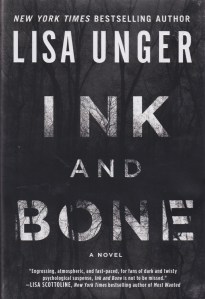
I also finished reading Lisa Unger’s Ink and Bone last night.

ink and bone

Daddy was on the phone, talking soft and low, dropping behind them on the path. Nothing new. He was always on the phone–or on the computer. Penny knew that her daddy loved her, but she also knew that he was almost never paying attention. He was “busy, sweetie,” or “with a client,” or “just a minute, honey, Daddy’s talking to someone.” He was a good story-teller, a bear-hugger, always opened his arms to her, lifted her high, or took her onto his lap while he worked at his desk. Mommy couldn’t lift her anymore, but Daddy still could. She loved the feel of him, the smell of him. He was never angry, always funny. But sometimes she had to say his name like one hundred times before he heard her, even when she was right next to him.

Dad. Dad? Daddy!

Honey, you don’t have to yell.

How could you not hear someone who was right next to you?

If Mommy was out and Daddy was in charge, then she and her brother could: eat whatever they wanted (all you had to do was go into the kitchen and take it; he wouldn’t even notice); play on the iPad forever (he would never suggest that they read a book or play a game together); ride their plasma cars up and down the long hallway from the foyer to the living room. And it was only when they got too loud that he might appear in the doorway to his office and say: “Hey, guys? Keep it down, okay?”

I can’t remember who it was that insisted I read Lisa Unger, but I owe that person a tremendous debt of gratitude.

Ink and Bone is the second Unger novel I’ve read (the first was Crazy Love You, which I read last year and loved), and I enjoyed this one even more than the first one I read, and I loved that one.  Unger is an extraordinary writer; with an uncanny ability to tell her readers who a character is with a few brushstrokes that are so honest and real and true that the reader immediately knows exactly who that person is; and her ‘villains’ are all the more terrifying for being so absolutely real.

Both books I’ve read of hers were set in (or around) a small town in upstate New York known as The Hollows as well as in Manhattan. The Hollows is one of those towns; like Stephen King’s Castle Rock, a town where paranormal things happen: people can see ghosts, commune with the dead, or hear The Whispers in the woods; the dead trying to tell their stories. There is also human evil in The Hollows; whether these people are drawn there by the paranormal force (one character in Ink and Bone calls the town a ‘hellmouth’) that is active there, or if that force draws the evil out from their hearts.

The story at the heart of Ink and Bone is missing children: the Gleason family rented a woodsy cabin in The Hollows for the summer; the marriage between Wolf and Merri is teetering because of his adultery and her Vicodin addiction. Merri is too zonked out on Vicodin to go for a walk in the woods with her family; on that walk both her husband and son are shot, and her daughter Abbey taken. This disappearance, and the fact that both parents are considered suspects by the police, has further shattered the marriage, perhaps beyond repair, and Merri is convinced her daughter is still alive. She goes back up to the Hollows and hires a local private eye, Jones Cooper, to look for her daughter. Jones works with Eloise Montgomery, an elderly local psychic–but in this case, Eloise passes the case along to her granddaughter, Finley.

Finley is a the crowning achievement of this narrative; a young heroine with complicated emotions and a gift she doesn’t quite understand, doesn’t know how to control, and isn’t sure she wants. She is heavily tattooed; the ghosts she sees she has transformed into tattoos on her body. She is sort of involved with a tattoo artist, Rainer, who loves her and followed her to the Hollows from Seattle, setting up shop in the small town. She isn’t sure how she feels about him, or whether she can get more serious with him thanks to her gift/curse. She has a close relationship with her (sometimes maddening) grandmother, who sort of Yodas her about the gift; never really explaining anything and often responding to her questions with ambiguous non-answers. She has a difficult relationship with her own mother, who is estranged from Eloise and has rejected fervently the gift. Finley, though, is seeing things now; things that may lead her to Abbey.

The book is extraordinary, and while Finley is the primary point-of-view character, we get to see things from several others as well; secondary point-of-view characters who not only advance the story but also enhance our understanding of what is going on, who they are, and Unger makes us care about them, warts and all. She is an incredibly gifted storyteller, and I defy anyone to put the book down during the last hundred pages or so.

Unger has written many novels about the Hollows, and about Jones Cooper; having not read them all nor having read them in order, I can’t say whether reading them in order enhances and enriches the reader’s experience or knowledge; maybe reading them in order is a more satisfying experience. But I can say that not reading them in order isn’t a hindrance, like so many other series or interconnected books.

You need to be reading Lisa Unger, Constant Reader.

And I think next I shall read Carson McCullers’ Reflections in a Golden Eye.

And now back to the spice mines.