Take Time to Know Her

I finished reading  Cleopatra’s Shadows last night. Over all, I enjoyed it, but with all due respect to Emily Holleman, I didn’t love it. I already knew the story of Cleopatra’s sisters, Berenice and Arsinoe, so I wasn’t expecting to learn anything new from it, so that wasn’t the issue I had. I thought it was interesting that the book focused on the brief period of time when Berenice deposed her father and took the Egyptian throne. Usually, fiction about Cleopatra generally begins with Julius Caesar’s arrival in Alexandria and her being snuck into his presence rolled up inside of a rug; which, admittedly, is quite a romantic beginning and you can’t really go wrong starting there. The first book I ever read about Cleopatra–a bio for kids called Cleopatra of Egypt, written by Leonora Hornblow and illustrated by W. T. Mars–began with her fleeing from Alexandria out of fear her brother/husband Ptolemy XIII was going to kill her; and she rose an army and started a civil war. This war interrupted grain shipments to Rome–which was in the midst of its own civil war, between Pompey and Caesar. Caesar had just defeated Pompey, who fled to the court of the Ptolemies; Caesar pursued him there and also aimed to settle the Egyptian civil war. Ptolemy famously beheaded Pompey, thinking he would please Caesar by doing so; instead, he pissed him off, which made Caesar more inclined to be sympathetic to Cleopatra, who was actually Cleopatra VII. But one of the most interesting things to me about Hornblow’s book–which was for kids, mind you–was that she talked about Berenice’s rebellion and usurpation, as well as that of Cleopatra’s younger sister, Arsinoe–and how Cleopatra was present in Rome for the Roman Triumph in which Arsinoe was marched, in chains, behind a chariot…and that was the motivation behind her own suicide when she lost to Rome; she refused to be subjected to the same humiliations in front of the Roman mob that her sister endured.
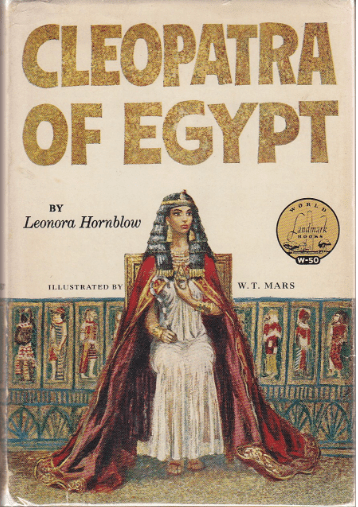
cleopatra of egypt

I found a copy of it on ebay a few years back, and bought it again. I kind of always wanted to write about both sisters, honestly.

So, obviously, I was very excited to read Cleopatra’s Shadows.

It isn’t that the book wasn’t well-written; it was, and I am sure, as Holleman is a historical scholar, it was undoubtedly incredibly well-researched. What was disappointing to me was that Holleman didn’t give either sister agency. The Ptolemy dynasty,  Macedonian Greeks descended from Ptolemy, one of Alexander the Great’s generals who was rewarded with Egypt after Alexander’s death and the break-up of his empire, was known for it’s intelligent, highly educated and ruthless women. Like the Egyptian pharaohs of old, the Ptolemies married their sisters to keep the dynasty pure, and while there aren’t a lot of records–the burning of the Great Library at Alexandria to blame for this–there is enough evidence that the sister-wives were actually, in many instances, co-rulers and just as ruthless as the males. Each male pharaoh took the name Ptolemy; their sister/wives/queens were named either Cleopatra, Berenice, Arsinoe or Selene–or a combination of two of those names. Again, there is also evidence that Ptolemaic queens disappeared–probably murdered by their husbands, and the ‘pure bloodline’ wasn’t quite so pure, as the unions were sometimes sterile and other women, concubines, were brought in to bear children for the pharaoh. The plotting and machinations of the Ptolemaic court, the struggles for power, are endlessly fascinating to me; even in the children’s book which was my first introduction to the most famous (notorious) Cleopatra this was very clear.

So, the characters of Berenice and Arsinoe as Helleman chose to depict them were disappointing to me. Berenice was, per this novel, the only true child of a royal brother/sister pair; and her father, Ptolemy XII Auletes, the Piper, was not a popular ruler. The premise of this story is that Ptolemy tired of his sister/wife Tryphaena and her inability to bear him a healthy son, so he banished her from court and replaced her with a beautiful concubine, who bore him four children–Cleopatra, Arsinoe, and two young males both named Ptolemy. Berenice’s revolution and overthrow of her father was apparently more based in the bitterness of mother and daughter in being supplanted by the concubine (never named) and her children more than anything else. And while it is all too frequently true that kingdoms and history were shaped by family disputes, rivalries, and romances/loves/jealousies, but I always kind of admired Berenice. The strong woman I always imagined she must have been, strong enough to raise a rebellion against an unpopular king, and to be successful, was not the character Helleman wrote about, who was vacillating, weak, and insecure.

Likewise, the younger sister, whose point of view the story is also told from, Arsinoe, is completely obsessed with her older sister Cleopatra, and barely a page in her point of view passes without so mention of how much she misses her sister. She never thinks about either her father or her mother, and given she is a child, that’s a bit more understandable. But Arsinoe eventually leads her own rebellion against Cleopatra’s rule, so clearly she too is an ambitious young woman as well as intelligent one, one foolhardy enough to rise the Egyptian people up against the Roman legions who have come to Alexandria to back up her sister, and I get no sense of that strong woman in this child. Things just happen to Arsinoe, and while there are slight hints of the politician in her being trained and brought to the fore in the lessons she is learning at the court of a sister who despises both her and her mother, for the most part she is just someone things  happen to–and she never grasps the idea that she should stop being passive and maybe make things happen. The Ptolemies were notoriously ruthless in killing people and relatives who might pose a threat; a pragmatism that may seem horrific to our modern-day sensibilities of family ties but something that was absolutely necessary for them to keep their thrones and their power secure. In fact, Berenice’s advisors want her to kill Arsinoe, but she refuses, and never gives any reason for doing so, which weakens her character still further.

It’s a good read, and it’s well-written and interesting, but I was disappointed with the characters, frankly. I can recommend it to anyone who enjoys historical fiction, and is interested in the period.

And it did revive my interest in the Ptolemies.

And now, back to the spice mines.

Spooky

During the Civil War, Harriet Beecher Stowe was invited to dinner at the White House. When she was introduced to President Lincoln, his eyes twinkled and he said, “So this is the little lady who made this great big war.” Stowe, of course, had authored Uncle Tom’s Cabin, published originally in 1852, and it was probably one of the most influential books ever published in the United States.

La La (Means I Love You)

Good morning. It’s a lovely Sunday morning in New Orleans, as I look at the start of a relatively easy and short week for me at work. Good Friday is a paid holiday for me, so I only have four days to get through, and I have short days on both Monday and Thursday (horrifying long days on Tuesday and Wednesday, of course), so it’s kind of a ‘win some lose some’ kind of week. I ended up not writing much yesterday; instead I read Underground Airlines (which I am enjoying) and when Paul got home from his errands, I made dinner and we watched Rogue One and then the first two episodes of Five Came Back, a wonderful documentary about five Hollywood film directors (Frank Capra, John Ford, John Huston, William Wyler, and George Stevens) who spent World War II making documentaries about the war rather than directing films in Hollywood. It’s narrated by Meryl Streep, and is based on the book of the same title by Mark Harris (who also wrote the documentary). It’s very well done; and it does a really good job of capturing the era it’s about, while at the same time not only exposing how easy it is for film to be used as propaganda, but raising questions about the ethics of making propaganda during a time of war. As we as Americans are currently wrestling with the notion of news as propaganda, and how to tell what is real and what is not–a horrifying place to be, quite frankly–and how the news was controlled for the American public during the Second World War to keep them behind the war effort (which was prodigious) as well as buying war bonds to finance it, it raises difficult questions about truth, ethics, and the media. I cannot recommend it enough; I’m really looking forward to viewing the final episode.

I will undoubtedly spend today in a mix of cleaning, writing, and reading. My friend Stuart is in town, and hopefully we’ll get to have lunch or an early dinner together today, if not, it will be tomorrow.

Underground Airlines, like The Underground Railroad, is not an easy book to read. I’ve never read much alternate history (Philip K. Dick’s The Man in the High Castle being one of the few exceptions), and that’s what this book is; alternate history, and one that, as you learn more about the ‘history’ of the United States and its ‘peculiar institution’ the deeper you get into the book, is terribly disturbing because you can see how it might have gone this way.

American history, as it pertains to questions of race and equality, is difficult; and the truth of American history, as opposed to the deeply sanitized version we are taught in public school (or at least, the deeply ‘rah-rah-rah’ version I was taught in the 1960’s, predicated on the manifest destiny of white Europeans to take dominion over the Americas while eradicating the natives and enslaving Africans, required a lot of unlearning; I told one of my co-workers the other day that I’ve spent most of my adult life unlearning everything I was raised to believe while re-educating myself on the truth), is actually kind of ugly. I remember reading James Michener’s Centennial when I was in my teens, and realizing everything I’d been taught, read, or seen in movies about the native Americans, and their clash with white Europeans, was actually incredibly biased against the native ‘savages’. (If you’re interested in re-educating yourself on American history, please read Howard Zinn’s histories of the United States, starting with A People’s History of the United States.)

Anyway, when Underground Airlines was released, there was some controversy, given the subject matter and that author Ben H. Winters was white and writing from the perspective of an African-American who worked as a runaway slave catcher. Questions of cultural appropriation often dog the work of white people who write from outside their own experience; yet at the same time there is also a clamor for diversity within fiction and there has long been a Twitter hashtag #weneeddiversebooks. I don ‘t think–and I could be wrong–that the problem is so much cultural appropriation as it is that authors of color do not have the same easy access to publishing that white people do; it’s easier for a white author to get a book published with a person of color as the main character than it is for an author of color to do so. I’ve personally enjoyed seeing the progress made by film and television to cast people of color; when I was a kid I would have loved to find books or television shows or films where gay men weren’t tragic figures doomed to die, or the butt of the joke, or figures of contempt; I can only imagine the positive impact this is having on young minority children to be able to see characters like themselves on films and television shows, or finding them in books.

This is not a bad thing.

The book is very well-written, and I am enjoying it tremendously, but it’s not an easy read, as I said earlier. I had always, as I’ve said before, intended to read it and The Underground Railroad back-to-back, to get a sense of comparison and to see how the differences between how an author of color deals with the issues of race and white supremacy vs how a white author does. Both books have made me think about these issues–the racial divide/conflict that is so deeply woven into the fabric of our society and culture, and how it always has been there from the very beginning.

That’s not a bad thing. Being made to think, to reexamine your values and beliefs, to unlearn things you were taught that are wrong and to reeducate yourself is never a bad thing. I think we, as a country and a society and a culture, can do with some reexamination.

Heavy thoughts for a Sunday morning before I head back into the spice mines.

Here’s a happy Sunday morning hunk for you, Constant Reader.

IMG_1678


Too Busy Thinking About My Baby

Another glorious night of sleep, and I feel terrific this morning. I’ve already done one load of laundry, am well through a second, had breakfast, and am about to put the dishes away. I have a shorter than usual day at the office today; I logged some extra time earlier in the week so I can go in later–which is truly lovely; I have my morning free both today AND tomorrow (tomorrow morning I will be getting the car washed on my way to work). I decided to wait until next Friday to get my new outfit for the Tennessee Williams Festival opening party (I’d debated going this weekend, but I really don’t want to face any mall on the weekend). My breakthrough on Crescent City Charade definitely is working; I am very pleased with the flow now, and I am also hoping to get the rewrite of the short story finished up this weekend. All in all, a win all around.

I also got some book mail this week: Lisa Unger’s In the Blood  and Jonathan Beckman’s How to Ruin a Queen. Constant Reader will remember how much I enjoyed the first Lisa Unger novel I read last year, and I am definitely looking forward to reading more. The Beckman book is history (although that would make a great title for a noir about someone obsessed with revenge on a drag queen); it’s about the Affair of the Diamond Necklace, a huge scandal from the 1780’s that helped set the stage for the French Revolution. I’ve always been vaguely aware of the story, but not in any great detail. Someone from an old noble house of France, the Cardinal de Rohan, claimed to be an agent of  Marie Antoinette’s in order to buy a fabulous necklace for her–once the necklace was purchased the Queen claimed to know nothing about it, and a trial ended up happening. Marie Antoinette was so hated by this time that popular opinion was solely on the side of the Cardinal de Rohan; he was eventually found not guilty and there was a massive celebration at this public humiliation of the Queen. Every step of the way the royal family mishandled the situation, but I’ve never read enough about the Affair of the Diamond Necklace to know exactly how it played out and it’s never made a lot of sense to me. So, I am really looking forward to diving into this one (I also recently acquired a book about an enormous scandal at the Court of Louis XIV, The Affair of the Poisons, which I am also looking forward to reading). As you can tell, Constant Reader, right now I am going through a French history period.

I also want to get this essay about being a gay crime writer finished this weekend, and I also need to do the deep clean of the Lost Apartment.

I also can’t believe it’s almost April. Then again, time flies at the beginning of the year always, as it’s one thing after another in New Orleans. We’ve been having a slight cold snap this week–temps in the 50’s and 60’s–which after the gloriously beautiful spring days we had for Carnival seems completely unnecessary, wrong, and flat-out vile.

As this is also the last weekend before the Festival kicks into gear next week, I doubt Paul will be around much; as it is, I’ve barely seen him the last few weeks. He gets home after I got to bed and sometimes leaves after I do, so he’s still sleeping when I leave the house. He’s already out the door this morning; I got to see him awake for all of ten minutes. Sigh. But soon enough things will be normal around here again. Heavy heaving sigh.

Or what passes for normal, at any rate.

All right, I suppose I should return to the spice mines.

Here’s today’s hunk.


14937223_10154456197016001_901964319052523095_n

Crimson and Clover

Constant Reader knows I love history.

One of the (many) reasons I didn’t major in history was because I really couldn’t pick a period to specialize in; there are so many different periods of history that fascinate me. I talk on here a lot about the sixteenth century, but I am also interested in the seventeenth. I’ve actually been toying with a book idea set in that century for going on ten years now; periodically I will read some history of that century as background, but there is still so much I don’t know. I am reading Royal Renegades right now, about the children of Charles I of England–fascinating stuff; I knew basics about the English Civil War but not a lot–and the Stuarts of that period were particularly entwined with France. Charles I’s wife was Henrietta Maria, youngest sister of Louis XIII and aunt to Louis XIV; she fled to France for safety and some of the royal Stuart children also made it over there at some point. Henrietta Anna, Charles I’s youngest daughter, grew up at the French court; she eventually married Louis XIV’s brother, Philippe, the Duc d’Orleans.

And therein lies a tale.

My interest in Louis XIV–and Versailles–led me to discover that the Sun King’s younger brother, Philippe (whose existence, for that matter, completely invalidated the plot of Dumas’ The Man in the Iron Mask, although I’ve always loved that story), was, if not a gay man, then bisexual: he had children by both his first wife, Henriette Anna Stuart, and his second, Elisabeth Charlotte, Princess Palatine. In fact, Philippe is called the Father of Europe because all of European royalty in the nineteenth century were his descendants.

As a small child reading history, I picked up on the homosexuality that most historians always tried to gloss over (Edward II and Piers Gaveston; James I and first Robert Carr, later George Villiers; Richard the Lion-Hearted; Henri III of France; etc) but there was never any real attempt to gloss over Monsieur’s (Philippe was known throughout his life as Monsieur, after the death of his uncle Gaston, from whom he inherited that particular title as well as the title of duc d’Orleans) sexuality. He had a long term relationship with the Chevalier de Lorraine, which started when he was a young man and lasted until the Chevalier’s death. Monsieur’s first wife put up with it but didn’t care for it; his second wife didn’t care one way or the other.

The story goes that his mother, Anne of Austria, made him that way–which is, in modern times, a laughable thought (a domineering mother, etc etc etc)–by dressing him as a girl when he was a child, and continuing to do so after he was of an age to start wearing male clothing. Apparently, Queen Anne was concerned that Louis XIV and his younger brother would have an adversarial relationship the way her husband Louis XIII had with his own younger brother, Gaston. The troubled marriage of Louis XIII and his Spanish wife is also fascinating; they were married very young, she had two miscarriages, and he blamed her for the second one and they became estranged, not living together as man and wife for a very long time afterwards (the second miscarriage was around 1619, I believe; Louis XIV was not born until 1638 and his younger brother in 1640)–this estrangement between King and Queen–and the way George Villiers, Duke of Buckingham shamelessly flirted with Queen Anne when he came to Paris to negotiate the marriage of Charles I to Henrietta Maria–were the seeds from which Dumas also wrote The Three Musketeers.

Since so much time had passed (almost nineteen years) since Louis XIII last slept with Queen Anne, there were lots of rumors and talk that her two sons were not Louis XIII’s; there are many who believed Cardinal Richelieu fathered the boys with the Queen (fictionalized in Evelyn Anthony’s The Cardinal and the Queen); but there was never any question that the two boys were Bourbons. (Like the Hapsburgs with their genetic ‘jaw’, the Bourbon ‘nose’ was also relatively famous; both Louis and Philippe had the nose–but then that could simply mean that their father was a Bourbon rather than confirmation that Louis XIII was)

Monsieur often dressed as a woman for court functions, even as an adult; despite this proclivity he was a great soldier and commander of the French army–he was so successful in the field that his brother was jealous of his successes and often removed him from command.

His second wife was a diarist and a compulsive letter writer; her memoirs and letters are one of the best sources for information about life at the court of Louis XIV.

I’ve always been a little surprised that, while there are scores of biographies of Louis XIV (who, despite his incredible ego, wasn’t as great a king as he thought he was; he accomplished a lot but he also succeeded in planting the seeds for the French Revolution and creating the court system that also played a big part in the downfall of his dynasty. He also wasn’t successful militarily and diplomatically; his wars were expensive and ruinous–although all of Europe had to unite against him in order to beat him.) there are very few, if any, of Monsieur. I would think a biography of him would be something a gay historian would be interested in writing, because of the ability to look at his sexuality, his difference from the others at court, and how, as a prince, he was able to be himself–despite his own religious mania, Louis XIV never seemed to care about Monsieur’s proclivities–and on his own terms. Not to mention how incredibly difficult and strange it would have been to be the younger brother of the egomaniacal Sun King.

Was Monsieur gay? Bisexual? Transgender? Was this a result of his mother dressing him as a girl when he was young or was that just a coincidence?

As I said, the seventeenth century is interesting. And a lot was going on as well–the Thirty Years’ War was the last European war over religion; there were civil wars in both France and England; the colonizing of North America by the British, French, and Spanish truly got into full swing; and it was also the time, of course, of Cardinal Richelieu, the first great modern statesmen.

I hope to write this book someday. But in the meantime, I am having a great time doing the background research.

And now, back to the spice mines.

Voulez-Vous

A final push today and the essay will be finished. Huzzah! I also need to pack today and prepare for the trip; I will also have to go to bed early as I want to get an early start tomorrow. The drive is about eleven and a half hours, not including stops; with stops, figure maybe twelve to thirteen. (The times are estimates, of course; I’ve made the drive in less than eleven hours before and it’s also taken longer.) I also need to clean out my email inbox before I go; make sure there’s nothing left hanging that needs to be taken care of, and then drug myself early into a nice, restful sleep (I really do need to go to bed around ten tonight, which is a minimum of an hour and a half earlier than I usually do.) I stocked the larder yesterday, have paid all of the bills that fall due before I get paid again, and other than the essay and packing, I’m pretty much done. If I can knock the essay out early, I can then go ahead and do some straightening/cleaning (I cleaned out the refrigerator yesterday after getting groceries, in an attempt to get everything to fit in there).

I did finish reading Gore Vidal’s Empire yesterday, and frankly, wasn’t all that impressed with it. Oh, Vidal was a great writer; he knew how to use words and string them together, but at least in this book he didn’t create great characters; his characters are emotionless ciphers that don’t engage the reader. Vidal was an incredibly smart man, and a very great thinker; no one can take that away from him. But just because he was smart didn’t mean that he was right, you know? Often as I read the book, I would think to myself, man, he really hated this country; and then I would also find myself wondering, or is my reaction to his cynicism about this country a part of my own brainwashing?

As a child, going through public school, watching television with my parents, I was instilled with values and beliefs, some of which I have come to not only question but violently disagree with as I developed, through reading, my own experiences, and my own witnessing, my OWN set of core values and beliefs. Periodically I do catch myself thinking something automatically and not critically; and then I have to examine the automatic thought, figure out where is came from, and whether it actually has any value, any basis in reality and fact. Much of what I learned as a child has been, in fact, unlearned as an adult.

I’m not sure I agree with Vidal’s analysis of our country and its history. To be fair to Vidal, I’ve not read his other fictionalized histories: Burr, Lincoln, 1876, Washington D.C., Hollywood, and The Golden Age; nor have I read his essays and nonfiction on the subject. I’d like to read Burr at some point; just to get some better idea of Vidal’s thoughts about American history and what was true. Obviously, Aaron Burr is not a hero of American history, and yet Vidal seemed to think he was; I am curious to revisit this. I have always been taught that Burr was a villain; and in the interest of confronting things I was taught to decide on their veracity and validity, it may be necessary to reexamine that period of time in American history (which is why I am also interested in reading Howard Zinn’s “People’s Histories”).

Interesting thoughts on a Sunday morning with an essay to write about writing crime fiction in New Orleans.

But the book I have selected as my new bathroom read is a book called Royal Renegades by Linda Porter. It is not published in the US, only the UK; I ordered my copy through Book Depository, and I don’t recall how I heard about the book in the first place. The focus of the book, which is nonfiction history, is on the marriage of King Charles I and Henrietta Maria, and the lives of their children. I have some knowledge of Stuart England, but am not as well-informed as I would like to be, particularly on the 1620’s (which is a period of particular interest to me for a secret project, which I have been trying to research for years, without a great deal of success). This particular royal marriage–which, of course, led to disaster for the Stuart dynasty; with repercussions well into the eighteenth century, only ending with the final defeat of the Stuarts in the 1740’s–started a string of Stuart marriages in which Protestant English kings married Catholic princesses and made them Queens: two of their sons not only became king but also took Catholic wives; their second son even went so far as to convert (and this led to his deposal). Henrietta Maria was not only French, but her mother was Marie de Medici–yes, so her lineage went back to Italy and Florence and the amazing Medici family, reestablishing Medici blood into the French royal lineage after it died out in 1589. This was also the period of Cardinal Richelieu, one of my favorite historical statesmen; the Thirty Years’ War in Germany; and the further colonization of North America by the European powers. Anyway, this history begins with the first meeting between King Charles I and his French wife; she would be the last French-born Queen of England, and she was, indeed, the first French-born Queen in nearly two hundred years, after centuries where a French queen was the norm, not the exception. I’m looking forward to it.

Yesterday evening, after chores were completed and work was done for the day, Paul and I watched the European Figure Skating Championships on our NBC Sports Apple TV app. we are both huge fans of the two-time defending world champion French ice dancing team of Guillaume Cizeron and Gabriella Papadokis; their performances are breathtakingly beautiful.

And so are they; Guillaume also, apparently, works as a model.

You can see why. I’ve never understood why American male figure skaters and male gymnasts don’t get contracts as underwear models, at the very least; those bodies are en pointe.

And now, back to the spice mines.

Isn’t It Midnight

So this is Christmas.

I overslept this morning, which was a pleasant surprise. I’d intended to get up so I could get going on everything i need to do today, but it simply wasn’t in the cards for me to wake up early (the way I did yesterday). Ah, well, it is what it is, and while I do have a lot of work to do today, if I buckle down I can get it done.

I know, working on Christmas? Deadlines, alas, don’t get adjusted for holidays, and this is my punishment for allowing myself to get so behind in the first place. A few hours of good, solid work though, and I can take the rest of the day off. I also have tomorrow off (Paul’s going into the office) and this is my week of late nights (both Tuesday AND Thursday) so if I can get back on track with some good work today–I can still make the deadline.

We opened our gifts yesterday; I got some lovely things from Paul that I am very happy with, and he also seemed to like his gifts also. So, that was lovely. He went out during the day and got a massage while I worked, and got shrimp po’boys for us on his way home and then we watched the Saints beat Tampa Bay (GEAUX SAINTS!) and then relaxed while watching two movies–Hail Caesar!, which could have been better; and Deadpool, which was a lot of fun. I’m not sure what we’re going to do later–I am sure we’ll find something to watch on the many, various streaming options that we now have. (We were going to get caught up on The Exorcist, but Paul decided it was inappropriate to watch on Christmas Eve. “But it’s about good and evil,” I replied, to no avail.)

I will also do some reading. Yesterday evening I reread an old thriller originally published in 1975; that I think I read sometime in the late 1970’s/early 1980’s, when I was going through my first thriller reading phase: Valley of the Assassins by a long-forgotten novelist named Ian MacAlister, and it was set in the Middle East; more precisely, Iran, Iraq, Oman and then Saudi Arabia. It’s an Indiana Jones-type tale (which I always love) about the search for the tomb of the Old Man of the Mountain, and all the treasure buried with him somewhere in the Arab deserts. It begins with the appearance of a strange map, lots of intrigue and adventure and double crosses, and it had some basis in history–the Old Man of the Mountain really existed (I first learned about him reading Thomas B. Costain’s The Three Edwards, and more in The Conquering Family; an interesting historical figure; he founded the Society of Assassins, and was greatly feared). It was also interesting to reread to see how much the Middle East has changed since the time this book was written, making it very dated.

My thriller/intrigue period of this time was triggered by reading Alistair MacLean’s Circus and Helen MacInnes’ The Salzburg Connection back to back; I went through a very long period where I read many books by those two authors and books by others as well; eventually discovering Robert Ludlum, whom I really loved and read everything by until his death (I’ve not read any of the ‘co-written’ books published yearly since he died).

Reading this, and thinking about these thrillers, has reminded me of something I periodically remember but then it slips away: an idea I had years and years and years ago that I wanted to write about as a stand-alone type book, which then evolved into a stand-alone novel with Colin from the Scotty series as the main character. This is an idea I’ve always loved and wanted to try. The Scotty series, if you will recall, began as a stand-alone and then evolved, because of the contracts, into a trilogy. The final volume of the trilogy was effectively split into two books: Mardi Gras Mambo and Vieux Carre Voodoo (and by this, I don’t mean the mysteries themselves; I mean the personal story of the guys). No one really knows much about Colin other than what he chooses to share with them, and there’s also no way of knowing if what he chooses to share is the truth, part of the truth, or not true at all. The fun thing about having a character who’s a secret agent for hire of sorts is just that: the mystery of who he really is. I thought it would be fun to write a stand alone adventure for Colin himself, so the readers could get to know him better–and know him better than Scotty and Frank do. The idea for the thriller I wanted to write, a thriller based in a treasure hunt based in history in the Middle East, easily melded with the thought of writing a stand alone thriller for Colin; in fact, using that idea for a Colin book makes the most sense.

So rereading this book made me think of that book; and while it never really had a title, nor a definitive answer for what treasure he was looking for in addition to being involved in some international espionage, obviously, I’ve been thinking about it a lot over the last day or so.

I’ve also, for that matter, thought about writing a book from Frank’s point of view as well. But the Colin one makes the most sense to me.

Anyway, I digress, and need to get back to the spice mines.

Happy holidays, everyone!

Mystified

Ah. another cold Wednesday morning in New Orleans. Although, apparently it is going to be in the seventies this weekend, just in time for the holiday. Clearly, it’s going to be another bipolar winter in New Orleans. But at least this morning wasn’t as bad as Monday and Tuesday.

I continue to struggle with the book, but I think I’ve solved the problem I was having–I’ve found the character’s voice, without which writing the book is near impossible. I think I’m going to hit the required groove soon, which is also quite lovely–particularly as I continue to fall further and further behind on it. It’s not beyond the realm of possibility that it’ll be finished on time, but then again…who knows what distractions lie in my immediate future?

Heavy heaving sigh.

But in odd news of the coincidental, last weekend I was looking something up on Google Earth, which of course led me into the wormhole of hey, let me look up every place I’ve ever lived and every place I went to school and so on and so forth, and of course as I explored Lyon County, Kansas–which led to me to some important findings for a secret project I’ve been working on for two years and hope to get back to with a vengeance in January–I started reliving some of my old high school memories from Kansas, and tried to locate (drum roll please) the missile base.

Back on the dark days of the Cold War, the Midwest was riddled with nuclear missile bases, and there was one near the small town of Bushong, which we drove past in the school bus on our way to school every morning. The only way you knew there was a town there was because you could see the Bushong water tower from the road, and through the foliage you could see the roof of the old high school, closed and absorbed in the 1950’s into the high school I went to, Northern Heights. You knew you were at Bushong when you got to the railroad tracks; there wasn’t even a sign. The presence of the missile base–which was long abandoned at the time I lived there–meant that Bushong was still considered a potential target for nuclear attack, should it ever come, from the Soviet Union. When the ABC movie-for-television about the aftermath of a nuclear war, The Day After, aired in the early 1980’s, it made that message very clear–there were lots of missiles in Kansas, and Kansas would definitely be a major target.

All the kids knew about the missile base, and I went out there twice. I am sure it was trespassing; I think at that time the land still belonged to the government because I remember the big gate had military signs on it and warned people away; but there were also holes in the fencing and there were no guards. It was completely deserted. I remember there was a hill, with a big metal door built into the side of it. I know both times we went out there we opened the door–it wasn’t even locked–and with the daylight you could see along the entry hall, which dead-ended about thirty or forty feet, bisecting at a ninety degree angle another hallway which went off in both directions. It was pitch dark down there, and I remember you could barely read the warning side on the wall all the way down there–but it was clearly a warning about radiation. You keep hear water dripping, and other weird sounds…and no, we never ventured inside.

I always thought it would make an interesting setting for a story, or novel.

So, the other day I was trying to find it on Google Earth, with no luck.

Then, today, someone I knew way back when in Kansas posted a link to this blog someone wrote about visiting Bushong and the missile base.

How weird is that? Should I take it as a sign to start thinking about a book about the missile base?

And now back to the spice mines.

Here’s today’s hunk:

Caroline

It is grim and dreary and windy outside this morning; gray and kind of nasty–the kind of day where you are grateful to stay inside and not ever leave (as of right now, my plan for the day is to stay inside and only go outside to take out the trash if I have to). I got all of my Christmas shopping done Friday and mailed the gifts that needed to go yesterday after I saw (drum roll please) Rogue One.

I. LOVED. It.

I woke up feeling crappy yesterday; congested and mildly feverish. In fact, had I not already bought the ticket on-line I would have probably changed my mind and stayed home. But I needed to mail my presents and stop at the grocery store, and had already paid for the ticket…so I went. (It did occur to me that if I was contagious, I could possibly Typhoid Mary the entire theater; but I wasn’t coughing or sneezing, and I didn’t have to turn over money or make physical contact with anyone. It wasn’t crowded, either–it was a ten a.m. show; so I made sure I sat by myself where no one else was sitting. So there.)

I will admit I was incredibly disappointed at the beginning when the big STAR WARS logo didn’t appear nor did they play the theme music; and I will readily admit I was a bit pouty about it. It kind of, for me, got off to a bit of a slow start which was necessary in order to provide back story, but once it got going, it was great fun. I’ll see it again, undoubtedly (Paul is seeing it with his mother this weekend, so I didn’t go see it without him; his mom suggested it last week when he talked to her, and so that was when I bought my ticket.)

Although after running my errands, I felt much worse than I did when I woke up. I tried to write but couldn’t, and finally abandoned the effort, retiring to my easy chair and my book. I finished reading it, then watched the last few episodes of Medici: Masters of Florence, another couple of episodes of The Man in the High Castle (season two started out kind of slowly but has definitely picked up steam), and another show I’ve been watching on-line: Yuri On Ice.

Yuri On Ice is a Japanese anime television series about Yuri Katsuki, a Japanese male figure skater. The show opens with him finishing last at the Grand Prix final, and questioning whether he should just retire. He is considered to be Japan’s best male skater, but he also is shy and introverted, with very little self-confidence, and also suffers from crushing self-doubt and anxiety, which is why he performs poorly. After graduating from college in Detroit, he returns home to his small home town in Japan, and while visiting the ice rink, is recorded perfectly mimicking a routine by five time world champion Viktor Nikiforov. The video goes viral, and Viktor, also questioning his own future in the sport, comes to Japan to be Yuri’s coach–Yuri has always idolized Viktor, and decides to give the sport one more year.

I’m really enjoying the show, quite frankly. I’ve never watched Anime before, so I don’t know if the weird lapses into over-the-top emotion from the characters is normal for Anime, but it’s the only thing that bothers me about the show. The character of Yuri is so incredibly well developed; and the skating sequences are absolutely amazing. As a long time figure skating fan, it’s only natural that I would enjoy the show, I suppose. I’ve long been wanting to write a noir about figure skating, and watching this show has really intensified that desire–plus, I’m writing something else, which always makes me want to write other things.

I started reading Exit, Pursued by A Bear by E. K. Johnston last night, and am enjoying it thus far.

All right, I need to make up for lost time today, so it’s off to the spice mines I go.

Everywhere

So, Season 2 of The Man in the High Castle drops today, and there’s also Medici: Masters of Florence for me to watch, plus all kinds of reading and cleaning and so forth for me to do around the house this weekend. I also have all kinds of errands to run today–just thinking about it makes me tired. On the other hand, I can get everything done and hopefully be home long before five this evening (I am hoping at any rate).

I slept remarkably well last night–was tired, no doubt–and woke up this morning feeling rested and almost prepared to face a day of malls and shopping and errands and appointments and all that jazz. It will be lovely to get all the Christmas stuff done and out of the way, and that way I can have everything wrapped before Paul gets back on Sunday evening.

I also need to spend the late afternoon/early evening writing before retiring to my chair this evening. I am almost finished with Gore Vidal’s Empire, and last night before falling asleep I read some more of The Tigress of Fiori, which I haven’t looked at in a while. I think I’ll probably get all three books I’m reading finished either this weekend or over the course of the next week, and I am trying to decide what I want to read next–horror? Another crime novel? True crime? Literary fiction? I’m very behind on some of my favorite writers.

I also remembered some books I did not include on my list of the best reads of the year: Bent Road by Lori Roy, Lily by Michael Thomas Ford, Slade House by David Mitchell, Iron House by John Hart, and Roger Crowley’s City of Fortune: How Venice Ruled the Seas. My bad, I shouldn’t have just gone off the top of my head.

Bad, bad,bad Gregalicious.

I am still very pleased about my editor’s response to my short story. As I constantly say, and Constant Reader is aware, short fiction is very hard for me, so it’s enormously satisfying for me to write something that pleases an editor. It actually–and I honestly know this is twisted–means a lot more to me to be recognized for writing a good short story than writing a good novel.

Crazy, right?

Well aware.

All right, I need to make a list of what all I am going to be looking for at the various places I will be stopping to shop at today. Sigh. Groan. ARGH.

I detest shopping, I really do.

And as I prepare for my voyage deep into the heart of the spice mines today, here’s some French firemen hunks for you.