Reelin’ in the Years

It’s raining again on this first morning of June; gray and slick and wet outside my condensation-veiled windows as I sip my second cup of coffee. It’s Thursday; there’s only tomorrow to get through before the weekend, and I still am feeling a bit off, as I often do during short work weeks. But I am still feeling rested and like I am getting good sleep, even if I am not sleeping all the way through the night–I wake up once or twice, but am able to fall back asleep, which is a lovely change. (Plus, every morning around five Scooter turns into a purr machine, along with the kneading with claws extended. Sigh.)

We finished watching London Spy last night, and wow, absolutely amazing how that went completely off the rails in the final two episodes. I was enormously disappointed, obviously. The show had such an amazing premise, and would have worked beautifully had they simply put as much thought into how to end it as they did in how to set up the premise. And there were so many wonderful, brilliant options! I will still chalk the show up as a win on several levels: 1. Beautifully realized, realistic gay characters; 2. Probably the most honest approach to gay sexuality I’ve seen in any film or television series, or at least one of the most honest; 3. An excellent, absolutely powerful depiction of what it is like to get an HIV test; 4. Excellent job of taking a crime trope–innocent person caught up in something far beyond their scope to deal with, including the inability to trust anyone while caught in a trap which includes rabid paranoia. It went off the rails, alas, and became completely unbelievable in its final two episodes, which is a pity.

But at least they tried, which is more than I can say for most television/film/production companies.

And remember–twenty years ago such a show would have been unfathomable. Twenty years ago we were embracing horrible Hollywood films like Philadelphia and To Wong Foo, Thanks for Everything, Julie Newmar,  which had queer characters (although Wong Foo’s drag queens, with the exception of John Leguizamo’s Chi Chi, were completely sexless; no lust or love or even desire for Patrick Swayze and Wesley Snipes!) which was something we could embrace, but both films had that false Hollywood veneer that rendered them inauthentic and castrated. (Don’t even get me started on In and Out.) Then again, it’s not like Hollywood is exactly churning out films with queer characters front and center, unless someone (straight) is gunning for an Oscar.

Ah, well.

Not sure what we’re going to watch next; either The Night Manager or The Magicians, most likely.

And now, back to revising.

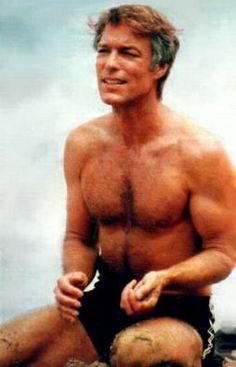
For Throwback Thursday, here’s gorgeous young Richard Chamberlain.

64eb1d7e90ab9a708d1ba078a529fea6


Vogue

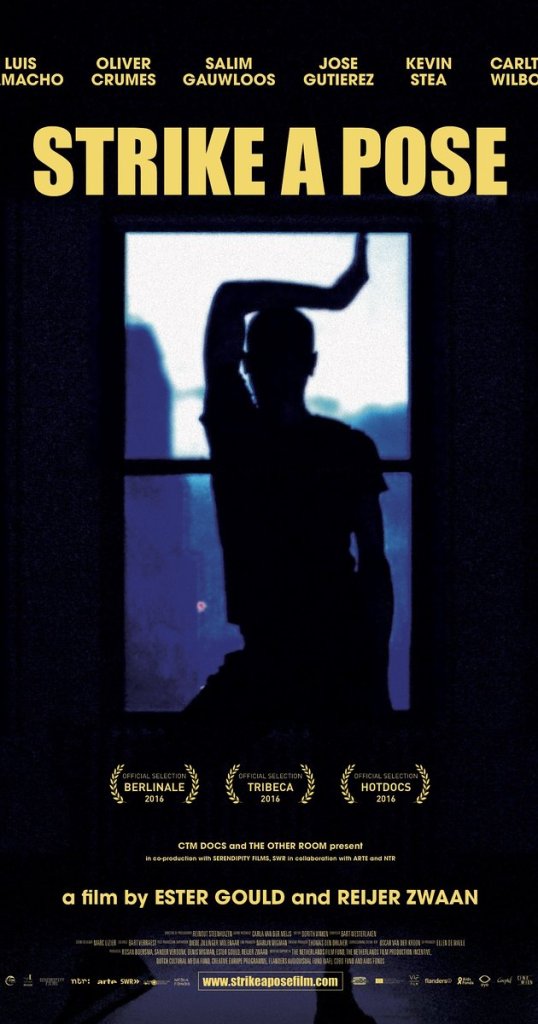
I finally watched Strike a Pose,  the documentary which takes a look at where the dancers from Madonna’s “Blonde Ambition” tour wound up, and what happened to them. That tour was also documented in another documentary, Truth or Dare, which was also extremely controversial at the time of its release.

strike a pose

It was ironic, as I reflected on watching Strike a Pose and how it affected me; what it made me think, and what I wanted to say about it on here, that I checked Twitter and saw a tweet from one of my friends:

A gentle reminder that using “it’s so much better than it was” when queerfolk are talking about their daily life is a dick move, “allies.”

The Blond Ambition tour was in support of Madonna’s fourth album, Like a Prayer (which is one of my favorite albums of hers; I’ve never tired of the title song or the second single, “Express Yourself”), which was enormously controversial when it was released…of course, back then almost everything about Madonna was controversial. She’d signed a mega-million endorsement deal with Pepsi, which was also geared to promote the album. When the video for “Like a Prayer” was released, people got up in arms about it and Pepsi cancelled the endorsement deal–Madonna’s “Like a Prayer” Pepsi commercial never aired–which only got her more publicity. (In an aside, I’ve never understood the issues with the “Like a Prayer” video; it was all about racism, and finding the strength through prayer to stand up to it–but everyone, as usual, got caught up in images from it without the proper context.)

I didn’t go see Truth or Dare in the theater; I rented it from Blockbuster when it came out on video. I had an enormous crush on the dancer Salim–he was just so handsome in the “Vogue” video–and as a Madonna fan, I was curious to see what it was like backstage on one of these massive tours. I was also–and remain–grateful to Madonna for all she did for the LGBT community, as well as bringing attention to HIV/AIDS, and being one of the first celebrities to do so. It was quite an unusual experience to see all these gay men in the film, so openly and brazenly gay and unashamed and just being themselves. The 1980’s was an incredibly difficult decade for me, personally–I’ve still not unpacked my twenties completely, maybe I never will–and the 1990’s didn’t start off much better for me. But at the time I watched Truth or Dare I had already started down a path to make a better life for myself, coming to terms with myself and who I was, and who I wanted to become, the kind of life I wanted. So the documentary resonated for me a bit; these were gay men who’d followed their dreams, and despite everything, despite all the hate and homophobia and prejudice and bigotry, made those dreams came true.

That was kind of aspirational, if not inspirational.

Seeing where the dancers ended up afterwards, some twenty-five years or so later, in Strike a Pose was kind of sad in some ways, but good in others. Being a ‘Madonna dancer’ was both a blessing in some ways and a curse in others, but they all seem to be doing well now, and it was fun seeing them all together–the ones who are left; one died from AIDS complications–again; it was also painful to listen, and see, them talking about their own personal struggles with HIV, the stigma and the shame–another legacy from that time.

Recently I was given the opportunity to talk to a retirement specialist, to help me come up with a plan for my retirement, and she was a little nonplussed about how “unprepared” I was for my looming retirement. “You should have started in your twenties,” she gently chided me.

I replied, “When I was in my twenties I thought I would be dead before I was forty.”

My reply made her feel uncomfortable, and bad–which wasn’t my intent. I knew she wasn’t being insensitive…but I wasn’t trying to make her feel bad, either. I was merely stating the truth, awful as it might seem now.

We all thought–no, believed, we were going to die young.

So, yes, it is very true that things aren’t as bad as they used to be, that things have gotten better in our society and in our world and in our culture.

But for fuck’s sake, that’s a pretty goddamned low bar–and progress doesn’t mean we’ve overcome everything, either.

Now I’d like to see Truth or Dare again. Strike a Pose struck a chord in me, obviously, and I do think it’s an important film…I’m glad I saw it.

NOTE: The Blond Ambition tour was also supporting Madonna’s album I’m Breathless: Music from and Inspired by the Motion Picture Dick Tracy. It was that album that contained “Vogue,” which is a timeless classic.


Nobody But Me

As tired as I was, I didn’t sleep very deeply last night, and I was wide awake this morning by six thirty. Not a bad thing; I’ll probably sleep well tonight, and I am trying to get organized. The kitchen/work space is an absolute disaster area, and I am also doing laundry, having to put away dishes, and file and organize. I am going to be really tired later, but must stay awake and watch Twitter because tonight is THE EDGAR AWARDS, and I have so many friends nominated! I can’t BELIEVE how tense I am, and I’m not even up for anything!

No lie, but if I were ever an Edgar finalist, I would probably cry.

It’s lovely to be back home; this past week or so has literally been crazy. I’ve driven almost a thousand miles (yay for new car!) and had a really nice time reconnecting with my Southern roots. I am an Alabama boy; I used to joke that I still have red dirt between my toes. I love Alabama, and I love the South. But that love doesn’t mean that I also blind myself to the problems down here, and have actually spent a lot of my adult life trying to figure out ways to change things down here. But when you drive through Alabama and Mississippi, you can’t help but be blown away by how beautiful it is down here.

I’m also aware that I can be blown away by the natural beauty as I drive because I don’t have to worry about being pulled over for Driving While Black.

Alabama’s license plates, and welcome signs, all say “Alabama the Beautiful,” and it’s true. So many trees and forests, lush green grass, the sky is beautiful…and I feel so connected there. I always am inspired when I visit Alabama, or even just drive through it. I don’t write much about Alabama, but when I do, I feel like it’s some of my best work. Dark Tide is my only novel set in Alabama, and it’s one of my personal favorites. I do want to write about Alabama, and I do have an idea about how to turn what I consider one of my best short stories into a novel. I may do that next; we’ll see how I feel when I get finished with the current project. I am also leaning towards shelving the Scotty book for a while. I like the idea behind the book, but I don’t really think it fits Scotty. I’m also struggling to find his voice again, so I think it might be best to take a break from him for a while.

I had a lovely time at the Alabama Book Festival. Troy University and the volunteers and staff did a fantastic job, and Old Town Alabama (or is it Old Alabama Town?) is gorgeous. I really liked Montgomery a lot–it’s a charming little city–I just wish I hadn’t been so tired. I worked doing bar testing the night before I drove up, and as such I was tired the entire time I was there–not sleeping well in hotels had a lot to do with it as well. My panel went really well; Lachlan Smith is very perceptive, insightful and smart, and I look forward to reading his books. I started the first in his series, and was really enjoying it before I put it aside for Thirteen Reasons Why; I’ll get back to it when I finish Cleopatra’s Shadows. Our moderator, Jessie Powell, did a really great job as well, and we had a nice audience. It was also lovely to see Carolyn Haines and Dean James and Tammy Lynn from Wetumpka again, and I also got to meet some lovely people whose company I enjoyed tremendously.

I never thought I’d ever be liked in Alabama, frankly–gay writer of gay stories–but that was my own prejudices and buying into the notion that everyone in Alabama is prejudiced and bigoted. It’s easy to make that assumption; just as it is easy to make that assumption about Louisiana. There are progressives in the South; we’re just outnumbered, but we’re fighting the good fight against prejudice and bigotry and discrimination and hate. Sometimes it feels like we’re fighting all alone, and progressives lucky enough to live in states that are more progressive are more than willing to write us off all the time. (Thanks for that, by the way.)

And on that note, I need to get moving on the day and back to the spice mines.

Here’s a Throwback Thursday hunk for you, John Wesley Shipp from when he appeared on Guiding Light in the late 1970’s/early 1980’s, and fueled many a fantasy of mine.JohnWesleyShipp


Born This Way

Monday and we survived Weekend One of Carnival Parades. *whew*. I am exhausted, though, which is never a good thing for a Monday morning of a new work week. Heavy heaving sigh.

Now I know what ‘bone tired’ means. And speaking of ‘bone tired’….

As Constant Reader knows, I taught a session on writing LGBTQ characters at the SinC into Great Writing workshop at Bouchercon this past September in New Orleans. It was an amazing experience, and it was enormously flattering to be asked to do so in the first place. I was also asked to write something for the Sisters newsletter, pretty much given carte blanche to write whatever I wanted to, and since I had an essay about being a gay writer on the backburner (I’ve been toying with it for almost a year) which I was calling “Death by a Thousand Cuts,” I said sure. As I was wrapping up deadlines and looking ahead to the glory days of NOT HAVING ANY DEADLINES, I started writing the essay again, whittling away things from the original unfinished draft that no longer fit my thesis and…I got about halfway through and stopped.

The reason why I stopped? Because it is next to impossible to write about the challenges of being a gay crime writer writing about gay characters without sounding like the biggest whiner in the world, and I don’t want to be that guy.

Then, a question posted on a list-serve I belong to for crime writers triggered some answers that were so horrific, so thoughtless, and so ignorant that I suddenly knew how to write the essay–or at least how to address it with a starting place.

One of the current ‘boiling points’, if you will, in our current society is the question of ‘cultural appropriation’ as well as ‘cultural insensitivity’, and how these questions apply in a broader sense with the American guarantee of First Amendment rights under the Constitution (without getting into the reality–which most people either don’t understand, or chose to ignore– that ‘freedom of speech’ is actually only guaranteed as a protection from persecution and prosecution from the state; not from other people, and certainly not from consequences. The example I always use is, “Well, when I worked at the ticket counter I couldn’t tell a passenger to go fuck himself, could I, without getting fired?”) Recently–I don’t remember where I saw this, but it was on Facebook; I don’t know if it was from an industry publication or a newspaper or something–I read a piece about the major publishers hiring what were called ‘sensitivity readers’ to read manuscripts dealing with characters who were out of the author’s experience to make sure the characters weren’t offensive. I am of two minds about this, and I can certainly understand why people would find this alarming/concerning; how much control/power would these ‘sensitivity readers’ have over the author’s work? Not to mention the fact that no one can speak for an entire community; what one gay man finds offensive the next three you ask may not.

So, yes, I do have a bit of a problem with the concept of sensitivity readers. However, if I were writing a character from a culture not my own; say, a New Orleanian of Vietnamese descent, wouldn’t I want to talk to a New Orleanian or two of Vietnamese descent? Wouldn’t I want my character to be as authentic and realistic as I can possibly make him or her? I’ve talked to cops, private eyes, and FBI agents to make my characters are grounded in reality as I can. So, why wouldn’t a heterosexual writer creating a gay character want to get some insight from a gay person? And so on, and so on, and so on. I don’t see a problem here, but again, that is the work that should be done before the manuscript is turned into the editor and publisher, and I’m not sure how comfortable I would be with that for myself.

Of course, there are those who, because of this, have pulled out the ‘censorship’ battleflag, thoroughly missing the point. The First Amendment does not guarantee anyone a publishing contract, nor does it guarantee a platform; if it does I’d like to be booked on both The Daily Show and Stephen Colbert when my next book comes out, thank you very much. Oh, wait, it doesn’t mean that, after all?

Blimey.

Which is my roundabout way of getting to the latest provocateur, Milo. People were rightly outraged when the conservative imprint of Simon & Schuster gave him a book deal; people were rightly outraged when he started getting invitations to speak at colleges and universities; people were outraged when he got invited to go on Real Time with Bill Maher (whom I also have problems with, but we’re talking about Milo now). As loathsome as the things he says are, I will defend his right to say them against any attempt by the state to silence him. Simon & Schuster is a business; they have a right to give a book deal to anyone they think will make them money (although I seriously doubt this book will make them any money; I see it going onto the remainder table pretty damned quickly, and not even being released in paperback; unless, of course, conservative clubs and organizations buy it in bulk at a deep discount as giveaways for fundraising drives and so forth–which is often how people like Ann Coulter wind up on the bestseller lists), and likewise, college/university groups have a right to invite anyone they want to come speak to them…but rescinding those invitations (and promise of payments and expenses) when said invitations blow up in their faces is not censorship as defined by the law and the Constitution. The same law that gives Milo the right to say what he does also applies to those who oppose the things he says.

That’s um, kind of how our country works.

Being utterly uninterested in anything he has to say (I’ve never enjoyed listening to transphobia or racism), I didn’t watch Real Time with Bill Maher, only watching the clips of Larry Wilmore telling him to go fuck himself, which I will also admit to enjoying immensely. (Of course, now that clips of him talking approvingly of sex between children and adults have turned up–and really, who didn’t think something like this was going to come up; it was just a matter of time–he won’t be getting invited to speak anywhere anymore, and I suspect S&S will be cancelling their book contract.) But Milo–like Ann Coulter before him–fascinates me. (And for the record, I use ‘fascinate’ with the old meaning of like how a snake fascinates its prey; I do think he is kind of dangerous, and snake-like.) I always wonder how people like him come to be. I wrote eighty pages of a Paige novel in which the victim was a Coulter-like character, attempting to peel back the layers and see what could create someone like her/him (that manuscript is in a drawer, as no one had the slightest interest in publishing it). Coulter apparently sees herself as a comedian/performance artist; I sadly know people who know her, and they state she doesn’t really believe what she says but it makes her money; I suspect Milo is kind of similar to her in that regard, yet at the same time…

Take, for example, his appearance on Bill Maher. Milo is precisely the kind of gay stereotype that triggers homophobic reactions from the right, and even from some gay men: he isn’t particularly masculine, and wore enormous faux pearls around his neck on the show, which he played with as he spoke (damn it, I am going to have to watch); he is an effeminate gay man (think a conservative Jack from Will & Grace, or Emmett from Queer as Folk: the kind of gay man that ‘straight-acting’ gay men loathe and despise). The loathing of homophobes for effeminate gay men (and, let’s be honest, a number of GAY MEN as well) has everything to do with the culture of masculinity and the fear of ‘not being a man’; which, really, is where homophobia and sexism and transphobia comes from.

I just saw on Twitter that Milo may lose his job at Breitbart over the pedophilia comments; I am not holding my breath, nor will I hold my breath about losing the contract with S&S. He has, always, positioned himself as a spokesperson for the First Amendment; all of this should give him more material to work with, and of course, I am sure it’s the fault of the ‘politically correct’ who ‘want to silence him.’

So, I doubt he will go gently into that good night, and he will undoubtedly continue to fascinate me the way cobras fascinate their prey before they kill and eat them.

I always am curious at to what made these types of people what they are.