Freedom

Thursday. I don’t have to go in until later today, which is nice; it gives me the morning to slowly wake up and get going. I didn’t sleep well last night for some reason so I am going to be really tired this evening; which is fine, I suppose. Maybe I’ll sleep well tonight, who knows? Paul came home just as I was getting ready to go to bed, which was nice. Normality, such as it is, has returned to the Lost Apartment. I started reading William J. Mann’s Tinseltown: Murder, Morphine, and Madness at the Dawn of Hollywood. It won the Edgar several years ago for Best Fact Crime, and I’ve been wanting to read it for years. I’ve know Bill for years–I was also there at the Edgars the night he won–and have always enjoyed his work.

I started writing that short story “Burning Crosses” yesterday, and am trying really hard to not allow fear to stop me from working on it. I think it could be a really good story, but…it’s also potentially a dangerous one to try to tell. but I can’t let fear of reaction stop me from working on something. That’s just not a good thing, you know?

51AFYZxNRhL._SX304_BO1,204,203,200_

“Everyone in Venice is acting,” Count Girolamo Marcello told me. “Everyone plays a role, and the role changes. The key to understanding Venetians is rhythim–the rhythm of the lagoon, the rhythm of the water, the tides, the waves…”

I had been walking along Calle della Mandola when I ran into Count Marcello. He was a member of an old Venetian family and was considered an authority on the history, the social structure, and especially the subtleties of Venice. As we were both heading in the same direction, I joined him.

“The rhythm in Venice is like breathing,” he said. “High water, high pressure: tense. Low water, low pressure: relaxed. Venetians are not at all attuned to the rhythm of the wheel. That is for other places, places with motor vehicles. Ours is the rhythm of the Adriatic. The rhythm of the sea. In Venice the rhythm flows along with the tide, and the tide changes every six hours.”

Count Marcello inhaled deeply. “How do you see a bridge?”

“Pardon me?” I asked. “A bridge?”

“Do you see a bridge as an obstacle–as just another set of steps tp climb to get from one side of a canal to the other? We Venetians do not see bridges as obstacles. To us bridges are transitions. We go over them very slowly. They are part of the rhythm. They are the links between two parts of a theater, like changes in scenery, or like the progression from Act One of a play to Act Two. Our role changes as we go over a bridge. We cross from one reality…to another reality. From one street….to another street. From one setting…to another setting.”

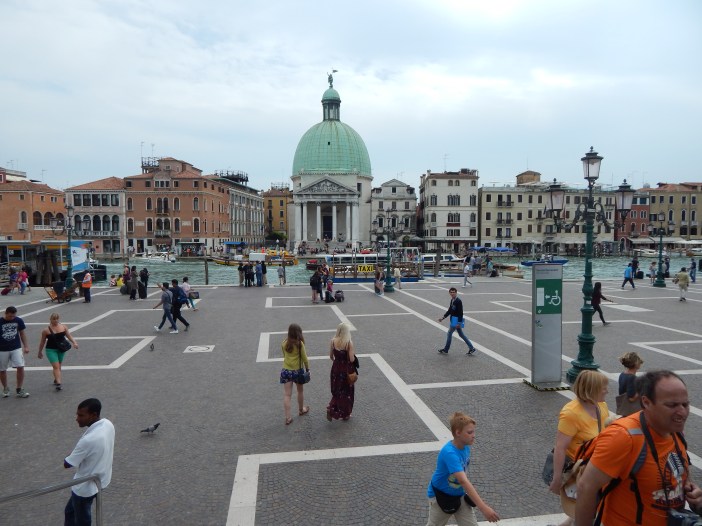
I love Venice. We spent a mere twenty-four hours there on our trip to Italy several years ago, taking the train from the magnificent station in Florence through the Italian countryside north and then across the lagoon to the Venetian station. I walked ahead of Paul through that Italian station, unable to wait to catch my first glimpse of the city from the top of the stairs rising from the piazza and vaporetto station on the Grand Canal.
DSCN6269

I was enchanted from that first glimpse.

I’d always wanted to visit Venice–ever since reading Daphne du Maurier’s brilliant story “Don’t Look Now” and seeing the film version, which is incredible–and also Anne Rice’s Cry to Heaven. Seeing Venice, even if was only for twenty-four hours, was wonderful. We were also incredibly lucky because Venice wasn’t crowded; apparently that’s become a huge problem (goo.gl/ePMQjT). It was even a problem when Berendt was writing The City of Falling Angels.

The title comes from a sign Berendt saw one day while strolling around Venice, near an old church that was crumbling and in need of restoration: BEWARE OF FALLING ANGELS. Apparently, the statues of angels on the sides of the church and along the rooftop had become loose with the rotting of the masonry, and one had fallen, almost hitting a pedestrian. The book reminded me so much of Venice, and why the city had enchanted me during my all-too-brief visit. I want to write about Venice; I’ve been toying with a story for years, and as I am just now starting to write my Panzano story, maybe I will soon write the Venice story.

Anyway, Berendt is best-known, of course, for his book about Savannah: Midnight in the Garden of Good and Evil, which I read decades ago when it was new. I enjoyed it; it was an examination of the quirks and curiosities of the city, built around the lens of a murder committed by a member of Savannah society. The City of Falling Angels is the same type of book, only viewed around the lens, not of a murder, but the burning of the Fenice Opera House. It did turn out to be a crime; two men were convicted of arson, but Berendt uses the fire, the investigations, and the subsequent trial, to view Venice; and along the way he takes a look at the quirks, eccentricities, and curiosities of a place that, like Savannah, is quaint and historic and beautiful–yet also very small. A lot of the things he talks about in the book–the concerns of locals that Venice is no longer for the Venetians, that the city is losing its neighborhoods to tourism; that poorer and middle class Venetians are being pushed out in the name of tourism–are concerns that we locals now have about New Orleans, so that made the book even more interesting to me. When we were there, we stayed overnight at a wonderful little family run hotel just off the Rialto Bridge and on one of the side canals; the Hotel San Salvador. We, too, had a lengthy conversation with two of the young women working there–members of the ownership family–who told us the same thing: Venice is no longer for the Venetians. Their family can no longer afford to live in the city, despite owning a hotel there; they live on the mainland and commute into the city. Most of the city’s apartments are being bought up by foreigners who then rent them out to visitors, so it is also affecting business for establishments like the Hotel San Salvador. I loved the hotel, it was charming and quaint and cozy; I loved the second floor lounge overlooking the canal below, and the family who owned and operated it were so nice, friendly, and charming. If and when we return, we will undoubtedly stay there again.

I’ve met John Berendt exactly once; he was very nice, and I liked him. I like his books, too. My character, Jerry Channing, who appears in both The Orion Mask and Garden District Gothic, and whom I’ve considered spinning off into his own series, is based on him only in that he writes the same kinds of books and articles Berendt does; kind of a cross between Berendt and Dominick Dunne. (I still might spin Jerry off; a lot of my short stories, which have first-person narrators who are never identified, are told in what I imagine Jerry’s voice to be) In fact, Jerry’s biggest success is a book called Garden District Gothic (very meta of me), which is about the quirks and curiosities and eccentricities of New Orleans, viewed through the lens of a society murder in the Garden District. The Scotty novel that bears the same title is an investigation into that case twenty-five years later, in fact (again, very meta of me).

16903185_10210905674210634_792277906514866377_o

Anyway,  I highly recommend The City of Falling Angels. I think I enjoyed it a lot more because I’d been to Venice, but it definitely made me want to go back. It’s very well-written, and a lot of fun to read.

And now back to the spice mines.

 

The Night Chicago Died

One of the most enjoyable developments of the last ten years or so (maybe longer) has been the resurgence of horror television. I am not knowledgeable enough about the television history–I don’t really pay nearly as much attention to the entertainment industry as I used to; and I often find shows long after everyone else does. My memory, which used to be sharp as a razor, is quite a bit duller than it used to be. The embrace of horror themes and stories by television networks is something I endorse (crime has long been a mainstay of the networks); I am greatly enjoying The Exorcist, gave up on both Scream and Scream Queens during their first seasons, never finished watching Damien (which was cancelled after season one)…and then there’s American Horror Story.

9bc64919-3688-40b6-9302-16c26a614590

To be honest, I have a love/hate relationship with the show.

Paul and I are both huge fans of Jessica Lange, so we were tempted to watch for that reason; we both enjoy horror (Paul was the one who got me to watch not only the Halloween movies but the Scream ones as well). But we rarely watch television when it airs; our schedules don’t permit us to watch things regularly week by week. For years we simply waited for them to come on to Netflix and then would binge-watch; it was before Season 2, Asylum, began airing that I got a DVR so we could record the shows–back in the days of VCR’s we used to record shows all the time. So, as Asylum aired, we were also watching Murder House from Netflix on disc at the same time.

american-horror-story-image-american-horror-story-36242754-500-281

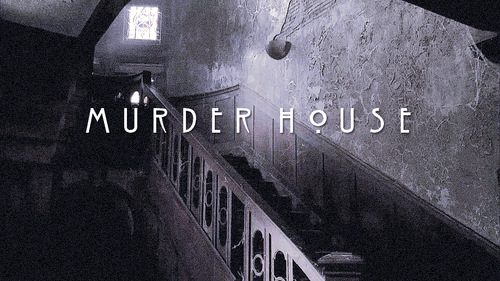
The acting was fantastic; Jessica Lange was, as always, amazing. But my biggest fear about the show–Ryan Murphy as show-runner–too often proved to be true. It has been my experience that Murphy is a great ideas guy, but those ideas don’t often pan out into a long-term running show; Glee being the classic example. But I thought the anthology nature of this show–each season being a self-contained story, and using an ensemble cast–might work. Murder House was terrific, and of all the seasons, the most cohesive in terms of story-telling. Asylum was all over the place; after an amazing beginning in which Adam Levine died in a most horrible fashion, the show seemed more concerned with cramming in as many horror tropes as possible within the season: Aliens! Serial killers! Nazis! Biological experiments creating bizarre things! Demonic possession! And on and on and on. Paul and I soon lost track of the story and were just watching for the acting. We never did watch the season finale. But it did give us the wonder that was Jessica Lange singing “The Name Game”; Lily Rabe’s brilliance as the possessed nun; and Sarah Paulsen, after playing a small part in season one, getting a chance to truly exercise her acting ability as Lana, the reporter who winds up involuntarily committed.

My favorite season, though, is Coven.

tumblr_nrpgjbwokf1u4r3too2_540

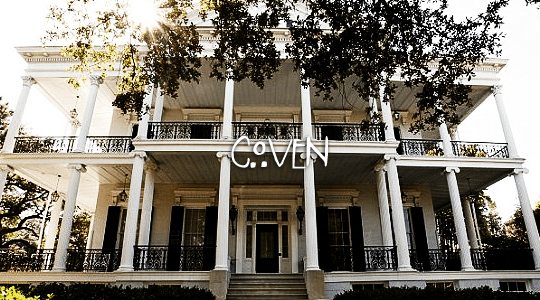
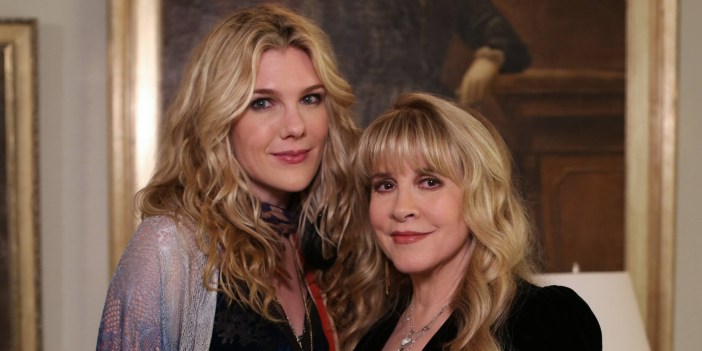
It was set in New Orleans, for one thing, and beautifully shot; it was almost a New Orleans travelogue. Kathy Bates was added to the cast, as was Angela Bassett; it was about witchcraft and a school for witches…and one of the girls was obsessed with Stevie Nicks, who even made two guest appearances on the show, but her music threaded through the entire season.

AMERICAN HORROR STORY: COVEN The Magical Delights of Stevie Nicks - Episode 310 (Airs Wednesday, January 8, 10:00 PM e/p) --Pictured: (L-R) Lily Rabe as Misty Day, Stevie Nicks as herself -- CR. Michele K. Short/FX

Miss Robicheaux’ School for Girls was even in my neighborhood.

But again, the writing was incredibly uneven and often times the story didn’t make any sense. The acting was terrific, though, and the visuals absolutely stunning. I even wrote a piece about how watching Coven for the Criminal Element website about how the show reminded me of why I fell in love with this crazy city in the first place.

The <i>Freak Show</i> season was again unevenly written, and this time the acting–the way the characters were written and so forth, wasn’t strong enough to really carry the show. It was also filmed here, with New Orleans standing in for Jupiter, Florida; the Mott mansion, for example, was Longue Vue. And Hotel was such a mess that we didn’t ever watch the season finale, like Asylum. We are watching the new season, Roanoke, and were very close to stopping watching until the big twist in episode 6–Murphy had hinted in interviews the show would flip, and so we decided to stick it out until then. But after the big flip–which was incredibly clever–it seems like the writing is going off the tracks again.

There have been amazing moments on the show, though.

I am curious to see where this season goes.

And now back to the spice mines.
Rhinestone Cowboy

I do love witches. What would Halloween be without them? Of course, the caricature of witches that we see at Halloween–green skin, pointed hat, riding a broom, warts, huge crooked nose–was popularized into modern culture by The Wizard of Oz (if not, the Wicked Witch in that film was the personification of the popular culture’s conception of a witch); but, alas, my knowledge on the history of the perception of witches is not that terrific. I know that the concept of witchcraft has been around for a long time–witches are mentioned in the Bible–and have been around in the popular culture for quite some time; I watched Bewitched as a child; there’s Bell, Book, and Candle, and so much fiction about witches…and of course, I’ve read up on the Salem witch trials–and hasn’t everyone been forced to read Arthur Miller’s The Crucible in high school? I am hoping that Lisa Morton, who has already co-authored a graphic novel with the late lamented Rocky Wood and illustrated by Greg Chapman called The Burning Times as well as definitive histories/non-fictions studies on both Halloween and ghosts, will also tackle witches.

But today, I am going to talk about Anne Rice’s The Witching Hour.

220px-thewitchinghourcover

The doctor woke up afraid. He had been dreaming of the old house in New Orleans again. He had seen the woman in the rocker. He’d seen the man with the brown eyes.

And even now in this quiet hotel room above New York City, he felt the old alarming disorientation. He’d been talking again with the brown-eyes man. Yes, help her.  No, this is just a dream. I want to get out of it.

The doctor sat up in bed. No sound but the faint roar of the air conditioner. Why was he thinking about it tonight in a hotel room in the Parker Meridien? For a moment he couldn’t shake the feeling of the old house. He saw the woman again–her bent head, her vacant stare. He could almost hear the hum of the insects against the screens of the old porch. And the brown-eyed man was speaking without moving his lips. A waxen dummy infused with life–

No, stop it.

He got out of bed and padded silently across the carpeted floor until he stood in front of the sheer white curtains, peering out at black sooty rooftops and dim neon signs flickering against brick walls. The early morning light showed behind the clouds above the dull concrete facade opposite. No debilitating heat here. No drowsing scent of roses, of gardenias.

Gradually, his head cleared.

I had read Interview with the Vampire when it first came out, back in the 1970’s, and honestly didn’t care for it. I had just read ‘salem’s Lot, and the concept of the vampire as hero didn’t appeal to me; it was just too foreign for me to wrap my head around (which is ironic, given my love for Dark Shadows, but I didn’t make the connection then between Louis and Barnabas). I picked it up again in the mid-1980’s, and felt the same way about it. I didn’t read anything else Mrs. Rice published, either, simply because I didn’t care for  Interview; then a friend who was a fan had me read The Mummy, which I greatly enjoyed. I had a hardcover copy of The Witching Hour–I don’t know why, to be honest–but after reading The Mummy I wanted to read something else by Mrs. Rice and remembered that I had a copy of this other one…

And could not put it down.

anne-rice-house

The Witching Hour ostensibly tells the story of Rowan Mayfair and Michael Curry. Rowan is the latest in a long line of witches going back to the seventeenth century (but doesn’t know it), and she saves Michael from drowning, bringing him back to life. He comes back to life with a strange power–the ability to see things when he touches them; he starts wearing gloves. He also had a vision while he was dead that is somehow connected to Rowan–so he tracks her down and they begin a relationship that eventually leads them back to New Orleans and the Mayfair house, a decayed, ancient mansion in the Garden District when her mother, Dierdre, dies. Dierdre has been in a vegetative state for years; every day she was placed on a side porch of the mansion with the great Mayfair jewel around her neck that always belongs to The Mayfair; the woman who, in each generation, has the power. The brown-eyed man the doctor sees in the opening is Lasher, a spirit whose relationship to The Mayfair is sometimes in question; is he the source of their power, or is he playing some other type of game that The Mayfair is unaware of? The narrative flashes back and forth in time, telling the history of the Mayfair witches along with the romance of Michael and Rowan as they, with the help of the secret order of the Talamasca, try to determine what the truth about the Mayfair witches–and Lasher–is.

I loved this book so much; I always recommend it to people who want to read books about New Orleans, and always include it on lists of the best books set in New Orleans. It was this book that made me want to come back to New Orleans again; and you can imagine the thrill I got when a friend who lived here drove me to the corner of First and Chestnut and showed me the Mayfair house, which was actually where Mrs. Rice and her family lived. And it was exactly as she described it in the book; Dierdre’s porch was even there.

I’ve read every Anne Rice novel since then, and she also became one of the authors I always buy in hardcover. She is one of those writers you either love or you hate; those who love her work can be very rabid. It was when I was reviewing one of her later Vampire Chronicles (Blood and Gold) that I realized–it’s different when you read for review than when you read for pleasure–that so many reviewers/critics actually got what she does in her books wrong. Mrs. Rice writes about supernatural creatures–vampires, witches, werewolves, etc.–but she isn’t writing horror; she is writing romances in the classic sense of the word. In modern literature romance has come to mean something greatly different than what it meant classically; a romance novel was not a love story, per se, but a big sweeping epic tackling huge themes like life and death, war, peace, humanity, faith, spirituality; what Mrs. Rice was doing was using supernatural characters to expand and explore those themes, and she was writing in the style of the great romance writers of the nineteenth century, like Dumas and Hugo.

I’ve always meant to go back and reread all of her work with this in mind–which is how I’ve read her novels since that realization–but again, time. I am actually several novels behind on her work now–I’ve not read The Wolves of Winter or Prince Lestat, and she has another coming out this year as well.

I will never catch up.

And now, back to the spice mines.

The Morning After

I got up early this morning (well, early for a Saturday) to take a streetcar named St. Charles down to Audubon Park for the NO/AIDS Walk. I was scheduled to work in the Carevan, our mobile testing unit–and had to wonder, why has it taken me this many years to figure out that clearly the Carevan is the place to work other than the Prevention table? The Carevan is air conditioned. 

It is sad how many years it has taken me to figure this out.

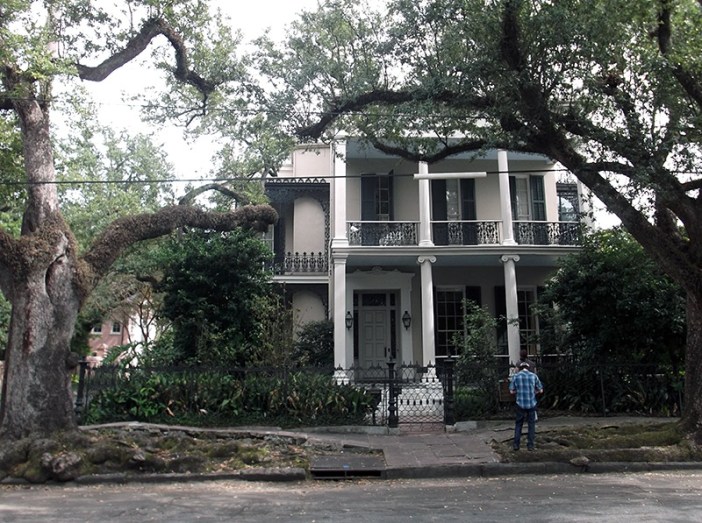
I also took the streetcar home, taking pictures of the beautiful homes on the way home–I don’t know why I didn’t do so on the way there, other than it was early and I’d only had two cups of coffee so my mind wasn’t exactly thinking very clearly–but on both trips, plus the walk through Audubon Park (on the way there, I made a wrong turn at the first lagoon and wound up having to walk all the way around the park–I’d forgotten there was a golf course in the middle of Audubon Park–but didn’t make that mistake on the way back to the streetcar stop) I felt connected to New Orleans again in a way that I haven’t in a while; as ‘touristy’ and ‘cliched’ as the St. Charles streetcar line may be, there’s nothing like taking a leisurely ride on it to make you feel connected to the city again. St. Charles Avenue, and all the houses on it, are so beautiful, and scenic–and all the hidden beauty in Audubon Park, along with the beautiful and massive live oaks everywhere…well, it’s been a while, you know? I love New Orleans so much, but I get so wrapped up in my day-to-day life and existence that I forget sometimes how much I love it here and how grateful I am that I get to live here.

There was, for example, a wedding party having their pictures taken in the park among the live oaks that I stumbled on as I walked back to St. Charles. I didn’t photobomb them–though I thought about it–but they were done and walked back to the Avenue by the time I reached them. There was a portable snowball stand set up on the Avenue, and I took a couple of pictures of the bridal party getting snowballs. It was such a uniquely New Orleans moment.


And riding the streetcar, wandering through the park–despite the heat and the heavy air, I couldn’t help but think about the next Scotty book, and how I need to make it more about New Orleans, how I can add layers and more depth to it as a book, about how to connect the characters in the case itself to the city and make it more New Orleans somehow. I feel like that’s been missing somehow in my work lately, at least in the last few books: that sense of New Orleans that was always there before.  I think I managed to get some of that into Garden District Gothic, but I am never sure. I know that the Chanse books were starting to feel like the setting was generic; they could have been in any city, they just happened to be set in New Orleans. That was, I think, why the series was starting to feel stale to me, and partly why I decided to end it.

I’m worn out now, exhausted from the heat and the humidity and the heavy thoughts. I am going to repair to my easy chair for a lovely relaxing day of college football (GEAUX TIGERS!) and reading Leslie Budewitz’ Assault and Pepper, in preparation for spending the day tomorrow in the spice mines.