Billie Jean

So, I didn’t get any writing done yesterday because I sat down with Lyndsay Faye’s The Gods of Gotham at long last, intending to read only one chapter–and then the next thing I knew it was time to make dinner and I was on page 100. Reluctantly I put the book down and made dinner; after which we watched Orphan Black, Game of Thrones, and the first episode of Amazon Prime’s The Last Tycoon before repairing to bed for the evening. Lyndsay’s book is extraordinary and exceptional; I’m both sorry and glad that I waited so long to read it–glad because I am clearly going to love every word of it; sorry that I could have savored it so much sooner. Heavy sigh.

So many books, so little time.

I am greatly enjoying this season of Game of Thrones, and am very curious as to how it is all going to shape up. Last night’s episode was terrific; when the credits started rolling I was like, “it’s over already?” That’s always a good sign, frankly; and Dame Diana Rigg’s final line as Lady Tyrell was just absolutely perfect.

We then switched over to Amazon Prime to try out The Last Tycoon. I’ve never read the Fitzgerald novel because, frankly, it was unfinished, and God knows I’d never want anyone to read anything of mine after I die that was unfinished. But I was curious to see this, as a sucker for old Hollywood. The show is set during the era of the big studios and their star system; where the studios crafted very careful images of their stars and turned out movie after movie after movie. My fascination with this time began when I was a kid and read Bob Thomas’ biography Selznick; I went on to read Tracy and Hepburn, biographies of stars like Spencer Tracy, Bette Davis, Joan Crawford, and Clark Gable, amongst many others; histories of Hollywood, and so forth. I’ve always wanted to write about that period; it’s really a great time for noir and crime, but again–research. Anyway, I was curious to see how the show was, and I was more than a little impressed. Fitzgerald had first-hand experience with Hollywood and the old studio system, and clearly the character played by Matt Bomer (who is just breathtakingly beautiful, and would be stunning in black and white) is based on Irving Thalberg; the genius producer with a heart problem who is aching to make the perfect film before he dies. Kelsey Grammer is also good, as always, as the studio boss, and the rest of the cast, none of whom I really recognized, are all good in their parts. There was also a big plot twist at the end of the first episode that I didn’t see coming, so kudos to that! It’s also filmed beautifully; the sets and costumes are spot on and everyone looks like they just stepped off the set of a 30’s movie. I am really looking forward to seeing more. I hope it’s not disappointing!

All right, back to the spice mines. Here’s a Monday hunk to get your week off to a great start!

IMG_1701


Every Breath You Take

I got absolutely nothing done, other than some laundry and a load of dishes, yesterday because I was too engrossed in reading Rebecca Chance’s Killer Affair to put it down. So, today, after I make my grocery run, I simply have to buckle down and clean as well as write and line edit. I’ve decided on my next book to read–Lyndsay Faye’s Gods of Gotham, which was nominated for the Edgar for Best Novel–and I am really looking forward to reading it. Lyndsay has written five novels, and been nominated for the Best Edgar novel twice–no small feat, I might add (her other nomination came this year for Jane Steele, which I am also looking forward to reading).

So, I survived the grocery store, made brunch for Paul and have done the dishes. I’m not feeling particularly motivated at the moment; I also had to walk to Office Depot to get ink for the printer and the six block to-and-from walk (twelve blocks in total) in the heat and humidity has sucked the life and energy right out of me. Just sitting at my desk and letting the air conditioning wash over me feels so lovely that I am tempted to simply blow everything off and read Gods of Gotham, which would be a huge mistake. I simply cannot keep blowing everything off; the kitchen floor is disgusting and so is the living room; perhaps a shower will pick my attitude right up out of the gutter where it has fallen. I’m so very close to being finished with the second draft of “For All Tomorrow’s Lies” that it’s really egregious to keep putting off working on it; and it certainly isn’t going to kill me to drag the hard copy of the WIP out and start marking it up again, either.

This laziness is why I am always playing catch-up on everything.

Heavy heaving sigh.

I did manage to also finish my reread of The Secret of Terror Castle last night; the very first Alfred Hitchcock and The Three Investigators mystery, and despite being dated, the story still holds up. The three young detectives (Jupiter, Bob, and Pete) are much better developed that the main characters in so many other children’s mystery series, with very distinct personalities, and the world in which they inhabit (Rocky Beach, California, close to LA–my assumption is it’s based on Long Beach) is interesting and also pretty well fleshed out: the Jones Salvage Yard, which is run by Jupiter’s aunt and uncle, always was interested and many of their cases came from things that Uncle Titus bought at an estate or yard sale; their headquarters, a battered old mobile home hidden from view by artfully arranged piles of junk and had secret entrances; their ability to use a gold-plated Rolls Royce (Jupiter won the use of the car in a contest), complete with British chauffeur, Worthington; and their relationship with Alfred Hitchcock, originally a bit fractious but came to be one of friendship and mutual respect as the boys proved themselves to be excellent detectives in case after case–all of these things made this a favorite series of mine. Not to mention, that in almost every book the boys had to actually solve a mystery, based on clues they found and observations they made–so the books were a bit smarter than the other series.

I’d love to update this series.

And now, here’s a hunk for your Sunday Funday, as I head back into the spice mines.

IMG_0976 2


Head over Heels

There was an article somewhere recently that described a new trend in literary fiction, inspired by Elena Ferrante: writing about women’s friendships. I literally did a double-take when I saw it; because there have been books, across all genres, about female friendships for many, many years–for example, the examination of women’s friendships and relationships with other women were at the root of every Rona Jaffe novel; the primary strengths of both Peyton Place and Valley of the Dolls lie in the friendships between the women; going back to Jane Eyre, there are always friendships between women at the heart of novels (hello, Jane Austen?). The point is this is nothing new, so to describe this as a ‘new trend’ is short-sighted to say the least, lazy writing at the worst.

Rebecca Chance novels kind of defy description, to be honest. They are called ‘bonkbusters’ in her native England (where they are runaway bestsellers); some call them ‘glamorous thrillers.’ She writes about what used to be called ‘the jet set’, or ‘the beautiful people’, or the ‘rich and beautiful’; territory that used to be mined by Jackie Collins, Judith Krantz, Sidney Sheldon, Harold Robbins, and Jacqueline Susann. And while I don’t mean to demean her predecessors in the field, who were quite good at what they did and wrote yarns you simply could not put down, Chance’s novels are different; in that they combine sharp social commentary, wit (at times, they are laugh out loud funny), and characters that you can’t help but like and identify with.

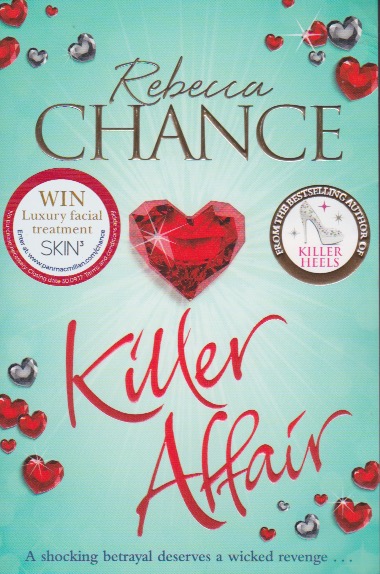
Her latest, Killer Affair, is no exception.

killer affair

It was an ocean liner come to rest in the heart of London, its glittering, prow-shaped facade jutting towards the Thames. From its terraces and balconies, the view was unparalleled: the beautiful curve of the Playhouse Theatre with its glowing lights, the flow of boats along the wide river, the sprawl of the South Bank beyond, London’s bounty spread like a fabulous offering of endless possibilities to the gilded, privileged guests who occupied the penthouse suites.

However, the young woman who was climbing out of the black cab outside the hotel entrance in Whitehall was in no mood for relaxing on a private balcony with a glass of champagne, resting her arms on the rail, gazing down over the glittering city as she made plans for that evening. Her jaw was set determinedly, her eyes hard. The liveried doorman, reaching into the can for her two suitcases, asked if she was a guest at the hotel, to which she responded curtly that no, she had a booking at the spa and needed to check her luggage.

If the doorman thought it was strange for a day spa visitor to arrive with a pair of large, battered suitcases, there was not a hint of that reaction on his face; his demeanour remained entirely polite and neutral as he carried them inside.

And so begins the latest Rebecca Chance novel–who is this woman, and what is she doing at the spa? The prologue ends with her discovering her target–another woman with whom she is angry–and dumping ice all over her recumbent figure as she spits out angrily, “You bitch! You’ve ruined my life!” (With hints of Shirley Conran’s brilliant, memorable opening to her novel, Lace: “Which one of you bitches is my mother?”)

The book then flashes back to the beginning of the story; how the two women met and became involved with each other’s lives. One of them is Lexy O’Brien, a reality television superstar in the UK who quite literally and ruthlessly climbed to the top of the pile of reality stars by carefully planning her every move, maximizing every bit of publicity she could gather, and is now quite happily married to a sexy former footballer who now is a TV commentator. The two live with their two children and various staff in a beautiful mansion in Sandbank, one of the most expensive places to buy property in the world, and Lexy is planning her next assault on the tabloids/entertainment journalism: writing a memoir. Of course, Lexy isn’t going to write it herself but needs a ghostwriter, which is where young, chubby Caroline comes in. Caroline works writing press releases and also writes a blog, shares a flat with four other broke young people, and dreams of becoming a successful novelist. She is quite dazzled at first by Lexy and her life; Lexy, while immensely narcissistic and self-absorbed (two vitally necessary personality traits for any reality star) is not a bad person–she just sees everyone around her as tools for her stardom and vehicles for publicity. She is actually quite generous with the bedazzled Caroline, and the young woman is grateful at first…but the more she writes, the less dazzled by Lexy she is…and the little nickname Lexy gives her at first–“Ghost Mouse”–begins to rankle…especially as Caroline, by being quiet, listening, and paying attention, learns a lot more than Lexy could ever imagine. And soon, she begins to not just envy Lexy her life, but to believe Lexy doesn’t deserve it.

To tell anymore would spoil the twisty, clever and wickedly funny plot (although it has strong elements of All About Eve), and despite all appearances to the contrary, neither Lexy nor Caroline is a villain. Chance, as always, has created three dimensional characters, strong women with good and bad sides, whose behavioral motivations make complete sense–and her keen insights into reality television, writing and publishing, and how intricate and delicate relationships between friends, family, and lovers can be, make the book completely un-put-down-able. I deeply resented having to put the book aside to work on my own writing, or go to work, or to go to bed. Yesterday I sat down in my easy chair to read for an hour before doing my own writing–and seven hours later put the book down with an enormously satisfied sigh.

Americans, you can either order the book from Amazon.co.uk; the Book Depository; or from Murder by the Book in Houston. It’s soooooo worth it, believe me.

Fading Fast

Good morning, Saturday! I have Wacky Russian this morning, and we are meeting friends for dinner later on, so I’ll probably spend the day reading, cleaning and doing laundry before that. I’m probably going to try to finish the revision of “For All Tomorrow’s Lies”, and maybe make some progress on the line edit as well. I am putting off making a grocery run until tomorrow; not sure if that’s wise or if I should just get it over with today, so I don’t have to leave the house tomorrow at all…decisions, decisions.

It seems a bit gray out there this morning; Paul is leaving shortly to go play tennis, which might (and most likely will be) rained out at some point. I don’t think it rained yesterday, which might be the first day since May it hasn’t rained here. I just hope it doesn’t rain on me on the way to the gym; that always sucks.

I could also spend some time organizing computer files, which always seems to get out of hand very quickly. I hate that. It comes from being lazy and stashing things quickly, always thinking I’ll straighten this up later. So, in the meantime, it drives me crazy and it builds up and builds up until it takes hours for me to reorganize everything.

Then again, it also helps me procrastinate and not write, so there’s that explained.

And as I glance around the kitchen this morning, it’s such  a mess. Heavy heaving sigh. Stacks of paper, stacks of books, the floor needs cleaning…ad my knives need sharpening, too. It never ends.

As I said yesterday, one of the things I find myself most interested in exploring in my writing now is damage, how people became damaged and how they cope with it, while contrasting their damage with mundanities of life. We all have our own damage; carry the signs of it with us internally all the time. My story “Housecleaning” was inspired by the smell of bleach, which reminded me one day of my mother–and that became the opening line: The scent of bleach always reminded him of his mother. Part of the genius of shows like Weeds and Ozark was the impact of their parents’ criminal behavior on their children; how do kids have a normal life when their parents are criminals and have thus lost their moral compass, as well as the morality of being a parent? “Housecleaning” was about such a kid, who grew up under the thumb of a con artist mother, who as he got older was required to assist in the cons. And when you’re assisting your mother in conning marks as a child, what kind of adult do you become?

I am also very far behind on my schedule for the summer. I’d hoped to have the noir novel’s first draft finished by the first of September, so I could spend the fall writing the next Scotty book while the noir rested. I’ve not even started the noir yet, still am not sure what the true plot is–it’s amorphous and keeps shifting in my head–but if I can get this line edit finished, and start sending that manuscript out to agents, I can buckle down and get the noir written, and still maybe get the Scotty finished by the end of the year.  Depending on how the scheduling works, I may end up having to put the noir aside until the Scotty is finished. And I am fairly certain of what I want to write after the Scotty and the noir are done. I just need to get them done.

Heavy heaving sigh.

All right, I am going to clean the kitchen before the gym.

Here’s a Saturday stud for you, Constant Reader.

20294016_10212559668603284_1726899913693936580_n

This Town

It’s Friday morning in New Orleans, and I slept fitfully; but when I did sleep, it was terrific. I only have to work a half-day today, which is lovely, and tonight I am hoping to not only get a chance to read some more of Rebecca Chance’s lovely Killer Affair, but to get further in the line edit as well. This weekend my plan is to work on the line edit and clean, alternating between the two, which hopefully will do the trick. I’ve not gotten as far along this week on anything that I’d hoped; the weekly to-do list is a complete and utter disaster. The good news this week was that our renewed passports arrived (hurray!), I got some great books–everything from the new Michael Connelly to Eric Ambler to Chester Himes–to add to the TBR pile, and the latest short story is really taking a good shape, one with which I am really and truly pleased.

My short stories are much darker than my novels. The WIP, currently being line edited, has little to no humor in it; at least none that I’m aware of–but then again I am not the best judge of that. I love to tell the story of my New Orleans Noir story, “Annunciation Shotgun,” which I thought  was this dark, unsettling tale, and continued thinking so until at a reading for the anthology, Chris Wiltz, one of the other contributors (her story, “Night Taxi,” is quite chilling) said to me, “Oh, I loved your story! It’s so funny!”

I was a little taken aback, as I’d thought it was a dark story…and then when it was my turn to read to the gathered audience, there were times when I got laughs.

Okay, I remember thinking, I guess I can be funny even when I’m not trying to be.

This story I’m working on now is also grim and dark; but I think the primary reason I’m drawn to the genre I work in primarily is my interest in damaged people. The Great Gatsby  was about damaged people, and the damage people can leave in their wake; it didn’t try, however, to explain or get into how the people got damaged and why,  and that was its greatest disappointment to me. This current story was inspired by watching a documentary while Paul was at his mother’s; I always have to find things to watch when he’s gone that we wouldn’t want to watch together (in other words, things I want to watch that he doesn’t. He tired of the TV series Scream; so I finished watching it while he was gone. Likewise, you can never go wrong with documentaries). I watched one on either Netflix, Hulu, or Amazon–I don’t remember which–about a young man and his brothers, who’d escaped a religious cult. As I watched these damaged young men trying to make sense of their childhood and fit into a world and society they were woefully underprepared for, while the main point-of-view character was also trying to reestablish a relationship with his mother, still in the cult and distant to him–I couldn’t help but wonder about the young women refugees from the cult he interviewed, and the stories they shared about their sexual abuse and, basically, being brainwashed into thinking that was normal. (The boys were also apparently sexually abused as well as physically abused, but their sexual abuse was skipped over; mentioned but not gotten into in depth.) I had my notebook in my lap, and I scribbled down notes…and eventually started writing the story I thought up while watching the documentary. The story is dark–I am revising it now, making it even darker than the first draft–which also limits its saleability quotient, but hey, I am definitely going to put it out there.

Christ, I have so many works in progress. Nothing like creative ADD without a deadline to anchor you down.

I’ve also not decided what book to write next once this WIP is finished. I am thinking about getting back to Scotty with Crescent City Charade, but there’s another noir I’d love to tackle, and my “A Holler Full of Kudzu” could easily be explored as a novel.  Heavy heaving sigh.

And on that note, it’s back to the spice mines with me! Here’s a Friday hunk for you, to get your weekend started properly.

Nyle_Feature

Lust to Love

Thursday! This week has slipped right through my fingers, hasn’t it? I looked at my weekly to-do list and was very disappointed to see many things not crossed off, that will have to carry over until next week. I am going through the WIP painstakingly; I am doing a line edit, which is something I’ve not done in a long time on one of my own manuscripts (which is really shameful to confess; in my own defense the copy editors haven’t had to do too much to my manuscripts to clean them up because I generally write very clean copy to begin with), but I am also trying to make this manuscript leaner than it came in on the last several drafts; it’s still sitting at over a hundred thousand words and at most, it should be ninety. At MOST. But it’s taking me longer to do than an usual edit, and I am having to pay more attention because I don’t have long stretches of time to dedicate to it, grabbing an hour here or there whenever I can. I will probably wind up working on it a lot this weekend because I really want to get it finished, once and for all.

I’ve also been revising a short story at the same time, and that’s coming along really well, too. I am very happy with the writing I’ve been doing, which is a lovely thing.

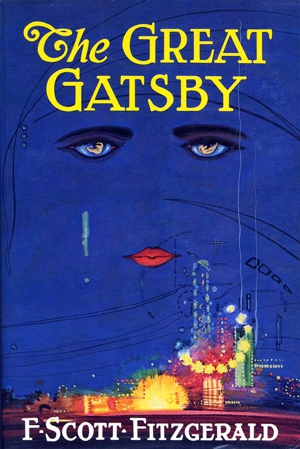
So, The Great Gatsby. I’ve been thinking about it a lot since I finished reading it the weekend before last, and while I am still not convinced it is either the great American novel or a masterpiece, I did enjoy it much more than I did when I was a teenager and had to read it for American Lit at Bolingbrook High.

TheGreatGatsby_1925jacket

In my younger and more vulnerable years my father gave me some advice that I’ve been turning over in my mind ever since.

“Whenever you feel like criticizing anyone,” he told me, “just remember that all the people in this world haven’t had the advantages that you’ve had.

He didn’t say any more but we’ve always been unusually communicative in a reserved way and I understood that he meant a great deal more than that. In consequence I’m inclined to reserve all judgements, a habit that has opened up many curious natures to me and also made me the victim of not a few veteran bores. The abnormal mind is quick to detect and attach itself to this quality when it appears in a normal person, and so it came about in college I was unjustly accused of being a politician, because I was privy to the secret griefs of wild, unknown men.

When I read this book in high school, all I could think was how boring. As my teacher went on and on about the symbolism of the green light on the dock, the eyes on the billboard in the valley of ashes on the road from the Long Island twin villages of East and West Egg (where the Wilsons’ garage was), the valley of ashes itself, and on and on, I just rolled my eyes in the back of the room, unable to wait to get back to reading whichever Ellery Queen or Agatha Christie or P. G. Wodehouse or Victoria Holt or Phyllis A. Whitney novel was next up in the stack from the library. My primary takeaway from the book? Every character in it was awful, even Nick Carraway, the narrator who knew everything, said nothing, and allowed the tragedy to unfold.

Several years ago, I was talking about books with a writer friend and I just kind of casually tossed out the notion, without putting a lot of thought into it, that “I mean, The Great Gatsby is a murder mystery told in reverse. A crime writer would have started with the body in the pool, unpeeling the layers that led Wilson to shoot Gatsby, with the big reveal at the end that Daisy was actually driving the car.”

Laura Lippman, one of our most talented voices and one of the smartest people I know, has said that she doesn’t like when people take books that are considered ‘literature’  and use them as examples of crime novels, to give the genre more cred (and is there anything more annoying than the phrase elevates the genre? Whenever I see that it makes me homicidal, because it implies that everything else in the genre is garbage), like those who say, “well, Crime and Punishment is a crime novel.” The definition of mystery that Mystery Writers of America uses, though, (paraphrasing) is “any fiction about a crime; the commission of, the solving of,  the events leading to,and/or the after-effects of,  a crime.” Dostoyevsky’s book certainly fits that description, as does To Kill a Mockingbird, Les Miserables, Sanctuary, and so many other books. Laura’s point, though, is that there are plenty of crime novels that are literature and can be seen as such without having to pull in books that aren’t traditionally seen as crime novels to give the genre credibility.

But in all honesty, I would rather read The Great Gatsby written as a crime novel rather than the way it is written and structured. It’s fine–don’t come for me, Gatsby fans, seriously–as it is, but I think the themes could be explored more deeply in a crime novel. On this read, I didn’t find I cared or liked the characters any more than I did the first time; I’m certain that was Fitzgerald’s intent. Nick, our narrator and our introduction to the glittering world of the rich in the 1920’s, may not be the most reliable narrator. Tom and Daisy are, frankly, awful people. Tom is an aggressive bully who thinks nothing of cheating on his wife or hitting a woman; the scene where he breaks Myrtle Wilson’s nose is horrific. Daisy is a self-absorbed narcissist needing constant entertainment; the two of them are a perfect match, and one can only wonder about how awful of a person their daughter will be when she grows up. (Hmmm, now there’s a book idea: Daisy’s Daughter.)

We don’t really learn much about Gatsby at first, other than he seems to have a lot of money, lives in an enormous house in less fashionable West Egg, and throws a lot of parties. There are lots of rumors about him, which Nick dutifully records, but the reader does eventually discover that he grew up very poor, but during World War I he was briefly stationed in Louisville before deploying, where he met and fell in love with Daisy before she married Tom. Whether he actually loved her or simply became obsessed with her we never know, as readers; but not being good enough for Daisy is what drove him to get money–because he believed that his poverty was the thing that kept Daisy from his side, and also convinced himself that she loved him. They do reunite during the course of the book, but again, Daisy isn’t really in love with him. She’s just bored and knows Tom is cheating on her, but in the big confrontation scene in the apartment in New York where Tom usually meets Myrtle, Daisy just sits there and won’t commit to either man. She is the one who accidentally runs Myrtle over in the road–which leads her cuckolded husband to shoot Jay Gatsby while he floats on an inflatable raft in his pool. The funeral of the man who threw such lavish parties, filled with people, is sparsely attended; Tom and Daisy simply go away, wash their hands of the mess, and go on with their lives. Gatsby–and Myrtle–were just blips in their lives; speed bumps they had to slow for and forgot about once they moved past. Nick’s disgust with them–which they would no doubt laugh about as bourgeois middle class moralizing, also leads him to end his budding relationship with the athletic Jordan Baker, who is basically cut from the same cloth. She cares so little for Nick, it turns out–who she has been seeing for the entire summer–that when he didn’t call her for a few days she just shrugged and moved on. An embittered Nick says of them all, They were careless people, unconcerned with the people whose lives they’ve smashed.

The book sadly still holds up in its theme; the rich continue to be careless and unconcerned with other people; almost more so today than in Fitzgerald’s time. Gatsby, so desperate to be one of them, was never accepted and forgotten once he was gone.

I enjoyed the book much more this time out; as an adult, its look at classism in what was supposed to be a classless society made more sense, and resonated more, and the characters seemed more real; the thirteen year old sophomore who originally read the book didn’t know enough of the world for the book to resonate. It would be terrific if someone would do an homage-like update of the story; although the case could be made that this is a storyline that runs through almost every iteration of the Real Housewives shows.

And now, back to the spice mines.

You Can’t Walk in Your Sleep (If You Can’t Sleep)

So, Ozark.

It was really the perfect thing to watch at this time, given my revived interest in Southern Gothic (Harry Crews’ A Feast of Snakes notwithstanding; I just need to find better examples of Southern Gothic to read, and every once in a while I’m going to come across something I don’t like; it’s just the odds, really).

But Ozark hit all the right notes, and combining great writing and storytelling with stunning cinematography, terrific acting in complex, multi-layered characters, and complicated relationships between those characters, and you get an amazing show. Ozark is just that; and I do hope it will be renewed.

download

Ozark is the latest in a series of television programs focusing on people who could be your friends or neighbors and are actually criminals. There were times when it reminded me of Weeds; I’ve heard other comparisons, like Breaking Bad and The Sopranos  as well. Marty Byrde, our main character, played perfectly by Jason Bateman (and back in the 80’s, who thought Jason Bateman would be the biggest star in that family?), is a numbers guy; he’s a partner in a very successful Chicago financial investment firm; he’s more of a look at the numbers and do the math kind of guy, while his partner is more of a dude bro salesguy; he makes the sales, but Marty is the one who takes care of the clients’ money and investments. In the very first episode, a Mexican drug lord, Dell, shows up with guns and goons, takes everyone in the firm hostage, and starts threatening them for stealing; everyone is killed–but Marty thinks quickly, promises to replace the money that was stolen, and launder it all; he decides to leave Chicago and set up shop at Lake of the Ozarks. His wife, played by the SUPERB Laura Linney (who makes everything better by just showing up), is having an affair and isn’t sure she wants to escape with Marty. Of course, Dell is having her watched as well–and alerts Marty to the fact she’s emptied their accounts and headed over to her lover’s apartment…the end result is her lover is thrown off the high balcony, literally landing at Marty’s feet when he arrives, and the Byrdes flee to Missouri to set up a money laundering business for the drug cartel in Lake of the Ozarks.

The writing is so crisp, the dialogue so real, and the characters are beautifully rendered and portrayed by the cast. Once they are at the lake, the Byrdes run afoul of some locals–the morally challenged Langmores, headed by teenaged Ruth; a star-making role for her portrayer, Julia Garner. Ruth is smart, battered by life, and mean–she wants to get her and her family out of the trailers they live in and into a better life; the developing relationship between her, her cousins, and the Byrdes is one of the strongest prongs of the show. There’s also a gay FBI agent, whose partner was also his partner in their private life but they are no longer together, which makes working together for them a challenge; Agent Roy Petty is one of the more unlikable characters on the show, and it’s very interesting to see such a developed, unlikable gay character on television. He’s also part of one of the most clever and original gay subplots I’ve ever seen; but saying any more than that would give away spoilers.

The plot is so intricate, there are so many twists and turns, ups and downs, changes in direction that you cannot stop watching, nor can you let your mind wander–something small and seemingly insignificant in one episode can turn out to be really important later.

And the cinematography! Lake of the Ozarks, the surrounding forests and topography, are lovingly shot; and it’s also shot through a slightly darker lens, to make it all more beautiful and brooding.

I loved this show, was sorry to see the end of the first season, and can’t wait for it to come back.


How Much More

Tuesday!

As I mentioned yesterday, on Sunday I reread one of my favorite Agatha Christie novels (although in mentioning favorites, I forgot So Many Steps to Death; her espionage novels were absolutely delightful), Endless Night. 

One of the things I loved the most about Christie is how she wasn’t afraid to try different types of crime fiction; she was probably best known for her two primary private eye series, one with Hercule Poirot and the other with Miss Marple, but she wrote over eighty novels, plays, and collections of short stories. She had a very keen eye for character (she is often criticized for the lack of character development; I never had that sense as a reader–she was able to sum up her characters very quickly and easily, able to use a few brief sentences and paint a vivid picture of who the person was; a skill I wish I had) and psychology; she was also a master of plotting. She knew how to create and manage suspense (the suspense is almost unbearable in And Then There Were None, for example); and she pretty much wrote everything from espionage thrillers to psychological suspense to murder mysteries to serial killers to…you name it; she wrote it.

But Endless Night is one of the most incredibly different things she wrote; and she wrote it very late in her career, publishing it in October of 1967.

endless night

The title comes from William Blake‘s Auguries of Innocence:

Every night and every morn,
Some to misery are born,
Every morn and every night,
Some are born to sweet delight.
Some are born to sweet delight,
Some are born to endless night.

According to some quick Internet research, the book was one of Christie’s own favorites, and received a very warm critical reception.

It’s easy to see why.

This is how the book opens:

In my end is my beginning….that’s a quotation I’ve often heard people say. It sounds all right–but what does it really mean?

Is there ever any particular spot where one can put one’s finger and say: “It all began that day, at such a time and such a place, with such an incident?”

Did my story begin, perhaps, when I noticed the Sale Bill hanging on the wall of the George and Dragon, announcing Sale by Auction of that valuable property, “The Towers,” and giving particulars of the acreage, the miles and furlongs, and the highly idealized portrait of “The Towers” as it might have been perhaps in its prime, anything from eighty to a hundred years ago?

I was doing nothing particular, just strolling along the main street of Kingston Bishop, a place of no importance whatever, killing time. I noticed the Sale Bill. Why? Fate up to its dirty work? Or dealing out its golden handshake of good fortune? You can look at it either way.

Isn’t that a terrific beginning?

(And “in my end is my beginning” is also what Mary Queen of Scots took as her motto during her long captivity at the hands of her cousin, Elizabeth I.)

Endless Night is, for wont of a better descriptor, a Daphne du Maurier novel written by Agatha Christie.

The book is told from the first person point of view of Mike Rodgers, a young man about town who is just kind of drifting from job to job. He winds up at The Towers, on a plot of ground known as Gipsy’s Acre, which was apparently cursed by the gipsies forceably evicted from the plot of ground centuries earlier…and the place has known nothing but tragedy since. There’s also a sharp, blind turn in the road just before the place, where plenty of people have been killed in car accidents. But while looking at the place, Mike encounters a young woman named Ellie…and before long, he and Ellie have embarked on a romance, and have decided to buy the land and build a new house there to spend the rest of their lives on. Mike has no real friends, and a bad relationship with his mother. And as it turns out, Ellie is quite wealthy…and once he is introduced to  her affluent world, things start to go very badly. Should they have listened to the old woman who warned them to stay away from Gipsy’s Acre? Is Mike a reliable narrator?

There’s an enormous twist in the book as well, which completely turns the narrative on its head, and makes you question everything you’ve been led to believe; a twist well-worthy of du Maurier. As they were contemporaries, I wonder if the two women ever met?

I love this book, and think it should be paired with du Maurier’s brilliant My Cousin Rachel, which for some reason was recently filmed again (I may watch the remake when it’s available for free streaming; it’s hard to imagine that it’s better than the original, which starred Olivia de Havilland and a very young Richard Burton). Someone should really write a compare/contract essay/piece of literary criticism about the two books; I kept thinking of My Cousin Rachel during this reread; now I really want to reread My Cousin Rachel.

Last night, I also started reading the latest Rebecca Chance, Killer Affair, and was sucked into it almost immediately; it’s Chance at her absolute best, and can’t wait to read more. I also started the final, definitive line edit of the WIP yesterday; since I always feel like the second half of my books don’t get as much attention from me as the first, I am trying something incredibly new for me: I am starting the edit with the second half of the book.

I hate line editing.

And now, back to the spice mines.


Beatnik Beach

Monday morning! Another glorious week here in New Orleans, late July, and it didn’t really feel that obnoxious this morning when I went out to feed the herd. We shall see, shan’t we? Last night was lovely; we finished watching Ozark, which is sooooooo good, and so twisted; I do hope it’s going to be picked up for a second season. It doesn’t seem to be generating the same kind of buzz as other Netflix shows, like Stranger Things, and so I am not as confident it will be back. But I cannot urge you enough to watch it; it’s absolutely brilliant as a crime-driven narrative, the acting and writing are topnotch, and the cinematography is breathtaking. There’s also a particularly brilliant and heartbreaking gay subplot you don’t see coming, that is unlike anything I’ve ever seen depicted on television (or on film, for that matter) before. I will blog more about Ozark, once I’ve let it digest a bit. I also reread Agatha Christie’s brilliant Endless Night yesterday; something else I am going to blog more deeply about, after letting it sit in my head for a bit. So, I have at least three blog entries brewing for the future: Ozark, The Great Gatsby, Endless Night.

I also spent time yesterday reading a bunch of my own short stories for editorial purposes (I think I may have solved some of the problems! Huzzah!) and I also read the other stories nominated for the Macavity Award, which was rather humbling.

As you, Constant Reader, are probably aware (and tired of hearing about), I was nominated for a Macavity Award for my short story, “Survivor’s Guilt” (from the Blood on the Bayou anthology, which I also edited, and the anthology itself was nominated for an Anthony Award). I am still reeling from the shock and surprise; one of the things I did after the Anthony nominations were announced was buy copies of the other nominated anthologies, and slowly started reading them, story by story. This weekend, I discovered that one of the other Macavity nominees, Paul D. Marks, had posted links to the Macavity nominated stories:

Paul D. Marks, “Ghosts of Bunker Hill” http://pauldmarks.com/stories/

Craig Faustus Buck, “Blank Shot”: http://tinyurl.com/BlankShot-Buck

Joyce Carol Oates, “The Crawl Space”: https://www.amazon.com/gp/product/B01N6INC6I

Lawrence Block, “Autumn at the Automat”: http://amzn.to/2vsnyBP

Art Taylor, “Parallel Play”: http://www.arttaylorwriter.com/books/6715-2/

Greg Herren, “Survivor’s Guilt”: https://gregwritesblog.com/2017/07/21/cant-stop-the-world/

I am not being self-deprecating when I say that I am in awe that I am somehow on the same list as these amazing writers and their amazing work. Not to mention this pedigree: Lawrence Block’s story won the Edgar; Joyce Carol Oates’ story won the Stoker, and Art Taylor’s won the Agatha. So, three of the finalists are already award winners; and both Art and Lawrence are also nominated for Anthonys this year, along with Megan Abbott’s stellar “Oxford Girl” from Mississippi Noir (which I read and loved);  Holly West’s “Queen of the Dogs” from 44 Caliber Funk: Tales of Crime, Soul and Payback; and probably my favorite title of all time, Johnny Shaw’s “Gary’s Got a Boner”, from Waiting to be Forgotten. 

So, it’s not being self-deprecating when I say I don’t think I am going to win. (Obviously, I would love to, but seriously, being in this company is literally a dream come true for me.)

Naturally, I decided to go ahead and read the stories. (The Block/Oates links are to the books that contain their stories; I don’t believe you can read them for free anywhere. However, I already own the book with Block’s story in it, as it is an Anthony nominee for Best Anthology; I went ahead and bought the ebook for the Oates story–from her collection Dis Mem Ber.)

And so, yesterday I read them all. Wow. Seriously. Wow.

I thought Paul’s story, “Ghosts of Bunker Hill,” would be set in Boston and have something to do with Revolutionary War history; I was wrong. The story is about the Bunker Hill neighborhood in Los Angeles, and is about the shooting of the point of view character, with nods to LA’s hardboiled, noir past pretty much everywhere you turn around. The story is well written and very compelling; but the nods to the history of crime fiction and the greats who wrote about LA (there are also several nods to the exquisite film Chinatown as well). Check out this opening paragraph:

I stood at the bottom of the hill, staring up at Angels Flight, the famous little funicular railway in the Bunker Hill section of Los Angeles, that brought people from Hill Street up to Olive. I desperately wanted to ride those rails up to the top. But now the two twin orange and black cars were permanently moored in the middle, suspended in midair, ghosts from another time.

Perfect. Paul is an accomplished author; his novel White Heat won the Shamus Award, and he has been nominated for a slew of others. I’ve ordered a copy of White Heat; can’t wait to read more of his work.
december 2016

Craig Faustus Buck’s story, “Blank Shot”, is set during the Cold War in East Berlin; a haunting, hard-boiled remembrance of a time when the world was gripped in a struggle between ideologies; communism vs. capitalism, and both sides had access to nuclear weapons. It was a time where espionage ruled; which spawned amazing novels and writers like Alistair MacLean, Helen MacInnes, Robert Ludlum, and John LeCarre. Buck’s story reminded me of those legendary giants.

Check out this opening paragraph:

His face hit the pavement hard. He tried to recall what just happened, but his thoughts wouldn’t sync. His head felt like he’d been whacked by the claw end of a hammer. Blood flowed into his field of vision, expanding on the ground before him. Must be his. Bad sign. He closed his eyes against a stab of afternoon sun reflecting off the crimson pool.

Saying anything more would be to give away too much; the problem with talking about short stories. Craig has also been honored extensively throughout his career; he has already been nominated for two Anthony Awards, a Derringer, and won the Macavity for Best Short Story. His debut novel, Go Down Hard,  was first runner-up for a Claymore Award–and he has been nominated for an OSCAR. Sheesh.

black coffee

Art Taylor is kind of indirectly responsible for both my nomination for the Macavity and my Anthony nomination for Blood on the Bayou. Art edited the Raleigh Bouchercon anthology, and he was the one who brought it up to me in Raleigh about who was editing the New Orleans one. I asked co-chairs Heather Graham and Connie Perry, who in turn asked me to edit it. So, thanks, Art! Art is an amazing writer, and an incredibly nice guy. He has won more short story awards, and been nominated more times, than just about anyone, really. Case in point: here is his short bio, from his website:

“Art Taylor is the author of On the Road with Del & Louise: A Novel in Stories, winner of the Agatha Award for Best First Novel. He has won three additional Agatha Awards, an Anthony Award, a Macavity Award, and three consecutive Derringer Awards for his short fiction, and his work has appeared in Best American Mystery Stories. He also edited Murder Under the Oaks: Bouchercon Anthology 2015, winner of the Anthony Award for Best Anthology or Collection. He is an associate professor of English at George Mason University, and he contributes frequently to the Washington Post, the Washington Independent Review of Books, and Mystery Scene Magazine.”

And check out the opening to his “Parallel Play,” from the anthology Chesapeake Crimes: Storm Warning (which is also nominated for the Anthony for best anthology):

The Teeter Toddlers class was finally drawing to a close–and none too soon, Maggie thought, keeping an eye on the windows and the dark clouds crowding the sky.

Ms. Amy, the instructor, had spread the parachute across the foam mats and gathered everyone on top of it. The children had jumped to catch and pop the soap bubbles she’d blown into the air. They’d sat cross-legged on the parachute and sung umpteen verses of “Wheels on the Bus” and two rounds of “Itsy Bitsy Spider.” The routine never varied, the children’s delight never waned–at least until the time came to raise the parachute with its spirals of color into the air.

Now, how’s that for an opening? Can’t everyone relate to that scene, those images? Immediately we are taken into a normal, every day, everyone can recognize and relate to it scene at a child care center, with an impatient mom waiting for it to be over so she can race an oncoming storm home. Into that normal, every day scene–things are about to take a turn, obviously, a chilling turn that could have been imagined and written by domestic noir goddesses from Charlotte Armstrong to Margaret Millar to Dorothy L. Hughes. And what can be more frightening, more suspenseful, that a mother and child in danger? Genius, really. Art keeps the reader squirming with suspense and unable to stop reading from first word to last.
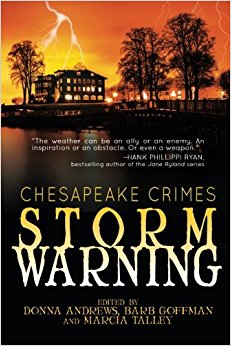
chesapeake crimes

I am a bit embarrassed to admit I’ve never read Joyce Carol Oates before. I met her briefly at a BEA sometime between 2001-2005, and thought she was very nice and very charming. She is also incredibly prolific; her output puts me to shame and also puts her up there with Stephen King. I know she’s been nominated for genre awards before, but I’ve never really thought of her as a genre writer. But her Macavity nominated story “The Crawl Space” won the Stoker Award for best short story this year, and the title of the collection it is from (Dis Mem Ber) sounds kind of genre. I bought the book yesterday, and started reading her nominated story.

Please. You make us uncomfortable.

You are always watching us. Like a ghost haunting us…

Though her husband had died seven years before the widow still drove past the house in which they’d lived for more than two decades.

Why?–no reason.

(To lacerate a scar, that it might become a raw-throbbing wound again? To lacerate her conscience? Why?)

The story, about a woman whose husband died and couldn’t then afford to keep their house, is creepy and macabre and incredibly sad all at the same time; it reminded me of some of Daphne du Maurier’s and Patricia Highsmith’s short stories–about a woman trying to deal with a tragedy in her life, unable to let go of her past, and possibly, just possibly, reaching the breaking point. It is exquisitely rendered, beautifully written; I am so going to read more of her work! I can also see why it won the Stoker.
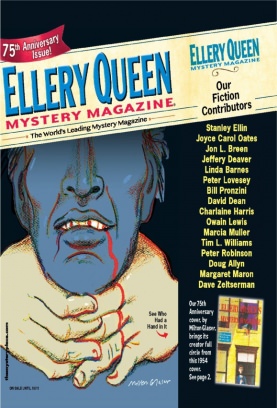
oates eqmm

The last story was Lawrence Block’s “Autumn at the Automat,” which recently won the Edgar as Best Short Story of 2016. It’s from Block’s anthology, In Sunlight or In Shadow: Stories Inspired by the Paintings of Edward Hopper, and the contributors are a who’s who of the best in modern crime fiction, from Megan Abbott to Lee Child to Michael Connelly; Stephen King and Joyce Carol Oates and Robert Olen Butler–I mean, it’s like an anthology editor’s dream of authors to include. The book is also nominated for the Anthony for Best Anthology; I’ve not finished reading all the stories yet, only having read the exquisite Megan Abbott story and now, Block’s.

The hat made a difference.

If you chose your clothes carefully, if you dressed a little more stylishly than the venue demanded, you could feel good about yourself. When you walked into the Forty-second Street cafeteria, the hat and coat announced you were a lady. Perhaps you preferred their coffee to what they served at Longchamps. Or maybe it was the bean soup, as good as you could get at Delmonico’s.

And with that, you are sucked into Block’s story, about a woman fallen on hard times eating at the Automat in New York City; a story that reminded me very much of one of my favorite short stories of all time, Katherine Mansfield’s “Miss Brill,” and like it, this one is more of a character study than a crime story–although there is a quite brilliant crime in the story; one you don’t see coming that suddenly slaps you across the face–and has a neat little resolution that is eminently satisfying to the reader. Block is a master; I’m not as familiar with his work as I should be–that backlist! Just thinking about trying to get caught up on his work makes my head swim–but this story is an absolute gem.
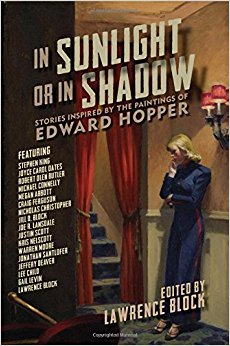
hopper

So, there you have it. Five exceptional, exquisitely honed short stories, all nominated for the Macavity; all of them already recognized as exceptional; all of them written by masters of the art form.

And me. Somehow I managed to slip in there, too.

Thereby proving the adage that anything is possible.


Yes or No

Good morning, Sunday people! I slept deeply and well last night, so this morning I feel rested. My muscles don’t feel tight, either–but I am still going to stretch this morning. I gave up on two things yesterday–reading A Feast of Snakes and writing “A Holler Full of Kudzu.” The first because it’s, quite frankly, stupid; I didn’t believe the characters, nor did I believe the story, nor did I care about any of it. Harry Crews did, however, write some terrific paragraphs and create some amazing sentences, but about halfway through–and mind you, the entire novel is less than 200 pages, and it’s taken me over a week to get halfway through it–I just wasn’t buying into it or believing it. The second I gave up on because, while I do think there’s a short story in there, there’s also more than enough story to become a novel; and I am not sure at this point what exactly the short story should be. It was also taking me a really long time to write it; I think in slightly more than a week I’d only managed slightly more than two thousand words. So, I decided to put it to the side, let it percolate for a while, and then I can come back to it. This morning, this day, I am going to try to finish “Quiet Desperation” (which I’d forgotten I was in the process of writing, because I got so caught up in the my recent interest in Southern Gothic), revise “For All Tomorrow’s Lies”, and then start the revision of my WIP. I am going to do something dramatically different with that, as well; I am going to revise the last five chapters first, and then work my way backward through the book. It’s odd, but I always am worried that working in a linear way, which is what I usually do, the first half gets more attention than the second, and the second half of the book always is like a neglected stepchild, when it is really the most important part of the book.

I also started a reread last night of one of my favorite Agatha Christie novels, and one of her lesser-known ones: Endless Night. Some of my favorite Agatha Christie novels are her less-known ones (A Murder is Announced, Death Comes as the End, The Body in the Library, The Mirror Crack’d, N or M, The Man in the Brown Suit, They Came to Baghdad, Cat Among the Pigeons,  and The Secret of Chimneys, among many others), which isn’t to say the more famous ones–The Murder of Roger Ackroyd, The Mysterious Affair at Styles, Murder on the Orient Express, And Then There Were None, and Death on the Nile–weren’t enjoyable. I am actually curious to see the new film version of Murder on the Orient Express, but seriously; is there anyone who doesn’t know the ending of that famous novel at this point?

Endless Night is one of my favorite Christies because it is vastly different than any of her other novels; one of the things that is the most amazing about Christie is she basically did everything first. Endless Night is more Gothic in style and tone; bordering on the noir side. I didn’t get very far into reading it yesterday before it was time to go get our weekend treat (a deep dish pizza from That’s Amore) and then we watched an Andy Samberg mock-documentary, Never Stop Never Stopping, which was really funny, and then it was time for a few episodes of Ozark, which continues to amaze and enthrall us. The way it’s shot is superb, the cinematography Oscar level, and both Jason Bateman and Laura Linney are killing it in their performances; they should be frontrunners for next year’s Emmys. And the Lake of the Ozarks is almost as much a character as the actors themselves, as well as the stunning beauty of the area. And, of course, tonight is Game of Thrones.

I didn’t get as much cleaning done as I would have liked yesterday, but I did reread some stories that need revision, and I think I may have figured out how to revise them and make them stronger; we shall see when I start working on them again, no? I’ve also still be digesting my reread of The Great Gatsby, and that’s a whole other entry in and of itself.

And on that note, I should get back to the spice mines. Here’s a Sunday hunk for you.

17457810_1306427206072007_4945909802005088083_n