Bad Blood

Lois Duncan was probably,one of the most influential y/a writers of the twentieth century. I know of several women crime writers today who consider her an influence; and there are probably dozens more than I don’t know about. I didn’t read Duncan when I was a teenager, but discovered her, ironically, when her novel I Know What You Did Last Summer was turned into a film in the 1990’s. (I say “ironically” because Duncan hated the film; they turned her mystery novel into a slasher picture, and she was unequivocal in her disdain for the film. One of the things I liked about Duncan was she didn’t mince words and was rather salty.) I got to meet her when she was named a Grand Master by the Mystery Writers of America, and her on-stage interview by the incomparable Laura Lippman was a highlight of that Edgar Week for me.

I read another one of her books this weekend, for Halloween Horror Month: Gallows Hill.
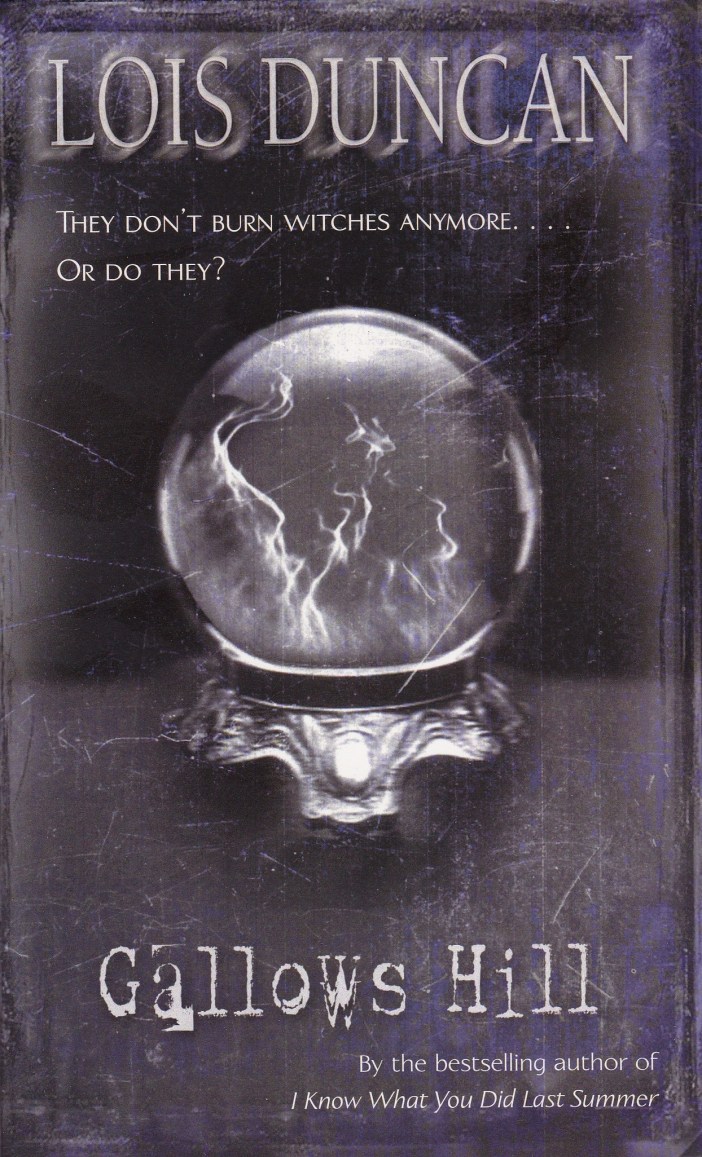
gallows-hill

The first time Sarah Zoltanne saw Eric Garrett, he was standing out by the flagpole in front of the school talking with a group of friends. Backlit as he was by the afternoon sunlight, everything about him seemed painted in gold–his hair, his skin, and, as far as she could tell from where she stood some distance away at the top of the cement steps,it even appeared that he might have golden eyes. In her literature class back in California she had done a unit on mythology, and the image that immediately leaped into her mind was Apollo.

Great opening, right?

Lois Duncan saw herself as more of a suspense writer than a horror writer; and it was only in a few of her novels for young adults that she crossed the line into the supernatural. Gallows Hill, despite it’s cover, doesn’t have anything to do with witches and/or withcraft in any way other than it’s kind of tied to the Salem witch trials, and that makes it a reincarnation novel; a book about karmic retribution and karmic debt than witchcraft; it’s kind of like Crowhaven Farm that way. Sarah herself has a bit of psychic ability; to look into a paperweight that had belonged to her grandmother (who may have been eastern European; Sarah is often described as looking like a Gypsy) and see things she shouldn’t be able to see. She also has troubling dreams about the past–not her own past, but centuries ago past.

The reincarnation theme tied to Salem and its witch trials has been used before, not only in Crowhaven Farm but in a really terrific novel I read in either the 1980’s or 1990’s called Salem’s Children by Mary Leader (who also wrote a terrific novel called Triad that I read in the 1970’s and loved), which was about the descendants of the people involved in the Salem witch trials and reincarnation (great, now I want to read both of those novels again); I remember the main character’s name was Submit, which struck me as odd at the time.

I really enjoyed Gallows Hill, but I wish it would have been longer, and gone into some of the plot points and the characters, as well as the theme of reincarnation, a little more.

Interesting that I am always drawn to reincarnation stories.
Half Breed

Ira Levin was one of my favorite writers. He only wrote seven novels during his lifetime (he died in 2007), and I’ve read all of them but one; they were each extraordinary. Like James M. Cain, his most famous novels were very short; but each one that I read was exceptional. His books were so ubiquitous that they’ve entered the vernacular; the references may be lost on younger people, but most people will know what you mean when you reference a Stepford wife or a boy from Brazil.

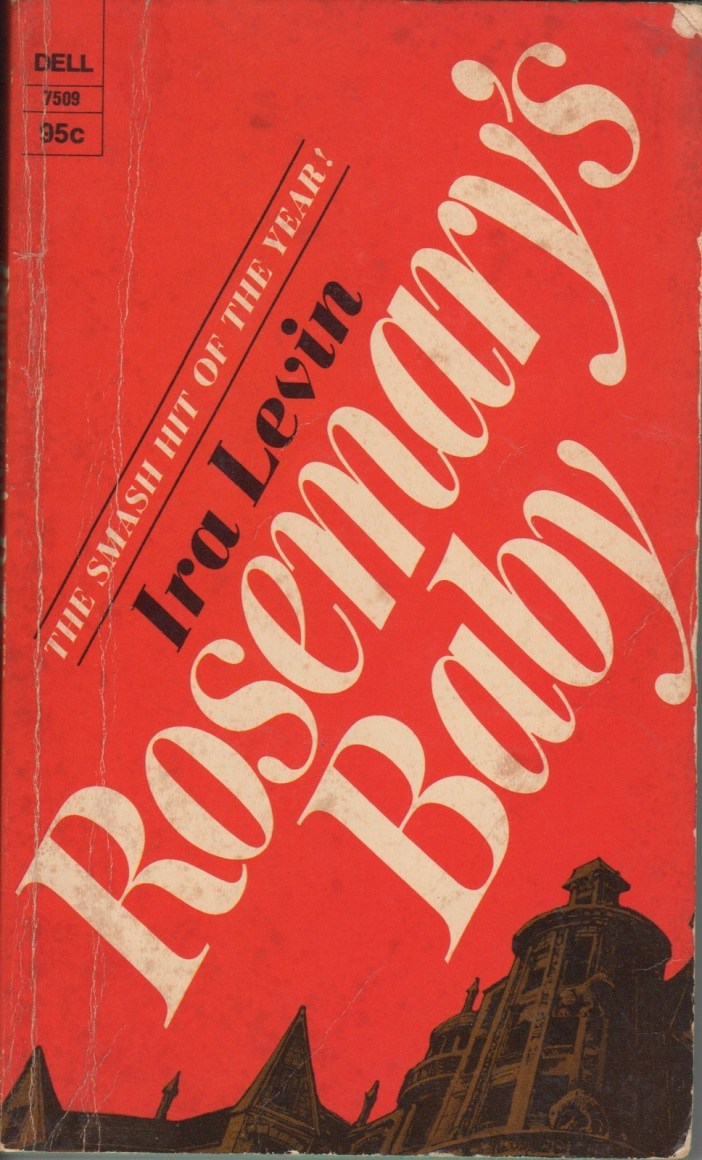
And everyone knows Rosemary’s Baby.

rosmarys-baby-apr-1968-ira-levin-publ-dell-7509-0-95-218pp-pb

Levin was an amazing writer, truly amazing. Take the opening to Rosemary’s Baby:

Rosemary and Guy Woodhouse had signed a lease on a five-room apartment in a geometric white house on First Avenue when they received word, from a woman named Mrs. Cortez, that a four-room apartment in the Bramford had become available. The Bramford, old, black, and elephantine, is a warren of high-ceilinged apartments prized for their fireplaces and Victorian detail. Rosemary and Guy had been on its waiting list since their marriage but had finally given up.

The opening paragraph of The Stepford Wives:

The Welcome Wagon lady, sixty if she was a day but working at youth and vivacity (ginger hair, red lips, a sunshine-yellow dress), twinkled her eyes and teeth at Joanna and said, “You’re really going to like it here! it’s a nice town with nice people! You couldn’t have made a better choice!” Her brown leather shoulderbag was enormous, old and scuffed; from it she dealt Joanna packets of powdered breakfast drink and soup mix, a toy-size box of non-polluting detergent, a booklet of discount slips good at twenty-two local shops, two cakes of soap, a folder of deoderant pads–

Both start so innocently; a young couple getting the apartment of their dreams, a wife newly moved to the suburbs being greeted by the Welcome-Wagon Lady (do people still do that, I wonder?). Sunshine, light, and innocence, right? Both books begin with new beginnings; a fresh start in a new home. And yet–both wives, Rosemary and Joanna, wind up in terrifying situations, and even worse, no one believes them, least of all their husbands–particularly since it was their husbands who sold them out in the first place; Guy Woodhouse selling Rosemary out to a cult of Satanists in exchange for career success, Joanna’s husband selling his feminist wife out for a realistic, animatronic robot version with a sexier figure who is programmed to be an obedient wife/slave to her husband. The Stepford Wives was the first Levin novel I read, and I read it shortly after it came out in paperback, plucking it off the wire paperback racks at the Zayre’s in Bolingbrook shortly after we’d moved to that suburb. And it’s really a frightening book to read when you’ve just moved to the suburbs.

But I can’t help but wonder why Levin’s work in these two instances isn’t considered domestic suspense? Both books are from the point of view of women; about their issues and their place in their marriages; and borrow the most important theme from romantic suspense novelists like Phyllis Whitney and Victoria Holt: his heroines cannot fully trust their husbands. Of course, both books veer into the supernatural…are they horror novels?

My favorite work of Levin’s is his first novel, which also won the Edgar for Best First, A Kiss Before Dying. It’s been filmed twice–neither film is worth watching, frankly–and it literally is genius. If you haven’t read it, you really need to–it’s one of the best suspense novels I’ve ever read. The problem, of course, with A Kiss Before Dying is you can’t really discuss it without spoiling it–and while you can still enjoy the book knowing the big twist, not having it spoiled really makes you appreciate how genius Levin really was.

And now, back to the spice mines.

Alone Again, Naturally

Saturday! Tonight LSU takes on Ole Miss in yet another crucial game for the Tigers. Heavy sigh. I have a lot to do today–cleaning, errands–around football games, and I am going to start reading another book while editing some short stories and–hopefully–working on the revision of Bourbon Street Blues.

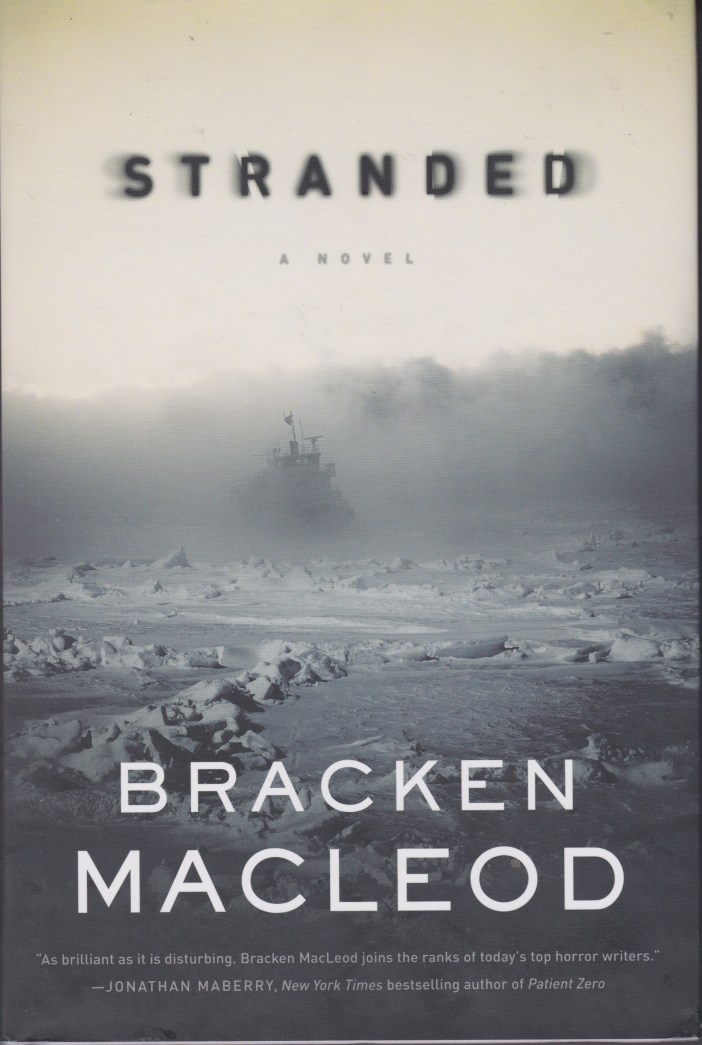
But yesterday, I finally had the time to devote to Bracken MacLeod’s amazing Stranded.

stranded
The void churned and swelled, reaching up to pull them down into frigid darkness, clamoring to embrace them, every one. A cold womb inviting them to return to the lightless source of all life, and die, each man alone in its black silence.

The sea battered the ship, waves crashing against the hull as the ship’s master tried to quarter–turning the vessel into the waves to lessen their impact. While he struggled at the helm, the crew scrambled to get into their gear. The men grabbed sledgehammers and baseball bats, rushing to the aid of their fellow deckhands like a medieval army mustering to stand against the cavalry that would break them, line and bone. Noah wrestled with his waterproof gear, trying to pull on his pants and jacket, jamming hands into clumsy gloves that would combat frostbite for only so long. The ship pitched and Noah lurched in the passageway, trying not to lose his footing, trying not to be thrown to the deck before he was even out in the storm. He shoved his foot into a boot, staggering away from his locker as gravity and momentum conspired to bash his skull against the bulkhead. He careened into the wall, feeling a pop and a blossom of pain in his shoulder. He gritted his teeth and shoved himself away; he had to get on the cargo deck with the others. He couldn’t be defeated before he even got outside.

The key to writing excellent horror, to quote Stephen King yet again, is to write about what scares you. Conversely, I think the most effective horror fiction is written about what scares and unsettles the reader. The opening to this exceptionally fine novel is a perfect example of why I will never board a ship and have absolutely no desire to ever go on a cruise. Is there anything more unsettling than not having solid ground beneath you? Every earthquake I experienced in California was horrific for that reason–when you can’t trust the floor beneath your feet not to move….shudder.

I’m not necessarily as afraid of cold as I dislike it intensely. I grew up in Chicago, spent my teens in Kansas, and as an adult, one horrible winter in Minneapolis (I love Minneapolis; just can’t handle the winters; it didn’t help that the particular winter I spent there was one of the worst in years). The rest of my life has been spent for the most part in warm-weather climates; I’ve only visited the cold on trips. I don’t like being cold, really. So, of course, books set where it’s cold always affect me (Peter Straub’s Ghost Story is one example–I still shiver not only from the scares in that book but from the images of the snowbound town; there was one by I think a British writer set in a ski lodge that was also horrifying but I can’t remember the name of the writer–he was recommended by a friend; Christopher Golden’s Snowblind, which I haven’t gotten to yet; and so many others….)

So, Stranded takes place on a freighter, in the winter, in the Arctic Sea, bringing supplies to an oil rig. The main character, Noah Cabot, is kind of the scapegoat on the ship, the Arctic Promise; no one seems to like him very much and the ship’s heirarchy really hate him, yet at the same time he is enormously likable to the reader. There’s some deep pain inside of him, this son of a family of long-time Maine fisherman, who went away to college in Seattle, but MacLeod plays his cards about Noah’s backstory perfectly, like a card shark reeling his victim in, card by card. And before you know it, the ship is beset; frozen in by the ice, trapped, with all of its communications not working. There is a weird fog, and everyone on the ship seems to be coming down with some kind of ailment. Out in the distance they can see the shape of something…maybe it’s the oil rig… and Noah, as one of the only men on board not affected by the strange sickness, is selected to help lead a team of men across the ice to whatever that shape is out in the distance.

And then the real fun begins.

The premise of the story is really enough to keep the reader intrigued enough to keep turning the pages–these are some serious stakes here–but MacLeod is a master at pacing, and knowing when to drop in those precious moments of backstory so that the reader becomes even more vested in the characters he is reading about. I kept trying to guess what was going on–I did figure one thing out–but I was almost always wrong, which is gratifying as a reader. The atmosphere is gothic and spooky, and the way MacLeod uses the freezing weather to amp up the tension is spectacular; not to mention his way of making the individual characters unique enough to be distinctive–not an easy task when you have as many minor characters populating a short novel like this.

I had read and deeply enjoyed MacLeod’s Mountain Home after I had met him at World Horror Con here in New Orleans whenever that was; I am really looking forward to reading his other novel, White Knight. His transition from noir to horror was seamless and exceptional; a mark of a truly gifted writer.

BUY THIS BOOK.

And more, please.

And now, back to the spice mines.

At Seventeen

The spice mines have not been kind to me lately; I’ve been in one of those awful malaises that I hate so much. I am behind on the book (of course) and I’ve been struggling with some short stories I needed to write. However, yesterday I made some progress on the book (huzzah!) and I think I am snapping out of it. The first thing I saw this morning on social media was this, from Anne Rice:

“To be a writer one thing is required. Write. That’s the big secret. It’s one word. Get the words down on paper, one way or another, and save them. Believe in your own voice, too, and your own way of doing it. Don’t listen to people who say negative things. They’re common. Writers are precious.”

That helped some, and I am hopeful that I am not coming out of the malaise.

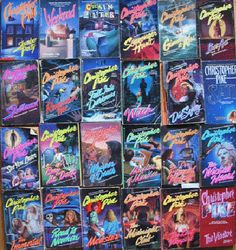
Today’s horror topic is Christopher Pike.

christopher-pike-books

I’ve often talked about how discovering the works of Christopher Pike in the early 1990’s was a revelation to me about young adult fiction, which I had dismissed most of my life; I’d gone almost directly from the kids’ mystery series to Ellery Queen and Agatha Christie and Phyllis A. Whitney and Victoria Holt and so forth; adult mystery and suspense. It was finding Pike–and later, R. L. Stine’s Fear Street books–that got me started writing the y/a books in the 1990’s, and even planned on connecting them all together, like the way Stine did.

Christopher Pike’s novels were seriously twisted. The first ones I bought copies of were Whisper of Death, Witch, Die Softly, and Remember Me. I was startled at how ‘adult’ the themes in the books were; when I was a teen the few books about teens I remembered were about “should I or shouldn’t I have sex?” or “drugs are bad for you” or “this is what happens if you DRINK”–that tiresome moralizing shit I couldn’t be bothered with–and in almost every instance it was about white kids in the suburbs, safely middle class. Pike’s characters were all mostly white still, but there wasn’t any overt, hit-you-in-the-head-with-a-baseball-bat type nonsense. Some of the kids were poor, from broken families, having sex, drinking, doing drugs…in other words, these were teenagers dealing with adult problems, and doing the best they could.

whisper-of-death

Whisper of Death was the first one that I read, and I couldn’t believe what I was reading, from page one. The point of view character, Roxanne, and her boyfriend, Pepper, were driving home to their small town from an abortion clinic in a nearby, larger city. Roxanne is the product of a single parent home; her mother ran away when she was a little girl, her father is blue collar and drinks too much, and Pepper, her boyfriend, is higher up on the economic scale and made it clear from the moment she realized she was pregnant that abortion was the only option. Pepper’s cavalier attitude about the situation–the palpable relief he feels now that it’s over–also has her questioning whether he is the right guy for her. So, Roxanne’s nerves and feelings are already on edge and raw as the true terror starts…every town they pass through on the drive home is abandoned. Even in their home town, there’s no one around but find three other teenagers they slightly know, and soon discover the only thing they have in common, really, is a connection through a girl named Mary Sue, who recently committed suicide, and who also apparently wrote short stories about the five of them dying in horrible ways.

As they look for other people, one by one they begin dying the way their deaths were described in Mary Sue’s stories.

I went back and read all of Pike’s books, enjoyed them all–and again, all of them were really dark and twisted. Remember Me, which turned into a trilogy, was about a dead girl whose spirit was trying to figure out who pushed her off a balcony at a party and killed her, for example. He also got me to discover Stine and Jay Bennett–who wrote amazing hard-boiled y/a thrillers. Pike also showed me that you could really push the boundaries in y/a fiction.

And now, the spice mines are calling me again.

Ruby Red Dress (Leave Me Alone)

Twelve days left to Halloween.

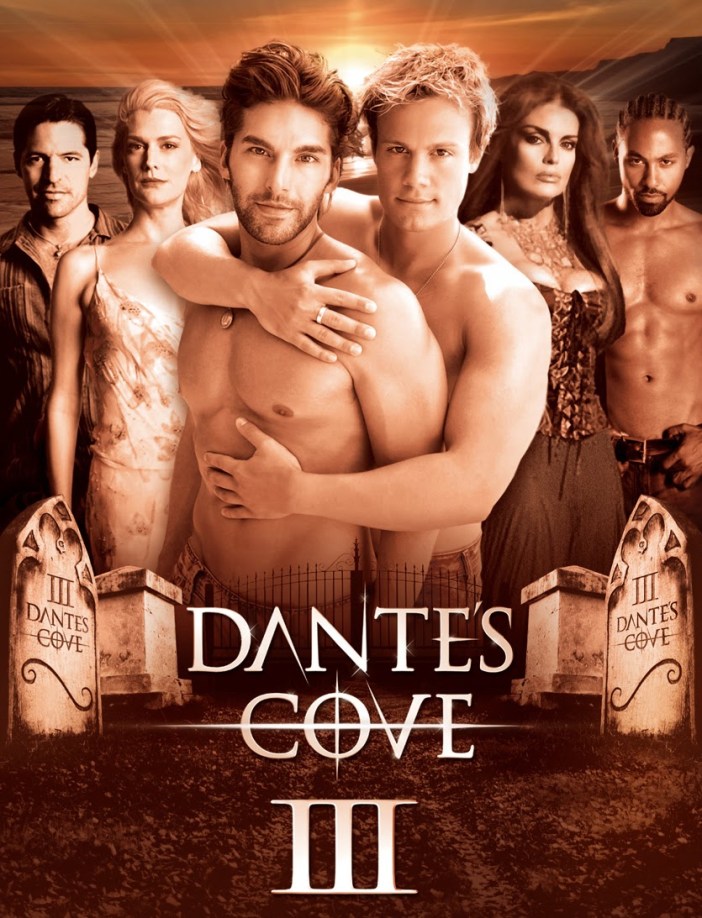
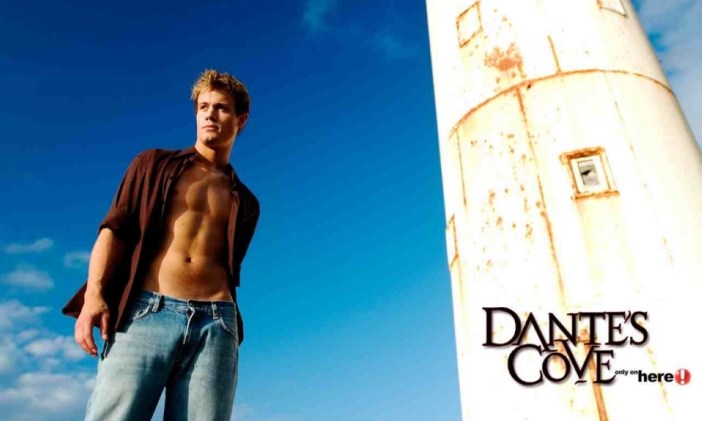
I’ve talked about Dark Shadows already, and I’ve also talked about soap operas before. But a lot of what we see now on television is technically serials; most series now are serials, where the action of each episode is picked up from where it left off in the previous one; continuity is important; and what happens in each episode has a causal effect on the characters for many episodes (and seasons) to come. I can remember, while True Blood was airing, and I was describing it to a friend who didn’t watch…and finally, I said, “It’s kind of like Dark Shadows with nudity, sex, and a lot of blood.” (I intend to talk about True Blood before Halloween, but this is not the entry.) It was kind of true, and I intend to draw those comparisons when I talk about True Blood –but today I am going to talk about another serial television show involving the supernatural (I don’t know that I can call it, fairly, horror) that Paul and I enjoyed watching: Dante’s Cove.

b83d4-dantes-cove-s03

I probably would have never known about Dante’s Cove if I hadn’t been working as an editor for Harrington Park Press at the time. Here TV was doing those adaptations of the Richard Stevenson/Don Strachey novels, and were also developing a series called <I>Dante’s Cove</i>. HPP was bringing the Strachey books back into print with tie-in editions, and Here was interested in having Dante’s Cove be novelized with tie-in editions. I thought it sounded interesting (it was pitched to us as “gay Dark Shadows“), and was interested in doing the novelizations myself, so Here sent me the pilot and the first season on DVD to watch.

The story was, actually, rather similar to the Dark Shadows opening: a young person comes to Dante’s Cove/Collinwood at the same time as a centuries old supernatural creature arrives, released from being imprisoned apparently for all time. Dark Shadows had Victoria Winters and Barnabas Collins the vampire; Dante’s Cove had Kevin and Ambrosius “Bro” Vallin. While Barnabas spurned the love of the witch Angelique, who cursed him and turned him into a vampire, leading his family to chain him up in his coffin; Ambrosius was a practitioner of magic called Tresum, and was engaged to a high priestess of the religion, Grace Neville. Grace caught Ambrosius literally being fucked in the ass by another man, whom she killed with magic, and she, too, cast a spell that locked him up for all eternity. Except Kevin, who comes to Dante’s Cove after being thrown out by his homophobic family to be with his lover Toby, unknowingly releases Ambrosius from his prison–which also triggers Grace to return.

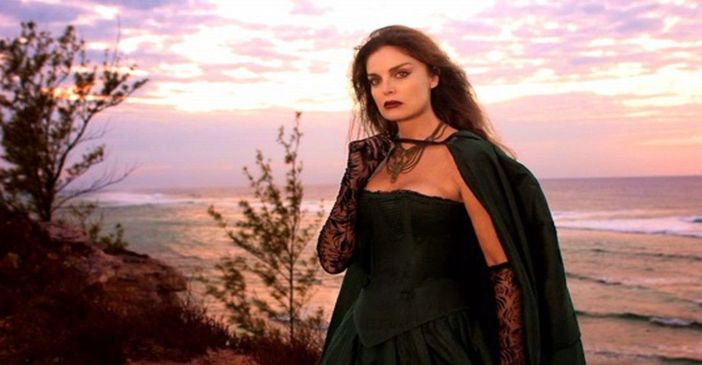
Grace was played by Tracy Scoggins, best known for playing Monica Colby on first The Colbys, and then later on Dynasty.

dantes-cove

There were various characters, lesbians, gay men, straight boys, and varying storylines. Toby, the male lead, was played by Charlie David.

dantescove03

Kevin was played by Gregory Michael, who also later turned up on the show Greek.

dantescove01

Arrow’s Stephen Amell was in the first season as an asshole straight boy who was recast in Season 2.

stephen-amell-dantes-cove-1645693-500-342

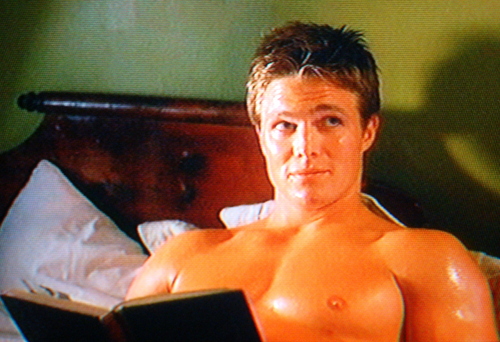
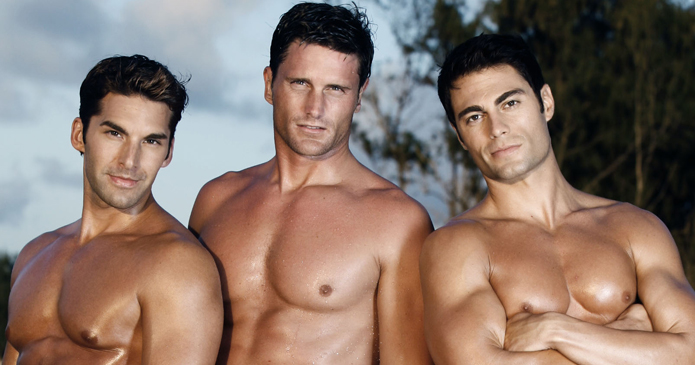
There was lots of male nudity–including full frontal–and the men always looked like they were covered in oil. Reichen Leimkuhl, who won The Amazing Race and was later on the terrible rip-off of Real Housewives type shows The A List–New York, joined the cast in Season 3. And Thea Gill from Queer as Folk, also joined in Season 2 as Grace’s sister and mortal enemy, Diana.

5yl

Like I said, lots of pretty shirtless men, bare male asses, and the occasional male full frontal.

dantescove

The primary problem with Dante’s Cove, I felt, was bad writing and bad directing, as well as some serious continuity problems. The actors did their best with what they were given, but they just weren’t given enough, and it seemed like it was trying to be too serious. But a supernatural-themed soap opera with gay and lesbian characters that could get away with nudity shouldn’t have taken itself quite so seriously; it should have gone for humor and camp, and I bet it would have really caught on. (As I’ve said about other shows, “it wants to be Tennessee Williams when it should be going for Melrose Place.”) We were entertained, and we enjoyed watching it, but there was always such a sense of what it could have been. In the third season, the show went more along a campy route, giving the characters great bitchy quips, and it looked liked it had found its way…but alas, it wasn’t to be. It was cancelled. There was a spin-off show about a lair of vampires who lived in a sex club called The Lair that was also fun, and looked like it was hitting its stride at the end of its first season…but there wasn’t a second season, alas.

The novelizations, alas, never happened, which was also incredibly disappointing. I really thought I could make it a lot of fun…but alas, it is another one of those ‘wasn’t meant to be’ things.’

It would be kind of fun to rewatch…

And now back to the spice mines.

The Night The Lights Went Out in Georgia

As a Southerner, born and bred, I used to take great offense to sweeping over-generalizations about the South and people from the region; that everyone from down here is stupid, racist, ignorant, inbred, illiterate, toothless, etc. No region or state in this country has cornered the market on those things, nor has any state or region cornered the market on intelligence, education, intellect, liberalism, art or literature. Now, when I see such sweeping generalizations, I just chuckle to myself a bit and shake my head; as it actually says more about the person making the statement than the region being defamed.

I’m from the South, as I said, and I am not ashamed of that. We have a lot of problems down here, there’s no denying that, but I love the South in spite of its problems. Some of the most beautiful and poetic and lyrical writing I’ve done has been about the South; most of it being in short stories, many of which have never seen print. One day I will write about a novel about Alabama, the part of the state that I’m from; and I have some really terrific memories about the summers I spent there in my childhood.

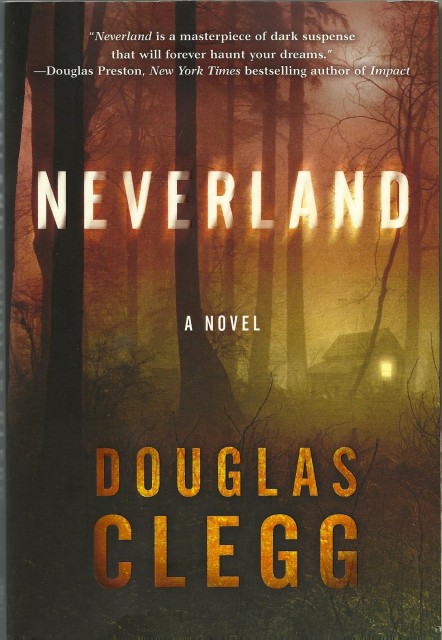
I cannot spend the month of October writing about horror and not mention Douglas Clegg. I met Doug at Stoker Weekend on Long Island in I think 2010; I may not have that date right–I am very foggy on years and dating now that I am closer to sixty than fifty. I was aware of him, of course, before I met him; I’d been wanting to read his Arthurian novel Mordred Bastard Son for years. I bought a copy of one of his books to have him sign it, and I read it on my flight home.

It was Neverland, originally published in 1991.

clegg-neverland

No Grown-ups

Among other words we wrote across the walls—some in chalk, some with spray paint—these two words were what my cousin Sumter believed in most.

There were other words.

Some of them were written in blood.

No child alive has a choice as to where he or she will go in the summer. After Grampa Lee died, our parents would drag us back every August to that small, as yet undeveloped peninsula off the coast of Georgia, mistakenly called an island.

Gull Island.

We would arrive just as its few summer residents were leaving. No one in their right mind ever vacationed off that section of the Georgia coastline after August first, and Gull Island may have been the worst of any vacation spots along the ocean. Giant black flies would invade the shore, while jellyfish spread out across the dull brown beaches like a new coat of wax. It was not (as sarcastic Nonie would remark) “the armpit of the universe,” but often smelled like it.

The Jackson family could afford no better.

Neverland is gorgeously written, and pretty damned scary at the same time.

From the very beginning, I was caught up in the brilliance of this book. The opening, in which the main character’s family is trapped in the car driving to a family vacation they are spending visiting relatives in Georgia, resonated with me–as every summer I was in the exact same situation heading to Alabama from Chicago. I remember the gas stations and the chocolate Yoo-hoos, buying the state maps, sitting in the backseat of the car with the “don’t cross” lines of demarcation between my sister and myself, and the forlorn wishing that we could take a family vacation doing something fun rather than visiting relatives.

And I was completely transported back to my own childhood.

The book is riveting, frankly–so gorgeously written and involving that it can’t be put down. I read it while I sat waiting to board my flight, all the way to Chicago, and finished it about halfway to New Orleans–and was sorry that it was over.

Is there anything quite like losing yourself in the grips of a master story-teller?

I’ve also read his chilling You Come When I Call You, and the truly great news here is that there is an enormous backlist to get lost in.

And now, back to the spice mines.

Spiders and Snakes

The key to writing good horror is, of course, to write about what scares you. Usually, what scares you will scare other people, as many of us have fears in common. I, for example, have many fears: the dark, situation claustrophobia (crowded elevators, tight spaces), heights, spiders, snakes, the puncturing of skin with sharp objects. (Reading Gillian Flynn’s brilliant Sharp Objects was incredibly difficult for me. In the hands of a lesser writer I probably would have stopped long before the end.) There are also things that make me uncomfortable–the woods, the open sea (again, situational; but even though I will get in the ocean, I am never really comfortable; but I am more comfortable in the ocean than I am in lakes and rivers), flying–when listing my fears, I do realize how neurotic I sound.

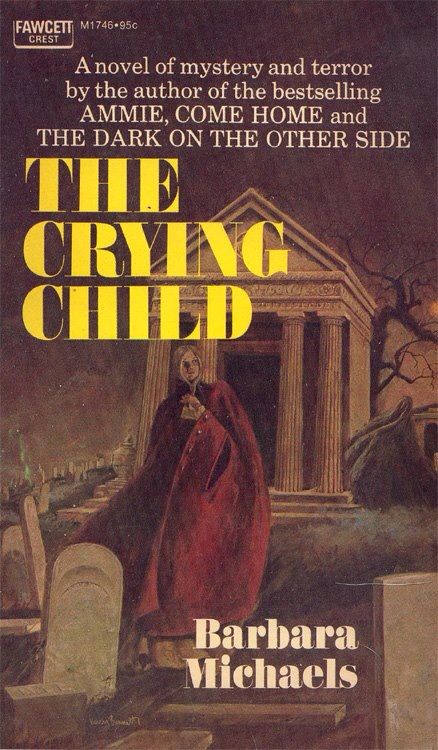
Barbara Michaels, aka Elizabeth Peters, aka Dr. Barbara Mertz, wrote wonderfully creepy Gothic horror novels; her ability to set that creepy mood where weird things could happen and seem absolutely realistic was extraordinary. I always say that Ammie Come Home is one of my all time favorite ghost stories, but she wrote many others that were also most excellent.

Take, for example, The Crying Child.

be7cff00027e10699a3205da9607d820-2

From the air, the island doesn’t look big enough to land a plane on. It’s a pretty sight, from above, calling to mind all sorts of poetic images–an agate, shining brown and green, flung down in folds of sea-blue satin; a blob of variegated Play-Doh, left in a basin of water by a forgetful child; an oval braided rug on a green glass floor.

Or a hand, in a brown-and-green mitten. The hand is clenched into a fist, with a thumblike promontory jutting out on one side. Across the broad end there is a range of hills that might be knuckles; at the other end, the land narrows down into a wrist-shaped peninsula. There are beaches there, like fur trim on the cuff of the mitten; the rest of the island is thick with foliage, somber green pines and fir trees for the most part. The house is surprisingly distinct from above. The lighter green of the lawns and the gray outline of roofs and chimneys stand out amid the darkness of the pines. The only other distinctive landmark is the cluster of buildings that make up the village, along the thumb promontory, and its harbor, which is formed by the junction of thumb and hand.

And that’s where the figure of speech fails. You could compare the house to an oddly shaped ring, up on the knuckles of the hand, but the village doesn’t suggest any analogy. A diseased imagination might think of sores or warts; but there was never anything festering about St. Ives. It was just a charming Maine town, and not even the events of that spring could make it anything else. There was no lurking horror in the village. It was in the house.

I certainly wasn’t aware of horrors that morning in May. I had worries, plenty of them, but they were comparatively simple ones. I didn’t know, then, how simple.

The story is quite simple. Joanne, our heroine, was raised by her older sister Mary after their parents died. Mary managed to land herself a millionaire husband, who tried to fill a father figure role for Joanne–which she didn’t appreciate or like. Long story short, the sisters became estranged when Joanne finished college and moved far away, refusing any further assistance from her wealthy brother-in-law and sister.*

*This is something I’ve never understood as a plot point; why would you refuse help from a wealthy, connected relative? This is often a plot device in melodramas/romances/soap operas, when someone marries into wealth. “I need to be my own man.” “I need to be my own woman.” I always roll my eyes; I understand it, but why make life harder on yourself than necessary?

Mary has always wanted a child of her own, and recently has suffered a miscarriage. Mary and her husband Ran are spending the summer on King’s Island, at his ancestral family home. He has wired Joanne that Mary needs her, and so of course, full of misgivings about her brother-in-law but worried about her sister, she gets on a plane and heads to Maine. After she lands, Ran–and the island doctor–tell her that Mary is having a breakdown; she keeps leaving the house at night because she claims she hears a baby crying and has to find it. The reason Ran finally sent for Joanne was because that night she almost went over a cliff.

Mary seems normal, but shortly after Joanne’s arrival, she sees a strange ghost in the family cemetery and stumbles over a grave just outside the consecrated ground…and then she, too, starts to hear the crying child.

This book is absolutely chilling, with constant twists and turns that keeps the reader on the edge of his/her seat, and that sense of unease, that Gothic atmosphere, keeps up through the entire book.

I loved the work of Barbara Michaels; still do, in fact. I also love her work as Elizabeth Peters. I’d love to revisit her novels–The Dark on the Other Side and Be Buried in the Rain in particular; I do reread Ammie Come Home fairly regularly.

And now, back to the spice mines.

Run, Joey, Run

Egypt. Land of the pharaohs, the bounty of the Nile. I’ve always loved, and been fascinated, by Egypt; I’m not sure why, or when it actually began, or what triggered it. It’s just always been. Maybe it’s a past-life thing, like my apparent fascination with Russian history and culture may have been (I was told be a psychic once that I’d lived as a Russian nobleman in a past life, eventually joining an Orthodox monastery after a long and fruitful life), if you believe in that sort of thing–I’m not sure that I do, and it’s not like I’ll ever know one way or another for sure.

But one thing that is true is that I’ve always been fascinated by Egypt; its history, its art, and its culture.

277252920780133877_lbj4rlul_c

Egypt was a mighty civilization and empire when our European ancestors were living in caves and trying to figure out how to start fires. No one is really certain how they were able to build the pyramids; there are theories, of course–I’ve always loved the Erich von Daniken theory that it was aliens (Chariots of the Gods?), which was later used in the movie Stargate, which I loved–and to this day, despite advances in archaeology and Egyptology and discoveries, we still don’t know a lot of about the ancient Egyptians.

abu-simbel

The burning of the Great Library of Alexandria during an Egyptian civil war during the time of Cleopatra VII (she is rarely given the number in modern times; we know her simply as Cleopatra), which had gathered all the knowledge of the ancient world, remains to me one of the greatest tragedies of history.

I’ve always dreamed of going to Egypt, to see the wonders there for myself. As I get older, the trips I’ve always longed for probably will never happen, but one day I do hope to get to the British Museum at the very least, to see the Egyptian treasures and artifacts there.

the-nile-aswan-2

So, what does Egypt have to do with horror month? Obviously, The Mummy.

imgres-2

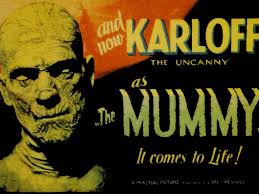
I saw the original film version of The Mummy as an afternoon movie after school; naturally, as a young Egyptophile how was I not going to watch it once I saw it in the television listings? I don’t remember the movie scaring me that much; I thought it was a great movie–but I never watched the sequels. In this movie, of course, some Egyptologists had found the tomb of Imhotep, who had been buried alive for some sacrilege, but became reanimated–the Scroll of Thoth had given him immortality (again, a similar plot device was used in The Cat Creature) and was now looking for the reincarnation of his great love Ankhesenamun (which was also the name of Tutankamen’s wife and queen; the tomb had only been discovered a mere eleven years earlier than when the film was made). It was clever, I thought, and you couldn’t help but feel a bit sorry for him.

mummy1999

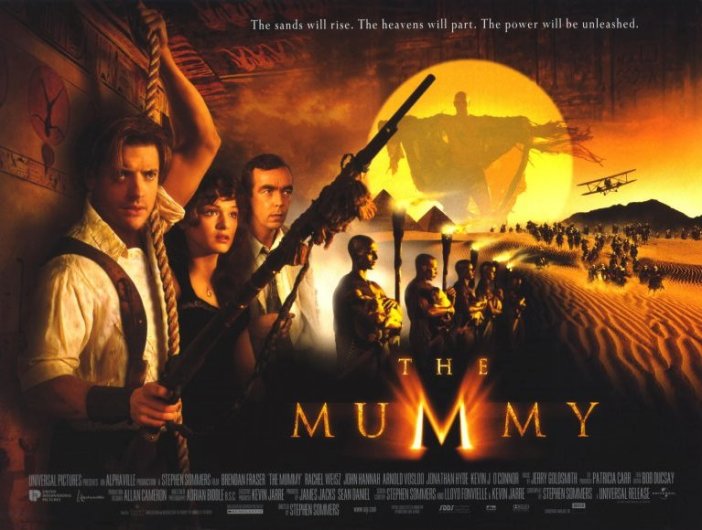
The 1999 film The Mummy used a lot of the same concepts as the 1933–Imhotep being brought back to life (this time by the Book of the Dead) and looking for his lost love Ankhesenamun–but this Imhotep was definitely a villain. The movie was also done as a period piece, with my crush Brendan Fraser in the lead as a kind of Indiana Jones-style adventurer. Both it, and its sequel, The Mummy Returns, were fun movies that I greatly enjoyed.

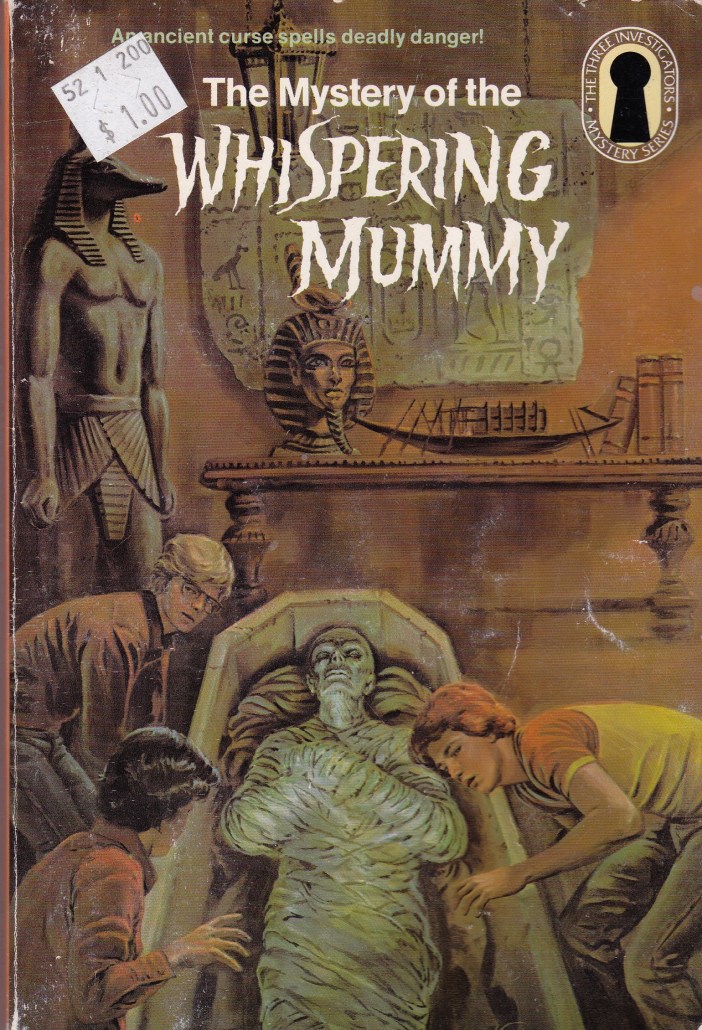
Mummies, and Egyptian antiquities, are often used for popular fiction; maybe sometime I should do an extensive study on this. My favorite Robin Cook novel is Sphinx ; I love Allen Drury’s Amarna novels A God Against the Gods and Return to Thebes; there’s the AMAZING Amelia Peabody series by the late always lamented Elizabeth Peters; the Hardy Boys themselves even had some Egyptian-related cases; Agatha Christie set Death Comes as the End in ancient Egypt and Death on the Nile in contemporary Egypt; The Three Investigators solved The Mystery of the Whispering Mummy; and Anne Rice also wrote Ramses the Damned, or The Mummy.

Hell, even Scooby Doo Where Are You? had an episode about a mummy.

mystery-of-the-whispering-mummy

Anne Rice’s The Mummy was a book I greatly enjoyed; I intend to reread it soon.

I’ve always wanted to do an Egyptian book; I’ve always wanted to do a mummy style book.

Maybe someday.

I Think I Love You

The 1980’s were an interesting time. The decade is sort of a blur for me in some ways–there was a lot of pot smoking and alcohol abuse and of course, the cocaine issue–but I also had fun, or so it seemed at the time. I sometimes wonder, when I am given to reflect on the past (something I seem to be doing more and more as I age) how different my life would be had I not, in fact, been living a double life in my twenties. But of course, these are the sort of things that are immaterial ultimately; if any single one thing in my past had been different, my life as I know it now would be different, and I am enormously happy with my present life. And I do remember that period of my life fondly; I remember going, many times, into a marijuana induced coma with friends while we watched endless hours of MTV, back when it used to actually show music videos.

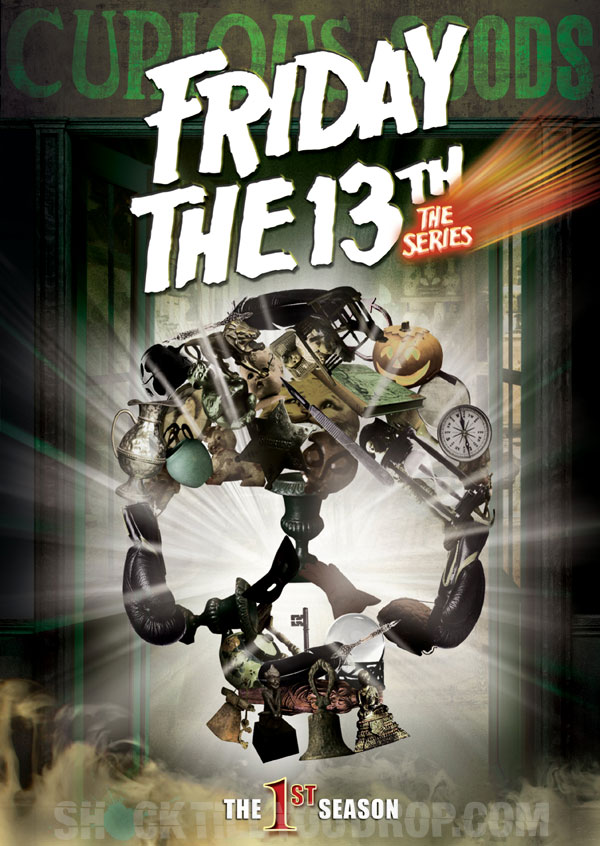
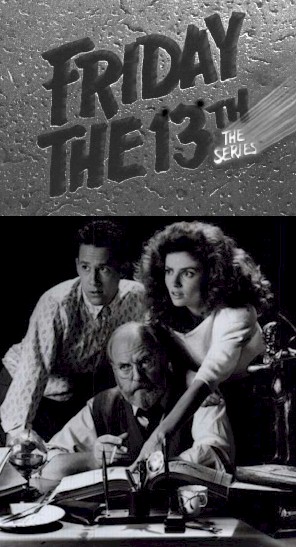
Another popular show that we watched through the smoke was a syndicated series called Friday the 13th–the Series.

friday-the-13th-series

Every episode of the show began with a voice over:

“Lewis Vendredi made a deal with the devil to sell cursed antiques. But he broke the pact, and it cost him his soul. Now, his niece Micki, and her cousin Ryan have inherited the store… and with it, the curse. Now they must get everything back, and the real terror begins.” 

Part of the problem, you see, was originally Micki and Ryan decided not to keep the store and had a big sale to get rid of everything inside. Then Jack Marshak, an expert in the occult, showed up and told them about Uncle Lewis’ deal with the devil and that every item in the store was cursed. In the first episode, they didn’t believe him, of course, until they started tracking down one of the items. Each cursed item had some kind of power related to what it was; a Cupid had the ability to make anyone fall in love with the person who owned it, for example. The problem was the blood curse on every item–in exchange for the use of the item’s power, the person using it had to kill someone, or the item itself would kill someone. The show followed the three–Jack, Micki, and Ryan–as they tried to track down each item.

friday13th

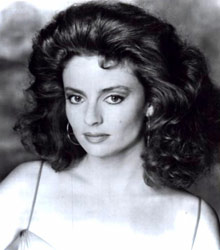
The reason I even discovered the show in the first place was because one of my friends thought Robey, the actress who played Micki, was hot.

robey_louise_250

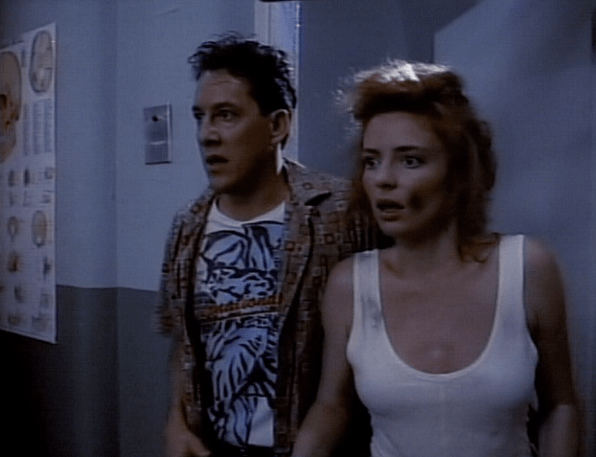
She almost always wore white cotton tank tops without a bra, in typical 80’s exploitation.

3-robey-and-ryan

She also had a bad case of serious 80’s hair.

23

But it was a clever idea for an anthology/horror/supernatural style series, and it last three seasons. I kind of got sucked into it, and still remember it fondly. It was syndicated, so it was much lower budget than it would have been had it aired on a network. It was available for streaming on Amazon Prime recently, and the last time I was doing cardio I was rewatching….alas, for my month of horror, it’s no longer available. Rewatching made me realize just how low budget the show actually was; but it would be a great thing to reboot for the modern audience.

And now, back to the spice mines.

Muskrat Love

One of the more interesting things in Stephen King’s Danse Macabre was his dissection of the common core at the root of all horror stories; the conflict between between the Apollonian and the Dionysian worlds; in that all horror stories begin in an Apollonian (or seemingly Apollonian) world where everything makes sense, everyone is just going about their business, and into that world something Dionysian is introduced, and the conflict, the point of the story, is to vanquish the Dionysian and return everything to the Apollonian; he further used Dr. Jekyll and Mr. Hyde by Robert Louis Stevenson as an illustrative example of the two sides; in which Dr. Jekyll is a man of the intellect, of reason, while Mr. Hyde is all pure emotion, sensuality, and chaotic action.

I’m probably explaining it badly (I am no King, after all), but it really does work thematically as you look at most horror (it doesn’t fit all horror stories, of course; nothing can possibly and simply explain an entire genre). It also kind of explains why I am not such a good horror writer; I am not well enough versed in the genre–fiction and non-fiction–to write it credibly. I mean, isn’t that why I devote so much of my reading time to crime fiction? To make me a better crime fiction writer?

Sigh. Yes, I do have a rather strong grasp of the obvious.

Yet, my own Sara certainly fits that description. Everyone at the school is going along, living their lives, and then Sara shows up; bad things happen, and then the problem is solved and they can go back to living their lives, if a little shell shocked.

Rereading Danse Macabre, I also realized that many of my horror stories–most of them, if not all of them, actually–subscribe to the ethos of what King called “the EC Comics mindset.” EC Comics were long gone by the time I was a kid, but I did read the DC comic versions, House of Mystery and House of Secrets.

house_of_mystery_v-1_66

There were usually two or three stories in each issue, and like the old EC Comics–the Tales from the Crypt style–there was a narrator of sorts, a curator of the House of Secrets or the House of Mystery–who would introduce each tale. It was either a horror/supernatural story, or some kind of noirish story where the main character was going to do something criminal or bad, and got their just desserts in the end.

As King says, the “heh heh” ending.

house_of_secrets_v-1_106

King himself does this in a lot of his own short stories, but being a better writer and more creative, he can make it work.

The short story that I finally finished last night is sort of like that, only it’s noir, not horror. I need to revise it–i will do that today, and spend the weekend revising some other stories I want to submit–but it’s interesting that I always try to go for the twist ending in my short stories.

Hey, at least I don’t do the “oh, it was all a dream” thing….anymore.

And now, back to the spice mines.