Not That Funny

I am awake but groggy. I slept late, am guzzling coffee, and am thinking that I may put off going to Costco until tomorrow. Today might be a stay at home, laze around, get some stuff done when and if I feel like it day. I have a bit of the ‘just turned in the book’ malaise, that bizarre funk where I just feel a bit dazed for a couple of days. Which is fine, of course, although I need to really get to work on the next. I see reading A Head Full of Ghosts in my future. I also have a Christmas party to attend this evening.

Yesterday I managed to find that Twilight Zone episode I was talking about, “Paladin of the Lost Hour,” based on the Harlan Ellison short story that is definitely one of my favorites of all time. It’s on Youtube, and if you have about thirty-two minutes to spare, it’s definitely worth watching.

Click here.

Sure, watching it now you can tell it was filmed in the 1980’s–the little bit of special effects used were especially cheesy–but the greatness of the story still comes through; it’s speculative fiction, sure, but the real strength and greatness of the story is in its human elements. And Danny Kaye is fantastic.

I found it because I was googling the story to find out which collection it’s in–it’s not in The Essential Ellison, sadly–and I wanted to read it again, only to discover you can actually read it on-line as a pdf here.

And yes, the story as written is so much more powerful than the actual teleplay–which I believe was also written by Ellison.

The story opens with two men in a small cemetery; one is quite old and visiting the grave of his beloved wife, lost to him for twenty years. He is set upon by a couple of young hoodlums determined to rob him; they are fought off and driven away by another man in the cemetery who sees it happening and comes to the old man’s rescue. The two men develop a bond, although the rescuer is a little stand-offish and the older man has to earn his trust. The old man’s name is Gaspar, and he is quite charming and a bit opinionated. The younger man, Billy, who is haunted still by something that happened to him in Vietnam.

THIS WAS AN OLD MAN. Not an incredibly old man; obsolete, spavined; not as worn as the sway-backed stone steps ascending the Pyramid of the Sun to an ancient temple; not yet a relic. But even so, a very old man, this old man perched on an antique shooting stick, its handles open to form a seat, its spike thrust at an angle into the soft ground and trimmed grass of the cemetery. Gray, thin rain misted down at almost the same, angle as that at which the spike pierced the ground. The winter-barren trees lay flat and black against an aluminum sky, unmoving in the chill wind. An old man sitting at the foot of a grave mound whose headstone had tilted slightly when the earth had settled; sitting in the rain and speaking to someone below.

“They tore it down, Minna.

“I tell you, they must have bought off a councilman.

“Came in with bulldozers at six o’clock in the morning, and you know that’s not legal. There’s a Municipal Code. Supposed to hold off till at least seven on weekdays, eight on the weekend; but there they were at six, even before six, barely light for godsakes. Thought they’d sneak in and do it before the neighborhood got wind of it and call the landmarks committee. Sneaks: they come on holidays, can you imagine!

“But I was out there waiting for them, and I told them, ‘You can’t do it, that’s Code number 91.03002, subsection E,’ and they lied and said they had special permission, so I said to the big muckymuck in charge, ‘Let’s see your waiver permit,’and he said the Code didn’t apply in this case because it was supposed to be only for grading, and since they were demolishing and not grading, they could start whenever they felt like it. So I told him I’d call the police, then, because it came under the heading of Disturbing the Peace, and he said . . . well, I know you hate that kind of language, old girl, so I won’t tell you what he said, but you can imagine.

“So I called the police, and gave them my name, and of course they didn’t get there till almost quarter after seven (which is what makes me think they bought off a councilman), and by then those ‘dozers had leveled most of it. Doesn’t take long, you know that.

“And I don’t suppose it’s as great a loss as, maybe, say, the Great Library of Alexandria, but it was the last of the authentic Deco design drive-ins, and the carhops still served you on roller skates, and it was a landmark, and just about the only place left in the city where you could still get a decent grilled cheese sandwich pressed very flat on the grill by one of those weights they used to use, made with real cheese and not that rancid plastic they cut into squares and call it ‘cheese food.’

“Gone, old dear, gone and mourned. And I understand they plan to put up another one of those mini-malls on the site, just ten blocks away from one that’s already there, and you know what’s going to happen: this new one will drain off the traffic from the older one, and then that one will fall the way they all do when the next one gets built, you’d think they’d see some history in it; but no, they never learn, And you should have seen the crowd by seven-thirty. All ages, even some of those kids painted like aborigines, with torn leather clothing. Even they came to protest. Terrible language, but at least they were concerned. And nothing could stop it. They just whammed it, and down it went.

“I do so miss you today, Minna. No more good grilled cheese.” Said the very old man to the ground. And now he was crying softly, and now the wind rose, and the mist rain stippled his overcoat.

Nearby, yet at a distance, Billy Kinetta stared down at another grave. He could see the old man over there off to his left, but he took no further notice. The wind whipped the vent of his trenchcoat. His collar was up but rain trickled down his neck. This was a younger man, not yet thirty-five. Unlike the old man, Billy Kinetta neither cried nor spoke to memories of someone who had once listened. He might have been a geomancer, so silently did he stand, eyes toward the ground.

One of these men was black; the other was white.

THAT is great writing. The story, which I read again last night, moved me to tears again; just as the cheesy 1980’s production of the beautifully written teleplay did as I watched it again. All of Ellison’s stories are engaging, superbly written; he writes about enormous themes and yet his characters, his situations, are incredibly real and relatable. He writes about the human condition, and humanity; and often he writes of humanity’s loss of humanity, if that makes sense. Ellison was the person who introduced the all-encompassing term speculative fiction as the tent that contains science fiction, fantasy, and horror; he is a master of all of them.

I’m really looking forward to rereading the stories I’ve already read; and I am also looking forward to reading stories of his I’ve not read. I encourage you, if you’re not read Ellison but are a fan of great writing, to click on the previous link and read “Paladin of the Lost Hour”; I would be very surprised if you didn’t want to read more. His website is at Ellison Webderland; you can find information there about the project (and possibly donate) to digitize all of his writing so it won’t be lost.

And on that note, back to the spice mines.

Here’s another French farmer.

Ledge

I worked yesterday morning and in the early afternoon yesterday; the work didn’t go as well as one would have preferred but those are the breaks. Hopefully today it will be better. One can always hope.

I spent the rest of the day watching college football–it was a most interesting day–and reading, of all things, comic books on my iPad (the recent DC mini-series The Coming of the Supermen, which, not being up on my current DC Universe, was a bit confusing in places but over-all, kind of interesting), started rereading Garden District Gothic because I am getting ready to start writing Scotty VIII, and also rereading some short stories from one of my favorite collections of all time, Harlan Ellison’s Alone Against Tomorrow.

It occurred to me yesterday, as I was marveling at the mastery of Ellison at short story writing (he really is one of the best short story writers of all time; his “Paladin of the Lost Hour” might be my favorite short story) that with all my talk about short stories lately I never talk about Ellison, which is a shame. (Also, rereading these stories and being reminded of how extraordinary a writer he is sent me into an ebay wormhole of ordering copies of his collections; I do have The Essential Ellison omnibus, but it doesn’t have everything; he is so prolific I don’t think all of his work could be collected into a single volume.)

But in fairness to me, these entries are usually unplanned and written while I am enjoying my morning coffee and waking up, so I am not as clear-headed as one might think when I write them.

I first discovered Ellison through, as so many other things in the speculative fiction world, Stephen King’s Danse Macabre. I knew from reading that book that he had written probably the best episode of Star Trek ever, “The City at the Edge of Tomorrow”–also known as ‘the one with Joan Collins’, but in those pre-Internet days finding books wasn’t as easy as it is now. It wasn’t until several years later, when I was at a friend’s apartment that I discovered she had a copy of his collection Strange Wine, which she not only loaned to me but gifted it to me, saying, “Reading Ellison will change your life.”

And it did. Several of those stories haunt me to this day. I was poor then, very poor, and so rarely bought books new; I haunted second-hand bookshops (do those even exist anymore?), and started hunting for Ellison whenever I went into them. That was how I found Alone Against Tomorrow, among others, and became a big fan.

Looking over these stories again last night, I was reminded why I was a fan.

And rereading Garden District Gothic after spending some time with Ellison was quite humbling.

I ordered a copy of Strange Wine last night–because I definitely need more books–and think I am going to dig out my copy of The Essential Ellison because I want to read more short stories (I say that all the time, don’t I?) and maybe I’ll make my entries for January all about short stories again this year. But I have so many short story collections lying around the house that I’ve never read; single author collections and anthologies and magazines and so forth, that a focused effort is really necessary.

And I really want to reread “Paladin of the Lost Hour.”

And now I should get back to the spice mines.

Here’s a hunk for the day:

No Questions Asked

Monday morning. Heavy heaving sigh. Another week, a lot to do, and probably not nearly enough time in which to try to do it all. I am going to do my level best <b>not</b> to allow this to create a sense of helplessness/impossibility which will lead me to distraction and not even trying, which only makes things worse.

Yes, I’ve been here before, if you couldn’t tell.

I must not panic I must not panic I must not panic I must not panic.

And I won’t. I just have to buckle down and get it done and I know I can.

FOCUS.

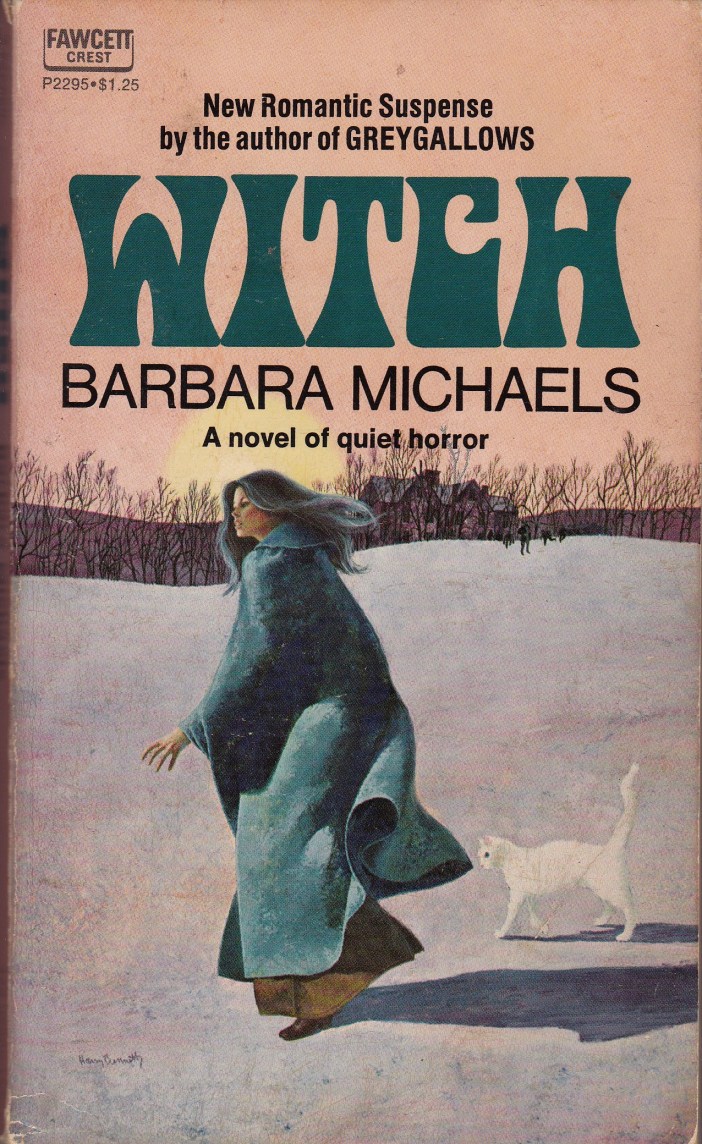
Over the weekend, after finishing Triad, I reread another favorite Barbara Michaels novel, Witch, which I had not read in a long time. (I am now reading Gore Vidal’s Thieves Fall Out, originally published under a pseudonym and now reprinted under his actual name by Hard Case Crime.)

witch

According to the directions Ellen had received from the real estate agent, the house was in a clearing in the woods. Gently perspiring in the the hot office, Ellen had thought wistfully of cool forest glades. April in Virginia is unpredictable; this particular day might have been borrowed from July, and the small-town office was not air-conditioned.

An hour later, after bumping down rutted lanes so narrow that tree branches pushed in through the car windows, Ellen was inclined to consider “clearing” a wild exaggeration. She started perspiring again as soon as she turned off the highway. No breeze could penetrate the tangled growth of these untamed forests; moisture weighted the air.

At any rate, this must be the house, though it more resembled a pile of worn logs overgrown by honeysuckle and other vines.

Barbara Michaels, as I have said any number of times, is one of my favorite writers of all time. Witch is one of her better books, definitely in my top tiers of her novels under that name. It tells the tale of Ellen March, divorced, who has been living with her brother-in-law helping him raise his three sons (her dead sister’s) and her own daughter, but now all are leaving for college or private schools, the brother-in-law’s job with the state department is taking him overseas, and all of a sudden, she is at loose ends. As the house in one of the suburbs of DC is to be sold, Ellen decides to buy a nice place out in the country. And she finds one, spends the next few months getting it fixed up, and moves in.

But all is not what it seems in the country.

First off, Ellen has a very bizarre reaction to the house when she first sets foot in it–an exultation, kind of ecstatic joy. And then there are the stories about the house–it was originally built in the seventeenth century, and it was the home of a woman many of the local considered to be a witch–who tended the wild animals in the woods and then “committed suicide.”

And then weird things start happening–she starts seeing a white cat in the woods (the witch had a white cat); sometimes she sees shadows out of the corner of her eye in her bedroom that vanish when she looks; she occasionally hears laughter inside the house; and then she tells, as a joke, fortunes for some teenagers who hang out in the general store in the nearby village of Chew’s Corners…and the fortunes start coming true.

The town, which is dominated by a horrific fundamentalist church called the Earthly Atonement of the Wrath of God, which is even worse than it sounds. So, of course, the “good” people of Chew’s Corners think she is either a witch herself, or being possessed by the ghost of the witch.

It’s a good story–although I would disagree with the cover’s depiction of it as “a story of quiet horror”–it’s still, more than anything else, a suspense novel with some paranormal elements thrown into it for good measure. It’s a great read, and the big reveal is just as shocking on a reread as it was on the original read.

And now, back to the spice mines. This stuff ain’t going to get done on its own.

Rhiannon (Will You Ever Win?)

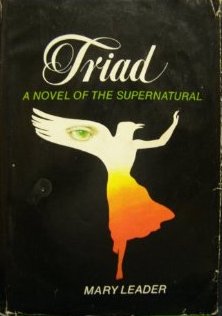
I first read Mary Leader’s novel Triad when I was either eleven or twelve. I was creepy, and I really enjoyed it; but I had trouble pronouncing one of the character names: Rhiannon. It was a Welsh name, of course, and I’d never heard it before, so I was pronouncing it RYE-uh-none. I actually thought it was an ugly name. Flash forward a few years, and I heard a song unlike any other I’d ever heard before on the radio–KCMO AM out of Kansas City, I think it was–and after it was finished playing, the deejay said it was “Ree-ANN-un” by Fleetwood Mac (a band I’d never heard of). The next time I was at a record store, I looked for it in the 45’s rack, and there it was: RHIANNON (Will You Ever Win” by Fleetwood Mac.

url

Oh, THAT’S how you say it, I thought to myself, and bought it. I eventually bought the entire album–one of the first albums I’d ever owned that I could listen to from beginning to end–and have been a Fleetwood Mac fan ever since.

A few years ago, I either read an interview with her, or saw her talking about the song on television somewhere, and Stevie Nicks said she’d read a book where she came across the name, and the book actually inspired the song. It was one of those moments where you feel a connection with an artist you love (“Oh my God, I read that book too!”)

Recently, and I don’t remember where or how or why; it may have been my October blogging, but as I said, I don’t remember how, but I remembered the book again. I hadn’t read it in over forty years, and I remembered that the author had written another book I’d enjoyed–Salem’s Children–and so I went on-line and ordered copies of both.

And I reread Triad this past week.

triad

It didn’t start all of a sudden. As I think back now, there were so many little unexplained incidents that I shoved aside and forgot about until later. There began to be those gaps in my life, little ones at first, but then longer and longer as time went on. I would wonder if my memory was failing me and I worried about the headaches to which I’d become prone, but my doctor told me that it was probably shock due to the baby’s death.

That has been so unexpected. I put him to bed one night, all rosy and dimpled with health. He looked at me with those big bright eyes, as he lay fingering the handle of his rattle, then drowsiness drew down his lids and he flipped over on his stomach as he always did and went to sleep with his fist curled around the rattle. The next morning I awakened to the sound of children on their way to school and the disposal truck grinding garbage under our apartment window. Alan was away on one of his projects, so I must have slept right through breakfast. I started to stretch lazily in those moments of waking when one lies between forgetting and remembering, and then sat up with a jerk. Timmy has missed his four o’clock feeding! Had he called and I hadn’t heard him? That wasn’t possible. I always woke at the slightest sound he made. I hurried to the crib and there he was, just as I had left him, but his little body was cold.

“Unexplained crib death” was what the doctor wrote on the death certificate after the autopsy, which meant that Timmy went to sleep a normal child and just stopped breathing for no apparent reason.

Branwen is our young point of view heroine, and the sudden, unexpected death of her child has obviously had a terrible effect on her; I cannot even imagine what it must be like to lose a child, let alone a baby. In an effort to get her over the tragedy, she and her husband, Alan–a civil engineer who is thus away for work most of the time–leave their Chicago apartment behind and buy a beautiful old Victorian house in a small town north of the city on the lake shore.

And then the weird things start happening.

Branwen has guarded a secret most of her life, you see. When she was a little girl she had an older cousin, Rhiannon–their parents were two sets of identical twins–who was jealous and cruel to her, and as such, Branwen hated her. After Rhiannon killed a kitten of Branwen’s–and made it look like it was Branwen’s fault–during a game of hide-and-seek, Rhiannon was inside an old freezer, and Branwen closed the lid on her.

Unfortunately, the handle broke and she wasn’t able to get her out. She went for help, but by the time she was able to get help, Rhiannon was dead.

And now, in the big empty house, with its speaking tubes and old-fashioned stylings, she can hear Rhiannon whispering to her…and strange things start happening.

Has Rhiannon come back? Is the house haunted? Has the loss of her child driven her mad? Is she being possessed?

The atmosphere of the book is terrifying and creepy–those speaking tubes! One of the things I remembered before the reread, over forty years later, was the speaking tubes and the hollow voices coming out of them.

In tone and voice and atmosphere, it’s very similar to Thomas Tryon’s The Other as well as something Shirley Jackson might have written.

Long out of print, it’s a shame. The book is a gem of a read, and short–less than 200 pages–and it’s also a shame Leader only wrote two books.

And as you read it, you can see echoes of the Stevie Nicks song in its pages, and you can see how it inspired her to write the song.

It’s a haunting book–like I said, I’ve never forgotten it–and I’m glad I got the chance to reread it.

I Can Help

All Soul’s Day; November. Two months left in 2016, and before you know it, it’s 2017. Heavy heaving sigh. The time change is coming this weekend, which means it will be dark before five. This always feels oppressive to me; I truly despise Daylight Savings Time (although I always enjoy the extra hour in the fall; hurray for consistency!). But, if I am being honest, I am more productive in the winter. I read more and I certainly write more. And God knows, I have a lot of writing to do in the next few months.

Madness.

I had a mini-breakthrough the other day while feeling sorry for myself that Wicked Frat Boy Ways was turning out to be such a bitch to write. It was such a “d’oh” moment–and it not only applied to the work in progress, but also as to why I have so much trouble writing short stories that I literally wanted to pound my head on my desk until it was soft as an overripe melon.

Seriously, I do not understand how I have a career of any sort in writing. The end result, however, was a great insight on not only how to make this book ever so much better, but how I can make my short stories better. So now all I want to do is write, rewrite, revise, lather, rinse, repeat. True madness.

I’ve been reading The Bird’s Nest by Shirley Jackson. It’s about what was called at the time she wrote it “multiple personality disorder;” the term now is dissociative identity disorder. The book was originally published in 1954, was filmed as Lizzie with Eleanor Parker in the lead role, and prefaced the more famous book/film The Three Faces of Eve by three years; although Eve was a true story and not fiction (and won Joanne Woodward an Oscar). I’ve always been interested in DID; when I was a kid, of course, I saw it handled on the soap One Life to Live, and of course, in my teens was when Sybil became a huge bestseller (and TV movie starring Sally Field, who won an Emmy and was the turning point in her career when she started being taken seriously as an actress). That story was later debunked, I believe; but DID is something I’ve always wanted to write about, but at the same time not in an exploitative way. Maybe at some point…it would require a lot of research to do it properly.

Anyway, I digress. I’m enjoying The Bird’s Nest, but it is slow and harder going than Jackson’s short stories and her two exquisite novels The Haunting of Hill House and We Have Always Lived in the Castle, or her delightful memoir Life Among the Savages. Jackson’s style is definitely present there, but it’s different. I am also very curious to read the recent bio of her, to see where the ideas for The Bird’s Nest came from.

As I was so busy sticking to my horror theme for October, I wasn’t able to talk about many other things–my reread of Antonia Fraser’s Mary Queen of Scots; the new gay-themed crime show Eyewitness; how much I’m enjoying the show Versailles; and so many other things–but I do look forward to talking about them now that I am no longer shackled to a theme here. (Hilarious, isn’t it? I can’t tell you how many mornings I’ve stared at the ‘post an entry’ page blankly, with no idea of what to write about…and then when I tie myself to a theme for a month the blog ideas burst forth from my head like Athena springing fully formed from Zeus’ forehead.

Oy.

I am also rereading Barbara Michaels’ sublime Be Buried in the Rain, and I do want to talk about Michaels some more at some point, as well.

And now, back to the spice mines.

Here’s today’s hunk:

hot-guy-on-the-beach

Don’t Give Up On Us Baby

So, with Halloween, All Hallows Eve, October and Horror Month comes to a close. It feels weird that the time didn’t change over the weekend; as annoying as Daylight Savings Time is (and I do think it should be done away with at this point), it’s even more annoying that they’ve started changing when it goes into effect, or when it stops. ENOUGH ALREADY.

I’ve enjoyed talking about horror this month, and didn’t even get to write about all the things I wanted to. I didn’t talk about R. L. Stine and the Fear Street books, or the Scream movies, or the Halloween ones. I didn’t talk about Peter Straub, or vampires. I only talked about one Stephen King novel, didn’t even get into Daphne du Maurier, or any number of truly scary movies and books I’ve enjoyed over the years. I did manage to not talk about Shirley Jackson’s The Haunting of Hill House, which is a mainstay, and I was going to write about Peter Straub’s Floating Dragon, until I realized that I talked about it already last year. (I did repeat Rosemary’s Baby, alas, but turned it into an entry more about Ira Levin.)

Halloween puts me in mind, again, of my unfinished story “The Weeping Nun,” and I’ve promised myself if I can get some good work on the book done today I can work on the story some more. I started thinking about Halloween this morning–duh, it is Halloween, after all–and I started thinking some more about what Halloween means, traditionally, and as I made my lunch this morning and washed dishes and put the turkey in the crock pot (I am making pulled turkey for dinner and for lunch sandwiches all week) I was remembering being a little kid in Chicago. My sister and I were only allowed to trick-or-treat on our block and the one across the street–that was as far as we were permitted to go. I don’t remember my costumes when I was a kid, and I don’t really remember much about going around and collecting candy on Halloween; I do remember being warned about unpackaged things, and the urban legends about razor blades in apples and poison injected into oranges were pretty much already well in place in the 1960’s. My parents–particularly my mother–was always afraid we were going to be taken; I never really thought about it much until this morning.

Of course she was afraid; she was from rural Alabama and moved to the Big Bad City with two small children when she was twenty. She was afraid of us being taken, she was afraid of us being run down by cars, she was afraid of us wandering off and getting lost and not being able to find our way home. I have very early memories of memorizing our phone number and our address; I can still recite them without even having to stop to think some fifty years later.

Fear.

That’s what horror is really about, bottom line. Fear.

I’ve realized that is the problem I have with writing horror short stories; I don’t tap into fear enough. This was why I was having so many problems with writing “The Weeping Nun,” frankly; that, and another realization I had over the course of the weekend; that part of the problem with so much of the horror I try to write comes from not really knowing what the story really is, because I am so busy trying to create an atmosphere of creepy dread that I don’t focus on the characters and don’t figure out what the story is….and even after I write the story, I still don’t know what the story is.

Duh. And d’oh.

Sometimes I wonder how I have a career.

Anyway, here’s a hottie in his Halloween costume as I go back to the spice mines.
7a1c6e634d3b64b569fa2af1b161c33a

The Night Chicago Died

One of the most enjoyable developments of the last ten years or so (maybe longer) has been the resurgence of horror television. I am not knowledgeable enough about the television history–I don’t really pay nearly as much attention to the entertainment industry as I used to; and I often find shows long after everyone else does. My memory, which used to be sharp as a razor, is quite a bit duller than it used to be. The embrace of horror themes and stories by television networks is something I endorse (crime has long been a mainstay of the networks); I am greatly enjoying The Exorcist, gave up on both Scream and Scream Queens during their first seasons, never finished watching Damien (which was cancelled after season one)…and then there’s American Horror Story.

9bc64919-3688-40b6-9302-16c26a614590

To be honest, I have a love/hate relationship with the show.

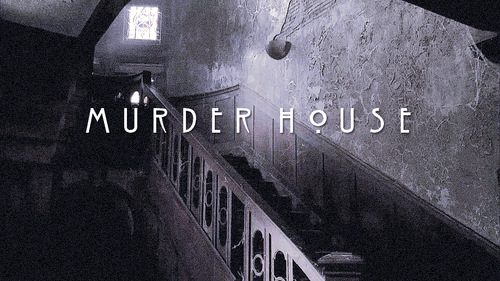
Paul and I are both huge fans of Jessica Lange, so we were tempted to watch for that reason; we both enjoy horror (Paul was the one who got me to watch not only the Halloween movies but the Scream ones as well). But we rarely watch television when it airs; our schedules don’t permit us to watch things regularly week by week. For years we simply waited for them to come on to Netflix and then would binge-watch; it was before Season 2, Asylum, began airing that I got a DVR so we could record the shows–back in the days of VCR’s we used to record shows all the time. So, as Asylum aired, we were also watching Murder House from Netflix on disc at the same time.

american-horror-story-image-american-horror-story-36242754-500-281

The acting was fantastic; Jessica Lange was, as always, amazing. But my biggest fear about the show–Ryan Murphy as show-runner–too often proved to be true. It has been my experience that Murphy is a great ideas guy, but those ideas don’t often pan out into a long-term running show; Glee being the classic example. But I thought the anthology nature of this show–each season being a self-contained story, and using an ensemble cast–might work. Murder House was terrific, and of all the seasons, the most cohesive in terms of story-telling. Asylum was all over the place; after an amazing beginning in which Adam Levine died in a most horrible fashion, the show seemed more concerned with cramming in as many horror tropes as possible within the season: Aliens! Serial killers! Nazis! Biological experiments creating bizarre things! Demonic possession! And on and on and on. Paul and I soon lost track of the story and were just watching for the acting. We never did watch the season finale. But it did give us the wonder that was Jessica Lange singing “The Name Game”; Lily Rabe’s brilliance as the possessed nun; and Sarah Paulsen, after playing a small part in season one, getting a chance to truly exercise her acting ability as Lana, the reporter who winds up involuntarily committed.

My favorite season, though, is Coven.

tumblr_nrpgjbwokf1u4r3too2_540

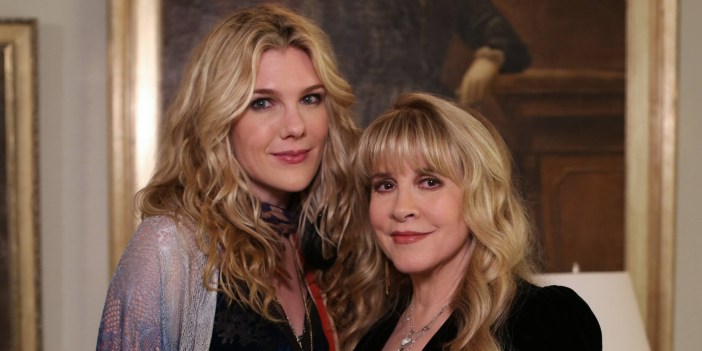
It was set in New Orleans, for one thing, and beautifully shot; it was almost a New Orleans travelogue. Kathy Bates was added to the cast, as was Angela Bassett; it was about witchcraft and a school for witches…and one of the girls was obsessed with Stevie Nicks, who even made two guest appearances on the show, but her music threaded through the entire season.

AMERICAN HORROR STORY: COVEN The Magical Delights of Stevie Nicks - Episode 310 (Airs Wednesday, January 8, 10:00 PM e/p) --Pictured: (L-R) Lily Rabe as Misty Day, Stevie Nicks as herself -- CR. Michele K. Short/FX

Miss Robicheaux’ School for Girls was even in my neighborhood.

But again, the writing was incredibly uneven and often times the story didn’t make any sense. The acting was terrific, though, and the visuals absolutely stunning. I even wrote a piece about how watching Coven for the Criminal Element website about how the show reminded me of why I fell in love with this crazy city in the first place.

The <i>Freak Show</i> season was again unevenly written, and this time the acting–the way the characters were written and so forth, wasn’t strong enough to really carry the show. It was also filmed here, with New Orleans standing in for Jupiter, Florida; the Mott mansion, for example, was Longue Vue. And Hotel was such a mess that we didn’t ever watch the season finale, like Asylum. We are watching the new season, Roanoke, and were very close to stopping watching until the big twist in episode 6–Murphy had hinted in interviews the show would flip, and so we decided to stick it out until then. But after the big flip–which was incredibly clever–it seems like the writing is going off the tracks again.

There have been amazing moments on the show, though.

I am curious to see where this season goes.

And now back to the spice mines.

Get Dancin’

The book is proceeding apace, but I do think this may be my last venture into writing any kind of erotica. I love the story I am writing, and I love the characters, but I am so tired of writing sex scenes. I don’t even want to think about how many sex scenes I’ve written. I never say never, of course–I may write another fratboy book; who knows? But right now I am enjoying writing the story but am having to force myself to put the sex scenes in. I wrote a really nasty poolside one today–it’s not that I can’t write them; like I said, the one I wrote today is hot and nasty; I just don’t find them as much fun to write as I used to.

Speaking of sex scenes and nudity (see what I did there?), a few entries back I mentioned how I described the HBO show True Blood as “Dark Shadows with sex, nudity and a lot more blood.” I stand by that description; the show was a serial, just like Dark Shadows, there were a lot of supernatural elements, just like Dark Shadows, and the primary story was a romance between a male vampire and a human woman, and the vampire was originally from the same area where the story was set. Like Maggie Evans, the object of Barnabas Collins’ dark desires, Sookie Stackhouse, our plucky heroine, was also a waitress at a local bar and grill.

1c8f75fdc9a7e2dc37e076b83e9ccc44

Whether True Blood was horror or not, I cannot say. As I said when I embarked on talking about my favorite horror this month, I pointed out that I am not well-read enough in the genre, or know enough about it’s history, to discuss actual aspects of the genre and what qualifies as horror or not. I think, like with ‘mystery,’ ‘horror’ has become a generic umbrella term for vast swatches of work that sometimes have as little in common as a tomato with a watermelon. Is a ghost story like Ammie Come Home horror? The book scared the crap out of me, but it was marketed, really, as romantic suspense with a touch of the paranormal. Are all paranormal novels horror? I am really not qualified to answer that question.

30639d96d82e4aa9772b1d13b7dbdb3f

I guess the best description of the show would be to call it a ‘paranormal soap.’ It had moments of suspense and terror, of course–and gore, and humor, and nudity, and sex. The story was interesting every season (the season about the maenad, not so much; Paul and I both got kind of bored with that season) to me. People often, on social media, talked about not liking the show or liking the show; but I’m not ashamed to say that I pretty much enjoyed it during its entire run. The problem, of course, was that they had to keep upping the stakes (no pun intended).

true_blood_sookie_stackhouse_bill_compton_eric_northman_sam_merlotte_jason_stackhouse_tara_thornton_pam_de_beaufort_jessica_hamby_lafayette_reynolds_93690_2560x1440

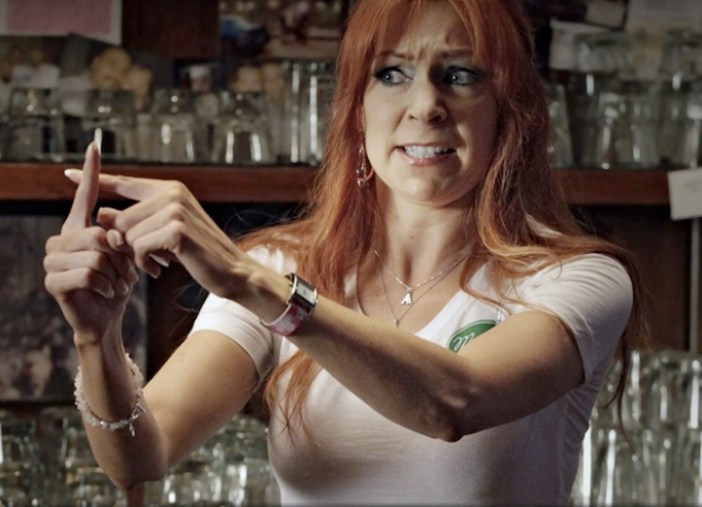
It also had a diverse cast. Many of the characters, in fact, I found a lot more interesting that Sookie the mixed blood fairy and Bill the vampire; and there were some wonderful comedy moments as well–one of my favorites being when Tara is in a moody funk after her boyfriend Eggs turned out to be a serial killer and was killed himself, and Arlene, played brilliantly by Carrie Preston, snaps in exasperation, “So you fell in love with a serial killer? Who here hasn’t?”

arlene-fowler-true-blood-14392869-723-523

If there was any problem with the show’s writing, it seemed like they couldn’t make up their minds what Sookie was; sometimes she was this whiny, passive heroine things happened to; other times she was a badass with a smart mouth who took no shit from anyone.

And of course, my absolute favorite, Pam, never got enough story or scene.

4f5ef85d4fc70318437fe7f3a7201c9d

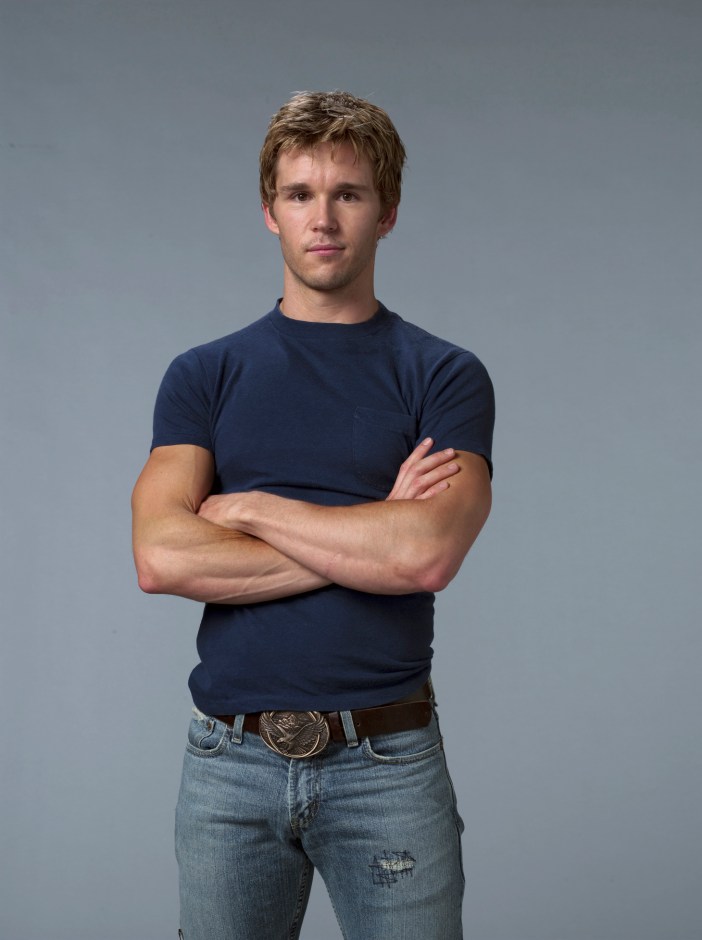
Even the annoying characters at the beginning eventually were developed into likable characters over the course of the show. Jason Stackhouse went from a self-absorbed young stud who loved and left every women he met, who was estranged from his sister, into a pretty decent guy who tried to do the right thing but just made bad choices. Of course, it didn’t hurt that Ryan Kwanten, who played him, was gorgeous.

1379526-jason13

The first moment I saw him on screen I thought, “That’s who should play Scotty if that series ever is filmed.”

I’ve not read the enormously popular novels the show was based on–not from any sense that I wouldn’t like them; but again, one of those I just don’t have time to read them things. I’ve gone back and forth on that–Charlaine Harris is a terrific writer, and an absolutely lovely person–but maybe if I take another trip to a beach, like the Acapulco trip or Hawaii, I’ll take them with me to go and binge read.

The show was also filmed beautifully; it was filmed in Louisiana, and sometimes they were here in New Orleans filming, and Bon Temps was, like Collinsport in Dark Shadows, a kind of magnet for paranormal creatures and activity. I myself have always wanted to do this type of a series–I came up with an idea a million years ago–and even named my town, Bayou Shadows. My short story “Rougarou” actually took place in Bayou Shadows, Louisiana, and I’d intended for Need to eventually tie into that at some point.

Ah, well.

There was also a lot of homoeroticism in the show, and gay/lesbian/bisexual characters. I loved Lafayette, the gender bending short order cook/drug dealer/hustler who was also a medium.

ea5b241d150b4526

The show was also exceptionally clever, as I am sure the books were as well, about dipping into social issues.

And now back to the spice mines.

Have You Never Been Mellow?

My parents were from the country, and as a kid, despite living in Chicago and its suburbs until I was fourteen, I spent a lot of time in rural regions in the summer. We moved to rural Kansas the summer I turned fifteen, to a small town with a population of less than a thousand, a post office and no home mail delivery, and a blinking red light at the cross roads in the center of town. There has always been a sense in this country that the simpler life, i.e. living in the country, is somehow more pure, more American, than living in the cities; I’ve never really understood this, frankly. I’m not disparaging rural life, or people who chose that lifestyle; it’s simply not my preference.

But there’s nothing like the countryside for setting a horror novel, is there? Isn’t it interesting how some of my absolute favorite horror is set either in the countryside or in a small town? Hmmmm…I wonder what to make of that.


harvest-home-tryon

My favorite novel from former actor turned author Thomas Tryon is The Other; which is certainly Gothic and creepy, but I am not including it in my list of Halloween horror novels because I don’t really think of it as a horror novel; maybe other people think so–but other people aren’t making this list, now are they?

I awakened that morning to birdsong. It was only the little yellow bird who lives in the locust tree outside our bedroom window, but I could have wrung his neck, for it was not yet six and I had a hangover. That was in late summer, before Harvest Home, before the bird left its nest for the winter. Now it is spring again, alas, and as predicted the yellow bird has returned. The Eternal Return, as they call it here. Thinking back from this day to that one nine monthe ago, I now imagine the bird to have been sounding a warning. But that is nonsense, of course, for who could have thought it was a bird of ill omen, that little creature?

During the first long summer, its cheerful notes seemed to stand both as a mark of fulfillment and as a promise of profound happiness, signifying the achievement of our heart’s desire. Happiness, fulfillment–if promised, they came only in the strangest measure.

The house, though new to us when we purchased it in the spring, was almost three hundred years old, an uninhabited wreck we had chanced upon, bought, and spent the summer restoring. In late August, with the greater part of the work behind us, I was enjoying the satisfaction of realizing one’s fondest wish. A house in the country. The great back-to-the-land movement. City mouse into country mouse. Mr. and Mrs. Theodore Constantine and daughter, landed gentry, late of New York City, permanently residing at 11 Penrose Lane, in the ancient New England village of Cornwall Coombe. We had lived there less than four months.

Despite some things that wouldn’t play today–there’s a rape scene, for example, which isn’t really dealt with or intended to lose sympathy in the reader for the rapist, for one, and Mrs. Theodore Constantine, really? Yet those were signs of the times–Harvest Home still holds up for the most part today. It’s hard to imagine, though, in this day and age, a rural hamlet that would be so remote and a community so insular and wrapped up in itself that its secrets would never escape; the Internet and smart phones have pretty much connected everywhere (or so I think, in my smug urban-dweller experience). But it’s a chilling book, really, even if there are no supernatural influences going on in the book. Ned and Beth, with their asthmatic daughter Kate, move to the country so Ned can work on his dream of being a serious painter rather than an advertising executive. (For those who were not around in the late 1960’s/1970’s, there was a big movement, or desire/fantasy, for city dwellers to give up the rat race and chase their dreams by moving back to the simpler, country lifestyle, and interestingly enough–here’s a dissertation topic for someone: there was also a literature of the time in which this desire/fantasy, upon achievement, turned into a hideous nightmare; just asThe Stepford Wives showed that moving to a suburb to escape the horrors of city life was into the fire from the frying pan–and there’s the title! From the Frying Pain. I expect to be in the acknowledgements, whoever does this.)

Harvest Home is more of a mystery novel, I suppose, than a horror novel; Tryon’s novels really defied description or categorization, blending elements of different genres together into a dark whole. The book really kicks off when Ned discovers the grave of Gracie Everdeen outside the hallowed ground of the town cemetery, and starts looking into her story and why she was buried out there. Pulling one thread unravels and unspools many others,and the town’s secrets–and strange rituals–slowly come to be revealed to Ned, and to his horror…his discoveries not only put himself at risk but his wife and daughter as well.

And at the center of everything is the aged Widow Fortune–is she a force for good, or a force for evil? In either case, she is one of the most compelling and interesting characters in the novel. (The book was made into a Made-for-TV movie, with Bette Davis in the role.)

It’s a very creepy novel, and the tension/suspense builds and builds. The ending is satisfying–if not the ending the reader may be hoping for, of course.

I always have entertained the notion of writing a biography of Thomas Tryon. He was gay, he was a movie star, and he was rather a good writer, who has sadly been mostly forgotten (although The Other has been brought back into print by New York Review of Books Classics). He also had a long term relationship with Casey Donovan, one of the more famous gay porn stars of the 1970’s.

Because of course I have so much time.

And now back to the spice mines.


Rhinestone Cowboy

I do love witches. What would Halloween be without them? Of course, the caricature of witches that we see at Halloween–green skin, pointed hat, riding a broom, warts, huge crooked nose–was popularized into modern culture by The Wizard of Oz (if not, the Wicked Witch in that film was the personification of the popular culture’s conception of a witch); but, alas, my knowledge on the history of the perception of witches is not that terrific. I know that the concept of witchcraft has been around for a long time–witches are mentioned in the Bible–and have been around in the popular culture for quite some time; I watched Bewitched as a child; there’s Bell, Book, and Candle, and so much fiction about witches…and of course, I’ve read up on the Salem witch trials–and hasn’t everyone been forced to read Arthur Miller’s The Crucible in high school? I am hoping that Lisa Morton, who has already co-authored a graphic novel with the late lamented Rocky Wood and illustrated by Greg Chapman called The Burning Times as well as definitive histories/non-fictions studies on both Halloween and ghosts, will also tackle witches.

But today, I am going to talk about Anne Rice’s The Witching Hour.

220px-thewitchinghourcover

The doctor woke up afraid. He had been dreaming of the old house in New Orleans again. He had seen the woman in the rocker. He’d seen the man with the brown eyes.

And even now in this quiet hotel room above New York City, he felt the old alarming disorientation. He’d been talking again with the brown-eyes man. Yes, help her.  No, this is just a dream. I want to get out of it.

The doctor sat up in bed. No sound but the faint roar of the air conditioner. Why was he thinking about it tonight in a hotel room in the Parker Meridien? For a moment he couldn’t shake the feeling of the old house. He saw the woman again–her bent head, her vacant stare. He could almost hear the hum of the insects against the screens of the old porch. And the brown-eyed man was speaking without moving his lips. A waxen dummy infused with life–

No, stop it.

He got out of bed and padded silently across the carpeted floor until he stood in front of the sheer white curtains, peering out at black sooty rooftops and dim neon signs flickering against brick walls. The early morning light showed behind the clouds above the dull concrete facade opposite. No debilitating heat here. No drowsing scent of roses, of gardenias.

Gradually, his head cleared.

I had read Interview with the Vampire when it first came out, back in the 1970’s, and honestly didn’t care for it. I had just read ‘salem’s Lot, and the concept of the vampire as hero didn’t appeal to me; it was just too foreign for me to wrap my head around (which is ironic, given my love for Dark Shadows, but I didn’t make the connection then between Louis and Barnabas). I picked it up again in the mid-1980’s, and felt the same way about it. I didn’t read anything else Mrs. Rice published, either, simply because I didn’t care for  Interview; then a friend who was a fan had me read The Mummy, which I greatly enjoyed. I had a hardcover copy of The Witching Hour–I don’t know why, to be honest–but after reading The Mummy I wanted to read something else by Mrs. Rice and remembered that I had a copy of this other one…

And could not put it down.

anne-rice-house

The Witching Hour ostensibly tells the story of Rowan Mayfair and Michael Curry. Rowan is the latest in a long line of witches going back to the seventeenth century (but doesn’t know it), and she saves Michael from drowning, bringing him back to life. He comes back to life with a strange power–the ability to see things when he touches them; he starts wearing gloves. He also had a vision while he was dead that is somehow connected to Rowan–so he tracks her down and they begin a relationship that eventually leads them back to New Orleans and the Mayfair house, a decayed, ancient mansion in the Garden District when her mother, Dierdre, dies. Dierdre has been in a vegetative state for years; every day she was placed on a side porch of the mansion with the great Mayfair jewel around her neck that always belongs to The Mayfair; the woman who, in each generation, has the power. The brown-eyed man the doctor sees in the opening is Lasher, a spirit whose relationship to The Mayfair is sometimes in question; is he the source of their power, or is he playing some other type of game that The Mayfair is unaware of? The narrative flashes back and forth in time, telling the history of the Mayfair witches along with the romance of Michael and Rowan as they, with the help of the secret order of the Talamasca, try to determine what the truth about the Mayfair witches–and Lasher–is.

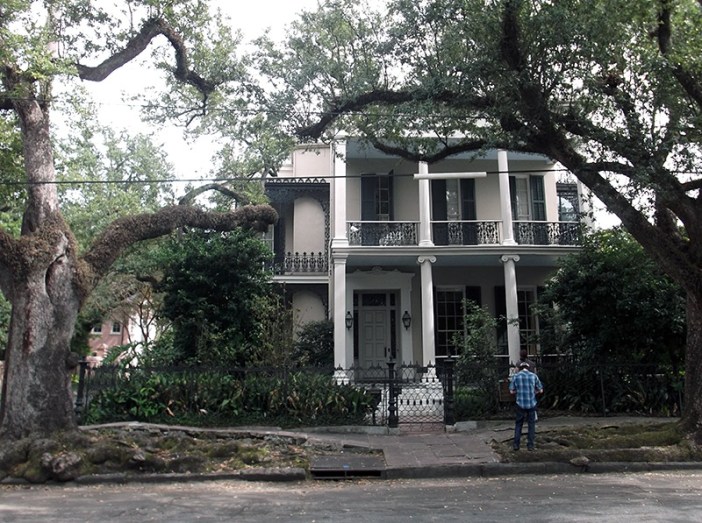
I loved this book so much; I always recommend it to people who want to read books about New Orleans, and always include it on lists of the best books set in New Orleans. It was this book that made me want to come back to New Orleans again; and you can imagine the thrill I got when a friend who lived here drove me to the corner of First and Chestnut and showed me the Mayfair house, which was actually where Mrs. Rice and her family lived. And it was exactly as she described it in the book; Dierdre’s porch was even there.

I’ve read every Anne Rice novel since then, and she also became one of the authors I always buy in hardcover. She is one of those writers you either love or you hate; those who love her work can be very rabid. It was when I was reviewing one of her later Vampire Chronicles (Blood and Gold) that I realized–it’s different when you read for review than when you read for pleasure–that so many reviewers/critics actually got what she does in her books wrong. Mrs. Rice writes about supernatural creatures–vampires, witches, werewolves, etc.–but she isn’t writing horror; she is writing romances in the classic sense of the word. In modern literature romance has come to mean something greatly different than what it meant classically; a romance novel was not a love story, per se, but a big sweeping epic tackling huge themes like life and death, war, peace, humanity, faith, spirituality; what Mrs. Rice was doing was using supernatural characters to expand and explore those themes, and she was writing in the style of the great romance writers of the nineteenth century, like Dumas and Hugo.

I’ve always meant to go back and reread all of her work with this in mind–which is how I’ve read her novels since that realization–but again, time. I am actually several novels behind on her work now–I’ve not read The Wolves of Winter or Prince Lestat, and she has another coming out this year as well.

I will never catch up.

And now, back to the spice mines.