Don’t Stop (Thinking About Tomorrow)

One more day to get through and then it’s vacation. Woo-hoo!

I have literally been riveted by Owen Laukkanen’s The Watcher in the Wall; I hated having to put it down and go to bed last night. I’m about halfway finished; Paul won’t be home until late tonight so I am hoping I’ll be able to finish it tonight. I’m probably going to read Michael Thomas Ford’s Lily tomorrow; the LSU game is on early and after that I am probably going to do a lot of cleaning and organizing and reading. (I’ve decided to take Saturday off from all projects, in order to recharge my batteries.) There’s no Saints game on Sunday, so I am debating whether I should attempt Costco before the LSU game tomorrow, or just go Sunday while everyone’s at church.

Decisions, decisions.

Of course, while I juggle these multiple projects, I’ve been thinking a lot about a couple of short stories I’ve been working on for years, “The Ditch” and “Fireflies”; this was triggered, I think, by reading the Lisa Unger novel. I’ve been also thinking about a y/a novel I’ve wanted to write for years called Ruins; rereading the two Barbara Michaels novels in October started me down that path, and the Unger kicked it into overdrive. The problem with Ruins is that I borrowed some of it for Lake Thirteen; if I am going to write Ruins I’ll have to come up with some new things to say, and replace the scenes I borrowed. The problem with Ruins, of course, is that it’s a Civil War ghost story, and you can’t write that kind of book without addressing the elephant in the room: slavery and racism. I originally wrote it as a short story a long time ago (correction: make that a really bad short story; I think it was one of the stories I wrote in the 1980’s when I was trying to emulate Stephen King. I didn’t address any of those issues in the short story; I blissfully pretended, as so many others have done, that none of that mattered. God, the naivete. I think this is why I have so much trouble with trying to write about Alabama. Is there anything more annoying than a progressive white person trying to address race issues? I loved To Kill a Mockingbird when I read it as a kid; I reread it again recently and, while still thinking it was a moving story that was beautifully written, recognized several problems with it. I have copies of the Colson Whitehead novel that just won the National Book Award and the controversial book Ben Winters published earlier this year; I also found a copy of William Bradford Huie’s The Klansman, about the civil rights struggle in Alabama in the 1960’s, on ebay that I want to reread. (I read it when I was young; I’d like to give it a reread as an adult.)

Maybe after I read Lily. The time has never been more ripe for reading about racism, and studying America’s history of it. I also have Philip Roth’s alternate history The Plot Against America.

Hmmmm.

Of course, actually writing Ruins is a long way away; I have so much to do before the end of the year…

But it’s lovely feeling creative again. I am making lots of notes. The book is coming along rather well, too. I may even get all these things done when I am supposed to

Scary. Who am I?

And on that note, I should probably head back to the spice mines.

Here’s a hottie for today:

14542384_10210729441256939_5592957175501939966_o

Never Going Back Again

Tonight is my biweekly late night, and tomorrow is my last day in the office before I go on vacation, which is so fucking lovely I cannot wait. I have to do some things today –grocery store and get the oil changed in the car–before I head to work, and I also need to edit and write. I have some laundry going right now, and I also have to do the dishes.

I’m so fascinating.

I am reading Owen Laukkanen’s amazing The Watcher in the Walls, and I think I may take Saturday as a day off so I can watch the LSU-Florida game and relax and finish reading it. One of the lovely consequences of recent events has me avoiding wasting time on social media when I get home from work and actually either watching something on television–last night I watched the season finale of American Horror Story, which was incredibly awful and a complete waste of time, just as the entire season was–or reading; I’m really enjoying the reading, frankly, and there are so many books I need to read. Just that extra hour or so of reading every day is getting me through the TBR file ever so much faster and it’s absolutely lovely. I love reading so much.

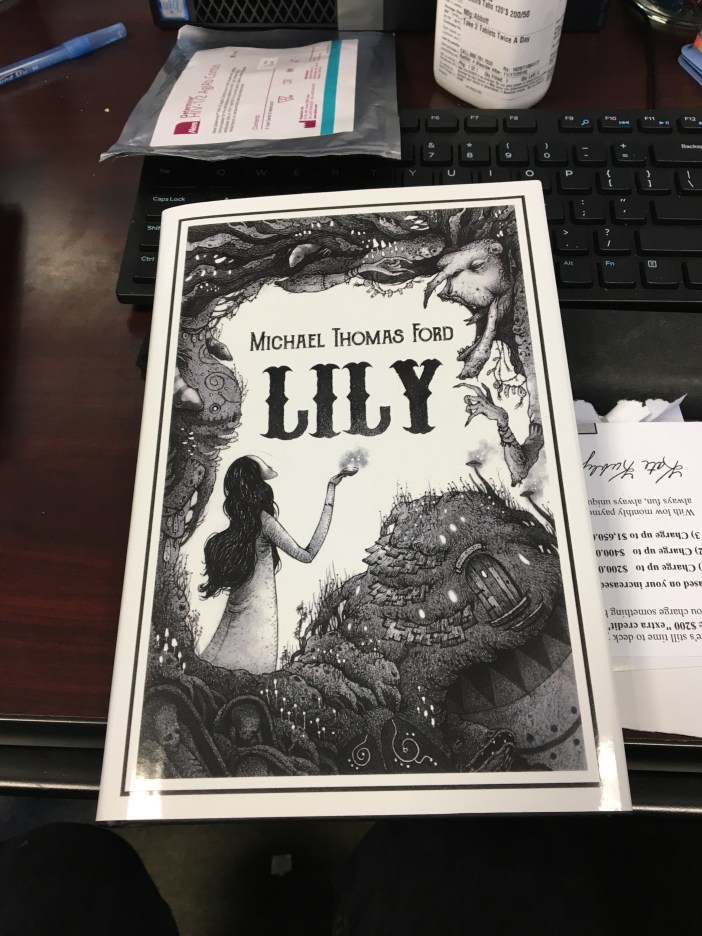
I also got some lovely new books in the mail yesterday, not the least of which is Michael Thomas Ford’s Lily, which I am hoping to read very soon.

img_0974

I also got Lara Parker’s latest Dark Shadows novel, Heiress of Collinwood; I think I might indulge myself and read those novels during Christmas.

I’m also feeling a bit discombobulated this morning; I am going to have to get out my list and make sure I am getting everything done today that I need to get done.

And on that note–back to the spice mines.

Dreams

I just remembered I am going to be on vacation next week.

It’s not a ‘vacation’ in the sense that I am going anywhere; I simply took the week off from work and am staying home. I have a lot to get done (as always) but rather than being stressed or worried about it, I feel pretty good about it. Odd, I know; who am I and what have I done with Gregalicious? It will be nice, though; I’ll also be able to sleep in and go to the gym; perhaps do some cardio (I can dream, can’t I?) and maybe finally reorganize and clean the kitchen the way I want it to be done.

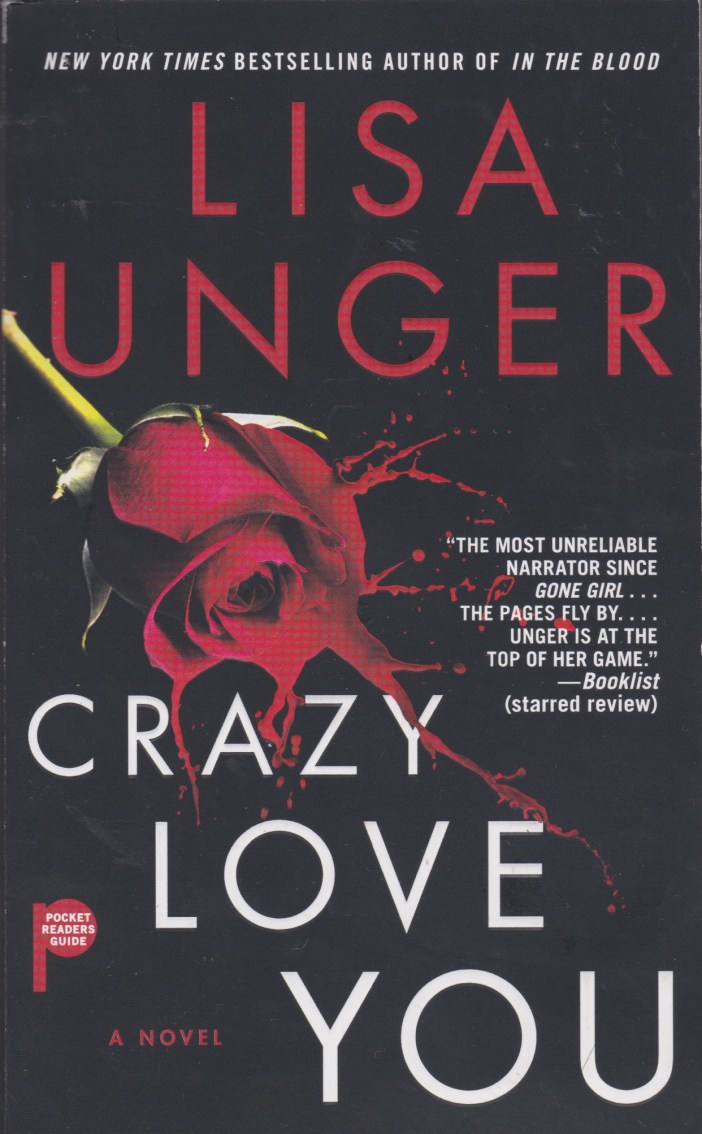
I finished reading Lisa Unger’s superb Crazy Love You last night, and started reading Owen Laukkanen’s The Watcher in the Wall (which is also superb).

crazy-love-you

As I pulled up the long driveway, deep potholes and crunching gravel beneath my wheels, towering pines above me, I was neither moved by the natural beauty nor stilled inside by the quietude I did not marvel at the fingers of light spearing through the canopy, dappling the ground. I did not admire the frolicking larks or the scampering squirrels for their carefree existence. No. In fact, it all made me sick. There was a scream of protest lodged at the base of my throat, and it had been sitting there for the better part of a year. When it finally escaped–and I wasn’t sure when that might be–I knew it would be a roar to shake the world to its core.

I always say the best writers inspire me; when I read their work, I get ideas for stories of my own and how to improve my own writing. I am now adding Lisa Unger to the list of writers who have that effect on me when I read their books.

Crazy Love You is a rollercoaster ride where you don’t ever know what is real, what is going on, and it’s deeply unsettling to read. But the main character is so well done, you can’t stop reading, you can’t stop caring for him–even when he may (or may not) be doing something truly terrible; you can’t help but hope that it’s not him.

Our hero is Ian Paine, and the story is told in his first person point of view. Ian is the successful artist/writer of a series of semi-autobiographical graphic novels called Fatboy and Priss. Ian grew up in a small town north of New York City called The Hollows, and was fat and unpopular and bullied as a kid. There was a horrible family tragedy when he was young, and that’s when he discovered his friend Priss, a beautiful little girl who lived somewhere in the woods near his own house. Throughout Ian’s life, Priss has taken care of him, when things have gotten bad for him or someone has treated him badly. As the book flashes back and forth in time between the present–where Ian is in love, and engaged to, an almost perfect young woman named Megan and trying to dissociate himself from Priss–to his childhood when Priss stepped in to intervene in his life in some way, we slowly begin to wonder precisely what’s going on. Does Priss really exist, or is she some imaginary friend he’s conjured up to help him deal with his own anger issues? Is she some kind of supernatural creature? Does he have dissociative identity disorder? Is this all some kind of drug-induced hallucination?

This was fascinating to read, and a little heartbreaking; I was bullied when I was young and so of course I can completely empathize with Ian and his absorption into comic books and then graphic novels. And Unger is great at not only her use of language but in building tension, mood, suspense and atmosphere.

I’ll definitely be reading more of her work.

And now back to the spice mines.

Second Hand News

I finished reading Gore Vidal’s Thieves Fall Out between bursts of writing on Saturday, and then during the LSU-Arkansas game Saturday night I started reading Lisa Unger’s Crazy Love You, which is just extraordinary. I often say that the best writers and their work are inspirational to me; they give me ideas and make me want to work harder at my own writing and just be a better writer.

So far, the Unger novel is doing just that–and that’s my hallmark for someone being a truly spectacular writer. I just wish I had the time to just sit down and read it through.

That said, as Constant Reader is undoubtedly aware, I’ve been in a writing malaise lately. I don’t know why this happens, nor do I know how to stave it off, but it’s been the reality. I’ve been struggling to write, and even getting 1000 words out in one day has been absolutely like pulling teeth in the Middle Ages. And yet…yesterday I sat down and in less than two hours I wrote over 3000 words. I think–and I am deadly serious–that reading the Unger novel kicked me past it. I also managed to get a lot done over the weekend on top of the writing as well; organizing and cleaning and so forth. So I think I may be past the malaise this time. Here’s hoping.

I wasn’t crazy about the Vidal novel, to be perfectly honest. It seemed like it could be something truly special; international intrigue in 1950’s Egypt, with after effects from the war and all the intrigue from that, as well as some stuff about the antiquities black market. It was one of the many novels Vidal published under a pseudonym in the 1950’s, after publishing The City and the Pillar basically killed his career for a while. I’ve read other works by Vidal and greatly enjoyed them; I am slowly working my way through his epic Empire (one of the multiple books I am currently reading) and so I thought this noirish thriller would be better than it actually was. Don’t get me wrong, I’m not sorry I read it, mind you–I just don’t think it warrants more of a discussion on here.

Although my creativity continues to rage out of control. I had some ideas on how to fix some short stories this weekend, and wish that I could work on them right now–I also got the idea for another novel. Heavy heaving sigh. It really never relents!

Okay, I am going to dive back into the spice mines. Here’s a beefcake shot of Ryan Phillippe, a bonus from 54:

ryan-phillippe-54

Bella Donna

I’ve been, over the course of the last week, rereading Les Liaisons Dangereuses by Choderlos de Laclos; originally published in 1782 as the sun set on the absolute Bourbon monarchy. My interest and curiosity in the novel had been piqued by watching the two competing film versions of the same story that had come out in the same time period; the more famous Dangerous Liaisons and the overshadowed Valmont. The book had been adapted into a quite successful play; the play was the basis for the former film while the book served as the template for the latter–the director, Milos Forman, had been intrigued by the play but the rights had already gone; the book, however was in the public domain and he was determined to film his story. Even now, I wonder about the wisdom of his decision and his financial backers. Dangerous Liaisons wound up being an enormous hit and was nominated for a boatload of Oscars; his film came out second and was mostly overlooked. I preferred Valmont at the time, for reasons I shall explain; but on reviewing the films it is clearly the inferior of the two.

dangerous-liaisons

I also thought it was interesting that publishers associated the book in print with the first film…

The story itself has always, always, fascinated me; it is incredibly dark, and rather on the noir side. Madame de Merteuil, a widow (her title is actually Marquise), is angry because her lover, the Comte de Gercourt, has left her to become affianced to her young cousin Cecile Volanges; a fifteen year old innocent who has been living and being educated in a convent. It is this innocence that Gercourt is attracted to; and as an affianced husband he no longer requires a mistress. The Marquise’ jealousy is, of course, primarily motivated by ego; men do not leave her. So she concocts a scheme to despoil the innocence of young Cecile, and wants to enlist her dear friend, the Vicomte de Valmont, to seduce the girl and turn her into a wanton so that on her wedding night Gercourt would not only be disappointed but humiliated; she also thinks Valmont will help her because in the past, Gercourt had seduced a mistress of Valmont’s. But seducing a virgin isn’t the kind of challenge a practiced roué as Valmont; his interest lies in seducing Madame de Tourvel, a deeply religious and devoted wife whose husband is away on business, nor does he particularly feel the need for revenge against Gercourt. So the Marquise instead has to find another method of having the young girl seduced, and the story goes from there.

glenn-close-and-john-malk-001

I love the book. It’s extraordinary; and it is an epistolary novel, told and advanced through the letters of everyone involved in this game of seduction and the corruption of innocence and virtue. The reader is thus able to engage with each player, and Laclos is able to create each character and their voice distinctly. It’s also a fascinating character study; as the Vicomte and the Marquise explain to each other each step in their game–eventually leading to a bet between the two; if Valmont is somehow able to accomplish his seduction of Tourvel, the Marquise will be his for one night. But also, we see Tourvel’s letters to the Vicomte as she tries to resist him; her letters to friends where she talks about the struggle in her own soul between virtue and sin. We see Cecile’s letters to her friend Sophie, back in the convent, as her own innocence and childhood is slowly taken away from her as she is first excited and scared at the thought of her impending marriage; her innocent, almost childlike love for her music instructor, the Chevalier Danceny (whom the Marquise, having failed at getting Valmont to seduce Cecile, targets to be Cecile’s despoiler), and then her ultimate education into sensuality by Valmont (who finally does seduce Cecile and take her as his mistress to revenge himself on her mother, who has written disparagingly about him to Tourvel and thus hindered his seduction of her). The letters between the Marquise and Valmont also reveal how they became the way they are; their own brief affair which ended when they recognized in each other another such as themselves and decided to be friends and allies instead, and the ultimate game they are actually playing with each other.

The original film, with Glenn Close and John Malkovich in the leads, with Michelle Pfeiffer as Tourvel, Uma Thurman as Cecile, Keanu Reeves as Danceny, and Swoosie Kurtz as Cecile’s mother Madame de Volanges, was very sumptuously filmed; gorgeous sets and costumes and cinematography. But I was repelled by it when I watched it; I couldn’t really believe either Close or Malkovich as these master seducers–although I readily believed them as manipulators. The film itself seemed incredibly cold and dark to me. I much preferred Valmont; with Colin Firth and Annette Bening in the roles, with Meg Tilly as Tourvel, Fairuza Balk as Cecile, Henry Thomas (from E.T. now a young man) as Danceny, and the amazing Sian Phillips as Cecile’s mother. The backstory is set up better–we see Gercourt dumping the Marquise brutally, for example, and Bening and Firth are just so luminously beautiful it was easier to believe they’d be able to seduce pretty much anyone.

tumblr_l89but6kut1qzu6rfo1_1280I read the book after seeing the films; I’ve reread it several times, and after rereading it this last time and rewatching the movies, I am not ashamed to say that I was wrong originally. <I>Dangerous Liaisons</I> is more true to the book as it was written; that coldness, the dark viciousness at the heart of the novel drives that movie far more than it does <I>Valmont</i>; the main characters aren’t quite as dark and nasty and chilling in the second version; she’s simply a woman scorned and he’s just kind of a dick. That sense of evil entitlement that Close and Malkovich embraced and played to the hilt; that seductive sleaziness just isn’t there.
And I now prefer the first film.

It was adapted yet again in the late 1990’s as Cruel Intentions and updated to the world of a modern day prep school and filthy rich kids, with beautiful Ryan Philippe and Sarah Michelle Gellar in the leads as step-siblings, Reese Witherspoon in the Tourvel role as a young girl who’s kind of became the spokesperson for modern virtue and virginity pledges, and Selma Blair as Cecile; whom Catherine’s latest boyfriend has left her for. It takes place over the summer between semesters–and the motivation for Gellar as Catherine to have Cecile seduced, and the reason her boyfriend leaves her for Cecile, doesn’t really play as well. (In an interesting aside, Swoosie Kurtz appears early in the movie as Sebastian’s–the modern day Vicomte–therapist whose daughter he seduces. The darkness at the heart of the story is there in this adaptation, making it even darker as it is about cynical teenagers/high school students. I intend to watch it again; I’ll probably talk about it here once I do.


MSDCRIN EC012

And now back to the spice mines.

No Questions Asked

Monday morning. Heavy heaving sigh. Another week, a lot to do, and probably not nearly enough time in which to try to do it all. I am going to do my level best <b>not</b> to allow this to create a sense of helplessness/impossibility which will lead me to distraction and not even trying, which only makes things worse.

Yes, I’ve been here before, if you couldn’t tell.

I must not panic I must not panic I must not panic I must not panic.

And I won’t. I just have to buckle down and get it done and I know I can.

FOCUS.

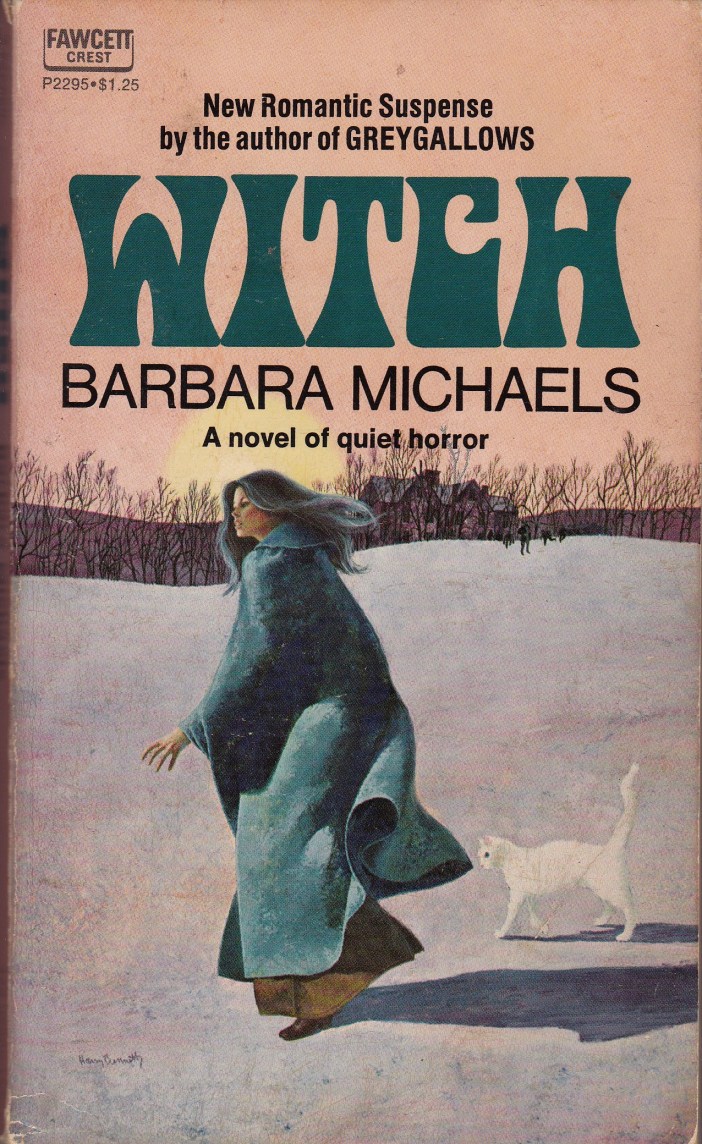
Over the weekend, after finishing Triad, I reread another favorite Barbara Michaels novel, Witch, which I had not read in a long time. (I am now reading Gore Vidal’s Thieves Fall Out, originally published under a pseudonym and now reprinted under his actual name by Hard Case Crime.)

witch

According to the directions Ellen had received from the real estate agent, the house was in a clearing in the woods. Gently perspiring in the the hot office, Ellen had thought wistfully of cool forest glades. April in Virginia is unpredictable; this particular day might have been borrowed from July, and the small-town office was not air-conditioned.

An hour later, after bumping down rutted lanes so narrow that tree branches pushed in through the car windows, Ellen was inclined to consider “clearing” a wild exaggeration. She started perspiring again as soon as she turned off the highway. No breeze could penetrate the tangled growth of these untamed forests; moisture weighted the air.

At any rate, this must be the house, though it more resembled a pile of worn logs overgrown by honeysuckle and other vines.

Barbara Michaels, as I have said any number of times, is one of my favorite writers of all time. Witch is one of her better books, definitely in my top tiers of her novels under that name. It tells the tale of Ellen March, divorced, who has been living with her brother-in-law helping him raise his three sons (her dead sister’s) and her own daughter, but now all are leaving for college or private schools, the brother-in-law’s job with the state department is taking him overseas, and all of a sudden, she is at loose ends. As the house in one of the suburbs of DC is to be sold, Ellen decides to buy a nice place out in the country. And she finds one, spends the next few months getting it fixed up, and moves in.

But all is not what it seems in the country.

First off, Ellen has a very bizarre reaction to the house when she first sets foot in it–an exultation, kind of ecstatic joy. And then there are the stories about the house–it was originally built in the seventeenth century, and it was the home of a woman many of the local considered to be a witch–who tended the wild animals in the woods and then “committed suicide.”

And then weird things start happening–she starts seeing a white cat in the woods (the witch had a white cat); sometimes she sees shadows out of the corner of her eye in her bedroom that vanish when she looks; she occasionally hears laughter inside the house; and then she tells, as a joke, fortunes for some teenagers who hang out in the general store in the nearby village of Chew’s Corners…and the fortunes start coming true.

The town, which is dominated by a horrific fundamentalist church called the Earthly Atonement of the Wrath of God, which is even worse than it sounds. So, of course, the “good” people of Chew’s Corners think she is either a witch herself, or being possessed by the ghost of the witch.

It’s a good story–although I would disagree with the cover’s depiction of it as “a story of quiet horror”–it’s still, more than anything else, a suspense novel with some paranormal elements thrown into it for good measure. It’s a great read, and the big reveal is just as shocking on a reread as it was on the original read.

And now, back to the spice mines. This stuff ain’t going to get done on its own.

Rhiannon (Will You Ever Win?)

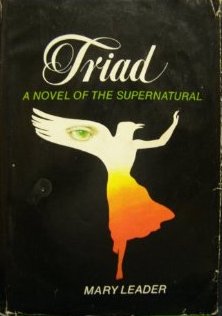
I first read Mary Leader’s novel Triad when I was either eleven or twelve. I was creepy, and I really enjoyed it; but I had trouble pronouncing one of the character names: Rhiannon. It was a Welsh name, of course, and I’d never heard it before, so I was pronouncing it RYE-uh-none. I actually thought it was an ugly name. Flash forward a few years, and I heard a song unlike any other I’d ever heard before on the radio–KCMO AM out of Kansas City, I think it was–and after it was finished playing, the deejay said it was “Ree-ANN-un” by Fleetwood Mac (a band I’d never heard of). The next time I was at a record store, I looked for it in the 45’s rack, and there it was: RHIANNON (Will You Ever Win” by Fleetwood Mac.

url

Oh, THAT’S how you say it, I thought to myself, and bought it. I eventually bought the entire album–one of the first albums I’d ever owned that I could listen to from beginning to end–and have been a Fleetwood Mac fan ever since.

A few years ago, I either read an interview with her, or saw her talking about the song on television somewhere, and Stevie Nicks said she’d read a book where she came across the name, and the book actually inspired the song. It was one of those moments where you feel a connection with an artist you love (“Oh my God, I read that book too!”)

Recently, and I don’t remember where or how or why; it may have been my October blogging, but as I said, I don’t remember how, but I remembered the book again. I hadn’t read it in over forty years, and I remembered that the author had written another book I’d enjoyed–Salem’s Children–and so I went on-line and ordered copies of both.

And I reread Triad this past week.

triad

It didn’t start all of a sudden. As I think back now, there were so many little unexplained incidents that I shoved aside and forgot about until later. There began to be those gaps in my life, little ones at first, but then longer and longer as time went on. I would wonder if my memory was failing me and I worried about the headaches to which I’d become prone, but my doctor told me that it was probably shock due to the baby’s death.

That has been so unexpected. I put him to bed one night, all rosy and dimpled with health. He looked at me with those big bright eyes, as he lay fingering the handle of his rattle, then drowsiness drew down his lids and he flipped over on his stomach as he always did and went to sleep with his fist curled around the rattle. The next morning I awakened to the sound of children on their way to school and the disposal truck grinding garbage under our apartment window. Alan was away on one of his projects, so I must have slept right through breakfast. I started to stretch lazily in those moments of waking when one lies between forgetting and remembering, and then sat up with a jerk. Timmy has missed his four o’clock feeding! Had he called and I hadn’t heard him? That wasn’t possible. I always woke at the slightest sound he made. I hurried to the crib and there he was, just as I had left him, but his little body was cold.

“Unexplained crib death” was what the doctor wrote on the death certificate after the autopsy, which meant that Timmy went to sleep a normal child and just stopped breathing for no apparent reason.

Branwen is our young point of view heroine, and the sudden, unexpected death of her child has obviously had a terrible effect on her; I cannot even imagine what it must be like to lose a child, let alone a baby. In an effort to get her over the tragedy, she and her husband, Alan–a civil engineer who is thus away for work most of the time–leave their Chicago apartment behind and buy a beautiful old Victorian house in a small town north of the city on the lake shore.

And then the weird things start happening.

Branwen has guarded a secret most of her life, you see. When she was a little girl she had an older cousin, Rhiannon–their parents were two sets of identical twins–who was jealous and cruel to her, and as such, Branwen hated her. After Rhiannon killed a kitten of Branwen’s–and made it look like it was Branwen’s fault–during a game of hide-and-seek, Rhiannon was inside an old freezer, and Branwen closed the lid on her.

Unfortunately, the handle broke and she wasn’t able to get her out. She went for help, but by the time she was able to get help, Rhiannon was dead.

And now, in the big empty house, with its speaking tubes and old-fashioned stylings, she can hear Rhiannon whispering to her…and strange things start happening.

Has Rhiannon come back? Is the house haunted? Has the loss of her child driven her mad? Is she being possessed?

The atmosphere of the book is terrifying and creepy–those speaking tubes! One of the things I remembered before the reread, over forty years later, was the speaking tubes and the hollow voices coming out of them.

In tone and voice and atmosphere, it’s very similar to Thomas Tryon’s The Other as well as something Shirley Jackson might have written.

Long out of print, it’s a shame. The book is a gem of a read, and short–less than 200 pages–and it’s also a shame Leader only wrote two books.

And as you read it, you can see echoes of the Stevie Nicks song in its pages, and you can see how it inspired her to write the song.

It’s a haunting book–like I said, I’ve never forgotten it–and I’m glad I got the chance to reread it.

Da Doo Ron Ron

There’s really nothing like a good night’s sleep, is there?

Well, that first cup of coffee after a good night’s sleep is pretty close.

Tonight is my late night; bar testing in the Quarter, and as such I have the morning and early afternoon free. I intend to get some cleaning done as well as some writing (that’s always the intent, but it never seems to happen quite the way I have planned; primarily, methinks, because I have a tendency to over-plan what I can get done as well as the ever-popular easy distractions).

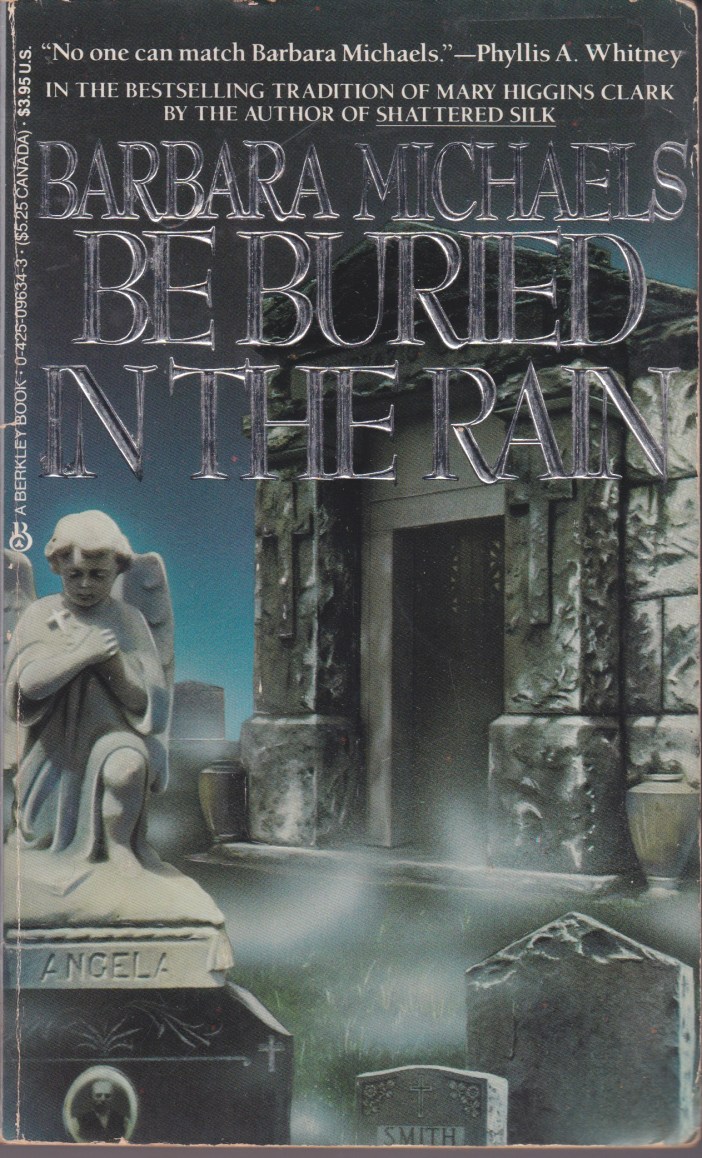
Last night, while I alternated between American Horror Story (ugh) and the final game of the World Series–nicely done, Cubs–I finished rereading Be Buried in the Rain by Barbara Michaels.

be-buried-in-the-rain

The old pickup hit a pothole with a bump that shook a few more flakes of faded blue paints from the rusted body. Joe Danner swore, but not aloud. He hadn’t used bad language for six years, not since he found his Lord Jesus in the mesmeric eyes of a traveling evangelist. He hadn’t used hard liquor nor tobacco either, not laid a hand on his wife in anger–only when she talked back or questioned his Scripture-ordained authority as head of the family.

It would never have occurred to Joe Danner that his wife preferred their old life-style. Back then, an occasional beating was the natural order of things, and it was a small price to pay for the Saturday nights at the local tavern, both of them getting a little drunk together, talking and joking with old friends, going home to couple unimaginatively but pleasurably in the old bed Joe’s daddy had made with his own hands.

Since Joe found Jesus, there were no more Saturday nights at the tavern. No more kids, either. Joe Junior had left home the year before; he was up north someplace, wallowing in the sins he’d been brought up to hate…only somehow the teaching hadn’t taken hold. Not with Lynne Anne, either. Married at sixteen, just in time to spare her baby the label of bastard–but not soon enough to wipe out the sin of fornication. She lived in Pikesburg, only forty miles away, but she never came home anymore. Joe had thrown her out the night she told them she was pregnant, and Lynne Anne had spat in his face face before she set out on a four-mile walk in the traditional snowstorm, to collapse on the doorstep of her future in-laws. They had raised a real ruckus about it, too. Methodists. What else could a person expect from Methodists?

I loved Barbara Michaels, which was one of the two pseudonyms used by Dr. Barbara Mertz (the other was, of course, Elizabeth Peters). She was named a Grand Master by the Mystery Writers of America in the 1980’s, and her books were consistently excellent. Be Buried in the Rain was one of my favorites she published as Barbara Michaels; not quite as favorite as Ammie Come Home, House of Many Shadows, The Crying Child, or Witch, but definitely right up there with them.

The opening, which I’ve quoted above, gives you a slight picture of just how good she actually was. In those brief three paragraphs she sketches out a very clear picture of Joe Danner and who he is; without any physical description, I can see him perfectly in my head. This is shortly before he comes across a surprise in the country road; in a place called Deadman’s Hollow, where the county road cuts through the overgrown, gone to seed estate called Maidenwood–the skeletons of a woman and a baby. That discovery is the key to the story of Be Buried in the Rain, and it’s a terrific story. Julie, our first person p.o.v character (I resisted the urge to call her Our Heroine) is in medical school; her mother and family pressure her into spending the summer between classes at Maidenwood, helping care for her eighty-five year old malevolent grandmother, Martha. Martha is truly monstrous, and Julie spent four years as a child in Martha’s care at Maidenwood while her mother worked her way through college. After being retrieved by her mother, Julie has never returned to Maidenwood, and for the most part has blocked the memories of those four awful years out of her mind…but her return to Maidenwood starts bringing the horrible memories back.

At the heart of the story is the mystery of the identity of the skeletons, and where they came from. Local legend has always held that Maidenwood was the site of a British colonial settlement called Maydon’s Hundred that was wiped out in an Indian massacre; Julie has a love interest in an archaeologist named Alan whom she was involved with before, who was always interested in finding the remains of Maydon’s Hundred. Martha grimly put a stop to that, and her nastiness to both Alan and Julie also ended their relationship. Now both are back at Maidenwood…a crumbling, dirty old manse with an overgrown, almost oppressive vegetation surrounding it, as there hasn’t been money for decades to keep the place up.

The atmosphere is fantastic; Michaels is at her best at describing the oppressive heat and humidity, the overgrowth, the darkness inside the house that is not only literal but symbolic. It brought to mind memories of my own childhood summers in Alabama at my own grandmother’s–but my grandmother wasn’t a monster like Martha. It also reminded me of an idea I had for a book about Alabama…

I really do need to write about Alabama.

And now, back to the spice mines.