Picture to Burn

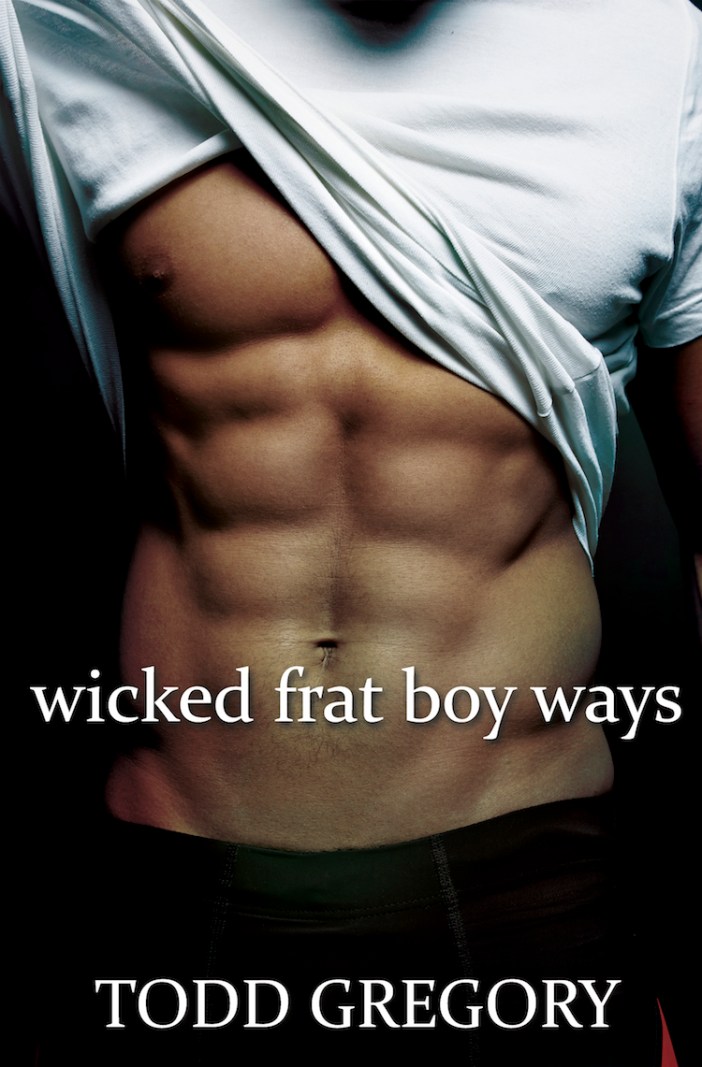
Good morning, Constant Reader! It’s my official release day for my latest Todd Gregory tome, Wicked Frat Boy Ways, which I am kind of excited about. For one thing, I love the cover. For another, I am kind of proud of this book. I did something completely different than anything I’ve ever done before, and it’s also an homage to one of my favorite stories of all time: Les Liaisons Dangereuses. (I’ve also discovered that young people will just look at me blankly when I mention that; or even say Dangerous Liaisons, the award winning film with Glenn Close and John Malkovich from the late 1980’s; however, mention Cruel Intentions with Ryan Phillippe and Sara Michelle Gellar, and their eyes will light up.) It’s a wonderful story; after all, to date, there are four film versions thus far, and a stage version. The Glenn Close movie inspired Madonna’s MTV Video Awards performance of “Vogue”–which I absolutely loved. I am a sucker for the costumes of that era; Bourbon France (1589-1792) is one of my favorite periods of history; the French Revolution is endlessly fascinating to me (Les Liaisons Dangereuses was set in the early 1780’s, and there are those who call the at-the-time scandalous novel as one of the flagstones in the pathway to the French Revolution, by pointing out the corruption and evil behavior that boredom amongst the wealthy and spoiled aristocracy in France to a wider audience); and so my personal favorite film version of the story are the Glenn Close with the Annette Bening/Colin Firth Valmont coming in second. But Cruel Intentions is also very well done, and both Phillippe and Gellar inhabit the evil characters absolutely perfectly. I’ve always wanted to do my own version of the story; but I wanted to follow the novel (which I absolutely loved, and have reread several times) more so than the film.

I’ve played with the idea a lot over the years; the trick is that the novel is epistolary. The epistolary novel was very popular in previous centuries (Dracula is also epistolary for the most part; a mix of letters and diary entries), although it has fallen out of favor in modern times. I’ve always thought they were great; it was a way to get inside character heads much more so than just alternating third-person point of views, and it’s even harder to do alternating first person point of views–which I also didn’t know how to do, and was afraid to try (Faulkner’s As I Lay Dying is perhaps the best example of this ever published). I thought about doing it in the form of emails years ago, and then. after Bold Strokes agreed to publish it, tried to figure out how to do it with modern technology–a combination of texts messages, emails, Facebook posts, etc. But that would also be a formatting nightmare for the technical side of publishing;  I even asked the formatter how it could be done, and the response wasn’t encouraging.

And then I reread one of my favorite books, The Rules of Attraction by Bret Easton Ellis, and I saw how it could be done–alternating first person point of view, present tense; in other words, tell the story in the present from the point of view of characters as it is happening to them, so you can also see, as in the letters, how their perspectives change and how the manipulations happen, and how they really feel. Yes, it was similar to how Faulkner wrote As I Lay Dying, but at the same time, it was a challenge I wanted to take on: an erotic novel with a strong plot, told in the present tense, in alternating first person point of view.

Instead of using the same Beta Kappa chapter at CSU-Polk, I moved it to another campus; one that is more rich and more elite: the University of California at San Felice (a shout out to Margaret Millar, who used San Felice in some of her novels as a stand-in for Santa Barbara), on the California coast a few hours north of Los Angeles. I had the character of Brandon Benson, from Games Frat Boys Play, transfer and now he’s a senior, friends with Phil Connors, chapter president. Phil and Brandon are the primary characters in the story; the others the chess pieces they move around the board; Ricky Monterro is the nephew of a very wealthy self-made lawyer who is president of the alumni association, and a recent drop out from the seminary at Notre Dame who’s just realized he doesn’t want to be a priest, preferring to live openly and honestly as a gay man; Dylan, an incoming transfer from UCLA who is engaged to a soldier on a tour in the Middle East; and Kenny, a shy young gay virgin with no self-esteem who falls head over heels for Ricky at first sight.

Jordy from Games Frat Boys Play even makes an appearance, having rented a house on Fire Island for the summer, which is where Brandon and Dylan first run into each other.

Damn, this book was fun to write. Hope it’s as fun to read!

Wicked Frat Boy Ways_final


Blank Space

It always feels good to finish a project. It’s not entirely in the books yet, of course–there’s another round of edits, and then page proofs to get through–but this stage is completed and it feels lovely.  Ironically, it didn’t take nearly as long as I thought it would; I’d started working on it Friday night, and had gotten much further along in it than I’d remembered. I then repaired to my easy chair and read some more of About the Author, which is terrific; a really great noir I can’t wait to finish. I did have to put it aside, though, because it reached that point I always call the “uh-oh” moment; the part where the character makes the really bad decision that will eventually bring him down. It’s an extremely well put-together novel, structurally speaking, which gives me some ideas about a noir I want to write–the long-thought about Muscles.

Reading is such a lovely gift to one’s self, really. I am so glad I learned to read very young, and fell in love with it. It’s a terrific pleasure.

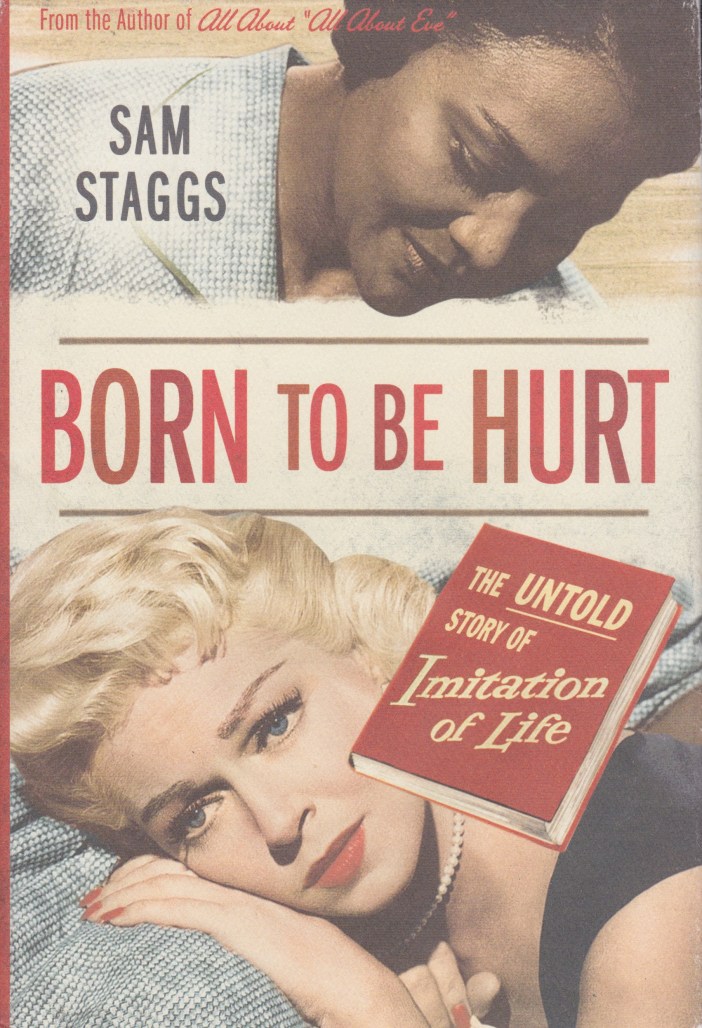
Last night, TCM aired the old Lana Turner movie Imitation of Life, directed by Douglas Sirk, and I watched it for the first time, while paging through Sam Staggs’ gossipy book about it, Born to Be Hurt: The Untold Story of “Imitation of Life.” I love Staggs’ books; I’d already read both All About ‘All About Eve’, Close-up on Sunset Boulevard, and When Blanche Met Brando. They’re wonderful books about the stories behind the making of iconic films–including gossip, of course–and also wittily written and compulsively readable. I do want to read the others again; I recently bought a bunch of them in a lot on eBay  just for that purpose. This one also includes information around the notorious Johnny Stompanato murder–he was Lana’s abusive lover; one night he was threatening her and he was stabbed by her daughter, Cheryl Crane–and it was after this scandal that Lana was cast in Imitation of Life. The movie itself works on so many levels; it’s campy but self-aware, and everyone plays it straight, which makes it even better. Turner plays Lora, an aspiring actress with a young daughter, whose life becomes entwined with that of Annie and her daughter, Sarah Jane–Annie is black and the two come to live with Lora and her daughter Susie, who is about the same age. Lora of course becomes a huge star, and the drama surrounding her has to do with her own self-absorption and basically she allows Annie to raise Susie–but it’s the story of Annie and her light-skinned daughter–who hates being black and passes for white, abandoning her mother until of course, at the very end, Annie has died and Sarah Jane comes back too late, that is the real story here. The movie doesn’t face any of the racial issues, they just are–there’s one perfectly horrible scene where Sarah Jane’s boyfriend, who has found out she is black, beats her (played by Troy Donahue) which is about it, really. There’s a sort of sense, at least on my first viewing, that the terrible situation for people of color in the US at the time was taken for granted; but I can only imagine how controversial the movie was at the time of its release. It was an enormous hit, and Juanita Moore and Susan Kohlar, as Annie and Sarah Jane, both got Oscar nominations. The film is flawed, but Turner is actually pretty good in the role (she was always considered a beauty who couldn’t act), but I also couldn’t help thinking how amazing Joan Crawford could have made it–it was the kind of role she or Bette Davis or Olivia de Havilland could have played in the late 1940’s/early 1950’s.

born to be hurt

If you like books about Hollywood, you have to read Sam Staggs’ books. They’re terrific.

So, this week I am getting back to the WIP, and hope to get some good work done on the short stories I’m struggling with. Woo-hoo! But I’m actually looking forward to getting back to the work I had to put aside to work on the edits of this other manuscript. (Keeping up? Sometimes I can’t keep up with what all is going on with me, so I am often curious if people reading this can follow along.) I should make it clear that the manuscript I just revised from editorial notes is one that will be published under a pseudonym; and the one I am now getting back to is neither a Scotty nor a Chanse. I mentioned a few entries ago that I was looking through Mardi Gras Mambo, and I do think I do need to make the time to reread the entire Scotty series as written thus far before trying to get back into writing another one. It’s long overdue, frankly; I’ve not reread the pre-Katrina Scottys in years, and I think, for this next one, it’s kind of necessary. The nice thing is it’s not like I need to read them deeply, I can sort of skim-read, get a sense of the voice and the characters, and the story.

And on that note, it’s back to the spice mines.

Coming Up Close

I wound up taking yesterday off from writing/editing, which really puts me under the gun today. But after working yesterday, getting groceries, and laundry, I was exhausted, and figured I’d get up early this morning and get going on the editing/rewriting. So, of course, I wound up sleeping late–I got almost ten hours of sleep last night, which is extremely unusual for me on any night. But I am not going to argue with it; I clearly needed the rest, right? So, I am going to get this entry finished up as a warm-up, clean up my email inbox as necessary, and then I am going to finish getting the kitchen cleaned up before showering and getting down to business here. I promised that I would get it finished today and turned in, and I am going to make this deadline no matter how badly I would rather curl up in a chair with About the Author, which I am absolutely loving, for many reasons.

I am only on my first cup of coffee right now, and am slowly waking up, which is kind of lovely. The shower will, as always, finish the process. It is a little disturbing how filthy the kitchen has become–out of order and all that. I am thinking about making shrimp creole for dinner, which means making it around two thirty (making the roux; etc.–it takes four hours to cook in the crock pot). I don’t think I’ll have a problem getting the edits/rewrite finished today, either–it really won’t take very long, I have very concise editorial notes and my editor really has a sharp eye for simple, easy ways to make the story and characters stronger, which is lovely. It’s simply a matter of not allowing myself to get distracted by anything, which is harder than it sounds.

At least, it is for me.

While I have been talking about Todd Gregory in the lead up to the release of his (my?) third Frat Boy book this week (its official release is Tuesday, for those of you who are keeping up), I’ve decided to skip over the vampire stories (“Blood on the Moon” and Need) because, while I enjoyed them and am proud of them, they are a different animal (there is a fraternity connection; my main character in both of those was a fraternity boy–Beta Kappa, of course–at Ole Miss) than the Frat Boy books. And while of course my Todd Gregory short story collection, Promises in Every Star and Other Stories, has little to do with either the Frat Boy books or the vampire stories, it’s more of a piece with the Frat Boy books than the vampire stories–although the short story “Bloodletting”, which is also Chapter One of Need, is included in it.

As I often have said, short stories are often more problematic for me than writing novels; so of course, having a short story collection put together has always been a dream of mine–from having enough stories to actually having any interest in such a book from a publisher. And Bold Strokes gave the collection a great cover.

promises in every star

You really can’t go wrong with that cover, can you?

It wasn’t my first short story collection, though. This was:

WannaWrestle-Front

That book happened in late fall, 2004. A publisher approached me and wanted to do a collection of my wrestling stories. I hadn’t published enough stories at that time to make up a full book, so I had to write some new ones, and I did. The book didn’t come out when it was supposed to, I never got paid anything for it, I wasn’t even sure if it was available anywhere–to be honest. The subsidiary rights were sold to Insightoutbooks, and it did very well there–again, I never saw any money because of ‘problems’ with the publisher. In the fall after Katrina, I got an offer from the publisher for a flat cash settlement to return the rights to me, terminate the contract, and get all remaining copies in stock at the warehouse….which ended up being nine copies. I seriously doubt the print run was that small, you know? In other words, I got thoroughly screwed…but at the same time, I wanted the mess over and done with and didn’t have the time nor interest as I was trying to figure out what to do with my life and living situation after the flood, you know? I think you can still find copies of it somewhere on line–for ridiculous amounts of money. I personally only have one copy left. Maybe I should do it as an ebook. It can’t hurt, it’s just sitting there, right?

Anyway, I digress. As I look over the table of contents for Promises in Every Star, I see that only two stories–“Man in a Speedo” and “Will You Love Me in September?”–were the only stories in it to be previously unpublished; I’ve not really written any Todd Gregory short stories since the book came out, which is kind of odd, really. People just stopped asking me to write stories for their anthologies. Not sure why that is, but there you have it.

I love all of these stories–“Promises in Every Star,” “The Sea Where Its Shallow,” “Unsent,” and “Wrought Iron Lace” are particular favorites of mine–and I was terribly pleased to have them all in one book.

I’d love to do another collection of my darker stories–crime and horror–and I think I may have enough published to do one, although I’d probably have to write some new ones (and I do have some unpublished ones on hand) but I might have to do it as a self-published thing. Who knows? We’ll see.

And now, back to the spice mines.


Sugar Sugar

So, I finally watched the season finale of Riverdale last night, and I have to say, well done! I went into Riverdale not sure what to expect–and worried I’d be disappointed–but the show really worked on many levels The writing was strong, if a bit uneven at times; the way it was shot–the production values, cinematography, use of color, etc–was always on point; but the biggest strength of the show was the cast. The young actors playing the Gang were appealing and imminently likable; and following the lead of Pretty Little Liars, the older members of the cast were former teen heartthrobs (Jason Gedrick, Luke Perry) or had become successful as young stars (Madchen Amick, Robin Givens). I am really looking forward to the second season.

Well done, Riverdale!

I slept really late this morning, which kind of felt good. I need to finish going over my editorial notes, and making those corrections–I intend to spend tomorrow polishing the book from beginning to end, and I also have to go into the office for a few hours today, as well as make groceries. I’d thought about doing the groceries this morning, but oversleeping took care of that, as well as wiping out my plan to finish the editorial notes. I’ll now have to do that when I get home from the office/making groceries. That’s fine, too; this morning before work I can organize/clean the kitchen and finish the laundry and do all those other lovely chores before running to get the mail and heading in to the office. Hurray! (There really needs to be a sarcasm font.)

I also started reading John Colapinto’s About the Author last night. It was recommended to me by a friend when I told them the basic premise behind my short story “Quiet Desperation”. I am only a few pages in but I am enjoying it so far. When I finish, I think I am going to read either The Sympathizer (won both Pulitzer Prize and Edgar) or Before the Fall by Noah Hawley (recently won the Edgar). Definitely some good reading in my future! Huzzah!

I also, for the first time in a while, looked at Mardi Gras Mambo, aka Scotty Three, and was more than a little startled by how much the tone, how much the character, had changed since then. People change, of course–things that happen affect who you are, affect how you react to things, change your perspective–but in just reading the introduction and the first three chapters, the change was so dramatic it was startling. Should I go back to Scotty–when I go back to Scotty–it only makes sense to read the series over again, from start to finish. Maybe it’s too late to get that sense of the earlier Scotty back now, I don’t know. But some things I’d been feeling make sense now; maybe in rereading the entire series I can figure out how to do the new one.

I have to say, I am starting to enjoy myself again with writing and editing. I think the break from deadlines was precisely what I needed.

And now, back to the spice mines.

Here’s a Saturday hunk for you:


456d2da057cb048966f9754624cdcbed

(They Long to Be) Close to You

Laura Lippman famously said on a panel once that in noir fiction, “dreamers become schemers.” It’s probably the best, and most simple, description of noir that I’ve ever heard; it’s broad enough to include James M. Cain’s Mildred Pierce (the book is different from the film) because Mildred does become a schemer, even though there is no crime in the book. That’s the part of noir that most don’t get; there doesn’t really have to be a crime in the story for it to be noir; although most noir has a crime. The first time I ever tried to write noir (which I love) was when I was asked to write a story for New Orleans Noir; that story, “Annunciation Shotgun,” is one of my favorites of my own work, and I was very pleased with my dark, nasty little story. So, you can imagine my horror when one of the other contributors told me, at a reading for the book, how much she loved my story “because it was so funny.” I hadn’t intended it to be funny, of course, but when it became my turn to read, sure enough, the audience laughed in parts. And I learned a valuable lesson: noir can be funny, too.

This is clearly a lesson the Victor Gischler learned at some point in his writing career because his second novel, The Pistol Poets, is noir but at the same time one of the funniest books I’ve ever read.

51CRGXC6VWL._SX302_BO1,204,203,200_

Moses Duncan was in the barn up to his elbows in the fried engine of his Harley-Davidson when he saw the girl driving too fast down the dirt road to his ranch, her Toyota pickup kicking up dust, the dogs barking. He knew who it was. The girl, one of those college kids. Sexy.

He looked at himself. Wiry arms sticking out of his sleeveless AC/DC T-shirt, greasy jeans. It was freezing in the barn, but he couldn’t work on the bike in a jacket. He hadn’t shaved or bathed in two days. Damn, he hated to look so shitty when the pretty ones came around to make a buy. He pushed back his shaggy dishwater hair, accidentally smearing  grease on one side of his head.

He wiped his hands on a rag, stepped out of the barn just as she parked her truck. Moses squinted at the sky. Clouds rolling in. It was rain soon, sleet maybe if it got cold enough.

As Constant Reader is aware, plot is probably my weakest point when it comes to my own novels. I can do character, dialogue, scene, setting, place, mood–all of that. But when it comes to plot…well, I just can’t seem to wrap my mind around how to intricately construct a plot and weave the strands and characters together. Carl Hiassen is really good at this (and manages to be funny at the same time); Victor Gischler does the same thing. And The Pistol Poets manages to contain the same level of farce as Hiassen, while being truly hardboiled and noir at the same time. There are any number of characters in The Pistol Poets, and many of them are point of view characters, at least briefly; again, very hard to pull off and make work.

The book begins with a college student buying drugs from Moses Duncan; she is having an assignation later on with one of her instructors at Eastern Oklahoma University, a second (maybe even third) rate college in a bumfuck small town, a visiting professor and published poet named Jay Morgan. Jay is the erstwhile hero/anti-hero of the story; having a sort of midlife crisis as he moves around the country at bad colleges as a visiting professor, filling in for tenured professors on sabbatical, drowning in alcohol and an “i-don’t-give-a-shit” attitude. The story also involves Harold Jenks, a two-bit hoodlum in East St. Louis who becomes accidentally involved in the murder of a young college student, heading for the bus station to attend the MFA program at EOU. Harold is sick of the life and decides to take the student’s place, which just happens to be in Jay’s poetry seminar…and the story is off to the races. It’s hard to imagine, given the high amount of violence and high body count, that the book is also funny; it manages to skewer MFA writing programs, poetry, academic writing/literature conferences, department politics, drug dealing, and so, so much more. It’s highly, highly entertaining, and I highly recommend this without any qualms.

And now, back to my edits.

The Long and Winding Road

Good morning, Monday, how are you? I am a bit rested and ready to face the challenges of the week ahead. I know, right? Who am I, and what have I done with Greg? Hey, it happens, you know.

I started reading Victor Gischler’s The Pistol Poets yesterday and am enjoying it so far. I also finished reading Royal Renegades, which was about the English Civil Wars and the children of Charles I, and how the wars and the exile affected them. Charles’ wife, Henrietta Maria, really comes across badly, but then from everything I’ve read she was pretty much an awful person. It was interesting and informative to read, but that was one royal family that was ill-fated; so few Stuarts died in their beds, or if they did, with their thrones intact, going back to when they were just the ruling family of Scotland. If you’re interested in English history, I can highly recommend this book; it’s well written and moves along at  quite a good pace. I have now moved on to Anne Somerset’s The Affair of the Poisons: Murder, Satanism, and Infanticide at the Court of Louis XIV. This is a subject that has always fascinated me, but I’ve not read much about other than what appears in French histories or biographies of Louis XIV, and I am really looking forward to sinking my teeth into a book that focuses solely on this story–and I think my next non-fiction will be How to Ruin a Queen, about Marie Antoinette and the Affair of the Diamond Necklace.

I love this kind of stuff.

I have edits to do this week, so it looks like my free time is going to be spent doing rewrites and edits for the rest of the week, all through the weekend, which is fine. I am taking a new approach to rewrites and editing my own work; I am looking at it as an invigorating challenge that will make my work better rather than as an odious chore that I hate doing. I don’t know why that never occurred to me before, really; so much of life depends, as Obi-wan said to Luke, on your point of view. I want to be a better writer, and I want my books to be better, therefore, edits and rewrites are a part of that process to make the work better. I am a good writer, I will never claim not to be, but I am not necessarily as good as I would like to be, and I certainly don’t ever want to get to a point where I can’t improve what I do.

And on that note, back to the spice mines with me.

Here’s a Monday morning hunk for you to get your week started.

swim3

Stay in My Corner

We binged the Netflix series Dear White People last night, and got so involved we couldn’t stop watching; it was one of those shows where you say “oh, just one more won’t hurt” and then it’s over and you’re saying it again and then “well, there’s only ONE left” and then it’s over and you just sit back and think, “wow.” Full realized characters, incredible acting, and the writing? Stellar. Again, it was told from almost everyone’s point of view, so you got to know everyone and their backstories, especially with each other. It was funny, provocative, timely, and diverse. Obviously, my favorite character was the young gay writer, coming to terms with his enormous crush on his hot but straight roommate, trying to figure out who he is while navigating the murky waters of a college campus and institutionalized racism–but no one had an issue with his sexuality. His also gay editor at the independent campus paper got off a line that has me still laughing–and it was repeated by another character in the same episode: “Labels are what keep people in Florida from drinking Windex.”

I finished reading a book yesterday, started a couple more and put them in the donation pile after a couple of chapters, and really was at a loss for what to read next; and finally settled on Victor Gischler’s The Pistol Poets. I did a panel with him years and years ago at the Louisiana Book Festival–really liked him, thought he was smart and funny and engaging–and then read his book Gun Monkeys, which I also enjoyed, and always meant to get more of his books. Sometime last year something reminded me of him, and I finally got some more of them. It has a great opening, and I am looking forward to spending some time with it today, as well as some cleaning, writing, and editing.

The other day, I wrote about the character of Jerry Manning, who appears in Garden District Gothic, and how much I liked the character. I also used him as a character in The Orion Mask–which I had somehow forgotten–and in fact, Jerry is the catalyst for that entire book. I had already created the character of Jerry for the Paige book I’d intended to write, and I liked him so much I actually introduced him to readers in The Orion Mask.
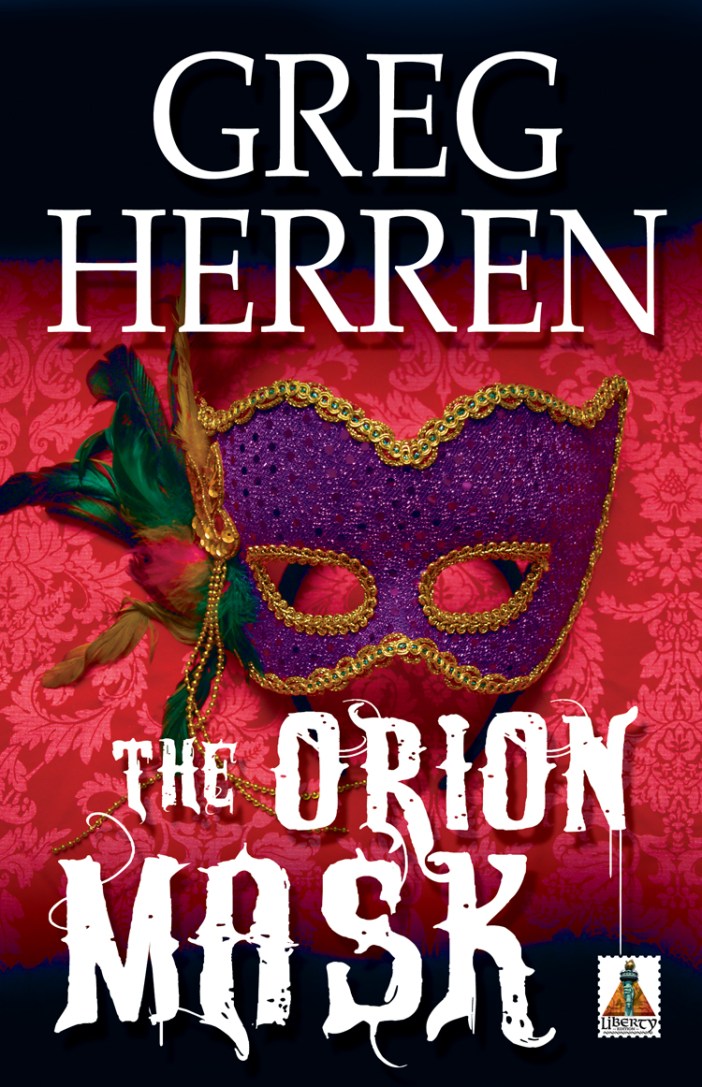
The Orion Mask 300 DPI

I had the idea for that book a long time ago; I’d always loved the romantic suspense novels of Phyllis A. Whitney, Victoria Holt, and Mary Stewart (although I would argue that she wasn’t a romantic suspense writer, simply marketed as one), and of course, Daphne du Maurier’s Rebecca is one of my favorite novels of all time. One of the reasons I loved that style of book so much is because they were not only mysteries, but there was a Gothic feel to them, stylistically and mood-wise, and I always wanted to write one. (I had already published what is my personal favorite of all my novels, Timothy, and really wanted to go back to that well again.) I originally came up with the idea for The Orion Mask many years ago; when I came to New Orleans for Mardi Gras the first time in 1995, only in all my notes and so forth it was called The Orpheus Mask;  the driving idea was a murder that happened a long time ago, and rare, valuable Mardi Gras masks had something to do with the crime. After moving to New Orleans and becoming more knowledgeable about the city and its history, I realized the Krewe of Orpheus was actually too new–plus, I couldn’t really use an actual Mardi Gras krewe. I still wanted to do the book, though, just wasn’t sure how to make it all work. I also knew it had to take place outside of New Orleans; for the story to work, the majority of the action needed to occur at a mansion in the countryside.

Fortunately, there are plenty of those. I was already using one for Murder in the Arts District, that was based on a sort of hybrid of Houmas House and Oak Alley, and thought, oh, what the hell, I’ll just use the same place for this book, too. It is fiction, after all. I’d created a fictional parish as well–Redemption Parish–for that first book, and had based a small town near the plantation on Breaux Bridge, just off I-10 between Baton Rouge and Lafayette that I’d visited with some friends from out of town years ago, but the town never really appeared in that story, so I could really use it for this book. But I still didn’t know how to connect the masks in…and then we went to Italy, and while we were there we went to Venice, and you cannot escape the Carnival masks or the Murano glass there. As we walked the cobbled alleys of that remarkably beautiful city (I so want to go back), it hit me in a flash: someone from Venice who worked with the glass came to America, to Louisiana, and the plantation not only was a farm but also produced glass, using the same techniques made famous by the Venetians, and they could have produced masks for the Kings of the major krewes of Mardi Gras made from the glass. I invented my own, now-defunct krewe–the Krewe of Orion–and everything fell into place.

My story, of course, which was about a young man whose mother died when he was very young, and who was raised by his father and stepmother, completely disconnected from his mother’s family and only comes to see them as an adult, which starts the story, didn’t really have the right hook I needed to get started. Why would he suddenly, after all these years, finally get in touch with his mother’s family?

And that’s where Jerry came in. Jerry, looking for another true crime to write another one of his books, has discovered the murder/suicide involving my character’s mother. I named the character Heath Brandon, after a friend of mine, by inverting his first and middle names (I’d actually given a character his actual name before we met; it was very odd because his name was so familiar to me when we met, but we’d never met before, and then one day I realized I had actually written a character with that name, but I digress.). I put Heath into another fictional city I’d created for another book, Bay City (based on Tampa), and had him work at the airport at an airline ticket counter (a job I’ve actually had), working for the fictitious airline I created for Murder in the Rue Dauphine and have always used ever since whenever I need an airline.

I sat up in a strange bed, wide awake, my heart pounding.

 Disoriented, I looked around in the gloom, not sure where I was or what had woken me up from my already restless sleep. I shivered. A storm was raging outside as my mind began the process of clearing out the fog. Wind was whipping around the house, rattling the windows and the French doors.  The rain was coming down in a steady stream. As I sat up further in my bed, lightning lit up the room, and I recoiled in horror. The brief flash of illumination had exposed the shadow of someone against the curtains over the French doors. I bit back a scream as I wondered if there was anything within reach in this strange room that I could use as a weapon. My eyes were still seeing spots as thunder shook the house as I remembered there was a table lamp on the night stand next to the bed. As my vision cleared, I could see through the gloom that the doorknob on the French doors was turning. I reached my hand out to the table and fumbled for the switch on the lamp. I found it and clicked it on, filling the room with bright yellow light.

I thought I heard footsteps running away along the gallery.  I threw the covers aside and climbed out of the massive bed. I dashed over to the fireplace on the other side of the bed, grabbed one of the brass pokers, and carried it over to the French doors. I flipped the lock off, turned the knob , and the wind immediately grabbed them out of my hands. They slammed against the walls and swung back. The wind pushed me back a few steps. Curtains moved away from the walls, and the canopy over the bed rippled as I struggled to latch the doors against the walls. Once this was accomplished, I tried to step out onto the gallery. Lightning flashed again as I stepped out onto the wide gallery. I wrapped my arms around me and wished I’d put on at least a T-shirt. The wind was blowing the rain onto the gallery, and the heavy drops were splashing my legs with water as I looked through the gloom in each direction.

I didn’t see anyone.

My heart still pounding, I closed and locked the doors again before heading back to the bed, still holding the poker in my hand. I put the poker into the bed next to me and slid underneath the covers. Maybe it had been a dream, maybe there really hadn’t been someone out there on the gallery trying to get into my room, and it was just my imagination working overtime. There wasn’t anyone out there, you fool, I scolded myself, you’re just a little off balance—but it’s understandable. It isn’t every day you meet a family you didn’t know you had a month ago. I switched the lamp off and pulled the covers back up to my chin, and lay there, staring at the canopy over my head.

It was hard to believe it had only been a month since I first noticed the bald man sitting in the airport lobby, and my entire life changed.

The bald man was Jerry, of course, and he tracked Heath down as he investigated the long ago murder/suicide, and it was Jerry who set the stage for Heath to come back to the family estate, Chambord, and  find the truth about what had happened all those years ago, about his mother and the Orion mask.

Writing the book was a lot of fun, and I’d love to do another, similar style book at some point.

I had thought about giving Jerry his own series, or his own stand-alone book; and when I started making notes I realized something: he had been a personal trainer/stripper (so had Scotty) and he came from a repressive small town and a white trash family (Chanse), and thus was basically repeating myself, which is one of my biggest fears. So I shelved the idea…but it runs through my mind periodically because the idea is a good one. I may have to write it about a different character, though.

Heavy sigh.

And now, back to the spice mines.
 

Take Time to Know Her

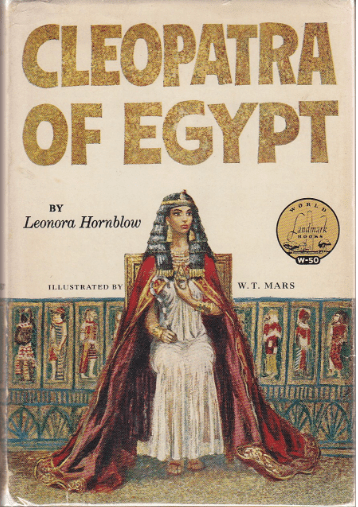
I finished reading  Cleopatra’s Shadows last night. Over all, I enjoyed it, but with all due respect to Emily Holleman, I didn’t love it. I already knew the story of Cleopatra’s sisters, Berenice and Arsinoe, so I wasn’t expecting to learn anything new from it, so that wasn’t the issue I had. I thought it was interesting that the book focused on the brief period of time when Berenice deposed her father and took the Egyptian throne. Usually, fiction about Cleopatra generally begins with Julius Caesar’s arrival in Alexandria and her being snuck into his presence rolled up inside of a rug; which, admittedly, is quite a romantic beginning and you can’t really go wrong starting there. The first book I ever read about Cleopatra–a bio for kids called Cleopatra of Egypt, written by Leonora Hornblow and illustrated by W. T. Mars–began with her fleeing from Alexandria out of fear her brother/husband Ptolemy XIII was going to kill her; and she rose an army and started a civil war. This war interrupted grain shipments to Rome–which was in the midst of its own civil war, between Pompey and Caesar. Caesar had just defeated Pompey, who fled to the court of the Ptolemies; Caesar pursued him there and also aimed to settle the Egyptian civil war. Ptolemy famously beheaded Pompey, thinking he would please Caesar by doing so; instead, he pissed him off, which made Caesar more inclined to be sympathetic to Cleopatra, who was actually Cleopatra VII. But one of the most interesting things to me about Hornblow’s book–which was for kids, mind you–was that she talked about Berenice’s rebellion and usurpation, as well as that of Cleopatra’s younger sister, Arsinoe–and how Cleopatra was present in Rome for the Roman Triumph in which Arsinoe was marched, in chains, behind a chariot…and that was the motivation behind her own suicide when she lost to Rome; she refused to be subjected to the same humiliations in front of the Roman mob that her sister endured.

cleopatra of egypt

I found a copy of it on ebay a few years back, and bought it again. I kind of always wanted to write about both sisters, honestly.

So, obviously, I was very excited to read Cleopatra’s Shadows.

It isn’t that the book wasn’t well-written; it was, and I am sure, as Holleman is a historical scholar, it was undoubtedly incredibly well-researched. What was disappointing to me was that Holleman didn’t give either sister agency. The Ptolemy dynasty,  Macedonian Greeks descended from Ptolemy, one of Alexander the Great’s generals who was rewarded with Egypt after Alexander’s death and the break-up of his empire, was known for it’s intelligent, highly educated and ruthless women. Like the Egyptian pharaohs of old, the Ptolemies married their sisters to keep the dynasty pure, and while there aren’t a lot of records–the burning of the Great Library at Alexandria to blame for this–there is enough evidence that the sister-wives were actually, in many instances, co-rulers and just as ruthless as the males. Each male pharaoh took the name Ptolemy; their sister/wives/queens were named either Cleopatra, Berenice, Arsinoe or Selene–or a combination of two of those names. Again, there is also evidence that Ptolemaic queens disappeared–probably murdered by their husbands, and the ‘pure bloodline’ wasn’t quite so pure, as the unions were sometimes sterile and other women, concubines, were brought in to bear children for the pharaoh. The plotting and machinations of the Ptolemaic court, the struggles for power, are endlessly fascinating to me; even in the children’s book which was my first introduction to the most famous (notorious) Cleopatra this was very clear.

So, the characters of Berenice and Arsinoe as Helleman chose to depict them were disappointing to me. Berenice was, per this novel, the only true child of a royal brother/sister pair; and her father, Ptolemy XII Auletes, the Piper, was not a popular ruler. The premise of this story is that Ptolemy tired of his sister/wife Tryphaena and her inability to bear him a healthy son, so he banished her from court and replaced her with a beautiful concubine, who bore him four children–Cleopatra, Arsinoe, and two young males both named Ptolemy. Berenice’s revolution and overthrow of her father was apparently more based in the bitterness of mother and daughter in being supplanted by the concubine (never named) and her children more than anything else. And while it is all too frequently true that kingdoms and history were shaped by family disputes, rivalries, and romances/loves/jealousies, but I always kind of admired Berenice. The strong woman I always imagined she must have been, strong enough to raise a rebellion against an unpopular king, and to be successful, was not the character Helleman wrote about, who was vacillating, weak, and insecure.

Likewise, the younger sister, whose point of view the story is also told from, Arsinoe, is completely obsessed with her older sister Cleopatra, and barely a page in her point of view passes without so mention of how much she misses her sister. She never thinks about either her father or her mother, and given she is a child, that’s a bit more understandable. But Arsinoe eventually leads her own rebellion against Cleopatra’s rule, so clearly she too is an ambitious young woman as well as intelligent one, one foolhardy enough to rise the Egyptian people up against the Roman legions who have come to Alexandria to back up her sister, and I get no sense of that strong woman in this child. Things just happen to Arsinoe, and while there are slight hints of the politician in her being trained and brought to the fore in the lessons she is learning at the court of a sister who despises both her and her mother, for the most part she is just someone things  happen to–and she never grasps the idea that she should stop being passive and maybe make things happen. The Ptolemies were notoriously ruthless in killing people and relatives who might pose a threat; a pragmatism that may seem horrific to our modern-day sensibilities of family ties but something that was absolutely necessary for them to keep their thrones and their power secure. In fact, Berenice’s advisors want her to kill Arsinoe, but she refuses, and never gives any reason for doing so, which weakens her character still further.

It’s a good read, and it’s well-written and interesting, but I was disappointed with the characters, frankly. I can recommend it to anyone who enjoys historical fiction, and is interested in the period.

And it did revive my interest in the Ptolemies.

And now, back to the spice mines.

Magic Carpet Ride

We had the most marvelous electrical storm last night, which helped me sleep deeply and well. I don’t have to be at work until later–more bar testing tonight–and even as I sit here at my desk, it’s getting dark and gloomy outside, which clearly means another storm is on its way. I also had a weird dream about the Outdoor Kitties last night–I went outside to feed them and Scooter was outside, so I picked him up and brought him in…only another Scooter was inside, along with some gorgeously colored Maine coons and some beautiful kittens. This is when I woke up, confused that Scooter had somehow cloned himself, only to find him sleeping on me. Very weird, right? That’s the first dream I’ve had in years that I could remember when I woke up.

Figures it involves cats.

I still haven’t finished Cleopatra’s Shadows, but since I’m not going in until later today, I might be able to get through it today. It’s irritating, because there isn’t much left, and I really want to get to Universal Harvester. Ah, well. We watched another episode of The Handmaid’s Tale last night, and seriously, with everything else going on in the country today, it’s even more alarming and depressing in its realism. I also want to start watching American Gods; maybe this weekend. I have some appointments on Saturday, and some things to do–I definitely want to start working on the stored books sooner rather than later–and I want to get some work done on the book.

I’ve put the new Scotty aside for now, as I mentioned before. I was talking to a writer friend over lunch the other day–he’s in town for a conference, and very graciously treated me to lunch at Willa Jean in the CBD–and I was able to put my finger on precisely why I wasn’t feeling the new Scotty book. I had a similar problem with Garden District Gothic when I started writing it, and what I really think I need to do before I move forward with the new Scotty is go back and binge-read the first seven (!) books in the series. I kind of think something intrinsic to the series somehow might have gotten lost along the way in the books.

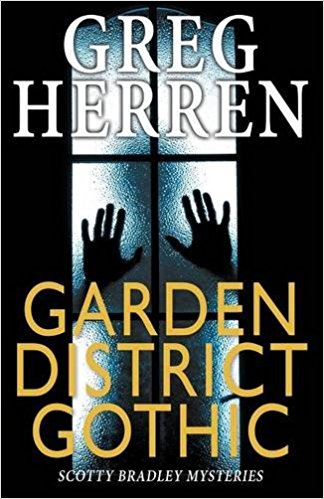
Garden District Gothic wasn’t supposed to be a Scotty book initially; it was intended to be another Paige book. (Just as Murder in the Rue Ursulines was originally intended to be a Scotty, and I turned it into a Chanse.) I won’t get into why the Paige series came to a premature end, but I will say that I love Paige, I loved writing about her, but I will say that I was being pressured to make that series something I wasn’t feeling, and I think it came across in the writing. I had created the character of Jerry Manning for one of the Paige books, with the intent of making him a focal point of the third. But I liked the character so much I also used him in The Orion Mask, and when I decided not to do another Paige, I didn’t want to lose the character in the process. I also liked the idea behind the book, the plot I came up with for it, and so I decided to simply turn it into a Scotty book and rejigger the story somewhat. Jerry was fun–I’ve debated giving him his own solo book, or series; a white trash boy who ran away from his repressive small town in Mississippi where he grew up, and had kind of a hardscrabble life when he got to New Orleans as a sixteen-year-old runaway with not much money. His backstory fascinated me. He worked days as a busboy in a French Quarter restaurant, lived in a crappy, run down roach-infested apartment in the Marigny, and then started dancing at the Brass Rail (my fictional version of the Corner Pocket). But Jerry was ambitious, refused to get caught up in the unfortunate world of the dancers there–although he did things for money he maybe shouldn’t have, while putting aside money with an eye to going to the University of New Orleans and getting a degree in creative writing, which he eventually was able to do. He also became a personal trainer and started working in Uptown, eventually becoming the personal trainer for wealthy women. (Aside: I’ve also always wanted to do a series about a personal trainer. The amazing thing about personal trainers is–at least, in my experience being one and having one–is that they are similar to hairdressers and bartenders, in that there’s a forced intimacy between the trainer and client; I learned a LOT about my clients, things they probably didn’t share with their close friends or in some cases, even their partners. That’s something I’ve always wanted to explore…) Because of this, Jerry was told a lot of insider gossip about New Orleans society, and when a big, shocking murder happened in the Garden District, one that exploded in the national consciousness, Jerry was privy to a lot of insider gossip, which he started recording, and eventually turned into a book he called Garden District Gothic. The book made him rich and gave him a perennial income (sort of like Midnight in the Garden of Good and Evil), and as a well-liked gay man who used pseudonyms for the real life people he wrote about, he wasn’t shunned but was actually welcomed into New Orleans society.

I love that character, and I wanted to tell that story.

Of course, I based the murder loosely on the Jon-Benet Ramsey case, and since it was fictionalized, I was able to make up all sorts of things and follow my own (disproved) original theories on the case. The family was the Metoyers, old New Orleans society/money; the mother in this case was a former runner-up to Miss Louisiana who was the second wife and stepmother to the father’s twin sons from his first marriage; and the daughter was Delilah Metoyer, murdered and found in the carriage house on the grounds of the Metoyer mansion in the Garden District. By timing it the way I did, I also made it possible for the Metoyer twins to be classmates of Scotty’s at Jesuit High School, and also to give them a history together–one of the twins bullied Scotty for being gay, until Scotty went out for the wrestling team and kicked his ass one day. I also added a new element: the twins’ mother, after leaving their father, disappeared, and the bully now wants Scotty and the boys to find his mother, and maybe figure out what really happened to Delilah all those years ago. I also re-utilized a character from one of the Paige books, Serena Castlemaine, and had her buy the old Metoyer house, and throw a housewarming party. It’s at this party that Scotty runs into Jerry–they slept together a million years ago–and also meets Paige, who I decided to move into the Scotty series as well, since her series was dead in the water and I’d ended the Chanse series (I didn’t want to lose her character). This book also, because of the introduction of Serena, Jerry and Paige, was going to serve as the launching point for the next Scotty, in which I rebooted the second Paige novel about a Real Housewives of New Orleans type show and turned it into a Scotty, and wrote the story the way I saw it.

garden district gothic

Writing the book was really a lot of fun, despite the deadline stress, and I liked what I did with it. I liked being able to open it with the Red Dress Run, I liked bringing back the character of Frank’s nephew, Taylor, and showing how he was adapting to life in the Quarter without any worries about being openly gay after being thrown out by his parents. (I still think about giving Taylor his own book someday.)

I also love this opening:

You know you live in New Orleans when you leave your house on a hot Saturday morning in August for drinks wearing a red dress.

It was well over ninety degrees, and the humidity had tipped the heat index up to about 110, maybe 105 in the shade. The hordes of men and women in red dresses were waving handheld fans furiously as sweat ran down their bodies. Everywhere you looked, there were crowds of people in red, sweating but somehow, despite the ridiculous heat, having a good time. I could feel the heat from the pavement through my red-and-white saddle shoes, and was glad I’d decided against wearing hose. The thick red socks I was wearing were hot enough, thank you, and were soaked through, probably dyeing my ankles, calves and feet pink. But it was for charity, I kept reminding myself as I greeted friends and people-whose-names-I-couldn’t-remember-but-whose-faces-looked-familiar, as we worked our way up and down and around the Quarter.

Finally, I had enough and called it a day.

 “I don’t think I’ve ever been so hot in my life,” my sort-of-nephew, Taylor Wheeler, said, wiping sweat from his forehead as we trudged down Governor Nicholls Street on our way home.

“It is hot,” I replied, trying really hard not to laugh. I’d been forcing down giggles pretty much all day since he came galloping down the back steps the way he always does and I got my first look at his outfit. “The last few summers have been mild—this is what our summers are normally like.” It was true—everyone was complaining about the heat because it had been several years since we’d had a normal summer. It hadn’t even rained much the year before, which was really unusual.

“I don’t even want to think about how much sweat is in my butt crack,” he complained, waving the fan he picked up somewhere furiously, trying to create a breeze.

I gave up fighting it and laughed.

And on that note, it’s back to the spice mines.

Ain’t Nothing Like the Real Thing

I had a great workout this morning; the first time in a long time I can say that. Usually, I am so tired and brain-dead I just go through the motions, whining, but this morning, after some good sleep, I was wide awake and rarin’ to go, and also enjoyed it for the first time in a long time.  I didn’t sleep well Monday night; never fully going to sleep, spent most of the night in that horrible half-awake state, and was exhausted all day yesterday, which was a long work day for me culminating in a late night of bar testing. I also had trouble falling asleep last night, but I think I wound up with about five full hours of deep, restful sleep. I woke up before the alarm went off, but even that small amount of good sleep was what my body needed.

I don’t mind not getting eight hours, as long as I get some good sleep.

I was so tired yesterday I couldn’t focus, so of course, got nothing done that I needed to get done. That always sucks, of course, but I am hoping that with the rest, and the endorphin rush I have from working out, that I’ll be able to plough through a lot of things today. I want to finish reading Cleopatra’s Shadows, and then I am going to read Universal Harvester, by John Darnielle. I also am going to start restructuring the WIP, which is going to be probably an odious chore, but I am going to do that before I start the revision/editing process with it to get it ready. In an ideal world, it will be finished by the end of this month; in a realistic world more like the end of June. I also want to get the next draft of “Quiet Desperation” finished. (I have an idea for another story I’d like to get started, “In Lieu of Flowers”, so the sooner I can get the one finished, the sooner I can start working on the new one.)

I’m also thinking about the next book I want to write. I know, it’s crazy to start thinking about the next book I want to write while I am still working on the current WIP, but there are two I am toying with in my head–one would be called Girl X, the other You’re No Good–and I’ve had these ideas floating around in my head for quite some time now. (There are always lots of ideas percolating in my head at any time, in case you haven’t noticed by now.) So I am just going to brainstorm those whenever I get stuck on something else I am writing; both are, ironically, stories about the relationships between mothers and daughters–which is odd, since I am neither. But hey, what can I say?

Well, here’s a hump day hunk for you.

hump day hunk