I have sung the praises of Carol Goodman and her fantastic novels numerous times here on this blog; literally to the point that I have begun to wonder at times whether or not I have said certain things about her work before. I know I always bring up Dark Shadows and the great Gothic writers of my youth that I loved; give me a dark brooding mansion and a sinister legend of murders and ghosts and I am in my favorite place. But it does get repetitive, and that will hardly convince you, Constant Reader, to pick up one of her books (you won’t regret it), will it?
So, this time around, rather than talking about her Gothic sensibility, this might be a good time to look at this most recent read of hers in a different way.
“I’m just having trouble getting back on track.”
Nina Lawson isn’t the first student this semester–or even the first today–to attribute their academic woes to a deviation from some metaphorical track. As Dean of Liberal Arts, I’ve heard every excuse, sob story, and tragedy over the course of the last two years. But the image, coming as it does at the end of a long day at the end of a very long year, jolts me as if we’re both on a train that has suddenly jumped off the rails into an abyss.
To give myself time to craft a response I look down at Nina’s folder. I see that she comes from Newburgh–a small city about an hour south of campus–that she did well in her public high school even after her classes went remote in March of her senior year, and she’s earned the Raven Society writing scholarship to Briarwood on the basis of a short story she wrote in high school. There’s a note in my assistant’s meticulous handwriting that Nina had to defer admission for a year to help her single, out-of-work mother with the bills. She has a work-study job in the financial office and an off-campus job at a local restaurant. No wonder she looks tired, I think, gazing up at her. Her light brown skin is mottled with acne. She’s slouched in a zippered sweatshirt, hood up, eyes swollen and bloodshot, lips raw and chapped. “I wish you had come to see me sooner,” I say in my firm-but-gentle voice. “The withdrawal deadline passed six weeks ago.”
“Someone told me it had been extended,” she says, not looking up.
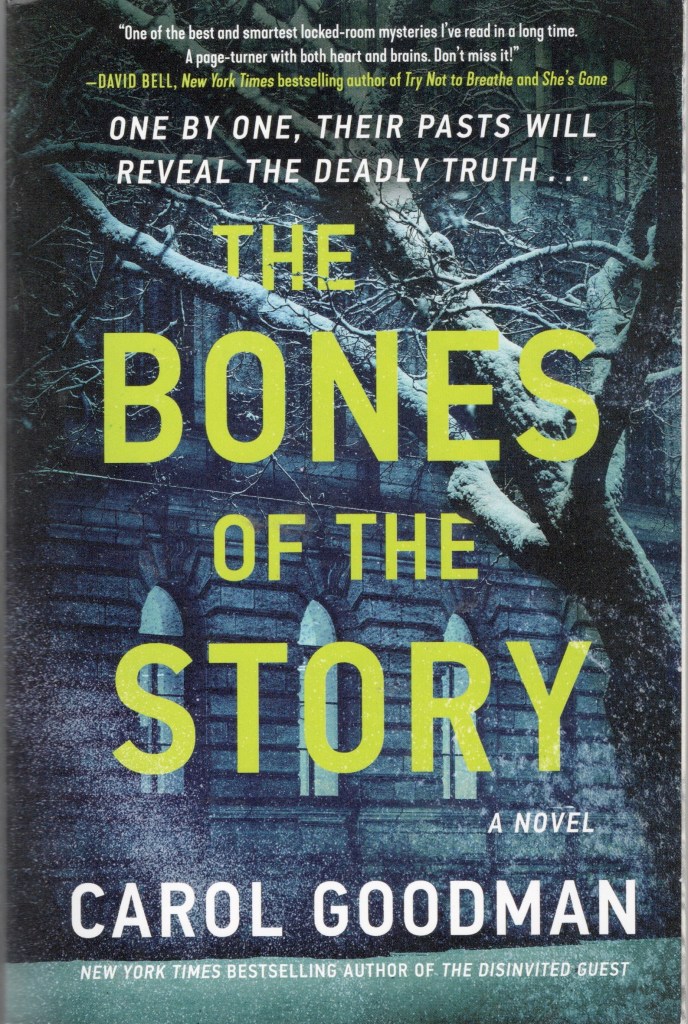
This opening scene establishes several things: the book is going to be set at a prestigious small private college; the school has an excellent creative writing program; and our main character is getting a little jaundiced and world-weary in her position. The “I’ve heard it all before” is a problem for people in these kinds of jobs, and often occurs in education–the weariness and suspicion that students are lazy and just don’t want to work eventually becomes so engrained that they have a closed mind before the student even starts talking. I’ve experienced this myself any number of times–this past week I related two experiences I had in school where I was basically called a liar by an educational authority figure only to get an apology later when I was proved to be telling the truth to my dad, which ended with an airy “teachers never believed me, ever”–which probably explains why I never really got into school the way other smart kids did. But fortunately, Nell gives Nina the withdrawal permission, because she thinks something else is going on with Nina and she wants to help her (which was lovely to read), but Nina won’t open up to her. Briarwood is getting ready to open it’s new Writer’s Center, and there’s a big celebratory party coming up–as well as a bad winter storm–and that night, at a traditional ceremony where the students carry candles up the side of a mountain, there’s an accident and Nina falls into one of the ice caves…and when she is rescued, the skeleton of a young woman is found–which triggers Nell’s memories of being a writing student twenty-five years ago, the friends she made in the program, and the secrets they’ve kept ever since.
Which means the book is also a dual-timeline novel, which is one of my favorite tropes in crime novels (any novels, really); the book is also a master class in how to do a dual-timeline novel. Part of Goodman’s skill is taking those young, wet-behind-the-ears college students and evolving them as they make their way through their college years, as well as who they’ve turned into in the intervening years. There’s not a single false step in any of the character development, which isn’t easy when you’re juggling any number of characters.
And in the present day timeline, Goodman pays homage to several classic crime novels–particularly Christie’s And Then There Were None, which was delightful. She also made several references, throughout the book, to MARY STEWART, who I often think of as Goodman’s literary godmother…and with the past story, there’s some real The Secret History stuff going on, too. The Stewart references aren’t for the terrific suspense novels she wrote, but the equally terrific Arthurian saga she created (The Crystal Cave, The Hollow Hills, The Last Enchantment, This Wicked Day), which I should revisit sometime.
The suspense and tension continues to build, and with everyone trapped on campus by a winter storm–and characters start dying, one by one…the suspense almost becomes unbearable as the secrets and lies from the past finally come home to roost in the present.
(I will say that when I started listening to the book, I thought to myself if this were a Gothic novel this is who the killer would be–only to be correct! But the motive wasn’t what I thought it was…)
The Bones of the Story is well-written, with great language, terrific tone and style, and very literate and smart…so another feather in the cap of the divine Carol Goodman.
 Queer and Loathing in America