Here Comes the Sun

For right now, I am trying to clear my head and figure out what I need to do. In the meantime….

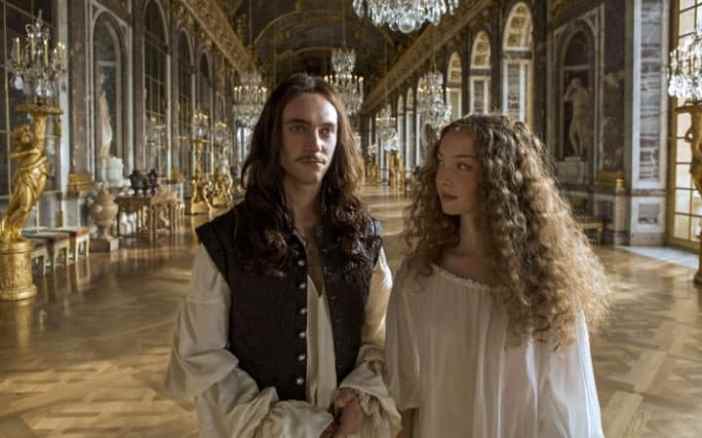
I’ve mentioned that I’ve been watching Versailles and really enjoying it. I often talk about the sixteenth century and how I am utterly fascinated by it; I also love the seventeenth century, but in that particular century my fascination is almost entirely with France. Don’t get me wrong–the Stuarts in England were very interesting, and Charles II and the restoration period is definitely one of my favorites; but my heart, alas, is really in France.

And part of that, of course, has to do with Louis XIV.
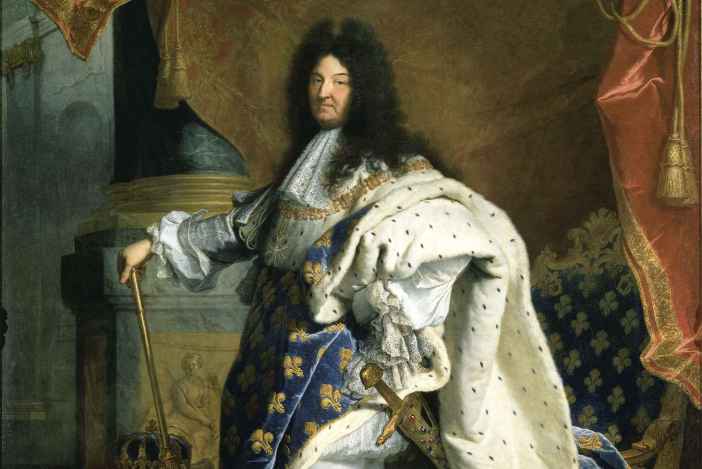
2048x1536-fit_louis-xiv-1701-hyacinthe-rigaud-musee-louvre

The Sun King, le Roi Soleil, le Grande Monarch. The third king from the house of Bourbon, who took the throne at age five and reigned for seventy-two years; which is the longest reign by a king (there were dukes and princes who ruled longer; but his was the longest for an actual King) in European history. His father was Louis XIII, the feckless and foppish king from Dumas’ The Three Musketeers; his mother was Anne of Austria, the Spanish princess whose honor the Musketeers and d’Artagnan were trying to protect/save (despite the fact, of course, that covering up the Queen’s adulterous affair with the Duke of Buckingham, the nation’s biggest enemy, was actually treason). His younger brother was Phillippe, duc d’Orleans; from whom most of Europe’s royal houses are descended. Louis XIV was the king who said l’etat c’est moi (I am the state), ruled without a chief minister, and centralized all political power in France in the person of the King; making him an absolute monarch and the envy of every other king in Europe who chafed under the rules and restrictions placed upon them by their governing bodies.

He also built the magnificent palace that was (is) Versailles; and because nobles couldn’t be trusted away from court–and also because he didn’t trust Paris, he made it mandatory for the court to live at Versailles, where he could keep his eye on them. It enhanced and centralized his power, but at the same time it planted the seeds for the eventual collapse of the French monarchy. But he built France into the major power all of Europe always had feared it could become; the conspiracies and ambitions of the great nobles had crippled the country for centuries–going back to the Norman conquest, which made the great northern province of Normandy the property of the king of England, setting both countries on the road to centuries of war and hatred.

Louis XIV fought several major wars in his later years, and France lost both, and was greatly weakened by those wars. But one must also take into consideration the fact that it took almost ALL of Europe combined years to defeat France in first the War of the Grand Alliance, followed almost directly by the War of the Spanish Succession. The fact that France was able to rally so quickly after defeat to wage another major war against almost all of Europe is indicative of just how strong and powerful the country became under Louis XIV. (Germany was also divided and squabbling for centuries, but that’s a tale for another time.)

I heard about this series a while ago, and it’s only recently become available in the US. I got it from iTunes.
title-card

The series takes place early in the reign of Louis XIV, shortly after his mother/regent Anne of Austria has died and he has taken control of the reins of government. (No mention of Cardinal Mazarin, though.) Louis’ distrust of his nobility and his capital came from the civil wars known as the Fronde, which took place when he was still in his minority, and were basically a revolt of the nobility–which the backing of the Parisians–against his mother and Cardinal Mazarin’s regency. It was eventually suppressed, but Louis never trusted his nobles again, nor did he ever live in Paris once he started turning his father’s hunting lodge at Versailles into the palace it became.

The show is beautiful. I know some of it was shot on location at Versailles itself, and the palace is breathtaking and awe-inspiring. I cannot imagine how amazing it must be in person. I’ve always wanted to go there, and now I really do.

The costumes! The sets! I love the way men dressed–well, royalty and the nobility, anyway–during this period. (The 1974 version of The Three Musketeers is one of my favorite movies of all time.)
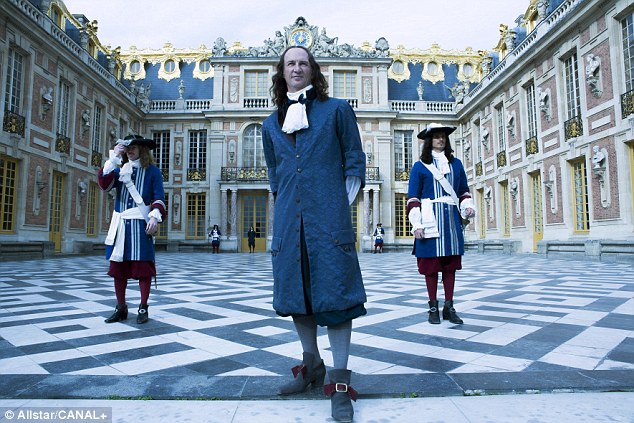
shoes

Stunning.

versailles_4-large_transeo_i_u9apj8ruoebjoaht0k9u7hhrjvuo-zlengruma

And of course, the fountains and the grounds.
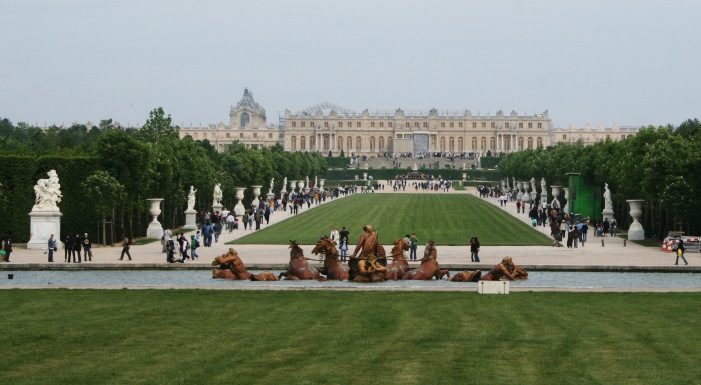
versailles_tapis_vert_1

The plot itself isn’t great–it gets off to a very slow start; and Louis XIV, while interesting, isn’t Henry VIII; his life doesn’t quite loan itself to the soapy fun that was The Tudors.

But they did not shy away from his brother Philippe’s sexuality…Monsieur, as he was known, preferred men to women; he had lots of children with his two wives, but he always had a male lover, or “favorite”, as they were called then.

I’m enjoying it, but it may not to be everyone’s tastes.

Let Her In

I often talk about the sixteenth century, primarily in the context of how in that particular century women held major positions of power, or were in positions to not only have an impact on history but did. Constant Reader knows I love me some history–right now I am thoroughly enjoying Versailles and having a bit of a seventeenth century period–but during this past football season, during games, I was rereading a book I first read when I was ten years old: Antonia Fraser’s Mary Queen of Scots.

Ah, the tragic romantic heroine that is the Queen of Scots! I first discovered her, I think, when I was maybe eight years old when I read Genevieve Foster’s John Smith and His World; and there really wasn’t much about her, as Smith was only alive in the late Elizabethan period. I do remember reading the entry about her execution, and about how her spaniel was hidden inside her skirts as she went to her death–and how when the headsman held up her head, she was wearing a wig, her head fell to the ground, and the whimpering spaniel curled up around it.

How romantic! Almost sounds like the start of a ghost story, doesn’t it? “And ever after, at Fotheringhay Castle, the sound of a whimpering spaniel could be heard on the anniversary of her mistress’ death.”

Hmmmm….

Anyway, the first book I read about Mary Queen of Scots was one I found in the school library (her title always bothered me–shouldn’t it have been Queen of THE Scots?), and it was sanitized for children, and again, highly romantic: Mary was a romantic heroine, doomed by her gender to be treated as a pawn by the men of her court and, of course, her cousin Queen Elizabeth I was the villain of the piece. The 1971 film, with Vanessa Redgrave as Mary and Glenda Jackson (who was AMAZING) as Elizabeth pretty much told the same story; Mary was a romantic heroine and Elizabeth the villain.

It makes for a lovely narrative, and it’s one that is incredibly popular in fiction; the young beautiful Scottish queen who falls in love with and marries her cousin Lord Darnley only to realize it’s a colossal mistake, but then throws everything away because of her deep love for the Earl of Bothwell, winds up imprisoned by her wretched cousin Elizabeth who eventually has her executed. It does make for a lovely story.

Fraser, in her bestselling biography, tried to get to the truth of who Mary was, rather than paying lip-service to the romantic narrative. It is her thesis that Mary was actually much smarter than anyone at the time or since has given her credit for; and that her decisions weren’t emotional but made coolly as political moves in the game of thrones she was playing–and the end goal, of course, was to ascend the throne of England, uniting the entire island into one realm; an ambition her son James finally achieved.

Mary’s life, once she started getting into her marriage entanglements, was the stuff of high drama. She inherited her throne when her father died from wounds inflicted in the Battle of Solway Moss against the English; she was only six days old. She was the third child of King James V and his second, French wife, Marie de Guise; her two older brothers died of fevers while her mother was carrying her. (Inheriting the Scottish throne as children was a sad Stewart family tradition; James V was less than a year old when his own father was killed in battle–again against the English–in the Battle of Flodden Field; Mary herself abdicated in favor of her own son when he was less than a year old; James I was only twelve when he became king; James II was only seven; James III was nine, and James IV fifteen. These minority reigns helped empower the Scottish nobility and prevent the throne from becoming strong, as it did in say England, France and Spain.)

Her royal family was Stewart; her marriage to her cousin Henry Stuart changed the dynasty to the English spelling, which is why the royal family of England was known as the Stuarts, not Stewarts.

Her grandmother was Margaret Tudor, eldest surviving child of Henry VII of England and elder sister of Henry VIII, which is where her claim to the English throne came from. Until the birth of Edward VI to Henry VIII’s third wife in 1537, James was the only male heir to England. The marriage of Edward VI to young Mary was probably the wisest move, uniting the two crowns and ending centuries of strife between the two kingdoms, but Marie de Guise, Mary’s mother, was French and instead sent her infant daughter to the French court, where she was engaged to the Dauphin. The Tudor direct line ended with Henry VIII’s children, who were all childless; the death of Edward VI in 1553 brought the Catholic Mary to the throne. Once Mary died in 1558, Elizabeth became queen; but Catholics didn’t recognize Elizabeth’s legitimacy–Henry’s marriage to her mother Anne Boleyn was bigamous in the eyes of the Catholic Church and so therefore Elizabeth was a bastard. The nearest legitimate heir, in their eyes, was the young Queen of Scots–who was married to the heir to the French throne and a Catholic.

Obviously, the thought of those three crowns being united was a threat to both Spain and the Holy Roman Empire, so they recognized Elizabeth. A year later Mary and her husband were King and Queen of France–a year later Mary was a childless widow returning to Scotland. Elizabeth never forgave her for claiming herself to be queen of England; and the game of thrones was on.

Four years after her return, Mary married her first cousin, Henry Stuart, Lord Darnley. This is where it gets complicated. Margaret Tudor, Mary’s grandmother, only had one child with James IV; after he died she married again and had a daughter, Margaret Douglas–who had no claim to the Scottish throne but a claim to England as a Tudor. She in turn married Matthew Stuart, Earl of Lennox–who was a descendant of James I and thus also was an heir to the Scottish throne. Their son Henry thus had claims to both thrones; he married Mary, and their son James would obviously be King of Scotland thru his mother; had a claim through his paternal grandfather, and a claim to the English throne from both his mother AND his father, both of whom were great-grandchildren of Henry VII.

Madness.

Lord Darnley, her husband, and other lords of the court were jealous of her closeness to her Italian secretary, and they murdered him in front of her when she was about six months pregnant. Somehow, later that night, as a prisoner of her husband and lords, Mary convinced her husband to come back to her side and they escaped together, rose an army, and with her loyal lords defeated the conspirators–who included her illegitimate brother. Mary had a son, and then, a few months later, her husband was murdered–the house he was recuperating from an illness in was blown up, but his strangled body was found in the gardens. Mary then married the Earl of Bothwell, who was commander of her armies–it was an incredibly volatile time, the Queen was Catholic and most of her subjects were not–and so it was very easy for public opinion to turn against her; particularly since most people believed Bothwell had murdered her husband so he could marry her.

Was she complicit? The marriage made it appear so–and soon enough her army was defeated, she was a prisoner, and forced to abdicate. She escaped to England, where Elizabeth promptly placed her under house arrest.

George R. R. Martin has nothing on the Queen of Scots.

She was eventually implicated in a plot to assassinate Elizabeth–after being a prisoner for almost twenty years–was tried and found guilty and sentenced to death.

So, was she a wanton adulteress and murderess? Was she a silly woman who allowed her emotions to lead her down the wrong path, or was she a calculating player who wound up being outplayed? Despite her high station, she had a pampered and spoiled childhood, and wasn’t raised or educated to be a regnant Queen; it was always assumed her husband the King of France would rule for her. So the odds were stacked against her from the beginning; and she learned her lessons the hard way; unlike her contemporary, Elizabeth, who spent her childhood and early twenties with the shadow of the executioner across her neck.

Fraser does a great job of defending her thesis; I’ve read many other books about both the royal cousins and the game they played with each other, and I think Fraser probably paints the most accurate picture of the Queen of Scots: a smart woman who played the game against overwhelming odds and lost.

Is there anything so romantic as a lost cause?

One of the biggest disappointments of the CW show Reign was, in order to try to draw in the younger audience, they told the story when she was a young girl in France–probably the most boring part of her life. Her life in Scotland was MUCH more interesting, and would have made for greater television. The best part of Reign was Megan Follows as Queen Catherine de Medici of France–one of the most fascinating women in history. Apparently, the struggle between the cousin queens became a part of the story in the third season…but Paul and I had bored of the show long before then.

And now back to the spice mines.

I Can Help

All Soul’s Day; November. Two months left in 2016, and before you know it, it’s 2017. Heavy heaving sigh. The time change is coming this weekend, which means it will be dark before five. This always feels oppressive to me; I truly despise Daylight Savings Time (although I always enjoy the extra hour in the fall; hurray for consistency!). But, if I am being honest, I am more productive in the winter. I read more and I certainly write more. And God knows, I have a lot of writing to do in the next few months.

Madness.

I had a mini-breakthrough the other day while feeling sorry for myself that Wicked Frat Boy Ways was turning out to be such a bitch to write. It was such a “d’oh” moment–and it not only applied to the work in progress, but also as to why I have so much trouble writing short stories that I literally wanted to pound my head on my desk until it was soft as an overripe melon.

Seriously, I do not understand how I have a career of any sort in writing. The end result, however, was a great insight on not only how to make this book ever so much better, but how I can make my short stories better. So now all I want to do is write, rewrite, revise, lather, rinse, repeat. True madness.

I’ve been reading The Bird’s Nest by Shirley Jackson. It’s about what was called at the time she wrote it “multiple personality disorder;” the term now is dissociative identity disorder. The book was originally published in 1954, was filmed as Lizzie with Eleanor Parker in the lead role, and prefaced the more famous book/film The Three Faces of Eve by three years; although Eve was a true story and not fiction (and won Joanne Woodward an Oscar). I’ve always been interested in DID; when I was a kid, of course, I saw it handled on the soap One Life to Live, and of course, in my teens was when Sybil became a huge bestseller (and TV movie starring Sally Field, who won an Emmy and was the turning point in her career when she started being taken seriously as an actress). That story was later debunked, I believe; but DID is something I’ve always wanted to write about, but at the same time not in an exploitative way. Maybe at some point…it would require a lot of research to do it properly.

Anyway, I digress. I’m enjoying The Bird’s Nest, but it is slow and harder going than Jackson’s short stories and her two exquisite novels The Haunting of Hill House and We Have Always Lived in the Castle, or her delightful memoir Life Among the Savages. Jackson’s style is definitely present there, but it’s different. I am also very curious to read the recent bio of her, to see where the ideas for The Bird’s Nest came from.

As I was so busy sticking to my horror theme for October, I wasn’t able to talk about many other things–my reread of Antonia Fraser’s Mary Queen of Scots; the new gay-themed crime show Eyewitness; how much I’m enjoying the show Versailles; and so many other things–but I do look forward to talking about them now that I am no longer shackled to a theme here. (Hilarious, isn’t it? I can’t tell you how many mornings I’ve stared at the ‘post an entry’ page blankly, with no idea of what to write about…and then when I tie myself to a theme for a month the blog ideas burst forth from my head like Athena springing fully formed from Zeus’ forehead.

Oy.

I am also rereading Barbara Michaels’ sublime Be Buried in the Rain, and I do want to talk about Michaels some more at some point, as well.

And now, back to the spice mines.

Here’s today’s hunk:

hot-guy-on-the-beach