One of the fun things you get to deal with when you’re a queer mystery writer is the diversity panel.
What, you may well ask, is a diversity panel?
It’s what used to happen back in the day when well-meaning non-minority people realized they had to do something with non-white non-straight mystery writers coming to mystery conventions. What better way than to wash your hands of working for diversity by throwing all of the non-white non-straight writers at a conference onto a “diversity panel”?
Back when I was getting started and still was doing touring for book store events, I used to joke that signings/readings always made me feel like a sideshow freak hawking snake oil; the mass signings at events like BEA (Book Expo America) were the worst for this. I always wound up sitting next to someone enormously popular or famous (when they’re done alphabetically, I always expect to be seated next to Charlaine Harris, which is quite humbling. The most humbling of all was sitting next to Sharyn McCrumb at the South Carolina Book Festival. Her line literally went out of the room and into the hallway….ao I just started opening the books for her to make it run more smoothly. Might as well be useful since I was just sitting there doing nothing.)
But that was years before I was ever put on a diversity panel. Ah, the well-meaning diversity panel. Make no mistake, it’s always meant well–the path to hell and all that–but inevitably these panels would devolve into let me teach you nice straight white cisgender people about homophobia/racism/misogyny. The problem was always not the intention, which was good (inclusivity is never a bad thing), but the mentality that you could throw everyone outside the straight white cisgender class onto that type of panel and not worry about actually putting those authors onto other panels wasn’t the best. Conference diversity was the goal, and tossing out a “diversity panel’ to check off that box…yeah, no thanks.
As if having your entire writing career reduced to, in my case, who I fuck isn’t a bit disheartening, to say the least. It also very clearly sends the message that the only benefit any audience would ever get out of listening to me speak would be my ability to teach them about what it’s like to be a GAY writer. Not a mystery writer, not a writer, but a GAY writer. When I taught the character/stereotype class for SinC into Good Writing at New Orleans Bouchercon, I opened with “I don’t get up in the morning and shut off my gay alarm and go down my gay staircase and make myself a gay cup of coffee. I shut off my alarm, go downstairs and make a cup of coffee like everyone else does.”
I’m a gay man, and I write (mostly) about gay men. I’ve written and centered characters who were gay men before, and will probably do so again. My driving passion, though, is to write about my community and people like me. I long ago accepted I’d never get rich doing so, but I write what interests me and the concerns and plights of gay men are usually at the top of that list. I bristled whenever I was assigned to a queer panel or a diversity panel at a mainstream community event, but I also felt obligated to do the work–and I’ve always (wrongly) believed that complaining sounds like ingratitude. (Ah, that Christian brainwashing!) If I do sit on the panel and talk about the history of queer crime fiction, writers from the past who influenced me but are out of print today, and talk about why I write what I write, maybe some hearts and minds can be changed, or at least influenced to do some reflection and processing that can lead to effective change.
But…I can also talk about writing, and inspiration, and plotting and character development and dialogue and the mechanics of novel/story construction. I can talk about suspense and cliff-hangers, and how to keep the reader turning the page. I can talk about setting and place, scene and mood and voice, first person v. third or present v. past tense. I mean, I get it. If you want someone to talk about gay crime writing, you should get a gay crime writer; every writer can speak to those things, but not every writer can talk about being a gay crime writer. But it’s so nice when I can talk about something else, you know?
The diversity panel all too often would also be the only panel we “others” would get assigned to, because clearly the only interesting thing about us and our work was it didn’t center straight white cisgender people. They were always scheduled at terrible times–either super-early in the morning or late in the afternoon; and inevitably, there would be panels scheduled against packed with superstars everyone wants to hear. If having your work and career distilled down into simply being about you fuck is disheartening, imagine being assigned to a panel at 4 in the afternoon on Friday to talk about how who you fuck makes you different from the majority of authors to the six or seven people who show up for it (if you were lucky).
If signings or readings made me feel like a sideshow freak hawking snake oil, diversity panels tend to make me feel like some exotic creature behind glass in a zoo somewhere. (There is, however, a defense for these panels, in that they do make marginalized writers easier to find for marginalized readers, but that’s an argument for another day.) I made the conscious decision to start refusing to do them quite a while ago, probably after the St. Petersburg Bouchercon. I did agree to do one at Bouchercon in Toronto, and I only agreed to do that one because Kristopher Zgorski was moderating and he pulled the panel together.
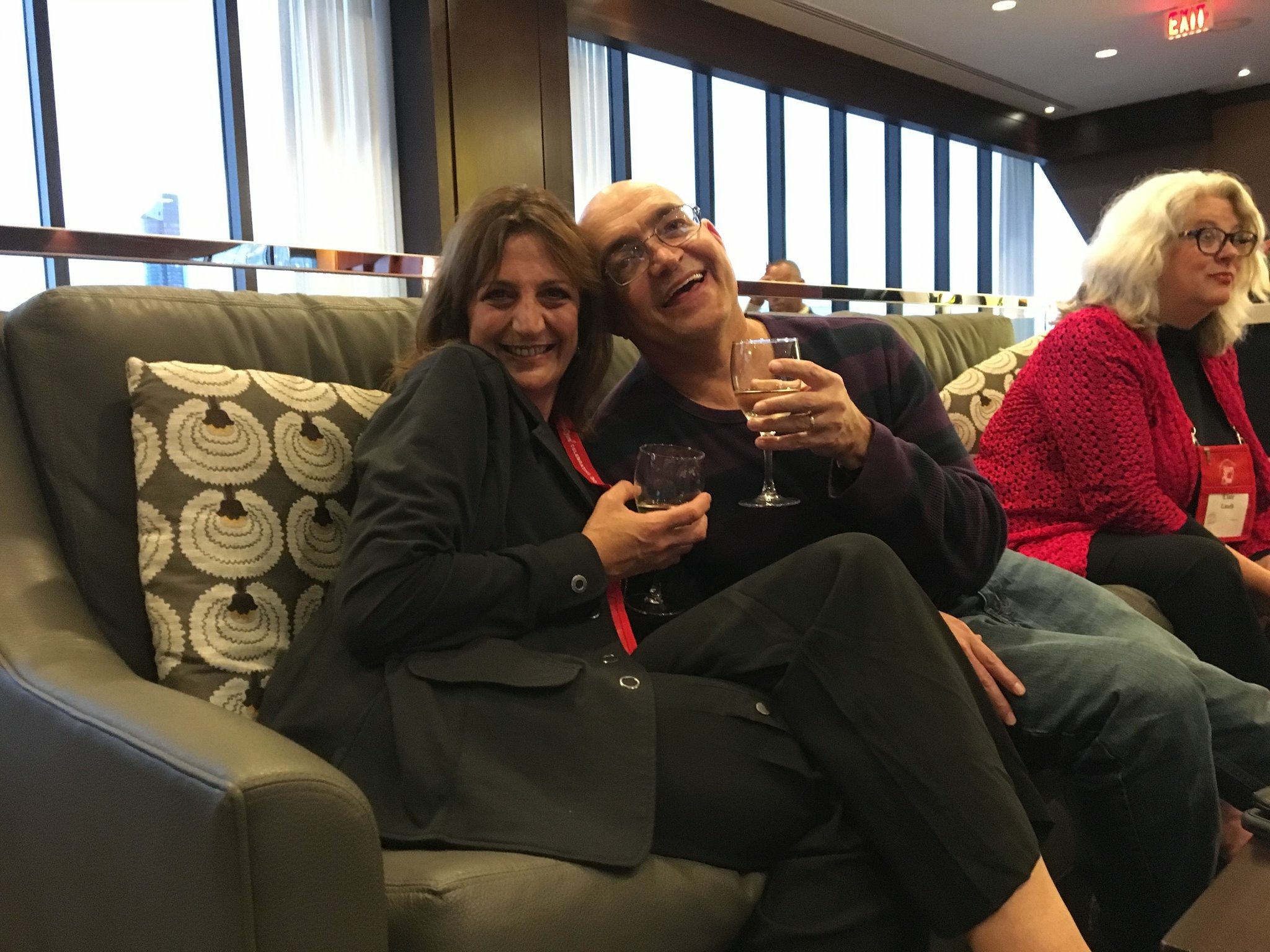
But I will say this: the diversity panel in Toronto was very well attended, and I met not only some writers and readers that were new to me, but those folks have become friends in the time since. I was pleasantly surprised that we had a full room; which I took as an incredible sign because it wasn’t an all-encompassing diversity panel but restricted to queer people, and that many people showed up. (I suspect a lot of that had to do with Kristopher’s blog readership more than any of us who were actually on the panel.) I believe the panel was–and forgive me if my faulty memory leaves someone out–Owen Laukkanen, Stephanie Gayle, John Copenhaver, Jessie Chandler, and me. It was great. We had an amazing conversation, I got to meet Stephanie and John for the first time, and it’s always fun hanging with Owen and Jessie. Kristopher asked great questions. When it was over, I was pleasantly surprised. The audience was receptive and also asked great questions.
When I was helping do the program for Dallas Bouchercon, the local committee really wanted a diversity panel. I agreed to put one together on two conditions: 1, that I would be the moderator so could control the topics under discussion* and 2. it would not be the only panel the participants would be assigned to. I made sure that was the case since I was helping write the program, and knowing I had the power to ensure that happened was the only reason I agreed to organize it. I also asked everyone who was on the Dallas panel if they minded being on the panel, and guaranteed them another panel while asking. I also assured them refusing the diversity panel would not affect any decisions about other panels, either–because you have to worry about that, too! I called it “Not a Diversity Panel” and I had planned on not talking about any of us being writers from the perspective of being marginalized, but at most, how being “on the margins” impacted how, what, and who we chose to write about.
Ironically, I wound up not going to Dallas after all; an inner ear infection kept me in New Orleans.
Diversity panels have come a long way from what they used to be, but that danger is still there. I would urge conference programmers to think long and hard before deciding to put together a diversity panel, and why you think it’s necessary to have one. If you do decide that it’s something needed for the program, remember that the authors on it should have a chance to be on a panel where they can be an author, not just a diverse author. Diversity issues and concerns should be discussed, and diversity panels are often the place for those conversations that are so important and necessary to happen. But they can easily can go down the path to the dark side, very easily, in which the panelists are made to feel like zoo animals being poked, prodded, and observed. It’s great that people will show up in droves to these panels now–but that’s why sensitivity and a moderator who has experience with marginalization is essential, to bar a repeat of that horrible diversity panel where a well-respected and lauded editor, about three quarters of the way through the panel where a very great discussion was being had decided to opine, But it has to be about the writing! The writing has to be good!
Because of course diversity is pushing bad work forward? Because work from non-white non-straight writers usually doesn’t measure up? I was horrified, and lost any respect I had for the editor along with any desire to ever work with said editor.
I will forever feel ashamed for not calling out that comment in the moment, but I was so stunned and shocked I didn’t know what to say.


 Queer and Loathing in America