Someone recently pointed out to me that on my website, I described my Chanse MacLeod series as more nourish, but a hilarious typo—which either no one noticed previously or had but were too polite to mention to me— made the sentence read as the Chanse series is more nourish. Yes, it made me laugh for a few moments before I went in and corrected it, but it also made me start thinking about the sentence itself. Is the Chanse series, in fact, more noir than the Scotty series?
The Chanse series is darker than the Scotty series, and yes, that was a deliberate choice, but calling the Chanse series noir is probably incorrect; what I should have said was the Chanse series was more hardboiled. That would be factually correct. So, what precisely is the difference between hardboiled and noir?
Hardboiled crime fiction is a bit easier to define than noir, and it is possible for a novel or story to be both. Wikipedia says this:
Hardboiled (or hard-boiled) fiction is a literary genre that shares some of its characters and settings with crime fiction (especiallydetective stories). Derived from the romantic tradition which emphasized the emotions of apprehension, awe, horror and terror, hardboiled fiction deviates from that tradition in the detective’s cynical attitude towards those emotions. The attitude is conveyed through the detective’s inner monologue describing to the audience what he is doing and feeling.
The genre’s typical protagonist is a detective who witnesses daily the violence of organized crime that flourished during Prohibition(1920–1933) and its aftermath, while dealing with a legal system that had become as corrupt as the organized crime itself.[1]Rendered cynical by this cycle of violence, the detectives of hardboiled fiction are classic antiheroes. Notable hardboiled detectives include Philip Marlowe, Mike Hammer, Sam Spade, Lew Archer, and The Continental Op.
Interesting that Wikipedia doesn’t define it as a subgenre of crime fiction, but defines it as its own genre, separate but sharing characteristics with crime fiction. It also claims that the notion of hardboiled fiction is limited to a specific time period. I don’t think that’s true; I would go so far as to say that there are many authors who are publishing hardboiled crime fiction today. It’s only my opinion, but I do think one could consider Sue Grafton, Sara Paretsky, Ace Atkins, Reed Farrel Coleman, and many others as practitioners of the form.
Noir, on the other hand, is a more slippery kind of fish to define. Film noir and literary noir, for example, are completely different things; the classic movie is considered film noir, but the novel itself, to me, is hardboiled; Spade is a cynic but he is not a bad guy. When I was asked to write a story for New Orleans Noir, the assignment, as defined by the editor, was to come up with a description for noir and write a story that fit that definition. My definition was the endless nightmare; for me, noir was about an everyday Joe who makes a bad decision—something amoral or immoral, maybe against the law—and that bad decision sets he/she on a path where things get worse, and the only choices presented from that point on sink the character deeper and deeper into the quagmire of an amoral abyss. To that end, I wrote the story “Annunciation Shotgun”.
I never really felt, though, that my definition was adequate; it scratched the surface, but it didn’t go deep enough to truly define noir. Of course, Laura Lippman defined noir on a panel I was on perfectly: dreamers become schemers. As always, the woman who is often the smartest person in the room nailed it, and I have since stolen that as my definition.
I love noir, both the film and literary versions of it. James M. Cain is one of my favorite writers, and I have always wanted to write a noir novel. I have a couple of ideas, and as always, it’s simply a matter of being able to find the time to sit down and actually write one. I want to read more noir writers; modern day genius Megan Abbott is one of our best writers and her novels are extraordinary. The closest I’ve come to a noir with my novels are Timothy and Dark Tide;


I have a couple of other ideas, as I said, that I may explore. I know how both start, but there’s that slight issue of the plot yet to work out. Once I have a better grasp of the plots, I’ll start writing them.
And on that note, it’s back to the spice mines.
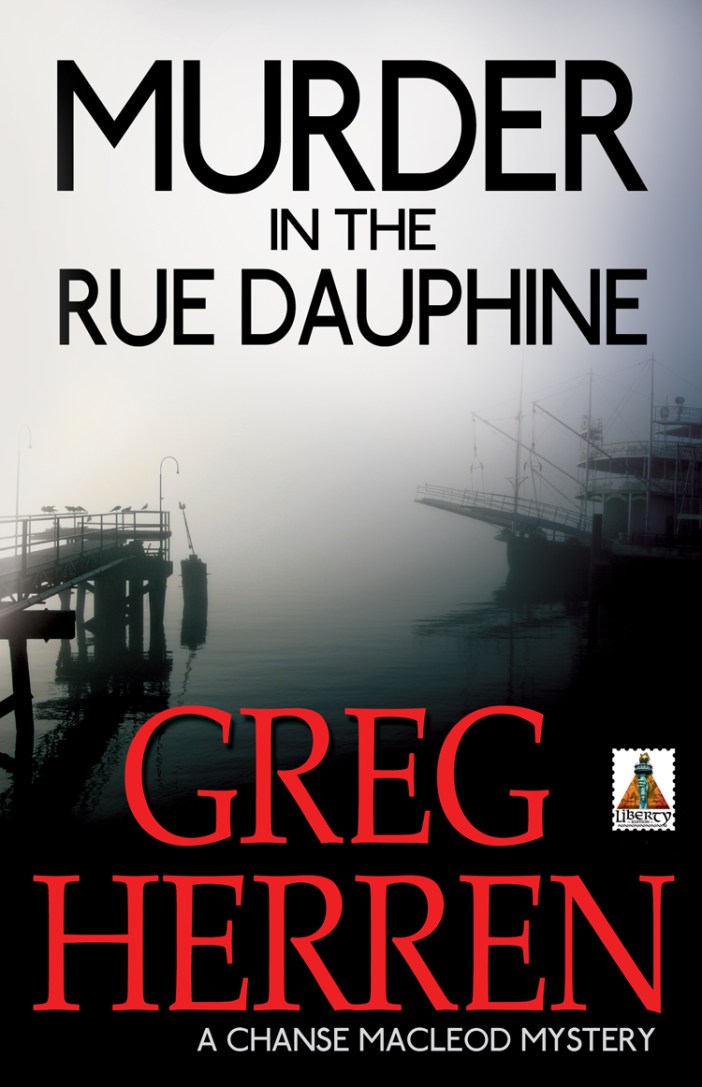 The funny thing is, I didn’t realize I was subverting, or appropriating, a trope at the time I wrote the book–but I was also trying to write a gay-themed mystery with a gay main character, and so I wound up using one of the tried-and-true crime tropes without even realizing I was doing it.
 Queer and Loathing in America