No Questions Asked

Monday morning. Heavy heaving sigh. Another week, a lot to do, and probably not nearly enough time in which to try to do it all. I am going to do my level best <b>not</b> to allow this to create a sense of helplessness/impossibility which will lead me to distraction and not even trying, which only makes things worse.

Yes, I’ve been here before, if you couldn’t tell.

I must not panic I must not panic I must not panic I must not panic.

And I won’t. I just have to buckle down and get it done and I know I can.

FOCUS.

Over the weekend, after finishing Triad, I reread another favorite Barbara Michaels novel, Witch, which I had not read in a long time. (I am now reading Gore Vidal’s Thieves Fall Out, originally published under a pseudonym and now reprinted under his actual name by Hard Case Crime.)
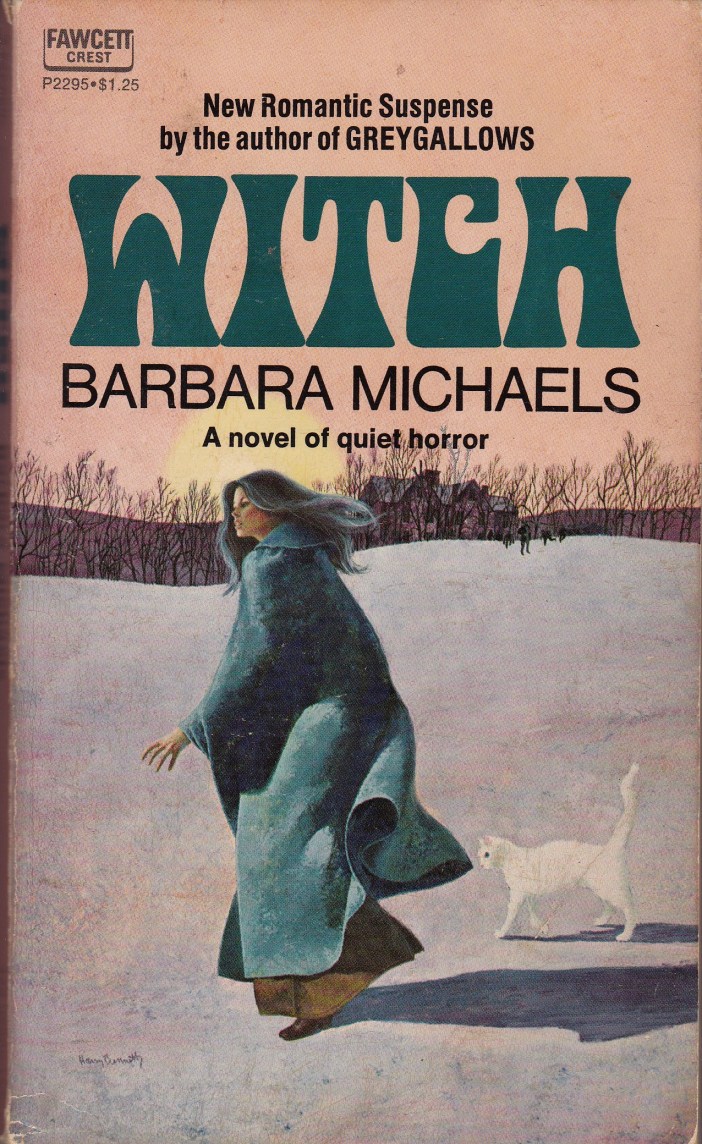
witch

According to the directions Ellen had received from the real estate agent, the house was in a clearing in the woods. Gently perspiring in the the hot office, Ellen had thought wistfully of cool forest glades. April in Virginia is unpredictable; this particular day might have been borrowed from July, and the small-town office was not air-conditioned.

An hour later, after bumping down rutted lanes so narrow that tree branches pushed in through the car windows, Ellen was inclined to consider “clearing” a wild exaggeration. She started perspiring again as soon as she turned off the highway. No breeze could penetrate the tangled growth of these untamed forests; moisture weighted the air.

At any rate, this must be the house, though it more resembled a pile of worn logs overgrown by honeysuckle and other vines.

Barbara Michaels, as I have said any number of times, is one of my favorite writers of all time. Witch is one of her better books, definitely in my top tiers of her novels under that name. It tells the tale of Ellen March, divorced, who has been living with her brother-in-law helping him raise his three sons (her dead sister’s) and her own daughter, but now all are leaving for college or private schools, the brother-in-law’s job with the state department is taking him overseas, and all of a sudden, she is at loose ends. As the house in one of the suburbs of DC is to be sold, Ellen decides to buy a nice place out in the country. And she finds one, spends the next few months getting it fixed up, and moves in.

But all is not what it seems in the country.

First off, Ellen has a very bizarre reaction to the house when she first sets foot in it–an exultation, kind of ecstatic joy. And then there are the stories about the house–it was originally built in the seventeenth century, and it was the home of a woman many of the local considered to be a witch–who tended the wild animals in the woods and then “committed suicide.”

And then weird things start happening–she starts seeing a white cat in the woods (the witch had a white cat); sometimes she sees shadows out of the corner of her eye in her bedroom that vanish when she looks; she occasionally hears laughter inside the house; and then she tells, as a joke, fortunes for some teenagers who hang out in the general store in the nearby village of Chew’s Corners…and the fortunes start coming true.

The town, which is dominated by a horrific fundamentalist church called the Earthly Atonement of the Wrath of God, which is even worse than it sounds. So, of course, the “good” people of Chew’s Corners think she is either a witch herself, or being possessed by the ghost of the witch.

It’s a good story–although I would disagree with the cover’s depiction of it as “a story of quiet horror”–it’s still, more than anything else, a suspense novel with some paranormal elements thrown into it for good measure. It’s a great read, and the big reveal is just as shocking on a reread as it was on the original read.

And now, back to the spice mines. This stuff ain’t going to get done on its own.

Kung Fu Fighting

Ugh. Tonight is the LSU-Alabama game, which means I will be incredibly tense all day. Sometimes I do wonder why I watch college football, as it really doesn’t seem like I enjoy it all that much…or maybe I enjoy the tension? Anyway, obviously, I am all in for the Tigers tonight, and win or lose, I will still be a Tiger fan. GEAUX TIGERS!

I also finished reading Mary Leader’s Triad last night, and started rereading Barbara Michaels’ Witch; I will probably discuss the Leader novel tomorrow.

We also watched, around our other shows this week, the latest James Franco film, King Cobra.

king_cobra_film_poster

The film is based on a true crime title (which has been in my TBR pile forever) called Cobra Killer: Gay Porn Murder and the Manhunt to Bring the Killers to Justice by Andrew E. Stoner and Peter A. Conway, about the true life murder of gay porn producer/director Bryan Kocis. I remember when it all happened; I also remember thinking this would make a great noir novel.

I have any number of ideas for noir novels set in the world of gay porn.

The crux of the case had to do with Kocis’ exclusive contract with a young porn star who performed under the name Brent Corrigan; the killers–Harlow Cuadra and Joseph Kerekes–were porn producers/stars who were deeply in debt and saw Corrigan’s popularity as a way to get out of the debt, by having him star in one of their films. Kocis was the fly in the ointment with his exclusive contract and his trademarking of the name “Brent Corrigan”; so they killed him. Grisly and dark; it has all the makings of a great noir, and I may still write it, you never know–as I said, I have any number of ideas for noir novels set in the world of gay porn.

It is an industry that sadly lends itself to noir.

The film, starring James Franco, Christian Slater, Garrett Clayton, and Keegan Allen in the leads, with Alicia Silverstone and Molly Ringwald in supporting roles…is well done but not well written, if that makes any sense. The way it is filmed and edited and written tells the story from the moment young Sean Lockhart meets Bryan Kocis, ostensibly to intern in a film production company, only to find himself being turned into Brent Corrigan, gay porn star. The way the role is written you can’t really tell if Sean went to meet with Kocis knowing what he was doing; did he want to do porn for the money, or was he really interested in film making? He also kind of comes across as not particularly smart.

Clayton, however, is certainly pretty enough to be a twink porn star, if you’re into twink porn stars.

Garrett Clayton, late of the Disney Channel:

116435_016

The actual Brent Corrigan:

brentcorrigan051

The movie was, you know, just okay. I didn’t really come away from it feeling anything, or with any further insight to what happened or why; it was just kind of matter of fact. The strongest performance in the film, I felt, was from Keegan Allen, whom I used to watch on Pretty Little Liars; he managed to make killer (oops, spoiler, sorry!) Harlow Cuadra sympathetic; kind of a child/man who was both intellectually and emotionally stunted, whereas Franco’s portrayal of Kerekes left me wondering ‘was it the drugs, or was he actually a sociopath?” But Keegan Allen was terrific.

cobra2.png

The movie was entertaining enough; it held my interest, but as I said, it was matter-of-fact to the point it seemed almost like a documentary; this happened and then this happened and then this happened and then they were arrested.

Corrigan is not pleased with the movie, I suppose I should add, and plans to write his own book about what happened.

And that, really, is the key to all of this, and why I think the movie doesn’t succeed ultimately. I don’t know who Brent Corrigan is, or any of these people, any more than I did before I watched the movie.

One thing they did get right–almost so right it made me laugh–was how bad the acting in porn films are. They would show the start of the scenes, when the actors have to “act”–and they really got the amateurish line-readings down pat.

I do want to read the book now, though, because the story is, in and of itself, fascinating to me.

And now back to the spice mines.

Me and You and a Dog Named Boo

As I continue to muddle my way through this manuscript–honestly, I don’t know sometimes why it’s like pulling teeth and other times it’s just comes right out–I am constantly amazed at how many other ideas I get when I am working on something; ideas that are infinitely more interesting and sound like more fun to write than whatever it is I am actually working on. AND IT HAPPENS EVERY SINGLE TIME. And once I am finished, the creativity and urge to work on something else goes right away.

Surely I can’t be the only writer who experiences this?

AUGH.

Madness.

But as I think about these short stories, I remember probably the two finest collections of short stories ever–Echoes from the Macabre by Daphne du Maurier and Night Shift by Stephen King. I recently bought another copy of Night Shift on ebay, as my copy is in a box somewhere. Both du Maurier and King were short story masters; in fact, when I was a kid I loathed short stories and loathed reading them; this was primarily because I had to read things like “The Minister’s Black Veil” ad nauseum in English classes. I wasn’t lucky enough to be exposed to the truly great stories, like Faulkner’s “A Rose for Emily” and Jackson’s “The Lottery” until I got to college; but even by then the damage was done; that, along with the assigned short stories in writing courses (if I ever have to write an essay on Irwin Shaw’s “The Girls in the Their Summer Dresses” again I cannot be held responsible for what I do) had conspired to create a mentality that I loathed short stories. My experience writing short stories in writing courses in various colleges and universities had also taught me that I wasn’t a good short story writer; any good short stories I might write for a class were good purely by accident because I did not know what I was doing. That still stands true for today; I would rather write a novel than a short story.

But I am digressing, as is my wont.

Reading the du Maurier and King short story collections made me aware of what was possible for a truly gifted author to do with a short story; just as Jackson did with “The Lottery” and Faulkner with “A Rose for Emily.” My own difficulties with writing short stories comes from not, I realize now, having an actual system; I get an idea–usually both a title and a first line; maybe a character–and then I just kind of write with no idea of what’s to come, or what the story is about. This is the issue I had with “The Weeping Nun”; I wanted to write a story to submit to an anthology about Halloween stories, and I had this great title with an amorphous idea for a story, a point of view character, and an opening line: Satan had a great six pack. The problem, as I started writing the story, was realizing that as it came to me it had nothing to do with a weeping nun; but I was determined to somehow force that into the story so I could use the title.

On reflection, it seems perfectly insane and ludicrous now; but I am nothing if not obtuse and I am incredibly stubborn in stupid ways. I liked that title, and damn it, this story was going to fit that title if it fucking killed me.

The end result was the story was never finished, I missed the deadline for submission, and there was just frustration left in the wake of yet another short story failure.

And of course, this week as I struggled with writing the novel, it came to me in a flash: the story I was writing had nothing to do with the story of the weeping nun; I should have simply retitled the story and followed it to its logical conclusion and saved the story of the weeping nun for another time.

Idiocy, really. So simple, but I just couldn’t see it at the time.

And now I want to finish writing the damned story, which I now see as being about the gates of Guinee on Halloween night in the French Quarter.

Heavy heaving sigh.

And now, back to the spice mines.

Here’s a hunk to cheer you up, Constant Reader:

hot-firefighters-with-puppies-calendar-charity-australia-1

Da Doo Ron Ron

There’s really nothing like a good night’s sleep, is there?

Well, that first cup of coffee after a good night’s sleep is pretty close.

Tonight is my late night; bar testing in the Quarter, and as such I have the morning and early afternoon free. I intend to get some cleaning done as well as some writing (that’s always the intent, but it never seems to happen quite the way I have planned; primarily, methinks, because I have a tendency to over-plan what I can get done as well as the ever-popular easy distractions).

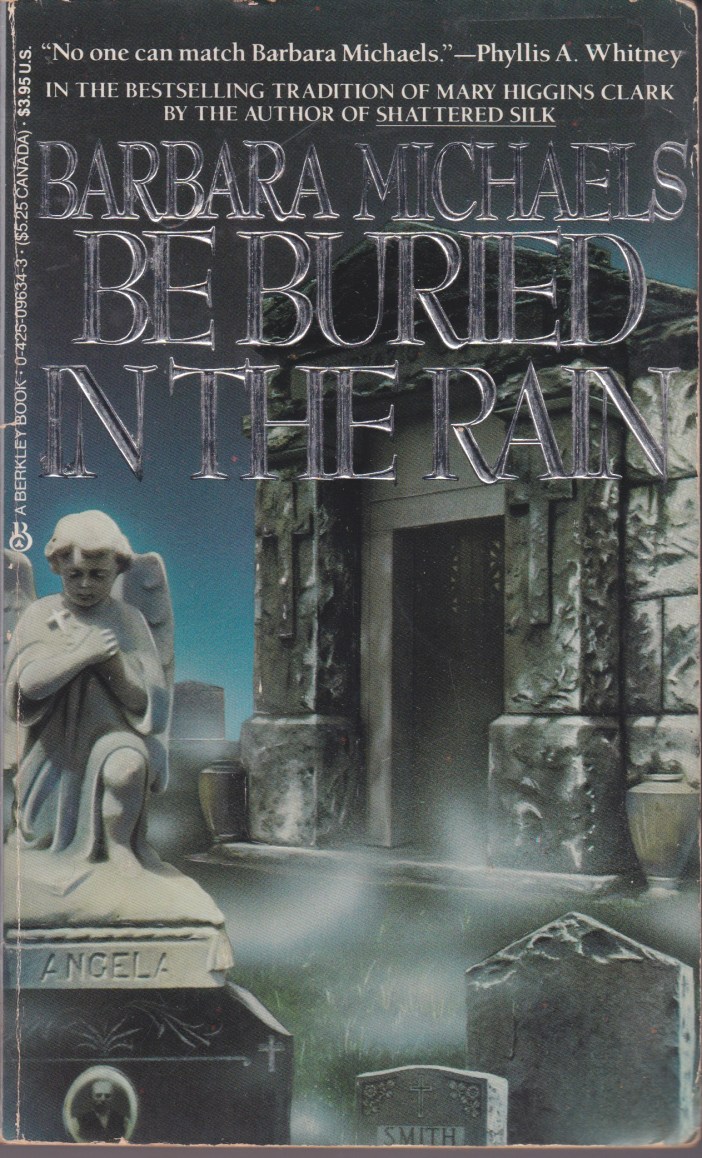
Last night, while I alternated between American Horror Story (ugh) and the final game of the World Series–nicely done, Cubs–I finished rereading Be Buried in the Rain by Barbara Michaels.

be-buried-in-the-rain

The old pickup hit a pothole with a bump that shook a few more flakes of faded blue paints from the rusted body. Joe Danner swore, but not aloud. He hadn’t used bad language for six years, not since he found his Lord Jesus in the mesmeric eyes of a traveling evangelist. He hadn’t used hard liquor nor tobacco either, not laid a hand on his wife in anger–only when she talked back or questioned his Scripture-ordained authority as head of the family.

It would never have occurred to Joe Danner that his wife preferred their old life-style. Back then, an occasional beating was the natural order of things, and it was a small price to pay for the Saturday nights at the local tavern, both of them getting a little drunk together, talking and joking with old friends, going home to couple unimaginatively but pleasurably in the old bed Joe’s daddy had made with his own hands.

Since Joe found Jesus, there were no more Saturday nights at the tavern. No more kids, either. Joe Junior had left home the year before; he was up north someplace, wallowing in the sins he’d been brought up to hate…only somehow the teaching hadn’t taken hold. Not with Lynne Anne, either. Married at sixteen, just in time to spare her baby the label of bastard–but not soon enough to wipe out the sin of fornication. She lived in Pikesburg, only forty miles away, but she never came home anymore. Joe had thrown her out the night she told them she was pregnant, and Lynne Anne had spat in his face face before she set out on a four-mile walk in the traditional snowstorm, to collapse on the doorstep of her future in-laws. They had raised a real ruckus about it, too. Methodists. What else could a person expect from Methodists?

I loved Barbara Michaels, which was one of the two pseudonyms used by Dr. Barbara Mertz (the other was, of course, Elizabeth Peters). She was named a Grand Master by the Mystery Writers of America in the 1980’s, and her books were consistently excellent. Be Buried in the Rain was one of my favorites she published as Barbara Michaels; not quite as favorite as Ammie Come Home, House of Many Shadows, The Crying Child, or Witch, but definitely right up there with them.

The opening, which I’ve quoted above, gives you a slight picture of just how good she actually was. In those brief three paragraphs she sketches out a very clear picture of Joe Danner and who he is; without any physical description, I can see him perfectly in my head. This is shortly before he comes across a surprise in the country road; in a place called Deadman’s Hollow, where the county road cuts through the overgrown, gone to seed estate called Maidenwood–the skeletons of a woman and a baby. That discovery is the key to the story of Be Buried in the Rain, and it’s a terrific story. Julie, our first person p.o.v character (I resisted the urge to call her Our Heroine) is in medical school; her mother and family pressure her into spending the summer between classes at Maidenwood, helping care for her eighty-five year old malevolent grandmother, Martha. Martha is truly monstrous, and Julie spent four years as a child in Martha’s care at Maidenwood while her mother worked her way through college. After being retrieved by her mother, Julie has never returned to Maidenwood, and for the most part has blocked the memories of those four awful years out of her mind…but her return to Maidenwood starts bringing the horrible memories back.

At the heart of the story is the mystery of the identity of the skeletons, and where they came from. Local legend has always held that Maidenwood was the site of a British colonial settlement called Maydon’s Hundred that was wiped out in an Indian massacre; Julie has a love interest in an archaeologist named Alan whom she was involved with before, who was always interested in finding the remains of Maydon’s Hundred. Martha grimly put a stop to that, and her nastiness to both Alan and Julie also ended their relationship. Now both are back at Maidenwood…a crumbling, dirty old manse with an overgrown, almost oppressive vegetation surrounding it, as there hasn’t been money for decades to keep the place up.

The atmosphere is fantastic; Michaels is at her best at describing the oppressive heat and humidity, the overgrowth, the darkness inside the house that is not only literal but symbolic. It brought to mind memories of my own childhood summers in Alabama at my own grandmother’s–but my grandmother wasn’t a monster like Martha. It also reminded me of an idea I had for a book about Alabama…

I really do need to write about Alabama.

And now, back to the spice mines.

I Can Help

All Soul’s Day; November. Two months left in 2016, and before you know it, it’s 2017. Heavy heaving sigh. The time change is coming this weekend, which means it will be dark before five. This always feels oppressive to me; I truly despise Daylight Savings Time (although I always enjoy the extra hour in the fall; hurray for consistency!). But, if I am being honest, I am more productive in the winter. I read more and I certainly write more. And God knows, I have a lot of writing to do in the next few months.

Madness.

I had a mini-breakthrough the other day while feeling sorry for myself that Wicked Frat Boy Ways was turning out to be such a bitch to write. It was such a “d’oh” moment–and it not only applied to the work in progress, but also as to why I have so much trouble writing short stories that I literally wanted to pound my head on my desk until it was soft as an overripe melon.

Seriously, I do not understand how I have a career of any sort in writing. The end result, however, was a great insight on not only how to make this book ever so much better, but how I can make my short stories better. So now all I want to do is write, rewrite, revise, lather, rinse, repeat. True madness.

I’ve been reading The Bird’s Nest by Shirley Jackson. It’s about what was called at the time she wrote it “multiple personality disorder;” the term now is dissociative identity disorder. The book was originally published in 1954, was filmed as Lizzie with Eleanor Parker in the lead role, and prefaced the more famous book/film The Three Faces of Eve by three years; although Eve was a true story and not fiction (and won Joanne Woodward an Oscar). I’ve always been interested in DID; when I was a kid, of course, I saw it handled on the soap One Life to Live, and of course, in my teens was when Sybil became a huge bestseller (and TV movie starring Sally Field, who won an Emmy and was the turning point in her career when she started being taken seriously as an actress). That story was later debunked, I believe; but DID is something I’ve always wanted to write about, but at the same time not in an exploitative way. Maybe at some point…it would require a lot of research to do it properly.

Anyway, I digress. I’m enjoying The Bird’s Nest, but it is slow and harder going than Jackson’s short stories and her two exquisite novels The Haunting of Hill House and We Have Always Lived in the Castle, or her delightful memoir Life Among the Savages. Jackson’s style is definitely present there, but it’s different. I am also very curious to read the recent bio of her, to see where the ideas for The Bird’s Nest came from.

As I was so busy sticking to my horror theme for October, I wasn’t able to talk about many other things–my reread of Antonia Fraser’s Mary Queen of Scots; the new gay-themed crime show Eyewitness; how much I’m enjoying the show Versailles; and so many other things–but I do look forward to talking about them now that I am no longer shackled to a theme here. (Hilarious, isn’t it? I can’t tell you how many mornings I’ve stared at the ‘post an entry’ page blankly, with no idea of what to write about…and then when I tie myself to a theme for a month the blog ideas burst forth from my head like Athena springing fully formed from Zeus’ forehead.

Oy.

I am also rereading Barbara Michaels’ sublime Be Buried in the Rain, and I do want to talk about Michaels some more at some point, as well.

And now, back to the spice mines.

Here’s today’s hunk:

hot-guy-on-the-beach

Don’t Give Up On Us Baby

So, with Halloween, All Hallows Eve, October and Horror Month comes to a close. It feels weird that the time didn’t change over the weekend; as annoying as Daylight Savings Time is (and I do think it should be done away with at this point), it’s even more annoying that they’ve started changing when it goes into effect, or when it stops. ENOUGH ALREADY.

I’ve enjoyed talking about horror this month, and didn’t even get to write about all the things I wanted to. I didn’t talk about R. L. Stine and the Fear Street books, or the Scream movies, or the Halloween ones. I didn’t talk about Peter Straub, or vampires. I only talked about one Stephen King novel, didn’t even get into Daphne du Maurier, or any number of truly scary movies and books I’ve enjoyed over the years. I did manage to not talk about Shirley Jackson’s The Haunting of Hill House, which is a mainstay, and I was going to write about Peter Straub’s Floating Dragon, until I realized that I talked about it already last year. (I did repeat Rosemary’s Baby, alas, but turned it into an entry more about Ira Levin.)

Halloween puts me in mind, again, of my unfinished story “The Weeping Nun,” and I’ve promised myself if I can get some good work on the book done today I can work on the story some more. I started thinking about Halloween this morning–duh, it is Halloween, after all–and I started thinking some more about what Halloween means, traditionally, and as I made my lunch this morning and washed dishes and put the turkey in the crock pot (I am making pulled turkey for dinner and for lunch sandwiches all week) I was remembering being a little kid in Chicago. My sister and I were only allowed to trick-or-treat on our block and the one across the street–that was as far as we were permitted to go. I don’t remember my costumes when I was a kid, and I don’t really remember much about going around and collecting candy on Halloween; I do remember being warned about unpackaged things, and the urban legends about razor blades in apples and poison injected into oranges were pretty much already well in place in the 1960’s. My parents–particularly my mother–was always afraid we were going to be taken; I never really thought about it much until this morning.

Of course she was afraid; she was from rural Alabama and moved to the Big Bad City with two small children when she was twenty. She was afraid of us being taken, she was afraid of us being run down by cars, she was afraid of us wandering off and getting lost and not being able to find our way home. I have very early memories of memorizing our phone number and our address; I can still recite them without even having to stop to think some fifty years later.

Fear.

That’s what horror is really about, bottom line. Fear.

I’ve realized that is the problem I have with writing horror short stories; I don’t tap into fear enough. This was why I was having so many problems with writing “The Weeping Nun,” frankly; that, and another realization I had over the course of the weekend; that part of the problem with so much of the horror I try to write comes from not really knowing what the story really is, because I am so busy trying to create an atmosphere of creepy dread that I don’t focus on the characters and don’t figure out what the story is….and even after I write the story, I still don’t know what the story is.

Duh. And d’oh.

Sometimes I wonder how I have a career.

Anyway, here’s a hottie in his Halloween costume as I go back to the spice mines.
7a1c6e634d3b64b569fa2af1b161c33a

Have You Never Been Mellow?

My parents were from the country, and as a kid, despite living in Chicago and its suburbs until I was fourteen, I spent a lot of time in rural regions in the summer. We moved to rural Kansas the summer I turned fifteen, to a small town with a population of less than a thousand, a post office and no home mail delivery, and a blinking red light at the cross roads in the center of town. There has always been a sense in this country that the simpler life, i.e. living in the country, is somehow more pure, more American, than living in the cities; I’ve never really understood this, frankly. I’m not disparaging rural life, or people who chose that lifestyle; it’s simply not my preference.

But there’s nothing like the countryside for setting a horror novel, is there? Isn’t it interesting how some of my absolute favorite horror is set either in the countryside or in a small town? Hmmmm…I wonder what to make of that.


harvest-home-tryon

My favorite novel from former actor turned author Thomas Tryon is The Other; which is certainly Gothic and creepy, but I am not including it in my list of Halloween horror novels because I don’t really think of it as a horror novel; maybe other people think so–but other people aren’t making this list, now are they?

I awakened that morning to birdsong. It was only the little yellow bird who lives in the locust tree outside our bedroom window, but I could have wrung his neck, for it was not yet six and I had a hangover. That was in late summer, before Harvest Home, before the bird left its nest for the winter. Now it is spring again, alas, and as predicted the yellow bird has returned. The Eternal Return, as they call it here. Thinking back from this day to that one nine monthe ago, I now imagine the bird to have been sounding a warning. But that is nonsense, of course, for who could have thought it was a bird of ill omen, that little creature?

During the first long summer, its cheerful notes seemed to stand both as a mark of fulfillment and as a promise of profound happiness, signifying the achievement of our heart’s desire. Happiness, fulfillment–if promised, they came only in the strangest measure.

The house, though new to us when we purchased it in the spring, was almost three hundred years old, an uninhabited wreck we had chanced upon, bought, and spent the summer restoring. In late August, with the greater part of the work behind us, I was enjoying the satisfaction of realizing one’s fondest wish. A house in the country. The great back-to-the-land movement. City mouse into country mouse. Mr. and Mrs. Theodore Constantine and daughter, landed gentry, late of New York City, permanently residing at 11 Penrose Lane, in the ancient New England village of Cornwall Coombe. We had lived there less than four months.

Despite some things that wouldn’t play today–there’s a rape scene, for example, which isn’t really dealt with or intended to lose sympathy in the reader for the rapist, for one, and Mrs. Theodore Constantine, really? Yet those were signs of the times–Harvest Home still holds up for the most part today. It’s hard to imagine, though, in this day and age, a rural hamlet that would be so remote and a community so insular and wrapped up in itself that its secrets would never escape; the Internet and smart phones have pretty much connected everywhere (or so I think, in my smug urban-dweller experience). But it’s a chilling book, really, even if there are no supernatural influences going on in the book. Ned and Beth, with their asthmatic daughter Kate, move to the country so Ned can work on his dream of being a serious painter rather than an advertising executive. (For those who were not around in the late 1960’s/1970’s, there was a big movement, or desire/fantasy, for city dwellers to give up the rat race and chase their dreams by moving back to the simpler, country lifestyle, and interestingly enough–here’s a dissertation topic for someone: there was also a literature of the time in which this desire/fantasy, upon achievement, turned into a hideous nightmare; just asThe Stepford Wives showed that moving to a suburb to escape the horrors of city life was into the fire from the frying pan–and there’s the title! From the Frying Pain. I expect to be in the acknowledgements, whoever does this.)

Harvest Home is more of a mystery novel, I suppose, than a horror novel; Tryon’s novels really defied description or categorization, blending elements of different genres together into a dark whole. The book really kicks off when Ned discovers the grave of Gracie Everdeen outside the hallowed ground of the town cemetery, and starts looking into her story and why she was buried out there. Pulling one thread unravels and unspools many others,and the town’s secrets–and strange rituals–slowly come to be revealed to Ned, and to his horror…his discoveries not only put himself at risk but his wife and daughter as well.

And at the center of everything is the aged Widow Fortune–is she a force for good, or a force for evil? In either case, she is one of the most compelling and interesting characters in the novel. (The book was made into a Made-for-TV movie, with Bette Davis in the role.)

It’s a very creepy novel, and the tension/suspense builds and builds. The ending is satisfying–if not the ending the reader may be hoping for, of course.

I always have entertained the notion of writing a biography of Thomas Tryon. He was gay, he was a movie star, and he was rather a good writer, who has sadly been mostly forgotten (although The Other has been brought back into print by New York Review of Books Classics). He also had a long term relationship with Casey Donovan, one of the more famous gay porn stars of the 1970’s.

Because of course I have so much time.

And now back to the spice mines.


Rhinestone Cowboy

I do love witches. What would Halloween be without them? Of course, the caricature of witches that we see at Halloween–green skin, pointed hat, riding a broom, warts, huge crooked nose–was popularized into modern culture by The Wizard of Oz (if not, the Wicked Witch in that film was the personification of the popular culture’s conception of a witch); but, alas, my knowledge on the history of the perception of witches is not that terrific. I know that the concept of witchcraft has been around for a long time–witches are mentioned in the Bible–and have been around in the popular culture for quite some time; I watched Bewitched as a child; there’s Bell, Book, and Candle, and so much fiction about witches…and of course, I’ve read up on the Salem witch trials–and hasn’t everyone been forced to read Arthur Miller’s The Crucible in high school? I am hoping that Lisa Morton, who has already co-authored a graphic novel with the late lamented Rocky Wood and illustrated by Greg Chapman called The Burning Times as well as definitive histories/non-fictions studies on both Halloween and ghosts, will also tackle witches.

But today, I am going to talk about Anne Rice’s The Witching Hour.

220px-thewitchinghourcover

The doctor woke up afraid. He had been dreaming of the old house in New Orleans again. He had seen the woman in the rocker. He’d seen the man with the brown eyes.

And even now in this quiet hotel room above New York City, he felt the old alarming disorientation. He’d been talking again with the brown-eyes man. Yes, help her.  No, this is just a dream. I want to get out of it.

The doctor sat up in bed. No sound but the faint roar of the air conditioner. Why was he thinking about it tonight in a hotel room in the Parker Meridien? For a moment he couldn’t shake the feeling of the old house. He saw the woman again–her bent head, her vacant stare. He could almost hear the hum of the insects against the screens of the old porch. And the brown-eyed man was speaking without moving his lips. A waxen dummy infused with life–

No, stop it.

He got out of bed and padded silently across the carpeted floor until he stood in front of the sheer white curtains, peering out at black sooty rooftops and dim neon signs flickering against brick walls. The early morning light showed behind the clouds above the dull concrete facade opposite. No debilitating heat here. No drowsing scent of roses, of gardenias.

Gradually, his head cleared.

I had read Interview with the Vampire when it first came out, back in the 1970’s, and honestly didn’t care for it. I had just read ‘salem’s Lot, and the concept of the vampire as hero didn’t appeal to me; it was just too foreign for me to wrap my head around (which is ironic, given my love for Dark Shadows, but I didn’t make the connection then between Louis and Barnabas). I picked it up again in the mid-1980’s, and felt the same way about it. I didn’t read anything else Mrs. Rice published, either, simply because I didn’t care for  Interview; then a friend who was a fan had me read The Mummy, which I greatly enjoyed. I had a hardcover copy of The Witching Hour–I don’t know why, to be honest–but after reading The Mummy I wanted to read something else by Mrs. Rice and remembered that I had a copy of this other one…

And could not put it down.

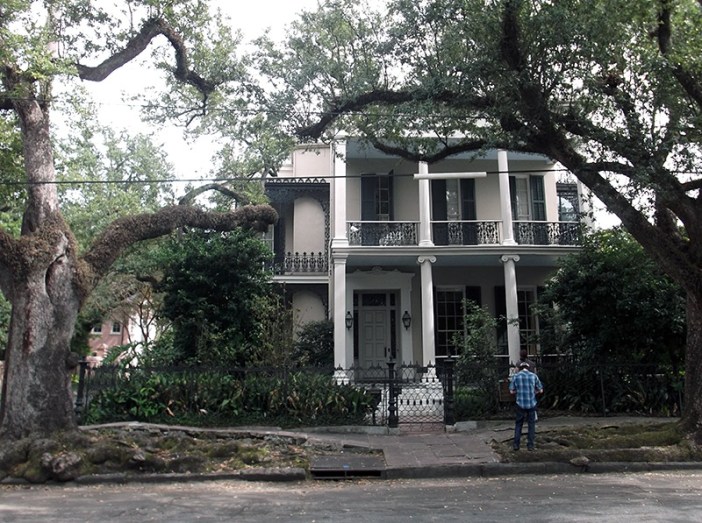
anne-rice-house

The Witching Hour ostensibly tells the story of Rowan Mayfair and Michael Curry. Rowan is the latest in a long line of witches going back to the seventeenth century (but doesn’t know it), and she saves Michael from drowning, bringing him back to life. He comes back to life with a strange power–the ability to see things when he touches them; he starts wearing gloves. He also had a vision while he was dead that is somehow connected to Rowan–so he tracks her down and they begin a relationship that eventually leads them back to New Orleans and the Mayfair house, a decayed, ancient mansion in the Garden District when her mother, Dierdre, dies. Dierdre has been in a vegetative state for years; every day she was placed on a side porch of the mansion with the great Mayfair jewel around her neck that always belongs to The Mayfair; the woman who, in each generation, has the power. The brown-eyed man the doctor sees in the opening is Lasher, a spirit whose relationship to The Mayfair is sometimes in question; is he the source of their power, or is he playing some other type of game that The Mayfair is unaware of? The narrative flashes back and forth in time, telling the history of the Mayfair witches along with the romance of Michael and Rowan as they, with the help of the secret order of the Talamasca, try to determine what the truth about the Mayfair witches–and Lasher–is.

I loved this book so much; I always recommend it to people who want to read books about New Orleans, and always include it on lists of the best books set in New Orleans. It was this book that made me want to come back to New Orleans again; and you can imagine the thrill I got when a friend who lived here drove me to the corner of First and Chestnut and showed me the Mayfair house, which was actually where Mrs. Rice and her family lived. And it was exactly as she described it in the book; Dierdre’s porch was even there.

I’ve read every Anne Rice novel since then, and she also became one of the authors I always buy in hardcover. She is one of those writers you either love or you hate; those who love her work can be very rabid. It was when I was reviewing one of her later Vampire Chronicles (Blood and Gold) that I realized–it’s different when you read for review than when you read for pleasure–that so many reviewers/critics actually got what she does in her books wrong. Mrs. Rice writes about supernatural creatures–vampires, witches, werewolves, etc.–but she isn’t writing horror; she is writing romances in the classic sense of the word. In modern literature romance has come to mean something greatly different than what it meant classically; a romance novel was not a love story, per se, but a big sweeping epic tackling huge themes like life and death, war, peace, humanity, faith, spirituality; what Mrs. Rice was doing was using supernatural characters to expand and explore those themes, and she was writing in the style of the great romance writers of the nineteenth century, like Dumas and Hugo.

I’ve always meant to go back and reread all of her work with this in mind–which is how I’ve read her novels since that realization–but again, time. I am actually several novels behind on her work now–I’ve not read The Wolves of Winter or Prince Lestat, and she has another coming out this year as well.

I will never catch up.

And now, back to the spice mines.

Alone Again, Naturally

Saturday! Tonight LSU takes on Ole Miss in yet another crucial game for the Tigers. Heavy sigh. I have a lot to do today–cleaning, errands–around football games, and I am going to start reading another book while editing some short stories and–hopefully–working on the revision of Bourbon Street Blues.

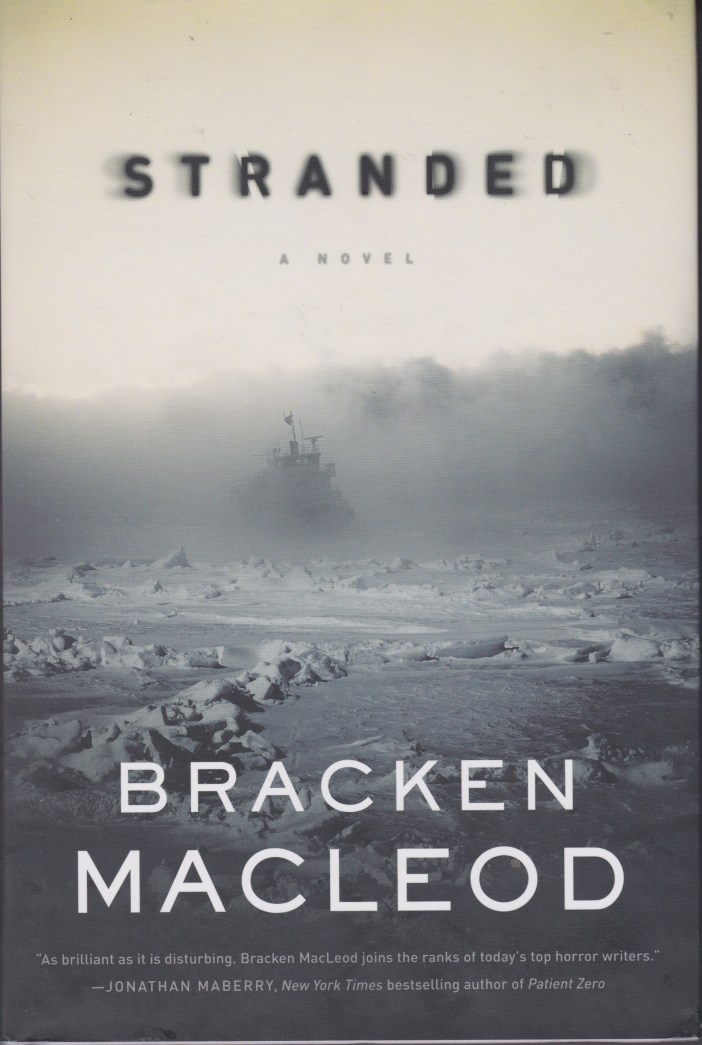
But yesterday, I finally had the time to devote to Bracken MacLeod’s amazing Stranded.

stranded
The void churned and swelled, reaching up to pull them down into frigid darkness, clamoring to embrace them, every one. A cold womb inviting them to return to the lightless source of all life, and die, each man alone in its black silence.

The sea battered the ship, waves crashing against the hull as the ship’s master tried to quarter–turning the vessel into the waves to lessen their impact. While he struggled at the helm, the crew scrambled to get into their gear. The men grabbed sledgehammers and baseball bats, rushing to the aid of their fellow deckhands like a medieval army mustering to stand against the cavalry that would break them, line and bone. Noah wrestled with his waterproof gear, trying to pull on his pants and jacket, jamming hands into clumsy gloves that would combat frostbite for only so long. The ship pitched and Noah lurched in the passageway, trying not to lose his footing, trying not to be thrown to the deck before he was even out in the storm. He shoved his foot into a boot, staggering away from his locker as gravity and momentum conspired to bash his skull against the bulkhead. He careened into the wall, feeling a pop and a blossom of pain in his shoulder. He gritted his teeth and shoved himself away; he had to get on the cargo deck with the others. He couldn’t be defeated before he even got outside.

The key to writing excellent horror, to quote Stephen King yet again, is to write about what scares you. Conversely, I think the most effective horror fiction is written about what scares and unsettles the reader. The opening to this exceptionally fine novel is a perfect example of why I will never board a ship and have absolutely no desire to ever go on a cruise. Is there anything more unsettling than not having solid ground beneath you? Every earthquake I experienced in California was horrific for that reason–when you can’t trust the floor beneath your feet not to move….shudder.

I’m not necessarily as afraid of cold as I dislike it intensely. I grew up in Chicago, spent my teens in Kansas, and as an adult, one horrible winter in Minneapolis (I love Minneapolis; just can’t handle the winters; it didn’t help that the particular winter I spent there was one of the worst in years). The rest of my life has been spent for the most part in warm-weather climates; I’ve only visited the cold on trips. I don’t like being cold, really. So, of course, books set where it’s cold always affect me (Peter Straub’s Ghost Story is one example–I still shiver not only from the scares in that book but from the images of the snowbound town; there was one by I think a British writer set in a ski lodge that was also horrifying but I can’t remember the name of the writer–he was recommended by a friend; Christopher Golden’s Snowblind, which I haven’t gotten to yet; and so many others….)

So, Stranded takes place on a freighter, in the winter, in the Arctic Sea, bringing supplies to an oil rig. The main character, Noah Cabot, is kind of the scapegoat on the ship, the Arctic Promise; no one seems to like him very much and the ship’s heirarchy really hate him, yet at the same time he is enormously likable to the reader. There’s some deep pain inside of him, this son of a family of long-time Maine fisherman, who went away to college in Seattle, but MacLeod plays his cards about Noah’s backstory perfectly, like a card shark reeling his victim in, card by card. And before you know it, the ship is beset; frozen in by the ice, trapped, with all of its communications not working. There is a weird fog, and everyone on the ship seems to be coming down with some kind of ailment. Out in the distance they can see the shape of something…maybe it’s the oil rig… and Noah, as one of the only men on board not affected by the strange sickness, is selected to help lead a team of men across the ice to whatever that shape is out in the distance.

And then the real fun begins.

The premise of the story is really enough to keep the reader intrigued enough to keep turning the pages–these are some serious stakes here–but MacLeod is a master at pacing, and knowing when to drop in those precious moments of backstory so that the reader becomes even more vested in the characters he is reading about. I kept trying to guess what was going on–I did figure one thing out–but I was almost always wrong, which is gratifying as a reader. The atmosphere is gothic and spooky, and the way MacLeod uses the freezing weather to amp up the tension is spectacular; not to mention his way of making the individual characters unique enough to be distinctive–not an easy task when you have as many minor characters populating a short novel like this.

I had read and deeply enjoyed MacLeod’s Mountain Home after I had met him at World Horror Con here in New Orleans whenever that was; I am really looking forward to reading his other novel, White Knight. His transition from noir to horror was seamless and exceptional; a mark of a truly gifted writer.

BUY THIS BOOK.

And more, please.

And now, back to the spice mines.

At Seventeen

The spice mines have not been kind to me lately; I’ve been in one of those awful malaises that I hate so much. I am behind on the book (of course) and I’ve been struggling with some short stories I needed to write. However, yesterday I made some progress on the book (huzzah!) and I think I am snapping out of it. The first thing I saw this morning on social media was this, from Anne Rice:

“To be a writer one thing is required. Write. That’s the big secret. It’s one word. Get the words down on paper, one way or another, and save them. Believe in your own voice, too, and your own way of doing it. Don’t listen to people who say negative things. They’re common. Writers are precious.”

That helped some, and I am hopeful that I am not coming out of the malaise.

Today’s horror topic is Christopher Pike.

christopher-pike-books

I’ve often talked about how discovering the works of Christopher Pike in the early 1990’s was a revelation to me about young adult fiction, which I had dismissed most of my life; I’d gone almost directly from the kids’ mystery series to Ellery Queen and Agatha Christie and Phyllis A. Whitney and Victoria Holt and so forth; adult mystery and suspense. It was finding Pike–and later, R. L. Stine’s Fear Street books–that got me started writing the y/a books in the 1990’s, and even planned on connecting them all together, like the way Stine did.

Christopher Pike’s novels were seriously twisted. The first ones I bought copies of were Whisper of Death, Witch, Die Softly, and Remember Me. I was startled at how ‘adult’ the themes in the books were; when I was a teen the few books about teens I remembered were about “should I or shouldn’t I have sex?” or “drugs are bad for you” or “this is what happens if you DRINK”–that tiresome moralizing shit I couldn’t be bothered with–and in almost every instance it was about white kids in the suburbs, safely middle class. Pike’s characters were all mostly white still, but there wasn’t any overt, hit-you-in-the-head-with-a-baseball-bat type nonsense. Some of the kids were poor, from broken families, having sex, drinking, doing drugs…in other words, these were teenagers dealing with adult problems, and doing the best they could.

whisper-of-death

Whisper of Death was the first one that I read, and I couldn’t believe what I was reading, from page one. The point of view character, Roxanne, and her boyfriend, Pepper, were driving home to their small town from an abortion clinic in a nearby, larger city. Roxanne is the product of a single parent home; her mother ran away when she was a little girl, her father is blue collar and drinks too much, and Pepper, her boyfriend, is higher up on the economic scale and made it clear from the moment she realized she was pregnant that abortion was the only option. Pepper’s cavalier attitude about the situation–the palpable relief he feels now that it’s over–also has her questioning whether he is the right guy for her. So, Roxanne’s nerves and feelings are already on edge and raw as the true terror starts…every town they pass through on the drive home is abandoned. Even in their home town, there’s no one around but find three other teenagers they slightly know, and soon discover the only thing they have in common, really, is a connection through a girl named Mary Sue, who recently committed suicide, and who also apparently wrote short stories about the five of them dying in horrible ways.

As they look for other people, one by one they begin dying the way their deaths were described in Mary Sue’s stories.

I went back and read all of Pike’s books, enjoyed them all–and again, all of them were really dark and twisted. Remember Me, which turned into a trilogy, was about a dead girl whose spirit was trying to figure out who pushed her off a balcony at a party and killed her, for example. He also got me to discover Stine and Jay Bennett–who wrote amazing hard-boiled y/a thrillers. Pike also showed me that you could really push the boundaries in y/a fiction.

And now, the spice mines are calling me again.