I Was Made for Dancing

One afternoon a friend of mine and I were really bored. We were just sitting around smoking pot and watching MTV and everyone else we knew were at work and we didn’t have anything to do.

“Hey, let’s go see a movie,” he said. “There’s a new John Carpenter movie playing.”

I agreed. I wasn’t really sure who John Carpenter was, but I’d heard the name before. I was vaguely aware he was a horror director; I knew he had directed the remake of The Thing and he had also directed Escape from New York, which I’d really liked.

I hadn’t really gotten into horror movies much in the heyday of the slasher movies; I’d never seen any of the Friday the 13th movies (still haven’t) or any of the Halloween films (I’ve seen them all now); I wasn’t really into the gory movies with lots of graphic violence and dismemberment and splashing blood–but I did enjoy horror; this was when I was trying to write it, was using Stephen King as my guiding force and writing lots of (really bad) short stories. I don’t know what I was expecting when we went to see this movie–but I was absolutely terrified almost from the very beginning.

prince-of-darkness-poster

The premise of the movie is incredibly clever. The devil of the Bible actually was an extraterrestrial being with amazing powers of darkness and evil. At the beginning of time, God and this being fought for control of Earth and the universe. This being knew he wasn’t powerful enough to win, so he sealed his son’s essence in a container and buried it in the Middle East till the day his son could assume form and attain his own power, and free his father from the other side, which God was going to banish him to. He was banished, and his son, sealed into his canister, was forgotten about. But Jesus knew the story and told it to his followers, none of whom believed him because it was so crazy, and it was in the best interests of the Catholic Church to not tell people that evil was actually an outside force rather than something within, so they kept it a secret for several thousand years “until science had advanced enough to prove Jesus was right.” For some reason, they moved the canister containing the devil’s son to a church named St. Godard’s in Los Angeles (it is never made clear why), and he is watched over by the Brotherhood of Sleep. Now, there has been a change in the canister–the priest guarding him has died–and the Archdiocese, represented by a priest played wonderfully by Donald Pleasence, enlists the help of several different schools of science from a local university, including quantum physics, to not only prove the story so they can warn the world…but at the same time figure out a scientific way to stop the prince of darkness.

princeofdarkness-container

From the opening credits, when the score (also written by John Carpenter, and one of his creepiest) the sense of dread grows. I watched the movie again a few years later on video, and it was just as terrifying.

I watched it again last night, in preparation for writing this blog entry, and it wasn’t scary at all to me; then again, I also knew what was going to happen so it wasn’t likely to work again. I did think it was just as clever a premise as before (you can never go wrong with old secrets about religion in my book), and I enjoyed watching.

6125203945_00f73f9f1f_b

The best parts are, of course, Donald Pleasence, and how, as the power of the prince grows, how he is able to take control of first the creatures around the church–the insects, worms, etc–and then the students themselves. (He also is able to control the minds of the homeless people who live in the neighborhood, which is kind of homeless-phobic, in implying that as homeless people their minds as weaker somehow). But I did enjoy it–I also enjoyed the weird dreams that everyone who sleeps in the near vicinity of the church all share (they all have the same dream; which is actually a broadcast through quantum physics from the future).

pod302

But the acting is really horrible, and I can’t help but wonder what Carpenter was thinking. All of the characters are supposedly grad or Ph.D students–and there isn’t enough make-up or soft lighting to make them look young enough (and yes, older people can be students, I know that, but when everyone in the cast is at least in their early thirties….) The male lead is Jameson Parker of Simon and Simon fame, with his eighties porn stache, with Lisa Blount as his love interest…and the absolute worst, Susan Blanchard, whom I recognized, even in 1987, as the actress who played Nurse Mary Kennicott on All My Children in the early 1970’s. Even having an older cast would have been fine, but the characters are written young, and having a woman who is in her mid-thirties play the part as a gum-chewing pony-tailed co-ed was just a silly choice.

I would be very interested to see this remade, actually; the concept was great.

And now back to the spice mines.

Rhinestone Cowboy

I do love witches. What would Halloween be without them? Of course, the caricature of witches that we see at Halloween–green skin, pointed hat, riding a broom, warts, huge crooked nose–was popularized into modern culture by The Wizard of Oz (if not, the Wicked Witch in that film was the personification of the popular culture’s conception of a witch); but, alas, my knowledge on the history of the perception of witches is not that terrific. I know that the concept of witchcraft has been around for a long time–witches are mentioned in the Bible–and have been around in the popular culture for quite some time; I watched Bewitched as a child; there’s Bell, Book, and Candle, and so much fiction about witches…and of course, I’ve read up on the Salem witch trials–and hasn’t everyone been forced to read Arthur Miller’s The Crucible in high school? I am hoping that Lisa Morton, who has already co-authored a graphic novel with the late lamented Rocky Wood and illustrated by Greg Chapman called The Burning Times as well as definitive histories/non-fictions studies on both Halloween and ghosts, will also tackle witches.

But today, I am going to talk about Anne Rice’s The Witching Hour.

220px-thewitchinghourcover

The doctor woke up afraid. He had been dreaming of the old house in New Orleans again. He had seen the woman in the rocker. He’d seen the man with the brown eyes.

And even now in this quiet hotel room above New York City, he felt the old alarming disorientation. He’d been talking again with the brown-eyes man. Yes, help her.  No, this is just a dream. I want to get out of it.

The doctor sat up in bed. No sound but the faint roar of the air conditioner. Why was he thinking about it tonight in a hotel room in the Parker Meridien? For a moment he couldn’t shake the feeling of the old house. He saw the woman again–her bent head, her vacant stare. He could almost hear the hum of the insects against the screens of the old porch. And the brown-eyed man was speaking without moving his lips. A waxen dummy infused with life–

No, stop it.

He got out of bed and padded silently across the carpeted floor until he stood in front of the sheer white curtains, peering out at black sooty rooftops and dim neon signs flickering against brick walls. The early morning light showed behind the clouds above the dull concrete facade opposite. No debilitating heat here. No drowsing scent of roses, of gardenias.

Gradually, his head cleared.

I had read Interview with the Vampire when it first came out, back in the 1970’s, and honestly didn’t care for it. I had just read ‘salem’s Lot, and the concept of the vampire as hero didn’t appeal to me; it was just too foreign for me to wrap my head around (which is ironic, given my love for Dark Shadows, but I didn’t make the connection then between Louis and Barnabas). I picked it up again in the mid-1980’s, and felt the same way about it. I didn’t read anything else Mrs. Rice published, either, simply because I didn’t care for  Interview; then a friend who was a fan had me read The Mummy, which I greatly enjoyed. I had a hardcover copy of The Witching Hour–I don’t know why, to be honest–but after reading The Mummy I wanted to read something else by Mrs. Rice and remembered that I had a copy of this other one…

And could not put it down.

anne-rice-house

The Witching Hour ostensibly tells the story of Rowan Mayfair and Michael Curry. Rowan is the latest in a long line of witches going back to the seventeenth century (but doesn’t know it), and she saves Michael from drowning, bringing him back to life. He comes back to life with a strange power–the ability to see things when he touches them; he starts wearing gloves. He also had a vision while he was dead that is somehow connected to Rowan–so he tracks her down and they begin a relationship that eventually leads them back to New Orleans and the Mayfair house, a decayed, ancient mansion in the Garden District when her mother, Dierdre, dies. Dierdre has been in a vegetative state for years; every day she was placed on a side porch of the mansion with the great Mayfair jewel around her neck that always belongs to The Mayfair; the woman who, in each generation, has the power. The brown-eyed man the doctor sees in the opening is Lasher, a spirit whose relationship to The Mayfair is sometimes in question; is he the source of their power, or is he playing some other type of game that The Mayfair is unaware of? The narrative flashes back and forth in time, telling the history of the Mayfair witches along with the romance of Michael and Rowan as they, with the help of the secret order of the Talamasca, try to determine what the truth about the Mayfair witches–and Lasher–is.

I loved this book so much; I always recommend it to people who want to read books about New Orleans, and always include it on lists of the best books set in New Orleans. It was this book that made me want to come back to New Orleans again; and you can imagine the thrill I got when a friend who lived here drove me to the corner of First and Chestnut and showed me the Mayfair house, which was actually where Mrs. Rice and her family lived. And it was exactly as she described it in the book; Dierdre’s porch was even there.

I’ve read every Anne Rice novel since then, and she also became one of the authors I always buy in hardcover. She is one of those writers you either love or you hate; those who love her work can be very rabid. It was when I was reviewing one of her later Vampire Chronicles (Blood and Gold) that I realized–it’s different when you read for review than when you read for pleasure–that so many reviewers/critics actually got what she does in her books wrong. Mrs. Rice writes about supernatural creatures–vampires, witches, werewolves, etc.–but she isn’t writing horror; she is writing romances in the classic sense of the word. In modern literature romance has come to mean something greatly different than what it meant classically; a romance novel was not a love story, per se, but a big sweeping epic tackling huge themes like life and death, war, peace, humanity, faith, spirituality; what Mrs. Rice was doing was using supernatural characters to expand and explore those themes, and she was writing in the style of the great romance writers of the nineteenth century, like Dumas and Hugo.

I’ve always meant to go back and reread all of her work with this in mind–which is how I’ve read her novels since that realization–but again, time. I am actually several novels behind on her work now–I’ve not read The Wolves of Winter or Prince Lestat, and she has another coming out this year as well.

I will never catch up.

And now, back to the spice mines.

Grease

Yesterday I was tired, but had slept well. I didn’t get as much done as I would have preferred–I still make to-do lists thinking I have the energy I had ten years ago; what I wouldn’t give for that–but I did make an awesome chicken/white bean chili for dinner, so that’s something, isn’t it? I did work on the story a bit, cleaned a lot, and started reading Bracken MacLeod’s Stranded, which is quite wonderful so far.

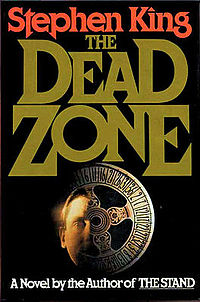
As we delve more deeply into October, the month I am devoting to horror, I decided to examine another book by Stephen King today, a novel this time, and one that I don’t think gets nearly enough attention–and certainly hasn’t gotten enough attention in this particular election cycle. It’s always been a favorite of mine, and I haven’t reread it in years; I know I’ve read it more times than I can count. And yes, true confessions from my derivative self; just as I used the same framing device and structure as Christine for Sara‘s original draft, I did the same thing with Sleeping Angel in its original draft, only using The Dead Zone.

200px-deadzone

By the time he graduated from college, John Smith had forgotten all about the bad fall he took on the ice that January day in 1953. In fact, he would have been hard put to remember it by the time he graduated from grammar school. And his mother and father never knew about it at all.

They were skating on a cleared patch of Runaround Pond in Durham. The bigger boys were playing hockey with old taped sticks and using a couple of potato baskets for goals. The little kids were farting around the way little kids have done since time immemorial–their ankles bowing comically in and out, their breath puffing in the frosty twenty-degree air. At one corner of the cleared ice two rubber tires burned sootily, and a few parents sat nearby, watching their children. The age of the snowmobile was still distant and winter fun still consisted of exercising your body rather than a gasoline engine.

Johnny had walked down from his house, just over the Pownal line, with his skates hung around his shoulder. At six, he was a pretty fair skater. Not good enough to join in the big kids’ hockey games, but able to skate rings around the other first graders, who were always pinwheeling their arms for balance or sprawling on their butts.

That is one terrific opening, isn’t it? It’s the prologue; King offers us an insight into what it is to come, as young John, skating around the pond and having a good time as six year olds do, is accidentally mowed down by one of the hockey players. He is sent flying across the ice, out of control, and crash lands, hitting his head hard–which of course brings all the adults and other kids running. Before he comes to consciousness, he is muttering…about how something had taken all the charge it could take…and then he comes to…and soon is skating around again like nothing ever happened, the way kids do all the time.

Only a few days later, one of the men gathered around him is charging a car battery, which becomes overcharged and explodes. No one remains what little Johnny said, or connects the two incidents.

The book then flashes forward to John, now a college graduate and working as a high school teacher in a small town in Maine, dating another young teacher whom he thinks he might be falling in love with, and they are going to a carnival, where Johnny has a ridiculous run on a roulette wheel…and is involved in a terrible car accident after dropping Sarah off, that sends him into a coma for five years. And when he finally comes out of the coma, the world has changed dramatically–and that dormant power in his brain, that he first experienced after the fall on the ice, is back and even stronger than before.

The problem, of course, is that he has become a modern-day Cassandra–he can see the future, but no one believes him.

That story, in and of itself, is genius enough to drive a novel; the moral implications, the having to deal with trying to take action vs. doing nothing–in one instance Johnny is blamed for what happens since he foresaw it–and what kind of responsibility do you have to the world in general? The crushing burden of foresight–added to how the world changed for Johnny himself during his coma (Sarah fell in love with and married someone else; his mother, always religious, has been a zealot) and having to deal with all of that would make for an incredibly compelling story.

But King goes one step further; the book also examines not just Johnny’s life but that of the rise of Greg Stillson, a sociopath whose only true interest is money and power; how he is building a political machine–dismissed as a clown but has a “populist” message that has him rising and defying the odds to run for high office. King exposes the dark underbelly of the character; the reader knows Stillson is a monster–and then Johnny goes to one of his rallies out of curiosity–and shakes his hand.

And sees the future, a future where an insane Stillson has become president of the United States, and has his finger, literally, on the button to launch a full scale nuclear war.

The end of the world.

Does Johnny have a responsibility to stop him?

The Dead Zone is absolutely brilliant, and almost horrifyingly prescient. I am writing this from memory as I don’t want to revisit this book just yet–but I do want to read it again.

And now, back to the spice mines.

Hooked on a Feeling

I can be kind of obtuse when it comes to the date; I have to date documents at work every day but it’s kind of automatic and then one day it hits me: hey, it’s October! Where did 2016 go?

I hate when that happens.

I especially hate my obliviousness because I’d intended to spend the month of October blogging about the horror genre–books, stories, films, etc. So here I am, four days behind but I am game to get going on this. Are you with me, Constant Reader?

I knew you would be.

I wasn’t allowed to watch monster movies when I was a kid because they always gave me the absolute worst nightmares, and I would always wake up screaming and terrified. Yet at the same time, I was drawn to scary movies; I loved being terrified. One of my earliest memories was watching The Birds on television with my parents, and I’ve never been able to see a flock of birds on telephone/power lines ever since without having a chill go up my spine. The first horror novel I read was either The Exorcist or The Other, I’m not sure which; but they were two of the popular books everyone was reading when I was in junior high school (the crucifix masturbation scene in The Exorcist  was discussed in great detail). I never much care for The Exorcist, to be honest, and even when I finally was able to rent the film years later and watch it for the first time, it was more funny to me than anything else; almost like it was trying too hard to be scary and obscene–which is what I also felt about the novel. (I thought about rereading the novel recently, since I am really enjoying the new TV show based on it; but I’ve read other works by Blatty and not cared for them either; plus, I think I’ve read somewhere recently that he’s a homophobe, and yes, I know one should try to separate the art from the artist, but I’m just not that evolved, okay? Sue me.)

Anyway, I digress.

The horror genre is similar to the crime genre in that there are a number of sub-genres contained under the umbrella term of horror; and not all horror is necessarily scary. I am not well-read enough in the genre to even try to define any of these subgenres, frankly; I’m not especially well-versed on horror films or television programs, either. I am a casual fan; when it is done well, I greatly enjoy it–but I am hardly an expert in the field. I know good writing when I see it, though–whether it’s literary or crime or horror or fantasy or romance.

I once said on a panel somewhere–I don’t remember where–that crime and horror fiction are the flip sides of the same coin; the difference being in crime fiction the monsters are human. It was a great sound-byte, and I used a variation of it in the introduction to the anthology I co-edited with J. M. Redmann, Night Shadows, where I said the two genres were both concerned with death. After all, Freddy Kruger is just a supernatural serial killer, right? And while I’ve not read any of the Thomas Harris books (I know, I know, shame on me), the film The Silence of the Lambs is both a crime film as well as horror.

Stephen King, of course, is my writing god. I discovered him when I was a sophomore in high school, and a friend was reading the paperback of Carrie. I’d never heard of either the author or the book, but I picked it up idly and started reading it–and couldn’t put it down. She graciously let me borrow it, and I didn’t put it down until I’d finished reading it that night. I’d never read anything like it before–and I became an immediate fan. It wasn’t until The Stand, several years later, that I started buying King in hardcover; but I have done so ever since (at least, the ones that were published in hardcover; some, like his Hard Case Crime novels The Colorado Kid and Joyland were paperback originals only).

But my real favorites are, and always have been, ghost stories. Barbara Michaels wrote some excellent ones, including Ammie Come Home, The Crying Child, House of Many Shadows, and Be Buried in the Rain, among many others.

And of course, Shirley Jackson and Daphne du Maurier wrote some brilliant work.

I do wish I had more time to read–so many brilliant writers and so many brilliant books out there to read.

So, I intend to spend this entire month blogging about horror. Next time, Dark Shadows.

darkshadows


Watching Scotty Grow

As I work to revise Bourbon Street Blues for its ebook debut, and plan out yet another Scotty book (tentatively titled Reality Show Rumba, but that may change to St. Charles Second Line or something else, I’m not completely sold on that as a title), yes, I’ve got Scotty on the brain, what can I say? I’m in that weird mode where ideas are bouncing around inside of my head, and can’t seem to focus enough to get any one thing worked on and finished.

It ain’t easy being a Gregalicious.

As I said when I rode the streetcar to and from the NO/AIDS Walk last weekend, the ride felt wonderful because I felt reconnected to New Orleans. I’ve felt some disconnect over the past few years; partly because I was so damned busy doing so damned much, and partly because the city has changed somewhat over the years as well that have followed Katrina. It was inevitable; the city was going to change even had Katrina not happened, and the question remains, were these good changes for the city? The so-called ‘sharing economy,’ with the coming of AirBNB and Uber and Lyft, are good things but can also be bad things; AirBNB had resulted in private homes being turned into rental properties–but is that what has driven up property costs and rentals in New Orleans, or was that a result of the rising property costs? I signed up for a realtor’s daily emails about properties for sale–mainly because I saw a sign on a house I’ve always loved and wanted to set a book in, so I wanted to be able to see the inside and the yard–and I am daily astounded at the costs of the properties she has listed. I have yet to see one for less than 1.2 million; when I was writing Murder in the Rue Dauphine, I mentioned in passing ‘the million dollar homes in the Garden District’ only to be corrected by my first reader: “There are no homes in New Orleans that cost a million dollars or more, not even in the Garden District.” As I said, every featured property in the daily emails I get from this realtor are a minimum of 1.2 million; then again, I am certain people from other cities would think them bargains, as they also are a minimum of 4000 square feet or more.

The only way Paul and I could ever own property here would be to hit the Powerball.

One of the things I know I am going to do with the next Scotty book–one of the many things I am going to do with the next Scotty book–is determine whether or not Scotty and the boys are going to stay in the Quarter. GASP, right? But one penultimate New Orleans thing that I’ve never written about–although I’ve endured it numerous times–is the joy of renovation. The house the boys all live in on Decatur Street was, of course, rebuilt after the fire in Bourbon Street Blues–I did write about Scotty having to live in the Marigny while the house was being rebuilt in Jackson Square Jazz–but about eleven years have passed since then; the house survived Katrina and everything that followed, but eleven years of heat and humidity, of wood swelling and shrinking, of termites…well, it’s about time the house on Decatur Street got renovated again–and of course, treated for termites and so forth to begin with. And so the boys have to go live elsewhere while the place is gutted and rebuilt yet again…and now, the question is whether or not they want to move back into the Quarter or not, or maybe buy a place. Scotty has come into his trust funds, after all, and so there is plenty of money…but it should also make for an interesting subplot. And the plot of this one…I think this could possibly be the best Scotty of them all.

At least, I certainly hope so.

I’m very excited about it. Now I just have to write two other books first.

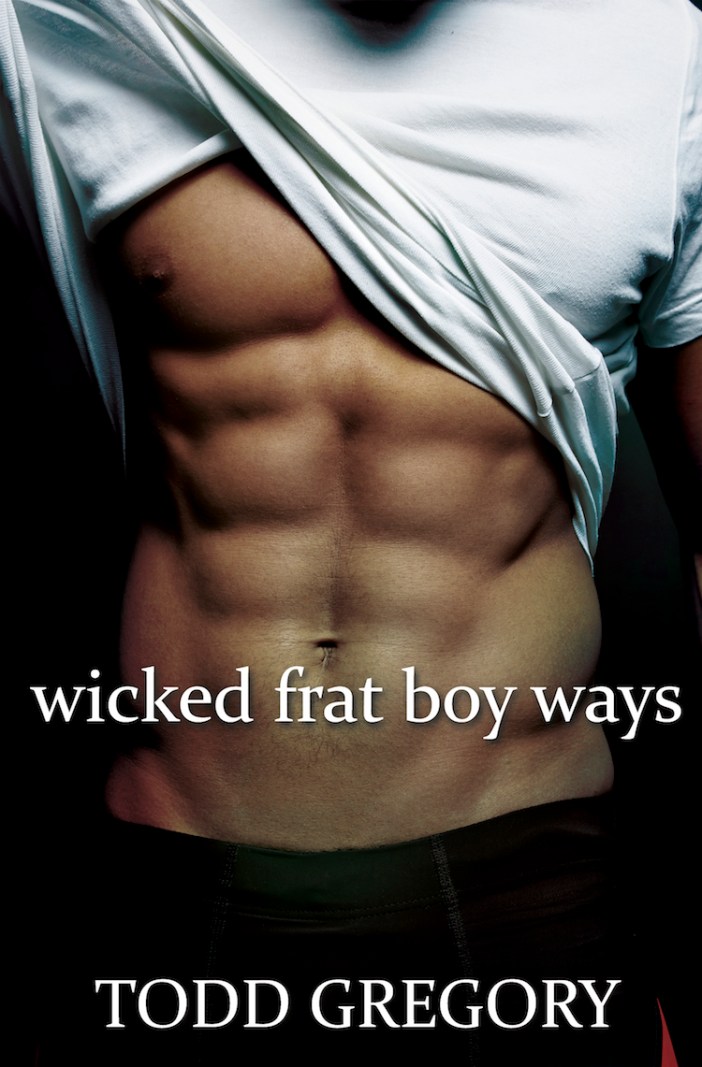
Here’s the cover for the work-in-progress I am primarily focusing on:

wicked-frat-boy-ways_final


Cat’s in the Cradle

The death of Agnes Nixon this past week saddened me, and spurred me to write two blog posts about her greatest, and most famous, creations; All My Children and One Life to Live. I watched both shows, along with General Hospital, off and on for over thirty years; I only stopped watching soaps when I needed the time I spent watching them to write–a decision I’ve never really regretted all that much. But I watched, over the years, many different soaps at one time or another: The Edge of Night, Dark Shadows, Love of Life, Search for Tomorrow, As the World Turns, Guiding Light, The Young and the Restless, Another World, Days of Our Lives, The Bold and the Beautiful, Capitol, Love is a Many Splendored Thing–it’s really quite staggering. And at night, I remember watching Peyton Place with my mom as a kid–although I don’t really remember much of it–and later, I was a huge Dynasty fan. I did watch Dallas, Knots Landing, and Falcon Crest during the 80’s night time soap heyday; I also watched others that didn’t last very long, like Emerald Point NAS, Flamingo Road, Paper Dolls, and Bare Essence.

It’s pretty safe to say I am a fan of the serial/continuing story format. When I was in college, I managed to get into a graduate level English course despite being an undergraduate because I was able to write a paper that was good enough to get me in; it was on Popular Culture in the 20th Century, and attendance wasn’t required–always a plus for me–and there were no tests; you only had to write a lengthy paper on some aspect of popular culture in the 20th century for your grade. I chose to write about soaps; the paper, which would wind up being 120 or so typewritten pages long, was title “How Changes in Daytime Drama Storylines Have Reflected Changes in American Culture and Society Since the 1950’s.”

God, how I wish I still had a copy of that paper.

I really wanted to work for the soaps in the 1980’s; my ambition switched from being a mystery and/or horror writer to being a soap writer. I still think it would be a lot of fun, even if there are very few soaps left to work for. But writing that paper required me to do a lot of research into the soaps and their histories; I’ve never minded doing research if it was a subject I was interested in. So, I kind of became a mini-expert in the soaps, and their histories, and there were a lot of interesting trends. It was interesting how moralistic the soaps were–something that hadn’t changed from their early days; back when there was a Motion Picture Code and a Comic Books Code, and censors for television (do they still have censors?); in which someone who did something bad always had to be found out and punished. (An interesting aside: one of the bad things that characters could do, and be forgiven/rehabilitated for and not necessarily punished for, was rape. But that’s a subject for another time–but I want to go on record to say that characters who had long runs on soaps, and in fact became very popular, at one time were rapists: Luke on General Hospital, Mickey on Days of Our Lives, John on As the World Turns, Roger on Guiding Light, Todd on One Life to Live; far too many for it to be a one-off, and enough to make it a trend. Even in prime time, on Dynasty Adam raped Kirby and was never prosecuted; she later agreed to marry her rapist.)

I even wrote, as a joke, a soap parody when I was in college, with my friends as characters. I called it The Young and the Pointless, and it was primarily for my amusement, and that of my friends. Basically, I looked at my friends and asked myself the question, if you were a character on a soap, what kind of character would you be?  I came up with the storylines myself; borrowing liberally from the storylines I’d learned so much about writing the paper, and ironically, my friends couldn’t get enough of it. They really became invested in the story; one even told me “My character wouldn’t say this.” Every day they would ask “have you written any new episodes?” It finally became over-bloated, because people who weren’t in it originally wanted to be, and I tried to be accomodating, and I cancelled it at long last midway through the third “season”. But it was a valuable learning experience for me, in that I learned that 1. I could write stories that interested people and made them want to keep reading; 2. I learned valuable lessons in creating characters and writing dialogue; and 3. I learned how to plot out a story. It was more like the classic parody SOAP than a real soap opera, but it was so much fun to write. I still have the originals somewhere–I’d always intended to type it up and make copies for the friends who were characters in it. Alas, some of them have died in the years since–a rather sobering thought–but The Young and the Pointless lives on in my files.

Yesterday LSU won, beating Missouri 42-7 at Tiger Stadium; their first win under interim head coach Ed Orgeron. LSU looked terrific; the defense played incredibly well, and the offense misfired a couple of times, but over all looked terrific. Unfortunately, it’s hard to tell if that was because they’ve come together as a team and are playing up to their potential, or if Missouri just isn’t particularly good; but LSU looked much sharper against Missouri than they did a few weeks ago against Jacksonville State. Their schedule now turns into Murderer’s Row, with games against Florida, Arkansas, Alabama, Ole Miss, and Texas A&M, so we shall see.

I wound up not being as productive yesterday as I’d intended; I did a lot of laundry and did some cleaning, but not all the cleaning I’d wanted to do. I also didn’t do any writing; I wound up getting sucked into watching some games on television (the last five minutes of the Georgia-Tennessee game was amazing; it reminded me of the last three minutes of the 2009 Georgia-LSU game, where LSU went ahead 12-7, only to fall behind with forty seconds left 13-12, but scored with less than twenty seconds left to pull off the win 20-14). Amazing.

I also spent some time opening Antonia Fraser’s Mary Queen of Scots and reading random sections yesterday; I originally read the book when I was eleven. The Queen of Scots has always interested me, and also, she was one of that ‘monstrous regiment of women’ who held power in the sixteenth century–when, as I’ve mentioned before, more women were in positions of power throughout Europe than any time prior or since. I also read some of Barbara Tuchman’s essays in Practicing History, and again, thought about how much I would love to write a book about the sixteenth century.

God, how I love history.

And now, I need to make up for the work I didn’t get done yesterday, so it’s off to the spice mines I go.

Here’s a hunk for you to enjoy:

img_1103


Tie a Yellow Ribbon Round The Old Oak Tree

Good morning and Happy Saturday, Constant Reader! This is my first full free weekend since Labor Day–no Decadence outreach, no LSU tickets, no Bouchercon, no AIDS Walk. Paul’s off at tennis, despite having an abscessed tooth extracted this past week, and the house is silent–I don’t know where Scooter is, having vanished after getting fed and a his morning handful of ‘you’re a very spoiled kitty here have some treats.’ I am doing laundry and will most likely clean today, but I also intend on working on short stories today. I came across an interesting submissions call the other day that I have an unfinished story that would be perfect for, so I am going to try to finish the story that I was asked for, edit two more, and finish writing that one–and maybe even work on the fratboy porn novel. I have to head out to Walgreen’s at some point, but other than that I don’t even have to leave the house this weekend unless I want to. I may go do some cardio later, but I may leave that up in the air as well.

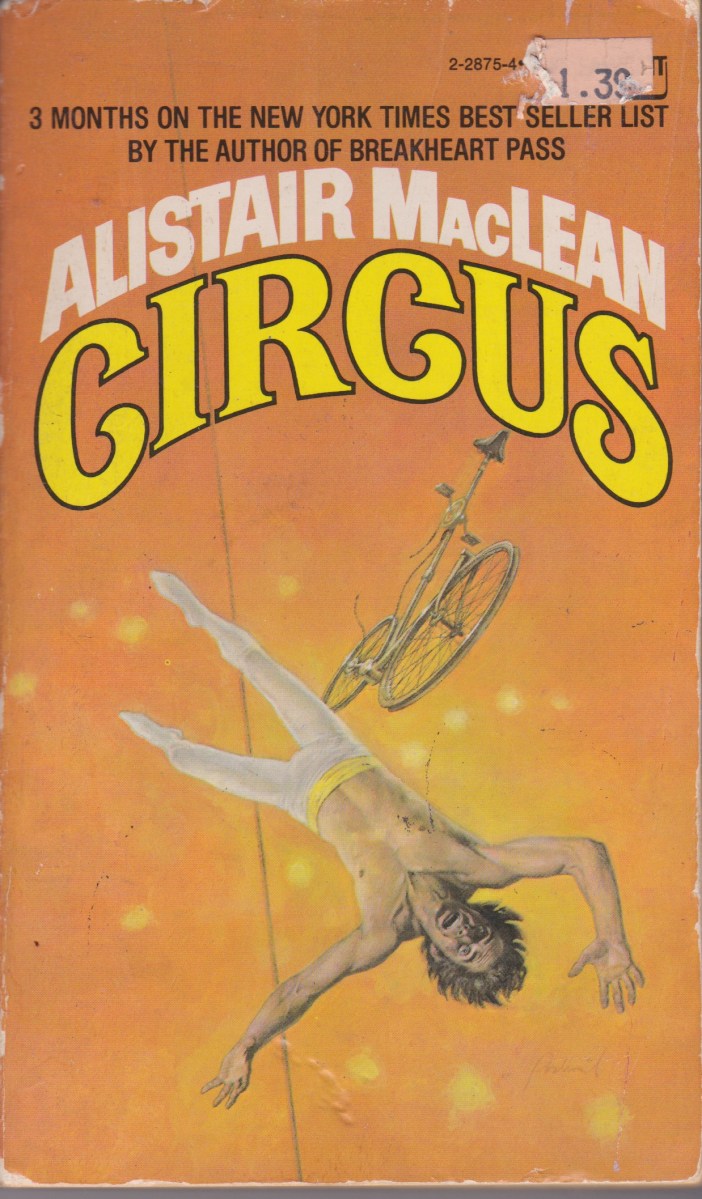
I am reading several books at the moment–some nonfiction; The Proud Tower and Practicing History: Collected Essays by Barbara Tuchman, in addition to The Tigress of Fiori, which is still on my nightstand, and I am now reading Puppet on a Chain by Alistair MacLean; someone had mentioned him recently on Facebook, and I remembered enjoying his work in the 1970’s and 1980’s, and also that I had never finished reading all of his books. Someone had mentioned Puppet on a Chain as a favorite, and it was one I hadn’t read, so it was off to eBay I went to get a bunch of his work. The first book of his I read was Circus–the young gay boy couldn’t help but be drawn to the cover design of a ripped muscular bare-chested man in white tights falling from a high wire. That may have been my first bare torso book cover purchase….hmmmm.


circus
Can’t imagine why that caught my eye, can you?

It’s also, I find, very interesting to read thriller writers from the past, to see how much the genre has changed. Obviously, back then the big enemy was Communism and the Soviets; World War II was also recent enough so Nazis weren’t out of the question, either. I also bought some Helen MacInnes novels I hadn’t read while I was there; I look forward to making my way through that stack of books at some point when I have time.

Ha ha ha ha! I even typed that with a straight face.

So, that’s my day; finishing “Lightning Bugs in a Jar” and “The Scent of Lilacs in the Rain,” editing “The Weight of a Feather” and “Death and the Handmaidens”, cleaning, watching college football, and listening to my new download of Fleetwood Mac’s remastered, deluxe version of the vastly underrated Mirage album, which I am really enjoying. I’d forgotten how much I really liked the album, and the early versions of the songs are, in some cases, better than the version that was eventually released on the album–Christine McVie’s early version of “Hold Me” is less lick, and without those interesting harmonies overdubbed (which I do like, don’t get me wrong), you can see how the song could actually be performed live; and the early version of Stevie Nicks’ “That’s Alright” (one of my favorite songs of hers) is actually much more country; I’ve always thought Stevie should record an album of country songs.

I also may start editing and correcting Bourbon Street Blues, so that ebook can finally get going. It’s been way too long since people have been able to get it anywhere other than ebay and from used bookstores.

Okay, off to mine spice! Have a lovely day, everyone!


Torn between Two Lovers

The other show that Agnes Nixon created was One Life to Live, set in the Philadelphia suburb of Llanview. The show never really got quite the attention that it’s sister shows on ABC did, airing for most of its run between the better known All My Children and General Hospital, and it did veer into the weird from time to time. But when it was on its game,One Life to Live was without question one of the best shows on television.

oltl92

I can remember watching from a very early age, with our babysitter and my grandmother. The lead character was–and always remained–Victoria Lord. The show followed the classic soap set-up of two contrasting families–one rich, one poorer–but Agnes Nixon gave that classic set-up a twist. Usually, the families were large–the Hortons on Days of Our Lives being a prime example–and very WASP-y; with names like Hughes and Lowell and Matthews. The “poorer” family wasn’t really poor; it usually was more upper-middle class, with doctors and lawyers; money was never a concern. What Nixon did with One Life to Live was very different than anything else on the air. Of course, there were the Lords, filthy rich with their mansion and publishing empire–but she deliberately made the second family not only working class but ethnic–the Polish-American Woleks.

And even more shocking, one of her initial storylines was about Carla…who turned out to be a light-skinned black woman passing for white, engaged to a white man, and struggling to deal with whether she should embrace who she was or continue living a lie. For the 1960’s, this was shocking–particularly since she was engaged to a white doctor. The big reveal when the audience found out that Carla was actually black was one of the biggest plot twists ever on a daytime drama–and needless to say, didn’t play well in the deep South.

The show always took chances–some of them paid off, others didn’t. The underground city of Eterna story, the time travel story that sent Clint Buchanan back to the 1880’s–these were the things that made one roll one’s eyes.

But like I said, when the show was on, it was fucking on.

Take the character of Tina Clayton, for example. She was originally brought on as the teenaged daughter of Viki’s best friend from college, and a little loose with her morals. She left the show, only to return in the mid 1980’s older, trashier, and with a secret–she was actually Viki’s half-sister, because her mother had had an affair with VIki’s father!

andrea_evans

Now, one of the original big stories on the show was Viki’s mental illness–she had DID (dissociative identity disorder), or what was then called a ‘split personality.’ She would become another woman, Niki Smith. This illness was originally ‘cured’ and Viki moved on. Tina’s return, and the claims about Viki’s father, brought Niki Smith back out yet again. Tina was front and center on the show for several years, superbly played by Andrea Evans, until she left the show. The part was recast a couple of times, but Evans was so definitive it was hard for the other actresses to make the part their own.

But Erika Slezak was fantastic as Viki. She won six Emmys for the part–in no small part because of her stunning performances during the DID episodes, when she was completely believable as someone else.

slezak4-thumb-250x274-21937-e1384105464226

She also had amazing chemistry with another amazing actress, Robin Strasser, who played her arch-enemy and stepmother, Dorian Lord.

mti4odiynda0ntc4mzg0mzuw

The scenes when Dorian finally confronts Viki with the knowledge she’d always thought Viki knew herself–that Victor Lord had sexually abused her as a child–were stunning; they are on Youtube, if you want to take a look. That was when Viki’s mind shattered into several different characters; at least six. Amazing acting and writing.

In the early 1990’s, One Life to Live was absolutely must-watch television, at least for me, as the show took on homophobia and HIV. Viki’s youngest son Joey’s best friend Billy Douglas, played by Ryan Philippe, was thrown out by his parents for being gay.

ea9f5a12fba50e9d1875e383bf864b37

At the same time, a local girl named Marty Saybrooke was obsessed with Father Andrew Carpenter, an Episcopalian priest who was trying to help Billy. When Andrew rejected her advances, Marty started telling people that Andrew had actually molested Billy and that was why he was gay. Andrew’s older brother had actually BEEN gay, and died from AIDS without reconciling with their homophobic father. It was riveting to watch, as characters whom I’d watched and loved for years had to struggle with their own homophobia and biases, as well as their fear of AIDS. Watching Sloan Carpenter come to terms with the knowledge that his own fears and biases had cost him his son was powerful, and of course, in the end all was well and the truth came out and Sloan convinced Billy’s parents that loving their son–and not losing him as he had lost his own son–was most important. The storyline wrapped up with a visit to the AIDS Quilt, where the Carpenters added a panel for their lost son.

As a gay man in a homophobic world, you can only imagine how powerful that was to watch. That they actually showed the quilt was one of the most amazing things in the world to me.

But the show wasn’t done quite yet with powerful stories. Next came the gang rape of Marty Saybrooke, at a fraternity party. SPurning the advances of Todd Manning and pretty much loathed and despised by everyone in Llanview as a liar, Marty got drunk at a fraternity party–and Todd, along with two of his buddies, including a cousin of Viki’s–gang raped her in one of the fraternity dorm rooms. The rape was actually shot through an aquarium; so you could see vague movements and blurred violence, but you could hear it happening. It was incredibly horrifying, and extraordinary television and storytelling; because who would believe notorious liar Marty? Especially because she included Viki’s oldest son, Kevin, in her accusation because she was drunk–and later recanted, which threw her entire story into question.

todd_kev_powell_zach

Susan Haskell won an Emmy for her portrayal of Marty–she would later win another for reprising the role fifteen years later.

And the show created the most terrifying villain of all in ringleader Todd Manning, superbly played by Roger Howarth (who also won an Emmy). The character was so popular they had to somehow find a way to keep him on the show–which meant rehabilitating a rapist (problematic, but that’s a subject for another time). Eventually, Todd turned out to be Viki’s half-brother, product of the continued liaison between her friend Irene and her father.

For those two stories alone–the homophobia and the gang rape–the show should never be forgotten.

It was brave and daring for its time, and incredible storytelling.

And I didn’t even mention Judith Light’s brilliance as housewife hooker Karen Wolek.

S thank you, Agnes Nixon. You were an amazing writer, and a creative genius, and your creations were some of the best television ever.

Angie Baby

Agnes Nixon died yesterday. For those of you who don’t know who she was, she created the long-running soaps One Life to Live and All My Children, among others, and worked on numerous others as well. She created two of the greatest female characters in television history–Victoria Lord on One Life to Live and Erica Kane on All My Children, both of whom made daytime legends of the actresses who played them, Erika Slezak and Susan Lucci.

I loved soaps, and it wasn’t until the late 1990’s that I stopped watching them because i needed the time to write. When I was a kid, both of my parents worked so during the summers a lady down the street watched my sister and I during the day–and she was an avid fan of General Hospital, One Life to Live, and Dark Shadows. My grandmother also worked the evening shift at American Can Company back then, and so she also watched the shows, so on days when she watched us we watched them all together. It was hard sometimes catching up, since we weren’t able to watch them during the school year (other than Dark Shadows, which we could run home from school to catch the last twenty minutes or so of), but watch them we did…and when All My Children debuted, we started watching that one because it was new–we could know everything from the very beginning. The thing that was amazing about All My Children as well, was that it had young characters featured front and center; the romantic lives of teenagers was just as important as that of its older characters. Tara, Phil, Chuck and Erica were all high school students when the show started, and there was something else odd about the adults in Pine Valley, as well. They didn’t just sit around and talk about what was going on with their lives, they also talked about the Vietnam War, protests, and opposing it. The show was actually relevant; while other soaps were insular, where nothing mattered except what was going on in the town as though the rest of the world didn’t exist, the people in Pine Valley were very aware. And both Phil and Chuck–and their families–worried they’d be drafted when they got out of high school.

amcbook

Phil eventually did wind up going to Vietnam, and was reported dead there.

The show was incredibly popular with young people–all of my friends watched it, and as the years passed, the show continued its commitment to young love. Pine Valley also had something else that most other soaps didn’t have–people of color. In the early 1980’s, there were two parallel star-crossed love stories featuring teens–Greg and Jenny, who were white, and Jesse and Angie, who were black. Both stories got equal air time, were equally important, and the young actors were incredibly compelling. There was also a teen villainess, Liza Colby, played by Marcy Walker, who was also fantastic.

Greg and Jenny:
imgres

Angie and Jesse:

imgres-1

The despicable Liza:

imgres-2

Kim Delaney, who would go on to prime time success, left the show shortly after she and Greg were finally, after years of heartbreak, obstacles, and separation, married; the show decided not to recast but to kill her off.

It was devastating.

In college, everyone would gather around television sets in the lounges to watch All My Children ; when Jenny flatlined I remember everyone in the lounge gasped in disbelief; some people actually started crying. Years later, I mentioned to a friend “if someone ever tells you they used to watch All My Children , and you ask them when they stopped watching, they will tell you they stopped watching when Jenny died.”

The show did eventually recover from killing off Jenny, but it took a while.

Over the years, the show created incredible characters played by exceptional actors; Sarah Michelle Gellar’s big break came as Kendall on the show; a young actress who not only could hold her own against Susan Lucci but was a villainess you also felt compassion for. She played Kendall, the daughter no one knew Erica had; the product of a rape when she was thirteen that she gave away, and Kendall turned up as a teenager. The scenes between Erica and Kendall, when Erica tried to explain why she could never love her because she would always see Kendall and remember the rape, were incredibly powerful; Sarah Michelle Gellar would win an Emmy for those scenes, and I never understood why Lucci did not. (Lucci, of course, was nominated a billion times and only won once; it became a running joke for Lucci–the irony being she became much more famous for not winning than any of the women who won did; and when she did finally win, it was national news and she was on every magazine cover on the newsstands.)

e55267ed80865a18956f611ddd65fbb8

Kelly Ripa also got her big break on All My Children , as Adam Chandler’s illegitimate daughter Haley.

One of the other things that made the show special was it wasn’t afraid to be funny; it was more than just unrelenting melodrama and sobbing. One moment your heart would be breaking over Donna’s grief over her child dying in a fire and the next you’d be laughing at the antics of Opal Gardner. All My Children never was afraid to be funny. (One of the greatest characters on the show was villainess Janet–“Janet from another planet”–who did horrible things but at the same time was incredibly funny.)

And of course, there was Erica Kane. You can’t talk about All My Children without talking about Erica. When asked once if she would ever leave the show, Susan Lucci replied, “Why would I? Where else would I get to play Scarlett O’Hara every day?” Erica started out as a bitch on the show–a young teen villainess– but in the skillful hands of the perfect actress for the part and a talented writer who showed the character in all of her confusing complexity, Erica became the center of the show, and was always the star. Erica wanted to be loved, but she also wanted to be rich and famous and successful–and didn’t want to get all of those things by marrying a rich man; she wanted to get them herself. And that drive, Erica’s drive, I think, was what made her such a beloved character. She did things the wrong way, she lied and manipulated, but the disaster that was her personal life never stopped her from getting all the things out of life that she wanted–and when her deceptions once again destroyed her personal life, she always wiped away the tears and repeated her mantra: “I can do anything. I’m Erica Kane.”

And of course, Erica had daytime’s first (and one of the few) abortions.

The show always dealt, like it did with abortion and Vietnam, social issues. It had daytime’s first lesbian character, dealt with HIV/AIDS, had a gay character and addressed homophobia, and of course, Erica’s daughter Bianca became daytime’s first main character to be a lesbian…and to have as troubled, dramatic, and fascinating love life as any of the straight characters.

I could probably write an entire book about All My Children . I learned a lot from the show, about writing, how to plot a murder mystery (the show had some of the best murder mysteries on daytime), and how to create a complicated character.

RIP, Ms. Nixon. I’ll talk about One Life to Live tomorrow.

Afternoon Delight

For the first time in maybe a month, I actually had an appointment with Wacky Russian this morning, and you know what? I feel great.I’ve clearly missed the exercise; and I actually feel like I should be going in every morning and doing a bit of stretching and cardio.

Right? Who am I, and what have I done with Gregalicious?

But the rush of endorphins! What a glorious feeling! I actually feel like the lethargy that has engulfed me since prior to Bouchercon has been lifted; the cobwebs in my mind cleared away, and energy, energy, energy. On my walk home from the gym, I actually solved the problem I am having with this stubborn short story I’ve been struggling with for weeks (short stories are ever so much harder for me than novels, really, and yes, I know that means I am completely insane).

And–since we are on a ‘Greg is insane’ run this morning–the problem is I don’t like the title; it doesn’t really fit, and so I have to come up with a better title.

There is great power in names, and I find that I cannot work on anything unless it has a title that I think fits the story; that title might change over the course of writing and rewriting when something better comes to mind, but if it’s not titled, I just can’t write it. I know that doesn’t make any sense, but that also is true about characters. I can’t write about a character unless I know their name.

And this story’s title, while lofty, pretentious and borderline literary (“The Handmaidens of Olympus”) really doesn’t fit the story to me. I’ve played with the title, trying to make that oh-so-pretentious title work in some variation, to no avail. And on the walk home from the gym, I realized that it doesn’t work, it isn’t going to work, and no amount of thinking about it is going to make it work. So, out it goes, and I have to come up with something new.

So, the goal for today is to come up with a new, working title–I have some ideas already–and I suspect the story is going to flow a lot easier for me now.

Weird. I know.


Here’s today’s hunk.

img_1115