Walk a Thin Line

Yesterday morning it was cold for here; it was only forty degrees out when I got out of bed and lumbered downstairs. It was even colder inside that it was outside–the joy of old New Orleans homes, built to be cooler inside than out–and sat here shivering at my desk trying to get some work done. It wasn’t easy and I was so cold, so cold that I decided when out running errands to buy gloves in order to cut off their fingers so I could type with them on so it wouldn’t be an issue. It wasn’t, of course, until later that I remembered I had a space heater in the closet upstairs, which I brought downstairs and set up. It’s not as cold this morning as it was yesterday, but I do have it on and I am relatively comfortable in here. This is a good sign. I didn’t get as much writing done yesterday as I’d intended; I have to write at least two chapters and revise two short stories this weekend–so of course, I started writing an entirely different short story yesterday, and one I don’t have a market for.

Heavy heaving sigh. Isn’t that always the way?

Ah, well. It’s an idea I had actually a really long time ago, and something I saw on Facebook reminded me of it, and so I actually started writing it. I’d forgotten the idea, quite frankly, hadn’t made any notes or anything, and it is a good idea, so I thought it better not to forget about it a second time so I took some action and wrote the opening. I also don’t know how to end it, either, so I am not going to try to write any more of it; rather, I’ll just print what I had and write out some notes and create a folder for it so it’s there when I want to get back to it. Which is what I usually do. Which is why I have a million folders everywhere.

We are still watching Ray Donovan, but I also discovered a new series on Netflix last night, Medici: Masters of Florence, which I of course wanted to start watching. Paul’s not into it as much as I am, of course, but he’s also going to visit his mother this coming weekend so I will have plenty of time to watch it while he’s gone. It’s focused on Cosimo de Medici (I love me some Medicis), and the building of Il Duomo. It’s lavishly and expensively shot–they’ve spared little to no expense–and the lead actor is the guy who played Robb Stark on Game of Thrones, Richard Madden, who is quite lovely to look at.

Those eyes!

The story flashes back and forth between the time when Cosimo is a young man with aspirations of being an artist, and forced into the world of banking and power by his father, Giovanni (played by Dustin Hoffman)–who dies of poison at the opening of the first episode. The present day is 1429, so the ‘past’ is 1409. Giovanni is the one who started the bank and founded the dynasty; Cosimo took it much higher–Cosimo’s grandson laid the groundwork for two Medici popes and, in time, two Medici queens of France. (The Medici eventually reached noble status, and eventually royal. Not bad for a family of bankers.) The Medici are fascinating, of course, and watching the episodes we did see made me, of course, long for Italy. (Next year’s Bouchercon anthology is themed Passport to Murder; I have some ideas for stories set in Italy, which is kind of exciting for me. And of course, there’s an Italian novel I want to write–not in Italian, set in Italy, of course.)

I am also still reading and enjoying Nick Mamatas’ I Am Providence, which is really hitting its stride nicely. I am not sure what I intend to read when I finish it; there are some lovely horror novels in my TBR pile, but then again, every book on my TBR pile looks lovely.

Heavy heaving sigh.

Honey Hi

The book is coming along nicely, if slowly, but I feel that this weekend (no college football) will be a MOST excellent time for me to get caught up on it. I am also making terrific progress on the revision of the short story, and I have another to revise on top of it, so my work–around errands and cleaning–this weekend is cut out for me indeed.

But as I always say, I’d rather be busy–and holiday weekends are coming, as well. I’ve done the majority of my Christmas shopping already; Paul is, as always, a challenge as he simply buys what he wants when he wants it, and he never really wants much in the first place.

We’ve started watching Ray Donovan on Showtime, and we’re enjoying it so far. I’ve always been fascinated by Hollywood ‘fixers’–albeit the ones in the days of the big studios–so it’s kind of interesting to see a fictional series about one in the present day.

I am almost finished reading Gore Vidal’s Empire; it’s slow going, as so much of Vidal’s work is (although I’d really love to reread Julian the Apostate again; and The City and the Pillar as well). It’s part of his fictional ‘American history’ series, which I’ve not read. Vidal was, as one of my co-workers said, the kind of American intellectual we will probably never see again in this country; I tried to think, and have been trying to think, of whom the current day American intellectuals are, without much success. I don’t know if that’s my failing, or that of our society; I don’t know who the current day equivalent of Vidal or William F. Buckley Jr. would be. Vidal was incredibly intelligent, but there was also a sneering, condescending superiority to him that I never particularly cared for (Buckley was much the same); a sense that “if you don’t agree with me you are clearly mentally inferior.” No one likes to be told they’re stupid or not as smart as someone else; that puts me off even when it’s someone I agree with. Vidal had a deeply cynical view of American history and of the country itself; I’ve not read his essays on American history and politics so I am not sure if that cynical contempt was of the country or how it mythologized its past and the hand-over-heart patriotism it promotes; the concept of American exceptionalism, which does bear much deeper scrutiny than it gets as a general rule. I do know that he was fascinated by Aaron Burr (his fictional biography, Burr, was the first book in his series about American history) and felt he was an unappreciated American hero unjustly vilified by his enemies, whose view of him has come down to us through the centuries.

I’ve actually never read Burr, or any biographies of him; what I know of Burr has primarily come from reading biographies of his political enemies (Hamilton and Jefferson) or histories of the period that are slanted towards his enemies; it only stands to reason if Hamilton and Jefferson are to be heroes, than their enemies must therefore be villains. Yet Hamilton and Jefferson were political enemies; throw John Adams into the mix and you have quite a confusing mishmash of who is the bad guy/who is the good guy. The truth, of course, is they were human and a mix of both the good and the bad, despite the mythology.

Heavy thoughts for a Friday morning; and not where I really wanted my blog entry this morning to go.

Then again, I’m listening to the Hamilton cast show album, and Burr is mentioned periodically in Empire, so perhaps there was an inevitability to this, after all.

(And now, of course, I want to reread both The Federalist Papers and The Anti-Federalist Papers, damn you, Hamilton cast show recording!)

All right, perhaps it’s time to return to the Spice Mines.

Here’s today’s hunk:

Over and Over

My documentary binge continues. I was actually wrong–the series about castles in England was called Secrets of Great British Castles, and the presenter is a very attractive Brit named Dan Jones. The first episode was Dover; the second The Tower of London. The third episode was Warwick Castle, but I decided to skip that one. I’ll go back to the show eventually, but I wasn’t really in the mood to watch about Warwick Castle, so I went back to the documentary category on Netflix while waiting for Paul to get home (I wrote a lot yesterday) and found one called Shenandoah.

It was incredible, and I can’t get it out of my mind.

The documentary is about the death of an illegal immigrant from Mexico in the small town of Shenandoah Valley, Pennsylvania; a coal mining town which is dying a slow economic death. The town was made up of families descended primarily from European immigrants: Irish, Italian, Lithuanian, Polish–but has also seen a recent influx of Mexican immigrants. Luis Ramirez was attacked and beaten by four stars of the high school football team (again, yet another town whose identity is wrapped up entirely in its high school football team) and later died of his injuries. Two of the four boys pled guilty and agreed to testify against their friends; an all-white jury in the town shockingly (sarcasm) found them all not guilty on every charge other than simple assault. The federal government then stepped in and charged the boys under federal hate crime statutes, along with four local cops accused of hindering the FBI investigation and conspiracy to cover up the crime. All six were convicted.

What was disturbing, for me, was the horrific racism exhibited by the townspeople during the investigations, and how they saw the original verdict as a triumph for “white America”; the horrific xenophobia and the blaming of Mexicans for all their troubles. I am glad some of these people are now on film; some day they will be as embarrassed, hopefully, by their behavior and conduct preserved for all time as the racists during the integration struggle in the south. Chanting “USA!” in response to the death of a Latino at the hands of four white teenagers? Calling them good boys?

Despicable, really. And for the record, these are the white working class voters of ‘real America’, of ‘small town America’, that are held up as paragons of everything that our country supposedly is at its best.

Not all of them, of course. The documentary showed several points of view that also showed there were people who aren’t racist and were appalled by what was going on in their town. The young boy who was involved and pled guilty initially, Brian Scully, was kicked off the football team and the documentary actually traces his growth as a person, and how the horror of that night and what he was involved in changed him. He actually found some salvation and solace from, of all things, musical theater; joining the cast of a school production of Into the Woods (which, ironically, opened the night before he had to testify against his friends in the initial trial).

It’s an incredibly powerful documentary that I recommend everyone watch; it’s on Netflix.

I also watched Ghosts of Ole Miss, which was about the integration of the campus in 1962 by James Chambers and the campus wide riot that resulted, with the students attacking the National Guard and the National Guard having to fight back, resulting in the US Military having to come to the campus to put down the riot and finish the integration process. The documentary also talked about the 1962 undefeated Ole Miss football team, which held the university together and gave the students something to be proud of after the Battle of Ole Miss; yet at the football games the students were all waving Confederate flags and their mascot was still Johnny Reb, and…

Sigh.

Both documentaries have given me a lot to think about, and even some ideas about things to write; which means both films did their jobs.

Today I am going to write some more (the goal is five thousand words; I achieved that yesterday but I don’t know if I can do it a second day in a row but you never know!) and continue reading Elizabeth Little’s Dear Daughter around doing some chores. I don’t have to leave the house again until Monday when I go back to work (sob), so there’s that. I also got another deep good night’s sleep last night, so….can’t complain!

And now back to the spice mines.

Here’s a hunk for today:

Gold Dust Woman

My windows are filthy.

Embarrassingly so. It’s always amazing to me how dirty the air in New Orleans must be; because I don’t think I’ve ever lived anywhere before in my life where dust accumulates so quickly.

Anyway. At some point this weekend I shall have to do something about it.

Thanksgiving was a lovely day; the pizza was amazing and we watched two movies, Absolutely Fabulous (which was so bad it was sad) and Neighbors 2, which was actually quite funny. If someone would have told me before watching that the movie I was really looking forward to would be terrible and the one I was watching because I thought it would be terrible would be enjoyable, I would have scoffed in utter disdain. But Rose Byrne is quickly becoming a favorite actress of mine, and this is the first thing I’ve ever seen Zac Efron in, and he played the role of douchey frat bro aging out much better than Rob Lowe did in St. Elmo’s Fire; in fact, I kept thinking as I watched that he would be perfect in the inevitable remake.

I also got further into Elizabeth Little’s wonderful Dear Daughter, which I am also really enjoying. I started off the day watching another documentary series, Secrets of English Castles, and was about halfway through the episode on Dover Castle when Lisa arrived with our pizza, and once I’m finished working today (Paul won’t be home until really late this evening yet again)I am diving back into it. I really am delighted to discover all the documentaries on all of my streaming apps; I see plenty of informational and enjoyable viewing in my future.

We also watched the LSU game last night; GEAUX TIGERS. It’s really quite a shame, as they lost four games by a total of twenty points. Yet another season so close, and yet so far. The coaching situation should be resolved soon; one thing for certain is that LSU football is never dull.

I also can’t believe my vacation is almost over. Where did the time go? I didn’t get nearly as much finished this week as I wanted to, and yet…I can’t really see where I wasted time or goofed off a lot. But the primary purpose of a vacation is to get rested, and I certainly have rested this week and gotten a lot of wonderful sleep. We shall see how that translates into next week when I return to work, won’t we?

And now I suppose I should return to the spice mines.

Here’s a hunk for the day:

Oh Daddy

work work work work work.

Can’t complain, though. I love my work, I really do–although I can always complain. Work on Wicked Frat Boy Ways is coming along swimmingly, if I do say so myself (and I do) and I project that I may be able to get it done by the (extended) deadline if things keep going as swimmingly as they are now. Of course, now that I’ve said that I will undoubtedly hit a snag. Heavy heaving sigh.

Ain’t that the way it always seems to go?

But I am very pleased with it so far; I am not having any of my usual doubts/fears/terrors about this one the way I usually do. I’m not sure if that’s progress on my part as far as confidence is concerned, or blithe unawareness. Perhaps both; we shall see.

After writing a significant chunk of the book yesterday–and cleaning–I settled in to watch some documentaries while waiting for Paul to come home; first I watched Trojan War, the ESPN documentary about the USC football program while Pete Carroll was coach, and then moved on to a three episode BBC documentary called Empire of the Tsars, about the Romanov dynasty of Russia. (It was also the first time I’d ever heard it pronounced ro-MAHN-off, which is probably correct.) As I had just finished watching the series Versailles earlier in the week and marveling at the magnificent beauty of that palace, I was also struck in this series about how incredibly beautiful and ornate St. Petersburg and the imperial palaces must be; both Moscow and St. Petersburg have always been places I wanted to visit–but it’s not like it’s particularly safe for a gay to go there. One never knows, of course–it may happen someday.

After Paul got home we also watched the most recent episode of Eyewitness, which is SUCH a good show.

I also finally started reading a book that’s been languishing in my TBR pile for far too long; Elizabeth Little’s Dear Daughter, and while I am only a couple of chapters in, it’s pretty terrific thus far.

Today, for Thanksgiving, I am probably not going to get as much writing done as I would like (I am not ruling it out, of course) but our friend Lisa is coming over and we are having our traditional That’s Amore Chicago-style deep-dish pizza meal while watching the Absolutely Fabulous movie and Neighbors 2.

So, Happy Thanksgiving, one and all.

Don’t Stop (Thinking About Tomorrow)

One more day to get through and then it’s vacation. Woo-hoo!

I have literally been riveted by Owen Laukkanen’s The Watcher in the Wall; I hated having to put it down and go to bed last night. I’m about halfway finished; Paul won’t be home until late tonight so I am hoping I’ll be able to finish it tonight. I’m probably going to read Michael Thomas Ford’s Lily tomorrow; the LSU game is on early and after that I am probably going to do a lot of cleaning and organizing and reading. (I’ve decided to take Saturday off from all projects, in order to recharge my batteries.) There’s no Saints game on Sunday, so I am debating whether I should attempt Costco before the LSU game tomorrow, or just go Sunday while everyone’s at church.

Decisions, decisions.

Of course, while I juggle these multiple projects, I’ve been thinking a lot about a couple of short stories I’ve been working on for years, “The Ditch” and “Fireflies”; this was triggered, I think, by reading the Lisa Unger novel. I’ve been also thinking about a y/a novel I’ve wanted to write for years called Ruins; rereading the two Barbara Michaels novels in October started me down that path, and the Unger kicked it into overdrive. The problem with Ruins is that I borrowed some of it for Lake Thirteen; if I am going to write Ruins I’ll have to come up with some new things to say, and replace the scenes I borrowed. The problem with Ruins, of course, is that it’s a Civil War ghost story, and you can’t write that kind of book without addressing the elephant in the room: slavery and racism. I originally wrote it as a short story a long time ago (correction: make that a really bad short story; I think it was one of the stories I wrote in the 1980’s when I was trying to emulate Stephen King. I didn’t address any of those issues in the short story; I blissfully pretended, as so many others have done, that none of that mattered. God, the naivete. I think this is why I have so much trouble with trying to write about Alabama. Is there anything more annoying than a progressive white person trying to address race issues? I loved To Kill a Mockingbird when I read it as a kid; I reread it again recently and, while still thinking it was a moving story that was beautifully written, recognized several problems with it. I have copies of the Colson Whitehead novel that just won the National Book Award and the controversial book Ben Winters published earlier this year; I also found a copy of William Bradford Huie’s The Klansman, about the civil rights struggle in Alabama in the 1960’s, on ebay that I want to reread. (I read it when I was young; I’d like to give it a reread as an adult.)

Maybe after I read Lily. The time has never been more ripe for reading about racism, and studying America’s history of it. I also have Philip Roth’s alternate history The Plot Against America.

Hmmmm.

Of course, actually writing Ruins is a long way away; I have so much to do before the end of the year…

But it’s lovely feeling creative again. I am making lots of notes. The book is coming along rather well, too. I may even get all these things done when I am supposed to

Scary. Who am I?

And on that note, I should probably head back to the spice mines.

Here’s a hottie for today:

14542384_10210729441256939_5592957175501939966_o

Here Comes the Sun

For right now, I am trying to clear my head and figure out what I need to do. In the meantime….

I’ve mentioned that I’ve been watching Versailles and really enjoying it. I often talk about the sixteenth century and how I am utterly fascinated by it; I also love the seventeenth century, but in that particular century my fascination is almost entirely with France. Don’t get me wrong–the Stuarts in England were very interesting, and Charles II and the restoration period is definitely one of my favorites; but my heart, alas, is really in France.

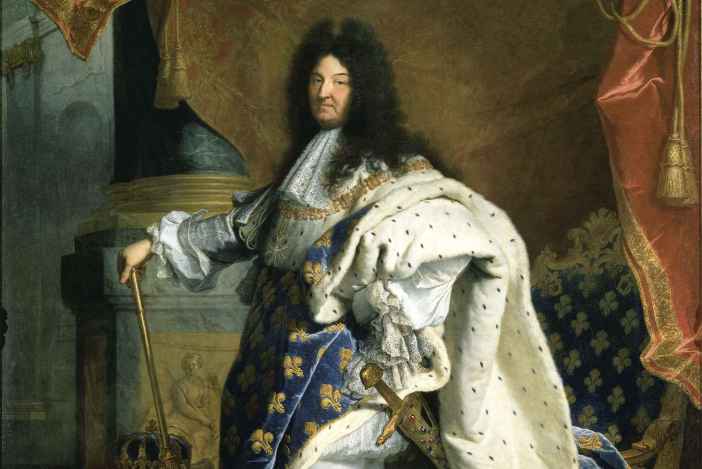
And part of that, of course, has to do with Louis XIV.

2048x1536-fit_louis-xiv-1701-hyacinthe-rigaud-musee-louvre

The Sun King, le Roi Soleil, le Grande Monarch. The third king from the house of Bourbon, who took the throne at age five and reigned for seventy-two years; which is the longest reign by a king (there were dukes and princes who ruled longer; but his was the longest for an actual King) in European history. His father was Louis XIII, the feckless and foppish king from Dumas’ The Three Musketeers; his mother was Anne of Austria, the Spanish princess whose honor the Musketeers and d’Artagnan were trying to protect/save (despite the fact, of course, that covering up the Queen’s adulterous affair with the Duke of Buckingham, the nation’s biggest enemy, was actually treason). His younger brother was Phillippe, duc d’Orleans; from whom most of Europe’s royal houses are descended. Louis XIV was the king who said l’etat c’est moi (I am the state), ruled without a chief minister, and centralized all political power in France in the person of the King; making him an absolute monarch and the envy of every other king in Europe who chafed under the rules and restrictions placed upon them by their governing bodies.

He also built the magnificent palace that was (is) Versailles; and because nobles couldn’t be trusted away from court–and also because he didn’t trust Paris, he made it mandatory for the court to live at Versailles, where he could keep his eye on them. It enhanced and centralized his power, but at the same time it planted the seeds for the eventual collapse of the French monarchy. But he built France into the major power all of Europe always had feared it could become; the conspiracies and ambitions of the great nobles had crippled the country for centuries–going back to the Norman conquest, which made the great northern province of Normandy the property of the king of England, setting both countries on the road to centuries of war and hatred.

Louis XIV fought several major wars in his later years, and France lost both, and was greatly weakened by those wars. But one must also take into consideration the fact that it took almost ALL of Europe combined years to defeat France in first the War of the Grand Alliance, followed almost directly by the War of the Spanish Succession. The fact that France was able to rally so quickly after defeat to wage another major war against almost all of Europe is indicative of just how strong and powerful the country became under Louis XIV. (Germany was also divided and squabbling for centuries, but that’s a tale for another time.)

I heard about this series a while ago, and it’s only recently become available in the US. I got it from iTunes.

title-card

The series takes place early in the reign of Louis XIV, shortly after his mother/regent Anne of Austria has died and he has taken control of the reins of government. (No mention of Cardinal Mazarin, though.) Louis’ distrust of his nobility and his capital came from the civil wars known as the Fronde, which took place when he was still in his minority, and were basically a revolt of the nobility–which the backing of the Parisians–against his mother and Cardinal Mazarin’s regency. It was eventually suppressed, but Louis never trusted his nobles again, nor did he ever live in Paris once he started turning his father’s hunting lodge at Versailles into the palace it became.

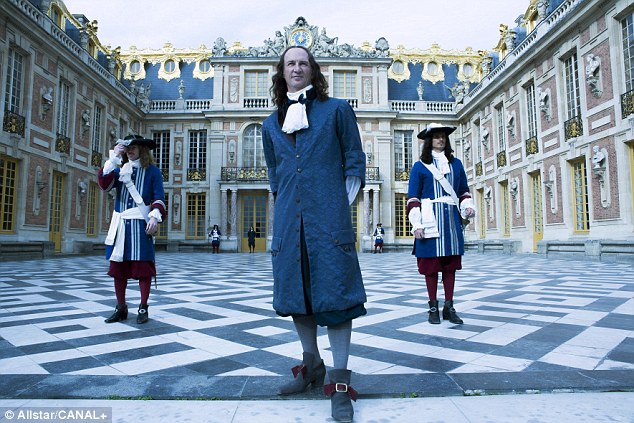
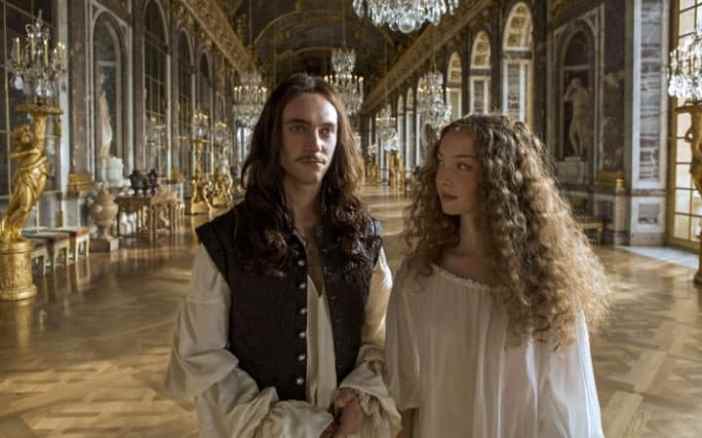
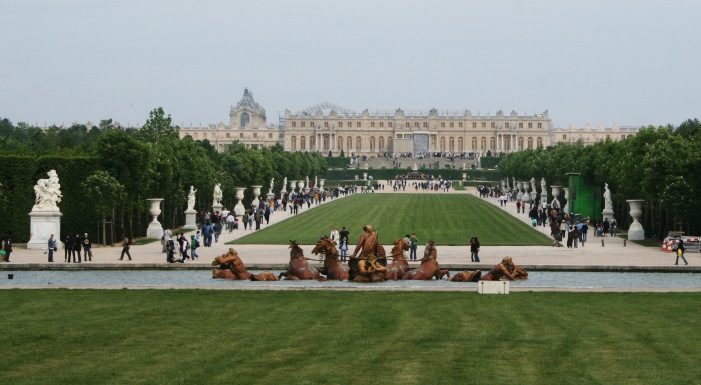
The show is beautiful. I know some of it was shot on location at Versailles itself, and the palace is breathtaking and awe-inspiring. I cannot imagine how amazing it must be in person. I’ve always wanted to go there, and now I really do.

The costumes! The sets! I love the way men dressed–well, royalty and the nobility, anyway–during this period. (The 1974 version of The Three Musketeers is one of my favorite movies of all time.)

shoes

Stunning.

versailles_4-large_transeo_i_u9apj8ruoebjoaht0k9u7hhrjvuo-zlengruma

And of course, the fountains and the grounds.

versailles_tapis_vert_1

The plot itself isn’t great–it gets off to a very slow start; and Louis XIV, while interesting, isn’t Henry VIII; his life doesn’t quite loan itself to the soapy fun that was The Tudors.

But they did not shy away from his brother Philippe’s sexuality…Monsieur, as he was known, preferred men to women; he had lots of children with his two wives, but he always had a male lover, or “favorite”, as they were called then.

I’m enjoying it, but it may not to be everyone’s tastes.

Let Her In

I often talk about the sixteenth century, primarily in the context of how in that particular century women held major positions of power, or were in positions to not only have an impact on history but did. Constant Reader knows I love me some history–right now I am thoroughly enjoying Versailles and having a bit of a seventeenth century period–but during this past football season, during games, I was rereading a book I first read when I was ten years old: Antonia Fraser’s Mary Queen of Scots.

Ah, the tragic romantic heroine that is the Queen of Scots! I first discovered her, I think, when I was maybe eight years old when I read Genevieve Foster’s John Smith and His World; and there really wasn’t much about her, as Smith was only alive in the late Elizabethan period. I do remember reading the entry about her execution, and about how her spaniel was hidden inside her skirts as she went to her death–and how when the headsman held up her head, she was wearing a wig, her head fell to the ground, and the whimpering spaniel curled up around it.

How romantic! Almost sounds like the start of a ghost story, doesn’t it? “And ever after, at Fotheringhay Castle, the sound of a whimpering spaniel could be heard on the anniversary of her mistress’ death.”

Hmmmm….

Anyway, the first book I read about Mary Queen of Scots was one I found in the school library (her title always bothered me–shouldn’t it have been Queen of THE Scots?), and it was sanitized for children, and again, highly romantic: Mary was a romantic heroine, doomed by her gender to be treated as a pawn by the men of her court and, of course, her cousin Queen Elizabeth I was the villain of the piece. The 1971 film, with Vanessa Redgrave as Mary and Glenda Jackson (who was AMAZING) as Elizabeth pretty much told the same story; Mary was a romantic heroine and Elizabeth the villain.

It makes for a lovely narrative, and it’s one that is incredibly popular in fiction; the young beautiful Scottish queen who falls in love with and marries her cousin Lord Darnley only to realize it’s a colossal mistake, but then throws everything away because of her deep love for the Earl of Bothwell, winds up imprisoned by her wretched cousin Elizabeth who eventually has her executed. It does make for a lovely story.

Fraser, in her bestselling biography, tried to get to the truth of who Mary was, rather than paying lip-service to the romantic narrative. It is her thesis that Mary was actually much smarter than anyone at the time or since has given her credit for; and that her decisions weren’t emotional but made coolly as political moves in the game of thrones she was playing–and the end goal, of course, was to ascend the throne of England, uniting the entire island into one realm; an ambition her son James finally achieved.

Mary’s life, once she started getting into her marriage entanglements, was the stuff of high drama. She inherited her throne when her father died from wounds inflicted in the Battle of Solway Moss against the English; she was only six days old. She was the third child of King James V and his second, French wife, Marie de Guise; her two older brothers died of fevers while her mother was carrying her. (Inheriting the Scottish throne as children was a sad Stewart family tradition; James V was less than a year old when his own father was killed in battle–again against the English–in the Battle of Flodden Field; Mary herself abdicated in favor of her own son when he was less than a year old; James I was only twelve when he became king; James II was only seven; James III was nine, and James IV fifteen. These minority reigns helped empower the Scottish nobility and prevent the throne from becoming strong, as it did in say England, France and Spain.)

Her royal family was Stewart; her marriage to her cousin Henry Stuart changed the dynasty to the English spelling, which is why the royal family of England was known as the Stuarts, not Stewarts.

Her grandmother was Margaret Tudor, eldest surviving child of Henry VII of England and elder sister of Henry VIII, which is where her claim to the English throne came from. Until the birth of Edward VI to Henry VIII’s third wife in 1537, James was the only male heir to England. The marriage of Edward VI to young Mary was probably the wisest move, uniting the two crowns and ending centuries of strife between the two kingdoms, but Marie de Guise, Mary’s mother, was French and instead sent her infant daughter to the French court, where she was engaged to the Dauphin. The Tudor direct line ended with Henry VIII’s children, who were all childless; the death of Edward VI in 1553 brought the Catholic Mary to the throne. Once Mary died in 1558, Elizabeth became queen; but Catholics didn’t recognize Elizabeth’s legitimacy–Henry’s marriage to her mother Anne Boleyn was bigamous in the eyes of the Catholic Church and so therefore Elizabeth was a bastard. The nearest legitimate heir, in their eyes, was the young Queen of Scots–who was married to the heir to the French throne and a Catholic.

Obviously, the thought of those three crowns being united was a threat to both Spain and the Holy Roman Empire, so they recognized Elizabeth. A year later Mary and her husband were King and Queen of France–a year later Mary was a childless widow returning to Scotland. Elizabeth never forgave her for claiming herself to be queen of England; and the game of thrones was on.

Four years after her return, Mary married her first cousin, Henry Stuart, Lord Darnley. This is where it gets complicated. Margaret Tudor, Mary’s grandmother, only had one child with James IV; after he died she married again and had a daughter, Margaret Douglas–who had no claim to the Scottish throne but a claim to England as a Tudor. She in turn married Matthew Stuart, Earl of Lennox–who was a descendant of James I and thus also was an heir to the Scottish throne. Their son Henry thus had claims to both thrones; he married Mary, and their son James would obviously be King of Scotland thru his mother; had a claim through his paternal grandfather, and a claim to the English throne from both his mother AND his father, both of whom were great-grandchildren of Henry VII.

Madness.

Lord Darnley, her husband, and other lords of the court were jealous of her closeness to her Italian secretary, and they murdered him in front of her when she was about six months pregnant. Somehow, later that night, as a prisoner of her husband and lords, Mary convinced her husband to come back to her side and they escaped together, rose an army, and with her loyal lords defeated the conspirators–who included her illegitimate brother. Mary had a son, and then, a few months later, her husband was murdered–the house he was recuperating from an illness in was blown up, but his strangled body was found in the gardens. Mary then married the Earl of Bothwell, who was commander of her armies–it was an incredibly volatile time, the Queen was Catholic and most of her subjects were not–and so it was very easy for public opinion to turn against her; particularly since most people believed Bothwell had murdered her husband so he could marry her.

Was she complicit? The marriage made it appear so–and soon enough her army was defeated, she was a prisoner, and forced to abdicate. She escaped to England, where Elizabeth promptly placed her under house arrest.

George R. R. Martin has nothing on the Queen of Scots.

She was eventually implicated in a plot to assassinate Elizabeth–after being a prisoner for almost twenty years–was tried and found guilty and sentenced to death.

So, was she a wanton adulteress and murderess? Was she a silly woman who allowed her emotions to lead her down the wrong path, or was she a calculating player who wound up being outplayed? Despite her high station, she had a pampered and spoiled childhood, and wasn’t raised or educated to be a regnant Queen; it was always assumed her husband the King of France would rule for her. So the odds were stacked against her from the beginning; and she learned her lessons the hard way; unlike her contemporary, Elizabeth, who spent her childhood and early twenties with the shadow of the executioner across her neck.

Fraser does a great job of defending her thesis; I’ve read many other books about both the royal cousins and the game they played with each other, and I think Fraser probably paints the most accurate picture of the Queen of Scots: a smart woman who played the game against overwhelming odds and lost.

Is there anything so romantic as a lost cause?

One of the biggest disappointments of the CW show Reign was, in order to try to draw in the younger audience, they told the story when she was a young girl in France–probably the most boring part of her life. Her life in Scotland was MUCH more interesting, and would have made for greater television. The best part of Reign was Megan Follows as Queen Catherine de Medici of France–one of the most fascinating women in history. Apparently, the struggle between the cousin queens became a part of the story in the third season…but Paul and I had bored of the show long before then.

And now back to the spice mines.