Rhiannon (Will You Ever Win?)

I first read Mary Leader’s novel Triad when I was either eleven or twelve. I was creepy, and I really enjoyed it; but I had trouble pronouncing one of the character names: Rhiannon. It was a Welsh name, of course, and I’d never heard it before, so I was pronouncing it RYE-uh-none. I actually thought it was an ugly name. Flash forward a few years, and I heard a song unlike any other I’d ever heard before on the radio–KCMO AM out of Kansas City, I think it was–and after it was finished playing, the deejay said it was “Ree-ANN-un” by Fleetwood Mac (a band I’d never heard of). The next time I was at a record store, I looked for it in the 45’s rack, and there it was: RHIANNON (Will You Ever Win” by Fleetwood Mac.

url

Oh, THAT’S how you say it, I thought to myself, and bought it. I eventually bought the entire album–one of the first albums I’d ever owned that I could listen to from beginning to end–and have been a Fleetwood Mac fan ever since.

A few years ago, I either read an interview with her, or saw her talking about the song on television somewhere, and Stevie Nicks said she’d read a book where she came across the name, and the book actually inspired the song. It was one of those moments where you feel a connection with an artist you love (“Oh my God, I read that book too!”)

Recently, and I don’t remember where or how or why; it may have been my October blogging, but as I said, I don’t remember how, but I remembered the book again. I hadn’t read it in over forty years, and I remembered that the author had written another book I’d enjoyed–Salem’s Children–and so I went on-line and ordered copies of both.

And I reread Triad this past week.
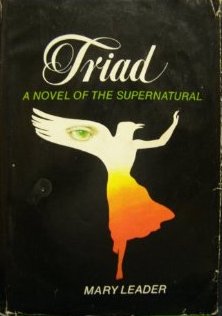
triad

It didn’t start all of a sudden. As I think back now, there were so many little unexplained incidents that I shoved aside and forgot about until later. There began to be those gaps in my life, little ones at first, but then longer and longer as time went on. I would wonder if my memory was failing me and I worried about the headaches to which I’d become prone, but my doctor told me that it was probably shock due to the baby’s death.

That has been so unexpected. I put him to bed one night, all rosy and dimpled with health. He looked at me with those big bright eyes, as he lay fingering the handle of his rattle, then drowsiness drew down his lids and he flipped over on his stomach as he always did and went to sleep with his fist curled around the rattle. The next morning I awakened to the sound of children on their way to school and the disposal truck grinding garbage under our apartment window. Alan was away on one of his projects, so I must have slept right through breakfast. I started to stretch lazily in those moments of waking when one lies between forgetting and remembering, and then sat up with a jerk. Timmy has missed his four o’clock feeding! Had he called and I hadn’t heard him? That wasn’t possible. I always woke at the slightest sound he made. I hurried to the crib and there he was, just as I had left him, but his little body was cold.

“Unexplained crib death” was what the doctor wrote on the death certificate after the autopsy, which meant that Timmy went to sleep a normal child and just stopped breathing for no apparent reason.

Branwen is our young point of view heroine, and the sudden, unexpected death of her child has obviously had a terrible effect on her; I cannot even imagine what it must be like to lose a child, let alone a baby. In an effort to get her over the tragedy, she and her husband, Alan–a civil engineer who is thus away for work most of the time–leave their Chicago apartment behind and buy a beautiful old Victorian house in a small town north of the city on the lake shore.

And then the weird things start happening.

Branwen has guarded a secret most of her life, you see. When she was a little girl she had an older cousin, Rhiannon–their parents were two sets of identical twins–who was jealous and cruel to her, and as such, Branwen hated her. After Rhiannon killed a kitten of Branwen’s–and made it look like it was Branwen’s fault–during a game of hide-and-seek, Rhiannon was inside an old freezer, and Branwen closed the lid on her.

Unfortunately, the handle broke and she wasn’t able to get her out. She went for help, but by the time she was able to get help, Rhiannon was dead.

And now, in the big empty house, with its speaking tubes and old-fashioned stylings, she can hear Rhiannon whispering to her…and strange things start happening.

Has Rhiannon come back? Is the house haunted? Has the loss of her child driven her mad? Is she being possessed?

The atmosphere of the book is terrifying and creepy–those speaking tubes! One of the things I remembered before the reread, over forty years later, was the speaking tubes and the hollow voices coming out of them.

In tone and voice and atmosphere, it’s very similar to Thomas Tryon’s The Other as well as something Shirley Jackson might have written.

Long out of print, it’s a shame. The book is a gem of a read, and short–less than 200 pages–and it’s also a shame Leader only wrote two books.

And as you read it, you can see echoes of the Stevie Nicks song in its pages, and you can see how it inspired her to write the song.

It’s a haunting book–like I said, I’ve never forgotten it–and I’m glad I got the chance to reread it.
Da Doo Ron Ron

There’s really nothing like a good night’s sleep, is there?

Well, that first cup of coffee after a good night’s sleep is pretty close.

Tonight is my late night; bar testing in the Quarter, and as such I have the morning and early afternoon free. I intend to get some cleaning done as well as some writing (that’s always the intent, but it never seems to happen quite the way I have planned; primarily, methinks, because I have a tendency to over-plan what I can get done as well as the ever-popular easy distractions).

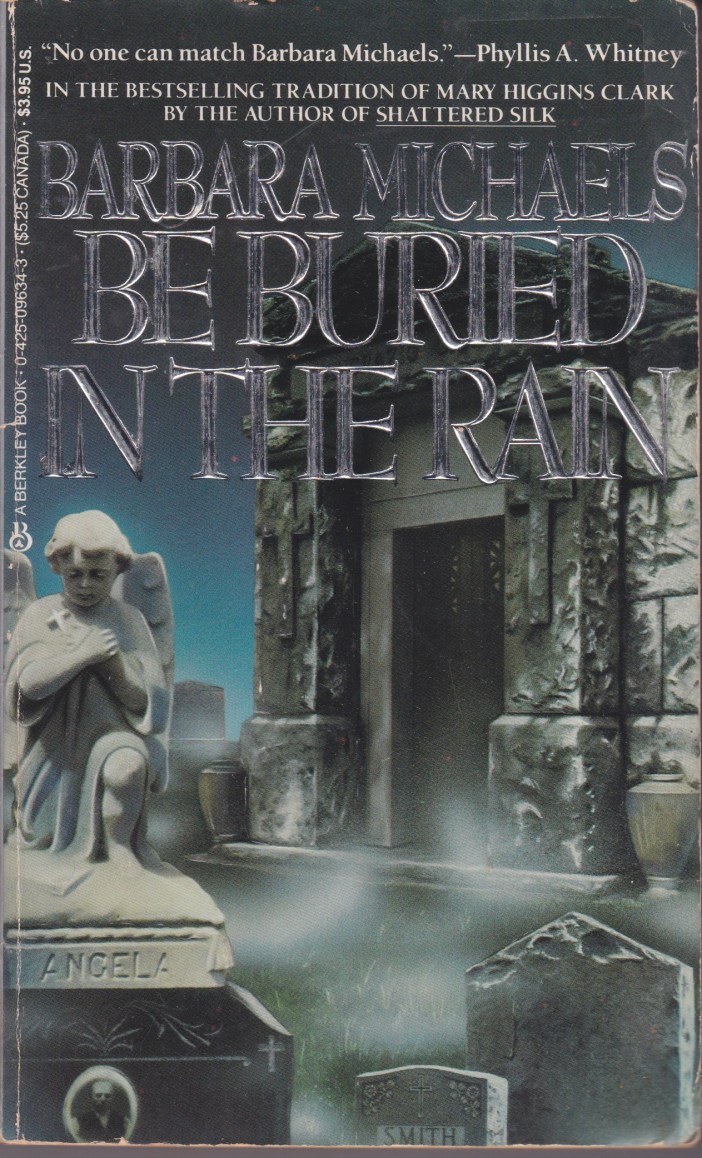
Last night, while I alternated between American Horror Story (ugh) and the final game of the World Series–nicely done, Cubs–I finished rereading Be Buried in the Rain by Barbara Michaels.

be-buried-in-the-rain

The old pickup hit a pothole with a bump that shook a few more flakes of faded blue paints from the rusted body. Joe Danner swore, but not aloud. He hadn’t used bad language for six years, not since he found his Lord Jesus in the mesmeric eyes of a traveling evangelist. He hadn’t used hard liquor nor tobacco either, not laid a hand on his wife in anger–only when she talked back or questioned his Scripture-ordained authority as head of the family.

It would never have occurred to Joe Danner that his wife preferred their old life-style. Back then, an occasional beating was the natural order of things, and it was a small price to pay for the Saturday nights at the local tavern, both of them getting a little drunk together, talking and joking with old friends, going home to couple unimaginatively but pleasurably in the old bed Joe’s daddy had made with his own hands.

Since Joe found Jesus, there were no more Saturday nights at the tavern. No more kids, either. Joe Junior had left home the year before; he was up north someplace, wallowing in the sins he’d been brought up to hate…only somehow the teaching hadn’t taken hold. Not with Lynne Anne, either. Married at sixteen, just in time to spare her baby the label of bastard–but not soon enough to wipe out the sin of fornication. She lived in Pikesburg, only forty miles away, but she never came home anymore. Joe had thrown her out the night she told them she was pregnant, and Lynne Anne had spat in his face face before she set out on a four-mile walk in the traditional snowstorm, to collapse on the doorstep of her future in-laws. They had raised a real ruckus about it, too. Methodists. What else could a person expect from Methodists?

I loved Barbara Michaels, which was one of the two pseudonyms used by Dr. Barbara Mertz (the other was, of course, Elizabeth Peters). She was named a Grand Master by the Mystery Writers of America in the 1980’s, and her books were consistently excellent. Be Buried in the Rain was one of my favorites she published as Barbara Michaels; not quite as favorite as Ammie Come Home, House of Many Shadows, The Crying Child, or Witch, but definitely right up there with them.

The opening, which I’ve quoted above, gives you a slight picture of just how good she actually was. In those brief three paragraphs she sketches out a very clear picture of Joe Danner and who he is; without any physical description, I can see him perfectly in my head. This is shortly before he comes across a surprise in the country road; in a place called Deadman’s Hollow, where the county road cuts through the overgrown, gone to seed estate called Maidenwood–the skeletons of a woman and a baby. That discovery is the key to the story of Be Buried in the Rain, and it’s a terrific story. Julie, our first person p.o.v character (I resisted the urge to call her Our Heroine) is in medical school; her mother and family pressure her into spending the summer between classes at Maidenwood, helping care for her eighty-five year old malevolent grandmother, Martha. Martha is truly monstrous, and Julie spent four years as a child in Martha’s care at Maidenwood while her mother worked her way through college. After being retrieved by her mother, Julie has never returned to Maidenwood, and for the most part has blocked the memories of those four awful years out of her mind…but her return to Maidenwood starts bringing the horrible memories back.

At the heart of the story is the mystery of the identity of the skeletons, and where they came from. Local legend has always held that Maidenwood was the site of a British colonial settlement called Maydon’s Hundred that was wiped out in an Indian massacre; Julie has a love interest in an archaeologist named Alan whom she was involved with before, who was always interested in finding the remains of Maydon’s Hundred. Martha grimly put a stop to that, and her nastiness to both Alan and Julie also ended their relationship. Now both are back at Maidenwood…a crumbling, dirty old manse with an overgrown, almost oppressive vegetation surrounding it, as there hasn’t been money for decades to keep the place up.

The atmosphere is fantastic; Michaels is at her best at describing the oppressive heat and humidity, the overgrowth, the darkness inside the house that is not only literal but symbolic. It brought to mind memories of my own childhood summers in Alabama at my own grandmother’s–but my grandmother wasn’t a monster like Martha. It also reminded me of an idea I had for a book about Alabama…

I really do need to write about Alabama.

And now, back to the spice mines.