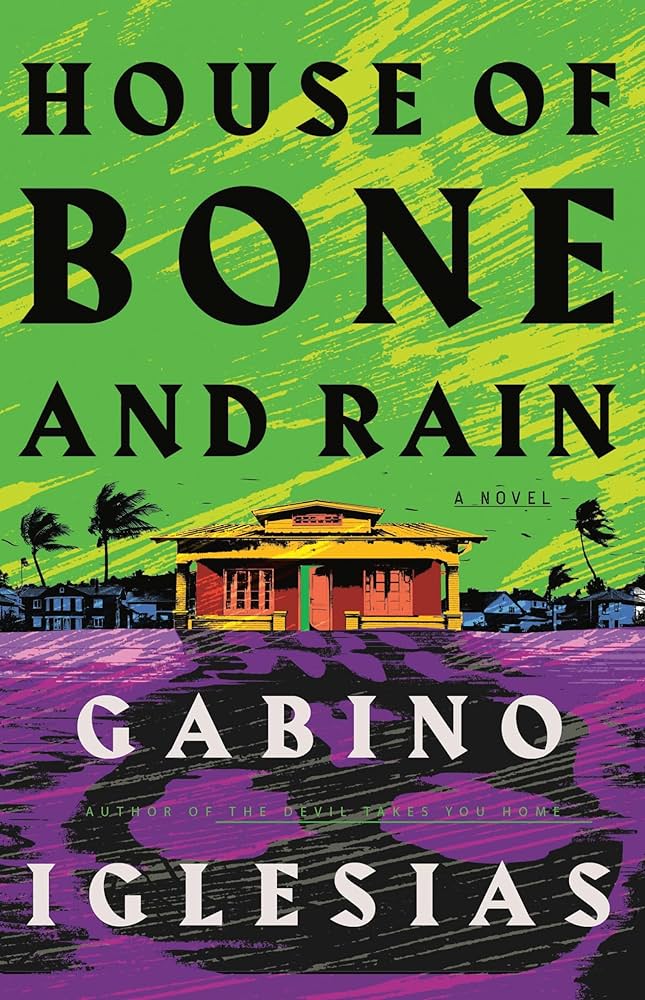
It was weird reading Gabino Iglesias’ latest, House of Bone and Rain, for any number of reasons that had nothing to do with the quality of the book. I was reading it when that “comedian” called Puerto Rico “a floating pile of garbage” (not that it mattered); while writing my own book, also set during a hurricane; and was thinking about writing another supernatural thriller about teenagers. This book is set in Puerto Rico before, during, and after a hurricane, and the main characters are teenagers. Serendipity? Synchronicity? An interesting series of events? I’m not sure if it’s anything other than a lovely coincidence, but there it is. I also really loved Gabino’s previous novel, the award-winning and critically acclaimed The Devil Takes You Home, which was exceptional, and had my appetite whetted for a follow up.
It says a lot about an author so good they make me overlook things I generally don’t like to read about–machismo, violence–because they are able to turn those things into art.
The last day of classes, our last day as high school students, marked a new era for us. We wanted it. we feared it. We had plans for it. Then Bimbo’s mom hit the sidewalk with two bullet holes in her face, and the blood drowned out all those plans.
Bimbo called to tell us the day after it happened. His real name was Andrés, but we mostly called him Bimbo because he was brown and chubby and looked like the mascot bear of a brand of cookies. It’s normal for people to report the death of a parent. Old age. Cancer. A heart attack. Whatever. Old people die and we expect it, accept it even. It’s normal. Murder is different. Murder is a monster that chews up whatever expectations you had regarding death and spits them in your face. Murder is an attack on someone’s life, yes, but also an attack on those left behind.
When Bimbo called to tell me about the death of his mother, María, I felt attacked. “They shot my mom, man.” Five words about the recent past that were heavy enough to crush out future.
It says a lot about an author so good they make me overlook things I generally don’t like to read about–machismo, violence–because they are able to turn those things into art. I generally don’t like to read about extreme violence, with bones crunching, blood spurting, and teeth flying. Because I do actually abhor the use of violence1, it’s very hard for me to relate to characters who turn to violence for whatever reason; it’s not easy to ever make me think yes, this is the right path. Violence and rage are very dark places to go, and while I completely understand embracing your rage, I will vent it a bit so it calms down before I go there. But Iglesias is the kind of writer who can pull a squeamish reader along the path of male rage and violence, which is emotion-driven rather than logical.
The book centers a group of five young friends who have just graduated from high school, and the brotherhood they develop by uniting as a group and fighting off everyone else; it’s very Three Musketeers-like; “anyone fucks with one of us, they fuck with all of us.” Iglesias also provides enough back story to make each character an individual–not easy to do with so many characters–as well as the group dynamic and why, despite any internal squabbling, they always try to present a united front on this dark odyssey of revenge and violence. Gabe, our narrator, is kind of at loose ends at the opening of the book and not knowing what he wants to do with his life. He has a girlfriend he genuinely cares about and wants to build a life with, who wants to move to the mainland and go to nursing school–and wants him to come with…but his own ties to Puerto Rico, including his mother, make it hard for him to make the choice. What if he does and it doesn’t work out? What will he do then? He is transitioning from callow youth into manhood at far too young an age, but…that’s what life is like for people living under colonization.2
Gabe is also the conscience of the story–if there can actually be one. He goes along with his brothers to get revenge for Bimbo’s mother’s murder, which puts them afoul of a drug cartel (seriously, who sets out to kill the head of a murderous criminal cartel?), but there’s also something else going on…there’s some supernatural elements involved with the cartel as well that either could just be gossipy stories to scare people into obedience, or might just be real.
The book barrels along at an excellent pace–the length of time it took for me to get through it had nothing to do with the quality; I was trying to savor it because I was enjoying the voice and the writing so much. It’s also very vivid and real; Iglesias writes in such a way that puts you right there in the room with the characters–and always, there’s this foreboding sense that time is running out for the boys, and not all of them may make it to the end.
An excellent mash-up of horror, crime, and noir stylings, I have to say this is terrific, so check it out.
- Ain’t going to lie, there’s a part of my brain that does think that those who commit violence should get it back, repeatedly and far worse, than they dealt. ↩︎
- After the Puerto Rico garbage insult, people thought Puerto Rico should become a state; which I found amusing. No, they should be granted their independence from their final colonizers and paid reparations. Who says statehood in a racist country is desirable for them? ↩︎
 Queer and Loathing in America