So, in honor of Pride Month, I’ve decided to do things a little bit differently than I usually do when it rolls around every year. Usually, I’ll share book covers by queer authors that I either enjoyed or influenced me, either personally or professionally, in some way–or could be used for that hoary old cliché this made me gay. In a way, it’s a trip down memory lane for me, going back to my childhood, my teens, and twenties; places I am currently revisiting as I plan out The Summer of Lost Boys.
Thomas Tryon’s debut novel, The Other, is often heralded as one of the books (the others being The Exorcist and Rosemary’s Baby) that kicked off the horror craze of the 80’s and 90’s; Stephen King’s Carrie was released in 1974 and shifted the craze into four-wheel drive. I read this book when I was in the seventh grade, and it resonated with me in ways I didn’t fully understand or comprehend at the time. It drew me in, and fascinated me in ways I’d never been fascinated with a book before. Part of it was the transition I was making from reading kid’s books to more adult fare; I was already reading at a collegiate level by the seventh grade. (The Ken Holt series also resonated with me, as did the Rick Brant–which are getting their own entries.)
I wouldn’t learn until years later that Tryon was gay–although I should have known, were I more mature and gay wasn’t one of those things people didn’t talk about when I was a kid; it’s certainly there in his books–and then it made even more sense to me why the book resonated so much with me, why it intrigued me so much, and why I identified with it so much. Niles Perry, the point of view character, is a shy, reticent boy who mostly lives in his own head and world and doesn’t really interact a lot with people. He’s a nice kid who is always worried about getting in trouble and doing the wrong thing; his identical twin brother, Holland, is more of what we would now call a sociopath. But Holland has no fear, has no dread of consequence, and is more outgoing and adventurous; he’s more of a troublemaker and relishes getting revenge on people who’ve done him, in his mind, grievous wrongs. Niles loves his brother–adores him, wants to be like him, wants to be less timid–but is also afraid of him. He knows all Holland’s secrets and he knows everything that Holland does, and often he figures out Holland’s schemes and even tries to stop him…but Holland always outsmarts him, and leaves Niles to clean up his mess.
This brotherly dynamic–the closeness and the dominant/submissive relationship between the twins spoke to me. I saw myself as more of a Niles type than a Holland; shy and quiet and mostly keeping to myself–and always being drawn to flashier, more outgoing types as friends, to whom I was both devoted but also jealous of–a pattern I followed for most of my life. This is the same reason certain books drew me in as a teenager in most cases; A Separate Peace has that same underlying relationship theme–the flashier more outgoing more popular friend, and the quiet best friend content to live in his shadow but also being a bit resentful and jealous.
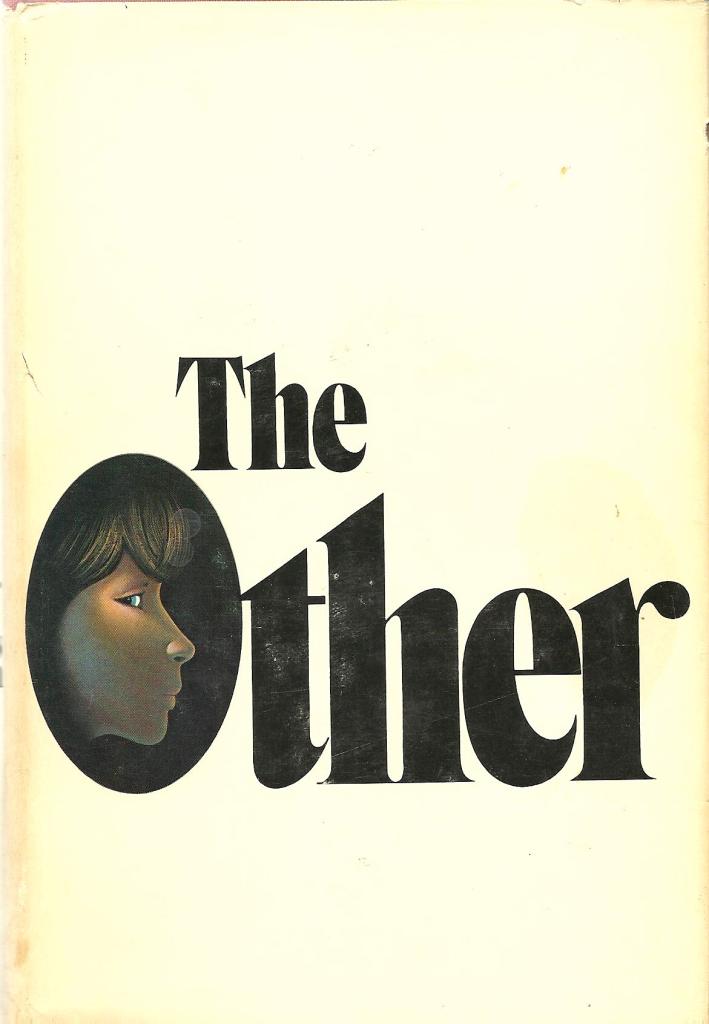
And then about two-thirds of the way through the book comes a plot twist that changes everything you’ve already read and processed and you have to see the book in an entirely new way–every time I reread it (which is every year or so since I got a hardcover copy off eBay), I try to find the clues to the twist in the first two-thirds, and they are there, but cleverly disguised so you don’t put it together until it’s literally revealed in such an incredibly powerful scene that just thinking about it–and its creepy conclusion–makes the hairs on my arm tingle a bit.
I didn’t have a brother, so I wasn’t sure about the brother dynamic Tryon explored so beautifully in the book; is that the way things work in real life between brothers? Probably not, as every set of brothers is different, of course. (I’ve rarely written about brothers, now that I think about it. Chanse has one who turned up in a short story and Scotty has Storm) But the relationship interested me, and it’s a trope that is often used in every style of fiction; two people, either siblings or close friends, one is more outgoing and daring and likes to take risks while the other is more nervous and afraid and namby-pamby, and that weird combination of love/jealousy that can often get involved in those stories.
It’s also a strong dynamic that can play out within gay couples, as well.
The Other is also written in a lyrical, beautiful, dream-like style; that lovely sense of remembering the past nostalgically, when everything was magic and the world seemed full of wonder.
I was paging through the book the other day and I began to realize that it’s impacted and influenced me as a writer far more than I had ever realized.
 Queer and Loathing in America