Songbird

I always say that short stories are much harder for me to write than novels, and I also realize that makes me sound completely insane. But it’s true. I don’t know why I have such a mental block about writing short stories, but the sad thing is I do. I make it much harder than it probably needs to be, most likely. And there’s nothing I admire more than people who write excellent short stories. There’s apparently nothing Stephen King can’t do when it comes to writing; I can name of the top of my head any number of absolutely brilliant short stories he’s written. Daphne du Maurier, Shirley Jackson, William Faulkner–the list goes on and on. I wish I read my short stories, honestly; it makes sense to read short stories when I don’t have a lot of free time to read a novel, or between clients at work, etc. I really want to reread King’s collections Night Shift and Skeleton Crew, and I have anthologies all over my house, as well as back issues of both Ellery Queen’s Mystery Magazine and Alfred Hitchcock’s Mystery Magazine that I should really read.

Music often inspires me; all of my blog titles are song titles, for example, or a lyric from a song, so when I heard about Jim Fusilli’s new anthology Crime Plus Music, crime short stories inspired by music, I had to get a copy.

Thus far, I’ve only read one of the stories, but it’s quite exceptional and may be one of the best short stories I’ve read this year: Alison Gaylin’s “All Ages.”

Gaylin is one of my favorite authors. I’ve loved all her novels (there is one I haven’t read; I’m holding it back because of that weird thing where I always want there to be one more book I haven’t read by a favorite writer), and her What Remains of Me is one of my favorite novels of 2016. Her contribution to my own anthology Blood on the Bayou, “Icon”, was something I was incredibly proud to publish.

But “All Ages”–wow.

We started with the hair. Bret said that was where all adventures started–Great hair, great music, great buzz. And so the first thing we did on the night of the all-ages X show at The Whisky was to lock ourselves in her upstairs bathroom with two cans of Aquanet, three boxes of Midnight Raven temporary dye, and an assortment of pics and combs, gels whose names I can no longer remember but whose colors I do–battery acid green, radioactive yellow…Each of them with anepoxy-like consistency and a sickly chemical smell. We teased the mercy out of each other’s hair and took swigs from a bottle of peach schnapps we’d found at the back of her parents’ liquor cabinet and we played X albums–Under the Big Black Sun, Los Angeles, some bootleg tape recorded live at one of their local shows. Bret’s trifecta in action. And it was working. Exene’s steely voice grew more and more beautiful with each gulp of schnapps, John Doe’s growl a cloud I could float on. My hair turned stiff and black and defiant and before long I was a star, a punk rock star. I felt like dancing.

Gaylin captures the 80’s beautifully, and what it was like to be a kid during that time (she also does this in What Remains of Me). The story, also like the novel, flashes back in time from the present to the 80’s, as the main character remembers what happened the night of the X concert, and how she and Bret hadn’t been friends for years, now that she is attending Bret’s funeral. It’s a lovely story, about friendship and loss, the complicated relationships between girls…and there’s a twist that will knock you out of your chair.

The book is worth the price for this story alone, and it has an amazingly stellar line-up of top crime writers in addition to Gaylin as well: Craig Johnson, Val McDermid, and Gary Phillips, just to name a few.

I’m looking forward to reading the rest.

And now back to the spice mines.

Go Your Own Way

I had planned, all week, to take yesterday as a day off. I am going to have to write and edit like a madman all of my vacation (woo-hoo! I’m on vacation!) and decided that yesterday, and Thanksgiving day itself, would be my days to do nothing but putter around the house and read and so forth. I also somehow wound up in Facebook jail for posting a photo of a guy in a bikini three years ago that someone somehow decided yesterday ‘violated their community standards of nudity’–who knew that a man in a bikini was naked? Puritans. So I went to Costco and cleaned up around the house and spent the day finishing reading Owen Laukkanen’s The Watcher in the Wall, and once I was finished with that, I started reading William Hjortsberg’s Falling Angel, around essays from Barbara Tuchman’s Practicing History.

Damn, I do love to read.

We also started getting caught up on the shows we watch last night.

It was time.

Adrian Miller had planned to wait, a few more days, another week, maybe. Hell, when he woke up for school that morning, before school, he wasn’t even sure he would do it anymore. He’d thought about his mom and dad and sister, about Lucas, and wondered what kind of monster would want to hurt them the way he was planning. He’d hugged his parents goodbye and walked out the front door, and it was a beautiful fall morning, crisp and bracing and clear, and he’d decided, not yet. Maybe not ever.

But then he showed up at school, and it all started again.

Lucas wouldn’t talk to him. Lucas never talked to him, not in public, anyway. Lucas avoided his eyes in the hallway, wouldn’t eat lunch with him, made him wait until the final bell rang and they could go to the park, or to Lucas’ dad’s basement, somewhere far away from school and Lucas’ real friends.

I really, really loved this book.

Take this opening. Laukkanen perfectly captures the experience of what it feels like to be that kid; the one who has no friends, the one who counts the minutes until the final bell rings, who dreads going to gym class or the cafeteria for lunch and going to school every morning; who dreads going to bed every night because it means when you wake up you have to go to school again; what it feels like to wish you would die in your sleep so it would all be over; to wonder if you would ever have the nerve to kill yourself.

I was that kid once.

When I bought the book (because I wanted to read one of Owen’s books) I didn’t realize it was a book in a series, but to be honest, I didn’t realize it was a series until I was well into it, and by then I couldn’t stop reading even if I had wanted to; and it didn’t matter at all. Maybe the reading experience would have been heightened by having read the series in its proper order (I’m a bit obsessive about this sort of thing) but I didn’t feel like I missed anything. It worked perfectly well as an introduction to the series (which I am now going to go back and read), and that’s truly not an easy thing to do. (I don’t think, for example, my series can be read out of order.)

The series characters are Kirk Stevens and Carla Windermere, who work on a joint FBI-BCA violent crime task force. They get involved in this particular case when Stevens’ daughter–distraught about her classmate Adrian Miller’s suicide–asks them to do something about it. There isn’t much they can do at first, but as a courtesy they start looking into it, and soon discover an ugly world on-line of suicide groups and chatboards…and disturbed individuals who encourage the suicidal to go through with it. Adrian was the victim of one such person, and as they start to dig into this subculture more, they soon realize that there will be more kids talked into killing themselves while this person watches via webcam.

What makes the book so brilliant, though, is that Laukkanen takes us into the mind of the psychopath as well; how he became this person who enjoys watching young people kill themselves, how much he enjoys playing the game, and how he has turned it into a for-profit business. And while it is a slithery, creepy, horrifying place to be–at the same time you can’t help but feel some empathy for this awful, horrible person you want to be caught; since you know the backstory of how he came to be this monster. This fleshes him out, makes him more real–and all the more terrifying, as it is easy to see how such a psychopath is created.

Laukkanen also shows us the point of view of his new target, a sad lonely girl who hates her life, lured in by an Internet boyfriend she meets on one of the suicide chat boards and comes to know through Facebook and other social media (he uses the pictures of an attractive boy who committed suicide already to create this fake presence, and we learn how he does this and how easy teenagers are prey to this sort of thing–which is also terrifying), and finally she decides to go meet him, taking a bus from Tampa to Louisville…and the race is on for Stevens and Windermere to save her.

The pacing is amazing; you never want to put the book down. The writing is superb, and Laukkanen’s characters are all very real.

Oddly enough, once I finished reading this I realized I actually already had the first book in the series, The Professionals, in my TBR pile.

Looking forward to reading some more of Owen Laukkanen.

Me and You and a Dog Named Boo

As I continue to muddle my way through this manuscript–honestly, I don’t know sometimes why it’s like pulling teeth and other times it’s just comes right out–I am constantly amazed at how many other ideas I get when I am working on something; ideas that are infinitely more interesting and sound like more fun to write than whatever it is I am actually working on. AND IT HAPPENS EVERY SINGLE TIME. And once I am finished, the creativity and urge to work on something else goes right away.

Surely I can’t be the only writer who experiences this?

AUGH.

Madness.

But as I think about these short stories, I remember probably the two finest collections of short stories ever–Echoes from the Macabre by Daphne du Maurier and Night Shift by Stephen King. I recently bought another copy of Night Shift on ebay, as my copy is in a box somewhere. Both du Maurier and King were short story masters; in fact, when I was a kid I loathed short stories and loathed reading them; this was primarily because I had to read things like “The Minister’s Black Veil” ad nauseum in English classes. I wasn’t lucky enough to be exposed to the truly great stories, like Faulkner’s “A Rose for Emily” and Jackson’s “The Lottery” until I got to college; but even by then the damage was done; that, along with the assigned short stories in writing courses (if I ever have to write an essay on Irwin Shaw’s “The Girls in the Their Summer Dresses” again I cannot be held responsible for what I do) had conspired to create a mentality that I loathed short stories. My experience writing short stories in writing courses in various colleges and universities had also taught me that I wasn’t a good short story writer; any good short stories I might write for a class were good purely by accident because I did not know what I was doing. That still stands true for today; I would rather write a novel than a short story.

But I am digressing, as is my wont.

Reading the du Maurier and King short story collections made me aware of what was possible for a truly gifted author to do with a short story; just as Jackson did with “The Lottery” and Faulkner with “A Rose for Emily.” My own difficulties with writing short stories comes from not, I realize now, having an actual system; I get an idea–usually both a title and a first line; maybe a character–and then I just kind of write with no idea of what’s to come, or what the story is about. This is the issue I had with “The Weeping Nun”; I wanted to write a story to submit to an anthology about Halloween stories, and I had this great title with an amorphous idea for a story, a point of view character, and an opening line: Satan had a great six pack. The problem, as I started writing the story, was realizing that as it came to me it had nothing to do with a weeping nun; but I was determined to somehow force that into the story so I could use the title.

On reflection, it seems perfectly insane and ludicrous now; but I am nothing if not obtuse and I am incredibly stubborn in stupid ways. I liked that title, and damn it, this story was going to fit that title if it fucking killed me.

The end result was the story was never finished, I missed the deadline for submission, and there was just frustration left in the wake of yet another short story failure.

And of course, this week as I struggled with writing the novel, it came to me in a flash: the story I was writing had nothing to do with the story of the weeping nun; I should have simply retitled the story and followed it to its logical conclusion and saved the story of the weeping nun for another time.

Idiocy, really. So simple, but I just couldn’t see it at the time.

And now I want to finish writing the damned story, which I now see as being about the gates of Guinee on Halloween night in the French Quarter.

Heavy heaving sigh.

And now, back to the spice mines.

Here’s a hunk to cheer you up, Constant Reader:

hot-firefighters-with-puppies-calendar-charity-australia-1

I Can Help

All Soul’s Day; November. Two months left in 2016, and before you know it, it’s 2017. Heavy heaving sigh. The time change is coming this weekend, which means it will be dark before five. This always feels oppressive to me; I truly despise Daylight Savings Time (although I always enjoy the extra hour in the fall; hurray for consistency!). But, if I am being honest, I am more productive in the winter. I read more and I certainly write more. And God knows, I have a lot of writing to do in the next few months.

Madness.

I had a mini-breakthrough the other day while feeling sorry for myself that Wicked Frat Boy Ways was turning out to be such a bitch to write. It was such a “d’oh” moment–and it not only applied to the work in progress, but also as to why I have so much trouble writing short stories that I literally wanted to pound my head on my desk until it was soft as an overripe melon.

Seriously, I do not understand how I have a career of any sort in writing. The end result, however, was a great insight on not only how to make this book ever so much better, but how I can make my short stories better. So now all I want to do is write, rewrite, revise, lather, rinse, repeat. True madness.

I’ve been reading The Bird’s Nest by Shirley Jackson. It’s about what was called at the time she wrote it “multiple personality disorder;” the term now is dissociative identity disorder. The book was originally published in 1954, was filmed as Lizzie with Eleanor Parker in the lead role, and prefaced the more famous book/film The Three Faces of Eve by three years; although Eve was a true story and not fiction (and won Joanne Woodward an Oscar). I’ve always been interested in DID; when I was a kid, of course, I saw it handled on the soap One Life to Live, and of course, in my teens was when Sybil became a huge bestseller (and TV movie starring Sally Field, who won an Emmy and was the turning point in her career when she started being taken seriously as an actress). That story was later debunked, I believe; but DID is something I’ve always wanted to write about, but at the same time not in an exploitative way. Maybe at some point…it would require a lot of research to do it properly.

Anyway, I digress. I’m enjoying The Bird’s Nest, but it is slow and harder going than Jackson’s short stories and her two exquisite novels The Haunting of Hill House and We Have Always Lived in the Castle, or her delightful memoir Life Among the Savages. Jackson’s style is definitely present there, but it’s different. I am also very curious to read the recent bio of her, to see where the ideas for The Bird’s Nest came from.

As I was so busy sticking to my horror theme for October, I wasn’t able to talk about many other things–my reread of Antonia Fraser’s Mary Queen of Scots; the new gay-themed crime show Eyewitness; how much I’m enjoying the show Versailles; and so many other things–but I do look forward to talking about them now that I am no longer shackled to a theme here. (Hilarious, isn’t it? I can’t tell you how many mornings I’ve stared at the ‘post an entry’ page blankly, with no idea of what to write about…and then when I tie myself to a theme for a month the blog ideas burst forth from my head like Athena springing fully formed from Zeus’ forehead.

Oy.

I am also rereading Barbara Michaels’ sublime Be Buried in the Rain, and I do want to talk about Michaels some more at some point, as well.

And now, back to the spice mines.

Here’s today’s hunk:

hot-guy-on-the-beach

Don’t Give Up On Us Baby

So, with Halloween, All Hallows Eve, October and Horror Month comes to a close. It feels weird that the time didn’t change over the weekend; as annoying as Daylight Savings Time is (and I do think it should be done away with at this point), it’s even more annoying that they’ve started changing when it goes into effect, or when it stops. ENOUGH ALREADY.

I’ve enjoyed talking about horror this month, and didn’t even get to write about all the things I wanted to. I didn’t talk about R. L. Stine and the Fear Street books, or the Scream movies, or the Halloween ones. I didn’t talk about Peter Straub, or vampires. I only talked about one Stephen King novel, didn’t even get into Daphne du Maurier, or any number of truly scary movies and books I’ve enjoyed over the years. I did manage to not talk about Shirley Jackson’s The Haunting of Hill House, which is a mainstay, and I was going to write about Peter Straub’s Floating Dragon, until I realized that I talked about it already last year. (I did repeat Rosemary’s Baby, alas, but turned it into an entry more about Ira Levin.)

Halloween puts me in mind, again, of my unfinished story “The Weeping Nun,” and I’ve promised myself if I can get some good work on the book done today I can work on the story some more. I started thinking about Halloween this morning–duh, it is Halloween, after all–and I started thinking some more about what Halloween means, traditionally, and as I made my lunch this morning and washed dishes and put the turkey in the crock pot (I am making pulled turkey for dinner and for lunch sandwiches all week) I was remembering being a little kid in Chicago. My sister and I were only allowed to trick-or-treat on our block and the one across the street–that was as far as we were permitted to go. I don’t remember my costumes when I was a kid, and I don’t really remember much about going around and collecting candy on Halloween; I do remember being warned about unpackaged things, and the urban legends about razor blades in apples and poison injected into oranges were pretty much already well in place in the 1960’s. My parents–particularly my mother–was always afraid we were going to be taken; I never really thought about it much until this morning.

Of course she was afraid; she was from rural Alabama and moved to the Big Bad City with two small children when she was twenty. She was afraid of us being taken, she was afraid of us being run down by cars, she was afraid of us wandering off and getting lost and not being able to find our way home. I have very early memories of memorizing our phone number and our address; I can still recite them without even having to stop to think some fifty years later.

Fear.

That’s what horror is really about, bottom line. Fear.

I’ve realized that is the problem I have with writing horror short stories; I don’t tap into fear enough. This was why I was having so many problems with writing “The Weeping Nun,” frankly; that, and another realization I had over the course of the weekend; that part of the problem with so much of the horror I try to write comes from not really knowing what the story really is, because I am so busy trying to create an atmosphere of creepy dread that I don’t focus on the characters and don’t figure out what the story is….and even after I write the story, I still don’t know what the story is.

Duh. And d’oh.

Sometimes I wonder how I have a career.

Anyway, here’s a hottie in his Halloween costume as I go back to the spice mines.
7a1c6e634d3b64b569fa2af1b161c33a

Get Dancin’

The book is proceeding apace, but I do think this may be my last venture into writing any kind of erotica. I love the story I am writing, and I love the characters, but I am so tired of writing sex scenes. I don’t even want to think about how many sex scenes I’ve written. I never say never, of course–I may write another fratboy book; who knows? But right now I am enjoying writing the story but am having to force myself to put the sex scenes in. I wrote a really nasty poolside one today–it’s not that I can’t write them; like I said, the one I wrote today is hot and nasty; I just don’t find them as much fun to write as I used to.

Speaking of sex scenes and nudity (see what I did there?), a few entries back I mentioned how I described the HBO show True Blood as “Dark Shadows with sex, nudity and a lot more blood.” I stand by that description; the show was a serial, just like Dark Shadows, there were a lot of supernatural elements, just like Dark Shadows, and the primary story was a romance between a male vampire and a human woman, and the vampire was originally from the same area where the story was set. Like Maggie Evans, the object of Barnabas Collins’ dark desires, Sookie Stackhouse, our plucky heroine, was also a waitress at a local bar and grill.

1c8f75fdc9a7e2dc37e076b83e9ccc44

Whether True Blood was horror or not, I cannot say. As I said when I embarked on talking about my favorite horror this month, I pointed out that I am not well-read enough in the genre, or know enough about it’s history, to discuss actual aspects of the genre and what qualifies as horror or not. I think, like with ‘mystery,’ ‘horror’ has become a generic umbrella term for vast swatches of work that sometimes have as little in common as a tomato with a watermelon. Is a ghost story like Ammie Come Home horror? The book scared the crap out of me, but it was marketed, really, as romantic suspense with a touch of the paranormal. Are all paranormal novels horror? I am really not qualified to answer that question.

30639d96d82e4aa9772b1d13b7dbdb3f

I guess the best description of the show would be to call it a ‘paranormal soap.’ It had moments of suspense and terror, of course–and gore, and humor, and nudity, and sex. The story was interesting every season (the season about the maenad, not so much; Paul and I both got kind of bored with that season) to me. People often, on social media, talked about not liking the show or liking the show; but I’m not ashamed to say that I pretty much enjoyed it during its entire run. The problem, of course, was that they had to keep upping the stakes (no pun intended).

true_blood_sookie_stackhouse_bill_compton_eric_northman_sam_merlotte_jason_stackhouse_tara_thornton_pam_de_beaufort_jessica_hamby_lafayette_reynolds_93690_2560x1440

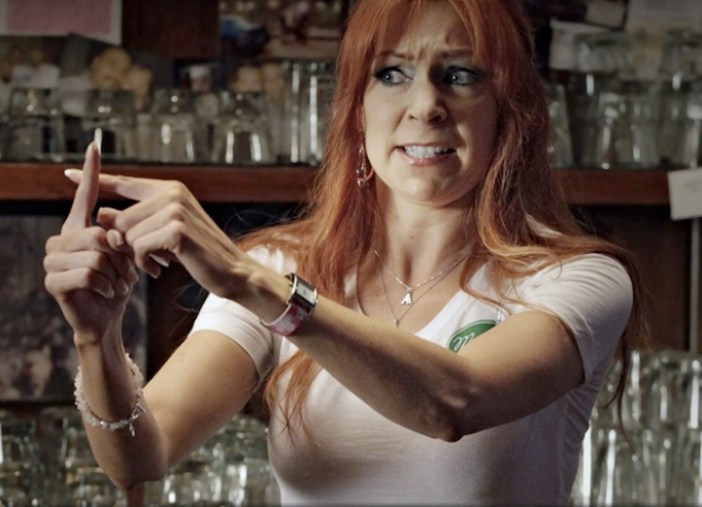
It also had a diverse cast. Many of the characters, in fact, I found a lot more interesting that Sookie the mixed blood fairy and Bill the vampire; and there were some wonderful comedy moments as well–one of my favorites being when Tara is in a moody funk after her boyfriend Eggs turned out to be a serial killer and was killed himself, and Arlene, played brilliantly by Carrie Preston, snaps in exasperation, “So you fell in love with a serial killer? Who here hasn’t?”

arlene-fowler-true-blood-14392869-723-523

If there was any problem with the show’s writing, it seemed like they couldn’t make up their minds what Sookie was; sometimes she was this whiny, passive heroine things happened to; other times she was a badass with a smart mouth who took no shit from anyone.

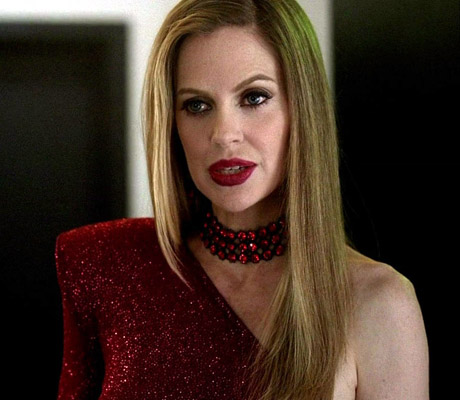
And of course, my absolute favorite, Pam, never got enough story or scene.

4f5ef85d4fc70318437fe7f3a7201c9d

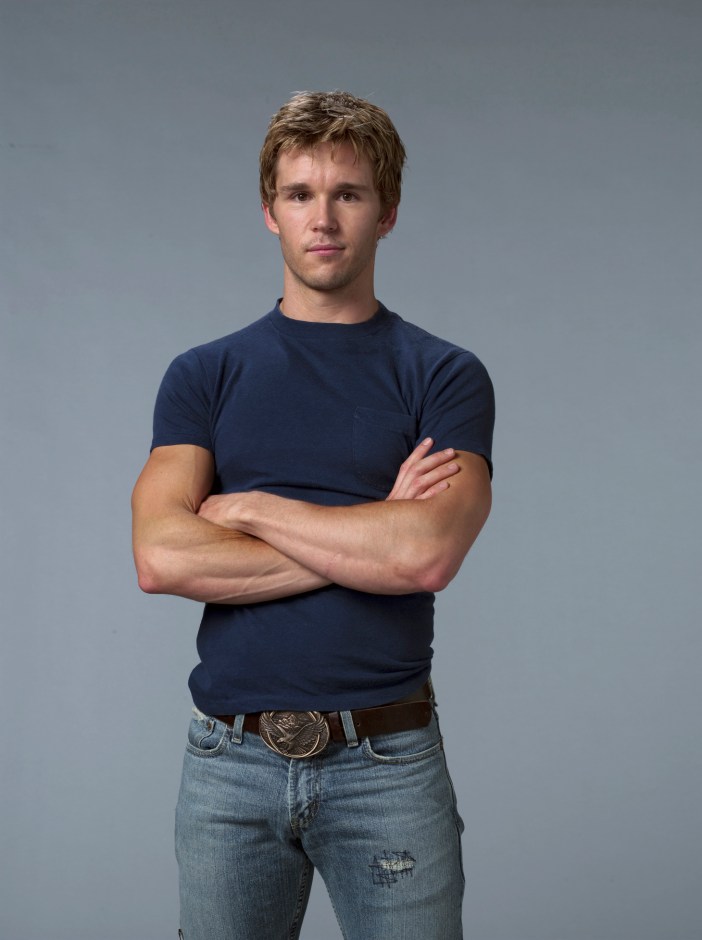
Even the annoying characters at the beginning eventually were developed into likable characters over the course of the show. Jason Stackhouse went from a self-absorbed young stud who loved and left every women he met, who was estranged from his sister, into a pretty decent guy who tried to do the right thing but just made bad choices. Of course, it didn’t hurt that Ryan Kwanten, who played him, was gorgeous.

1379526-jason13

The first moment I saw him on screen I thought, “That’s who should play Scotty if that series ever is filmed.”

I’ve not read the enormously popular novels the show was based on–not from any sense that I wouldn’t like them; but again, one of those I just don’t have time to read them things. I’ve gone back and forth on that–Charlaine Harris is a terrific writer, and an absolutely lovely person–but maybe if I take another trip to a beach, like the Acapulco trip or Hawaii, I’ll take them with me to go and binge read.

The show was also filmed beautifully; it was filmed in Louisiana, and sometimes they were here in New Orleans filming, and Bon Temps was, like Collinsport in Dark Shadows, a kind of magnet for paranormal creatures and activity. I myself have always wanted to do this type of a series–I came up with an idea a million years ago–and even named my town, Bayou Shadows. My short story “Rougarou” actually took place in Bayou Shadows, Louisiana, and I’d intended for Need to eventually tie into that at some point.

Ah, well.

There was also a lot of homoeroticism in the show, and gay/lesbian/bisexual characters. I loved Lafayette, the gender bending short order cook/drug dealer/hustler who was also a medium.

ea5b241d150b4526

The show was also exceptionally clever, as I am sure the books were as well, about dipping into social issues.

And now back to the spice mines.

Have You Never Been Mellow?

My parents were from the country, and as a kid, despite living in Chicago and its suburbs until I was fourteen, I spent a lot of time in rural regions in the summer. We moved to rural Kansas the summer I turned fifteen, to a small town with a population of less than a thousand, a post office and no home mail delivery, and a blinking red light at the cross roads in the center of town. There has always been a sense in this country that the simpler life, i.e. living in the country, is somehow more pure, more American, than living in the cities; I’ve never really understood this, frankly. I’m not disparaging rural life, or people who chose that lifestyle; it’s simply not my preference.

But there’s nothing like the countryside for setting a horror novel, is there? Isn’t it interesting how some of my absolute favorite horror is set either in the countryside or in a small town? Hmmmm…I wonder what to make of that.


harvest-home-tryon

My favorite novel from former actor turned author Thomas Tryon is The Other; which is certainly Gothic and creepy, but I am not including it in my list of Halloween horror novels because I don’t really think of it as a horror novel; maybe other people think so–but other people aren’t making this list, now are they?

I awakened that morning to birdsong. It was only the little yellow bird who lives in the locust tree outside our bedroom window, but I could have wrung his neck, for it was not yet six and I had a hangover. That was in late summer, before Harvest Home, before the bird left its nest for the winter. Now it is spring again, alas, and as predicted the yellow bird has returned. The Eternal Return, as they call it here. Thinking back from this day to that one nine monthe ago, I now imagine the bird to have been sounding a warning. But that is nonsense, of course, for who could have thought it was a bird of ill omen, that little creature?

During the first long summer, its cheerful notes seemed to stand both as a mark of fulfillment and as a promise of profound happiness, signifying the achievement of our heart’s desire. Happiness, fulfillment–if promised, they came only in the strangest measure.

The house, though new to us when we purchased it in the spring, was almost three hundred years old, an uninhabited wreck we had chanced upon, bought, and spent the summer restoring. In late August, with the greater part of the work behind us, I was enjoying the satisfaction of realizing one’s fondest wish. A house in the country. The great back-to-the-land movement. City mouse into country mouse. Mr. and Mrs. Theodore Constantine and daughter, landed gentry, late of New York City, permanently residing at 11 Penrose Lane, in the ancient New England village of Cornwall Coombe. We had lived there less than four months.

Despite some things that wouldn’t play today–there’s a rape scene, for example, which isn’t really dealt with or intended to lose sympathy in the reader for the rapist, for one, and Mrs. Theodore Constantine, really? Yet those were signs of the times–Harvest Home still holds up for the most part today. It’s hard to imagine, though, in this day and age, a rural hamlet that would be so remote and a community so insular and wrapped up in itself that its secrets would never escape; the Internet and smart phones have pretty much connected everywhere (or so I think, in my smug urban-dweller experience). But it’s a chilling book, really, even if there are no supernatural influences going on in the book. Ned and Beth, with their asthmatic daughter Kate, move to the country so Ned can work on his dream of being a serious painter rather than an advertising executive. (For those who were not around in the late 1960’s/1970’s, there was a big movement, or desire/fantasy, for city dwellers to give up the rat race and chase their dreams by moving back to the simpler, country lifestyle, and interestingly enough–here’s a dissertation topic for someone: there was also a literature of the time in which this desire/fantasy, upon achievement, turned into a hideous nightmare; just asThe Stepford Wives showed that moving to a suburb to escape the horrors of city life was into the fire from the frying pan–and there’s the title! From the Frying Pain. I expect to be in the acknowledgements, whoever does this.)

Harvest Home is more of a mystery novel, I suppose, than a horror novel; Tryon’s novels really defied description or categorization, blending elements of different genres together into a dark whole. The book really kicks off when Ned discovers the grave of Gracie Everdeen outside the hallowed ground of the town cemetery, and starts looking into her story and why she was buried out there. Pulling one thread unravels and unspools many others,and the town’s secrets–and strange rituals–slowly come to be revealed to Ned, and to his horror…his discoveries not only put himself at risk but his wife and daughter as well.

And at the center of everything is the aged Widow Fortune–is she a force for good, or a force for evil? In either case, she is one of the most compelling and interesting characters in the novel. (The book was made into a Made-for-TV movie, with Bette Davis in the role.)

It’s a very creepy novel, and the tension/suspense builds and builds. The ending is satisfying–if not the ending the reader may be hoping for, of course.

I always have entertained the notion of writing a biography of Thomas Tryon. He was gay, he was a movie star, and he was rather a good writer, who has sadly been mostly forgotten (although The Other has been brought back into print by New York Review of Books Classics). He also had a long term relationship with Casey Donovan, one of the more famous gay porn stars of the 1970’s.

Because of course I have so much time.

And now back to the spice mines.


At Seventeen

The spice mines have not been kind to me lately; I’ve been in one of those awful malaises that I hate so much. I am behind on the book (of course) and I’ve been struggling with some short stories I needed to write. However, yesterday I made some progress on the book (huzzah!) and I think I am snapping out of it. The first thing I saw this morning on social media was this, from Anne Rice:

“To be a writer one thing is required. Write. That’s the big secret. It’s one word. Get the words down on paper, one way or another, and save them. Believe in your own voice, too, and your own way of doing it. Don’t listen to people who say negative things. They’re common. Writers are precious.”

That helped some, and I am hopeful that I am not coming out of the malaise.

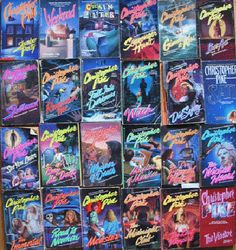
Today’s horror topic is Christopher Pike.

christopher-pike-books

I’ve often talked about how discovering the works of Christopher Pike in the early 1990’s was a revelation to me about young adult fiction, which I had dismissed most of my life; I’d gone almost directly from the kids’ mystery series to Ellery Queen and Agatha Christie and Phyllis A. Whitney and Victoria Holt and so forth; adult mystery and suspense. It was finding Pike–and later, R. L. Stine’s Fear Street books–that got me started writing the y/a books in the 1990’s, and even planned on connecting them all together, like the way Stine did.

Christopher Pike’s novels were seriously twisted. The first ones I bought copies of were Whisper of Death, Witch, Die Softly, and Remember Me. I was startled at how ‘adult’ the themes in the books were; when I was a teen the few books about teens I remembered were about “should I or shouldn’t I have sex?” or “drugs are bad for you” or “this is what happens if you DRINK”–that tiresome moralizing shit I couldn’t be bothered with–and in almost every instance it was about white kids in the suburbs, safely middle class. Pike’s characters were all mostly white still, but there wasn’t any overt, hit-you-in-the-head-with-a-baseball-bat type nonsense. Some of the kids were poor, from broken families, having sex, drinking, doing drugs…in other words, these were teenagers dealing with adult problems, and doing the best they could.

whisper-of-death

Whisper of Death was the first one that I read, and I couldn’t believe what I was reading, from page one. The point of view character, Roxanne, and her boyfriend, Pepper, were driving home to their small town from an abortion clinic in a nearby, larger city. Roxanne is the product of a single parent home; her mother ran away when she was a little girl, her father is blue collar and drinks too much, and Pepper, her boyfriend, is higher up on the economic scale and made it clear from the moment she realized she was pregnant that abortion was the only option. Pepper’s cavalier attitude about the situation–the palpable relief he feels now that it’s over–also has her questioning whether he is the right guy for her. So, Roxanne’s nerves and feelings are already on edge and raw as the true terror starts…every town they pass through on the drive home is abandoned. Even in their home town, there’s no one around but find three other teenagers they slightly know, and soon discover the only thing they have in common, really, is a connection through a girl named Mary Sue, who recently committed suicide, and who also apparently wrote short stories about the five of them dying in horrible ways.

As they look for other people, one by one they begin dying the way their deaths were described in Mary Sue’s stories.

I went back and read all of Pike’s books, enjoyed them all–and again, all of them were really dark and twisted. Remember Me, which turned into a trilogy, was about a dead girl whose spirit was trying to figure out who pushed her off a balcony at a party and killed her, for example. He also got me to discover Stine and Jay Bennett–who wrote amazing hard-boiled y/a thrillers. Pike also showed me that you could really push the boundaries in y/a fiction.

And now, the spice mines are calling me again.

The Night The Lights Went Out in Georgia

As a Southerner, born and bred, I used to take great offense to sweeping over-generalizations about the South and people from the region; that everyone from down here is stupid, racist, ignorant, inbred, illiterate, toothless, etc. No region or state in this country has cornered the market on those things, nor has any state or region cornered the market on intelligence, education, intellect, liberalism, art or literature. Now, when I see such sweeping generalizations, I just chuckle to myself a bit and shake my head; as it actually says more about the person making the statement than the region being defamed.

I’m from the South, as I said, and I am not ashamed of that. We have a lot of problems down here, there’s no denying that, but I love the South in spite of its problems. Some of the most beautiful and poetic and lyrical writing I’ve done has been about the South; most of it being in short stories, many of which have never seen print. One day I will write about a novel about Alabama, the part of the state that I’m from; and I have some really terrific memories about the summers I spent there in my childhood.

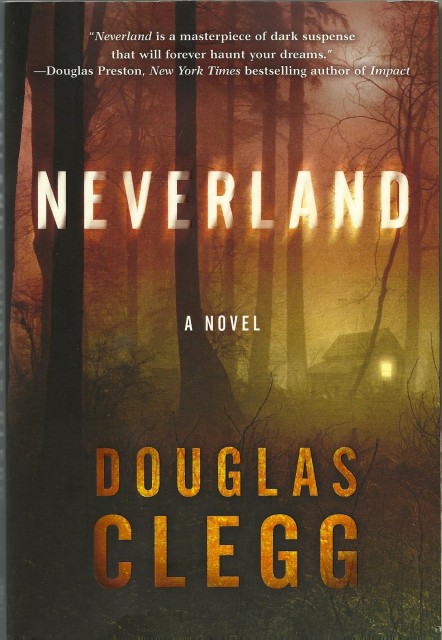
I cannot spend the month of October writing about horror and not mention Douglas Clegg. I met Doug at Stoker Weekend on Long Island in I think 2010; I may not have that date right–I am very foggy on years and dating now that I am closer to sixty than fifty. I was aware of him, of course, before I met him; I’d been wanting to read his Arthurian novel Mordred Bastard Son for years. I bought a copy of one of his books to have him sign it, and I read it on my flight home.

It was Neverland, originally published in 1991.

clegg-neverland

No Grown-ups

Among other words we wrote across the walls—some in chalk, some with spray paint—these two words were what my cousin Sumter believed in most.

There were other words.

Some of them were written in blood.

No child alive has a choice as to where he or she will go in the summer. After Grampa Lee died, our parents would drag us back every August to that small, as yet undeveloped peninsula off the coast of Georgia, mistakenly called an island.

Gull Island.

We would arrive just as its few summer residents were leaving. No one in their right mind ever vacationed off that section of the Georgia coastline after August first, and Gull Island may have been the worst of any vacation spots along the ocean. Giant black flies would invade the shore, while jellyfish spread out across the dull brown beaches like a new coat of wax. It was not (as sarcastic Nonie would remark) “the armpit of the universe,” but often smelled like it.

The Jackson family could afford no better.

Neverland is gorgeously written, and pretty damned scary at the same time.

From the very beginning, I was caught up in the brilliance of this book. The opening, in which the main character’s family is trapped in the car driving to a family vacation they are spending visiting relatives in Georgia, resonated with me–as every summer I was in the exact same situation heading to Alabama from Chicago. I remember the gas stations and the chocolate Yoo-hoos, buying the state maps, sitting in the backseat of the car with the “don’t cross” lines of demarcation between my sister and myself, and the forlorn wishing that we could take a family vacation doing something fun rather than visiting relatives.

And I was completely transported back to my own childhood.

The book is riveting, frankly–so gorgeously written and involving that it can’t be put down. I read it while I sat waiting to board my flight, all the way to Chicago, and finished it about halfway to New Orleans–and was sorry that it was over.

Is there anything quite like losing yourself in the grips of a master story-teller?

I’ve also read his chilling You Come When I Call You, and the truly great news here is that there is an enormous backlist to get lost in.

And now, back to the spice mines.
Billy Don’t Be a Hero

When I talked about Crowhaven Farm the other day I also mentioned how the ABC Movie of the Week used to occasionally foray into horror, and that some of those made-for-TV horror movies were actually quite good; everyone remembers the scary Trilogy of Terror with Karen Black; primarily for the part with the Zuni fetish doll. I can’t remember the other two stories in that anthology movie, but that part absolutely terrified me from beginning to end, and I still remember it vividly. There was another called Don’t Be Afraid of the Dark, with Kim Darby of True Grit fame, which was about little murderous monsters that lived in a house but couldn’t come out into the light. As someone with a lifelong fear of the dark, that one still haunts my dreams.

Constant Reader knows I’m an Egyptophile; have been since I was a little boy. So, today, I am going to talk about one of those movies that had a basis in Egyptian mythology and history; I barely remember anything about it, to be honest, but it was quite terrifying.

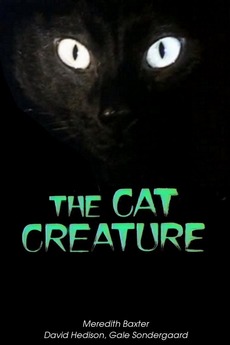
It was called The Cat Creature.

114789-the-cat-creature-0-230-0-345-crop

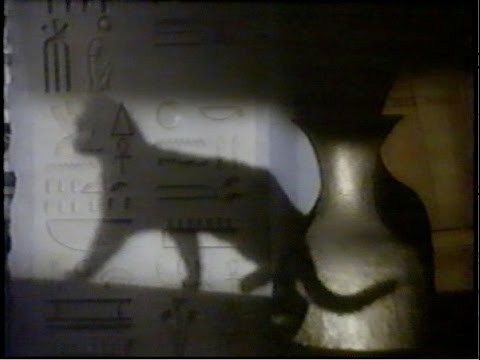
The premise of the movie is that a very wealthy, eccentric man who liked to collect things has died. Someone is sent out to his house to catalogue and valuate his things. Down in the basement in a room are a bunch of things that no one knew he had–Egyptian antiquities, including a mummy with a big solid gold amulet around its neck. A thief has also broken into the house, and when the other guy is distracted, steals the amulet from the mummy. Then something kills the first guy, while the thief runs away with the amulet. Lots more deaths follow, including eventually the original thief–and it appears that the amulet is a lot more important than anyone thinks. An archaeology professor is brought it to consult with the police, because of the Egyptian thing, and it also appears like all of the victims were killed by an animal–a cat, specifically, and all through the movie there are cats acting strangely all the time. Meredith Baxter Birney shows up as a new girl in town, gets a job at the pawnshop where the amulet wound up, and to serve as a love interest for the archaeology professor.

hqdefault

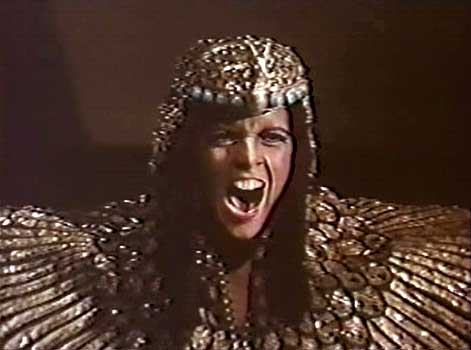
Turns out the mummy belonged to a priestess of the Egyptian goddess Bast, and the amulet has magic properties–keeping the priestess, who has eternal life, trapped in the mummy. When the thief took the amulet, the mummy came back to life–and of course, as a priestess of Bast has the ability to turn herself into a cat. She is trying to destroy the amulet, so of course she can never be trapped again.

Meredith Baxter Birney, of course, is the priestess, and when she tries to kill the archaeologist in the end, he quickly slips the amulet around the cat’s neck, turning her back into the priestess, then into the mummy again, and then her body turns to dust.

cat13

Oscar winner Gale Sondergaard–I think she may have won the first Oscar for Best Supporting Actress; if not the first, one of the first–had a great supporting role as the pawnshop owner.

cat-creature-gale

It’s on youtube; sometime when I have time (HA!) I will watch it again. I also looked up some info on the movie just now–the plot is pretty much as I remember it, and the original story and screenplay was written by Robert Bloch!

I’ve always wanted to write a story about Egypt, and I have a y/a in the files I’ve been wanting to write for a while–revolving around a cult of Bast; and now I know where the inspiration came for it!

And now, back to the spice mines.