I Don’t Want to Know

Thanksgiving Eve, and all is well in the Lost Apartment. I’m up early for Wacky Russian, and I actually woke up a half an hour before the alarm went off, well rested and not tired in the least. There’s something to this vacation thing, or it’s the sleepytime tea I’ve been drinking before I go to bed every night (I started that this week, and so far it’s been pretty effective).

Of course, now that I’ve said that, tonight it won’t work.

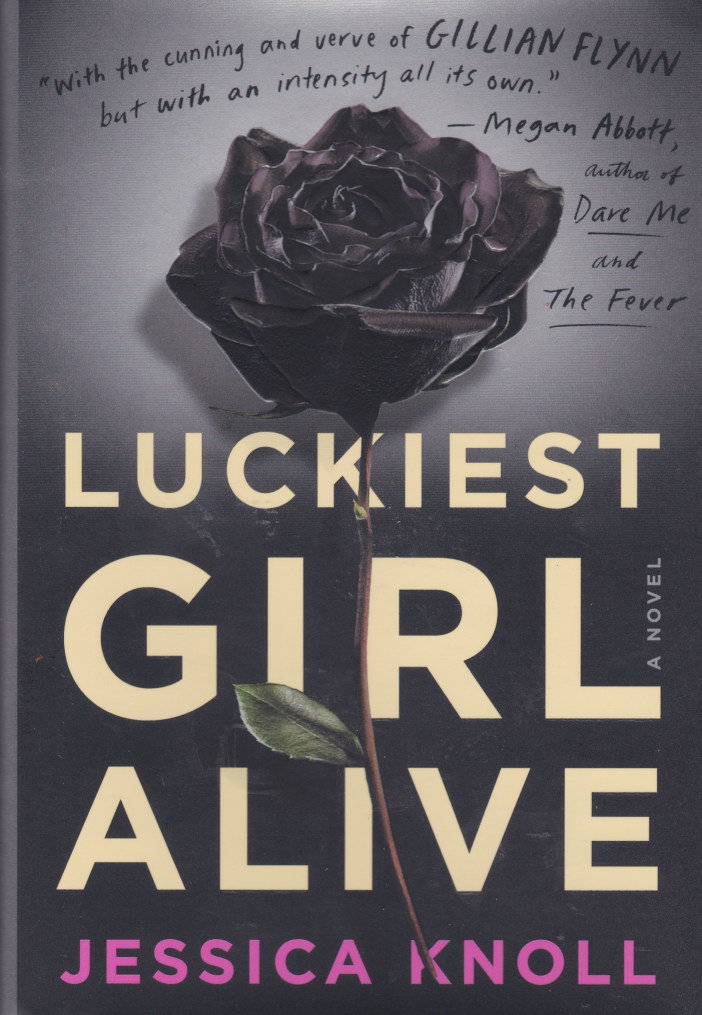
Last night I finished reading Falling Angel by William Hjortsberg.

It was Friday the thirteenth and yesterday’s snowstorm lingered in the streets like a leftover curse. The slush outside was ankle-deep. Across Seventh Avenue a treadmill parade of lightbulb headlines marched endlessly around Times Tower’s terra cotta facade…HAWAII IS VOTED INTO UNION AS FIFTIETH STATE: HOUSE GRANTS FINAL APPROVAL 232 TO 89; EISENHOWER’S SIGNATURE OF BILL ASSURED…Hawaii, sweet land of pineapples and Haleloki; ukuleles strumming, sunshine and surf, grass skirts swaying in the tropical breeze.

I spun my chair around and stared out at Times Square. The Camels spectacular on the Claridge puffed fat steam smoke rings out over the snarling traffic. The dapper gentleman on the sign, mouth frozen in a round O of perpetual surprise, was Broadway’s harbinger of spring. Earlier in the week, teams of scaffold-hung painters transformed the smoker’s dark winter homburg and chesterfield overcoat into seersucker and panama straw; not as poetic as Capistrano swallows, but it got the message across. My building was built before the turn of the centuryl a four-story brick pile held together with soot and pigeon dung. An Easter bonnet of billboards flourished on the roof, advertising flights to Miami and various brands of beer. There was a cigar store on the corner, a Polerino parlor, two hot dog stands, and the Rialto Theatre, mid-block. The entrance was tucked between a peep-show bookstore and a novelty place, show windows stacked with whoopee cushions and plaster dog turds.

The book was originally published in 1978 and was an Edgar Award finalist for Best First Novel; it didn’t win, losing to Killed in the Ratings by William L. DeAndrea. It was filmed in the 1980’s as the infamous Angel Heart, starring Mickey Rourke, Charlotte Rampling, Lisa Bonet, and Robert DeNiro. I enjoyed the film very much when I saw it, not knowing it was based on a book; it was another one of those films that drew me to New Orleans and Louisiana. Recently (in the last several months) I came across a listing of great crime novels or the ten noir novels everyone should read or something like that; so I thought, oh, I have to read that and there you go.

The plot of the novel itself was adapted almost perfectly for the film; a private eye named Harry Angel is hired by a strange man named Louis Cyphre to find Johnny Favorite, a singer who was apparently severely injured and left with amnesia during World War II; he owes a debt to Mr. Cyphre and he suspects that Favorite may not be in the hospital he is supposed to be. Angel starts looking for Favorite and discovers that Cyphre is right; Favorite is no longer at the hospital, and soon is drawn into a creepy world of black magic, voodoo, and ritual murder. The primary difference between the novel and the film is that the novel takes place entirely in New York; in the book Favorite’s trail leads Angel to New Orleans.

I guess the filmmakers felt voodoo, black magic, and ritual murders fit better in New Orleans that New York. Whatever; I’m glad they did because again, the film was another step in my journey to New Orleans.

The book is very well done, the pacing is great and as I have said in previous entries, that cynical, hard-boiled noir voice is captured perfectly. I myself have never been able to quite get that style down absolutely right; I do intend to keep trying as I love both hard-boiled and noir styles. Having seen the movie I knew the big surprise twist; I can imagine how surprising and shocking it was back in 1978, or if you haven’t seen the film; the twist was one of the reasons I loved the movie. Even knowing it, I still enjoyed the book tremendously because of the writing.

And now, back to the spice mines.

You Make Loving Fun

Another good night’s sleep. There must be something to this stay-at-home vacation thing, don’t you think?

I didn’t get as much writing/editing done yesterday as I wanted to, but I also had to run errands and bouncing back into a creative mode after dealing with the General Public is never easy; I find that always to be all too frequently true. But as I waited for Paul to come home last night, I watched the season finale of Versailles (which I am going to miss) and the Netflix documentary Audrie and Daisy, which made me smolder with rage, and made me realize my rape culture novel, sitting collecting dust now for over a year, really needs to get out there for people to read.

Will it make a difference? I doubt it, but change is water wearing away at a rock, and maybe at some point our culture and society will finally recognize that men do not have a right to women’s bodies.

I also read a few more chapters of Falling Angel last night. It’s the Edgar Award nominated novel the film Angel Heart was based on, and while I haven’t seen the film in decades, I remember liking it a lot (it was another one of those films that heightened the connection I felt with New Orleans before I moved here); once I read the book I am going to watch the movie again, see how it holds up. The book is quite good; as I read it I remember the film more and more; the book’s quality lies in that hardboiled noir voice I mentioned the other day having trouble capturing in my own work. I think part of the problem I have with that, frankly, is the straight male machismo aspect of it. One of the reasons I stopped reading crime fiction in the late 1970s (having exhausted Christie, Queen, and Gardner) was because the current stuff was pretty much the straight male gaze and that macho bullshit. (Not everything, of course, and that was, I realize now, an over-generalization; but that was how it seemed to me.) I eventually returned to crime fiction, primarily thanks to Sue Grafton and Sara Paretsky; their work led me to a greater appreciation of the genre and enabled me to read and appreciate John D. Macdonald and eventually get back into the genre over-all, and is partly why, in my own work, I tried to develop my own version and style; the gay male gaze. Whether I succeeded or not is for future generations to decide–whether I am remembered at all or not.

Probably not, is the most likely.

And I’m fine with that, really.

Yesterday I did manage to get the kitchen cleaned (not quite organized as I would have liked, but small victories), and today around editing and writing I intend to do the same with the living room and start working on the kitchen cabinets and drawers. It is truly sad how these things give me pleasure, but on the other hand, I like cleaning up my house and feel truly satisfied when it is cleaned and organized and sparkling. (If it remains sunny but chilly, I am going to do the windows in the kitchen as well.)

And that is, really, the genesis of my story “Housecleaning”, in the wonderful anthology Sunshine Noir.

The smell of bleach always reminded him of his mother.

It was, he thought as he filled the blue plastic bucket with hot water from the kitchen tap, probably one of the reasons he rarely used it. His mother had used it for practically everything. Everywhere she’d lived had always smelled slightly like bleach. She was always cleaning. He had so many memories of his mother cleaning something; steam rising from hot water pouring from the sink spigot, the sound of brush bristles as she scrubbed the floor (‘mops only move the dirt around, good in a pinch but not for real cleaning’), folding laundry scented by Downy, washing the dishes by hand before running them through the dishwasher (‘it doesn’t wash the dishes clean enough, it’s only good for sterilization’), running the vacuum cleaner over carpets and underneath the cushions on the couch. In her world, dirt and germs were everywhere and constant vigilance was the only solution. She judged other people for how slovenly they looked or how messy their yards were or how filthy their houses were. He remembered one time—when they were living in the apartment in Wichita—watching her struggle at a neighbor’s to not say anything as they sat in a living room that hadn’t been cleaned or straightened in a while, the way her fingers absently wiped away dust on the side table as she smiled and made conversation, the nerve in her cheek jumping, the veins and chords in her neck trying to burst through her olive skin, her voice strained but still polite.

When the tea was finished and the cookies just crumbs on a dirty plate with what looked like egg yolk dried onto its side, she couldn’t get the two of them out of there fast enough. Once back in the sterile safety of their own apartment, she’d taken a long, hot shower—and made him do the same. They’d never gone back there, the neighbor woman’s future friendliness rebuffed politely yet firmly, until they’d finally moved away again.

“People who keep slovenly homes are lazy and cannot be trusted,” she’d told him after refusing the woman’s invitation a second time, “a sloppy house means a sloppy soul.”

Crazy as she seemed to him at times, he had to admit she’d been right about that. In school after school, kids who didn’t keep their desks or lockers neat had never proven trustworthy or likable. It had been hard to keep his revulsion hidden behind the polite mask as he walked to his next class and someone inevitably opened a locker to a cascade of their belongings. He’d just walked faster to get away from the laughter of other kids and the comic fumbling of the sloppy student as he tried to gather the crumpled papers and broken pencils and textbooks scattered on the shiny linoleum floor.

As I said, I like to clean, and I often joke that my own mother makes Joan Crawford look like a slob. One morning, when I was filling up my blue bucket with water and bleach, the smell of bleach reminded me of my mother and voila! A story was born. I actually stopped cleaning to sit down and write the entire first draft.

Sigh. I love when that happens.

And now back to the spice mines.

The Chain

Vacation all I ever wanted…interestingly enough, I’ve been sleeping extremely well since Friday; maybe it’s the cold (for us) snap, but I’ve been getting at least nine hours of divinely deep sleep every night since Friday. Which is lovely, really–the whole point of this stay-at-home vacation was to not only get a lot of work done but to get rested and relaxed. So, I have to say that’s all working out quite well so far, which is lovely. Yesterday I worked and we got caught up on watching some of our shows (Eyewitness, Gotham, Supernatural, The Exorcist, with Arrow and The Flash and Secrets and Lies on deck), and I read some of Falling Angel, which has a great noir voice.

I love me some noir. I think one of the problems I have with writing noir–or when I’m trying to write it–is I can’t ever get that noir voice right. I’m going to try to write a noir novel in 2017; it’s been dancing around in the back of my head for a really long time, and I think the time is ripe for me to try to write it at long last.

Woo-hoo!

The kitchen is a mess this morning, and I do have a couple of errands to run today, in addition to the work I want to get done. One of the purposes of said vacation was to get a good deep cleaning on the Lost Apartment done, and I plan on working on the kitchen today around the work I have to do. It’s funny how you can let things slide for so long…actually, no, it’s not, but I also have to cut myself a break. I work full time, write full time, and edit part time. Something has to give in that scenario, and two of the things that have are my workouts and my cleaning schedule around the house. I need to stop beating myself up over these things; there are only so many hours in a day, and I am fifty-five and need down time sometimes.

I think maybe one of my goals in 2017 will be to cut myself a break every now and again, and accept that I don’t have to try to be Superman anymore.

Wow, just typing that felt freeing.

We’ll see how that goes.

But I feel up to the challenge. In 2017 I am going to write another Scotty book, a noir, and another y/a. I also want to get some of these short stories revised and redone and submitted out and out there. (I also need to update calendar reminders for deadlines re: some anthologies I want to submit to.) I also need to step up my reading, and spend less time on social media.

All right, I need to dive into the spice mines or I’ll start goofing off and get nothing done.

Here’s today’s hunk:

Songbird

I always say that short stories are much harder for me to write than novels, and I also realize that makes me sound completely insane. But it’s true. I don’t know why I have such a mental block about writing short stories, but the sad thing is I do. I make it much harder than it probably needs to be, most likely. And there’s nothing I admire more than people who write excellent short stories. There’s apparently nothing Stephen King can’t do when it comes to writing; I can name of the top of my head any number of absolutely brilliant short stories he’s written. Daphne du Maurier, Shirley Jackson, William Faulkner–the list goes on and on. I wish I read my short stories, honestly; it makes sense to read short stories when I don’t have a lot of free time to read a novel, or between clients at work, etc. I really want to reread King’s collections Night Shift and Skeleton Crew, and I have anthologies all over my house, as well as back issues of both Ellery Queen’s Mystery Magazine and Alfred Hitchcock’s Mystery Magazine that I should really read.

Music often inspires me; all of my blog titles are song titles, for example, or a lyric from a song, so when I heard about Jim Fusilli’s new anthology Crime Plus Music, crime short stories inspired by music, I had to get a copy.

Thus far, I’ve only read one of the stories, but it’s quite exceptional and may be one of the best short stories I’ve read this year: Alison Gaylin’s “All Ages.”

Gaylin is one of my favorite authors. I’ve loved all her novels (there is one I haven’t read; I’m holding it back because of that weird thing where I always want there to be one more book I haven’t read by a favorite writer), and her What Remains of Me is one of my favorite novels of 2016. Her contribution to my own anthology Blood on the Bayou, “Icon”, was something I was incredibly proud to publish.

But “All Ages”–wow.

We started with the hair. Bret said that was where all adventures started–Great hair, great music, great buzz. And so the first thing we did on the night of the all-ages X show at The Whisky was to lock ourselves in her upstairs bathroom with two cans of Aquanet, three boxes of Midnight Raven temporary dye, and an assortment of pics and combs, gels whose names I can no longer remember but whose colors I do–battery acid green, radioactive yellow…Each of them with anepoxy-like consistency and a sickly chemical smell. We teased the mercy out of each other’s hair and took swigs from a bottle of peach schnapps we’d found at the back of her parents’ liquor cabinet and we played X albums–Under the Big Black Sun, Los Angeles, some bootleg tape recorded live at one of their local shows. Bret’s trifecta in action. And it was working. Exene’s steely voice grew more and more beautiful with each gulp of schnapps, John Doe’s growl a cloud I could float on. My hair turned stiff and black and defiant and before long I was a star, a punk rock star. I felt like dancing.

Gaylin captures the 80’s beautifully, and what it was like to be a kid during that time (she also does this in What Remains of Me). The story, also like the novel, flashes back in time from the present to the 80’s, as the main character remembers what happened the night of the X concert, and how she and Bret hadn’t been friends for years, now that she is attending Bret’s funeral. It’s a lovely story, about friendship and loss, the complicated relationships between girls…and there’s a twist that will knock you out of your chair.

The book is worth the price for this story alone, and it has an amazingly stellar line-up of top crime writers in addition to Gaylin as well: Craig Johnson, Val McDermid, and Gary Phillips, just to name a few.

I’m looking forward to reading the rest.

And now back to the spice mines.

Go Your Own Way

I had planned, all week, to take yesterday as a day off. I am going to have to write and edit like a madman all of my vacation (woo-hoo! I’m on vacation!) and decided that yesterday, and Thanksgiving day itself, would be my days to do nothing but putter around the house and read and so forth. I also somehow wound up in Facebook jail for posting a photo of a guy in a bikini three years ago that someone somehow decided yesterday ‘violated their community standards of nudity’–who knew that a man in a bikini was naked? Puritans. So I went to Costco and cleaned up around the house and spent the day finishing reading Owen Laukkanen’s The Watcher in the Wall, and once I was finished with that, I started reading William Hjortsberg’s Falling Angel, around essays from Barbara Tuchman’s Practicing History.

Damn, I do love to read.

We also started getting caught up on the shows we watch last night.

It was time.

Adrian Miller had planned to wait, a few more days, another week, maybe. Hell, when he woke up for school that morning, before school, he wasn’t even sure he would do it anymore. He’d thought about his mom and dad and sister, about Lucas, and wondered what kind of monster would want to hurt them the way he was planning. He’d hugged his parents goodbye and walked out the front door, and it was a beautiful fall morning, crisp and bracing and clear, and he’d decided, not yet. Maybe not ever.

But then he showed up at school, and it all started again.

Lucas wouldn’t talk to him. Lucas never talked to him, not in public, anyway. Lucas avoided his eyes in the hallway, wouldn’t eat lunch with him, made him wait until the final bell rang and they could go to the park, or to Lucas’ dad’s basement, somewhere far away from school and Lucas’ real friends.

I really, really loved this book.

Take this opening. Laukkanen perfectly captures the experience of what it feels like to be that kid; the one who has no friends, the one who counts the minutes until the final bell rings, who dreads going to gym class or the cafeteria for lunch and going to school every morning; who dreads going to bed every night because it means when you wake up you have to go to school again; what it feels like to wish you would die in your sleep so it would all be over; to wonder if you would ever have the nerve to kill yourself.

I was that kid once.

When I bought the book (because I wanted to read one of Owen’s books) I didn’t realize it was a book in a series, but to be honest, I didn’t realize it was a series until I was well into it, and by then I couldn’t stop reading even if I had wanted to; and it didn’t matter at all. Maybe the reading experience would have been heightened by having read the series in its proper order (I’m a bit obsessive about this sort of thing) but I didn’t feel like I missed anything. It worked perfectly well as an introduction to the series (which I am now going to go back and read), and that’s truly not an easy thing to do. (I don’t think, for example, my series can be read out of order.)

The series characters are Kirk Stevens and Carla Windermere, who work on a joint FBI-BCA violent crime task force. They get involved in this particular case when Stevens’ daughter–distraught about her classmate Adrian Miller’s suicide–asks them to do something about it. There isn’t much they can do at first, but as a courtesy they start looking into it, and soon discover an ugly world on-line of suicide groups and chatboards…and disturbed individuals who encourage the suicidal to go through with it. Adrian was the victim of one such person, and as they start to dig into this subculture more, they soon realize that there will be more kids talked into killing themselves while this person watches via webcam.

What makes the book so brilliant, though, is that Laukkanen takes us into the mind of the psychopath as well; how he became this person who enjoys watching young people kill themselves, how much he enjoys playing the game, and how he has turned it into a for-profit business. And while it is a slithery, creepy, horrifying place to be–at the same time you can’t help but feel some empathy for this awful, horrible person you want to be caught; since you know the backstory of how he came to be this monster. This fleshes him out, makes him more real–and all the more terrifying, as it is easy to see how such a psychopath is created.

Laukkanen also shows us the point of view of his new target, a sad lonely girl who hates her life, lured in by an Internet boyfriend she meets on one of the suicide chat boards and comes to know through Facebook and other social media (he uses the pictures of an attractive boy who committed suicide already to create this fake presence, and we learn how he does this and how easy teenagers are prey to this sort of thing–which is also terrifying), and finally she decides to go meet him, taking a bus from Tampa to Louisville…and the race is on for Stevens and Windermere to save her.

The pacing is amazing; you never want to put the book down. The writing is superb, and Laukkanen’s characters are all very real.

Oddly enough, once I finished reading this I realized I actually already had the first book in the series, The Professionals, in my TBR pile.

Looking forward to reading some more of Owen Laukkanen.

Don’t Stop (Thinking About Tomorrow)

One more day to get through and then it’s vacation. Woo-hoo!

I have literally been riveted by Owen Laukkanen’s The Watcher in the Wall; I hated having to put it down and go to bed last night. I’m about halfway finished; Paul won’t be home until late tonight so I am hoping I’ll be able to finish it tonight. I’m probably going to read Michael Thomas Ford’s Lily tomorrow; the LSU game is on early and after that I am probably going to do a lot of cleaning and organizing and reading. (I’ve decided to take Saturday off from all projects, in order to recharge my batteries.) There’s no Saints game on Sunday, so I am debating whether I should attempt Costco before the LSU game tomorrow, or just go Sunday while everyone’s at church.

Decisions, decisions.

Of course, while I juggle these multiple projects, I’ve been thinking a lot about a couple of short stories I’ve been working on for years, “The Ditch” and “Fireflies”; this was triggered, I think, by reading the Lisa Unger novel. I’ve been also thinking about a y/a novel I’ve wanted to write for years called Ruins; rereading the two Barbara Michaels novels in October started me down that path, and the Unger kicked it into overdrive. The problem with Ruins is that I borrowed some of it for Lake Thirteen; if I am going to write Ruins I’ll have to come up with some new things to say, and replace the scenes I borrowed. The problem with Ruins, of course, is that it’s a Civil War ghost story, and you can’t write that kind of book without addressing the elephant in the room: slavery and racism. I originally wrote it as a short story a long time ago (correction: make that a really bad short story; I think it was one of the stories I wrote in the 1980’s when I was trying to emulate Stephen King. I didn’t address any of those issues in the short story; I blissfully pretended, as so many others have done, that none of that mattered. God, the naivete. I think this is why I have so much trouble with trying to write about Alabama. Is there anything more annoying than a progressive white person trying to address race issues? I loved To Kill a Mockingbird when I read it as a kid; I reread it again recently and, while still thinking it was a moving story that was beautifully written, recognized several problems with it. I have copies of the Colson Whitehead novel that just won the National Book Award and the controversial book Ben Winters published earlier this year; I also found a copy of William Bradford Huie’s The Klansman, about the civil rights struggle in Alabama in the 1960’s, on ebay that I want to reread. (I read it when I was young; I’d like to give it a reread as an adult.)

Maybe after I read Lily. The time has never been more ripe for reading about racism, and studying America’s history of it. I also have Philip Roth’s alternate history The Plot Against America.

Hmmmm.

Of course, actually writing Ruins is a long way away; I have so much to do before the end of the year…

But it’s lovely feeling creative again. I am making lots of notes. The book is coming along rather well, too. I may even get all these things done when I am supposed to

Scary. Who am I?

And on that note, I should probably head back to the spice mines.

Here’s a hottie for today:

14542384_10210729441256939_5592957175501939966_o

Never Going Back Again

Tonight is my biweekly late night, and tomorrow is my last day in the office before I go on vacation, which is so fucking lovely I cannot wait. I have to do some things today –grocery store and get the oil changed in the car–before I head to work, and I also need to edit and write. I have some laundry going right now, and I also have to do the dishes.

I’m so fascinating.

I am reading Owen Laukkanen’s amazing The Watcher in the Walls, and I think I may take Saturday as a day off so I can watch the LSU-Florida game and relax and finish reading it. One of the lovely consequences of recent events has me avoiding wasting time on social media when I get home from work and actually either watching something on television–last night I watched the season finale of American Horror Story, which was incredibly awful and a complete waste of time, just as the entire season was–or reading; I’m really enjoying the reading, frankly, and there are so many books I need to read. Just that extra hour or so of reading every day is getting me through the TBR file ever so much faster and it’s absolutely lovely. I love reading so much.

I also got some lovely new books in the mail yesterday, not the least of which is Michael Thomas Ford’s Lily, which I am hoping to read very soon.

img_0974

I also got Lara Parker’s latest Dark Shadows novel, Heiress of Collinwood; I think I might indulge myself and read those novels during Christmas.

I’m also feeling a bit discombobulated this morning; I am going to have to get out my list and make sure I am getting everything done today that I need to get done.

And on that note–back to the spice mines.

Dreams

I just remembered I am going to be on vacation next week.

It’s not a ‘vacation’ in the sense that I am going anywhere; I simply took the week off from work and am staying home. I have a lot to get done (as always) but rather than being stressed or worried about it, I feel pretty good about it. Odd, I know; who am I and what have I done with Gregalicious? It will be nice, though; I’ll also be able to sleep in and go to the gym; perhaps do some cardio (I can dream, can’t I?) and maybe finally reorganize and clean the kitchen the way I want it to be done.

I finished reading Lisa Unger’s superb Crazy Love You last night, and started reading Owen Laukkanen’s The Watcher in the Wall (which is also superb).

crazy-love-you

As I pulled up the long driveway, deep potholes and crunching gravel beneath my wheels, towering pines above me, I was neither moved by the natural beauty nor stilled inside by the quietude I did not marvel at the fingers of light spearing through the canopy, dappling the ground. I did not admire the frolicking larks or the scampering squirrels for their carefree existence. No. In fact, it all made me sick. There was a scream of protest lodged at the base of my throat, and it had been sitting there for the better part of a year. When it finally escaped–and I wasn’t sure when that might be–I knew it would be a roar to shake the world to its core.

I always say the best writers inspire me; when I read their work, I get ideas for stories of my own and how to improve my own writing. I am now adding Lisa Unger to the list of writers who have that effect on me when I read their books.

Crazy Love You is a rollercoaster ride where you don’t ever know what is real, what is going on, and it’s deeply unsettling to read. But the main character is so well done, you can’t stop reading, you can’t stop caring for him–even when he may (or may not) be doing something truly terrible; you can’t help but hope that it’s not him.

Our hero is Ian Paine, and the story is told in his first person point of view. Ian is the successful artist/writer of a series of semi-autobiographical graphic novels called Fatboy and Priss. Ian grew up in a small town north of New York City called The Hollows, and was fat and unpopular and bullied as a kid. There was a horrible family tragedy when he was young, and that’s when he discovered his friend Priss, a beautiful little girl who lived somewhere in the woods near his own house. Throughout Ian’s life, Priss has taken care of him, when things have gotten bad for him or someone has treated him badly. As the book flashes back and forth in time between the present–where Ian is in love, and engaged to, an almost perfect young woman named Megan and trying to dissociate himself from Priss–to his childhood when Priss stepped in to intervene in his life in some way, we slowly begin to wonder precisely what’s going on. Does Priss really exist, or is she some imaginary friend he’s conjured up to help him deal with his own anger issues? Is she some kind of supernatural creature? Does he have dissociative identity disorder? Is this all some kind of drug-induced hallucination?

This was fascinating to read, and a little heartbreaking; I was bullied when I was young and so of course I can completely empathize with Ian and his absorption into comic books and then graphic novels. And Unger is great at not only her use of language but in building tension, mood, suspense and atmosphere.

I’ll definitely be reading more of her work.

And now back to the spice mines.

Second Hand News

I finished reading Gore Vidal’s Thieves Fall Out between bursts of writing on Saturday, and then during the LSU-Arkansas game Saturday night I started reading Lisa Unger’s Crazy Love You, which is just extraordinary. I often say that the best writers and their work are inspirational to me; they give me ideas and make me want to work harder at my own writing and just be a better writer.

So far, the Unger novel is doing just that–and that’s my hallmark for someone being a truly spectacular writer. I just wish I had the time to just sit down and read it through.

That said, as Constant Reader is undoubtedly aware, I’ve been in a writing malaise lately. I don’t know why this happens, nor do I know how to stave it off, but it’s been the reality. I’ve been struggling to write, and even getting 1000 words out in one day has been absolutely like pulling teeth in the Middle Ages. And yet…yesterday I sat down and in less than two hours I wrote over 3000 words. I think–and I am deadly serious–that reading the Unger novel kicked me past it. I also managed to get a lot done over the weekend on top of the writing as well; organizing and cleaning and so forth. So I think I may be past the malaise this time. Here’s hoping.

I wasn’t crazy about the Vidal novel, to be perfectly honest. It seemed like it could be something truly special; international intrigue in 1950’s Egypt, with after effects from the war and all the intrigue from that, as well as some stuff about the antiquities black market. It was one of the many novels Vidal published under a pseudonym in the 1950’s, after publishing The City and the Pillar basically killed his career for a while. I’ve read other works by Vidal and greatly enjoyed them; I am slowly working my way through his epic Empire (one of the multiple books I am currently reading) and so I thought this noirish thriller would be better than it actually was. Don’t get me wrong, I’m not sorry I read it, mind you–I just don’t think it warrants more of a discussion on here.

Although my creativity continues to rage out of control. I had some ideas on how to fix some short stories this weekend, and wish that I could work on them right now–I also got the idea for another novel. Heavy heaving sigh. It really never relents!

Okay, I am going to dive back into the spice mines. Here’s a beefcake shot of Ryan Phillippe, a bonus from 54:

ryan-phillippe-54

I Love the Nightlife

Ah, disco.

I’ve always loved to dance. In fact, many times when I’m cleaning and Paul isn’t home, I’ll put on some dance music and dance around the Lost Apartment while I’m cleaning. If it’s a song I particularly love, I’ll slip into Drag Queen mode and perform as I sing and dance along to the music. It brings me joy, and there’s nothing I love more than a dance jam. One of the things I tried to imbue in the Scotty books–especially Mardi Gras Mambo–was the joy that can be found in dancing and dance music; some of the best times of my life were on the dance floor.

When I was a kid I used to watch Soul Train and American Bandstand, and tried to copy the way the young people on the show danced. I loved going to high school dances. Of course, gay bars are often all about the dancing. I was also a child of the 1970’s, very much, and so I lived through the popularity of disco, which I loved because it was dance music. And while I sadly never went there, you also couldn’t live through that period without knowing about Studio 54.

So, you can imagine my disappointment when I saw the movie 54<; it was a glossy “boy from Jersey moves to the city gets caught up in the glitz but then walks away from it and learns from his experience” type movie. And while I may have never gone to Studio 54, I knew enough about it–and lived through that time–to know that this movie was deeply, deeply sanitized.

When I heard there was a director’s cut, that was much better because the studio had redone almost the entire film, I thought–I want to see it. Paul went to a play Friday night, so after I was finished with my daily work I got in my easy chair with Scooter and rented it from Amazon.

Seriously, it was amazing.

51j9xzmxetl-_sx200_ql80_

The only resemblance this movie has to the studio release is the cast and it’s about Studio 54.

This movie is bleak, dark, and realistic–I would say it’s just as dark as Saturday Night Fever, which is an incredibly dark movie.

Shane, the main character, played by Ryan Phillippe in all of his stunning young beauty, lives in Jersey City with his father and two younger sisters. This is blue collar America in the 1970’s in all of it’s realistic bleakness. He works as a pump jockey at a gas station; the hostage crisis in Iran is going on; the economy is in the toilet, and he is uneducated but wants something more–like so many people did from that background (like Tony in Saturday Night Fever, for that matter). He has a crush on Julie Black, an actress on All My Children, and after one wretched night in a bar where he meets a girl, they have mutually unsatisfying sex in the backseat of his car, and when he asks her if she want to go out sometime, she dismissively says, “I’m from Montclair and you’re from Jersey City. I don’t date guys from Jersey City”–he gets the big idea to cut off his long frizzy hair into a more stylish look and convince his two buddies to go into the city with him and try to get into Studio 54, where he might have a chance to meet Julie Black.

Shane catches the eye of Steve Rubell, played by Mike Meyers, in the crowd outside and is picked to go inside–his two buddies aren’t–and Meyers tells him, “Not in that shirt”–forcing him to take it off as the price of admission. Once he is inside, though…and this is very important–he is dazzled by the inside: the people, the decor, the music, the dancing, the celebrities.

ryanphillippe54

Before long, he’s hired to be a busboy, which requires him to wear those hilarious little running shorts that were in vogue back then–the bartenders are all gorgeous and shirtless–and he befriends another barback, whose wife works in the coatroom, and he moves in with them after his father throws him out for working at ‘that freakshow.’

The director’s cut doesn’t shy away from anything–the sexuality, the hedonism, the drugs. Everyone is smoking pot, snorting coke, popping Quaaludes. And of course, gorgeous as he is, Shane is getting laid left and right and using his body as his commodity. Shane also explores his own bisexuality; the movie never really makes it clear whether he is hustling when he is with wealthy men, or if he genuinely is fluid sexually. He often sleeps with people that Steve tells him to, and even gets some modeling gigs.

But the relationship with his married friends–Anita and Greg, played by Salma Hayek and Breckin Meyer, is also at the heart of the movie. They genuinely love and care about each other, but it’s never clear whether Shane is just close to them or if he’s part of the relationship. He definitely has sex with Anita–but after his initial anger Greg forgives him because they’re family.

There is also an incredibly awkward moment when Shane misreads a cue from Greg–now supplementing his income by dealing drugs–and they kiss for a moment before Greg freaks out and runs away.

54-16x9

I am not kidding when I say the director’s cut is a completely different movie from the theatrical release. There are characters in this version that don’t even show up–or if they do, it’s a small scene–in the theatrical version; there are whole stories and plots that vanish from this to the ‘original.’ This movie is very much in the tradition of Saturday Night Fever and Cruising (both of which I need to revisit now), and in its darkness and complexity, is equal to–and in some ways, superior–to both. This was the 1970’s I remember.

And the music! Oh, the music is so fantastic.

I highly recommend it.