Joy to the World

It is highly ironic that, on National Coming Out Day, I was reminded of the existence of someone whom I hadn’t thought about in years; someone who, back in the days before my first novel came out was editor of a gay fiction publication (whose name is, in fact, lost in the mists of time). I remembered emailing him, when I was working for Lambda Book Report, to see if we could do a piece on the magazine, what he was looking for in terms of submissions and so forth–my vision of Lambda Book Report, was to make the magazine not only about reviewing books but also to provide resources and support for aspiring LGBTQ writers and publications (the way I described my vision was “an LGBTQ hybrid of Publishers Weekly and The Writer“). He emailed me back, having totally misread my email and its intent with the simple sentence, I’ve had to reject much better writers than you.

I didn’t bother responding; I never had trouble finding material or pieces to fill the magazine to waste my time explaining myself to such a rude piece of shit. And yes, I admit it, I was small enough of a person to enjoy the moment when I heard his publication folded, and when his own first book disappeared without a trace. I’d forgotten he even existed until this morning.

I suppose it’s small of me to even mention this today; but it’s also nice to be reminded, every once in a while, that my voyage to becoming a published writer wasn’t always as smooth as I remember. But I digress; it’s still October, it’s still my month to write about horror, rather than the horrors of being a writer–and I have decided, in honor of National Coming Out Day, to write about two books that showed me that there was the possibility of such a thing as gay horror: Steam by Jay B. Laws, and Queer Fear, an anthology edited by Michael Rowe.

queer-fear

Queer Fear (and its sequel, aptly titled Queer Fear II) was a revelation to me. The stories (by authors like Douglas Clegg, Michael Thomas Ford, William J. Mann, Gemma Files, Caitlin R. Kiernan, and Nancy Kilpatrick, among many others) were extraordinary; great horror, terrific writing, and inspirational for me as a horror fan. I reviewed both editions for Lambda Book Report, and I still have my copies of both somewhere; I kind of want to dig them out and reread them again. Both were nominated for Lambda Literary Awards; the second won. It was when I found out there wouldn’t be a third (which I still think is criminal) that I decided to put together one of my own,Shadows of the Night.

steam

It’s been years since I read Steam, and I don’t know where my copy is; I know I still have it. Jay B. Laws only wrote two books before dying far too young from HIV/AIDS in the early 1990’s; he was an extraordinary writer. (I have a copy of the second, The Unfinished, but haven’t read it.) When I was senior editor at Harrington Park Press I wanted to reprint both books, but I was never able to uncover who owned the rights to them; Alyson had originally published them but they were long out of print, and of course, Laws was deceased.

jay-b-laws>

Steam was not only a great horror novel–terrifying, really–but it was also a powerful allegory about HIV/AIDS itself. In the story, there is a demonic presence in one of the bath houses in San Francisco, that is spreading and getting more powerful as it kills; and in order to save the men they love, some gay men have to go into the possessed bath house to kill the demon and close the portal to hell. It was an amazing, amazing read. I think I read it over the course of one day; I’ve always regretted the loss of Laws and the books he could have written.

In the LGBTQ ghetto of publishing; there have always been a lot of romance and mystery novels; but speculative fiction has never really been as represented as well as romance and mystery (the point can be made that romance and mystery are both much larger genres in the mainstream; and therefore the smaller percentage of queer speculative fiction novels corresponds to that as well), and I’ve always felt that there should be a lot more of them. Lethe Press is, as far as I know, the only press currently primarily focusing on LGBTQ speculative fiction; they are doing a great job, but I would love to see more.

And now, back to the spice mines.
Grease

Yesterday I was tired, but had slept well. I didn’t get as much done as I would have preferred–I still make to-do lists thinking I have the energy I had ten years ago; what I wouldn’t give for that–but I did make an awesome chicken/white bean chili for dinner, so that’s something, isn’t it? I did work on the story a bit, cleaned a lot, and started reading Bracken MacLeod’s Stranded, which is quite wonderful so far.

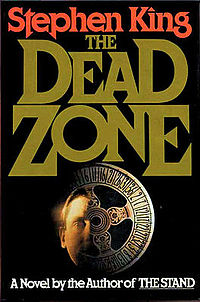
As we delve more deeply into October, the month I am devoting to horror, I decided to examine another book by Stephen King today, a novel this time, and one that I don’t think gets nearly enough attention–and certainly hasn’t gotten enough attention in this particular election cycle. It’s always been a favorite of mine, and I haven’t reread it in years; I know I’ve read it more times than I can count. And yes, true confessions from my derivative self; just as I used the same framing device and structure as Christine for Sara‘s original draft, I did the same thing with Sleeping Angel in its original draft, only using The Dead Zone.

200px-deadzone

By the time he graduated from college, John Smith had forgotten all about the bad fall he took on the ice that January day in 1953. In fact, he would have been hard put to remember it by the time he graduated from grammar school. And his mother and father never knew about it at all.

They were skating on a cleared patch of Runaround Pond in Durham. The bigger boys were playing hockey with old taped sticks and using a couple of potato baskets for goals. The little kids were farting around the way little kids have done since time immemorial–their ankles bowing comically in and out, their breath puffing in the frosty twenty-degree air. At one corner of the cleared ice two rubber tires burned sootily, and a few parents sat nearby, watching their children. The age of the snowmobile was still distant and winter fun still consisted of exercising your body rather than a gasoline engine.

Johnny had walked down from his house, just over the Pownal line, with his skates hung around his shoulder. At six, he was a pretty fair skater. Not good enough to join in the big kids’ hockey games, but able to skate rings around the other first graders, who were always pinwheeling their arms for balance or sprawling on their butts.

That is one terrific opening, isn’t it? It’s the prologue; King offers us an insight into what it is to come, as young John, skating around the pond and having a good time as six year olds do, is accidentally mowed down by one of the hockey players. He is sent flying across the ice, out of control, and crash lands, hitting his head hard–which of course brings all the adults and other kids running. Before he comes to consciousness, he is muttering…about how something had taken all the charge it could take…and then he comes to…and soon is skating around again like nothing ever happened, the way kids do all the time.

Only a few days later, one of the men gathered around him is charging a car battery, which becomes overcharged and explodes. No one remains what little Johnny said, or connects the two incidents.

The book then flashes forward to John, now a college graduate and working as a high school teacher in a small town in Maine, dating another young teacher whom he thinks he might be falling in love with, and they are going to a carnival, where Johnny has a ridiculous run on a roulette wheel…and is involved in a terrible car accident after dropping Sarah off, that sends him into a coma for five years. And when he finally comes out of the coma, the world has changed dramatically–and that dormant power in his brain, that he first experienced after the fall on the ice, is back and even stronger than before.

The problem, of course, is that he has become a modern-day Cassandra–he can see the future, but no one believes him.

That story, in and of itself, is genius enough to drive a novel; the moral implications, the having to deal with trying to take action vs. doing nothing–in one instance Johnny is blamed for what happens since he foresaw it–and what kind of responsibility do you have to the world in general? The crushing burden of foresight–added to how the world changed for Johnny himself during his coma (Sarah fell in love with and married someone else; his mother, always religious, has been a zealot) and having to deal with all of that would make for an incredibly compelling story.

But King goes one step further; the book also examines not just Johnny’s life but that of the rise of Greg Stillson, a sociopath whose only true interest is money and power; how he is building a political machine–dismissed as a clown but has a “populist” message that has him rising and defying the odds to run for high office. King exposes the dark underbelly of the character; the reader knows Stillson is a monster–and then Johnny goes to one of his rallies out of curiosity–and shakes his hand.

And sees the future, a future where an insane Stillson has become president of the United States, and has his finger, literally, on the button to launch a full scale nuclear war.

The end of the world.

Does Johnny have a responsibility to stop him?

The Dead Zone is absolutely brilliant, and almost horrifyingly prescient. I am writing this from memory as I don’t want to revisit this book just yet–but I do want to read it again.

And now, back to the spice mines.
Love Will Keep Us Together

Yesterday, since there wasn’t an LSU game to stress over, I simply did chores and idly watched (had the television on while I read or did chores) some games–Texas A&M vs. Tennessee; Alabama vs Arkansas, Florida State vs Miami–until we started watching some of our shows. I have to say, given what has been going on in the country over the last few years, and particularly since Friday; Friday night’s episode of  The Exorcist was especially powerful. What I really enjoyed about it was it showed how seductive evil can be…and the scene on the el, when Casey was basically being groped and assaulted by the drunk bro in front of everyone who watched and did nothing? Absolutely horrifying, and yes, while not wanting to provide spoilers, I had no sympathy for the dude bro.

Kind of how like in Carrie, I didn’t have much sympathy when the bullies started getting theirs.

But while I was watching football games yesterday, I was also rereading Danse Macabre by Stephen King. It’s really quite exceptional, even better than I remembered; it’s an examination of the horror genre from a personal perspective, but it’s incredibly smart. It could, quite seriously, be a text for a Genre Fiction class. It’s written in, as I mentioned, an incredibly accessible style, yet it also delves into serious scholarship and examination of the primary themes in the genre. It really, really is quite brilliant.

I overslept this morning, of course, as I am wont to do on Sundays, but the great thing about it is that I feel completely rested for the first time in days. I’ve already done the dishes, intend to clean up around here, and then I am going to write for a while. Then in the later afternoon, I am going to take my camera out into the neighborhood and take some pictures. There are some interesting changes going on down on Magazine Street.

Oh, yes, horror; I am supposed to be talking about horror, aren’t I?

When I was a kid, ABC used to made-for-TV movies and aired them on Tuesdays as the ABC Movie of the Week. Some of them were ‘important dramas’; like Go Ask Alice; some were bad comedies, some were mysteries, and some were horror. Many of them were quite terrible, but some of them were memorable; they often used film stars past their prime, and while I admit I’ve not seen any of them in years, the first one I remember–one that terrified the crap out of me–was Crowhaven Farm; which is on Youtube, and I have it on my watchlist, but haven’t gotten to it yet–partly because I fear it won’t hold up, and what scared a ten year old might seem silly to an adult.

url

I don’t remember the entire plot, but it had to do with a city couple either inheriting or buying Crowhaven Farm, and moving out to the country because their marriage was struggling; partly because they hadn’t been able to conceive a child. Once they reach the farm, though, the wife–Wikipedia tells me her name was Maggie–starts remembering things about the farm that she couldn’t possibly know; she walks over to a wall and touches a secret latch that opens a panel to a secret room, for example. She starts having flashes of a past in Colonial times; and there are ghosts walking around Crowhaven Farm–that apparently have it in for her. They take in a foster child but then Maggie learns she is pregnant…and some of the memories have to do with her being ‘pressed’–a punishment where suspected witches were placed beneath a wooden panel and stones piled on it until she is crushed to death (it always seemed like an unpleasant way to die to me). Back in Colonial times, the area had it’s own Salem-like witch issues, and it turns out that Maggie, back then, escaped death by pressing by ratting out some other witches who now want to get even with her in THIS life.

The ending was especially scary to me.

I used to watch the movie every time it aired, because I enjoyed it so much…and I’ve never forgotten about it, either. It popped back into my memory when I remembered that Barbara Michaels’ superb ghost story Ammie Come Home had been made into a Movie of the Week called The House That Would Not Die, starring Barbara Stanwyck, and went looking for it. I found it on Youtube…which suggested Crowhaven Farm to me.

Good stuff.

I also hope to start reading Bracken MacLeod’s Stranded tonight.

And now back to the spice mines.

Midnight at the Oasis

Stephen King. What is there left to say about Stephen King? From the first moment I read Carrie, I was a fan. I’d read a lot before I discovered him; and yet his writing was a revelation to me. What he was able to do with setting, with character, the way he made his stories–regardless of subject matter–relentlessly realistic opened my eyes to what one can accomplish with writing. Over the years, as I’ve continued to read King (I still am not completely caught up; I am several books behind–the days when I could buy the book on release day and devour it in one or two sittings are sadly, far in the past), I continue to marvel at his extraordinary expertise. And while some of his books seem to go off the rails a bit, I would be proud to claim any of what I consider his lesser books (and by that I mean ‘ones I am not as fond of as others’) as my own: The Tommyknockers, Rose Madder, Dreamcatcher. I used to reread his books, over and over again–I don’t even know how many times I’ve reread salem’s Lot and The Stand and The Dead Zone and Christine, for example; and I wish I had the time to sit down and reread them all, from Carrie on. His On Writing is the one text I would tell every beginning writer to read from beginning to end, commit to memory, go back to whenever needed.

But I decided I wanted to talk about a different Stephen King title today: Danse Macabre.

stephen-king-danse-macabre

As I often point out, I am more of a fan of horror than anything else; I’ve not read as widely in the genre as I would like, nor do I even know enough about the genre to write about subgenres and subcategories expertly. There are any number of horror writers whose oeuvres I’ve stuck my toe into, and found the water just fine, but haven’t had the time to fully commit to reading: Christopher Golden, Gemma Files, Douglas Clegg, Brian Keene, Nick Cutter, and John Boyne, just off the top of my head, and there are many more. There is just so much time, after all, and there are just so damned many books; and as someone who is primarily defined professionally as a crime writer, I have to read so much within my own genre, not to mention true crime–and of course, I love my nonfiction, which I can just walk away from without too much worry of having to go back to the beginning to start over.

But I do feel that King’s Danse Macabre, published originally in 1981, is an excellent overview of the horror genre up until that date. King’s non-fiction writing is very similar to his fiction; it’s smart but also accessible. And it’s excellent; it is serious scholarship about the genre of horror, written by the grandest master of the grand masters, talking in an accessible way about the best books, the best writers, the best films, and the best television programs within the genre…how they influenced his own work, and why. It’s truly exceptional.

I’ve always had a copy of Danse Macabre–well, I’ve always had a copy of every Stephen King book in my house–and it’s been a long time since I’ve revisited it. I may, once I tire of rereading Antonia Fraser’s Mary Queen of Scots, give it another whirl. Reading it the first time was what reminded me of Richard Matheson, introduced me to other writers like Robert Bloch and Harlan Ellison (my God, Harlan Ellison) and even, for the first time, made me truly aware of Shirley Jackson; reading this was what sent me to the used bookstores in search of books by these authors again, and I’ve never regretted those forays into their work–Ellison and Jackson are certainly up there on my list of absolute favorites, and many of the others I originally found through reading Danse Macabre are certainly favorites.

And that’s not even including the television shows and movies.

And now, back to the spice mines.
You and Me Against the World

I am very tired this morning. I did bar testing last night, and today feel like one of those extras on The Walking Dead about to get macheted by Michonne. I am so tired at this point getting macheted sounds almost preferable.

As my month of writing about horror continues, I had intended to talk about Stephen King today, but since I am so tired and incapable of much coherent thought, I decided to talk about the inspiration behind my novel Sara.

imgres

I’ve written about this book before, but while Lake Thirteen is a ghost story, and there are some serious paranormal elements to Sorceress, Sara is the only novel I’ve written that could be described as horror. It’s also my least successful novel; and by that, I mean the lowest selling. Trying to figure out why a book didn’t sell is literally just asking for it; the downward spiral into depression and full-on crazy. But Sara was different than anything else I’ve written; as I said before when talking about it, it was my “get even with everyone I went to high school who was mean to me” book; and when I first wrote it, that was really my mindset, sadly. Fortunately, I am more evolved now than I was when I wrote the first draft of Sara back in 1991, and when I was revising and rewriting for publication, I had to change/remove a lot of that; I was clearly in a very bitter place when I was originally writing Sara…

Stephen King’s Christine is one of my favorites of his; I know people make fun of it–the haunted car and all that–but I loved that book. It was high school as I remembered it; I knew kids like the kids in the book, and the book affected me deeply. I still think of Christine (as well as Carrie) as two of the best young adult horror novels ever written and published; I may talk about Christine more later in the month.

When I first decided to write Sara, it wasn’t intended to be written as a young adult novel any more than Christine was written as one. Sara was my first attempt to write a horror novel for adults; as I have said before, in the 1980’s I decided I wanted to write horror. I wrote a lot of short stories from about 1985 through the end of the decade (through 1992, most likely) that I never did anything with; but it was around 1991 that I decided to take the plunge and write the novel. Sara was originally inspired, not only by Christine, but by getting the invitation to my ten year high school reunion three years earlier. (That invitation also inspired my short story “Promises in Every Star.”) I thought an invitation to a high school reunion would be a great way to start a book, and when I started writing Sara, I decided to frame the story the same way King did with Christine; with the point-of-view character looking back at the things that went on during his senior year, then having them play out, and then end back in the present day with him remembering…and being afraid.

I was about five chapters into the book, and struggling (it really amazes me to remember how little I knew about writing a novel and so forth back then; particularly given what a spectacular mess I was making of my life. It’s a wonder I wrote anything at all, frankly.) when I discovered Christopher Pike and R. L. Stine. In my stupid, immature, addled “don’t know what I am talking about” way, I decided that it would be easier to write Sara.

I know, I was younger, much more foolish, and incredibly arrogant in my foolishness.

But on the other hand, I’m not sorry I did make that foolishly arrogant assumption; I wouldn’t be writing young adult fiction now had I not had that “epiphany.”

When I was rewriting Sara for publication, I dropped the framing device and re-set Sara in the present day; in the original, Glen wasn’t gay because that would have never worked in a book being set in 1978; which was, really, the major hole in the story. Had I indeed made him gay, bullied for being gay, in denial for being gay–AND had it set in 1978, it would have worked so much better, I think.

I do think Sara is a good book, though.

And now, back to the spice mines.
Feelings

Since October is, for me, the month of Halloween and therefore irrevocably tied to the horror genre, as Constant Reader already knows, I have decided to write only about horror in this month. I am casting my mind back, as it were, over the years and trying to remember what films and books drew me to the genre in the first place. As an author, I am often asked in interviews or on panels about influences, and while there are certain answers that I always give–Shirley Jackson, Stephen King, James M. Cain, Daphne du Maurier–there are often authors, books, films and television programs I forget at the time. (I once made a list of my favorite movies in response to a meme…and somehow forgot to name what could possibly be my favorite film of all time: The Princess Bride. In my defense, I often do these things very quickly and off the top of my head. )

So, in talking about the genre this month, I am also trying to dig deeper and not write about influences I have talked about before; or at least I am going to try not to–there is simply no way I can write about horror and not, for example, talk about Thomas Tryon’s terrific The Other, or Ira Levin. I do feel as though I’ve talked about Shirley Jackson and The Haunting of Hill House ad nauseum already; likewise with Daphne du Maurier’s sublime “Don’t Look Now.” (I may give in to the inevitable temptation and do so before the 31st; but I am going to honestly try to resist those temptations.)


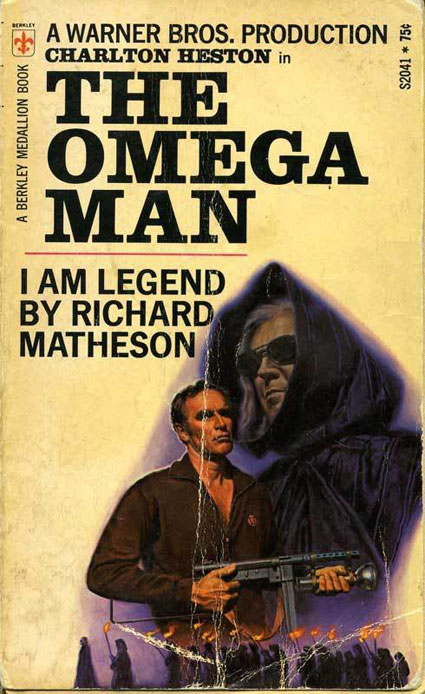
omegamancover

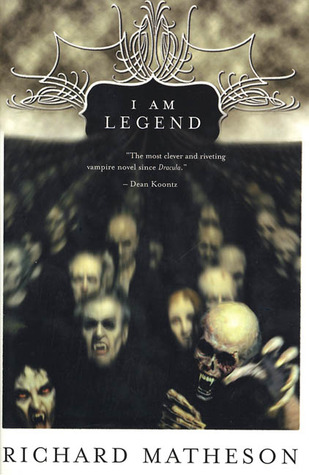
I think I was twelve when I first read something by Richard Matheson: I Am Legend. It had recently been made into a film starring Charlton Heston (I’ve seen the film, renamed The Omega Man. It’s okay, but not as good as the book.) I Am Legend, for those not familiar with the story (it was also filmed again sometime in the last decade or so, with Will Smith. I have not seen the remake), is one of those “last man on earth” stories; only in Matheson’s world, a terrible plague has turned everyone who has not died into vampire-like creatures. The last man on earth is Robert Neville, who somehow is immune to the plague. He barricades himself up into his home at night while the vampires try to find a way to either get inside or taunt him, hoping to lure him out–while during the day he scavenges for supplies and kills vampires by staking them through the heart (the matter-of-fact description of him doing this is chilling and has always stayed with me; there are several scenes in Stephen King’s ‘salem’s Lot where the gang of heroes also hunts and stakes vampires during the day–when I first read ‘salem’s Lot this reminded me of Matheson’s book. Likewise, when I read Stephen King’s apocalyptic novel The Stand, it again reminded me of Matheson’s book.) I Am Legend isn’t just a scary book about the aftermath of the end of the world though; there’s a lot of thought given to what it means, what this new society of people, this Brave New World of vampire-like people will be like, and what it’s like to be the last of your own kind. I didn’t catch a lot of this when I was a kid, and frankly, as it delved more into philosophy towards the end the unsophisticated reader I was found it a bit disappointing. When I revisited the book in the 1980’s–I went on a Matheson kick, and was delighted to discover that many episodes of television shows, or films, that I greatly enjoyed were actually based on Matheson’s work: Somewhere in Time, What Dreams May Come, Stir of Echoes–it’s quite an extensive list.

0ee08510ac0676ae995599ec51738eff

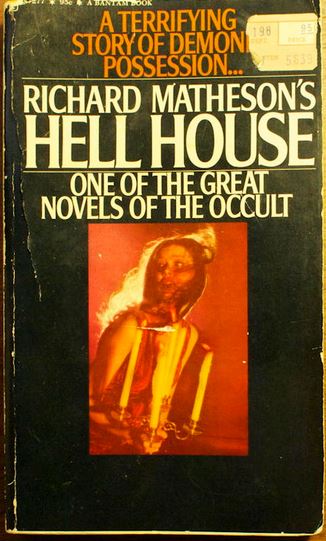
I also read Hell House when I was about thirteen, but didn’t connect that Matheson had written both books. Hell House, about “the Mount Everest of haunted houses”, was similar in structure to Shirley Jackson’s The Haunting of Hill House, but also very different. It was made into a terrifying film called The Legend of Hell House, which I recently rewatched, and actually holds up. (As a weary, cynical adult, I can see how cheaply the film was made now; but it’s just as spooky and scary as it was when I was a teenager and it terrified me.)

hellhousebookcover

That was the version I originally read; this is the one I reread:

imgres

Again, I would love to spend a week in a mountain cabin sometime revisiting Matheson’s work.

And now, back to the spice mines.
Una Paloma Blanca

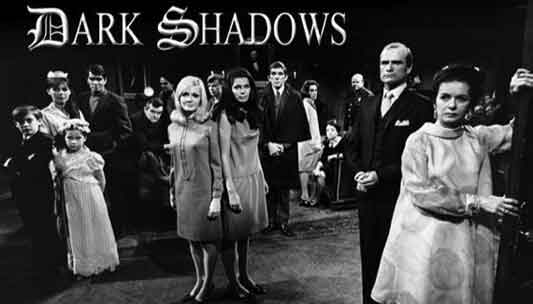
I really do think my enjoyment of horror comes from watching Dark Shadows as a child.

The show was spooky. I’m not really sure what drew me to Dark Shadows, but I was also watching other soaps with our babysitter, but by far and away, Dark Shadows was my absolute favorite, and it was my grandmother’s favorite, too.

“My name is Victoria Winters.”

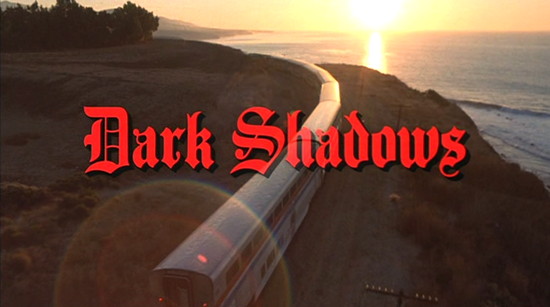
Every time I hear those words, or type them, I can hear that strange, haunting background music they always played as she spoke. Every episode, before the opening credits, Alexandra von Moltke (who later became the other woman in the von Bulow case; she was Klaus’s mistress and her ultimatum to him about leaving his wife theoretically was his motive for allegedly injecting her with an overdose of insulin that sent her into a coma), spoke those words, and other cryptic words, setting the stage for the episode, and the brief cliffhanger scene that would air before the opening credits and a commercial break. I recently watched the very first episode again, on either Netflix or Amazon Prime, I can’t remember which–and thrilled to those words, to the scene of Victoria on a train, riding to Collinsport to become the governess to troubled child David Collins.

darkshadows

If I can recall correctly, another part of the plot and original story was that Victoria was an orphan; but the entire time she lived in the home a cashier’s check to pay for her expenses and to give her a little spending money always arrived at the orphanage, drawn on a bank in Collinsport and with no name on the check. When the opportunity for the job came, Victoria jumped on the chance to take the job and maybe find out the truth about her heritage and background.


2012-04-23-darkshadows_bw

Dark Shadows was seen originally as a Gothic soap; how many Gothic novels are about the orphaned governess coming to the spooky mansion in the middle of nowhere to work with the tormented family? It was all about the atmosphere, and the show did a great job with that. The Collins family itself was secretive and strange; Elizabeth Collins Stoddard, whose husband disappeared and hasn’t set foot outside of the great house of Collinwood in twenty years; her snarky hard drinking brother Roger, David’s father, who has no patience for his son and whose own wife is missing; rebellious Carolyn, Elizabeth’s daughter–the Old House, nearby and abandoned for hundreds of years. The show didn’t do too well, though, and was bordering on cancellation when showrunner Dan Curtis decided to take the show all the way to the supernatural side: he introduced Roger’s wife as a phoenix, and when her story ended, David started seeing the ghost of a little girl in the big house. Shortly thereafter, a cousin from England showed up–Barnabas, who was actually a vampire and had been imprisoned in his coffin since the 1790’s, only to be released in the present day.

Man, did I want to live at Collinwood. There were witches (Lara Parker as Angelique!) and werewolves and the Devil and time travel and parallel universes…it was amazing.

collinwoodnightThe show went off the air in 1971, although two Dark Shadows movies were made for theatrical release, House of Dark Shadows and Night of Dark Shadows. The first simply retold the Barnabas-is-a-vampire story from the original show, only gorier, without Victoria Winters, and without the ‘cure’ that made Barnabas human again. The second starred David Selby, Kate Jackson, and Lara Parker in a strange story that had little or nothing to do with the television show; although it had something to do with a ghost story and witchcraft (I only saw it once, and don’t really remember it well).
And then….for years, nothing. The show was syndicated for reruns, and I was able to rewatch some of it in the early 1980’s, but it was over.

It was rebooted in 1991 as a prime time show, which I also loved. It only lasted one season, but I thought the cast was terrific, and it was done very well. I was really looking forward to season two; but alas, it was cancelled. In the first season, they did the Cousin Barnabas is a really a vampire story, and then flashed back to the 1790’s, where Victoria Winters (in the show, played by Joanna Going, somehow got sent back in time to witness how Barnabas became a vampire due to the machinations of the witch Angelique (Lysette Anthony), and was about to be hanged as a witch herself when the present-days Collinses were able to bring her back–knowing that Barnabas was the vampire. That was the season ending cliff-hanger. I was totally bummed the show wasn’t renewed.

91-dark-shadows-title

I made Paul watch it from Netflix a few years ago, and he, too, was addicted and bummed that it ended after one season.

Dark Shadows fans still have conventions and get-togethers, and are quite fanatical about their devotion. The Tim Burton comic remake/reboot of a few years ago earned quite a bit of scorn from the devotees; I actually didn’t mind it that much–having Eva Green in the cast is always a wise move to earn my approval, quite frankly. But when the daytime show was still airing, it was quite a cottage industry; there was an entire series of paperback novels based on the show and its characters written by Marilyn Ross (I read some of them), comic books, a board game, dolls, albums–pretty much any way you could make money off Dark Shadows, they found a way to do it. There wasn’t a cartoon series, though, nor a breakfast cereal.

So, yes, my love of the supernatural is partly due to Dark Shadows. I’d love to have the time to watch the original show again, from beginning to end.


Hooked on a Feeling

I can be kind of obtuse when it comes to the date; I have to date documents at work every day but it’s kind of automatic and then one day it hits me: hey, it’s October! Where did 2016 go?

I hate when that happens.

I especially hate my obliviousness because I’d intended to spend the month of October blogging about the horror genre–books, stories, films, etc. So here I am, four days behind but I am game to get going on this. Are you with me, Constant Reader?

I knew you would be.

I wasn’t allowed to watch monster movies when I was a kid because they always gave me the absolute worst nightmares, and I would always wake up screaming and terrified. Yet at the same time, I was drawn to scary movies; I loved being terrified. One of my earliest memories was watching The Birds on television with my parents, and I’ve never been able to see a flock of birds on telephone/power lines ever since without having a chill go up my spine. The first horror novel I read was either The Exorcist or The Other, I’m not sure which; but they were two of the popular books everyone was reading when I was in junior high school (the crucifix masturbation scene in The Exorcist  was discussed in great detail). I never much care for The Exorcist, to be honest, and even when I finally was able to rent the film years later and watch it for the first time, it was more funny to me than anything else; almost like it was trying too hard to be scary and obscene–which is what I also felt about the novel. (I thought about rereading the novel recently, since I am really enjoying the new TV show based on it; but I’ve read other works by Blatty and not cared for them either; plus, I think I’ve read somewhere recently that he’s a homophobe, and yes, I know one should try to separate the art from the artist, but I’m just not that evolved, okay? Sue me.)

Anyway, I digress.

The horror genre is similar to the crime genre in that there are a number of sub-genres contained under the umbrella term of horror; and not all horror is necessarily scary. I am not well-read enough in the genre to even try to define any of these subgenres, frankly; I’m not especially well-versed on horror films or television programs, either. I am a casual fan; when it is done well, I greatly enjoy it–but I am hardly an expert in the field. I know good writing when I see it, though–whether it’s literary or crime or horror or fantasy or romance.

I once said on a panel somewhere–I don’t remember where–that crime and horror fiction are the flip sides of the same coin; the difference being in crime fiction the monsters are human. It was a great sound-byte, and I used a variation of it in the introduction to the anthology I co-edited with J. M. Redmann, Night Shadows, where I said the two genres were both concerned with death. After all, Freddy Kruger is just a supernatural serial killer, right? And while I’ve not read any of the Thomas Harris books (I know, I know, shame on me), the film The Silence of the Lambs is both a crime film as well as horror.

Stephen King, of course, is my writing god. I discovered him when I was a sophomore in high school, and a friend was reading the paperback of Carrie. I’d never heard of either the author or the book, but I picked it up idly and started reading it–and couldn’t put it down. She graciously let me borrow it, and I didn’t put it down until I’d finished reading it that night. I’d never read anything like it before–and I became an immediate fan. It wasn’t until The Stand, several years later, that I started buying King in hardcover; but I have done so ever since (at least, the ones that were published in hardcover; some, like his Hard Case Crime novels The Colorado Kid and Joyland were paperback originals only).

But my real favorites are, and always have been, ghost stories. Barbara Michaels wrote some excellent ones, including Ammie Come Home, The Crying Child, House of Many Shadows, and Be Buried in the Rain, among many others.

And of course, Shirley Jackson and Daphne du Maurier wrote some brilliant work.

I do wish I had more time to read–so many brilliant writers and so many brilliant books out there to read.

So, I intend to spend this entire month blogging about horror. Next time, Dark Shadows.

darkshadows


You Light Up My Life

Last night I took the streetcar down to the Quarter to have drinks with two friends in from out of town at the Carousel Bar. It was a lovely day in New Orleans, with no humidity (any day without humidity is a beautiful day, frankly) and then the ride home after dark was equally lovely.

I didn’t get as much writing done this weekend as I had hoped, and I really need to get over this procrastination thing. A friend pointed out to me that I do this to myself all the time; that rather than sitting down and making myself write every day, I’ll just on any excuse not to–which results in stress and panic as the deadline looms. I did get some writing done yesterday; just not as much as I would have liked. I think I solved the problem I was having with one short story, and as I rode the streetcar yesterday I think I may have solved the problem I was having with the other.

Both of these are, of course, good things.

So, my plan is to continue working on the revision of Bourbon Street Blues, finish those two short stories this week, edit the other two for submission, and get about five thousand words written on the next book, while mapping out my ideas for the next Scotty. It may seem daunting–and it is; that’s a lot of work–but as long as I stay focused, I can get it all done; there’s no doubt in my mind. It is amazing what you can do when you focus on one thing at a time. If I get stuck on one of the stories, I’ll work on something else. This has been the problem I’ve been having lately; if I get stuck on something I just stop working, and that isn’t how I’ve managed to remain productive for so long; if something stalls I move on to something else and come back to the original piece of work the next day. Working on something else keeps my creativity working, and shakes out the cobwebs. And there are always cobwebs. Don’t ask me how it happens, but it does.

And on that note, it’s back to the spice mines.

Here’s today’s hunk:

dd82ee59682857b15753a27de9ff02c5

Watching Scotty Grow

As I work to revise Bourbon Street Blues for its ebook debut, and plan out yet another Scotty book (tentatively titled Reality Show Rumba, but that may change to St. Charles Second Line or something else, I’m not completely sold on that as a title), yes, I’ve got Scotty on the brain, what can I say? I’m in that weird mode where ideas are bouncing around inside of my head, and can’t seem to focus enough to get any one thing worked on and finished.

It ain’t easy being a Gregalicious.

As I said when I rode the streetcar to and from the NO/AIDS Walk last weekend, the ride felt wonderful because I felt reconnected to New Orleans. I’ve felt some disconnect over the past few years; partly because I was so damned busy doing so damned much, and partly because the city has changed somewhat over the years as well that have followed Katrina. It was inevitable; the city was going to change even had Katrina not happened, and the question remains, were these good changes for the city? The so-called ‘sharing economy,’ with the coming of AirBNB and Uber and Lyft, are good things but can also be bad things; AirBNB had resulted in private homes being turned into rental properties–but is that what has driven up property costs and rentals in New Orleans, or was that a result of the rising property costs? I signed up for a realtor’s daily emails about properties for sale–mainly because I saw a sign on a house I’ve always loved and wanted to set a book in, so I wanted to be able to see the inside and the yard–and I am daily astounded at the costs of the properties she has listed. I have yet to see one for less than 1.2 million; when I was writing Murder in the Rue Dauphine, I mentioned in passing ‘the million dollar homes in the Garden District’ only to be corrected by my first reader: “There are no homes in New Orleans that cost a million dollars or more, not even in the Garden District.” As I said, every featured property in the daily emails I get from this realtor are a minimum of 1.2 million; then again, I am certain people from other cities would think them bargains, as they also are a minimum of 4000 square feet or more.

The only way Paul and I could ever own property here would be to hit the Powerball.

One of the things I know I am going to do with the next Scotty book–one of the many things I am going to do with the next Scotty book–is determine whether or not Scotty and the boys are going to stay in the Quarter. GASP, right? But one penultimate New Orleans thing that I’ve never written about–although I’ve endured it numerous times–is the joy of renovation. The house the boys all live in on Decatur Street was, of course, rebuilt after the fire in Bourbon Street Blues–I did write about Scotty having to live in the Marigny while the house was being rebuilt in Jackson Square Jazz–but about eleven years have passed since then; the house survived Katrina and everything that followed, but eleven years of heat and humidity, of wood swelling and shrinking, of termites…well, it’s about time the house on Decatur Street got renovated again–and of course, treated for termites and so forth to begin with. And so the boys have to go live elsewhere while the place is gutted and rebuilt yet again…and now, the question is whether or not they want to move back into the Quarter or not, or maybe buy a place. Scotty has come into his trust funds, after all, and so there is plenty of money…but it should also make for an interesting subplot. And the plot of this one…I think this could possibly be the best Scotty of them all.

At least, I certainly hope so.

I’m very excited about it. Now I just have to write two other books first.

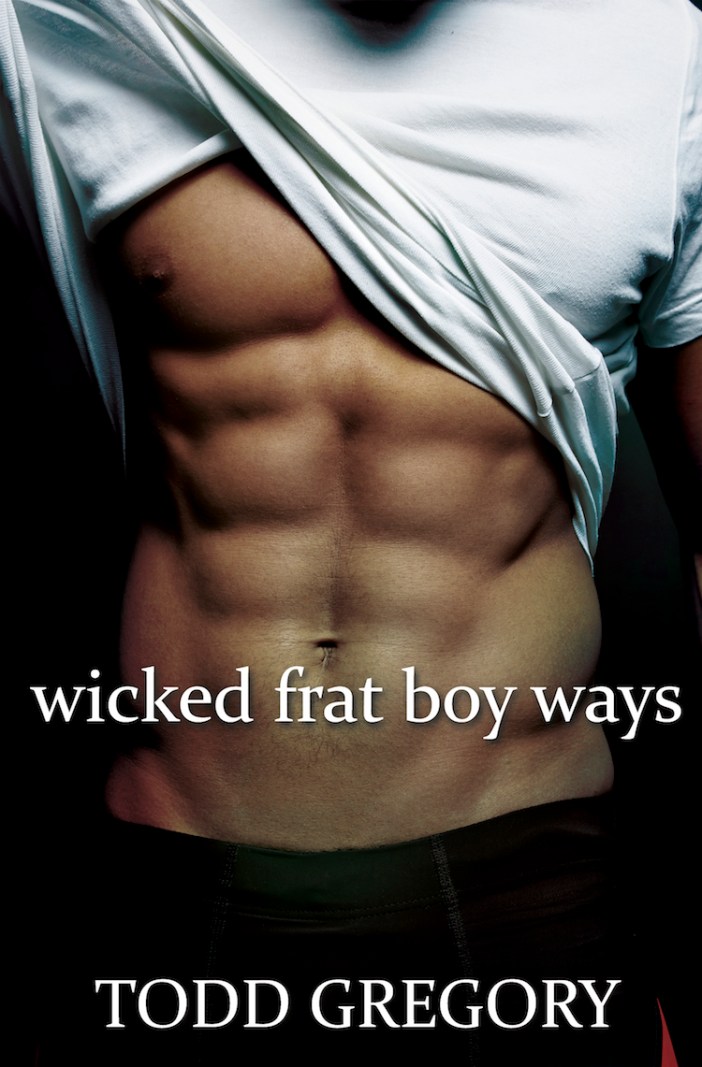
Here’s the cover for the work-in-progress I am primarily focusing on:

wicked-frat-boy-ways_final